The best bars in Chicago are a neighborhood story
Chicago does not have one nightlife scene. It has a dozen of them, stacked on top of each other along the L lines, each with its own accent, its own drink order, and its own idea of what a great night out looks like. In River North, it might be a twenty-dollar cocktail in a room that smells like cedar and money. On Milwaukee Avenue in Logan Square, it is more likely to be a tiki drink the color of a traffic light and a vinyl DJ set that runs until the bartender says goodnight. Both are excellent. Neither is the whole story.
That is exactly why hunting for the best bars in Chicago works better as a neighborhood crawl than a single ranked list. The city is famously a city of neighborhoods, and its bar culture reflects that: Wicker Park still carries its indie-rock DNA from the Empty Bottle era; Pilsen pairs its murals and galleries with mezcal rooms and corner taverns; Andersonville mixes Scandinavian heritage with one of the most welcoming LGBTQ+ bar scenes in the Midwest; and River North remains the polished, late-night downtown playground where out-of-towners start and locals finish.
This guide rounds up ten bars across five of the city’s strongest drinking neighborhoods: Logan Square, Wicker Park, Pilsen, River North, and Andersonville. We picked for variety on purpose. You will find a tiki bar and a gin specialist, a legendary indie-rock room and a Prohibition-style cocktail den, mezcalerias and skyline rooftops, plus the kind of neighborhood taverns where the bartender learns your name by your second visit. A comparison table below lets you scan the whole list at a glance, and a “perfect bar night” itinerary shows how to stitch three of these stops into one memorable evening. Everything is written for 2026: transit tips, typical prices, and practical notes reflect how the city actually drinks right now.
One house rule before we start: this is a 21-and-over guide, and Chicago pours generously. Pace yourself, eat something, and lean on the CTA and rideshares instead of driving. More on getting around safely at the end.
How we picked these ten
We did not try to name the ten “best” bars in some absolute sense, because Chicago would laugh at the attempt. Instead, we built the list around three criteria:
- Neighborhood character: each pick should feel like its neighborhood. A River North bar that could be anywhere does not belong here.
- A reason to go: every entry has a signature draw — a spirit specialty, a music program, a view, a scene — not just “good drinks.”
- Staying power: we leaned toward rooms with a track record and a loyal regular crowd rather than this month’s buzzy opening.
Prices below are typical per-drink ranges as of 2026 and will vary by what you order. When a venue is named, it is a real, established spot; where we describe a type of room instead, that is deliberate, so you can find your own version on any given night.
Logan Square: tiki temples and cocktail craft on the Blue Line
Logan Square, centered on the Blue Line stop of the same name and the boulevards that fan out from it, has arguably the deepest cocktail bench in the city. Milwaukee Avenue is the main artery, and within a ten-minute walk of the Logan Square Blue Line station you can drink your way from tiki to amaro to natural wine without breaking a sweat.
1. A tiki bar on Milwaukee Avenue with national-level craft
Logan Square is home to one of the country’s most respected tiki bars, the kind of room that tiki obsessives plan trips around. Expect a thatch-and-bamboo interior, a rum library that runs deep into agricole and overproof territory, and drinks built with fresh juice, house syrups, and fire. The tropical escapism is the point: in February, when it is 12 degrees outside, stepping into a room that smells like lime leaf and toasted coconut is a small miracle. Go early on weekends if you hate lines, and do not skip the shared bowls if you are with a group. Typical cocktails run in the mid-teens, which is fair for the labor involved.
2. A bar, gallery, and live music room in one
A few blocks away sits the neighborhood’s beloved multi-hyphenate: part craft cocktail bar, part art gallery, part live music venue. The front room pours serious drinks; the back hosts a rotating calendar of bands, DJs, and listening events. This is the Logan Square night in miniature: you arrive for one drink, the art on the walls gives you something to talk about, a band you have never heard of starts at ten, and suddenly it is midnight. Check the calendar before you go, because the best nights here are the programmed ones. Drinks are well made and fairly priced by Chicago cocktail standards, and the room draws a creative, unpretentious crowd.
Logan Square logistics: take the Blue Line to Logan Square and walk. Milwaukee Avenue, Logan Boulevard, and the side streets between them hold the highest density of options. The neighborhood is very walkable after dark, and late-night food options along Milwaukee Avenue mean you will not go hungry at 1 a.m.
Wicker Park: indie rock roots and speakeasy polish
Wicker Park, just southeast of Logan Square along the same Blue Line, grew up as Chicago’s indie-rock capital in the nineties, and it never fully let go of that identity. Today the six-corner intersection of Milwaukee, Damen, and North anchors a mix of legendary music rooms, polished cocktail dens, and late-night kitchens that keep the strip fed after shows.
3. A legendary indie music venue that still matters
Some rooms earn “legendary” status and then coast on it. This one did not. Decades after it became the proving ground for indie and punk acts passing through Chicago, the room still books rising bands, touring favorites, and the occasional secret set, with a calendar that rewards checking weekly. The bar itself is refreshingly unpretentious: good beer, fast pours, fair prices, and a crowd that is actually there for the music. If you only do one live-music night in Chicago, this is a strong candidate. Cover charges are typically modest when they exist at all, and weeknight shows are often the sweet spot — smaller crowds, cheaper tickets, same great sound.
4. A Prohibition-style cocktail den behind an unmarked door
For the other side of Wicker Park, slip into one of the city’s most famous speakeasy-style cocktail bars: an unmarked door, a curtained hallway, chandeliers, and high-backed chairs that make every conversation feel conspiratorial. The cocktails are precise and pricey, the ice program is serious, and the room enforces a no-standing, reservation-friendly calm that feels like an antidote to the neighborhood’s louder corners. This is a date-night or special-occasion stop, not a volume-drinking stop. Book ahead on weekends, dress like you mean it, and let the bartender build you something off-menu if you tell them what you like.
Wicker Park logistics: Blue Line to Damen is the most useful stop; Division is a short walk south for the Division Street bar strip. The neighborhood stays lively late, especially Thursday through Saturday, and rideshares are plentiful if you are heading further afield.
Pilsen: mezcal, murals, and the city’s most flavorful bar crawl
Pilsen, the historically Mexican-American neighborhood along 18th Street on the Lower West Side, offers one of Chicago’s most distinctive drinking experiences. The National Museum of Mexican Art anchors the cultural side; the bar side runs on agave spirits, art-filled interiors, and corner taverns where the jukebox leans regional Mexican and the regulars lean loyal. It is less polished than Logan Square and all the better for it.
5. An agave-focused mezcaleria on 18th Street
The essential Pilsen drink is mezcal, and the essential Pilsen stop is a dim, art-lined room devoted to it. Expect a deep agave list — mezcal, sotol, raicilla, bacanora — poured by people who can talk you through the difference between a tobala and an espadin without a hint of condescension. Flights are the move for first-timers; a copita neat with orange slices and sal de gusano is the move for everyone else. These rooms tend to be intimate and conversation-friendly, with prices that are gentler than the cocktail dens up north. Pair your pours with tacos from a nearby taqueria — 18th Street has no shortage — and you have one of the best-value nights in the city.
6. A mural-lined corner tavern with a jukebox
For balance, follow the mezcal with a classic Pilsen tavern: the kind of room where the walls are covered in local art, the beer list leans Mexican lagers and Chicago craft, and the jukebox has opinions. These taverns are the neighborhood’s living rooms — affordable, welcoming, and gloriously uncurated. Order a michelada if they make them (many do, and the good ones are genuinely excellent), play a round of pool if there is a table, and do not be surprised if the bartender recommends a gallery opening down the block. Pilsen’s bar scene is at its best when you let it be a crawl: two or three short stops along 18th Street beats one long sit.
Pilsen logistics: take the Pink Line to 18th Street and walk north to the commercial strip. The neighborhood is compact and walkable, and the murals alone are worth arriving before sunset. As with any neighborhood you are visiting for the first time, stick to the main corridors late at night.
River North: skyline views and polished late nights
River North is downtown Chicago’s after-dark playground: the blocks north of the river, east of the Kennedy, packed with restaurants, hotels, and the kind of lounges where the dress code is unspoken but real. This is where conventions, celebrations, and first-time visitors tend to land — and honestly, for a skyline-view cocktail or a proper late-night lounge, it delivers. Prices run higher here than anywhere else on this list; consider it the splurge district.
7. A high-rise rooftop with the skyline doing the talking
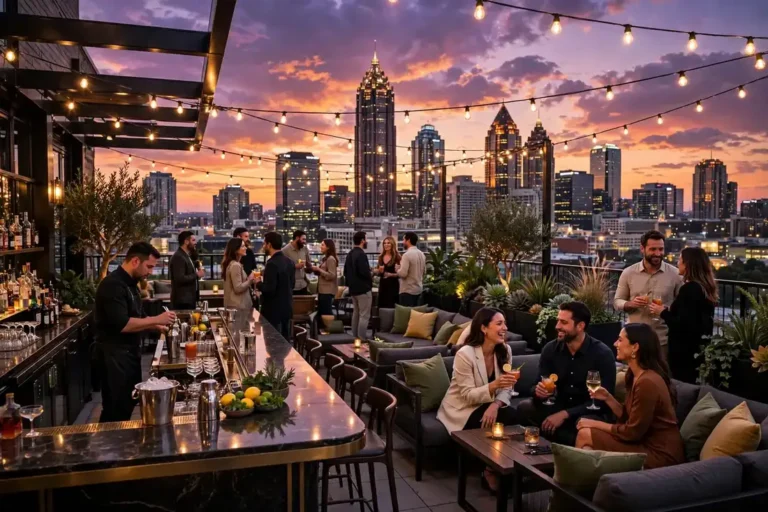
Chicago’s skyline earns its reputation, and a River North rooftop is the most direct way to drink inside it. The best of these rooms pair genuinely good cocktails with genuinely great views — the river, the towers, the lake glinting to the east — rather than treating the view as an excuse for mediocre drinks and a long wait. Go at golden hour for the full effect, and be prepared for a door line on summer weekends; arriving before eight is the veteran move. Rooftops are seasonal creatures in Chicago, typically running from late spring through early fall, so check ahead outside those months. Expect premium pricing and, at some rooms, a smart-casual dress code that is actually enforced.
8. An underground cocktail lounge for the second act
When the rooftop winds down, head below street level. River North hides several excellent subterranean lounges — low ceilings, candlelight, serious back bars — that feel a world away from the neighborhood’s glossy surface. These are nightcap rooms: amaro, aged rum, a properly made old fashioned, maybe a small vinyl setup or a DJ keeping things at conversation volume. The underground lounge is also River North’s answer to the neighborhood’s reputation for flash; down here, the drink is the show. Last call in most Chicago bars lands around 2 a.m., with a handful of late-night rooms licensed later, so plan this as your final stop rather than your first.
River North logistics: the Red Line’s Grand and Chicago stops bracket the neighborhood, and it is walkable to the Riverwalk and the Loop. Rideshares cluster here on weekend nights, which means short waits but surge pricing — the L is often faster and cheaper.
Andersonville: welcoming rooms on the far North Side
Andersonville, the stretch of Clark Street around Foster on the far North Side, blends Swedish heritage (the Swedish American Museum is here) with one of Chicago’s most beloved LGBTQ+ bar scenes. The vibe is friendly, a little quirky, and proudly neighborhood-first: rainbow crosswalks, independent shops, and bars where regulars genuinely know each other. It is a bit of a trek from downtown — about 30 to 40 minutes on the Red Line — but regulars will tell you the trip is the point.
9. A Scandinavian-leaning cocktail bar with hygge to spare
Andersonville’s cocktail rooms tend to be warm rather than flashy, and the best of them nod to the neighborhood’s Nordic roots: aquavit cocktails, candlelight, wood tones, and a coziness that the Danes would recognize. Expect thoughtful seasonal menus, bartenders who remember faces, and a crowd that skews local. This is an ideal first stop on an Andersonville night — settle in, have two excellent drinks, and let the evening unfold. Prices are moderate, the rooms are intimate, and walk-ins are usually fine on weeknights.
10. An LGBTQ+-friendly late-night bar with a dance floor
No Andersonville night is complete without the neighborhood’s late-night anchor: a welcoming, high-energy bar where the dance floor fills up, the drag or DJ programming rotates through the week, and everyone from longtime regulars to first-time visitors gets the same warm greeting. Andersonville’s queer bars are famous for their friendliness, and this is the room that proves the reputation. Cover is typically low or nonexistent on regular nights, drinks are fairly priced, and the energy peaks after midnight. If you are visiting Chicago and want to understand why locals are so loyal to this neighborhood, spend your last hour here.
Andersonville logistics: Red Line to Berwyn, then a short walk east to Clark Street. The neighborhood rewards an early arrival: browse the shops, grab dinner, then bar-hop north-south along Clark. Late-night Red Line service runs back downtown, though rideshares are the more comfortable option after 1 a.m.
The ten bars at a glance
| # | Bar | Neighborhood | Vibe | Typical drink price | Best for |
|---|---|---|---|---|---|
| 1 | Milwaukee Ave tiki bar | Logan Square | Tropical escapism, craft rum | Mid-teens | Winter-defying date night |
| 2 | Bar-gallery-music room | Logan Square | Creative, unpretentious | Moderate | Live music discovery |
| 3 | Indie music venue | Wicker Park | Raw, authentic rock room | Budget-friendly | Catching rising bands |
| 4 | Prohibition-style den | Wicker Park | Intimate, cinematic | Premium | Special occasions |
| 5 | 18th St mezcaleria | Pilsen | Artful, agave-obsessed | Moderate | Spirits education |
| 6 | Mural-lined tavern | Pilsen | Local, jukebox classic | Budget-friendly | Low-key hangs |
| 7 | High-rise rooftop | River North | Glossy, skyline views | Premium | Golden-hour cocktails |
| 8 | Underground lounge | River North | Moody, spirit-forward | Premium | Nightcaps |
| 9 | Nordic cocktail bar | Andersonville | Cozy, neighborhood-warm | Moderate | Easy first stop |
| 10 | LGBTQ+ dance bar | Andersonville | Joyful, high-energy | Budget-friendly | Late-night dancing |
The perfect Chicago bar night: a three-stop itinerary
If you only have one night, here is how we would stitch this list together. This route keeps you on one L line, minimizes transit time, and moves from conversation to energy to celebration.
Stop 1 — 8:00 p.m., Logan Square: the bar-gallery-music room (Stop 2). Start where the night is interesting but unhurried. Have a cocktail, look at the art, and check whether a band is on. One or two drinks, eaten food nearby — the taco and tavern options around the Logan Square Blue Line stop are excellent.
Transit: Blue Line from Logan Square to Damen (about 10 minutes).
Stop 2 — 10:30 p.m., Wicker Park: the Prohibition-style den (Stop 4). The night’s centerpiece. The room is at its cinematic best after ten, and arriving mid-evening usually beats the late rush. One perfect cocktail, maybe two. This is the stop you will talk about later.
Transit: Blue Line from Damen back toward downtown, or a rideshare if you are heading to Andersonville.
Stop 3 — 12:30 a.m., Andersonville: the late-night dance bar (Stop 10). End where the energy is highest and the welcome is warmest. The dance floor peaks after midnight, and the crowd is the friendliest late-night mix in the city. Stay for the last call, then Red Line or rideshare home.
Alternate route for skyline lovers: swap in the River North rooftop (Stop 7) at golden hour, the underground lounge (Stop 8) for nightcaps, and finish with the Wicker Park indie venue (Stop 3) if a show is on. Same principle: views, then craft, then music.
Practical tips for bar-hopping in Chicago
Getting around: the CTA is your best friend. The Blue Line serves Logan Square and Wicker Park; the Pink Line serves Pilsen; the Red Line serves River North and Andersonville. Trains run frequently until late, and the Blue and Red lines offer overnight service, which makes them genuinely useful for nights out. A Ventra card or contactless payment gets you on board. After the trains thin out, rideshares are plentiful downtown but can surge in River North on weekends.
Last call and timing: most Chicago bars close around 2 a.m., with a smaller set of late-night rooms licensed to pour later. Plan your final stop accordingly, and do not expect a 4 a.m. scene as a matter of course. Kitchens often close an hour or more before the bar does, so eat earlier than you think you need to.
Prices and tipping: expect budget-friendly pours at taverns and music venues, moderate prices at neighborhood cocktail bars, and premium pricing in River North. Tipping a dollar or two per drink at the bar, or around 20 percent on a tab, is the local standard — bartenders remember good tippers, and in a city of regulars, that matters.
Neighborhood etiquette: Chicago’s bar neighborhoods are residential first. Keep sidewalk volume down after midnight, use rideshare pickup points rather than idling on corners, and treat corner taverns like someone’s living room — because they are.
Weather reality: half the year, the walk between bars is the enemy. In winter, pick a dense strip (Milwaukee Avenue, 18th Street, Clark Street) and minimize outdoor time. In summer, patios and rooftops are the whole game — but they fill fast, so arrive early.
Drink responsibly: Chicago pours with pride, and the distances between neighborhoods are real. Set a drink limit before you go out, alternate with water, eat a real meal, and never drive after drinking. The CTA runs all night on key lines for a reason — use it.
Frequently asked questions
What neighborhood has the best bars in Chicago?
It depends on your night. Logan Square wins for cocktail craft, Wicker Park for the indie-music-plus-cocktails combo, Pilsen for distinctive agave bars and value, River North for skyline views and polish, and Andersonville for warmth and late-night dancing. Most locals would tell you to pick the vibe first and the neighborhood second.
How much does a night out at Chicago bars cost?
A moderate night — three to four drinks across two neighborhoods, plus transit and a late-night bite — typically runs $60 to $120 per person as of 2026, depending on how many craft cocktails versus tavern beers you order. River North can easily double that; Pilsen and dive-heavy routes can halve it.
Is the Blue Line safe at night for bar-hopping?
The Blue Line between Logan Square, Damen, and downtown is one of the busiest corridors in the system and is generally well-traveled late into the evening. Standard big-city awareness applies: stay in lit cars with other passengers, keep valuables out of sight, and use rideshares if a station feels empty.
Do Chicago bars require reservations?
Most taverns, music venues, and neighborhood bars are walk-in friendly. The polished cocktail dens and popular rooftops often take — and on weekends effectively require — reservations. When in doubt, check the bar’s site or socials the day of.
What is the drinking age and last call in Chicago?
The drinking age is 21 everywhere in the US, and Chicago bars check IDs seriously — bring a valid government ID. Most bars close around 2 a.m.; plan your last stop and your ride home around that.