
Why Nashville nights hit different
There is live music, and then there is Nashville. In most cities, finding a band on a Tuesday night takes planning. In Nashville, the problem is choosing between the six bands playing within a two-block radius — at 2 p.m. The city’s nightlife runs on an almost absurd abundance of working musicians: Lower Broadway’s honky tonks host live bands from late morning until the early hours, seven days a week, and the musicians are not background noise. They are the main event, playing for tips and the chance to be discovered in the same rooms where country legends got their start.
This nashville nightlife guide is organized the way locals think about the city: neighborhood by neighborhood. Lower Broadway is the neon honky tonk strip every visitor has seen in photos — and it earns the hype, if you know how to do it. East Nashville is the local-favorite east side, all dive bars and cocktail dens around Five Points. The Gulch is the polished, upscale playground of rooftop lounges and see-and-be-seen cocktail bars. Midtown, along Demonbreun, is where Nashville’s own service industry goes out after their shifts. We will tour all four, then lay out a sample two-night itinerary and the practical stuff that actually matters: cover charges, parking, and staying safe.
Everything here reflects Nashville as of 2026. This is a 21-and-over guide, and one theme will repeat: the music is free, the beer is cold, and the band works for tips — so tip the band.
Lower Broadway: the honky tonk strip
Lower Broadway — the stretch of Broadway between the river and about 5th Avenue — is the most famous bar street in America that is not in New Orleans or Las Vegas. Neon signs stack three and four stories high. Every building seems to contain a stage on every floor. And the defining feature, the thing that makes it genuinely special rather than just touristy, is this: the music is live and almost always free.
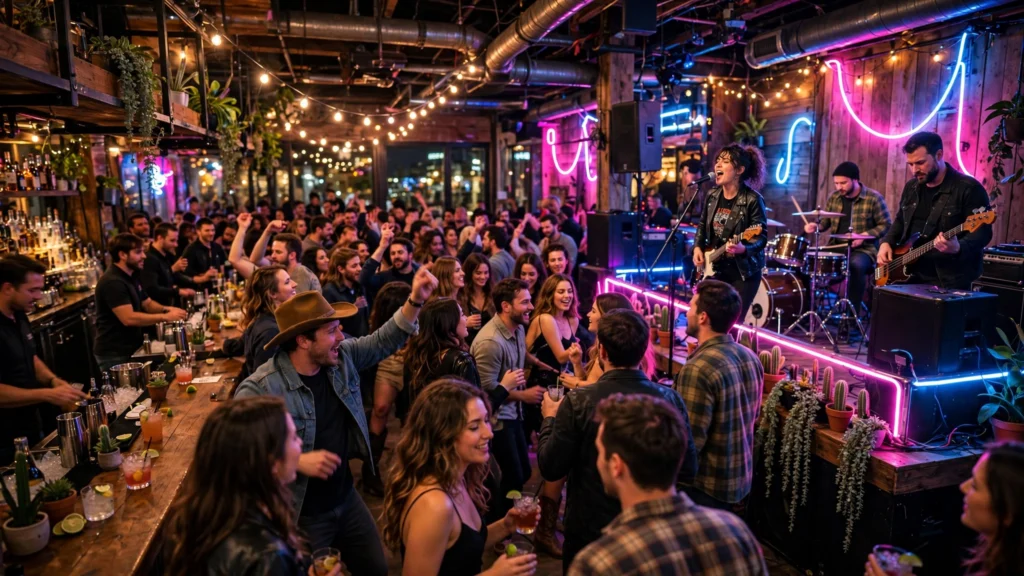
How honky tonks work: you walk in off the street, no cover charge at the vast majority of rooms. A band is playing — full drum kit, Telecaster twang, harmonies — and will keep playing in sets all day and night. You order a beer, find a spot, and when the tip jar or bucket comes around, you put money in it. That is the entire social contract, and Nashville takes it seriously. Bands play for tips plus whatever the bar pays; generous tippers get shout-outs and sometimes song requests. Drink prices are tourist-corridor pricing — expect to pay more than you would in East Nashville — but the entertainment is free, which rebalances the math considerably.
Tootsie’s Orchid Lounge
The most famous honky tonk on the strip, and famous for good reason. Tootsie’s Orchid Lounge has been the heart of Lower Broadway since the early 1960s, when its back alley connected directly to the Ryman Auditorium and touring country stars slipped in between sets. The purple exterior is one of the most photographed facades in Tennessee. Inside, it is three floors of history: signed photos and memorabilia covering every wall, live music on multiple levels, and a rooftop with views over the neon canyon of Broadway. It gets packed — this is the first stop for nearly every visitor — so go early in the day for the history or late at night for the energy, and be patient with the crowds in between.
Robert’s Western World
If Tootsie’s is the icon, Robert’s Western World is the purist’s choice. This is Nashville’s home of traditional country music: no pop crossovers, no gimmicks, just hardcore honky tonk played by musicians who treat the tradition as sacred. It is also the best value on Broadway. The famous Recession Special — a fried bologna sandwich, chips, a MoonPie, and a PBR — has been holding the line on affordable fun for years, and the room’s unpretentious boot-store-meets-dance-hall vibe is the real thing, not a reproduction. The dance floor fills with two-steppers who actually know what they are doing; watch a few songs before jumping in, or better yet, let a regular teach you.
Legends Corner and Layla’s Honky Tonk
These neighboring rooms represent the classic Broadway experience at its most authentic. Legends Corner, true to its name, leans into country’s heritage with memorabilia-lined walls and a strict never-a-cover policy. Layla’s Honky Tonk flies the flag for the grittier side of the strip — bluegrass, rockabilly, and Americana alongside straight country, in a room that feels happily unpolished. Both are the kind of places where you can post up for an afternoon, work through a few cold beers, and watch three different bands without ever checking the time.
Honky Tonk Central and AJ’s Good Time Bar
For the full multi-story Broadway spectacle, these big rooms deliver: three and four floors of stages, balconies overlooking the street, and rooftops with skyline views. Honky Tonk Central packs multiple stages into one of the strip’s largest footprints — you can bar-hop vertically without ever leaving the building. AJ’s Good Time Bar, the Alan Jackson-backed room, spreads live country across its floors with a dedicated karaoke level for when you decide the professionals are making it look too easy. These are the high-energy, bachelorette-party-heavy rooms; embrace the chaos or steer toward the smaller rooms above if you want it dialed down.
Broadway survival tips: start earlier than you think — the bands are great at 3 p.m. and the crowds are thinner. The strip is most intense (and most crowded) from Thursday through Saturday nights. Wear comfortable shoes; you will walk more than you expect. And remember that every room is its own ecosystem: if one bar’s band or crowd is not your speed, the next doorway is thirty seconds away.
East Nashville: where the locals go out
Cross the river and the neon gives way to something else entirely. East Nashville — centered on the Five Points intersection where Woodland, Clearview, and 11th meet — is where Nashville’s musicians, artists, and service industry people actually spend their nights off. The vibe is unpretentious and proudly weird: dive bars with deep jukeboxes, cocktail bars with serious programs, and patios full of people who all seem to know each other.
A classic East Nashville dive: every great bar neighborhood needs its anchor dive, and Five Points has several strong candidates — the kind of rooms with vinyl booths, cheap beer, a pool table, and a bartender who has worked there longer than you have lived in your city. These are the rooms where Nashville’s music community decompresses: do not be surprised to find a Grammy winner drinking quietly in the corner. Order simply, tip well, and respect the regulars’ space.
An East Side cocktail den: the east side’s cocktail game is quietly excellent. Look for the rooms with short, seasonal menus, house-made syrups, and bartenders who clearly care — often in converted houses or unmarked storefronts that reward a little exploration. Prices run noticeably lower than the Gulch for comparable quality, which is exactly why locals guard these spots. This is the date-night side of East Nashville: intimate, interesting, and never trying too hard.
A late-night dance or DJ bar: as the night deepens, the east side’s energy concentrates in a handful of rooms with DJs, dance floors, and weekend programming that runs late. The crowds are mixed, the covers (when they exist) are low, and the vibe is come-as-you-are. If Broadway felt like a show put on for visitors, East Nashville after midnight feels like a party you were lucky to find.
Getting there: East Nashville sits across the Cumberland from downtown — a 10-minute rideshare or a pleasant walk across the pedestrian bridge if the weather cooperates. Do not try to walk the whole east side; pick the Five Points pocket and explore on foot from there.
The Gulch: Nashville’s polished playground
The Gulch — the former industrial district between downtown and Midtown, named for its railroad gulch — is Nashville’s glossiest nightlife neighborhood. Where Broadway is neon and East Nashville is denim, the Gulch is tailored: rooftop lounges with skyline views, design-forward cocktail bars, and restaurants whose bar programs could anchor a guide of their own. This is where celebrations, date nights, and expense-account evenings land.
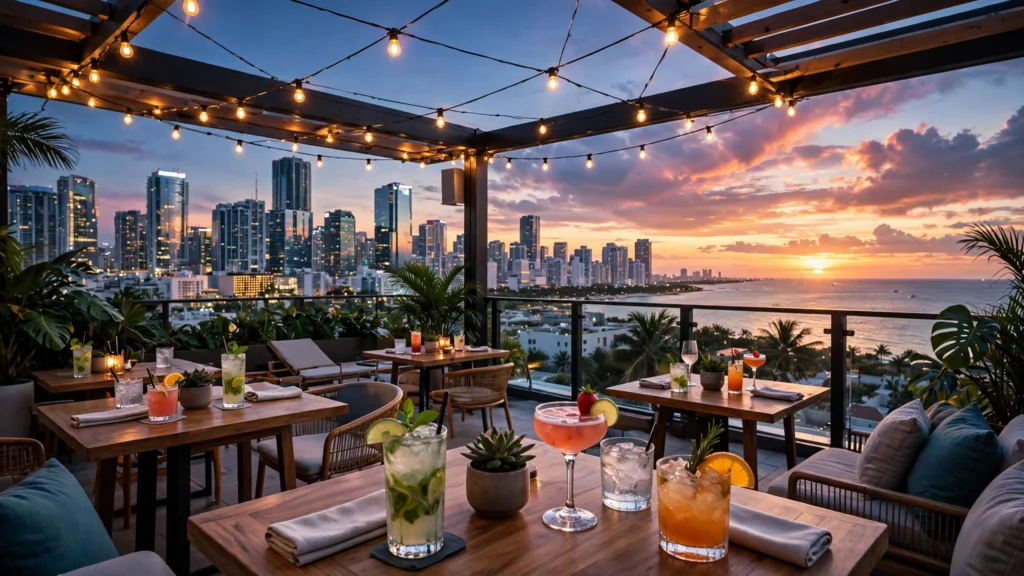
A Gulch rooftop at golden hour: the neighborhood’s rooftops are among the best in the city, pairing craft cocktails with sweeping views of the downtown skyline. Arrive before sunset, order something with local whiskey or seasonal fruit, and watch the city light up. These rooms run premium pricing and often enforce a smart-casual dress code on weekends — check before you go, and consider a reservation for Friday and Saturday evenings.
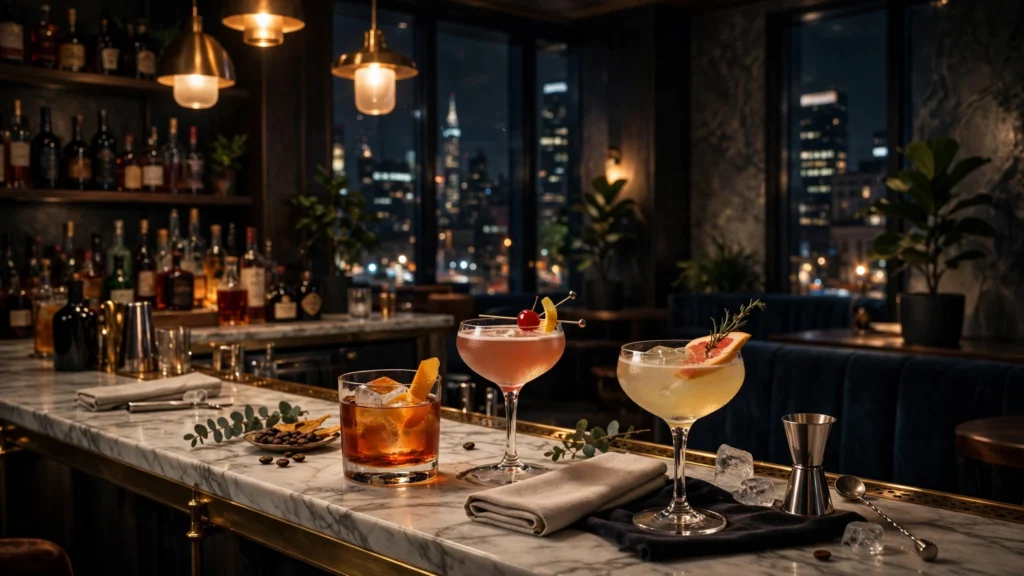
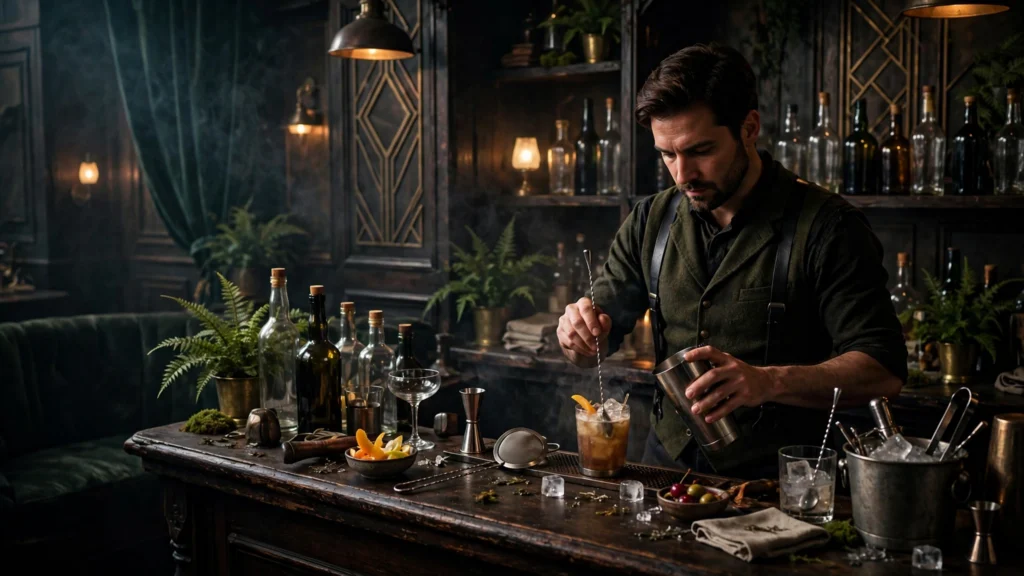
A design-driven cocktail lounge: the Gulch’s best cocktail rooms treat the bar as theater: dramatic interiors, ice programs, smoke and garnish deployed with intent, and menus that change with the seasons. The bartending talent here is top-shelf — many of these bartenders compete nationally — so this is the neighborhood to order adventurously. Tell the bartender your spirit preference and a flavor direction, then let them build. One or two drinks here is the move; the prices reward savoring over volume.
The Gulch after dark: as dinner service winds down, several Gulch rooms shift into late-night lounge mode — DJs at conversation-plus volume, the cocktail menu still in full force, and a crowd that skews dressed-up. It is the most “nightclub-adjacent” energy in this guide without being an actual nightclub, which suits the neighborhood’s polished brief perfectly.
Logistics: the Gulch is compact and very walkable, sitting just south of downtown. Rideshares are easy to find but surge on weekend nights; if you are staying downtown, it is a 15-minute walk or a quick ride.
Midtown: Demonbreun and the industry’s after-hours
Midtown — roughly the Demonbreun Street corridor near Music Row and Vanderbilt — is Nashville’s answer to the question “where do bartenders drink after their shifts?” The rooms here are local institutions: sports bars that turn into late-night hangs, honky tonk-adjacent rooms with serious live music calendars, and the kind of bars where the staff knows half the customers by name.
A Midtown sports bar turned late-night hang: the classic Midtown move starts as a game-watch — Titans on Sundays, Predators in hockey season — and evolves as the night goes on, with the volume rising and the crowd shifting from jerseys to going-out clothes. These rooms are spacious, unpretentious, and built for groups: pool tables, big patios, and drink deals that keep a long night affordable.
A Demonbreun honky tonk with local soul: Midtown’s live music rooms offer a middle path between Broadway’s tourist energy and East Nashville’s insularity — working bands, dance floors, and crowds that skew local without being cliquish. If you loved the honky tonk format but want it with fewer bachelorette sashes, this is your room. Covers are rare; tip jars are not.
Why Midtown matters in this guide: visitors often skip it, which is precisely why you should not. It is the most “real Nashville on a Friday night” of the four neighborhoods — the place where the city’s music economy comes to exhale.
Do not sleep on Printer’s Alley
One bonus stop for the historically minded: Printer’s Alley, the downtown alleyway that was Nashville’s original nightlife district — speakeasies during Prohibition, jazz and blues clubs through the mid-century. Today it holds a handful of atmospheric bars and clubs in a brick-lined corridor that feels a world away from Broadway’s neon, two blocks away geographically. It is a perfect 45-minute detour between dinner and your main night out.
The 2-night itinerary
Night 1 — Broadway immersion. This is the night you came for. Start with a late afternoon at Robert’s Western World: grab the Recession Special, catch an early band, and learn the honky tonk ropes while the crowds are thin. As evening comes on, walk the strip — pop into Legends Corner or Layla’s for a set, ride up to a rooftop (Tootsie’s or Honky Tonk Central) for the neon-at-dusk view, and settle wherever the band grabs you. Eat along the way; Broadway has plenty of quick options. End the night at AJ’s or wherever the dance floor looks happiest. Budget for a full evening: drinks are tourist-priced, but the music is free.
Night 2 — like a local. Dinner in East Nashville — the restaurant scene around Five Points is excellent — then a dive bar nightcap or two within walking distance. Mid-evening, rideshare to the Gulch for one polished cocktail at a rooftop or design bar (golden hour if you timed dinner right, nightcap if not). If you still have legs, finish in Midtown: a Demonbreun late-night room where the crowd is local, the band is working, and the night ends the way Nashville nights should — with live music and no cover. Two neighborhoods, three vibes, one very full evening.
Practical tips: cover charges, parking, and safety
Cover charges: here is the good news — most Lower Broadway honky tonks charge no cover, ever. Legends Corner’s “never a cover” policy is representative, not exceptional. Where covers do appear: Gulch lounges on big DJ nights, Midtown clubs on weekends, and ticketed shows at dedicated music venues (which are concerts, not bar nights). As a rule of thumb, if there is a stage and a bar in the same room on Broadway, you are walking in free. If there is a velvet rope and a dress code in the Gulch, check the venue’s socials first.
Parking: downtown Nashville parking is the least fun part of the night. Surface lots and garages near Broadway charge event-level rates on weekends — as of 2026, expect premium pricing on Friday and Saturday nights, with cheaper options a few blocks off the main strip. Our honest recommendation: do not drive downtown at night. Rideshares are abundant, the downtown core is walkable, and the free Music City Circuit bus loops through downtown if you check its current route. If you must drive, park once in a garage and walk or rideshare between neighborhoods.
Getting between neighborhoods: Broadway, Printer’s Alley, and the Gulch form a walkable downtown triangle. East Nashville and Midtown require rides — budget 10 minutes and a short fare each way. Do not attempt all four neighborhoods in one night; the itinerary above splits them across two nights for a reason.
Safety: Lower Broadway is heavily trafficked, well-lit, and patrolled — it is one of the safer-feeling entertainment districts in the country, especially in a group. Standard nightlife awareness still applies: watch your drink, keep your phone secured (crowded bars are pickpocket territory everywhere), and use the buddy system when the crowds thin out after 1 a.m. East Nashville and Midtown are fine on their main corridors; stick to lit streets if you are walking between spots late.
Best nights to go out: Broadway bands play daily, so even a Tuesday delivers live music — with thinner crowds and more elbow room. Thursday through Saturday is peak energy everywhere. Sunday afternoons on Broadway are an underrated gem: day-drinking with a full band and no wait for a spot near the stage.
Drink responsibly: Nashville’s no-cover, all-day music format makes it dangerously easy to lose track of time — and of your count. Set a limit before the first set, eat real food (hot chicken counts, and then some), alternate water with every couple of rounds, and sort your ride home before you need it. Tennessee takes impaired driving seriously. The music is free; the DUI is not.
When to visit: Nashville’s nightlife calendar
Nashville’s bar scene runs year-round, but a few timing notes help you plan. Spring and fall bring the best weather for rooftop season and patio-hopping; summer is hot and crowded, with bachelor and bachelorette parties at peak volume on Broadway (book accommodations early). Winter is the insider’s season — thinner crowds, easier bar seating, and the same bands playing with the same intensity. Big event weekends — CMA Fest in June, New Year’s Eve on Broadway — transform downtown into a festival; check the city’s event calendar before booking, because hotel and rideshare prices surge. If you want the liveliest possible Broadway, aim for a Thursday-through-Saturday trip. If you want the most relaxed version of the same rooms, Sunday through Wednesday delivers the music without the masses.
Frequently asked questions
Do Nashville honky tonks charge a cover?
Almost never. The vast majority of Lower Broadway honky tonks — including the famous rooms — operate with no cover charge, making money on drinks while the bands play for tips. Tip the band generously; it is the local custom and the right thing to do.
Where do locals go out in Nashville?
East Nashville (Five Points) and Midtown (Demonbreun) are the local-favorite answers. Broadway is beloved too — plenty of Nashville musicians play there and drink there — but for a night with fewer tourists, head east or to Midtown.
Is Lower Broadway safe at night?
The main strip is busy, well-lit, and heavily patrolled, and most visitors feel comfortable there. Go with friends, watch your belongings in crowds, and arrange your ride home in advance. If the peak-weekend chaos is too much, the smaller rooms and side streets are calmer.
How much does a night out in Nashville cost?
Broadway drinks run tourist-corridor prices — plan on a premium over neighborhood bars. A Broadway night with several drinks typically runs $80 to $150 per person as of 2026; an East Nashville or Midtown night can run half that. The free music everywhere is the great equalizer.
What time do Nashville bars close?
Many Broadway bars stay open until 3 a.m., with last call shortly before. Hours vary by neighborhood and night — downtown runs latest, neighborhood bars earlier. Plan your last stop and ride accordingly.
Can you bar-hop between neighborhoods in one night?
You can, but you should not try to do all four. Pick two adjacent zones — Broadway plus the Gulch, or East Nashville plus Midtown — and give each its proper time. Nashville rewards depth over breadth.
Pingback: Best Happy Hour Deals in Las Vegas: Where to Drink for Less
Pingback: Best Cocktail Bars in San Francisco: 9 Spots Worth the Trip
Pingback: Denver Craft Brewery Tour: A Self Guided Itinerary for Beer Lovers