The average restaurant check in America comes with more questions than answers now. A tablet spins around with tip options starting at 20%. The cashier at a fast-food counter watches you choose a tip amount for handing you a bag. Your bartender asks if you want to leave a tip on the screen — after pouring one beer. No wonder “tip fatigue” is a real phrase — and why classic references like the Emily Post Institute’s tipping etiquette advice remain worth a look alongside practical rules like these.
This guide cuts through the confusion with clear, scenario-by-scenario rules for restaurant tipping etiquette in the US. Save the cheat sheet, and you’ll never awkwardly hover over a tip screen again.
Sit-Down Restaurants: The Baseline Rules
Full-service dining is where tipping norms are strongest — and most consistent. Tips are part of tipped workers’ taxable wages, and the IRS maintains specific recordkeeping rules for tipping — one more reason generous tipping is baked into the system.
How Much to Tip at a Restaurant (Standard Dining)
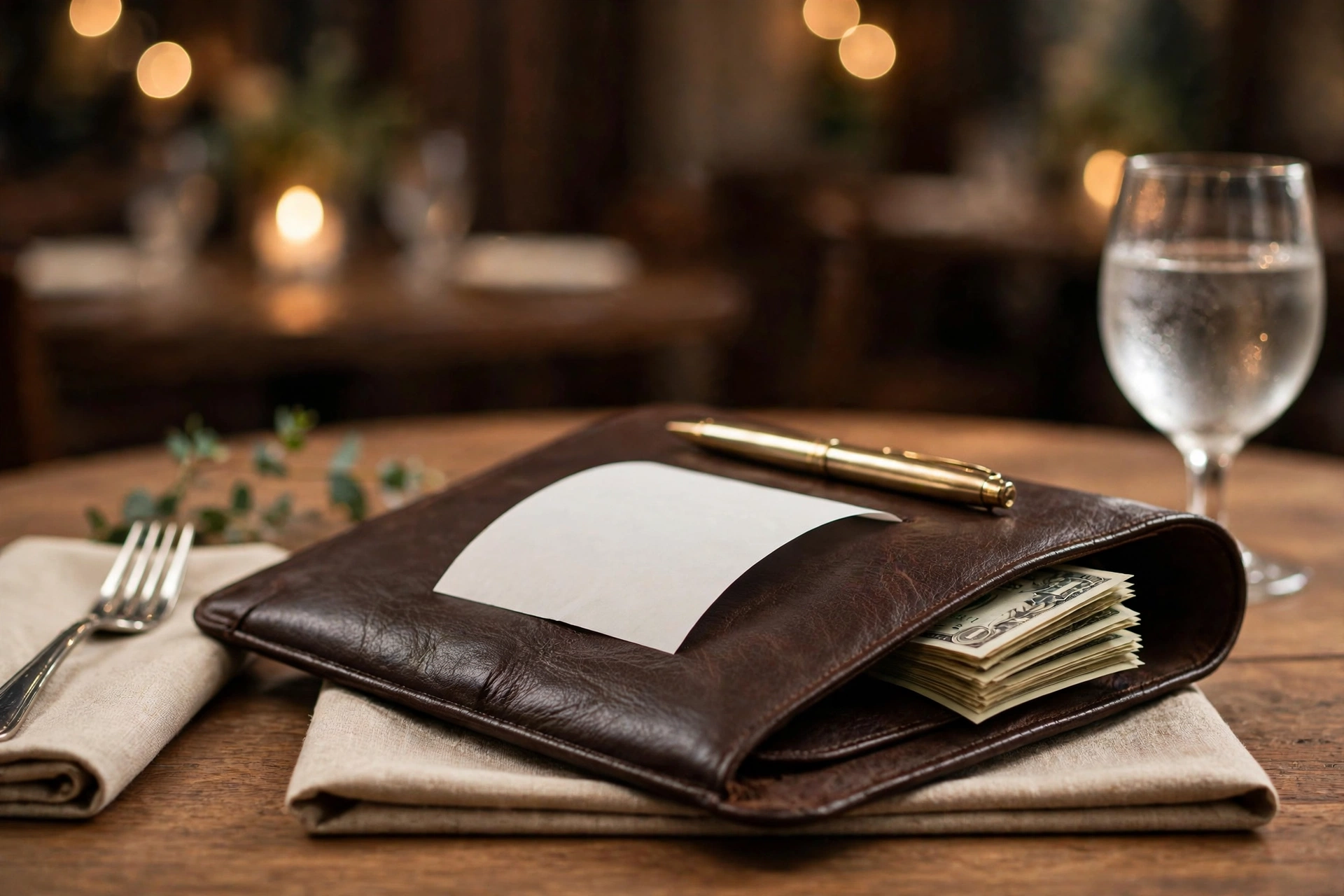
The widely accepted range is 15–20% of the pre-tax bill. Within that range:
- 15% — Standard, competent service. Your food arrived, drinks were refilled, nothing went wrong.
- 18% — Good service. Attentive server, handled a large table well, accommodated a request.
- 20% or more — Excellent service, a complicated order executed flawlessly, or the server clearly went out of their way.
Tip on the pre-tax total, not the post-tax total. Most POS systems calculate suggested tips on the post-tax amount, so the percentages you tap may be slightly higher than you intend — worth knowing, though few people recalculate by hand.
How to Handle the Bill Math
A quick trick: move the decimal point on the bill one place left for 10%, double it for 20%, and adjust from there. An $86.40 bill gives you 8.64 → double to roughly $17 for 20%. Round up to $18 or $19 if the service was good. No app required.
What About Bar Seating at a Restaurant?
If you eat a full meal at the restaurant’s bar, tip as you would at a table: 15–20%. The bartender served as your waiter. If you only had drinks at the bar, follow the bar tipping rules in the bar section below.
Bars: How Much to Tip a Bartender
Tipping at bars works a little differently than at tables.
- $1–$2 per drink is the classic rule for beer, wine, or simple cocktails. For a standard pour, $1 per drink remains common in most of the US.
- $2–$3 per cocktail for craft cocktails that take real effort — multiple ingredients, muddling, house-made syrups.
- 18–20% of the tab if you’re running a bar tab instead of paying per drink. This tends to come out to a little more than the per-drink rule on expensive drinks.
Cash still talks at bars. Tipping in cash on the first round often gets your next drink noticed faster — and bartenders genuinely appreciate it because card tips can take days to process.
Coffee Shops: Tip Jars and Tip Screens
Counter-service coffee shops are one of the newest gray zones. The old-school tip jar rules were simple: a dollar in the jar, or spare change. Digital tip screens changed that.
The practical etiquette:
- Drip coffee or tea, quick pour: 10–15%, or just skip. You’re paying for a two-minute transaction.
- Latte, cappuccino, or custom drink with real craft: $1–$2 per drink is a solid, appreciated amount.
- Complicated orders or long waits handled well: lean toward the higher end.
Nobody expects 20% on a $5 black coffee, and no decent barista expects you to feel guilty about tapping “custom” or $0. If you’re a regular, tipping consistently (even small amounts) gets you recognized in the best way.
Fast Food and Counter Service: Do You Tip at Fast Food?
Short answer: no, tipping is not expected at fast-food restaurants — even when the screen suggests it.
When you order at a counter, the food is handed to you, and there’s no table service, no tip is part of the traditional social contract. The tip screen is often a default POS feature, not a request from the workers. You can tap $0 without guilt.
Exceptions where a small tip makes sense:
- The order is genuinely complex or customized and the crew nailed it.
- You’ve had a notably friendly, fast experience and want to reward it.
- It’s a local spot you love and want to support.
A dollar or two is plenty in these cases. But know that skipping is the norm, not the exception.
Food Trucks: Where to Land
Food trucks sit between fast food and restaurants. You order at a window, but the food is often chef-driven, made to order, and cooked by a small crew.
- 10–15% is a good standard for food truck tipping.
- $1–$2 flat works for simple items like a taco or a coffee.
- Consider tipping more during extreme weather or long waits — small operations remember regulars.
Many food trucks add tip screens with high default percentages. Adjust them to what feels right; the crew will not be offended.
Takeout: Tipping Takeout Etiquette
Pickup takeout tipping is one of the most confusing areas. Here’s the breakdown:
- Standard pickup order: 10% or a few dollars. Someone packed your order, checked it, and timed it right — that’s real work.
- Large or complicated pickup orders: 15% is fair. Packing a 12-person family order with sauces, utensils, and special requests takes significant effort.
- Pizza pickup or counter grab-and-go: $1–$3 flat is plenty.
The common mistake is treating takeout like full table service (20%) or treating it like nothing ($0). The middle ground is the honest answer: tip something, but not the full dining rate.
Delivery: How Much to Tip the Driver
Food delivery has the clearest math and the highest stakes — drivers rely on tips as core income, not a bonus.
- 15–20% of the bill, with a $3–$5 minimum regardless of order size. A 20% tip on an $8 order is $1.60, which doesn’t cover a driver’s time and gas. Minimums fix that.
- Add more for bad weather, long distances, late nights, or large orders.
- Tip in the app before delivery when possible. Drivers can see tip amounts and may prioritize or decline orders based on them — pre-tipping isn’t just polite, it’s practical.
Delivery fees charged by the app are not tips. They go to the platform. Your tip is a separate line, and the driver only gets what’s marked as the tip.
Large Parties and Automatic Gratuity
Most restaurants add an automatic gratuity (typically 18–20%) for parties of 6 or 8+ — the threshold is usually printed on the menu. A few things to know:
- Check whether it’s already on the bill before adding your own tip. Double-tipping is a common mistake.
- If the gratuity is listed as a “service charge,” it legally belongs to the restaurant, not necessarily the server — but in practice it’s distributed to staff. The Department of Labor’s fact sheet on tipped employees under the FLSA explains how tipped wages and service charges work. You can still add extra if service was exceptional.
- For genuinely bad service on a large-party bill, ask to speak to a manager about adjusting the auto-gratuity rather than just removing it silently.
Splitting the bill? Tip on your portion’s pre-tax amount. If one person covers the tip, make sure it actually covers the full party — under-tipping because “everyone else will add something” is how servers get shorted.
When You Can Skip Tipping (Without Guilt)
Tipping culture has expanded, but plenty of situations still don’t call for it:
- Fast-food counters and drive-throughs — not expected.
- Self-checkout kiosks — you did the work yourself.
- Quick-service pickup windows where you do everything (grab, bag, go).
- Retail stores, grocery self-checkout, convenience stores — the tip screens here are genuinely out of place; skip freely.
- Takeout from a place where you never interact with staff (vending-style pickup lockers).
- When a tip screen appears before any service is rendered and none will be — you’re allowed to say no.
The key insight: a tip is a thank-you for service. If there’s no meaningful service, there’s no obligation.
Tip Screens and Tablets: How to Handle Them Without Awkwardness
Tablet tip screens are designed to make you tip more — higher percentages listed first, the “custom” option buried, the cashier watching. A few strategies:
- Decide your rule before you walk in. If you know counter service = $0–$1 in your book, the screen can’t pressure you.
- Look for the “skip,” “custom,” or “$0” button. It’s always there — sometimes on a second screen, sometimes small. It’s not rude to use it.
- Don’t overthink it in front of the worker. Tap your choice and move on. They see hundreds of transactions a day; they don’t judge the way you imagine.
- Remember the defaults aren’t norms. A screen suggesting 25%, 30%, 35% doesn’t mean those are the standard rates. It’s a sales tactic, and you can ignore it.
- Tip in cash when you want to be generous at counter spots. It often goes directly to the workers rather than through a pooled system.
Bad Service: What to Do When It’s Terrible
You are not locked into 20% when service fails. The etiquette for bad service:
- Mildly slow or forgetful: drop to 10–15%. It’s a signal without being punitive.
- Genuinely bad (rude, long unexplained waits, wrong food uncorrected): 5–10% is acceptable — or speak to a manager.
- Before you stiff a server entirely, ask whether the problem was their fault. Kitchen mistakes, short staffing, and slow bartenders aren’t your server’s doing. If the server communicated and tried, tip normally and complain about the kitchen, not the service.
- Never use a zero tip as a protest without saying why. A server who gets 0% with no feedback learns nothing. A calm word to the manager helps everyone.
And the opposite: if something went wrong but the server handled it beautifully — remade the dish, apologized, comped dessert — that’s often worth a bigger tip, not a smaller one. Recovery is the hardest part of service.
The Quick-Reference Tipping Cheat Sheet
| Situation | Standard Tip | Notes |
|---|---|---|
| Sit-down restaurant | 15–20% pre-tax | 20%+ for excellent service |
| Bar (per drink) | $1–$2; $2–$3 for craft cocktails | Or 18–20% on a running tab |
| Coffee shop | $1–$2, or 10–15% | $0 fine for a quick drip coffee |
| Fast food / counter | $0 | $1–$2 optional for great experiences |
| Food truck | 10–15% or $1–$2 flat | More in bad weather or long waits |
| Takeout pickup | 10% or $1–$3 | 15% for large/complex orders |
| Delivery | 15–20%, $3–$5 minimum | More for weather, distance, size |
| Large party (6–8+) | Check for auto-gratuity first | Usually 18–20% already added |
| Buffet | 10–15% | More if servers bring drinks or clear |
| Coat check / valet | $1–$3 per item/car | Hand it over at pickup |
Buffets, Cafeterias, and Other Edge Cases
- Buffets: 10–15%. You’re getting your own food, but servers clear plates and refill drinks. More if they’re attentive.
- Sushi bars with an omakase chef: 20%+ is standard; you’re paying for a performance.
- Catering or private chefs: check the contract for a service charge; if none, 15–20% of the food cost.
FAQ: Restaurant Tipping Etiquette
How much should I tip at a restaurant in 2026?
The standard remains 15–20% of the pre-tax bill for full table service. Tip 15% for competent service, 18% for good service, and 20% or more for excellent service. Nothing about the standard has fundamentally changed — only the tip screens have gotten pushier.
Do you tip at fast food restaurants?
No — tipping is not expected at fast-food restaurants, even when the checkout screen suggests it. You’re not receiving table service, so there’s no traditional obligation. A dollar or two for exceptional friendliness is a nice gesture, but $0 is the norm.
How much should I tip a bartender?
Tip $1–$2 per beer, wine, or simple mixed drink, and $2–$3 per craft cocktail. If you’re running a tab, 18–20% of the total works out about the same. Cash tips on the first round are always appreciated.
What is the etiquette for tipping on takeout?
For pickup takeout, 10% or a few dollars is the standard — someone packed and timed your order. Go up to 15% for large or complicated orders. Don’t tip full dining rates (20%) on takeout, but don’t default to zero either.
Do delivery fees count as the tip?
No. Delivery fees go to the delivery platform, not your driver. Your tip is a separate line, and it’s the driver’s actual income for the run. Tip 15–20% with a $3–$5 minimum, and tip in the app before delivery since drivers can see the amount.
Should I tip on the pre-tax or post-tax total?
Tip on the pre-tax total. Many POS systems calculate suggested tips on the post-tax amount, which quietly inflates what you pay. The difference is small on most bills, but knowing the convention keeps you in control.
When can I skip tipping without being rude?
Skip freely at fast-food counters, self-checkout, drive-throughs, and anywhere you received no real service. Tip screens at retail stores or before any service happens carry no obligation. A tip is a thank-you for service — no service, no tip.
What should I do if the service was truly terrible?
Drop the tip to 5–10% or speak with a manager. Before going low, check whether the problem was actually your server’s fault — kitchen errors and short staffing aren’t theirs. If they handled a bad situation well, consider tipping more, not less. A zero tip with no explanation teaches nobody anything.