On October 3, 1863, in the middle of the bloodiest war in American history, President Abraham Lincoln did something no president had done in nearly fifty years: he proclaimed a national day of thanksgiving. The abraham lincoln thanksgiving proclamation of 1863 is the founding document of the modern American holiday — the moment Thanksgiving stopped being a patchwork of regional observances and became a fixed, national institution. Written by Secretary of State William H. Seward, issued just months after the carnage of Gettysburg, and shaped by a seventeen-year campaign from magazine editor Sarah Josepha Hale, the proclamation set the last Thursday of November as America’s day of thanks and framed gratitude itself as an act of national healing. Here is the full story: the war, the woman, the words, and what happened on that first national Thanksgiving.
America in 1863: A Nation at War With Itself
To understand why Lincoln’s proclamation mattered, you have to understand what America looked like in the autumn of 1863. The Civil War had been raging for two and a half years. In July, the Battle of Gettysburg had left some 50,000 soldiers dead, wounded, or missing in three days — the bloodiest battle ever fought on American soil. A few days later, Union forces captured Vicksburg, Mississippi, splitting the Confederacy in two. These were turning points, but they were not endings: the war would grind on for another year and a half, and by its close more than 600,000 Americans would be dead.
The country was exhausted, grieving, and bitterly divided. Families had sons on both sides. Cities had buried their young men in waves. And yet, amid the wreckage, Lincoln saw something worth giving thanks for: the Union still held, the economy still functioned, the harvest had still come in. The proclamation’s genius was its insistence that gratitude was not naive in wartime — it was necessary. A nation that could still count its blessings, Lincoln and Seward argued, was a nation that could still imagine its future.
The Thanksgiving Gap: 1815–1863
Thanksgiving had a strange, stop-start history before Lincoln. George Washington proclaimed the first national day of thanksgiving in 1789, and John Adams and James Madison issued their own proclamations during their presidencies. But Thomas Jefferson, the third president, refused — he believed that presidential calls to prayer and thanksgiving violated the separation of church and state — and after James Madison’s proclamations in the War of 1812 era, no president issued another national Thanksgiving proclamation until Lincoln. For nearly fifty years, Thanksgiving survived only as a regional custom: governors declared it state by state, on different dates, and the South largely ignored it. By 1863, the holiday was a New England tradition with national ambitions and no national authority.
The Road to October 3: Hale’s Letter and Seward’s Pen
The immediate trigger for the proclamation was a letter that arrived at the White House in late September 1863. On September 28, Sarah Josepha Hale — then seventy-four years old and still editing Godey’s Lady’s Book — wrote to President Lincoln. She had been writing to presidents about Thanksgiving since 1846: Zachary Taylor, Millard Fillmore, Franklin Pierce, and James Buchanan had all received her appeals and ignored them. Lincoln was her fifth, and she framed her case with strategic brilliance: in a nation torn by civil war, she wrote, a national day of Thanksgiving could be a “National and fixed Union Festival” — a shared ritual of gratitude that might help bind the country’s wounds.
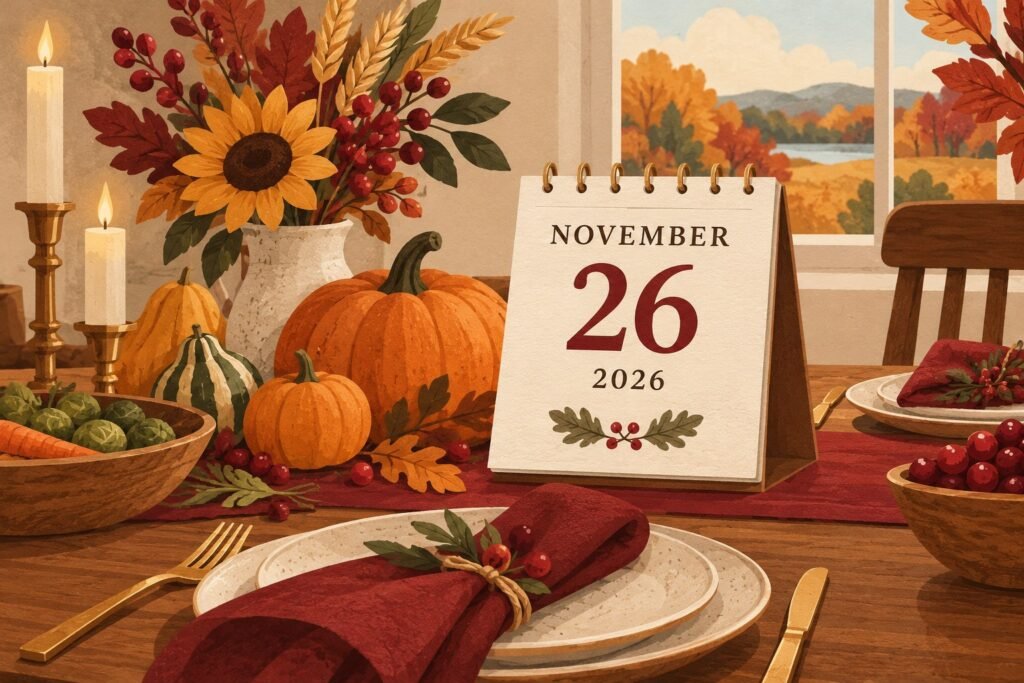
Lincoln was receptive. Within days, he handed the task of drafting the proclamation to his Secretary of State, William H. Seward. This is a detail worth savoring: the words most Americans associate with Lincoln were actually written by Seward, one of the great prose stylists of nineteenth-century American politics. Seward composed the proclamation in late September, and Lincoln issued it on October 3, 1863, designating Thursday, November 26, 1863, as the first national Thanksgiving — “the last Thursday of November next,” with the expectation that it would be observed annually thereafter.
Why Lincoln Said Yes
Historians debate how much Hale’s letter tipped the scales versus Lincoln’s own instincts. The evidence suggests both mattered. Lincoln had already used days of thanksgiving strategically: he had proclaimed days of thanks after Union victories earlier in the war, and he understood the morale value of shared ritual. But Hale gave him the framework — not a victory celebration, but an annual, fixed, national holiday rooted in gratitude rather than triumph. Coming in the wake of Gettysburg and Vicksburg, the timing was perfect: the Union finally had genuine good news, and Lincoln had a vehicle for turning military momentum into national spirit. Hale’s letter is preserved in the Library of Congress, and the speed of Lincoln’s response — days, not months — suggests a president who had been waiting for the right argument.
What the Proclamation Actually Says
The 1863 proclamation is a remarkable document — and because it was issued by the United States government in 1863, it belongs to the public domain, free for anyone to read and quote. Seward’s prose is formal and biblical, but its structure is worth understanding because it reveals exactly what Lincoln wanted Thanksgiving to mean.
The proclamation opens with an accounting of blessings: despite a civil war of “unequaled magnitude and severity,” the nation has been preserved, peace maintained with foreign powers, order kept, laws obeyed, and the harvests blessed. It then pivots to the war’s cost, urging Americans to remember “those who have become widows, orphans, mourners or sufferers in the lamentable civil strife in which we are unavoidably engaged.” Finally, it calls on citizens “in every part of the United States, and also those who are at sea and those who are sojourning in foreign lands” to observe the last Thursday of November as a day of thanksgiving — and to pray for the healing of the nation’s wounds and the restoration of peace, harmony, and Union.
Three Themes That Defined the Holiday
First, gratitude amid suffering. The proclamation insists that thanksgiving is most meaningful not when times are easy but when they are hard — a theme that has echoed through every wartime, Depression-era, and pandemic Thanksgiving since. Second, national unity. The call extends to “every part of the United States” and even to Americans abroad: one people, one day, one act of thanks. Third, moral humility. The proclamation asks Americans to approach the day “with humble penitence for our national perverseness and disobedience” — gratitude paired with self-examination, not self-congratulation. These three themes became the holiday’s permanent moral architecture.
The First National Thanksgiving: November 26, 1863
Just seven weeks after the proclamation, Americans observed the first national Thanksgiving on Thursday, November 26, 1863. It was a wartime holiday, and it showed. In the North, churches held special services, families gathered where the war allowed, and soldiers in Union camps marked the day with whatever feast could be assembled. President Lincoln himself spent the day quietly; the war consumed his attention, and there are no grand accounts of a White House celebration.
One of the most striking responses came from Philadelphia, where Rabbi David Einhorn of Congregation Keneseth Israel delivered a sermon on the new holiday, drawing on the story of Jacob and Esau — two brothers at war — to make the case for observing Lincoln’s proclamation. It was a powerful early sign that Thanksgiving could transcend its Protestant New England roots and become genuinely national: a holiday for all Americans, of all faiths, united in gratitude.
How the South Received It
The Confederacy, unsurprisingly, did not observe Lincoln’s Thanksgiving. The holiday was proclaimed by a Union president in the middle of a war, and Southern newspapers treated it as a Yankee imposition. But Hale had anticipated this: her Godey’s readership included thousands of Southern women who had been cooking her Thanksgiving menus for years, and after the war, the holiday spread southward with remarkable speed. By the 1870s and 1880s, Thanksgiving was genuinely national — celebrated in former Confederate states alongside Northern ones, a quiet testament to Hale’s belief that a shared ritual could help heal a divided country.
If you want the deeper story of the woman behind the proclamation, read our full account of Sarah Josepha Hale and her seventeen-year Thanksgiving campaign, and for the holiday’s earliest roots, see the true story of the first Thanksgiving.
From Proclamation to Permanent Holiday
Lincoln’s 1863 proclamation did not, strictly speaking, make Thanksgiving a permanent federal holiday — it was a presidential proclamation, and each subsequent president issued his own annual proclamation continuing the tradition. But in practice, 1863 was the point of no return. Every president from Lincoln onward proclaimed Thanksgiving on the last Thursday of November, and the holiday quickly became one of the most reliably observed dates on the American calendar.
The only serious disruption came in 1939–1941, when Franklin D. Roosevelt moved the date to the second-to-last Thursday to extend the Christmas shopping season, briefly giving America two competing Thanksgivings. Congress ended the chaos with the joint resolution of December 26, 1941, fixing Thanksgiving as the fourth Thursday of November — the date we still observe. But the holiday’s identity — a national day of gratitude in late November — was set in stone by Lincoln and Seward in 1863 and has never fundamentally changed.
The Proclamation’s Afterlife
Every president since Lincoln has issued an annual Thanksgiving proclamation, and most echo the themes of the 1863 original: gratitude for blessings, remembrance of those who suffer, and prayer for national unity. The document is regularly read aloud at Thanksgiving ceremonies, quoted in editorials, and taught in schools. It remains one of the most beautiful pieces of official prose in American history — all the more remarkable for having been written in the middle of a war, by a Secretary of State better known for buying Alaska than for poetry.
Reading the Proclamation Today
What strikes a modern reader about the 1863 proclamation is its balance. It is a wartime document that refuses to be only about war; a religious document that is inclusive enough for a rabbi in Philadelphia to preach on it with enthusiasm; a political document that reaches for something beyond politics. Seward’s language — “the ever-watchful providence of Almighty God,” “the gracious gifts of the Most High” — belongs to the nineteenth century, but the impulse is timeless: to pause, in the middle of difficulty, and name what is good.
It is also worth reading with clear eyes about what it does not say. The proclamation says nothing about the Pilgrims, nothing about Native Americans, nothing about 1621. In 1863, Thanksgiving was not yet a story about Plymouth — it was a story about the present: a nation trying to hold itself together. The Pilgrim mythology was added later, largely by the same magazine culture that Hale had built. The original meaning was simpler and more urgent: give thanks, remember the suffering, and pray for healing.
In Pictures: Lincoln's Thanksgiving Proclamation
In the middle of the Civil War, Abraham Lincoln did something no president had done — he made Thanksgiving a fixed national holiday. Here's the document that changed the calendar.
A facsimile-style view of the 1863 Thanksgiving proclamation text on aged parchment beside a quill and inkwell.
Watch: Lincoln's Thanksgiving Proclamation
A five-minute video on Lincoln and the origin of Thanksgiving as an American holiday — the Civil War context that made the proclamation matter.
At a Glance: Lincoln's Thanksgiving Proclamation
The facts behind the proclamation that created the modern holiday.
| Fact | Detail |
|---|---|
| Date issued | 3 October 1863, in the midst of the Civil War |
| The day chosen | The last Thursday of November — 26 November 1863 for the first national observance |
| The author | Drafted by Secretary of State William H. Seward at Lincoln's direction |
| The occasion | Issued months after Union victories at Gettysburg and Vicksburg; framed as thanks amid 'the midst of a civil war of unequaled magnitude' |
| What it changed | Turned scattered state observances into one unified national holiday, observed yearly ever since |
| The follow-up | In 1941, Congress fixed Thanksgiving as the fourth Thursday of November — Lincoln's 'last Thursday' rule in permanent form |
Frequently Asked Questions
When did Lincoln issue the Thanksgiving proclamation?
President Abraham Lincoln issued the proclamation on October 3, 1863, designating Thursday, November 26, 1863, as a national day of Thanksgiving and Praise, to be observed annually on the last Thursday of November.
Who actually wrote the 1863 Thanksgiving proclamation?
The proclamation was drafted by Secretary of State William H. Seward and issued under Lincoln’s name — a common practice for official proclamations. Seward’s authorship is well documented by historians.
Why did Lincoln proclaim Thanksgiving during the Civil War?
Lincoln acted on the urging of magazine editor Sarah Josepha Hale, who had campaigned for seventeen years for a national Thanksgiving as a “Union festival” that could help heal the nation’s divisions. Coming after Union victories at Gettysburg and Vicksburg, the proclamation framed gratitude as an act of national unity.
Was 1863 the first national Thanksgiving?
It was the first annual, fixed national Thanksgiving. George Washington, John Adams, and James Madison had all proclaimed one-off national days of thanksgiving, but no president had done so between the War of 1812 era and 1863, and none had established a recurring date.
Did the Confederacy observe Lincoln’s Thanksgiving?
No. The Confederate states did not observe a Thanksgiving proclaimed by the Union president during wartime. The holiday spread to the South after the war, aided by the national magazine culture that had promoted it for decades.
Is the original proclamation still legally in force?
The 1863 proclamation established the custom, but the current legal basis for Thanksgiving as a federal holiday is the 1941 joint resolution of Congress (signed December 26, 1941), which fixed the date as the fourth Thursday of November.
Conclusion
The Abraham Lincoln Thanksgiving Proclamation of 1863 is more than a historical curiosity — it is the founding charter of America’s most beloved holiday. Written by Seward, inspired by Hale, and issued in the crucible of civil war, it defined Thanksgiving as an act of collective gratitude and national healing. Every turkey carved on the fourth Thursday of November is, in a real sense, a continuation of that October day in 1863 when a war-torn nation was asked to give thanks. The proclamation worked: the nation did heal, the holiday did endure, and the wounds it prayed over did, in time, begin to close.
Keep reading: the woman behind the proclamation, 50 Thanksgiving facts and trivia, why it’s always on a Thursday, and more Thanksgiving history.
The Text and Its Echoes: A Closer Reading
The 1863 proclamation rewards careful reading. Seward organized it as a classical argument: first the evidence of blessings, then the acknowledgment of suffering, then the call to action. The opening catalogs what the nation has been spared despite the war — foreign intervention, domestic disorder, economic collapse — and attributes it all to “the ever-watchful providence of Almighty God.” This was not empty piety; in 1863, with the outcome of the war still uncertain, the claim that the Union had been providentially preserved was a political argument dressed as a prayer.
The middle section is the proclamation’s moral core. Seward asks Americans to remember the war’s victims — “widows, orphans, mourners or sufferers in the lamentable civil strife” — and to approach the day “with humble penitence for our national perverseness and disobedience.” The word “perverseness” is striking: the proclamation does not pretend the war was someone else’s fault. It frames the entire nation, North and South, as fallen and in need of grace. For a wartime document, this humility is extraordinary — and it explains why the proclamation could later be embraced by a reunited country rather than resented as a victor’s boast.
The Closing Call
The proclamation’s final movement is its most famous: the invitation to “my fellow citizens in every part of the United States, and also those who are at sea and those who are sojourning in foreign lands” to observe the day, and the prayer that God would “heal the wounds of the nation and restore it… to the full enjoyment of peace, harmony, tranquility, and Union.” The phrase “heal the wounds of the nation” would echo through Lincoln’s own Second Inaugural Address eighteen months later (“bind up the nation’s wounds”) — suggesting that the Thanksgiving proclamation was an early draft of the reconciliation philosophy Lincoln would make immortal.
Thanksgiving Proclamations After Lincoln
Every president from Andrew Johnson onward issued annual Thanksgiving proclamations, and the collection forms a fascinating shadow history of the nation. Ulysses S. Grant’s proclamations wrestled with Reconstruction. Theodore Roosevelt’s celebrated American energy and expansion. Woodrow Wilson’s 1917 and 1918 proclamations gave thanks amid World War I. Franklin D. Roosevelt’s Depression-era proclamations emphasized endurance and recovery, while his wartime ones (1942–1944) echoed Lincoln’s original themes of gratitude amid conflict — including a call for a nationwide reading of the Scriptures between Thanksgiving and Christmas in 1944.
The modern proclamations, issued every November by the sitting president, still follow Seward’s 1863 template: blessings counted, sacrifices remembered, unity invoked. They are among the least partisan documents the White House produces — a direct inheritance from a proclamation written to heal a divided nation. When you hear the annual proclamation read, you’re hearing the great-great-grandchild of the words Seward drafted in the autumn of 1863.
Where to Read the Original
The 1863 proclamation is in the public domain and widely available: the Library of Congress holds Hale’s original letter to Lincoln, and the proclamation text is published in the Collected Works of Abraham Lincoln and on numerous educational sites. Reading it in full takes only a few minutes — and it is worth it. Few American documents pack so much moral ambition into so few pages.
Frequently Asked Questions (Continued)
What did the 1863 Thanksgiving proclamation say?
Drafted by Secretary of State William Seward and issued by Lincoln on October 3, 1863, it called on Americans to observe the last Thursday of November as a day of thanksgiving, counted the nation’s blessings despite the Civil War, remembered the war’s widows and orphans, and prayed for the healing of the nation’s wounds.
Did Lincoln write the Thanksgiving proclamation himself?
The proclamation was drafted by Secretary of State William H. Seward at Lincoln’s direction and issued under Lincoln’s name — standard practice for official proclamations. Historians credit Seward with the prose and Lincoln with the decision and the moral vision behind it.
How did the 1863 proclamation influence later Thanksgivings?
It established the annual, fixed-date national observance that every subsequent president continued. Its themes — gratitude amid hardship, remembrance of suffering, prayer for unity — became the template for all later presidential Thanksgiving proclamations, and its “last Thursday” rule held until Congress fixed the fourth Thursday in 1941.
Why It Still Matters
The 1863 proclamation endures because it answers a question every generation asks: what do you do when there’s nothing to be thankful for? Lincoln and Seward’s answer — give thanks anyway, remember those who suffer, and work toward healing — has carried Americans through world wars, depressions, assassinations, and pandemics. It’s a short document with a long shadow, and it remains the best argument ever written for the holiday itself: gratitude isn’t the reward for good times. It’s the discipline that gets you through the bad ones.