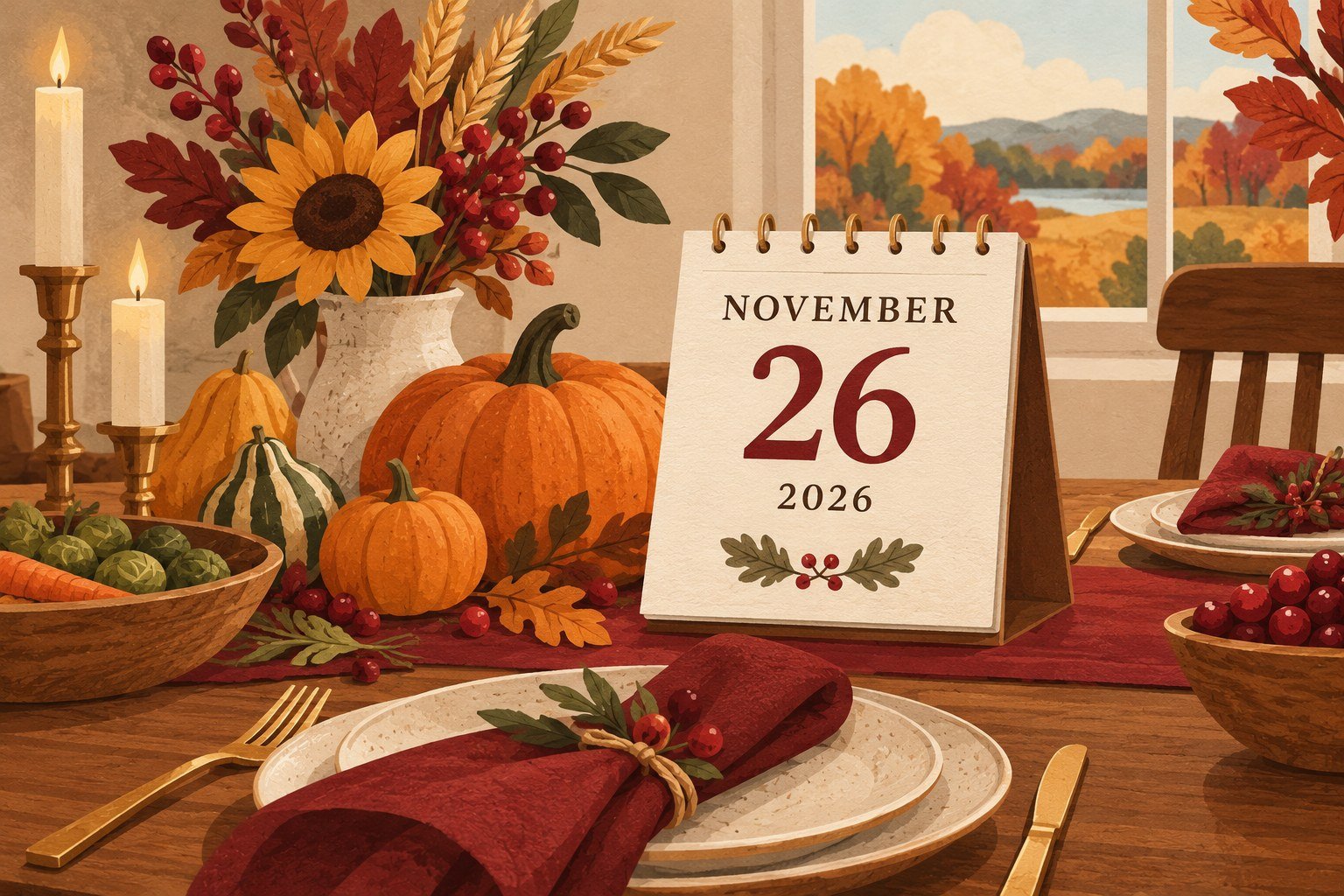
Thanksgiving 2026 is Thursday, November 26, 2026, in the United States. It falls on the fourth Thursday of November. The surrounding long weekend runs from Thursday, November 26, through Sunday, November 29, for people whose work or school schedules allow it.
The date is straightforward; the holiday means different things to different people. Some households gather for a meal, others travel, work, volunteer, or spend a quiet day at home. For many Indigenous people, the familiar national story also calls for reflection on colonization and whose experiences that story leaves out. You can plan a welcoming celebration while making room for that fuller history.
This guide brings together the calendar, historical context and practical decisions for 2026. Use the linked guides when you need a full menu, a cooking method, an activity or a message you can send.
Thanksgiving 2026 at a glance
| Question | Answer |
|---|---|
| US Thanksgiving date | Thursday, November 26, 2026 |
| How the date is chosen | Fourth Thursday in November |
| Federal holiday? | Yes; individual workplaces and services have their own schedules |
| Thanksgiving Eve | Wednesday, November 25 |
| Black Friday | Friday, November 27 |
| Weekend after Thanksgiving | Saturday, November 28, and Sunday, November 29 |
| Cyber Monday | Monday, November 30 |
The date comes from the US Office of Personnel Management's federal holiday calendar. Do not treat the federal designation as confirmation that a restaurant, supermarket, school, airline counter or private employer will close. Check the organization you actually need.
Why Thanksgiving falls on a Thursday
The modern rule is the fourth Thursday of November, rather than a fixed numbered date. That places Thanksgiving between November 22 and November 28. In 2026 the Thursdays are November 5, 12, 19 and 26, making the 26th the fourth.
“The last Thursday” is an easy rule to remember, but it is not always correct. A November with five Thursdays has another Thursday after Thanksgiving. The distinction came from the legislation that settled a national disagreement about the holiday's timing.
According to the National Archives, presidential observances once varied. Lincoln's 1863 proclamation helped establish an annual observance on November's last Thursday. Roosevelt moved the observance earlier in 1939, partly over concerns about the shopping season, and states did not all follow the same date. Congress resolved the confusion in 1941; Roosevelt signed the fourth-Thursday measure on December 26 of that year.
That history explains the current calendar rule. It does not mean a single law created every tradition now associated with Thanksgiving. Meals, family customs, public events and commercial promotions developed through different histories.
Thanksgiving history: separate the stories
The 1621 gathering and its limits
The harvest gathering at Plymouth in 1621 is often used as a simple origin story for today's holiday. Treating it as an uncomplicated friendship feast, or as the moment Native people first began giving thanks, erases substantial history.
The Smithsonian's National Museum of the American Indian explains that Wampanoag thanksgiving and harvest traditions long preceded the English settlers' arrival. The encounter also involved diplomacy and political interests. A brief account of a shared gathering is not evidence of lasting equality or harmony between Indigenous nations and colonists.
It is more accurate to name the Wampanoag than to refer to a single generic group of “Indians.” Native nations have distinct histories and continue to exist today. A holiday lesson should not leave children imagining Indigenous people only as figures in a seventeenth-century scene.
The national holiday developed later
The modern federal holiday is not simply the uninterrupted annual anniversary of one meal. National proclamations, campaigning for a shared observance, the Civil War period and the eventual calendar law belong to a later story.
Keeping those strands separate makes an explanation clearer: a historical gathering happened; later generations built a national story around it; and governments established an annual holiday through their own decisions. The customs in your home are another layer again.
How to discuss the history with children
Begin with a question that leaves room for evidence: “Whose account are we reading?” Choose a book or museum resource that identifies a particular Native nation and includes present-day people. Ask what the source tells you, what it does not tell you and whether a popular illustration is evidence or an artist's later interpretation.
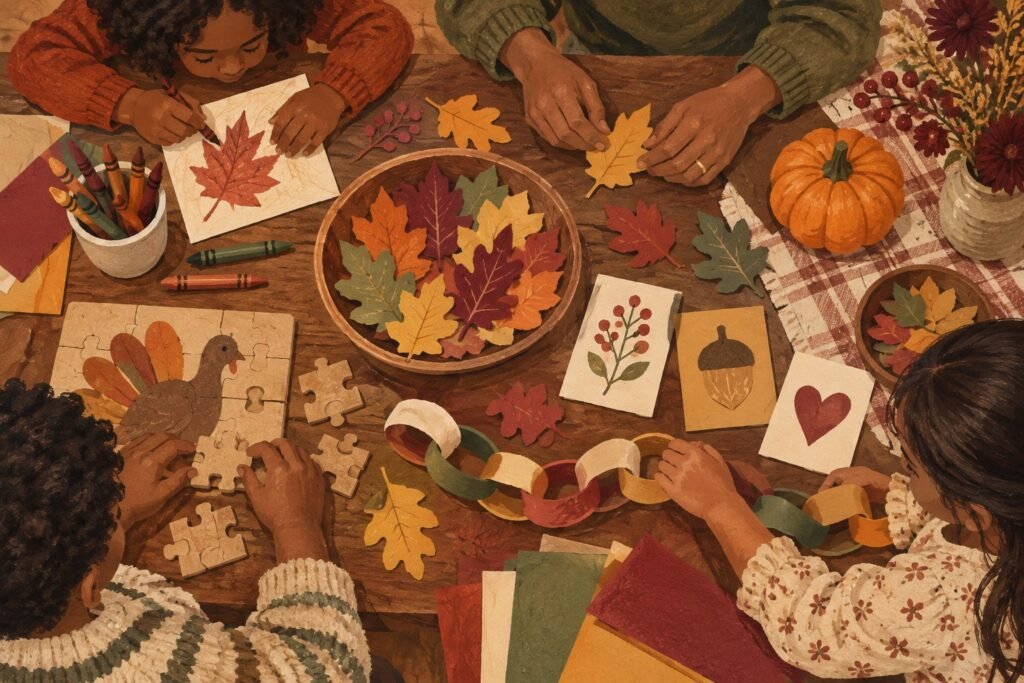
Avoid dressing children in invented “Native” costumes or turning culturally specific clothing into a generic craft. A leaf collage, family recipe interview or local harvest project can fill the creative part of the day without asking children to imitate someone else's identity. The Smithsonian resource above includes age-appropriate reading suggestions.
For an older child, compare a family tradition with a national claim. “We always serve this pie” describes your household. “Everyone has always eaten this pie on Thanksgiving” makes a much larger historical claim and needs evidence. Learning that difference is useful well beyond this holiday.
Why people celebrate Thanksgiving today
For many households, Thanksgiving offers a recurring reason to gather and recognize the people who help them through ordinary life. That might mean a crowded family meal, dinner with friends, a video call across time zones or a few hours of rest after a work shift.
There is no required emotional script. Someone grieving may prefer a brief visit. A person who cannot travel may want a phone call without a group audience. A new guest may enjoy the meal without sharing the host's religious practice. Offering options is usually more welcoming than asking everyone to demonstrate gratitude in the same way.
If you host, tell guests the practical shape of the day: arrival time, meal time, what to bring, whether children are included and any access details they need. A clear invitation can do more for comfort than an elaborate centerpiece.
Thanksgiving traditions you can adapt
Share a meal without making one person do everything
A shared meal works best when responsibilities are named. “Bring anything” often produces three desserts and no vegetables. Assign a complete task instead: a side dish with its serving spoon, drinks plus ice, or cleanup after dinner. Ask whether a dish will arrive hot, chilled or needing the oven.
Keep an alternative main course substantial enough to be a real meal. A vegetarian guest should not have to construct dinner from rolls and garnish. Label dishes and keep ingredient packaging available when guests need to check an allergy concern.
Make gratitude voluntary and specific
An optional note on a card is a useful alternative to going around the table. Specific thanks feels personal: a ride to an appointment, help with a move, a patient explanation or a regular check-in. Let people keep their notes private if they prefer.
If children join in, allow drawing instead of writing. Avoid correcting their answers or requiring them to thank a person they do not feel comfortable naming. The activity should invite attention, not test manners in front of an audience.
Watch, play or walk together
Some households watch a parade or sports, while others prefer games, music or a neighborhood walk. Decide whether television is the main activity or background sound so guests know what to expect. Include a quieter place for someone who needs a break.
A walk can be short and accessible. Choose a route, surface and distance that suit the actual group. A seated photo scavenger hunt or window-based bird count can offer a shared activity when weather or mobility makes an outdoor plan impractical.
Help in a way an organization can use
If you want to volunteer, contact a local organization before arriving. Holiday shifts may be full, and a food bank may need particular products, funds or help on a different day. Follow its current instructions rather than assuming homemade food or an unannounced group visit will be useful.
Community care can also be small and direct: check whether a neighbor wants groceries collected, offer a ride or include someone in a meal without making them explain why they are alone. Ask before taking or posting photographs of recipients.
Traditional Thanksgiving foods—and room for your own
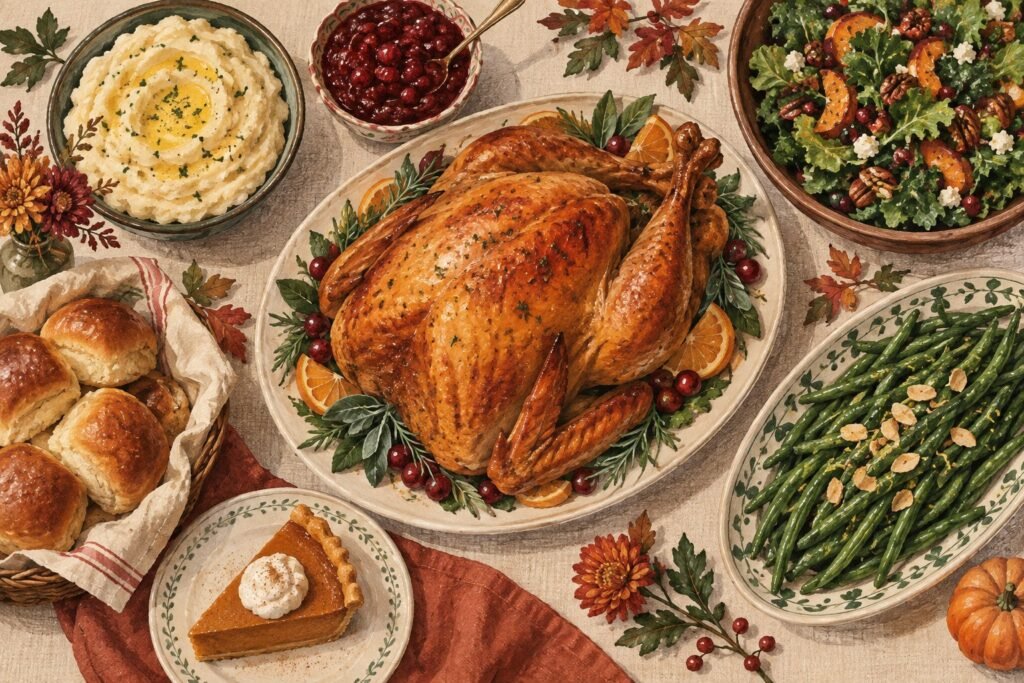
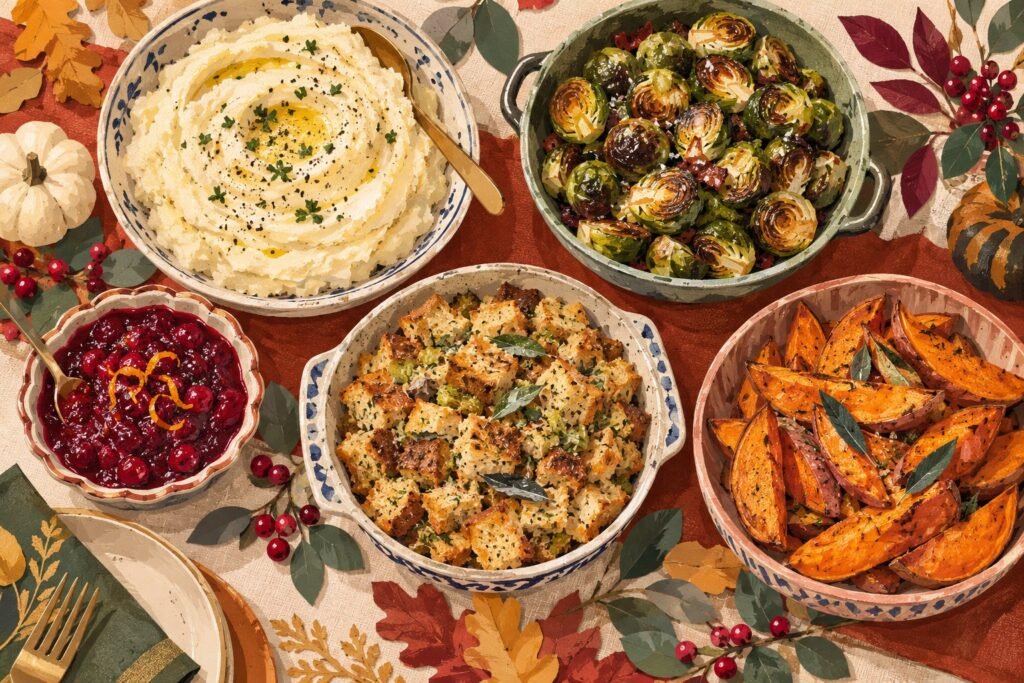
Turkey, dressing or stuffing, potatoes, cranberry sauce, vegetables, rolls and pie are familiar choices on many American tables. They are not a compulsory menu or a reliable reconstruction of a 1621 meal. Regional tastes, migration, religion, budget and family preference all shape what gets served.
Build a meal around contrast rather than the longest possible list: a savory main, a soft starch, a crisp or green element, something tart and a dessert. If your family looks forward to rice, noodles, tamales, seafood or another meaningful dish, there is no need to replace it just to resemble a stock holiday photograph.
Our Thanksgiving recipes collection helps you explore options across courses. The side-dish guide concentrates on vegetables, potatoes, dressing, grains and bread, while the dessert guide gives fuller baking instructions.
Plan dinner around the kitchen you have
Before choosing dishes, count the usable oven shelves, burners, refrigerator space and serving vessels. Two large casseroles may not fit side by side. A turkey pan can block a lower rack. A recipe that is easy by itself may be awkward alongside five other dishes needing the same appliance.
For a first Thanksgiving dinner, a main, three sides, one sauce and one dessert is a workable starting point. Add another dish because someone will enjoy it, not because a checklist suggests that every familiar food must appear.
The Thanksgiving dinner menu planner provides complete combinations for four, eight and twelve or more people, along with a grocery framework and a schedule. Use its plan as a starting point and adjust for your guests' appetites and the leftovers you can safely store.
Do the nonfood tasks early: clear a shelf, locate the thermometer, count chairs, label serving bowls and decide who answers the door while the cook is handling hot pans. Those small decisions protect the final hour from becoming a collection of unrelated emergencies.
The turkey decisions that matter most
Choose the bird and thawing method before Thanksgiving morning. A large frozen turkey needs several days in a refrigerator. Countertop thawing is not a shortcut to build into the plan.
Use a food thermometer rather than skin color or a predicted finishing time. FoodSafety.gov specifies at least 165°F in the thickest breast and innermost thigh and wing. Our turkey cooking guide explains thawing, roasting, brining, smoking, checking temperatures, carving and leftovers with source-based safety guidance.
A turkey breast can be a more manageable choice for a small group. For a larger gathering, think about oven capacity before buying the biggest bird available. Cooked quantity, raw weight and the number of portions are different measurements; leave room in the plan for bone weight and guests who prefer a particular cut.
Macy's Thanksgiving Day Parade in 2026
Macy's is preparing its 100th Thanksgiving Day Parade in New York City. Some 2026 balloons, floats and marching bands are already listed on its official website. Other practical details remain subject to later announcements.
Read the 2026 Macy's parade guide for a dated distinction between confirmed information and details still awaiting verification. Do not book a viewing location on the assumption that an earlier year's route restrictions, broadcast schedule or accessibility arrangements will repeat unchanged.
If watching from home is part of your dinner schedule, confirm the current broadcaster and your local listing before fixing a meal time around it. If attending in person, make the whole outing workable: transport, waiting, warm clothing, bathroom access, a meeting point and a route home.
Thanksgiving travel and the long weekend
Thanksgiving falls late enough in November that weather can affect some routes, but an exact forecast for the holiday is not something to invent weeks ahead. Build flexibility around the trip and check official conditions closer to departure.
Compare the whole journey, not simply the cheapest displayed airfare. A connection, a long drive to a distant airport, baggage charges and a late arrival can outweigh a small fare difference. Someone attending a Thursday meal may value arriving the day before more than an uncertain saving.
Our Thanksgiving travel planner covers flights, road trips, destination tradeoffs and family logistics. It separates planning suggestions from verified forecasts and does not promise a universal cheapest day to fly.
Activities for different ages and energy levels
A successful activity needs a clear start, a manageable duration and permission to stop. Plan one option for before dinner and another for afterward. A whole afternoon of mandatory games can be harder on guests than no organized activity at all.
Keep messy crafts away from food preparation, give adults a way to participate without competing against young children and avoid games that depend on embarrassment or physical ability. If a game requires reading, pair players or offer picture prompts.
The 100 Thanksgiving activities guide includes actual instructions, materials and adaptations. Choose two or three that fit your room and group; you do not need to recreate the entire list.
Wishes and messages that sound personal
A good Thanksgiving greeting names something true about the relationship. It can be short: thank a friend for showing up, recognize a colleague's help or tell a distant relative when you would like to call.
Avoid assuming the recipient is celebrating, surrounded by family or having an easy year. For someone grieving, a gentle acknowledgment and a no-pressure offer of company may be more appropriate than a cheerful group message.
Use the Thanksgiving wishes and messages collection as a starting point. Its original messages are organized by recipient and situation, including hosts, friends, family, coworkers and people having a difficult holiday.
Thanksgiving weekend: a practical four-day outline
| Date | Flexible plan | Check first |
|---|---|---|
| Thursday November 26 | Meal, visit, work shift or quiet observance | Host timing and service hours |
| Friday November 27 | Rest, a local outing or planned shopping | Reservations, opening hours and actual sale terms |
| Saturday November 28 | Longer visit, museum day or return trip | Weather and transport availability |
| Sunday November 29 | Travel home or prepare for the week | Flight status, road conditions and realistic arrival time |
Leave some of the weekend unscheduled. A visitor may need laundry, sleep or time with a different relative. If you are hosting overnight guests, explain breakfast arrangements and departure expectations without waiting until everyone is packing.
Thanksgiving and Black Friday are different events
Thanksgiving is the Thursday holiday. Black Friday is the following Friday, November 27 in 2026, associated with retail promotions. Cyber Monday follows on November 30. A retailer may use those labels for a longer sale period, so the name alone does not establish a start date, stock level or genuine saving.
If shopping is part of your weekend, use DayZora's Black Friday 2026 guide and compare the total cost and return policy. Keep shopping optional for guests who would prefer another activity.
Frequently asked questions
Is Thanksgiving November 26 every year?
No. US Thanksgiving is the fourth Thursday of November. November 26 is the correct date for 2026; do not reuse it for every future year.
Does everyone get Friday off too?
No. The federal Thanksgiving holiday falls on Thursday. Friday schedules depend on employers, schools and other organizations. Confirm before promising someone a four-day break.
Can we celebrate on another day?
Yes. Families and friends often choose a different gathering time to accommodate shifts, travel or shared custody. The official date does not require every private meal to happen on Thursday.
Is a turkey required?
No. A welcoming meal can center on poultry, vegetables, seafood or another dish your group enjoys. Choose a menu that meets your guests' needs and your kitchen's capacity.
What should a first-time guest bring?
Ask for a specific assignment and mention any equipment or heating the dish needs. If food is already covered, offer drinks, a serving task or cleanup. Arrive at the agreed time and respect the host's kitchen space.
How do I explain the holiday without repeating myths?
Separate the calendar rule, the national holiday's development, the evidence about 1621 and your own family's customs. Use Indigenous-authored or museum resources and name specific Native nations rather than presenting them as one historical group.
Where should I start planning?
Confirm who is coming and when, then choose a menu that fits the kitchen. Reserve travel or meals when needed, allow enough thawing time, and select only a few activities. A clear, realistic plan matters more than an elaborate one.