Leftover stuffing recipes turn one of Thanksgiving’s most beloved side dishes into an entire second menu — crispy stuffing waffles with gravy, savory stuffing muffins, golden fried stuffing balls, a strata-style breakfast bake, stuffed mushrooms and peppers, and even stuffing-crusted chicken. Stuffing (or dressing, depending on where you are from) is already a complete flavor package — herbed bread, onion, celery, butter, and broth — which makes it an exceptional ingredient in its own right. This guide collects the best ways to reinvent it, with practical advice on which stuffing styles work best for each recipe, how to handle dry or soggy stuffing, USDA-based storage and food-safety guidance, troubleshooting, and answers to frequently asked questions. Whether your stuffing is classic sage-and-onion, cornbread-based, sausage-studded, or oyster-laced, there is a delicious second act waiting.
Why Stuffing Reinvents So Well
Stuffing is essentially seasoned bread pudding’s savory cousin — a mixture of starch, aromatics, fat, and moisture that crisps beautifully when re-cooked and binds readily into new shapes. That structure is why it performs so many tricks: press it into a waffle iron and the exterior caramelizes into a crunchy lattice while the center stays tender; form it into balls and fry them and you get croquettes; bake it into muffin cups and you get single-serving stuffing cups with maximum crispy surface area. Flavor-wise, stuffing brings its own seasoning, so most of these recipes need little more than an egg or two to bind and a hot oven to transform. Before cooking, verify your stuffing is within its safe window with our guide on how long Thanksgiving leftovers last — 3 to 4 days refrigerated at or below 40°F (4°C) per USDA guidance, and remember that stuffing cooked inside the bird must have reached 165°F (74°C) at its center to have been safe in the first place.
Know Your Stuffing: What Works Where
Classic bread stuffing (cubed white or sourdough bread, sage, onion, celery) is the most versatile — it works in every recipe below. Cornbread stuffing (Southern-style) is crumblier and sweeter; it excels in waffles, muffins, and as a casserole topping, but needs extra egg to bind into balls. Sausage stuffing is rich and already protein-packed — it makes phenomenal fried balls and breakfast bakes with no additions needed. Oyster or seafood stuffing should be used quickly and only in thoroughly cooked applications (waffles, bakes) for safety and best flavor. Wild rice or gluten-free stuffing behaves differently — wilder, looser textures suit bakes and soups better than shaped recipes. Dry stuffing needs moisture: sprinkle with broth and let it absorb 10 minutes before shaping. Soggy stuffing needs drying: spread on a sheet pan and bake at 350°F (175°C) for 10 to 15 minutes, or cook it down in a skillet, before using in waffles or balls where crispness matters.
Recipe 1: Crispy Stuffing Waffles (20 Minutes)
The internet-famous transformation, and deservedly so. For 3 cups (about 450 g) of leftover stuffing, mix in 2 beaten eggs — the egg binds the waffle and adds the protein that makes it hold. Some cooks add ¼ cup (30 g) flour for extra structure with crumbly cornbread stuffing. Preheat your waffle iron until fully hot and grease it well (stuffing sticks more than batter). Pack about ¾ cup of the mixture firmly into the iron, close, and cook 5 to 7 minutes — longer than regular waffles — until deeply golden and crisp. The result: a lacy, crunchy-edged waffle with a savory, herby interior. Serve the classic way: topped with sliced leftover turkey, gravy, and a drizzle of cranberry sauce — the full Thanksgiving plate in waffle form. Or go breakfast: fried egg, sausage, and maple syrup (trust it — sweet-savory stuffing waffles are extraordinary). Troubleshooting: if the waffle falls apart, add another egg and pack the iron more firmly; if it sticks, your iron wasn’t hot enough or needs more grease.
Recipe 2: Savory Stuffing Muffins (30 Minutes)
Single-serving stuffing cups with maximum crispy edges — the best part of the baking dish, in every bite. For 3 cups (450 g) stuffing, mix in 2 beaten eggs and ½ cup (120 ml) chicken or turkey broth (less if your stuffing is already moist). Fold in extras: ½ cup shredded cheddar, diced leftover turkey, sautéed mushrooms, or dried cranberries for sweet-savory contrast. Divide among 12 well-greased muffin cups, pressing firmly. Bake at 375°F (190°C) for 20 to 25 minutes until the tops are deeply browned and the edges pull away from the cups. Cool 5 minutes before unmolding — they firm up as they stand. Serve with gravy for dipping. These are ideal for buffets, lunchboxes, and potlucks: portable, portion-controlled, and endlessly riffable. Variation: press the mixture into a greased mini-muffin tin for two-bite party appetizers (bake 15 minutes).
Recipe 3: Fried Stuffing Balls / Croquettes (25 Minutes)
For 3 cups (450 g) stuffing, mix in 1 beaten egg and ¼ cup (30 g) flour or fine breadcrumbs. If the mixture feels loose, chill 20 minutes. Form into 12 golf-ball-size spheres, pressing a small cube of mozzarella or a teaspoon of cranberry sauce into the center of each for a surprise core. Roll in flour, beaten egg, then panko breadcrumbs for maximum crunch. Deep- or shallow-fry at 350°F (175°C) for 3 to 4 minutes until golden all over; drain on a rack. Serve with gravy, cranberry aioli (mayonnaise + cranberry sauce + lemon), or honey mustard. Baked version: arrange on an oiled sheet pan, spray generously with oil, bake at 425°F (220°C) for 20 to 25 minutes, turning once. These are the appetizer that vanishes first at every gathering — make a double batch.
Recipe 4: Stuffing Breakfast Strata (50 Minutes, Mostly Hands-Off)
The make-ahead brunch hero. Grease a 9×13-inch (23×33 cm) baking dish and fill with 4 cups (600 g) stuffing. Whisk 8 eggs with 2 cups (475 ml) milk, 1 teaspoon salt, ½ teaspoon pepper, and 1 teaspoon dry mustard; pour evenly over the stuffing. Top with 1½ cups shredded cheese (Gruyère, cheddar, or Swiss), diced ham or crumbled cooked sausage, and sliced green onions. Refrigerate overnight (or at least 4 hours) so the custard soaks in. Bake at 350°F (175°C) for 40 to 45 minutes until puffed, golden, and set in the center (a knife inserted comes out clean). Rest 10 minutes before cutting. This feeds a holiday-weekend houseful from one dish, uses an enormous quantity of stuffing at once, and tastes like the world’s best savory bread pudding — because it is.
Recipe 5: Stuffed Mushrooms and Peppers (35 Minutes)
Stuffing is a ready-made filling for vegetables. For mushrooms: remove stems from 24 large cremini or button mushrooms, chop the stems and sauté with a little onion, then mix with 2 cups (300 g) stuffing, 1 beaten egg, ¼ cup parmesan, and herbs. Fill the caps generously, top with breadcrumbs, and bake at 375°F (190°C) for 18 to 20 minutes. For bell peppers: halve 4 peppers lengthwise, fill with a mixture of 3 cups stuffing, 1 cup diced turkey, 1 beaten egg, and ½ cup shredded cheese; bake covered at 375°F (190°C) for 25 minutes, uncovered 10 more. Both are complete, attractive main dishes — the vegetables’ freshness balances the stuffing’s richness.
More Ideas: Soups, Crusts, Casseroles, and Beyond
Turkey and Stuffing Soup (30 Minutes)
Simmer 6 cups (1.4 liters) turkey or chicken broth with diced onion, carrot, celery, and 2 cups diced leftover turkey for 15 minutes. Drop in 6 to 8 small scoops of stuffing (about 2 tablespoons each) and simmer 5 minutes more — they become savory dumplings that thicken the broth. Finish with fresh parsley and black pepper. Comfort in a bowl.
Stuffing-Crusted Chicken or Pork
Pulse 2 cups stuffing in a food processor into coarse crumbs. Use as the breading for chicken cutlets or pork chops: dredge in flour, dip in beaten egg, coat in stuffing crumbs, and pan-fry or bake. The herbs in the stuffing season the crust from within — no additional seasoning needed.
Stuffing-Topped Casserole
Any creamy casserole — turkey tetrazzini, green bean casserole, leftover turkey curry baked with cheese — gets better under a stuffing crumble topping. Toss 2 cups stuffing with 2 tablespoons melted butter, scatter over the casserole, and bake until golden. It is the crispy lid every casserole wishes it had.
Thanksgiving Egg Rolls
Fill egg roll wrappers with stuffing, diced turkey, and a spoonful of cranberry sauce; roll tightly, seal with water, and deep-fry at 350°F (175°C) for 3 to 4 minutes until golden. Serve with gravy for dipping. A playful, crowd-pleasing appetizer.
Stuffing Frittata (20 Minutes)
Spread 2 cups stuffing in an oven-safe skillet, pour over 8 beaten eggs seasoned with salt and pepper, top with cheese, and cook on the stovetop 3 minutes before finishing under the broiler 3 to 4 minutes until set and golden. Slice into wedges for a fast brunch or light dinner.
Deconstructed Thanksgiving Bowl
Layer warm stuffing over mashed potatoes in a bowl, top with sliced turkey, gravy, cranberry sauce, and crispy fried onions. Every component reheated together, eaten as one glorious bowl — the fastest route from fridge to comfort.
What to Serve with Stuffing Leftovers
Transformed stuffing dishes pair best with bright, fresh contrasts that cut through their buttery richness. A simple arugula or mixed-green salad with lemon vinaigrette alongside stuffing waffles or muffins keeps the plate balanced. Roasted vegetables — Brussels sprouts, carrots, or butternut squash — echo the holiday table while adding color and fiber. For sauces beyond gravy, try cranberry sauce for sweet-tart contrast, apple butter for autumnal sweetness, or a sharp mustard for bite. Fried eggs crown any savory stuffing creation for brunch. And for drinks, apple cider (hot or sparkling), a crisp lager, or a dry hard cider all complement the herbal, savory flavors beautifully. Think of each stuffing reinvention as the hearty anchor of the plate, then build freshness around it.
Storage, Reheating, and Food Safety
Stuffing has specific food-safety considerations because of its ingredients and its history inside the bird.
How Long It Keeps
Refrigerate leftover stuffing within 2 hours of serving, in shallow airtight containers at or below 40°F (4°C). It is safe for 3 to 4 days, per USDA guidance. Remove stuffing from the turkey cavity before refrigerating — never store the stuffed bird whole, since the dense center cools too slowly. In the freezer at 0°F (-18°C), stuffing keeps about 1 month at best quality (it dries out beyond that, though it remains safe). For the complete holiday reference, see our guide on how long Thanksgiving leftovers last.
The In-the-Bird Question
Stuffing cooked inside the turkey must reach 165°F (74°C) at its center — measured with a food thermometer in the deepest part — to be safe, because it absorbs raw turkey juices during roasting. If your stuffing never reached that temperature, it was not safe on day one, let alone as leftovers. This is why food-safety experts widely recommend baking stuffing separately in a dish (where it also gets crispier). For leftover purposes, only repurpose stuffing you know was fully cooked.
Reheating Stuffing
Reheat to 165°F (74°C) throughout. In the oven: place in a covered dish with a splash of broth, bake at 350°F (175°C) for 20 to 25 minutes — the broth restores moisture. In the microwave: cover, add a tablespoon of broth, heat in intervals, stirring between. For the transformed recipes in this guide (waffles, muffins, fried balls), the cooking process itself brings everything to safe temperatures — just ensure centers are steaming hot.
Food-Safety Notes for Transformed Dishes
The 3-to-4-day clock runs from when the stuffing was originally cooked, not from when you make waffles or muffins from it. Transform stuffing while it is still fresh (days 1 to 3), and eat the new dish promptly or refrigerate within 2 hours. Egg-bound mixtures must be cooked through — no runny centers in stuffing muffins.
Troubleshooting Common Problems
Waffles or Balls Falling Apart
Not enough binder, or the stuffing was too dry to cohere. Add another beaten egg per 3 cups of stuffing, and for very dry stuffing, sprinkle with broth and rest 10 minutes before mixing. Pack waffle irons firmly and chill ball mixtures before shaping. Cornbread stuffing almost always needs the extra egg plus ¼ cup flour.
Soggy Instead of Crispy
The stuffing started too wet, or the cooking surface wasn’t hot enough. Dry wet stuffing on a sheet pan at 350°F (175°C) for 10 to 15 minutes first. Preheat waffle irons fully, use enough oil, and cook longer than you think — stuffing waffles need 5 to 7 minutes to crisp. For fried balls, the oil must be at 350°F (175°C); cooler oil soaks in instead of searing.
Bland Results
Some stuffings are seasoned subtly for the holiday table. Taste every mixture before cooking and boost as needed: poultry seasoning, sage, thyme, garlic powder, salt, and black pepper. A spoonful of parmesan or a splash of Worcestershire sauce deepens savory notes. Remember that frying and baking mute seasoning — mixtures should taste bold before cooking.
Too Salty
Sausage stuffings and those made with canned broth can overshoot on salt, especially once reduced into concentrated forms like waffles. Balance with unsalted additions: extra egg, plain breadcrumbs, diced apple or pear, or dried cranberries. Serve with unsalted accompaniments like plain sour cream rather than gravy.
Dry Reheated Stuffing
Always reheat with added moisture — a splash of broth per cup of stuffing, covered, in the oven. Stir in a tablespoon of butter after reheating for richness. If it is beyond rescue as a side, repurpose it into one of the recipes above, where new moisture and fat solve the problem structurally.
Nutrition Notes
Per cup (about 150 g) of classic bread stuffing: roughly 350 calories, 7 grams of protein, 45 grams of carbohydrates, 15 grams of fat, and 3 grams of fiber, with sodium often running 700 to 900 mg (bread, broth, and butter all contribute). Sausage stuffing runs higher in fat and calories; cornbread stuffing slightly higher in sugar. The transformed recipes shift the profile: waffles and fried balls add egg and cooking fat; the strata adds significant egg, milk, and cheese protein; stuffed vegetables add fiber and vitamins. Lighter approaches: bake instead of fry, use vegetable broth, load muffins with vegetables, and treat these as the flavorful component of a balanced plate rather than the whole meal. These are estimates, not laboratory values.
Meal-Planning: A Weekend of Stuffing Reinvention
Friday brunch: stuffing waffles with fried eggs and maple syrup. Friday dinner: the deconstructed Thanksgiving bowl — zero extra cooking beyond reheating. Saturday lunch: fried stuffing balls with cranberry aioli as a snacky appetizer spread. Saturday dinner: stuffed peppers with a green salad. Sunday brunch: the overnight strata (assemble Saturday night) for the whole household. By Sunday evening the stuffing is gone — transformed, not trashed — well within its safe window. Coordinate with our leftover mashed potato recipes and turkey fried rice for a full leftover meal plan.
In Pictures: Leftover Stuffing Recipes
Stuffing might be the most versatile leftover of all — press it into a waffle iron and it turns shatteringly crisp, ready for gravy.
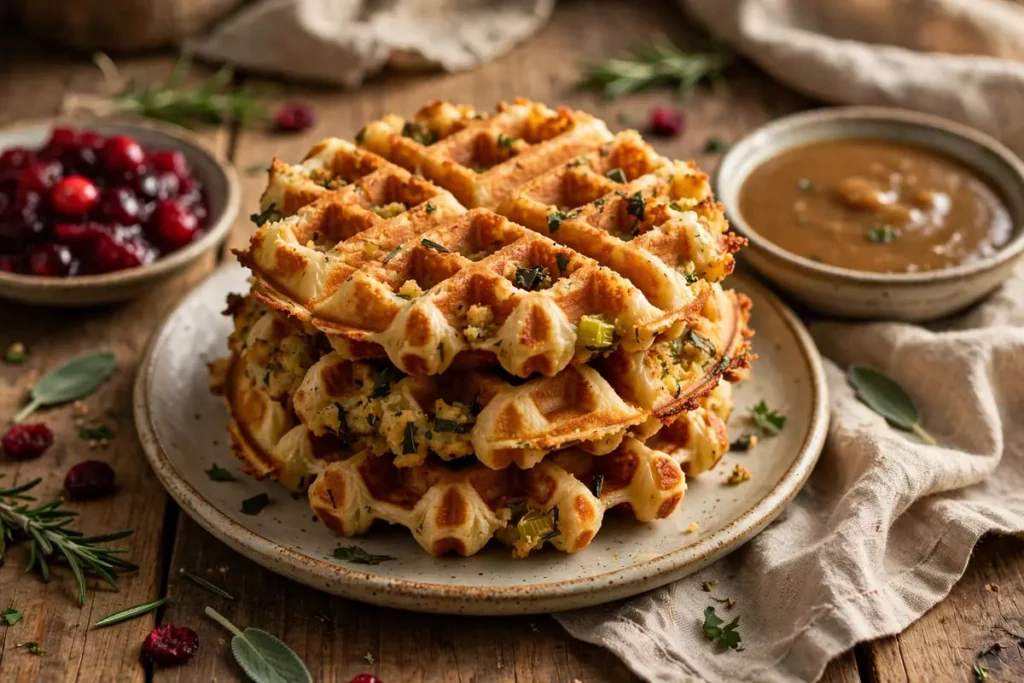
Golden, crispy stuffing waffles served with warm gravy for dipping and cranberry sauce on the side.
Watch: Leftover Stuffing Recipes
A roundup of the smartest ways to reinvent stuffing — including savory stuffed bites served with warm gravy and cranberry sauce for dipping.
At a Glance: Leftover Stuffing Recipes
Fresh ideas that treat stuffing as an ingredient, not a rerun.
| Remake | Method | Tip |
|---|---|---|
| Stuffing waffles | Press stuffing into a hot waffle iron until crisp | Top with a fried egg for a next-day brunch |
| Stuffed shells | Fill jumbo pasta shells with a stuffing-mash blend; bake with gravy | Chicken broth in the dish keeps everything moist |
| Breakfast casserole | Layer stuffing as a crust under whisked eggs, turkey, and cheese | Bake at 350°F until the eggs set, about 45 minutes |
| Stuffing frittata | Crisp stuffing in a skillet, pour over beaten eggs, finish under the broiler | Works with any cooked vegetables folded in |
| Fried stuffing balls | Coat balls of stuffing in breadcrumbs and fry until golden | Serve hot with gravy or cranberry sauce for dipping |
| Safety window | Use within 3 to 4 days refrigerated (USDA guidance); stuffing cooked inside the bird must have reached 165°F originally | |
Frequently Asked Questions
Can I freeze leftover stuffing?
Yes. Cool within 2 hours, pack into airtight containers or freezer bags with air pressed out, and freeze at 0°F (-18°C). Best quality within 1 month — stuffing dries out with longer freezing, though it remains safe. Thaw overnight in the refrigerator and reheat with a splash of broth to 165°F (74°C). Stuffing muffins and waffles also freeze well after cooking.
Is it safe to eat stuffing that was cooked inside the turkey?
Only if it reached 165°F (74°C) at its center during roasting, measured with a food thermometer. The stuffing absorbs raw poultry juices, so undercooked in-bird stuffing is a food-safety risk. When in doubt, bake stuffing separately — it is safer and gets crispier.
Why do my stuffing waffles stick to the iron?
Three causes: the iron wasn’t fully preheated, it wasn’t greased enough, or the waffles were opened too early. Preheat until the indicator says ready (then wait one more minute), brush generously with oil, pack the stuffing firmly, and cook a full 5 to 7 minutes before attempting to open. Nonstick spray before each waffle helps.
Can I make stuffing muffins gluten-free?
Yes, if your stuffing itself is gluten-free (made with gluten-free bread). The eggs and additions are naturally gluten-free; just ensure any flour or breadcrumbs used for binding are certified gluten-free. The method is otherwise identical.
How do I use up a huge amount of stuffing fast?
The strata is the volume champion — one 9×13-inch pan absorbs 4 cups. The breakfast bake scales to sheet pans for crowds. Stuffing muffins (12 per batch, easily doubled) and the soup with stuffing dumplings also move quantity quickly. For truly industrial volumes, freeze portions in 2-cup bags for future soups and bakes.
What is the difference between stuffing and dressing?
Technically, “stuffing” is cooked inside the bird and “dressing” is baked separately — but in practice the terms are regional (stuffing in the North and West, dressing in the South) and most modern recipes are baked separately regardless of name. For these leftover recipes, the distinction does not matter at all.
Conclusion
Leftover stuffing recipes turn the holiday’s most comforting side dish into its most versatile ingredient. Waffles with lacy crisp edges, muffins with maximum crunch, golden fried balls with molten centers, an overnight strata that feeds a houseful, vegetables stuffed and baked until tender — each one a genuine reinvention, not a reheated compromise. The method is simple (bind it, shape it, crisp it), the variations are endless, and the results consistently outshine the original serving. So rescue that container from the back of the fridge while it is still fresh, pick the transformation that fits your mood, and give your stuffing the second act it deserves. For the complete leftover collection, explore our Thanksgiving recipes and start planning next year’s Thanksgiving dinner menu with delicious leftovers as part of the design.