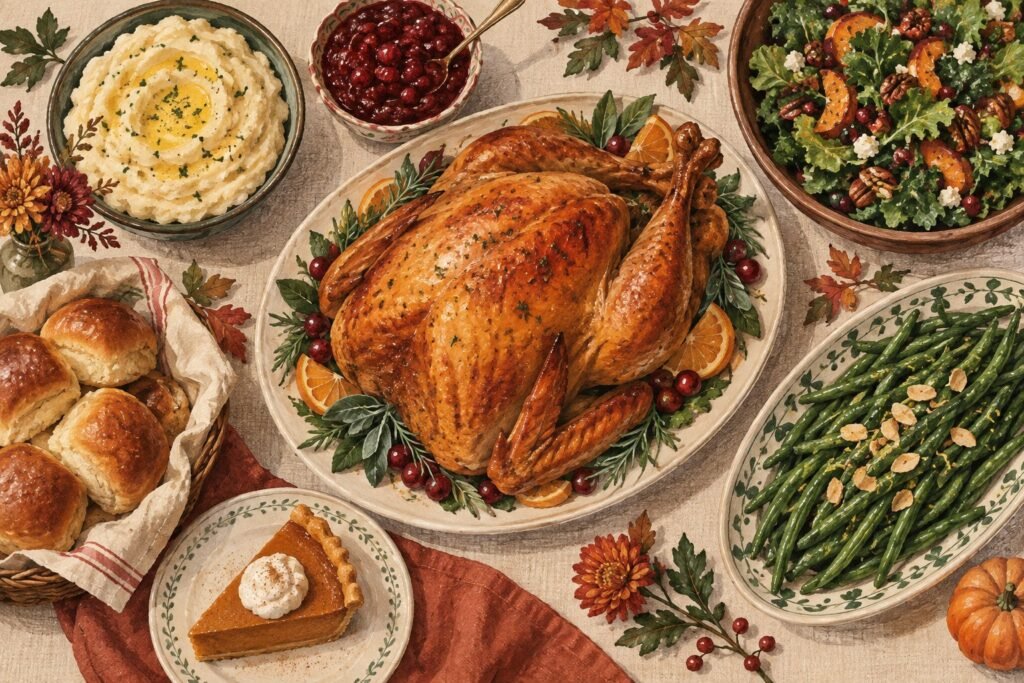
A plant-based Thanksgiving used to mean a plate of side dishes while everyone else ate turkey. Not anymore. A well-planned vegan thanksgiving dinner menu is a feast in its own right – a showstopping centerpiece, rich gravy, creamy mashed potatoes without a drop of dairy, stuffing with real depth, roasted vegetables caramelized to perfection, and pies nobody would guess are vegan. This guide gives you the complete menu for 8-10 guests, with full recipes using US measurements and Fahrenheit temperatures, a make-ahead timeline, and smart swaps for every classic. Whether you are hosting vegan guests, cooking for a mixed table, or planning your first fully plant-based holiday, you will find every course here – appetizer through dessert – designed to satisfy vegans and omnivores alike. Thanksgiving 2026 falls on November 26; let us make it delicious for everyone at the table.
The Complete Vegan Thanksgiving Menu at a Glance
| Course | Dish | Make-Ahead? |
|---|---|---|
| Appetizer | Roasted Butternut Squash Soup with Toasted Pepitas | Yes – 3 days ahead |
| Centerpiece | Whole Roasted Cauliflower with Miso-Tahini Glaze | Partial – glaze 2 days ahead |
| Side | Creamy Garlic Mashed Potatoes (dairy-free) | Yes – reheat day-of |
| Side | Savory Mushroom and Herb Stuffing | Yes – assemble 1 day ahead |
| Side | Maple-Roasted Brussels Sprouts with Cranberries | Best fresh |
| Side | Balsamic Glazed Carrots | Best fresh |
| Condiment | Classic Cranberry-Orange Sauce | Yes – 1 week ahead |
| Condiment | Rich Mushroom Gravy | Yes – 3 days ahead |
| Bread | Rosemary Dinner Rolls | Yes – bake day before |
| Dessert | Vegan Pumpkin Pie with Coconut Whipped Cream | Yes – bake 1 day ahead |
Every recipe below serves 8-10 as part of this menu. For a smaller gathering, our Thanksgiving dinner for two guide shows how to scale a holiday menu down gracefully.
Appetizer: Roasted Butternut Squash Soup with Toasted Pepitas
Starting with soup is a host’s secret weapon: it is made entirely ahead, reheats in one pot, and gives guests something warm while the final dishes finish. Roasting the squash first concentrates its sweetness far beyond what simmering alone achieves.
Ingredients
- 1 large butternut squash (about 3 pounds), halved and seeded
- 2 tablespoons olive oil, plus more for drizzling
- 1 large yellow onion, quartered
- 4 garlic cloves, unpeeled
- 4 cups vegetable broth
- 1 cup full-fat coconut milk
- 1 teaspoon ground cumin
- 1/2 teaspoon ground cinnamon
- 1/4 teaspoon cayenne pepper (optional)
- Salt and freshly ground black pepper to taste
- 1/3 cup raw pepitas (pumpkin seeds), toasted
- 2 tablespoons chopped fresh sage (optional garnish)
Instructions
- Preheat the oven to 400 degrees F. Rub the cut sides of the squash, onion, and garlic with olive oil, season with salt and pepper, and place cut-side down on a parchment-lined baking sheet.
- Roast 40-45 minutes until the squash is completely tender and caramelized at the edges. Squeeze the garlic from its skins.
- Scoop the squash flesh into a large pot. Add the onion, garlic, vegetable broth, cumin, cinnamon, and cayenne. Simmer 10 minutes.
- Blend until silky with an immersion blender (or in batches in a countertop blender). Stir in the coconut milk and warm through – do not boil. Adjust salt and pepper.
- Serve topped with toasted pepitas, a drizzle of olive oil, and sage. Reheats perfectly; thin with a splash of broth if needed.
Make-ahead: refrigerate up to 3 days or freeze up to 2 months. The flavor actually deepens overnight.
Centerpiece: Whole Roasted Cauliflower with Miso-Tahini Glaze
Every Thanksgiving table needs a centerpiece that makes people lean in – and a whole roasted cauliflower, burnished golden and glazed, does exactly that. It is dramatic, carveable into wedges, and deeply savory thanks to the miso-tahini glaze.
Ingredients
- 1 large head cauliflower (about 2 1/2 pounds), leaves removed, stem trimmed flat so it sits level
- 3 tablespoons olive oil
- 1 teaspoon salt
- 1/2 teaspoon freshly ground black pepper
- 1/3 cup tahini
- 2 tablespoons white miso paste
- 2 tablespoons maple syrup
- 1 tablespoon rice vinegar
- 1 teaspoon grated fresh ginger
- 3-4 tablespoons warm water, as needed
- 2 tablespoons chopped fresh parsley and 1 tablespoon sesame seeds, for garnish
Instructions
- Preheat the oven to 400 degrees F. Bring a large pot of salted water to a boil. Parboil the whole cauliflower for 8 minutes – this guarantees a tender interior. Drain well and pat dry.
- Rub the cauliflower all over with olive oil, salt, and pepper. Place in a cast-iron skillet or baking dish.
- Whisk together the tahini, miso, maple syrup, rice vinegar, and ginger, thinning with warm water until brushable.
- Brush half the glaze over the cauliflower. Roast 35 minutes, then brush with the remaining glaze and roast 15-20 minutes more, until deeply golden and a knife slides easily into the core.
- Rest 10 minutes, garnish with parsley and sesame seeds, and carve into wedges at the table.
Tip: for an even more substantial centerpiece, surround the cauliflower with halved Brussels sprouts and carrots tossed in oil – they roast in the same pan and catch the dripping glaze.
Side: Creamy Garlic Mashed Potatoes (Dairy-Free)
The trick to luxurious dairy-free mashed potatoes is twofold: Yukon Gold potatoes (naturally buttery) and warming the plant milk before adding it, so the potatoes stay hot and absorb it fully.
Ingredients
- 4 pounds Yukon Gold potatoes, peeled and quartered
- 6 garlic cloves, peeled
- 1/3 cup olive oil (or vegan butter)
- 1 cup unsweetened plain oat or soy milk, warmed
- 2 teaspoons salt, plus more to taste
- 1/2 teaspoon white pepper
- 2 tablespoons chopped chives, for serving
Instructions
- Place potatoes and garlic in a large pot, cover with cold salted water by 1 inch. Bring to a boil, then simmer 18-20 minutes until very tender.
- Drain well and return to the hot pot for 1 minute to steam off excess moisture.
- Mash with a potato masher (never a food processor – it makes them gluey). Beat in the olive oil, then the warm plant milk gradually until creamy. Season with salt and white pepper.
- Hold in a slow cooker on warm up to 2 hours, or refrigerate and reheat with a splash of plant milk, whisking smooth.
Side: Savory Mushroom and Herb Stuffing
Mushrooms give this stuffing the deep umami that sausage normally provides. Use a hearty bread – sourdough or ciabatta – dried out overnight for the best texture.
Ingredients
- 1 pound sourdough or rustic bread, cut into 3/4-inch cubes (about 10 cups), left out overnight to stale
- 1 pound mixed mushrooms (cremini, shiitake), sliced
- 3 tablespoons olive oil, plus more as needed
- 1 large onion, diced
- 3 celery stalks, diced
- 3 garlic cloves, minced
- 2 1/2 cups vegetable broth
- 2 tablespoons chopped fresh sage
- 1 tablespoon chopped fresh thyme
- 1 tablespoon chopped fresh rosemary
- 1/2 cup chopped fresh parsley
- 1 teaspoon salt, 1/2 teaspoon black pepper
Instructions
- Preheat the oven to 375 degrees F. Oil a 9×13-inch baking dish.
- In a large skillet over medium-high heat, sear the mushrooms in olive oil without crowding (work in batches) until deeply browned, 6-8 minutes per batch. Set aside.
- In the same skillet, soften the onion and celery 8 minutes. Add garlic and cook 1 minute. Stir in sage, thyme, and rosemary.
- In a very large bowl, combine bread cubes, mushrooms, vegetables, and parsley. Pour over the broth, season with salt and pepper, and toss gently – the bread should be moist but not soggy.
- Transfer to the baking dish, cover with foil, and bake 25 minutes. Uncover and bake 15-20 minutes more until the top is crisp and golden.
Make-ahead: assemble through step 4, refrigerate overnight, and bake (adding 10 minutes) on Thanksgiving Day.
Side: Maple-Roasted Brussels Sprouts with Cranberries
High heat is the secret to Brussels sprouts people actually crave: a 425-degree oven turns the outer leaves shatteringly crisp while the centers turn sweet and nutty. The maple glaze and dried cranberries make them taste like the holidays.
Ingredients
- 2 pounds Brussels sprouts, trimmed and halved
- 3 tablespoons olive oil
- 1 teaspoon salt
- 1/2 teaspoon black pepper
- 3 tablespoons pure maple syrup
- 1 tablespoon balsamic vinegar
- 2/3 cup dried cranberries
- 1/2 cup chopped toasted pecans or walnuts
Instructions
- Preheat the oven to 425 degrees F. Line a large rimmed baking sheet with parchment.
- Toss the sprouts with olive oil, salt, and pepper. Arrange cut-side down in a single layer – crowding steams them instead of roasting, so use two pans if needed.
- Roast 20 minutes. Whisk the maple syrup and balsamic together, drizzle over the sprouts, add the cranberries, and toss.
- Roast 8-10 minutes more until deeply caramelized with crisp edges. Shower with toasted pecans and serve immediately.
Side: Balsamic Glazed Carrots
Simple, glossy, and gorgeous on the platter – these carrots prove that a side dish needs only five ingredients when the technique is right.
Ingredients
- 2 pounds carrots, peeled and cut into 3-inch sticks (or whole baby carrots)
- 2 tablespoons olive oil
- 3 tablespoons balsamic vinegar
- 2 tablespoons maple syrup
- 1 teaspoon fresh thyme leaves, plus sprigs for garnish
- 3/4 teaspoon salt
- 1/4 teaspoon black pepper
Instructions
- Preheat the oven to 400 degrees F.
- Toss carrots with olive oil, salt, pepper, and thyme on a rimmed baking sheet.
- Roast 20 minutes, then drizzle with balsamic and maple syrup, toss, and roast 10-12 minutes more until tender and lacquered.
- Transfer to a platter, spoon over any pan glaze, and garnish with thyme sprigs.
Condiment: Classic Cranberry-Orange Sauce
Cranberry sauce is naturally vegan, takes 15 minutes, and keeps for a week – there is no reason to ever open a can. The orange zest lifts it from good to memorable.
Ingredients
- 1 12-ounce bag fresh cranberries, rinsed
- 3/4 cup sugar
- 3/4 cup fresh orange juice
- 1 tablespoon orange zest
- 1 cinnamon stick
- Pinch of salt
Instructions
- Combine everything in a medium saucepan. Bring to a boil over medium-high heat, stirring to dissolve the sugar.
- Reduce to a simmer and cook 10-12 minutes, until most berries have burst and the sauce thickens.
- Remove the cinnamon stick. Cool completely – it thickens as it cools. Refrigerate up to 1 week.
Condiment: Rich Mushroom Gravy
The number one anxiety about a vegan Thanksgiving is the gravy. This one ends the debate: deeply browned mushrooms, caramelized onions, and a touch of soy sauce build the savory depth people expect, and it pours like a dream over mashed potatoes and stuffing.
Ingredients
- 8 ounces cremini mushrooms, finely chopped
- 3 tablespoons olive oil or vegan butter
- 1 small onion, finely diced
- 2 garlic cloves, minced
- 1/4 cup all-purpose flour
- 3 cups vegetable broth
- 2 tablespoons soy sauce or tamari
- 1 teaspoon fresh thyme leaves (or 1/2 teaspoon dried)
- 1/2 teaspoon black pepper
- Salt to taste
Instructions
- In a saucepan over medium-high heat, brown the mushrooms in the oil until deeply golden, 8-10 minutes. Add the onion and cook 5 minutes more; add garlic for the last minute.
- Sprinkle over the flour and stir 2 minutes to cook out the raw taste.
- Slowly whisk in the vegetable broth, then the soy sauce, thyme, and pepper. Simmer 8-10 minutes, whisking, until thick enough to coat a spoon.
- For a silky texture, blend half the gravy and stir it back in. Season with salt. Reheats beautifully – whisk in a splash of broth if it thickens in the fridge.
Make-ahead: refrigerate up to 3 days. It is one less thing to think about on Thursday.
Bread: Rosemary Dinner Rolls
Soft, fragrant rolls for mopping up gravy. This dough is forgiving for beginners – the rosemary and olive oil make it nearly impossible to mess up.
Ingredients
- 1 cup warm water (105-115 degrees F)
- 2 1/4 teaspoons active dry yeast (1 packet)
- 2 tablespoons sugar
- 3 1/2 cups all-purpose flour, plus more as needed
- 1/4 cup olive oil, plus more for the bowl
- 2 teaspoons salt
- 2 tablespoons chopped fresh rosemary
- Flaky sea salt, for topping
Instructions
- Stir the yeast and sugar into the warm water; rest 5-10 minutes until foamy.
- Mix in the flour, olive oil, salt, and rosemary until a shaggy dough forms. Knead 8 minutes until smooth and elastic, adding flour a tablespoon at a time if sticky.
- Place in an oiled bowl, cover, and rise 1 hour until doubled.
- Divide into 12 balls, arrange in a greased 9×13-inch pan, cover, and rise 30-40 minutes.
- Bake at 375 degrees F for 20-22 minutes until golden. Brush tops with olive oil and sprinkle with flaky salt.
Make-ahead: bake Wednesday, cool completely, and store airtight. Warm 10 minutes at 350 degrees F before serving.
Dessert: Vegan Pumpkin Pie with Coconut Whipped Cream
The finale. Canned pumpkin, coconut milk, and cornstarch set into a custard that slices cleanly and tastes like the platonic ideal of pumpkin pie – no one will interrogate the ingredient list. For a dedicated deep-dive, see our vegan pumpkin pie guide.
Ingredients – crust
- 1 1/4 cups all-purpose flour
- 1/2 teaspoon salt
- 1 tablespoon sugar
- 1/2 cup cold vegan butter, cubed
- 3-4 tablespoons ice water
Ingredients – filling
- 1 15-ounce can pumpkin puree (not pumpkin pie filling)
- 3/4 cup full-fat coconut milk
- 3/4 cup brown sugar, packed
- 1/4 cup cornstarch
- 2 teaspoons pumpkin pie spice
- 1 teaspoon vanilla extract
- 1/2 teaspoon salt
Ingredients – coconut whipped cream
- 1 14-ounce can full-fat coconut milk, chilled overnight (do not shake)
- 2 tablespoons powdered sugar
- 1/2 teaspoon vanilla extract
Instructions
- Crust: pulse flour, salt, and sugar; cut in the cold vegan butter to pea-sized bits. Add ice water a tablespoon at a time until the dough holds together. Chill 30 minutes, roll out, fit into a 9-inch pie plate, crimp, and chill again while the oven preheats to 425 degrees F.
- Filling: whisk all filling ingredients until completely smooth. Pour into the chilled crust.
- Bake 15 minutes at 425 degrees F, then reduce to 350 degrees F and bake 40-45 minutes more, until the edges are set and the center still has a slight jiggle.
- Cool completely at room temperature (at least 2 hours), then refrigerate at least 4 hours or overnight – the pie finishes setting as it chills.
- Whipped cream: scoop the solid coconut cream from the chilled can (reserve the liquid for smoothies). Whip with powdered sugar and vanilla 2-3 minutes until fluffy. Serve alongside the pie.
Make-Ahead Timeline: Your Vegan Thanksgiving Week
Half of this menu is made before Thursday. Here is the plan.
Sunday-Tuesday
Shop for everything. Chill the coconut milk can for whipped cream. Make the cranberry sauce (keeps a week). Bake the pie crust dough and freeze it, or bake the whole pie Tuesday – it needs an overnight chill anyway.
Wednesday
Bake the pumpkin pie. Make the mushroom gravy and refrigerate. Make the soup and refrigerate. Bake the dinner rolls. Assemble the stuffing (unbaked) and refrigerate. Make the miso-tahini glaze. Chop all vegetables and store in bags. Your Thursday is now dramatically easier.
Thanksgiving Day
Morning: parboil and roast the cauliflower centerpiece. Midday: bake the stuffing, boil and mash the potatoes. Afternoon: roast Brussels sprouts and carrots, reheat soup, gravy, and rolls. Evening: whip the coconut cream, warm the rolls, carve the cauliflower, and serve. For oven choreography, adapt our Thanksgiving Day cooking schedule – the sequence works identically with a plant-based menu.
Essential Vegan Swaps for Thanksgiving Classics
Cooking a mixed table? These swaps let you veganize almost any traditional recipe without a separate menu.
Butter to vegan butter or olive oil
Use a 1:1 swap in mashed potatoes, roasted vegetables, pie crust, and rolls. For the flakiest crust, keep vegan butter very cold and handle the dough minimally. Olive oil works beautifully in savory dishes where butter is melted anyway.
Milk and cream to plant milks
Unsweetened oat milk is the best all-purpose stand-in (creamy, neutral). Full-fat coconut milk replaces heavy cream in soups, pies, and whipped toppings. Avoid sweetened or vanilla-flavored milks in savory dishes – they will announce themselves.
Eggs in baking
For custards like pumpkin pie, cornstarch does the setting work (see the recipe above). In quick breads and muffins, a flax egg (1 tablespoon ground flaxseed plus 3 tablespoons water, rested 5 minutes) replaces one egg. Commercial egg replacer works for cakes.
Broth, gravy, and hidden animal ingredients
Check labels: many “vegetable” broths are fine, but some contain whey; Worcestershire sauce contains anchovies (use a vegan brand or soy sauce); refined white sugar is sometimes processed with bone char – look for organic or certified vegan sugar if this matters to your guests. Our dairy-free Thanksgiving guide covers label-reading in more depth.
Serving a Mixed Table: Vegans and Omnivores Together
Most vegan Thanksgivings are not all-vegan – they are one menu that happens to welcome everyone. A few hosting notes make it seamless.
Do not announce every dish as vegan
Serve the food; let people enjoy it. Labeling everything “vegan mashed potatoes” invites skepticism before the first bite. A small card noting “everything on the table is plant-based” covers guests with allergies and the curious without making it a talking point.
Make the centerpiece earn its place
Omnivores forgive a lot when the centerpiece looks spectacular. The whole roasted cauliflower, carved at the table like a roast, gives the meal its ceremony. If your crowd includes committed turkey traditionalists, there is no shame in also roasting a small turkey breast on the side – the vegan menu still shines.
Wine and drinks
Most wine is technically not vegan (fining agents can include egg whites or gelatin), though many guests will not mind. If it matters to your crowd, look for wines labeled vegan – they are increasingly common. Our Thanksgiving wine pairing guide covers styles that suit the menu either way.
In Pictures: Vegan Thanksgiving Dinner Menu
A plant-based Thanksgiving can be every bit as abundant — this spread proves it.
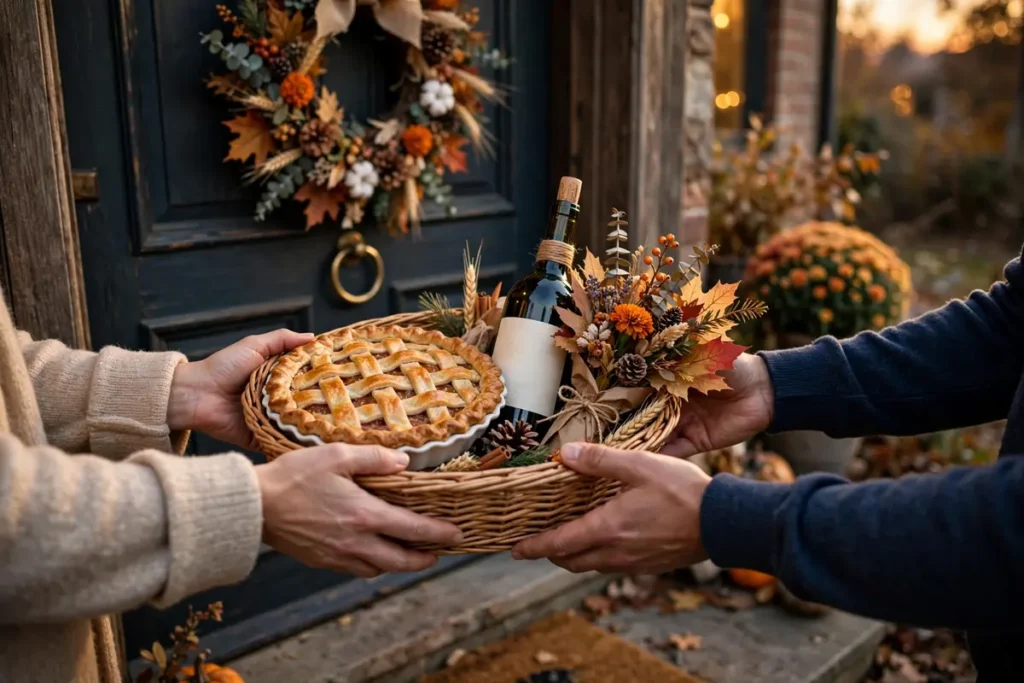
A vibrant vegan Thanksgiving spread: lentil loaf, Brussels sprouts, glazed carrots, mushroom gravy and vegan pumpkin pie.
Watch: Vegan Thanksgiving Dinner Menu
Vegan Richa lays out a simple vegan Thanksgiving menu with make-ahead options to cut day-of stress.
At a Glance: Vegan Thanksgiving Dinner Menu
The building blocks of a complete vegan Thanksgiving menu.
| Course | Vegan pick |
|---|---|
| Main | Lentil loaf, seitan roast or stuffed squash |
| Gravy | Mushroom or miso gravy made with vegetable broth |
| Sides | Roasted vegetables, mashed potatoes with olive oil, green beans |
| Stuffing | Vegetable-broth stuffing with plenty of herbs |
| Dessert | Vegan pumpkin pie or apple crisp with oat topping |
| Protein note | Lentils, beans and nuts keep the menu satisfying |
| Planning | Many dishes can be prepped a day ahead |
Frequently Asked Questions
What is a good vegan main dish for Thanksgiving?
A whole roasted cauliflower with a savory glaze is the most reliable crowd-pleaser: dramatic, carveable, and deeply flavorful. Other strong options include a lentil-mushroom loaf, stuffed acorn squash, or a mushroom Wellington. Whatever you choose, glaze it, roast it until burnished, and carve it at the table – ceremony is half the appeal of a centerpiece.
How do you make vegan gravy taste good?
Build umami in layers: deeply browned mushrooms, caramelized onions, soy sauce or tamari, and a good vegetable broth. A flour-based roux gives it body. The most common failure is under-seasoning – taste and salt confidently. Make it a day ahead; like all gravies, it reheats perfectly and the flavor melds overnight.
Can I make a vegan pumpkin pie without coconut flavor?
Yes. Full-fat coconut milk in pumpkin pie filling does not taste coconutty once baked with pumpkin and spice – the pumpkin dominates completely. If you are still wary, use a neutral soy or oat-based whipping cream alternative, or silken tofu blended smooth as the custard base.
How far ahead can I prep a vegan Thanksgiving menu?
Cranberry sauce: 1 week. Pumpkin pie: bake Wednesday (it needs an overnight chill). Gravy and soup: 3 days. Rolls: bake Wednesday, rewarm Thursday. Stuffing: assemble Wednesday, bake Thursday. Mashed potatoes: make Wednesday, reheat with a splash of plant milk. Only the roasted vegetables and the cauliflower centerpiece truly need Thursday oven time.
What do vegans eat instead of turkey on Thanksgiving?
The modern answer is a deliberate plant-based centerpiece, not a sad substitute: whole roasted cauliflower, stuffed squash, lentil loaf, or mushroom Wellington, surrounded by the same sides everyone loves. Most Thanksgiving sides – cranberry sauce, roasted vegetables, salads, rolls, pies – are vegan or one swap away from it.
Is a vegan Thanksgiving more expensive?
Usually less. The priciest Thanksgiving item is typically the turkey; a cauliflower, mushrooms, lentils, and seasonal vegetables cost a fraction of a large bird. Specialty items (vegan butter, plant milk) add a little, but the overall menu for 8-10 generally comes in well under a traditional turkey-centered feast. Our budget Thanksgiving dinner guide has more cost-saving strategies that apply to any menu.
Conclusion
A vegan thanksgiving dinner menu is not a compromise – it is a complete, generous feast that happens to be plant-based. Roast the cauliflower until it glows, brown the mushrooms until they sing, make the gravy a day early, and bake the pie on Wednesday. On November 26, 2026, serve it all with confidence and watch the omnivores go back for seconds. That is the real test of any Thanksgiving menu, vegan or not – and this one passes it.