Learning how to organize a Thanksgiving potluck is one of the highest-leverage hosting skills you can develop: it lets you gather twenty people around a spectacular holiday table while cooking only a fraction of the food, spending a fraction of the money, and — just as importantly — giving every guest a genuine stake in the celebration. Done well, a potluck Thanksgiving feels more communal and more abundant than any single-cook feast. Done poorly, it produces five desserts, no vegetables, and a host quietly reheating a backup casserole at midnight.
The difference between those two outcomes is organization, not luck. A successful Thanksgiving potluck runs on clear assignments, a shared timeline, honest communication about quantities and food safety, and a host who understands their real job: not cooking everything, but conducting everyone. This playbook covers the entire process from the first invitation to the last leftover container — sign-up systems, dish math, day-of logistics, troubleshooting, and the etiquette that keeps friendships intact.
Whether you are hosting Friendsgiving for the first time, coordinating a big family gathering where no one person should bear the whole load, or organizing an office or community potluck, this guide gives you the complete system. Follow it, and your potluck will feel less like a compromise and more like the point of the holiday.
The Potluck Host’s Real Job Description
First, a mindset shift: as a potluck host, you are the producer, not the entire cast. Your responsibilities are the venue, the centerpiece (traditionally the turkey), the coordination, and the day-of orchestration. Everything else is delegated — deliberately, specifically, and with gratitude. Hosts who try to “just fill in the gaps” end up cooking half the meal anyway; hosts who assign every dish firmly end up carving turkey while guests arrive with hot casseroles.
Your core duties:
- Set the date, time, and headcount early — at least three to four weeks out, so guests can plan their dish.
- Own the turkey and gravy. The bird is the centerpiece and the hardest item to transport; it stays with the host. Gravy too, since it depends on pan drippings. Our guide on how to cook a Thanksgiving turkey will get you through it confidently.
- Assign every dish category — no vague “bring something” invitations, ever.
- Provide the infrastructure: plates, napkins, cutlery, cups, serving utensils, oven space, fridge space, and drinks (or a drinks plan).
- Run the day-of timeline so hot food lands hot and the table comes together at serving time.
- Handle food safety — the unglamorous backbone of the whole event (more below, and in our Thanksgiving food safety tips).
Step 1: Build Your Guest List and Dish Map (4 Weeks Out)
Start with a firm headcount — potluck math depends on it. Then build a dish map: the complete list of everything the meal needs, organized by category, before you assign a single item. For a group of 12–16, a balanced map looks like this:
| Category | Dishes Needed | Notes |
|---|---|---|
| Centerpiece | Turkey + gravy | Host’s job — do not delegate |
| Starches (pick 2–3) | Mashed potatoes, stuffing/dressing, dinner rolls, sweet potato casserole | Assign each to a different guest |
| Vegetables (pick 2–3) | Green bean casserole, roasted Brussels sprouts, glazed carrots, salad | Mix hot and cold dishes |
| Sauces & extras | Cranberry sauce, extra gravy backup | Small but essential — easy assignments |
| Appetizers (1–2) | Thanksgiving charcuterie board, deviled eggs | Keeps early arrivals happy |
| Desserts (2–3) | Pumpkin pie, apple pie or crisp, one wild card | Cap at 3 — desserts multiply uncontrollably |
| Drinks | Wine/beer, non-alcoholic option, coffee/tea | Assign or do BYOB with guidance |
Key principles for the map: cap desserts at three (every potluck trends dessert-heavy; be explicit), ensure at least two dishes can be served at room temperature (salad, cranberry sauce, charcuterie — these buy you oven flexibility), and assign the labor-intensive dishes to your most reliable cooks while giving beginners the easy wins (rolls, cranberry sauce, drinks, a cheese ball).
The number-one rule of potluck organizing: specific assignments beat open invitations every time. “Can you bring the mashed potatoes for 12?” works. “Bring a side!” produces chaos.
Step 2: The Sign-Up System (3 Weeks Out)
You need a single, visible, shared list where guests claim dishes — this prevents duplicates and lets you spot gaps early. Options:
Option A: Shared Spreadsheet (Best for 12+ Guests)
A simple online spreadsheet with columns for dish category, specific dish, guest name, servings, and arrival/transport notes. Pre-fill the categories from your dish map and let guests claim rows. The magic of the spreadsheet is visibility: when someone sees that mashed potatoes are taken, they pick something else. Share the link in your invitation and nudge stragglers at the two-week mark.
Option B: Group Chat Thread (Best for Under 12)
For smaller groups, a dedicated chat thread works fine — post the dish map as a numbered list and have people reply with their claim number. Pin the list. The host updates the pinned list as claims come in. Less formal, but requires the host to be the single source of truth.
Option C: Host Assigns Directly (Best for Family)
With family, you can simply assign: “Mom, your sweet potato casserole; Jake, you are on drinks; Priya, the green beans.” Direct assignment is the most reliable method — no gaps, no duplicates — but use it only where the relationship supports it. Frame assignments as honors (“everyone always asks for your pie”) rather than chores.
Whichever system you choose, include these fields for every dish: what (specific dish), how much (servings — give a number, e.g., “serves 12”), hot or cold (critical for oven planning), and arrival time (dishes needing oven time arrive 60–90 minutes early; room-temp dishes can arrive with the guest). Also ask about dietary restrictions and allergens now — a guest with a nut allergy or a vegetarian at the table changes assignments, and it is far better to know at three weeks than on the day. Point guests toward our gluten-free Thanksgiving menu, vegan Thanksgiving dinner menu, or vegetarian Thanksgiving recipes if they need inspiration for inclusive dishes.
Step 3: Quantity Math — How Much Food Per Person
The most common potluck failure is under-catering caused by everyone assuming someone else brings “enough.” Fix it with explicit serving targets. The standard planning figures:
- Turkey: 1 to 1.5 lbs per person (host’s responsibility)
- Each side dish: enough for every guest to have a modest serving — for 12 guests, each assigned side should serve 10–12
- Starches: plan slightly generous — mashed potatoes and stuffing are the first things to run out
- Dessert: one full pie serves 8; plan 1.5 pies per 10 guests across 2–3 varieties
- Drinks: roughly 2–3 drinks per person over the evening; a bottle of wine serves ~5 glasses
- Appetizers: 4–6 bites per person for the pre-dinner hour
Communicate these numbers on the sign-up sheet itself (“Green bean casserole — serves 12”). When in doubt, our detailed guide on how much food per person for Thanksgiving has full portion tables. And build in one buffer: as host, keep a frozen backup (a quality frozen pie, extra rolls) that you can deploy if a dish fails or a guest no-shows. Buffers are invisible when unneeded and heroic when needed.
Step 4: The Week-Of Coordination
One Week Out: Confirm Everything
Send a confirmation message to every guest: their dish, serving size, whether it arrives hot or cold, and their arrival time. This is also when you finalize your own timeline — when the turkey goes in, when oven space frees up, when the table gets set. Share a simplified Thanksgiving dinner timeline with the group so everyone understands the day’s rhythm.
Two Days Out: Prep Your Infrastructure
As host, your pre-work is logistics, not cooking: clear fridge space (guests’ dishes need to land somewhere), clear counter space, set out serving dishes with sticky-note labels matching the dish map (this is the pro move — labeled empty dishes tell arriving guests exactly where their food goes), put out trivets and hot pads, set the table, and prep your turkey (brine, etc.). Charge your phone — you will be the day-of air traffic controller.
Thanksgiving Morning: Turkey In, Station Ready
Get the turkey in the oven on schedule, then set up your receiving station: a clear counter with the labeled serving dishes, serving utensils, aluminum foil, and a printed copy of the dish map with arrival times. When guests arrive with food, you greet, direct (“green bean casserole — oven dish is labeled, it needs 20 minutes at 350, oven frees up at 3:30”), and keep things moving. For a detailed hour-by-hour plan, adapt our Thanksgiving day cooking schedule to your potluck flow.
Step 5: Day-Of Logistics — The Oven Problem
The single hardest constraint in potluck hosting is oven space: your turkey occupies the oven for hours, and half your guests’ dishes need reheating. Solve it structurally:
The Oven Schedule
Work backward from serving time. A typical turkey needs 30–45 minutes of resting after it comes out — that resting window is prime reheating real estate. Build a written oven schedule and share it:
| Time (for 5 PM dinner) | Oven Status |
|---|---|
| 1:00–4:00 PM | Turkey roasting (do not open for “quick reheats” — every peek costs heat and time) |
| 4:00 PM | Turkey out, tented to rest; Dish 1 in (casserole needing 30 min) |
| 4:30 PM | Dish 1 out (foil tent to hold); Dish 2 in (rolls, 15 min) |
| 4:45 PM | Dish 2 out; Dish 3 in if needed; carve turkey |
| 5:00 PM | Serve — everything hot, staggered by minutes not hours |
Reduce Oven Demand by Design
The best oven schedule is one you barely need. When building your dish map, deliberately assign at least a third of dishes as no-reheat: room-temperature salads, charcuterie boards, cranberry sauce, deviled eggs, and desserts that serve at room temp. Encourage slow-cooker dishes — a slow cooker on “warm” is a self-contained serving station that needs zero oven time. Ask two guests to bring their dishes in insulated carriers or wrapped in towels; food held this way stays hot for 60–90 minutes. And remember the microwave: it is perfect for small reheats (gravy, a side for late arrivals) even if it never touches the turkey.
Step 6: Food Safety Rules for Potlucks
With food traveling between kitchens, potlucks have specific safety risks. Set these rules clearly and kindly in your confirmation message — frame them as “keeping everyone’s delicious food at its best”:
- The 2-hour rule is non-negotiable: perishable food must not sit at room temperature for more than 2 hours total (including transport time). Guests should transport hot food in insulated carriers and cold food in coolers with ice packs.
- Reheat to 165°F: any dish that cooled during transport and is being served hot must be reheated to 165°F internal temperature — not just “warmed.” A $10 instant-read thermometer at the receiving station lets you verify without awkwardness. (Full guidance: how to reheat Thanksgiving dinner and our Thanksgiving food safety tips.)
- Label allergens: ask every cook to include a small card listing their dish’s major allergens (nuts, dairy, gluten, eggs). This is hospitality and safety in one.
- Separate serving utensils: one utensil per dish, no exceptions — it prevents cross-contamination and keeps the vegetarian dishes vegetarian.
- Keep cold foods cold: shrimp cocktail, salads with mayo, and deviled eggs should sit on ice or go back in the fridge between servings, not linger on the buffet for hours.
- When in doubt, throw it out: give guests explicit permission to discard anything questionable. No dish is worth a foodborne illness.
Step 7: Setting the Buffet and Serving
For groups over 8, a buffet beats a plated table — it handles varied dishes gracefully and lets guests navigate dietary needs. Set it up for flow:
- Order: plates first, then the turkey (the star), then sides in a logical progression (starches, vegetables, salads), then bread, then condiments and gravy near the end (so they go on top), with drinks and desserts on a separate station to prevent bottlenecks.
- Label everything: dish name, cook’s name (“Priya’s Green Bean Casserole”), and allergen flags. Labels turn a random buffet into a curated experience and give cooks their well-earned credit.
- Stagger the release: invite guests to the buffet in two waves (or let elders and kids go first) to avoid a 16-person line.
- Keep hot foods hot: chafing dishes, slow cookers on warm, and insulated servers for the buffet line. Anything that will sit out more than 30 minutes needs a heat source or a plan to refresh it.
Potluck Etiquette: Keeping Friendships Intact
For Hosts
- Thank cooks publicly and specifically. During the meal, name the dishes and their makers. Recognition is the currency of potlucks.
- Never criticize a dish. If something fails, quietly supplement from your buffer and say nothing. The cook knows.
- Send leftovers home generously. Have containers ready and insist cooks take their own dishes’ leftovers first, then share the rest. Nobody should leave empty-handed.
- Follow up with thanks. A group message the next day with a photo and genuine thanks costs nothing and guarantees next year’s yes.
For Guests (Share This With Your Group)
- Bring what you signed up for, in the quantity promised. Swapping dishes without telling the host breaks the map.
- Arrive on time — or early if your dish needs the oven. Late dishes derail the whole timeline.
- Bring your dish ready to serve in its serving dish with its serving utensil. The host should not be washing your casserole dish mid-event.
- Take your dish and serving ware home unless the host insists otherwise.
- A host gift is a lovely touch — wine, flowers, or a candle — but it does not replace your assigned dish. For ideas, see what to bring to Thanksgiving dinner as a guest.
Troubleshooting: Potluck Emergencies
A guest cancels the morning of, taking the mashed potatoes with them. Deploy the buffer: instant mashed potatoes doctored with butter, roasted garlic, and warm milk can be ready in 20 minutes and fool almost everyone. Alternatively, promote a starch — make the stuffing portion bigger or put out extra rolls. Announce nothing; abundance covers a multitude of gaps.
Two guests both bring green bean casserole. Serve both, label both with cooks’ names, and make a light joke about the Great Green Bean Showdown. Duplicates of a popular dish are a feature, not a failure — they run out half as fast.
A dish arrives cold that should be hot. Check your oven schedule for a gap; if none exists, use the microwave in batches or a skillet on the stove. As a last resort, serve it at room temperature with confidence — many “hot” sides are delicious warm. Just ensure it gets to 165°F if it is being reheated from a cooled state.
The turkey is done early (or late). Early is easy: tent it with foil and hold — a rested turkey stays hot for 45–60 minutes and actually improves. Late is harder: put out appetizers (this is why you assigned them), pour drinks, and shift the timeline. Never rush a turkey; serving undercooked poultry is the one unforgivable potluck sin. Verify 165°F in the thickest part of the thigh with a thermometer.
Dietary surprise: a guest announces a restriction on arrival. Quickly audit the labeled buffet for safe dishes, and quietly ask one or two cooks whether their dish contains the allergen. Going forward, this is why you ask about restrictions at sign-up — but grace under pressure is the host’s superpower.
The secret of great potluck hosts: they prepare for problems nobody ever sees, so guests experience only the seamless celebration.
In Pictures: How to Organize a Thanksgiving Potluck
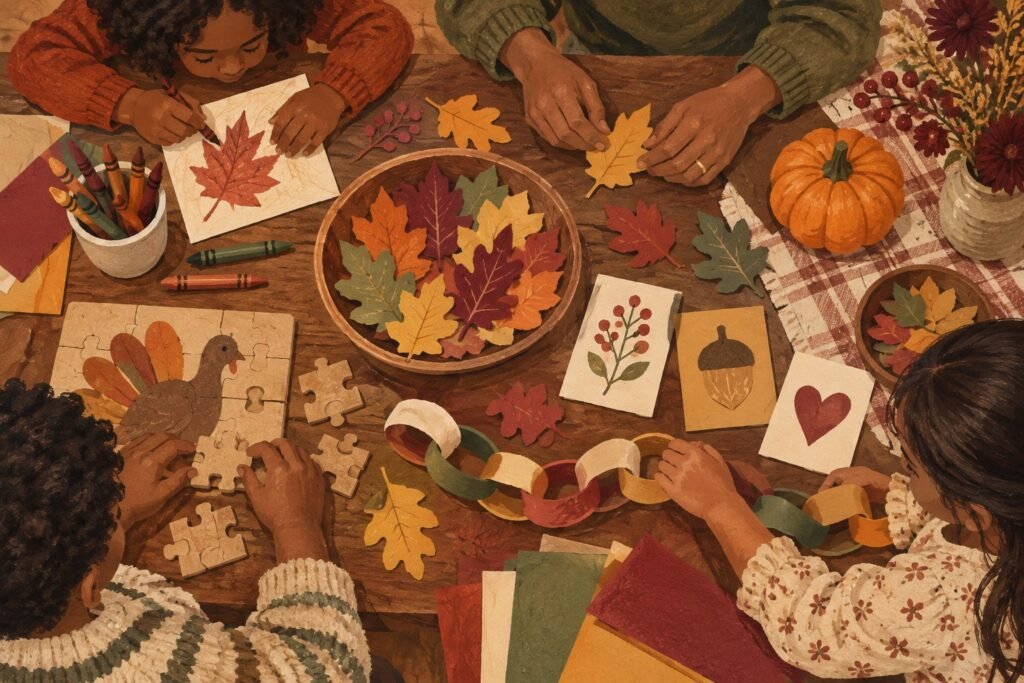
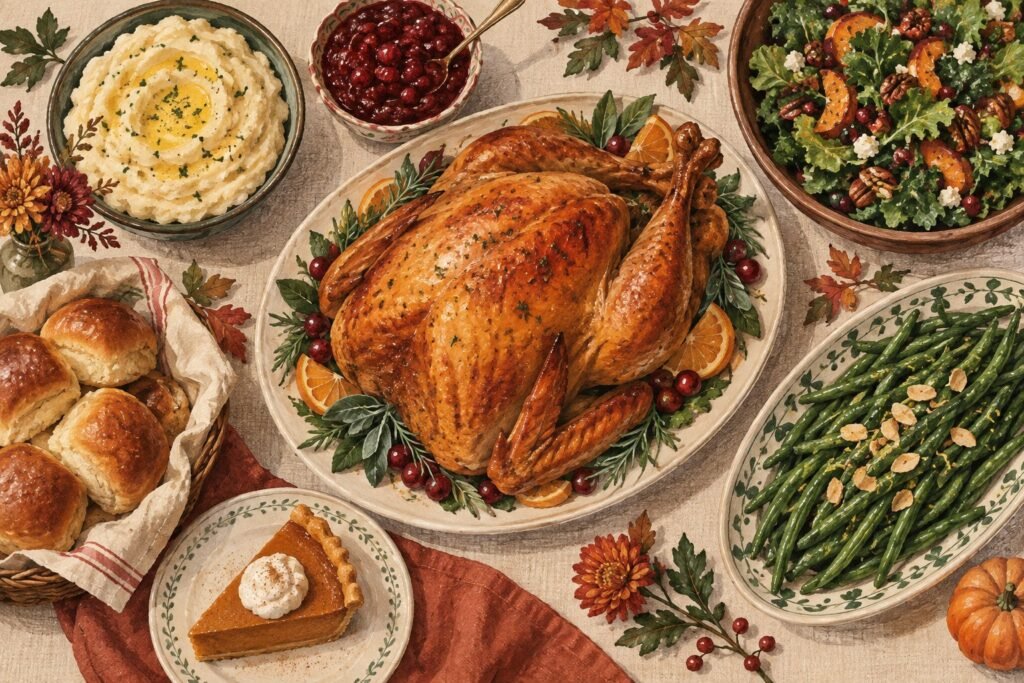
Everyone brings a dish, nobody brings the same dish twice — that is the potluck dream, and it takes a little organizing.
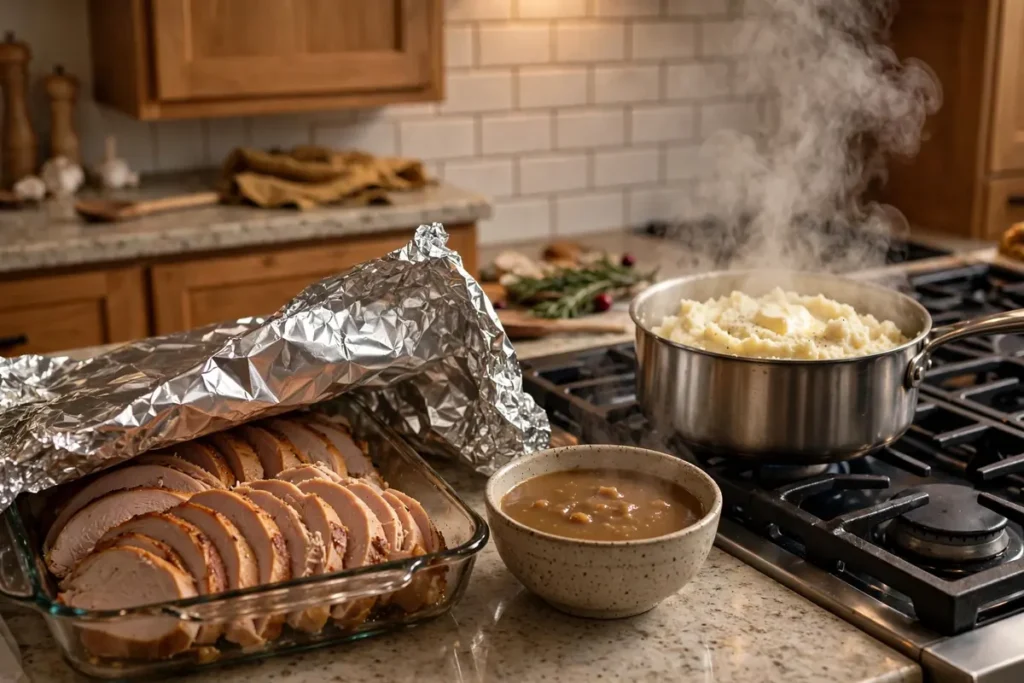
Friends arriving with covered dishes at a Thanksgiving potluck gathering.
Watch: How to Organize a Thanksgiving Potluck
A quick guide to the basic rules of a potluck — assigning dishes and keeping everything running smoothly.
At a Glance: How to Organize a Thanksgiving Potluck
The organizing moves that keep a potluck balanced, on time and food-safe.
| Detail | Tip |
|---|---|
| Sign-up sheet | Assign categories so you don't get five green bean casseroles |
| Host's dish | The host typically handles the turkey |
| Quantities | Ask for dishes that serve 8–10 to cover the group |
| Timing | Stagger arrivals so hot dishes land close to serving |
| Food safety | Keep hot foods hot and cold foods cold; 2-hour rule applies |
| Drinks | Assign drinks and ice to a guest or two |
| Labels | Ask cooks to label dishes and flag common allergens |
Frequently Asked Questions
How do I organize a Thanksgiving potluck without hurting feelings over assignments?
Frame assignments as honors, not chores: “Everyone always raves about your mashed potatoes — would you bring them?” Give people first choice within their category where possible, and match difficulty to skill — beginners get cranberry sauce, drinks, or a cheese ball; confident cooks get the labor-intensive dishes. Always allow one swap: if someone truly dreads their assignment, trade categories rather than forcing it. And never publicly reassign someone’s dish — handle changes privately and graciously.
What should the host provide at a Thanksgiving potluck?
The host provides the venue, the turkey and gravy (the centerpiece stays home — it is the hardest dish to transport), all infrastructure (plates, napkins, cutlery, cups, serving utensils, seating), oven and fridge logistics, drinks (or a clear BYOB plan), and a buffer dish or two for emergencies. The host also owns coordination: the dish map, the sign-up system, confirmations, the day-of timeline, and food safety oversight. Guests bring the assigned dishes; the host brings everything that makes those dishes work together.
How much food should each person bring to a Thanksgiving potluck?
Each assigned dish should serve the full guest count — for 14 guests, the mashed potatoes should serve 12–14, not 6. This is the rule guests most often get wrong, so state it explicitly on the sign-up sheet. As a cross-check: plan about 1 to 1.5 pounds of turkey per person (host), a modest serving of each of 5–7 sides per person, 1.5 pies per 10 guests across 2–3 desserts, and 2–3 drinks per person. Our how much food per person for Thanksgiving guide has detailed portion tables you can share with the group.
How do I handle food allergies at a potluck?
Ask about allergies and dietary restrictions at sign-up time — not on the day. Require every cook to label their dish with its name and major allergens (nuts, dairy, gluten, eggs, soy) on a small card. Use one serving utensil per dish to prevent cross-contamination, and keep allergen-free dishes at one end of the buffet with their own utensils. If an allergy is severe, consider assigning that guest a dish they prepare themselves so they have at least one guaranteed-safe option, and brief the group on keeping the buffet utensils separated.
What if someone brings a dish nobody eats or something goes uneaten?
It happens at every potluck and it is nobody’s fault — tastes vary. As host, do not draw attention to it. Pack it up with the cook’s leftovers to take home (they may love it even if the crowd did not), and note the pattern privately for next year’s dish map. The structural fix is capping risky categories: limit desserts to three, ensure the core classics (potatoes, stuffing, turkey) are covered by reliable cooks, and let the experimental dishes be bonuses rather than load-bearing parts of the meal.
Can I organize a Thanksgiving potluck at work or for a community group?
Yes — the same system scales beautifully, with two adjustments. First, use direct sign-up with categories rather than assignments, since workplace relationships are more formal; a shared spreadsheet where people claim slots works best. Second, tighten food safety: office potlucks mean more transport time and less host oversight, so emphasize the 2-hour rule, insulated carriers, and 165°F reheating in your sign-up instructions. Consider making it a lunch potluck (simpler dishes, smaller quantities) and check whether your workplace has policies about homemade food. For Friendsgiving-style gatherings, our 50 Thanksgiving party and Friendsgiving ideas has themes and formats to make it memorable.
Conclusion
Knowing how to organize a Thanksgiving potluck is really knowing how to turn a crowd into a community. The sign-up sheets, oven schedules, and labeled serving dishes are just scaffolding — what they build is a table where everyone contributed, everyone belongs, and no single person is exhausted. That shared ownership is why potluck Thanksgivings so often become the most beloved tradition in a family or friend group: people remember the holidays they helped make.
Start four weeks out, assign specifically, confirm twice, guard the oven schedule, and keep the food safety rules friendly but firm. Then on the day, carve the turkey, thank your cooks by name, and enjoy the rare pleasure of hosting a feast you did not have to cook alone. For menu inspiration to share with your group, explore our best Thanksgiving recipes of 2026 and the Thanksgiving dinner menu for 2026. Happy organizing — and happy Thanksgiving.