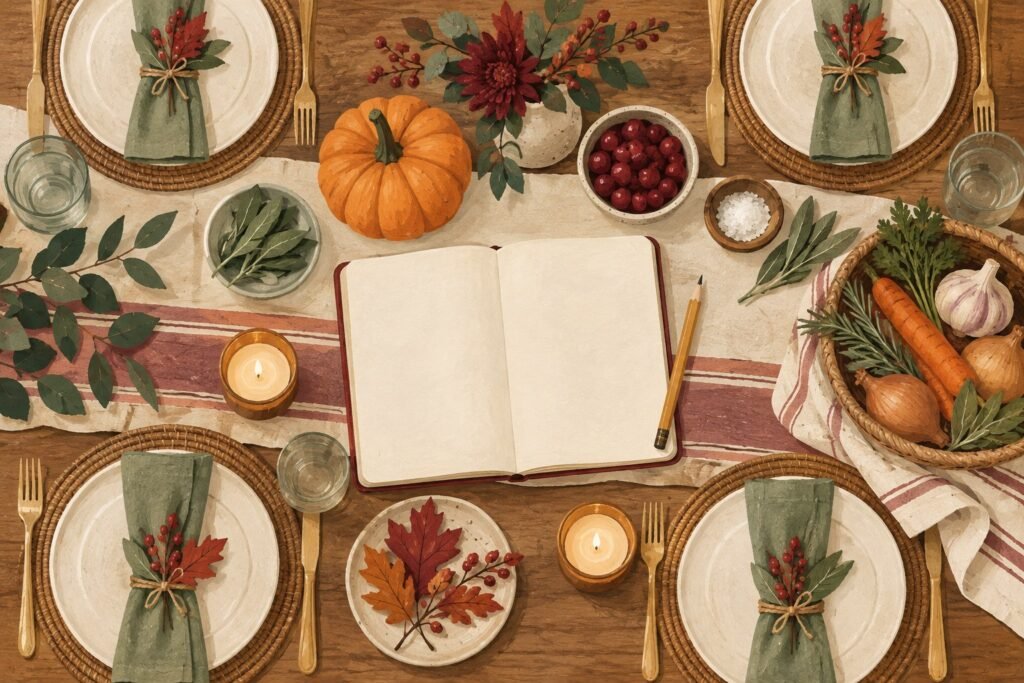
Thanksgiving table runner ideas deserve more attention than they usually get. The runner is the backbone of your tablescape — the long visual line that ties every place setting together, anchors the centerpiece, and sets the color story for the whole table. Get the runner right and the rest of the table nearly decorates itself; get it wrong and even beautiful dishes look scattered. This complete guide covers twenty festive runner styles across four design directions, DIY tutorials, sizing and fabric guides, layering techniques, budget breakdowns, and care tips.
Whether you buy, sew, or improvise your runner from what is already in the house, you will find a plan here matched to your table, your style, and your budget — plus the practical details (exact sizing formulas, wrinkle fixes, stain strategies) that make the difference between a runner that looks good in photos and one that survives the meal.
Why the Table Runner Matters
A runner does four jobs at once. Visually, it creates a central axis that organizes the table — the eye travels along it, which makes even a simply set table look intentional. Practically, it protects the table (or tablecloth) under the centerpiece and serving dishes, where heat and drips concentrate. Stylistically, it carries the color story: the runner is typically the largest single color field on the table, so it sets the palette everything else responds to. And economically, it is the highest-impact textile on the table — a $15 runner transforms the look more than $50 of scattered accessories.
Runners also solve the “bare middle” problem. Without one, the table’s center is just empty table between place settings — a dead zone that makes the table feel unfinished. With one, that space becomes a designed stage for the centerpiece.
Runner Sizing: The Exact Formulas
Length
The classic rule: the runner should overhang each end of the table by 6–12 inches — enough to drape elegantly, not so much it interferes with seated guests’ legs. Formula: table length + 12 to 24 inches. For a 72-inch table, buy a 84–96 inch runner. For round tables, runners are trickier — either use two runners crossed in an X, or skip the runner and use a round tablecloth with placemats.
Width
Standard runners are 12–16 inches wide. The runner should cover roughly one-third of the table’s width: on a 40-inch-wide table, a 14-inch runner leaves 13 inches per side for place settings — comfortable. Narrower tables (under 36 inches) suit 10–12 inch runners; wide farmhouse tables (48+ inches) can handle 18–20 inches. When in doubt, go slightly narrower — a runner that crowds the plates is worse than a slim one.
Drop and Hemming
If you are making a runner, hem all four edges (a 1-inch double-fold hem is standard) to prevent fraying and give weight so it lies flat. No-sew options: fusible hem tape (iron-on, holds through gentle washing) or simply folding raw edges under and pressing. Weight the ends slightly if the runner curls — a line of fusible interfacing in the hem adds body.
Fabric Guide: Choosing Runner Material
Linen
The gold standard: beautiful texture, natural drape, and it improves with washing. Linen wrinkles — embrace it (the rumpled look is part of the charm) or press with steam. Best for: rustic, farmhouse, and elegant tables. Cost: $20–$50.
Cotton and Cotton Blends
Affordable, washable, and available in every pattern. Quilting cotton makes excellent DIY runners. Less drape than linen, more structure — good for crisp modern looks. Cost: $8–$25.
Burlap and Jute
Maximum rustic texture at minimum cost. Burlap sheds fibers — shake it outdoors before first use and expect some shedding forever. Line the underside with a cotton strip if it sits on a good tablecloth. Cost: $5–$12.
Velvet
Luxurious and light-absorbing — velvet runners in deep autumn tones (rust, plum, forest) look incredibly rich under candlelight. Spot-clean only; velvet crushes where serving dishes sit. Best for: formal and moody tables. Cost: $25–$60.
Kraft Paper and Butcher Paper
The disposable hero: a roll of kraft paper makes a runner for pennies, doubles as a kids’ coloring surface (provide crayons), and gets recycled after the meal. Surprisingly chic in rustic and farmhouse settings — especially with hand-lettered place names or a gratitude prompt written along it. Cost: $3–$5 per roll.
20 Thanksgiving Table Runner Ideas by Style
Rustic Runner Ideas
1. Burlap with lace overlay. A burlap runner topped with a narrower lace or crochet runner — rough meets delicate, and the combination looks far more expensive than its $12 cost.
2. Flannel plaid runner. Cut a length of flannel fabric (no hemming needed — flannel does not fray much) in a fall plaid. Cozy, washable, and perfectly on-theme. Fringe the ends by pulling threads for a finished look.
3. Wood-slice path. No fabric at all: lay wood slices end to end down the table’s center as a “runner.” Each slice holds a candle or mini pumpkin. Rustic, sculptural, and endlessly reusable.
4. Wheat-sheaf runner. Lay bundles of dried wheat flat along the table’s center, alternating directions, tied with twine at intervals. Nearly flat (serving dishes sit fine), golden, and fragrant.
5. Drop-cloth runner. A painter’s drop cloth (washed to soften) cut to runner width — the farmhouse decorator’s secret. The natural canvas color and subtle texture are perfect, and a $10 drop cloth yields several runners.
Modern Runner Ideas
6. Charcoal linen runner. A single dark runner on a light table (or light runner on a dark table) — high contrast is the modern move. Keep everything else minimal and let the runner’s line carry the design.
7. Leather or faux-leather strip. A long strip of cognac faux leather as a runner — unexpected, wipeable (brilliant for Thanksgiving spills), and strikingly modern against ceramics. Cut with a rotary cutter for clean edges.
8. Geometric-patterned runner. Bold geometrics in fall colors (mustard, rust, charcoal) bring energy to a modern table. The pattern should be the table’s statement — keep the centerpiece simple.
9. Sheer gauze runner. Layers of sheer cheesecloth or gauze, loosely gathered — ethereal, soft, and beautiful under candlelight. Inexpensive and forgiving: wrinkles and uneven gathering are the look.
10. Black-and-white striped runner. Classic ticking stripe or bold cabana stripe — graphic, clean, and a perfect foil for colorful fall produce in the centerpiece.
Farmhouse Runner Ideas
11. Gingham check runner. Red-and-cream or black-and-cream gingham — the farmhouse pattern. Pairs with mason jars, white pumpkins, and cotton stems.
12. Grain-sack runner. Authentic grain-sack fabric (or reproduction) with its classic stripes — the farmhouse holy grail. Sturdy, washable, and full of character.
13. Quilted runner. A quilted table runner in fall fabrics — or a folded quilt used as a runner on a wide table. The quilting adds texture and a handmade feel. Family quilts make unforgettable Thanksgiving runners.
14. Eucalyptus garland as runner. Skip fabric entirely: a lush eucalyptus garland running the table’s length is both runner and centerpiece base. Our DIY centerpiece guide has a full garland-runner tutorial.
15. Buffalo-check runner. Bold buffalo check in red-black or neutral tones — high-impact farmhouse. Let it be the pattern star; keep dishes solid.
Elegant and Minimalist Runner Ideas
16. Ivory linen with fringe. Simple, timeless, perfect. The fringe ends add just enough detail. Works with every centerpiece style — the most versatile runner you can own.
17. Velvet in jewel tones. Deep plum, forest, or rust velvet — candlelight on velvet is pure luxury. Pair with brass candlesticks and white pumpkins for a magazine-worthy table.
18. Metallic-threaded runner. Linen or cotton with gold or copper metallic threading — subtle shimmer that catches candlelight. Elegant without being flashy.
19. Layered neutrals. Two runners layered — a wider natural linen under a narrower textured one (gauze, lace, or burlap). Layering adds depth and looks professionally styled.
20. No runner, styled placemats. The minimalist option: skip the runner and invest in beautiful placemats instead. On a gorgeous wood table, bare wood between placemats is a legitimate design choice — the table itself is the runner.
DIY Tutorial: No-Sew Linen-Look Runner in 30 Minutes
Materials
- 2 yards of linen-look cotton or drop-cloth fabric
- Iron-on fusible hem tape
- Iron and pressing cloth
- Scissors or rotary cutter
Steps
Step 1: Cut. Cut fabric to table length + 18 inches, by 14–16 inches wide. Use the fabric’s selvedge edges for the long sides if they are clean — fewer hems to make.
Step 2: Hem the ends. Fold each short end under 1 inch, press, then fold another inch and press. Slip fusible hem tape into the fold and iron according to the tape’s instructions (usually 10–15 seconds per section with steam). Let cool completely before moving.
Step 3: Hem the sides (if needed). Repeat on the long edges if not using selvedges.
Step 4: Fringe (optional). For a fringed end, skip hemming the short ends and instead pull horizontal threads to create a 2-inch fringe. Secure the fringe’s base with a line of stitching or fabric glue.
Step 5: Press and place. Give the whole runner a final press, center it on the table, and adjust the overhang to match at both ends.
Total time: 30 minutes. Total cost: $8–$15. Durability: the fusible hem survives gentle machine washing; press after washing to refresh.
Layering Runners Like a Stylist
Layering is what separates styled tables from simply covered ones. The formulas: wide + narrow (a 16-inch base runner with a 10-inch textured runner centered on top), fabric + natural (linen runner with a eucalyptus garland running along it), or runner + placemats in contrast (a solid runner with patterned placemats, or vice versa — one pattern per table, never two competing). Layered runners should share a palette but differ in texture — texture contrast is what makes layering read as intentional rather than cluttered.
Runner + Centerpiece Pairing Guide
The runner and centerpiece must work as a unit. Rules of thumb: busy runner → simple centerpiece (a patterned runner needs only candles and a few pumpkins); simple runner → elaborate centerpiece (plain linen can carry a lush garland); textured runner → smooth centerpiece elements (burlap pairs with ceramic pumpkins and glass); dark runner → light centerpiece (charcoal runner needs white pumpkins and light florals to avoid a black hole effect). And the non-negotiable: the centerpiece must sit ON the runner, not beside it — the runner is its stage. For centerpiece designs to pair, see our DIY Thanksgiving centerpieces and pumpkin centerpiece ideas.
Budget Breakdown
| Runner Option | Cost | Reusable? | |
|---|---|---|---|
| Kraft paper runner | $3–$5 | No (recyclable) | |
| Burlap runner | $5–$12 | Yes, years | |
| DIY no-sew cotton | $8–$15 | Yes | |
| Flannel or gingham | $10–$20 | Yes | |
| Quality linen runner | $25–$50 | Yes, decade+ | |
| Velvet runner | $25–$60 | Yes |
The best value in the table: the DIY no-sew cotton runner — custom size, custom fabric, under $15, and it lasts for years. For whole-table budget strategies, see our budget Thanksgiving decorations guide and Thanksgiving table settings guide.
Care, Stain Removal, and Storage
Thanksgiving runners earn their stains. Treat promptly: blot (never rub) spills immediately, pre-treat with dish soap or a stain remover before washing, and wash in the warmest water the fabric allows. Cranberry and red wine are the classic offenders — white wine or club soda buys time until proper treatment. For heirloom or velvet runners, professional cleaning is worth it.
Storage: roll runners on cardboard tubes (never fold — folds become permanent creases), store in breathable cotton bags (not plastic, which traps moisture), and keep cedar blocks nearby to deter moths from natural fibers. Photograph the runner on the table before storing — next year’s setup is instant.
Small Tables and Unusual Shapes
Round tables: cross two runners in an X, or use a round cloth with placemats. Square tables: one runner centered, or two parallel runners for a banquet feel. Narrow console-turned-buffet: a runner slightly narrower than the surface with the overhang tucked (buffet runners should not drape where guests’ hips pass). Folding tables: a floor-length cloth hides the legs; add a runner on top for the designed look.
7 Runner Mistakes to Avoid
1. Wrong size. A runner that barely covers the table’s center looks like a misplaced placemat; one that puddles excessively at the ends interferes with chairs. Measure the table and add 12–24 inches — no guessing.
2. Competing with the tablecloth. A patterned runner on a patterned cloth is visual chaos. One pattern per table: if the cloth is patterned, the runner must be solid (and vice versa).
3. Ignoring the underside. Burlap and rough fabrics can scratch wood or snag tablecloths. Add a soft backing or a protective pad — a beautiful runner that damages the table is a net loss.
4. Too slippery. Silk and sateen runners slide at the worst moments. Use rug-grip pads or fabric tape underneath — invisible insurance.
5. Forgetting heat protection. A runner is not a trivet. Hot serving dishes go on trivets or pads, never directly on fabric — especially synthetics, which melt. Plan trivet placement when laying the runner.
6. Wrinkles on display. A wrinkled runner photographs terribly and looks careless. Press or steam before laying — ten minutes that transforms the result. Linen’s natural rumple is fine; fold creases are not.
7. Centerpiece off the runner. The centerpiece must sit on the runner, not drift beside it. The runner is the centerpiece’s stage — if they separate, both look accidental.
From Thanksgiving to Christmas: The Runner Rotation
A good runner collection serves the whole season. The rotation strategy: own three runners — a neutral year-round base (natural linen or jute), a fall runner (rust, plaid, or harvest pattern), and a winter runner (deep green, red, or metallic). Thanksgiving uses base + fall layered; Christmas swaps fall for winter. Three runners, two holidays, endless combinations.
Care between holidays: clean promptly after Thanksgiving (cranberry waits for no one), roll on tubes, store in breathable bags, and photograph each holiday’s layered look for next year’s reference. A runner stored properly lasts a decade — the per-Thanksgiving cost of a $30 runner worn for ten years is $3. That is the real budget luxury: buy once, enjoy for years. For the table that surrounds the runner, see our Thanksgiving table settings guide.
In Pictures: Thanksgiving Table Runner Ideas
The runner is the backbone of the tablescape — this fall floral runner tutorial shows how to build rich autumn color right down the center of the table.
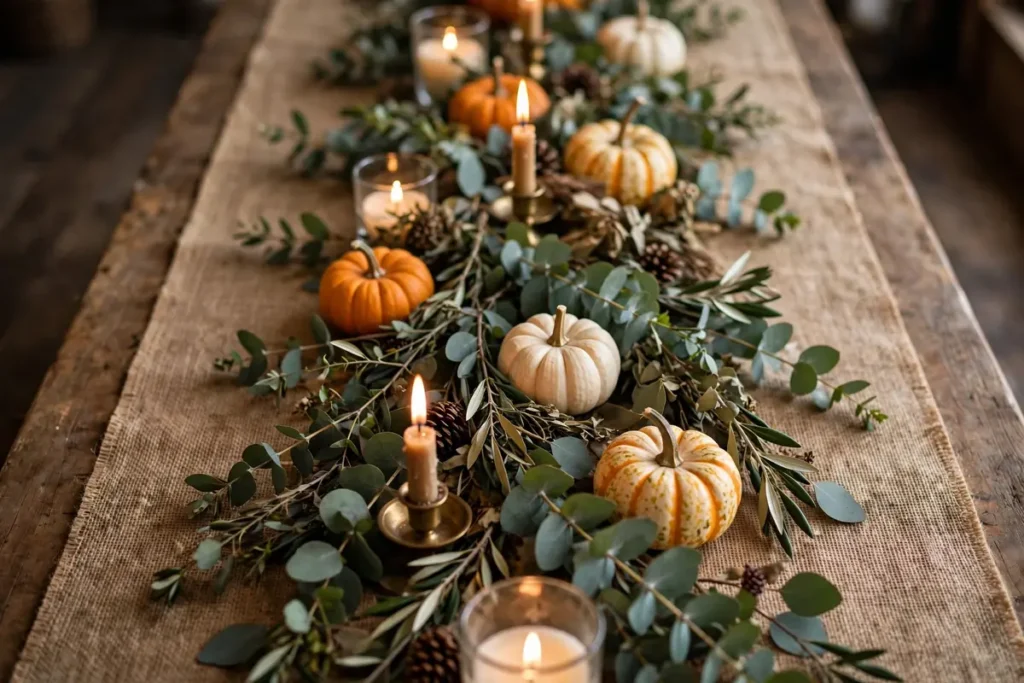
A burlap table runner layered with eucalyptus garland, small pumpkins, and candles down the table's center.
Watch: Thanksgiving Table Runner Ideas
Grace Monroe Home's DIY fall table runner — seasonal ribbon, simple techniques, and a warm festive finish for the Thanksgiving table.
At a Glance: Thanksgiving Table Runner Ideas
Runner styles from five minutes to a full afternoon.
| Style | Materials | Tip |
|---|---|---|
| Burlap + greenery | Burlap runner, eucalyptus garland, candles | The easiest elegant look — unroll, drape, done |
| Fall floral | Floral foam base, faux fall stems, berries | Layer tallest in the middle, trailing pieces at the ends |
| Leaf-covered | Felt base, faux maple leaves, hot glue | Overlap leaves like shingles, working outward from the center |
| Moss runner | Jute runner, fresh and dried moss, spray glue | Leave the center clear for serving dishes |
| Embroidered | Canvas runner, embroidery thread in fall colors | A simple blanket stitch around the edge is all it needs |
| Sizing | Runner should overhang each table end by 6 to 12 inches | |
Frequently Asked Questions
Should the runner match the napkins?
Coordinate, do not match exactly. The runner and napkins in the same color family but different shades or textures look designed; identical fabric everywhere looks flat. If the runner is patterned, napkins should be solid — and vice versa.
Can I use a runner on a round table?
Yes — cross two runners in an X pattern, letting all four ends drape over the edge. It looks intentional and festive. Alternatively, skip the runner and let placemats plus a centerpiece carry a round table.
How do I keep the runner from slipping?
Rug-grip pads cut to size, double-sided fabric tape, or a non-slip shelf liner underneath — all invisible and effective. On polished wood, a thin cotton pad underneath also protects the finish from heat.
What is the best runner fabric for families with kids?
Washable cotton or kraft paper. Cotton survives the machine; kraft paper gets recycled guilt-free after the inevitable spills. Avoid velvet and light linen with young children — beautiful, but you will spend the meal anxious.
Can I layer a runner over a tablecloth?
Absolutely — it is the classic formal look. The tablecloth provides the base color, the runner adds the accent. Ensure the runner contrasts enough to be visible (a tone-on-tone layer disappears).
How far should the runner hang over the table ends?
Six to twelve inches per end is the standard — enough to drape gracefully, not enough to catch on chairs or guests’ clothing. For buffet tables against a wall, let the back end puddle slightly and the front hang to just above the floor.
What runner length do I need for a 6-foot table?
A 6-foot (72-inch) table needs an 84–96 inch runner — the table length plus 12–24 inches for the end overhang. Standard 90-inch runners are made exactly for this table size. When buying, check the listed length includes any fringe or tassels, which do not count toward the functional overhang.
Can I use a scarf or blanket as a table runner?
Absolutely — a long scarf, shawl, or folded throw blanket makes a wonderful improvised runner, especially in fall textures like wool plaid or chunky knit. Ensure it is clean, press it flat, and check that dyes are colorfast (test a damp corner on white cloth) before laying it where food will sit.
How do I clean wax off a table runner?
Let the wax harden completely, then scrape gently with a dull knife. Place the runner between paper towels and press with a warm iron — the wax melts into the towels. Repeat with fresh towels until no more transfers. For stubborn residue, a dab of rubbing alcohol on a cloth finishes the job. Prevention beats cure: use hurricanes or drip-catching bobeches on tapered candles.
Do I need a runner if I have a beautiful wood table?
No — a gorgeous wood table is decor in itself, and many designers skip the runner to show it off. Use placemats to define place settings and let the wood’s grain be the visual interest. The runner is a tool, not a requirement; the prettiest table is the one where every element earns its place.
Conclusion
The right Thanksgiving table runner ties your whole tablescape together — literally and visually. Measure your table, choose a fabric that suits your style and your household, layer it with intention, and pair it with a centerpiece that shares its palette. It is a small decision with an outsized payoff, and a good runner serves for a decade of Thanksgivings. Complete the table with our Thanksgiving table settings guide and napkin folding tutorials — and happy Thanksgiving.