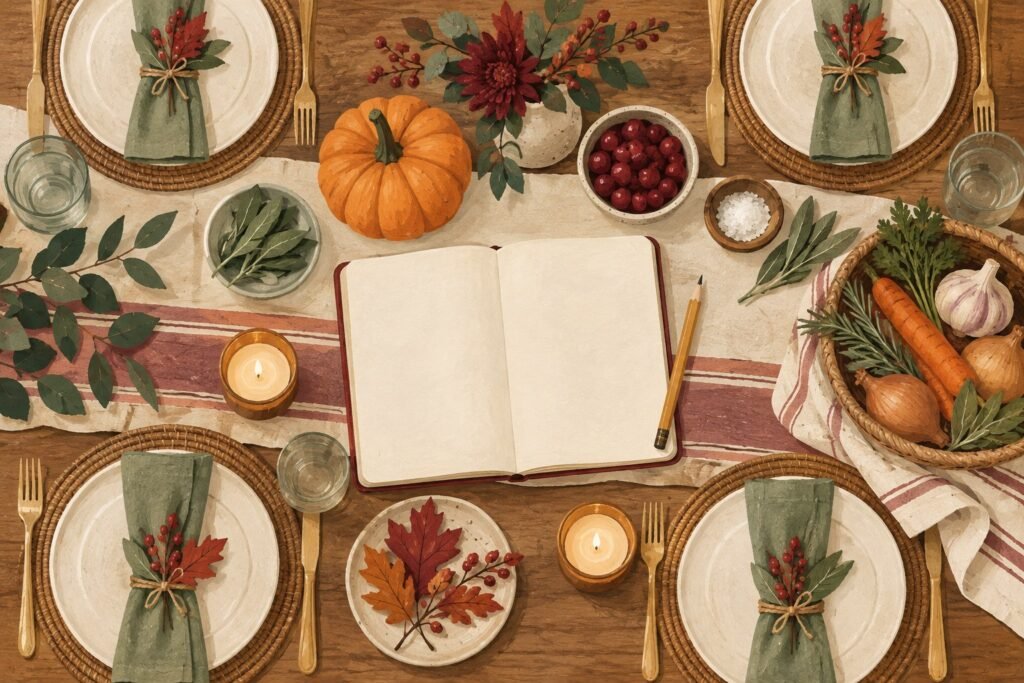
Napkin folding for Thanksgiving is the quiet art that turns a set table into a styled one. A beautifully folded napkin does what no other single detail can: it gives every place setting a finished, intentional look for the cost of sixty seconds and a little practice. This complete guide teaches twelve elegant napkin folds — from the two-minute classics to the showstoppers — with clear step-by-step instructions, difficulty ratings, styling ideas, fabric guidance, and troubleshooting for every common folding frustration.
Every fold below is described as if you have never folded a napkin before: exact starting position, what to do with each corner, and how to finish. Practice each fold two or three times on Thanksgiving Eve and you will fold a full table’s worth confidently on the day. Cloth napkins are assumed throughout — paper napkins work for the simplest folds but lack the structure for sculptural ones.
Choosing Napkins for Folding
Size Matters
Standard dinner napkins (18–22 inches square) fold best — large enough for sculptural folds, manageable for simple ones. Cocktail napkins (too small) and oversized banquet napkins (unwieldy) both frustrate. If buying for Thanksgiving, 20-inch square cotton or linen napkins are the versatile sweet spot.
Fabric and Stiffness
Crisp cotton and linen hold folds best; soft, washed-many-times napkins flop. For sculptural folds (the rose, the crown, the bird of paradise), lightly starch napkins before folding — spray starch, press, and the fabric will hold shapes like paper. Polyester napkins are slippery; they work for flat folds but resist standing designs. When in doubt, press the napkin first: a hot iron is the folder’s best friend, and pressed folds look dramatically sharper.
Color Strategy
The napkin is a major color field on the table — choose it as deliberately as the runner. Options: match the runner (monochrome elegance), contrast it (rust napkins on a cream runner — the classic Thanksgiving pop), or use the napkin as the table’s single pattern (patterned napkins on a solid runner). White napkins suit every fold and every table; they are the safe, timeless choice. For fold visibility, solid colors show shapes better than busy patterns.
Folding Fundamentals: 5 Rules
1. Start with a pressed napkin. Wrinkles fight every fold. Press (or at least smooth firmly) before starting.
2. Work on a hard, clean surface. A table or countertop — not your lap, not the bed. Hard surfaces give crisp creases.
3. Crease firmly. Run your finger or a bone folder along every fold. Sharp creases are what make folds look professional rather than improvised.
4. Keep hands clean and dry. Lotion, cooking oil, and damp hands stain light napkins. Fold before cooking, or wash and dry hands first.
5. Practice once, then commit. Fold each design once as a rehearsal (it will be imperfect), then fold the real set. The second attempt is always dramatically better.
Beginner Folds (2–3 Minutes Each)
1. The Classic Rectangle
The timeless hotel fold. Lay the napkin flat, fold in half, then fold in half again to a rectangle. Place centered on the dinner plate or to the left of the forks. Difficulty: trivial. Best for: formal tables where the napkin should be quiet and crisp. Embellish by laying a sprig of rosemary and a cinnamon stick across it, tied with twine.
2. The Envelope Fold
Lay the napkin flat in a diamond orientation (one corner pointing at you). Fold the bottom corner up to the center. Fold the left and right corners in to meet at the center, overlapping slightly. Fold the top corner down to create the envelope flap — tuck it under the side folds or leave it as a flap. The envelope’s pocket holds flatware, a place card, or a sprig of herbs. Difficulty: easy. Best for: casual and farmhouse tables.
3. The Pocket Fold
Fold the napkin in half, then fold the top layer’s bottom edge up in two overlapping tiers, creating two pockets. Tuck flatware into the pockets, or a place card in the front pocket and herbs in the back. Difficulty: easy. Best for: buffet-style Thanksgivings where guests carry flatware from the table — everything stays together.
4. The Simple Roll
Lay flatware diagonally across the napkin’s center, fold the bottom corner over the flatware, roll tightly, and tie with twine or ribbon. Add a rosemary sprig under the tie. Difficulty: trivial. Best for: casual, outdoor, or kids’ tables — sturdy, portable, and charming.
Intermediate Folds (4–6 Minutes Each)
5. The Crown Fold
Fold the napkin in half diagonally to a triangle. Fold the two base corners up to meet the top corner, forming a diamond. Fold the bottom point up about two-thirds, then fold the side points back and tuck one into the other to form a standing ring — the “crown.” Stand it on the plate. Difficulty: moderate (the tuck takes practice). Best for: formal Thanksgiving dinners — the crown is the classic celebration fold.
6. The Bishop’s Hat (Classic Pyramid)
Fold in half diagonally, then fold the two base corners up to the apex. Flip over, fold the bottom point up to just below the top, fold the right side over the left, tuck, and stand. The result is a tall mitre-like shape. Difficulty: moderate. Best for: traditional formal tables — this is the fold of grand hotels.
7. The Fan Fold
Accordion-fold the napkin in 1-inch pleats from one end to the other. Fold the pleated strip in half, secure the fold with a napkin ring or ribbon, and fan the pleats open. Stand in a glass or lay on the plate. Difficulty: moderate (even pleats take practice). Best for: elegant tables — the fan is dramatic and photogenic.
8. The Leaf / Feather Fold
Fold the napkin in half lengthwise. Starting at one short end, fold diagonal pleats like a paper fan but angled, creating a leaf shape. Secure the base with twine and let the “leaf” splay. Tuck into a glass or lay across the plate. Difficulty: moderate. Best for: Thanksgiving specifically — the leaf shape is on-theme and gorgeous in fall colors.
Advanced Folds (8–12 Minutes Each)
9. The Rose Fold
The showstopper. Fold the napkin in half diagonally. Roll the long edge toward the point, stopping 3 inches short — this roll becomes the petals. Then roll the triangle from one end to the other into a tight spiral, tucking the end underneath. Flip over: the spiral reads as rose petals, the point becomes leaves. Nestle into a wine glass or small bowl. Difficulty: high (the spiral tension is the trick — too loose and it unrolls, too tight and it puckers). Starch heavily. Best for: the head of the table, the guest of honor, or a small dinner where you can invest the time.
10. The Bird of Paradise
Fold in half, then fold into quarters lengthwise. Fold the two ends up diagonally to create wing shapes, then fold the whole piece in half and pull the inner “feathers” up and out in graduated layers. Stand in a glass. Difficulty: high — this is the most technically demanding fold here, and it needs a stiff, starched napkin. Best for: when you want guests to gasp. Practice three times before the event.
11. The Candle Fold
Fold the napkin diagonally, roll tightly from the long edge into a tube, then stand the tube upright and fold the top down like a candle flame’s wax drip — or leave straight for a pillar-candle look. Tie with ribbon at the base. Difficulty: moderate-high (the standing requires a stiff napkin and a flat base). Best for: evening Thanksgiving dinners — line them down the table and they read as extra candles.
12. The Turkey Fold (Thanksgiving Signature)
Yes, a turkey. Fold the napkin into a fan (accordion pleats), secure the center with a band, and spread one half as the tail feathers. Fold a second small napkin (or the remaining half) into the body and head — a simple rolled shape with the corner folded down as the beak. Combine: fan tail behind, body in front. Difficulty: high, but it is the Thanksgiving signature fold — guests will photograph it. Use two napkins in complementary colors (brown body, orange-gold tail) for the full effect.
Styling Folded Napkins: The Finishing Touches
A fold is the structure; the styling is the personality. Tuck a sprig of rosemary, eucalyptus, or wheat into any fold — greenery against fabric is the oldest styling trick and still the best. Tie flat folds with twine, ribbon, or a strip of fabric; slide a cinnamon stick under the tie for scent. Lay a handmade place card across or inside the fold. Scatter a few cranberries around the base. One embellishment per napkin is the rule — two looks busy.
Match the fold’s formality to the table: sculptural folds (rose, crown, bird of paradise) suit formal tables; flat and pocket folds suit casual ones. And match the fold to the placement — standing folds go on plates or in glasses; flat folds go under flatware or beside the plate. Our Thanksgiving table settings guide covers placement in full.
Troubleshooting Common Folding Problems
“My folds won’t hold their shape”
The napkin is too soft. Solution: spray starch and press, or choose a crisper napkin. Sculptural folds simply require body — there is no technique fix for limp fabric.
“My napkin is too slippery”
Polyester or sateen napkins slide. Solution: work slower, crease harder, and favor flat folds over standing ones. Or switch to cotton for the sculptural designs.
“The fold looks lopsided”
Almost always uneven starting folds compounding. Solution: measure the first fold (use the napkin’s own edges as guides — fold corner to corner exactly), and crease each step before proceeding. Precision early prevents lopsidedness late.
“I don’t have time for fancy folds”
The rectangle fold with a rosemary sprig and twine takes 60 seconds and looks genuinely elegant. Simple + well-styled beats complicated + rushed every time. Fold the simple design beautifully rather than the hard design badly.
“My napkins are wrinkled from storage”
Wash, then press while slightly damp — or tumble in the dryer with a damp towel for 10 minutes and press. For day-of wrinkles, a handheld steamer works in seconds per napkin.
Napkin Rings: Buy, DIY, or Skip
Napkin rings are optional but useful — they hold rolled and fan folds and add a jewelry-like accent. Buy: wood, brass, or beaded rings ($1–$3 each, reusable for years). DIY: twine wraps, ribbon ties, small wreaths of rosemary or grapevine, copper wire spirals, or strips of kraft paper with guests’ names (ring + place card in one). Skip: when the fold itself is the decoration (the rose and crown need no ring) or when using the envelope/pocket folds that hold themselves.
Folding for a Crowd: Efficiency Tips
Folding twelve or twenty napkins is an assembly line, not twelve separate crafts. Fold all napkins through step one, then all through step two — batching each step is dramatically faster than completing one napkin at a time. Set up a folding station with pressed napkins stacked, embellishments in bowls, and finished napkins on a tray. Recruit help: the envelope and rectangle folds are teachable in one minute, so draft family members. And choose ONE fold for the whole table — matching folds look intentional; a sampler of different folds looks indecisive (unless that is the deliberate eclectic look, in which case commit fully).
Pairing Folds with Table Styles
Rustic table: envelope fold with twine and rosemary, or the simple roll. Modern table: classic rectangle in a contrasting color, or the fan fold. Farmhouse table: pocket fold holding flatware, or rectangle with a gingham ribbon. Formal table: crown, bishop’s hat, or rose. Kids’ table: simple roll tied with ribbon (sturdy, portable, spill-forgiving). The fold should feel like it belongs to the table’s story — when in doubt, the rectangle with beautiful styling never looks wrong. Coordinate with your table runner choice: the napkin and runner are the table’s two textile statements, so they should relate (same family, different shade) rather than compete.
Care: Washing and Storing Cloth Napkins
Treat stains promptly (cranberry and gravy are the Thanksgiving classics — cold water and dish soap immediately, never hot water on protein stains). Machine wash warm with like colors; white napkins can handle bleach alternatives. Press while slightly damp for the crispest results, or press dry with steam. Store folded or rolled — rolling prevents crease lines. Keep a dedicated napkin drawer or box so the set stays together; nothing frustrates like eleven napkins when you need twelve.
Teaching Kids to Fold Napkins
Napkin folding is a perfect kid job: tangible, teachable, and genuinely helpful. Ages 4–6 can do the simple roll (lay flatware, roll, tie — they love the tying). Ages 7–9 master the rectangle and envelope folds with one demonstration. Ages 10+ can learn the pocket fold, fan fold, and even the crown with practice. Turn it into a pre-Thanksgiving activity: set up the folding station, demonstrate once, and let them fold the kids’ table’s napkins themselves.
Tips for young folders: use slightly smaller napkins (easier for small hands), demonstrate slowly with narration, praise the creases (kids love the “press hard” step), and accept imperfection — a slightly crooked fold by a proud 7-year-old outshines a perfect one by an adult. Let kids choose the embellishments for their napkins (which sprig, which ribbon) — ownership makes them care. And fold a few extra; kids’ folds sometimes need a quiet adult touch-up, and spares prevent tears.
Building a Napkin Collection Over Time
You do not need twelve matching napkins to start — build the collection strategically. Year one: one set of 12 white cotton napkins (the universal workhorse — suits every fold, every table, every holiday). Year two: a set of 8 in a fall color (rust, gold, or deep green) for Thanksgiving specifically. Year three: patterned or textured napkins for variety. Buy quality over quantity: good cotton napkins ($2–$4 each) outlast cheap ones ($1 each) by years and fold dramatically better.
Care for the collection: wash after every use (stains set), press while damp, store rolled or flat (never crumpled in a drawer), and keep sets together with a ribbon tie or in labeled bags. A well-kept napkin collection is a decades-long asset — many families use the same Thanksgiving napkins for twenty years, and the napkins become part of the holiday’s tradition. Monogram or embroider a set for an heirloom touch; the initial investment pays off in every folded photo for years.
In Pictures: Napkin Folding for Thanksgiving
A folded napkin is the jewelry of the place setting — this tutorial covers three fall folds (turkey, pumpkin, and leaf) step by step.
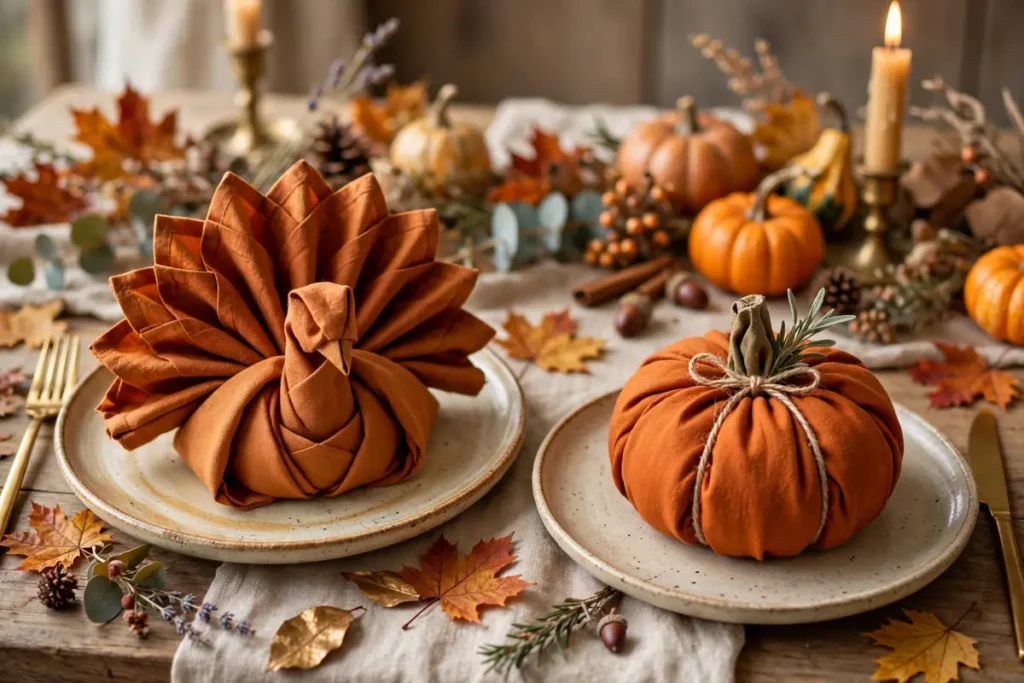
Cloth napkins in autumn colors folded into turkey and pumpkin shapes on dinner plates.
Watch: Napkin Folding for Thanksgiving
CV Linens demonstrates three easy fall napkin folds — turkey, pumpkin, and leaf — with the exact linens and rings used on camera.
At a Glance: Napkin Folding for Thanksgiving
Three classic folds, ranked by difficulty.
| Fold | Difficulty | Tip |
|---|---|---|
| Pumpkin fold | Easy — 2 steps | Tuck the napkin through a napkin ring; the pulled-through top becomes the stem |
| Leaf fold | Easy | Accordion-fold and fan; a burnt-orange napkin reads as a fall leaf |
| Turkey fold | Medium | Press folds with an iron as you go; starch keeps the fan crisp |
| Napkin choice | 20-inch cloth napkins hold folds best; stiffen thin napkins with spray starch | |
| Kid-friendly trick | Hide a small treat inside the pumpkin fold for young guests | |
| Ring alternative | No rings? Tie with twine and tuck in a sprig of rosemary | |
Frequently Asked Questions
Should napkins go on the plate or beside it?
Both are correct. On the plate (especially with a decorative fold) makes the strongest visual statement and is traditional for formal dinners. To the left of the forks (or under them) is practical and common for casual meals. In a glass (fan and rose folds) is elegant and space-saving. Choose based on your fold and formality.
Can I use paper napkins for fancy folds?
Simple folds (rectangle, roll, envelope) work with quality paper napkins; sculptural folds do not — paper lacks the body and tears at stress points. If using paper, choose the thickest dinner napkins and keep folds flat. For the twelve folds in this guide, cloth is strongly recommended.
How far in advance can I fold napkins?
Flat folds: days ahead, stacked with tissue between. Standing/sculptural folds: the morning of — they relax over time, especially in humidity. Fold sculptural designs Thanksgiving morning and place them just before guests arrive.
What is the easiest impressive-looking fold?
The fan fold: accordion pleats, fold in half, secure, fan open. It looks dramatically harder than it is, takes four minutes, and photographs beautifully. The envelope fold with beautiful styling (twine, rosemary, place card) is the easiest overall.
Do I need napkin rings?
No — most folds hold themselves or tie with twine/ribbon. Rings are a nice accent for rolled and fan folds but never a requirement. DIY twine or ribbon ties look more personal than store-bought rings anyway.
How do I fold napkins for a buffet?
Use the pocket fold or simple roll with flatware inside — guests carry the complete bundle from the buffet line to their seat. Set a basket of rolled bundles at the buffet’s start. Sturdy and self-contained beats decorative for buffets.
What is the fastest napkin fold that still looks good?
The envelope fold: diamond orientation, bottom corner up, sides in, top down — under two minutes with practice, and the pocket holds flatware or a place card so it looks thoughtful rather than simple. Add a rosemary sprig in the pocket and it photographs like a much harder fold.
Should napkin color match the tablecloth?
Coordinate rather than match exactly — napkins in a deeper or contrasting shade of the table’s palette look designed, while identical napkin-and-cloth reads as flat. White napkins are the universal exception: they work with everything, every time.
Can I fold napkins the night before?
Flat folds (rectangle, envelope, pocket): yes, stack with tissue between. Standing and sculptural folds (crown, rose, fan): fold Thanksgiving morning — they relax and soften over hours, especially in humid kitchens. The difference between a morning-folded crown and a night-before one is visible.
How do I keep white napkins white?
Wash whites separately in hot water with a bleach alternative (oxygen bleach, not chlorine, which yellows fibers over time), treat stains immediately with cold water and dish soap, and dry in sunlight when possible — UV is a natural whitener. Store white napkins away from wood drawers (acids yellow fabric) in breathable cotton bags.
Conclusion
Napkin folding for Thanksgiving rewards the smallest investment with one of the largest visual payoffs on the table. Learn one fold well — the fan for drama, the envelope for charm, the rectangle for timelessness — style it with a sprig of something green, and repeat it down the table. Your guests will notice, even if they cannot name what changed. Complete the place setting with our Thanksgiving table settings guide and DIY place cards — and enjoy the most beautifully folded holiday yet.