Looking for small living room ideas that actually work in real homes — not just staged showrooms? A compact living room can feel cramped or cozy, and the difference almost always comes down to smart choices: the right layout, furniture that pulls double duty, colors that open the space up, and lighting that flatters every corner. Whether you are furnishing a studio apartment, a small den, or the living area of a townhouse, this guide walks through 15 proven ideas that make a small living room feel bigger, brighter, and more welcoming without knocking down a single wall.
Small living rooms are one of the most common space challenges in American homes, especially in cities where square footage comes at a premium. The good news is that designers have spent decades perfecting the art of making little rooms live large. Below you will find layout strategies, furniture picks, color and lighting tricks, storage solutions, and the mistakes to avoid — everything you need to turn your tight living room into the room everyone gravitates toward.
Start With the Layout: Arrangement Is Everything
Idea 1: Float the Furniture Away From the Walls
It feels counterintuitive, but pushing every piece of furniture flat against the walls often makes a small living room look smaller, not larger. When a sofa and chairs sit in the middle of the room — even just a few inches off the wall — you create the impression of depth and breathing room. Try angling the sofa to face the room’s focal point (a window, fireplace, or TV) and pull chairs in to form a conversational grouping. Leave enough walkway space behind larger pieces so the arrangement reads as intentional rather than cramped. If the room is long and narrow, dividing it into two zones — a seating area and a small reading nook, for example — makes the space feel purposeful instead of awkward.
Idea 2: Define Zones With a Rug
An area rug anchors the seating group and visually expands the room by defining “this is the living space.” The number-one mistake in small living rooms is a rug that is too small. Front legs of the sofa and all chair legs should sit on the rug; a postage-stamp rug floating in the middle of the floor visually shrinks the room. A common rule of thumb is a rug that extends at least 18 to 24 inches beyond the seating on each side. Light, low-pile rugs in neutral tones keep the floor feeling continuous, while a subtle pattern hides everyday wear far better than a flat solid.
Idea 3: Choose One Clear Focal Point
Every room needs a place for the eye to land. In a small living room, one strong focal point — a fireplace, a large piece of art, a window with a view, or the television — keeps the space from feeling visually chaotic. Arrange seating to face it, and keep the sightline clear of clutter. If your focal point is a TV mounted over a fireplace or on a media console, consider a gallery wall or floating shelves flanking it so the wall feels finished rather than blank. When everything in the room points to one place, the room feels composed and calm, which reads as spacious.
Choose Furniture That Earns Its Footprint
Idea 4: Invest in Multifunctional Pieces
In a small living room, every item should do at least two jobs. An ottoman with hidden storage serves as a footrest, extra seating, and a place for throws and remotes. A sleeper sofa or a daybed hosts overnight guests without needing a guest room. A coffee table with a lift top becomes a work-from-home desk. Nesting side tables tuck together when you are not entertaining and fan out when friends come over. Before buying any piece, ask what it does besides its main job — if the answer is nothing, keep looking. This mindset shift alone can cut the furniture count in a room while increasing what the room can actually do.
Idea 5: Go Leggy — Let the Floor Show Through
Furniture with visible legs — mid-century style sofas, armchairs, and consoles — creates an airy feeling because you can see floor space underneath, which tricks the eye into perceiving more square footage. Bulky pieces that sit flush to the floor (skirted sofas, heavy recliners) look substantial and visually eat up the room. The same principle applies to shelving: open-backed bookcases and floating shelves feel lighter than solid-fronted cabinets. If you love a plush look, choose one substantial piece as your anchor and keep everything around it visually light.
Idea 6: Scale Down Without Going Mini
A common error is buying full-size furniture and cramming it in, which is why loveseats, apartment-sized sofas (typically 68 to 72 inches wide), and armless or track-arm chairs exist. But beware the opposite trap: filling a room with undersized “dollhouse” furniture makes the space feel like a compromise. Aim for furniture scaled to the room but designed for adults — a well-proportioned 72-inch sofa with slim arms can seat two comfortably and leave room to breathe. If you are downsizing from a larger home, measure the room first and measure the doorways, then choose pieces that fit the dimensions on paper before falling in love in the store.
Color, Light, and Texture: The Visual Expanders
Idea 7: Light Colors on Walls, With One Bold Exception
Light, warm neutrals — soft white, greige, pale warm gray — bounce light around and make walls recede, which is why they are the default recommendation for small living rooms. But “light” does not mean boring: warm whites with a hint of cream feel inviting, while cool whites can feel clinical under certain lighting. Here is the twist many designers swear by: painting a small room one rich, moody color (deep navy, forest green, charcoal) can actually make it feel larger because the edges of the room blur and the walls stop competing for attention. If you go dark, keep the ceiling light or paint it the same color for a cocooning effect, and make sure your lighting is strong enough to keep the room from feeling like a cave. The one approach to avoid is half measures — a medium tone that neither opens the room nor commits to drama.
Idea 8: Layer Your Lighting
A single overhead light creates harsh shadows and flat, unflattering light — in a small room it emphasizes exactly how small the room is. Aim for three layers: ambient (a ceiling fixture or floor lamp with a soft shade), task (a reading lamp beside the chair, a lamp on the console), and accent (a small picture light, LED strip behind a bookcase, candles). Place at least one light source in every corner; dark corners make walls close in, while lit corners push them back. Floor lamps with slim profiles and upward-facing shades wash the ceiling with light, which draws the eye up and makes ceilings feel higher. If your rental or budget limits wiring, plug-in wall sconces and battery-operated picture lights achieve the same layered effect with no electrician needed.
Idea 9: Use Mirrors and Reflective Surfaces Strategically
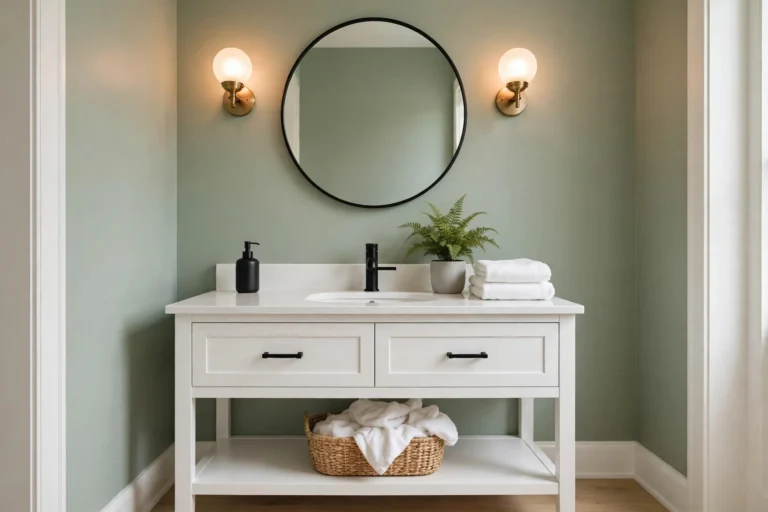
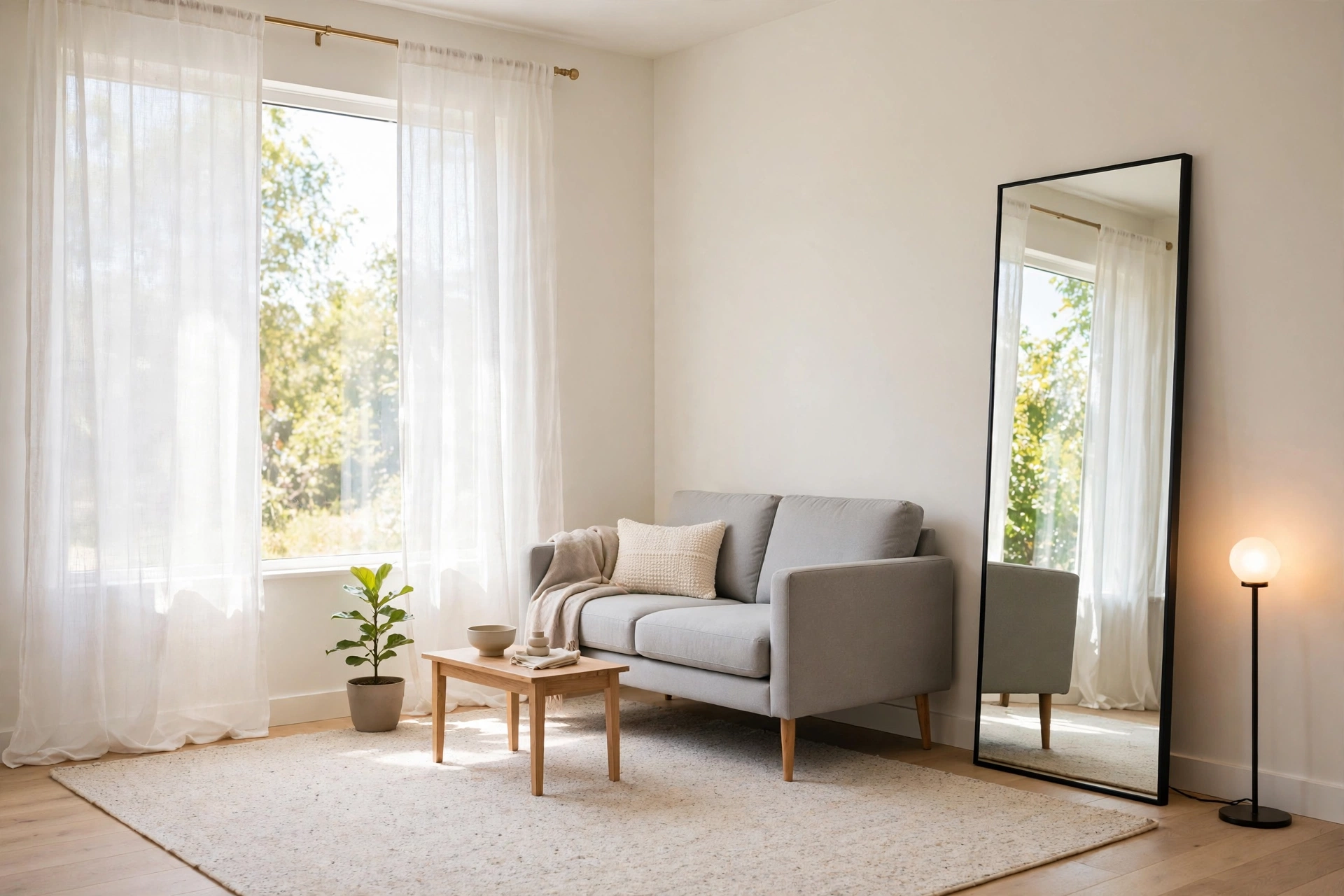
A large mirror opposite a window doubles the light and the view, effectively adding a second window to the room. One oversized mirror makes more impact than a scatter of small ones, which can look cluttered. Beyond mirrors, reflective surfaces — glass coffee tables, lacquered trays, metallic lamp bases — bounce light without adding visual weight. A glass-top coffee table is nearly invisible from across the room, which keeps sightlines open. If you hang art with glass, position it to catch light from a lamp rather than a window to avoid glare. Mirrors with thin or no frames blend into the wall best; heavy ornate frames become a second focal point competing for attention.
Idea 10: Hang Curtains High and Wide
Curtain rods mounted at ceiling height with panels extending well beyond the window frame make windows look dramatically larger and ceilings taller. Let panels just kiss the floor — pooling fabric eats visual space, and too-short curtains look like a mistake. Sheer or light-filtering curtains keep daylight flowing, which is critical in small rooms; heavy drapes can stay but should stack back fully off the glass during the day. If your windows are small, extending the rod 8 to 12 inches past each side of the trim creates the illusion of a much wider window, and a single continuous rod across a whole wall can unify the room.
Storage and Clutter Control
Idea 11: Go Vertical — Use Every Inch of Wall
When floor space is limited, walls are your best friend. Floor-to-ceiling bookcases, floating shelves above the sofa, and a tall narrow armoire all add storage without expanding the footprint. In rentals, tall leaning shelves and freestanding bookcases avoid drilling while delivering the same vertical impact. Store daily items at eye and hand level and relegate rarely used things to the top shelves in labeled bins. One caution: open shelving demands editing — a shelf of curated books and one or two objects looks airy, while a shelf crammed with random items becomes visual noise. If you tend toward clutter, choose closed storage (cabinets, baskets with lids) for the everyday mess and keep open shelves for display.
Idea 12: Corral Clutter Into Zones
Clutter is the fastest way to make a small living room feel tiny, and “put it away” is easier said than done when storage is tight. The practical fix is a home for everything: a lidded basket by the door for mail and keys, a storage ottoman for remotes and chargers, a slim console with drawers behind the sofa for things that migrate around the room. Spend ten minutes each evening resetting the room — it is the highest-impact small-space habit there is. If you are working on a bigger reset, our room-by-room walkthrough at decluttering your home room by room pairs well with these layout ideas, since a calm, edited room always looks larger than a crowded one.
Idea 13: Keep the Floor Clear
Every item that sits directly on the floor shrinks the visible floor area, and visible floor is what makes a room read as spacious. Mount the TV on the wall instead of using a bulky stand, choose wall-mounted or floating nightstand-style side tables, and lift the cat tree or pet bed onto a low platform if possible. Cord management matters too — a tangle of cables behind the media area reads as clutter even when the room is tidy. Adhesive cord clips, a cable box, and a single power strip tucked behind furniture clean up the mess in an afternoon.
Finishing Touches That Punch Above Their Size
Idea 14: One Statement Piece, Then Edit Ruthlessly
A small room can absolutely handle drama — it just needs to be one piece, not twelve. A bold piece of art, a sculptural floor lamp, a patterned accent chair, or a vibrant rug gives the room personality and a point of interest. Once the statement piece is in, edit the rest: every extra knickknack, throw pillow, and small frame dilutes the impact and adds visual noise. A useful test is the photo test — snap a picture of the room on your phone. Anything you notice as clutter in the photo is clutter in real life too, because the camera flattens the space and reveals what your eyes gloss over.
Idea 15: Bring in Life — Plants and Texture
Plants add color, softness, and a sense of scale that flat decor cannot. In a small living room, go for one medium plant (a snake plant or ZZ plant in a corner) rather than a windowsill full of tiny pots that read as clutter. Tall, upright plants draw the eye upward, reinforcing the sense of height you built with high curtains and uplighting. Texture matters as much as greenery: a chunky knit throw, a jute rug layer, linen pillows — these add warmth and depth without adding bulk, and they make a compact room feel intentionally designed rather than merely small.
Quick Comparison: Small vs. Large Room Rules
| Design Choice | Small Living Room | Large Living Room |
|---|---|---|
| Rug size | Large enough for all front legs; extends past seating | Can zone multiple areas with several rugs |
| Furniture profile | Leggy, slim arms, multifunctional | Can handle bulky, skirted, oversized pieces |
| Wall color | Light warm neutrals, or one committed dark | Can layer multiple mid-tones freely |
| Lighting | Layered; light every corner to push walls back | Can leave moody dark zones for intimacy |
| Decor count | One statement piece; edit the rest | Can layer collections and vignettes |
| Storage | Vertical; hidden storage inside furniture | Credenzas and standalone pieces have room to breathe |
Mistakes That Make Small Living Rooms Feel Smaller
- Rug too small — a floating postage-stamp rug visually shrinks the seating area; size up.
- One overhead light — harsh and flattening; layer ambient, task, and accent lighting instead.
- Furniture lined against walls — floating pieces a few inches off the wall creates depth.
- Curtains hung at window height — mount at ceiling height and extend past the trim.
- Too many small decor items — one statement piece beats a dozen knickknacks.
- Ignoring vertical space — blank walls above eye level are wasted storage and display real estate.
- Dark corners — unlit corners close the room in; add a lamp, sconce, or candle.
Frequently Asked Questions
How do I arrange furniture in a very small living room?
Start with the focal point, then place the largest piece (usually the sofa) facing it, floating a few inches off the wall. Add seating to form a conversational grouping, keep walkways at least 24 to 30 inches wide, and anchor the arrangement with a properly sized rug. Measure before you buy — furniture that fits on paper is the difference between cozy and cramped.
What colors make a small living room look bigger?
Light, warm neutrals (soft white, greige, pale warm gray) reflect light and make walls recede. For a bolder approach, one deep, saturated color on all walls can blur the room’s edges and make it feel larger — the key is committing fully rather than stopping at a muddy mid-tone.
Should I avoid dark furniture in a small living room?
Not necessarily. One dark anchor piece (a sofa, a bookshelf) adds depth and contrast, especially against light walls. The problem is an all-dark room with heavy, floor-hugging pieces — balance one substantial item with leggy, light-feeling pieces around it.
How many seats can fit in a small living room?
More than you think if you choose multifunctional seating: a loveseat plus two accent chairs seats five, and a storage ottoman adds a sixth seat for gatherings. Avoid the temptation to line the room with chairs — a tight conversational cluster seats the same number in less space.
Does a TV make a small living room feel smaller?
Only if it dominates. Mount it on the wall to free floor space, and balance it with art, shelves, or a gallery wall so it reads as part of a composed wall rather than a black hole. A media console with closed storage underneath hides components and doubles as a display surface.
A small living room rewards intention: every piece earns its place, every wall works hard, and lighting does the heavy lifting. Start with the layout, add furniture that multitasks, open the room with light colors and mirrors, and finish with one statement piece. The result is a room that feels designed, not diminished — proof that small square footage is no barrier to a living room you love.