Ask lawn-care professionals when the most important season for a lawn is, and most will surprise you: it is fall. These fall lawn care tips focus on the work that matters most — the six to eight weeks when grass shifts energy from top growth to root development, building the reserves that determine how your lawn survives winter and how fast it greens up in spring. Aeration, overseeding, fertilizing, and proper mowing in fall do more for next year’s lawn than anything you do in spring or summer. This guide covers the complete fall routine for cool-season and warm-season grasses, the timing that makes or breaks each task, and the mistakes that waste the season.
Why fall works: soil is still warm from summer (ideal for seed germination and root growth), air temperatures are cooling (less heat stress), weed pressure drops (most weeds are annuals finishing their cycle), and rainfall typically increases. Grass responds by growing roots aggressively — exactly what you want before winter dormancy. Miss this window and you spend spring playing catch-up.
Tip 1: Keep Mowing — And Lower the Height Gradually
Do not stop mowing when growth slows; grass keeps growing until it goes dormant, and long grass matted under snow invites snow mold disease. Continue mowing as needed through fall, but adjust the strategy: for the final mowings, gradually lower cool-season lawns to about 2 to 2.5 inches (from a summer height of 3 to 4 inches). The last cut of the season should be on the shorter side — short enough that grass does not mat, but not scalped. Never remove more than one-third of the blade in a single mowing, even in fall. Keep mulching the clippings; they return nutrients as they decompose. And mow or mulch fallen leaves rather than letting them smother the lawn — a mulching mower chops leaves into beneficial organic matter, but thick unmowed layers block light and trap moisture.
Tip 2: Aerate — The Single Best Fall Task
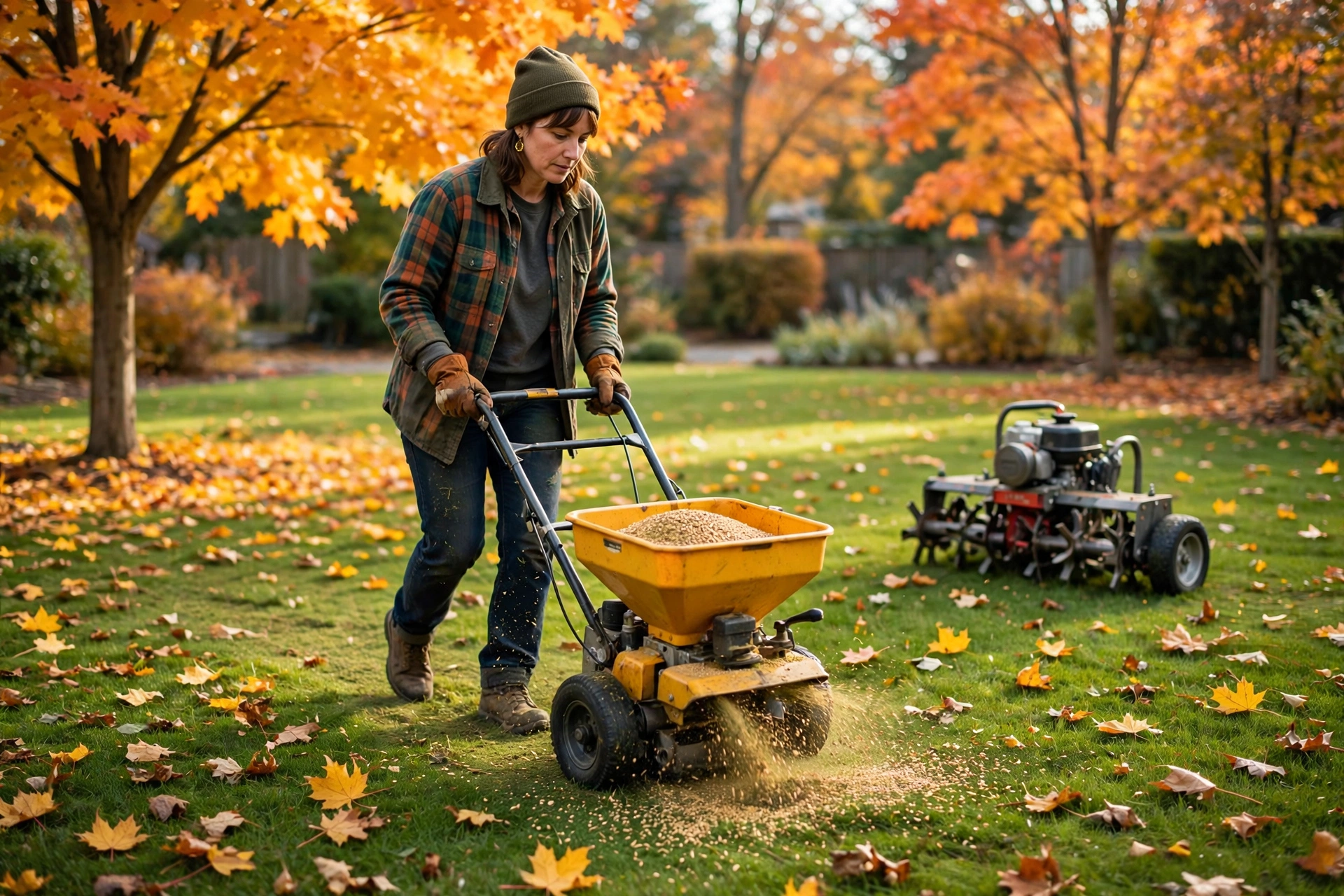
Core aeration (pulling small soil plugs) relieves compaction, improves water and nutrient penetration, and gives seed-to-soil contact for overseeding. Fall is the ideal time for cool-season lawns. Aerate when the soil is moist but not soggy — a day or two after rain is perfect; aerating bone-dry soil barely penetrates, and aerating mud makes a mess. Focus on high-traffic areas, which compact most. Leave the pulled plugs on the lawn to break down naturally; they return beneficial microbes to the soil. Rent a core aerator for a half day (they are heavy — bring help or a trailer), mark sprinkler heads and shallow utilities first, and make two passes in the worst areas. Spike aerators (which just poke holes) are far less effective — always choose core aeration.
Tip 3: Overseed Thin and Bare Spots
Fall overseeding takes advantage of warm soil, cool air, and reduced weed competition — germination conditions do not get better. For cool-season grasses, aim for early to mid-fall (roughly 45 days before your area’s first expected hard frost), giving seedlings time to establish before winter. Choose seed matched to your region and sun conditions, and consider modern disease-resistant cultivars — seed technology has improved dramatically, and premium seed outperforms cheap contractor mixes.
The method: mow short, aerate, spread seed with a broadcast spreader at the recommended rate (more is not better — overcrowded seedlings compete and weaken), rake lightly for seed-to-soil contact, and keep the seedbed consistently moist for two to three weeks until germination, then water deeply and less often. A light top-dressing of compost or peat moss over the seed retains moisture and improves contact. Skip pre-emergent herbicides anywhere you seed — they prevent grass seed from germinating just as effectively as weed seed.
Tip 4: Fertilize — But Time It Right
Fall fertilization is the most important feeding of the year for cool-season lawns. The classic program: one application in early fall (September) as growth resumes, and a second “winterizer” application in late fall (late October to November, depending on region) after top growth has stopped but roots are still active. That late feeding goes almost entirely to root reserves, fueling early spring green-up without the excessive top growth that early-spring fertilizer causes.
Use a fertilizer appropriate for fall — typically higher in nitrogen for the early application, with the winterizer balanced or potassium-leaning to support cold hardiness. Better yet, base it on a soil test rather than guessing. Apply with a calibrated spreader, water it in lightly, and keep fertilizer off driveways and sidewalks where it washes into storm drains. For warm-season grasses (Bermuda, zoysia), the schedule differs: fertilize in late summer to early fall at most, and do not push late-fall growth that a freeze will damage.
Tip 5: Tackle Weeds Strategically
Fall is prime time for broadleaf weed control. Perennial weeds like dandelions and clover are actively moving nutrients to their roots in fall — and they carry systemic herbicides down with them, making fall applications more effective than spring ones. Spot-treat rather than blanket-spraying; most lawns need only targeted treatment. For a non-chemical approach, hand-pull after rain when roots release easily, and remember that a thick, healthy lawn (from overseeding and proper mowing) is the best weed prevention there is. Avoid weed-and-feed combo products on newly overseeded areas — the herbicide component harms your new grass seed.
Tip 6: Manage Leaves — Do Not Let Them Smother the Lawn
A thick mat of wet leaves blocks light, traps moisture, and kills grass underneath within weeks. But you do not need to bag every leaf — a mulching mower chops leaves into dime-sized pieces that filter into the lawn and decompose, feeding the soil. The rule: if you can still see grass through the chopped leaves, you are fine; if the lawn disappears under leaf cover, mow again or rake the excess onto beds as mulch. This “mulch-mowing” approach returns organic matter and nutrients free, and research consistently shows it benefits lawns. Save the bagging for diseased leaves only.
Tip 7: Water Until the Ground Freezes
Lawns still need water in fall — roots are growing actively even as top growth slows. Continue providing about an inch per week (from rain plus irrigation) until the ground freezes or the lawn goes fully dormant. Newly overseeded areas need consistent moisture until established. Then winterize the irrigation system: drain lines or blow them out before hard freezes to prevent burst pipes — one of the most expensive and preventable fall mistakes. Disconnect hoses from spigots for the same reason.
Tip 8: Test Your Soil — Fall Is Ideal
Fall soil testing gives you results in time to act: lime applied in fall has all winter to adjust pH before spring growth. Most grasses prefer pH between 6.0 and 7.0; outside that range, nutrients lock up regardless of how much fertilizer you apply. Your cooperative extension offers inexpensive testing with specific recommendations — far cheaper than guessing with products. If the test calls for lime, pelletized lime is easiest to spread; it works slowly, which is exactly why fall application is perfect.
Tip 9: Repair, Edge, and Tidy
Fall is for fixing what summer broke: patch bare spots, re-cut bed edges for a crisp look going into winter, clean and store the mower properly (stabilize or drain fuel, clean the deck, sharpen the blade for spring), and put away hoses and sprinklers. Sharpening the blade now means one less task in the spring rush. Clean gutters too — overflowing gutters dump water onto lawn areas and create soggy spots that damage turf over winter.
Tip 10: Plan for Winter — Then Leave It Alone
Once the final mow is done and the lawn is dormant, the best care is no traffic: avoid walking on frozen grass (it breaks brittle blades and damages crowns), keep heavy objects off dormant turf, and mark driveway and walkway edges so snow shoveling and plowing do not tear up the lawn. Brush heavy snow off if you can do so gently, but never use ice melt products on or near the lawn — the salts damage grass and soil. A dormant brown lawn in winter is normal for cool-season grasses; it is resting, not dead. With the yard officially on winter break, it is a good time to shift family energy indoors — our indoor winter family activities guide has plenty of ideas for the cold months ahead.
Fall Lawn Care Calendar
| Timing | Cool-Season Grasses | Warm-Season Grasses |
|---|---|---|
| Early fall (Sept) | Aerate, overseed, first fall fertilizer, begin leaf mulching | Final fertilizer (early Sept only), keep mowing at summer height |
| Mid fall (Oct) | Continue overseed watering, spot-treat weeds, soil test | Reduce watering as growth slows; no more nitrogen |
| Late fall (Nov) | Winterizer fertilizer after top growth stops, final mow shorter, winterize irrigation | Final mow, winterize irrigation, leave dormant — do not fertilize |
| After dormancy | Stay off frozen turf; plan spring from soil test results | Stay off dormant turf; overseed with ryegrass only if desired for winter color |
Common Fall Lawn Mistakes
- Fertilizing warm-season grass late — pushes tender growth that winter kills; stop nitrogen by early fall.
- Overseeding too late — seedlings need ~45 days before hard frost; late seed wastes money.
- Applying pre-emergent on new seed — blocks your grass seed along with the weeds.
- Leaving leaves matted on the lawn — smothers grass in weeks; mulch-mow instead.
- Scalping the final mow — too short stresses crowns going into winter; go moderately shorter, not shaved.
- Stopping water too early — roots grow until freeze-up; keep watering until dormancy.
- Skipping the soil test — fertilizing blind wastes money and can worsen pH problems.
Frequently Asked Questions
When should I stop mowing in the fall?
Mow until top growth stops — usually around the first hard frosts. Make the final cut a bit shorter than summer height (about 2 to 2.5 inches for cool-season lawns) so grass does not mat under snow, but do not scalp it.
Is fall really better than spring for overseeding?
Yes, for cool-season grasses. Fall offers warm soil for germination, cool air that reduces stress, fewer competing weeds, and typically more reliable rain. Spring overseeding fights crabgrass pressure and summer heat before seedlings are established.
What is a winterizer fertilizer?
A late-fall fertilizer application made after top growth has stopped but while roots are still active. The nutrients go to root reserves rather than blade growth, fueling faster, healthier spring green-up. Timing matters more than the specific product — too early and you push top growth; too late and frozen ground wastes it.
Should I bag leaves or mulch them?
Mulch-mow them whenever possible. Chopped leaves decompose into the lawn, returning nutrients and organic matter free. Only bag if the leaf layer is so thick the mower cannot chop through it, or if the leaves are diseased.
My lawn is brown in late fall — is it dead?
Probably dormant, not dead. Cool-season grasses naturally brown as they go dormant in cold weather; the crowns and roots are alive underground. Tug test: if the grass resists pulling, the roots are alive. A lawn that was healthy going into fall greens up in spring — which is exactly what this fall routine ensures.
Fall lawn care tips all point to one truth: autumn is when lawns are built, and spring is when they are revealed. Aerate, overseed, feed on schedule, mulch the leaves, and water until freeze-up — do that work now, and next spring’s lawn will look like you hired a service. Pair the routine with a soil test each fall so every application is based on data, not guesswork, and your lawn will compound its gains year after year.
Warm-Season Grasses: The Fall Playbook Is Different
If you grow Bermuda, zoysia, St. Augustine, or centipede grass, fall care inverts the cool-season routine. Your grass is heading into dormancy, not gearing up for growth, so the goal is helping it sleep well rather than pushing growth:
- Stop nitrogen by early fall. Late nitrogen produces tender growth that winter cold damages. A potassium-focused application in late summer supports hardiness without pushing blades.
- Keep mowing until dormancy. Maintain normal mowing height; a final slightly-lower cut before dormancy reduces winter disease pressure.
- Overseed with ryegrass only if you want winter color. Annual ryegrass sown in fall gives a green winter lawn in the South, but it competes with the warm-season grass in spring — mow it short and let heat take it out.
- Watch for large patch and brown patch. These fungal diseases love fall’s warm days and cool nights on warm-season turf; a preventive fungicide in early fall protects susceptible lawns.
- Do not aerate late. If you aerate warm-season grass, do it in late spring or summer when it recovers fast — fall aeration heals slowly going into dormancy.
Diagnosing Fall Lawn Problems
| What You See | Likely Cause | Fall Action |
|---|---|---|
| Circular brown patches with dark edges | Brown patch fungus | Improve air circulation; avoid evening watering; fungicide if severe |
| White or pink webby patches after snow melt | Snow mold | Prevent with final short mow and leaf removal; rake affected areas in spring |
| Thin, weedy areas despite seeding | Poor seed-to-soil contact or dry seedbed | Top-dress with compost; keep seedbed moist; reseed bare spots promptly |
| Grass pulls up easily in patches | Grubs feeding on roots | Confirm by lifting sod and counting grubs; treat per extension guidance |
| Yellowing in streaks | Fertilizer skip or dull mower blade | Recalibrate spreader; sharpen blade; spot-feed missed strips |
| Moss spreading in shady spots | Too much shade, acidic or compacted soil | Soil test; lime if acidic; prune branches for light; accept groundcover in deep shade |
The Economics: DIY vs. Hiring Fall Lawn Care
A full fall renovation (aeration, overseeding, fertilizing) as a DIY project typically costs $100 to $250 in seed, fertilizer, and a half-day aerator rental for an average suburban lawn. A lawn-care company charges roughly $300 to $600 for the same package, depending on lawn size and region. The DIY savings are real, but so is the labor — aerators are heavy, and timing matters. A sensible middle path: rent the aerator and spread seed yourself (the satisfying, high-impact parts), and hire out only what you dread. Either way, get it done in the fall window — paying for spring overseeding instead is paying more for worse results.
Frequently Asked Questions (Continued)
Can I aerate and overseed on the same day?
Yes — in fact, that is the ideal sequence. Aerate first, then spread seed so it falls into the aeration holes for excellent seed-to-soil contact. Water everything in well afterward. Doing them together saves a weekend and improves germination noticeably.
How late is too late to overseed?
When soil temperatures drop consistently below 50°F, cool-season seed germinates poorly or not at all. As a rule of thumb, finish overseeding at least 45 days before your area’s average first hard frost. Late seed that does not establish before winter is largely wasted.
Do I need to water after the winterizer application?
A light watering helps move fertilizer off the blades and into the soil, preventing burn. But do not overwater late in the season — soggy soil going into freeze-up invites disease. A quarter inch is plenty.