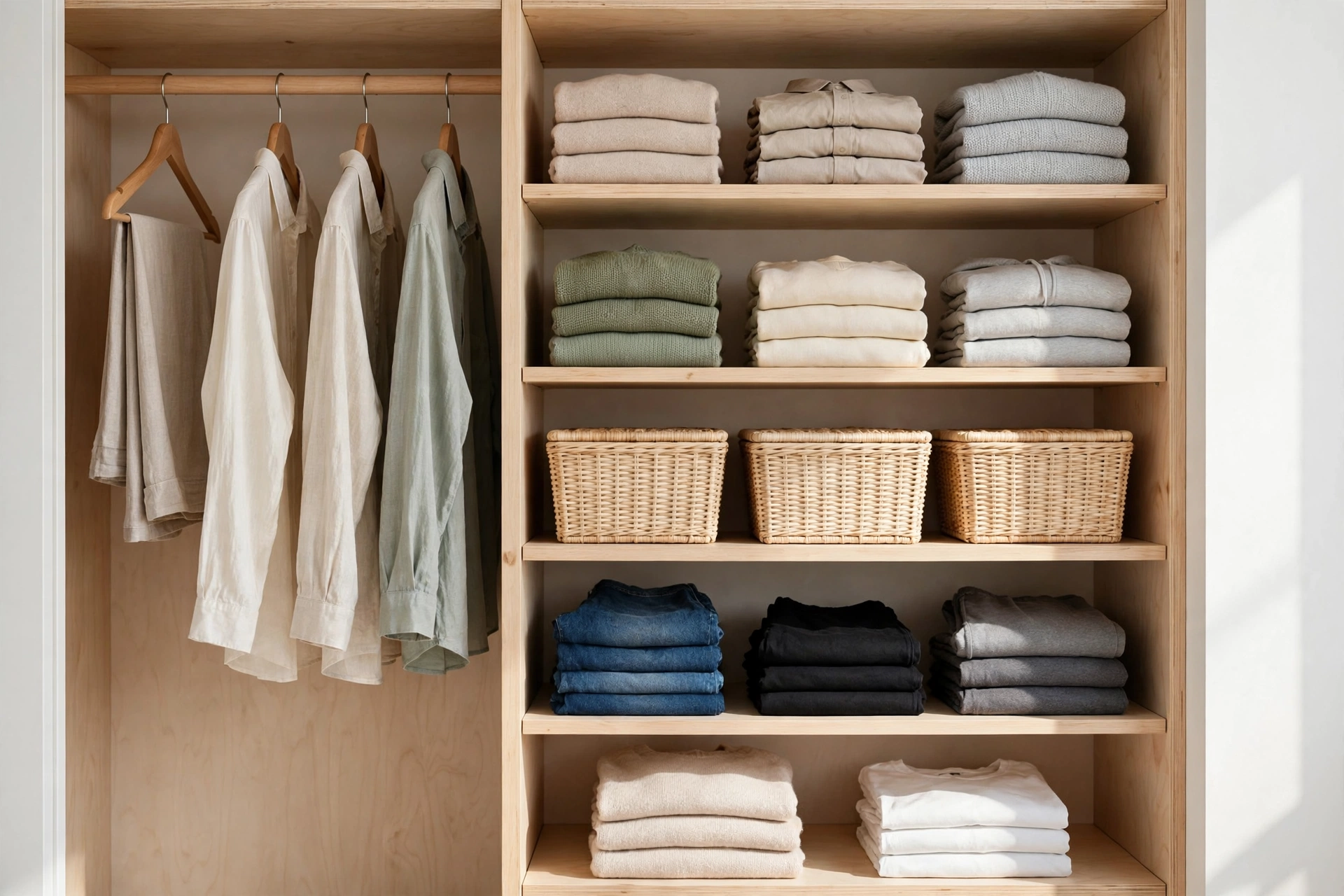
Learning how to declutter your home room by room is the most reliable way to get — and stay — organized, because it turns an overwhelming whole-house project into a series of small, winnable battles. This guide walks you through every room with a clear process: what to tackle first, the exact sorting method that works, what to do with the “maybe” pile, and how to keep clutter from creeping back. No marathon purge sessions, no guilt — just a practical plan that fits a busy adult life.
Why Room-by-Room Beats Whole-House Decluttering
Trying to declutter your entire home at once is like trying to clean every dish in a restaurant kitchen — you burn out before you finish. Room-by-room decluttering works because each room is a finite project with a visible finish line. You get the psychological reward of completion, which fuels the next room.
It also respects how clutter actually accumulates. Different rooms collect different things for different reasons: the kitchen gathers duplicates and expired items, closets gather clothes that no longer fit your life, the garage gathers “someday” projects. A room-specific approach lets you apply the right strategy to each type of clutter.
The 4-Box Method: Your Decluttering System
Every room uses the same core system. Get four boxes or bags and label them:
- Keep: Items you use, love, or genuinely need. They stay — but they must have a home.
- Donate/Sell: Usable items you no longer need. Donate promptly or list for sale within a week.
- Trash/Recycle: Broken, expired, stained, or genuinely useless items. Be honest here.
- Relocate: Items that belong in another room. Put them in the box and deliver at the end.
Work in one small zone at a time — a single drawer, one shelf, one closet section. Pull everything out, sort into the four boxes, wipe the space clean, and put back only the Keeps in an organized way. Never start a second zone until the first is finished.
The Order: Which Room to Declutter First
Start where you will feel the biggest relief fastest. For most adults, this order works well:
- Bathroom — small, fast, and full of easy decisions (expired products are obvious trash). A quick win builds momentum.
- Bedroom closet — high daily impact; getting dressed becomes easier immediately.
- Kitchen — the functional heart of the home; duplicates and expired food are easy targets.
- Living room — visible clutter here affects your mood most; quick surface wins.
- Home office — paper and tech clutter need a dedicated session.
- Bedroom (non-closet) — nightstands, under-bed, dressers.
- Kids’ rooms and toys — involve the kids; do it with them, not for them.
- Laundry room and linen closet — towels, sheets, cleaning supplies.
- Garage, basement, and attic — the deep storage zones; save for last when your skills are sharp.
Room 1: The Bathroom
Bathrooms are the easiest decluttering win in the house. Most of the clutter is expired, empty, or duplicated.
- Toss expired medications (check dates; take them to a pharmacy take-back program rather than flushing).
- Toss expired sunscreen, old makeup (mascara older than 3 months, foundation older than a year), and dried-out products.
- Consolidate half-empty bottles of the same product.
- Keep only the products you actually use weekly; store backups elsewhere.
- Limit each person to one bin or shelf — physical limits prevent re-accumulation.
- Relocate anything that does not belong (tools, random papers, that box of hair ties from 2019).
Time estimate: 30–60 minutes. Maintenance: a 5-minute monthly check for empties and expired items.
Room 2: The Bedroom Closet
Closet clutter is decision fatigue in physical form. Every unworn item makes getting dressed harder.
The Closet Sorting Questions
For each item, ask in order:
- Have I worn this in the last 12 months? (If no, it goes unless it is occasion-specific like a suit or formal dress.)
- Does it fit my body and my life right now? (Not “when I lose weight” or “if I ever need it.”)
- Would I buy it again today?
- Is it damaged beyond reasonable repair?
Closet Tactics That Work
- The hanger trick: Turn all hangers backward. When you wear something, return it facing forward. After 6 months, donate everything still backward.
- One in, one out: Every new clothing purchase means one item leaves. This single rule prevents future closet clutter.
- Contain categories: All workout clothes in one drawer, all socks in one organizer. When the container is full, something must go before anything new comes in.
- Donate or sell smartly: Good-condition clothes can go to consignment shops or donation centers — pairing a donation drop-off with a family volunteering outing makes decluttering feel good twice over.
Time estimate: 2–4 hours for a full closet. Maintenance: seasonal 30-minute review.
Room 3: The Kitchen
Kitchens accumulate duplicates (three spatulas, two blenders), expired food, and single-use gadgets. Work zone by zone: pantry, fridge, cabinets, drawers, counters.
- Pantry: Check every expiration date. Toss stale spices (ground spices lose potency after 1–2 years). Group remaining items by category: baking, grains, snacks, canned goods.
- Fridge and freezer: Toss expired condiments and mystery leftovers. Wipe shelves. Going forward, our guide to reducing food waste helps keep the fridge from refilling with waste.
- Cabinets: Pull out all dishes, glasses, and mugs. Keep the number you actually use (a household of two does not need 30 mugs). Match every container with a lid — lidless containers and containerless lids go.
- Drawers: The utensil drawer test: if you have not used it in a year and it is not a specialty holiday item, let it go. Junk drawers get one small organizer tray; overflow leaves.
- Counters: The goal is clear counters. Appliances you use daily stay; everything else gets a cabinet home. Clear counters make the whole kitchen feel decluttered instantly.
- Single-use gadgets: The avocado slicer, the banana hanger, the egg separator — if a regular knife or tool does the job, the gadget goes.
Time estimate: 3–5 hours total, split across sessions. Maintenance: wipe-and-check one zone weekly while cooking.
Room 4: The Living Room
Living rooms suffer from surface clutter — the flat surfaces collect everything. The fix is fast:
- Clear every flat surface completely, then put back only what belongs and looks intentional.
- Give every remote, charger, and controller a home (a basket, a drawer, a charging station).
- Sort media: keep the books and games you will actually revisit; donate the rest.
- Tackle the “decor drift” — knickknacks that accumulated without decisions. Keep the ones you love; the rest can go.
- Address the paper pile: mail gets sorted daily into action, file, or recycle. No “I’ll deal with it later” stack.
Time estimate: 1–2 hours. Maintenance: a 10-minute nightly reset — everything back in its home before bed.
Room 5: The Home Office
Paper and digital clutter compound here. Handle both:
Physical Paper
- Sort into: action needed, file, shred, recycle. Touch each paper once and decide.
- Digitize what you can — scan important documents and shred the originals (keep originals of legal documents like deeds and birth certificates).
- Create a simple filing system: one folder per category, labeled. If filing takes more than 60 seconds, the system is too complex.
- Set up an inbox tray for incoming paper so it never lands on the desk surface.
Digital Clutter
- Clear your desktop to fewer than 10 items; file the rest.
- Unsubscribe from 10 email lists today (use the search term “unsubscribe” in your inbox).
- Delete duplicate photos and blurry shots; back up the keepers.
- Organize files into a simple folder structure and archive anything older than a year that you do not actively use.
Time estimate: 2–3 hours. Maintenance: weekly 15-minute paper and inbox processing.
Room 6: Kids’ Rooms and Toys
Do this with your kids, not while they are at school — decluttering their things behind their back breaks trust. Make it a game: the “keep, share, toss” sort. Kids are often more ruthless than parents expect when given permission to choose.
- Sort toys into categories first (building, art, pretend, games) — duplicates become obvious.
- Broken toys with missing critical pieces go immediately.
- Use the “toy rotation” system: box up half the toys and swap monthly. Kids play more deeply with fewer options, and the stored toys feel new again.
- Artwork: keep favorites in a portfolio or photograph them; let the rest go.
- Clothes: apply the same 12-month and fit questions as adult closets, more frequently since kids grow fast.
Rooms 7–9: Laundry, Linens, and Storage Zones
Laundry Room and Linen Closet
- Keep two sets of sheets per bed, maximum. Towels: two bath towels per person plus a few spares.
- Toss stained, threadbare, or musty linens — cut them into cleaning rags before discarding.
- Consolidate cleaning supplies; dispose of old chemicals per local hazardous waste rules.
Garage, Basement, and Attic
Save these for last. They contain the hardest decisions: sentimental items, “someday” projects, and other people’s stuff.
- Sentimental items: Keep the best representatives, not everything. Ten photos of grandma’s house, not 200. One box of childhood mementos, not ten.
- “Someday” projects: Set a deadline. If you have not started the project in two years, you are storing guilt, not supplies.
- Other people’s stuff: Give it a 30-day notice. Text the owner: “I’m clearing the garage — please pick up your things by [date] or I’ll donate them.”
- Hazardous items: Old paint, chemicals, and batteries go to hazardous waste collection, not the trash.
What to Do With the Donate and Sell Piles
A donate pile that sits in your hallway for a month is just relocated clutter. Finish the job:
- Donate: Bag it, put it in your car immediately, and drop it off within 48 hours. Schedule the drop-off like an appointment.
- Sell: List higher-value items within one week. Set a deadline: anything unsold after 30 days gets donated. Do not let selling become indefinite storage.
- Trash: Take it out the same day. Full bags sitting around undo your psychological win.
How to Keep Clutter From Coming Back
Decluttering is a project; staying decluttered is a system. These five rules maintain your work:
- One in, one out: Every new item means one leaves. Non-negotiable.
- Everything has a home: If you cannot name where something lives, it is clutter waiting to happen.
- The nightly reset: 10 minutes before bed, return everything to its home. Wake up to a clean house daily.
- The 24-hour purchase pause: For non-essential purchases, wait a day. Most urges fade.
- Seasonal sweeps: Four times a year, do a quick pass through closets, pantry, and storage. Small, regular maintenance beats another whole-house purge.
Decluttering on a Busy Schedule: The 15-Minute Method
Not everyone has weekend blocks for room-by-room sessions. The 15-minute daily method declutters a home in about two months without ever feeling like a project:
- One zone per day: A drawer, a shelf, half a closet, one cabinet. Set a timer for 15 minutes and sort with the 4-box method.
- The daily donation bag: Keep a bag by the door. Every day, find at least one item to put in it. When full, it goes to the car immediately.
- The 5-minute nightly reset: Every evening, return 10–20 items to their homes. This alone prevents most re-cluttering.
- Weekend power hour: One focused hour on Saturday or Sunday for a bigger zone (a full closet section, the pantry).
The math works: 15 minutes × 60 days = 15 hours of decluttering — enough for most homes — with zero burnout. Consistency beats intensity for busy adults.
Where to Donate, Sell, and Recycle: Quick Reference
| Item Type | Best Donate Option | Best Sell Option | Notes |
|---|---|---|---|
| Clothing (good condition) | Local shelters, Goodwill, Salvation Army | Consignment shops, Poshmark, ThredUp | Sell only items worth $20+; donate the rest |
| Furniture | Habitat ReStore, local charities (many pick up) | Facebook Marketplace, Craigslist | Schedule pickup before you start so it leaves fast |
| Electronics | Schools, nonprofits | eBay, trade-in programs | Wipe all data first — factory reset everything |
| Books | Libraries, Little Free Libraries, schools | Used bookstores (credit) | Donate freely; used books sell for little |
| Kitchenware | Shelters, thrift stores | Garage sales, Marketplace lots | Bundle into lots — single mugs are not worth listing |
| Kids’ gear | Parent groups, shelters | Consignment sales, Marketplace | Check for recalls before selling kids’ items |
| Hazardous (paint, chemicals) | Municipal hazardous waste collection | Never trash or pour down drains | |
Whatever you choose, apply the 48-hour rule: donations leave the house within 48 hours, and sale listings go up within a week. A pile by the door is not decluttered — it is relocated.
Frequently Asked Questions
How do I start decluttering when I feel overwhelmed?
Start with the smallest possible win: one drawer in the bathroom. Set a 15-minute timer and sort only that drawer. The visible result builds momentum, and momentum is what carries you through the bigger rooms. Never start with sentimental items or the garage — start where decisions are easy.
What is the 4-box method for decluttering?
The 4-box method sorts every item into Keep, Donate/Sell, Trash/Recycle, or Relocate. You work one small zone at a time, pulling everything out, sorting into the boxes, cleaning the space, and putting back only the Keeps. It works because it forces a decision on every single item.
How long does it take to declutter a whole house?
For an average home, expect 20–40 hours of active work spread over 4–8 weeks. Bathrooms take under an hour; closets and kitchens take several hours each; garages and storage zones take the longest. Working in 1–2 hour sessions prevents burnout and keeps decisions sharp.
What should I do with sentimental clutter I can’t throw away?
Keep the best representatives rather than everything — photograph bulky items, keep one box of true treasures, and give yourself permission to let go of inherited items that don’t fit your life. Sentimental value lives in the memory and the story, not necessarily in the object.
Should I sell or donate my decluttered items?
Sell items worth significant money (generally $50+), and donate the rest. Set a 30-day deadline for selling — anything unsold gets donated. The time and mental energy of selling low-value items usually costs more than the items are worth.
How do I declutter if my partner or family won’t participate?
Declutter only your own things and shared spaces’ obvious trash — never someone else’s belongings without permission. Often, seeing your spaces transform motivates family members to join. For shared spaces, agree on simple rules together (like the nightly reset) rather than demanding a full purge.
The Bottom Line
Knowing how to declutter your home room by room turns an impossible project into a series of small victories. Start with the bathroom, use the 4-box method, finish each room completely before moving on, and get donations out of the house within 48 hours. Then protect your work with one-in-one-out and a nightly reset. A decluttered home is not about perfection — it is about a space that supports your life instead of draining it.