Most couples celebrate their wedding anniversary with fanfare, but the anniversary of the day you first met is often the sweeter, more personal milestone. It marks the exact moment your story began — the nervous hello, the accidental eye contact, the conversation that lasted three hours longer than planned. A small first meeting anniversary gathering is the perfect way to honor that origin story without the pressure or expense of a big wedding-style party. Whether you met at a coffee shop, a college dorm, a friend’s barbecue, or a dating app, gathering a handful of the people who matter most to relive and celebrate that beginning can feel more meaningful than any grand gesture.
The beauty of a small gathering is its flexibility. You are not bound by wedding traditions, seating charts, or other people’s expectations. Ten people or fewer, one good meal or activity, and a few thoughtful touches are all you need. This guide walks you through everything: choosing a format that fits your story, recreating the magic of where you met, planning a timeline that keeps stress low, decorating on any budget, and weaving your first-meeting story into the evening so guests feel like they were there. By the end, you will have a complete, practical plan for an intimate celebration that your friends and family will talk about for years.
Why Celebrate the Day You Met?
Your wedding day gets all the glory, but ask most long-married couples which day they actually think about, and many will tell you it is the day they met. That is the day the universe quietly changed direction. Celebrating it is a way of saying that the love itself — not the ceremony, the dress, or the venue — is the real event worth marking.
There are practical reasons too. Wedding anniversaries carry heavy expectations and often collide with busy seasons, in-law obligations, and milestone-year pressure. A first-meeting anniversary is entirely yours. Nobody else claims it, nobody else has opinions about how you should celebrate it, and nobody will be offended if you keep it tiny. For couples who eloped, had a courthouse wedding, or simply prefer intimacy over spectacle, it can become the primary celebration of the year.
It is also a wonderful excuse to gather your inner circle. Big wedding anniversaries tend to demand big guest lists. A first-meeting anniversary invites the opposite: your best friends, your siblings, maybe the friend who introduced you. These are the people who actually know your story, who remember the early days, and who will genuinely enjoy hearing the details retold. Smaller groups mean deeper conversation, real laughter, and the kind of evening where everyone leaves feeling closer.
Finally, the theme writes itself. Every decoration, toast, and menu choice can point back to that first encounter. If you met over tacos, serve tacos. If you met at a bookstore, build the centerpieces from old books. Guests love a theme with a true story behind it, and you never have to explain your choices twice.
Choosing the Right Format for Your Gathering
Before you book anything, decide what kind of evening fits your story and your energy. The format shapes everything else — the guest list, the budget, the food, and the flow of the night. Here are the formats that work best for small first-meeting anniversary gatherings, with honest notes on when each one shines and when it does not.
The Recreate-the-Date Dinner
This is the classic move and, for most couples, the most emotional one. Host a dinner that recreates your first date as closely as you can: the same restaurant if it still exists, the same cuisine if it does not, the same playlist you were both pretending not to notice. Invite six to ten people and let the evening unfold like a dinner party built around your origin story. Between courses, each of you tells your version of that first meeting — guests love hearing how differently two people remember the same evening. If you want to raise the stakes, ask a couple of guests who were there in the early days to share what they remember. Their version will be funnier than yours, guaranteed.
The Casual Backyard or Rooftop Hangout
Not every first meeting was a candlelit dinner, and not every celebration needs to be. If you met at a party, a game night, or through mutual friends, a relaxed backyard cookout or rooftop gathering feels truer to your story than a formal dinner. String lights, a simple grill menu or taco bar, a cooler of drinks, and a Bluetooth speaker playing songs from the year you met. The dress code is whatever you were wearing back then — or a playful “dress like it’s the year we met” theme that gives everyone an excuse to dig through old photos. This format is the most budget-friendly and the easiest to host, because the setting does most of the work.
The Activity-Based Gathering
Some couples bond over doing, not dining. If you met at a hiking trail, a pottery class, a trivia night, or a bowling alley, build the gathering around that activity. Book a private lane, reserve a pottery studio for a group session, host a trivia night with a round of questions about your relationship, or organize a group hike that ends with a picnic. Activities solve the biggest problem of small parties — awkward conversational lulls — because there is always something to do. They also photograph beautifully and give guests a story of their own to take home.
The Intimate Restaurant Takeover
If cooking for guests sounds like a chore rather than a joy, book the private room of the restaurant where you had your first date, or one with a similar vibe. Many restaurants offer small private dining rooms for parties of eight to fourteen with a set menu, which removes all hosting stress: no cooking, no dishes, no cleanup. Ask the restaurant if they will print a custom menu with your first-meeting date on it — most will do this for free or for a small fee, and it becomes an instant keepsake. If the original restaurant has closed, choose one in the same neighborhood and frame it as “the spirit of that night, ten blocks over.”
The Weekend Micro-Getaway
For the couple whose first meeting happened in a specific place — a college town, a beach city, a music festival — consider turning the anniversary into a small group trip. Rent a house for a long weekend and invite your four or five favorite couples. Visit the spot where you met, eat where you ate, and let the weekend breathe. This is the most expensive option on the list, but splitting a vacation rental keeps it reasonable, and the shared experience bonds the group in a way no single evening can. For inspiration on structuring couple-friendly trips, see our guide to marriage anniversary weekend getaway ideas, which adapts well to first-meeting celebrations.
Building the Guest List: Small but Mighty
The guest list is where small gatherings succeed or fail. Too many people and you lose the intimacy; too few of the right people and the energy flatlines. For a first-meeting anniversary, the sweet spot is six to twelve guests, and every name should pass a simple test: does this person know and love your story? That filter keeps the evening warm and eliminates the obligatory invites that make parties feel corporate.
Start with your non-negotiables: the friend who introduced you (if there was one), the roommate who heard every detail the next morning, the sibling who watched it all unfold. Then add the people who have become family since. If your parents were part of the early story — the dad who drove you to the first date, the mom who gave advice you ignored — they belong at the head of the list. One elegant touch is to invite the couple whose relationship inspired yours, or the friends who were at the same place that night and never knew they witnessed the beginning of something.
Be deliberate about the mix. A table of only couple-friends can feel like a double-date convention; adding one or two single friends who are great storytellers keeps the conversation lively. If kids are part of your life now, decide early whether this is an adults-only evening or a family affair — and put it on the invitation so nobody has to ask. Adults-only is perfectly fine for an anniversary; just give parents enough notice to arrange childcare.
When it comes to invitations, match the tone of your gathering. A handwritten note or a nicely designed digital invitation sets the mood far better than a group text. Include the date, time, dress code, what to bring (or pointedly, what not to bring), and one line about the theme: “We’re celebrating the night we met — come ready to hear the story again.” If you are recreating a specific date, tell guests in advance so they can play along. People love having a role, even a small one.
A Stress-Free Planning Timeline
One of the great advantages of a small gathering is that it does not need months of planning. But a little structure keeps the week of the event calm instead of chaotic. Work backward from your anniversary date with this timeline, adjusting for your format — a restaurant takeover needs earlier booking than a backyard hangout.
Six weeks out, lock in the format and the venue or restaurant, and send save-the-dates to your guest list. Four weeks out, finalize the menu — whether you are cooking, catering, or booking a set menu — and plan your decorations. Three weeks out, send formal invitations and start gathering the materials for any story-based elements: old photos, the playlist from that era, ticket stubs, or screenshots of early messages if you met online. Two weeks out, confirm your headcount, buy non-perishables and decor, and do a dry run of any activity that needs setup. One week out, confirm with the venue or caterer, prep anything that can be made ahead, and charge every device you will use for photos or music.
The day before, set up the space, prep food, and lay out anything guests will interact with — the memory table, the guest book, the playlist. On the day itself, give yourself a two-hour buffer before guests arrive for the inevitable last-minute fixes, then change into your outfit and stop working. The host who is still arranging flowers when the doorbell rings sets a frantic tone for the whole evening. Your only job once guests arrive is to be present, tell your story, and enjoy the people who came to celebrate it with you.
Decorating on Any Budget
Decorations for a first-meeting anniversary practically design themselves, because the theme is your own history. The most impactful decor costs almost nothing: photos. Print your early photos — the blurry first selfie, the group shot from that summer, the screenshot of the first message — and scatter them everywhere. A clothesline of photos strung across the room with mini clothespins costs under ten dollars and becomes the thing every guest gravitates toward. Add dates and one-line captions in your handwriting and you have decor that no florist can replicate.
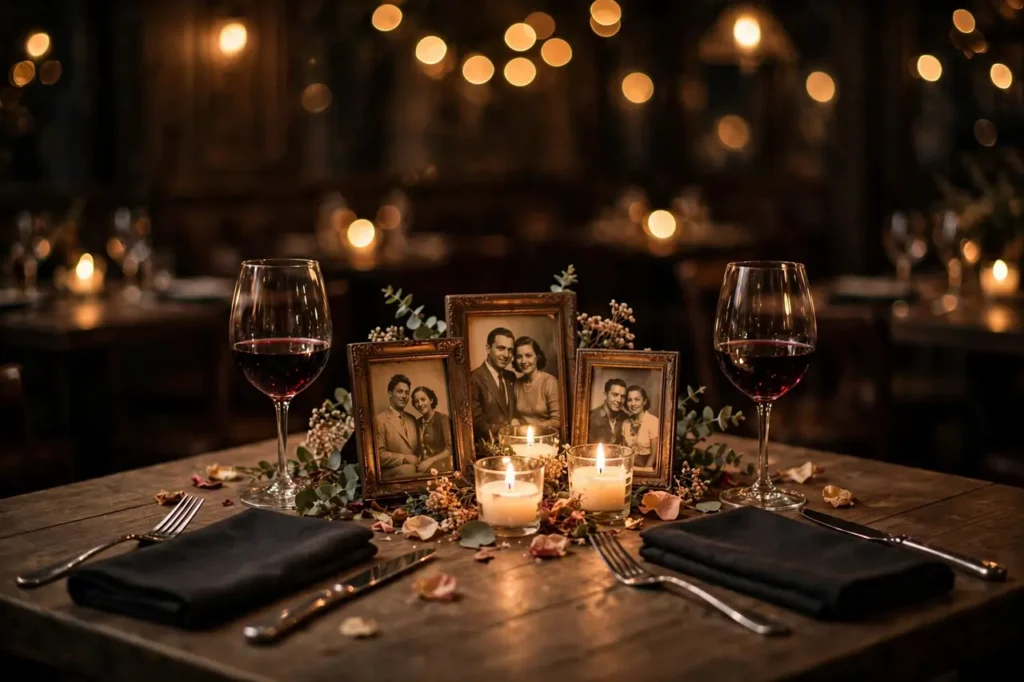
Build a “memory table” near the entrance: the book you were reading when you met, a replica of the concert ticket, the coffee mug from that first café, anything that anchors the story in objects. Guests will pick things up, ask questions, and start conversations on their own — it is the best icebreaker ever invented. For the table itself, keep it simple and romantic: candles at varying heights, a runner in a color that echoes your first date, and one low arrangement of seasonal flowers so people can actually see each other across the table.
If you want a bigger visual moment without a big budget, choose one statement piece rather than many small ones. A balloon garland in your wedding colors, a neon-style sign with your first-meeting date, or a photo backdrop with a simple fabric drape and fairy lights gives guests a designated photo spot and makes the evening feel like an event. Most of these can be assembled for under fifty dollars with supplies from a craft store, and the photos your guests take become part of the celebration’s legacy.
Menus That Tell Your Story
Food is memory, and nowhere is that truer than at a celebration of how you met. The most memorable anniversary menus are not the fanciest — they are the most personal. If your first date was pizza, serve exceptional pizza. If you met at a food truck festival, build a mini food-truck-style lineup in your backyard. If your first conversation happened over bad diner coffee at 2 a.m., serve a late-night diner spread with great coffee and watch your guests lose their minds with delight.
For a sit-down dinner, structure the menu as a story: a first course that nods to where you met, a main course that represents where you are now, and a dessert that points to the future. Print the menu with a line under each course explaining the connection. It is a small touch that turns dinner into theater. Keep the cooking manageable — choose one showpiece dish and let the rest be simple, or hire a private chef for the evening if the budget allows. With only eight to twelve guests, a private chef is often more affordable than people expect, and it lets both of you actually enjoy your own party.
Do not forget the drinks. A signature cocktail named after your first meeting — “The Blind Date,” “The Swipe Right,” “The Wrong Number” — gives the evening instant personality. Batch it in a pitcher so you are not playing bartender all night, and always offer an equally appealing non-alcoholic version. End the night with something sweet and simple: a small cake with your first-meeting date written on it, or a dessert bar featuring whatever you ate on that first date. For more menu inspiration, browse our romantic anniversary dinner ideas at home, many of which scale perfectly to a small gathering.
Weaving Your Story Into the Evening
The difference between a nice dinner party and an unforgettable anniversary gathering is the story. Plan two or three deliberate moments where your first meeting takes center stage, and the evening will feel curated without feeling staged.
The toast is the centerpiece. One of you — or better, both of you, tag-team style — tells the story of the first meeting in two minutes or less, ending with a toast to the people in the room who were part of it. Keep it specific: the exact words, the embarrassing detail, the thing you noticed first. Specificity is what makes a story feel true and what makes guests laugh and tear up in the same minute. If public speaking terrifies you, write it down and read it. Reading a heartfelt two minutes beats rambling for ten every time.
Add one interactive element. A “how well do you know our story” quiz with five questions and silly prizes gets everyone laughing. A time capsule — each guest writes a prediction or a wish, sealed to be opened at a future anniversary — gives the evening a legacy. Or set up a video station where guests record a thirty-second message: their memory of your early days, or advice for the next chapter. You will treasure these clips far more than any gift.
Finally, give guests something to take home. It does not need to be expensive: a printed photo from the evening in a simple frame, a small bag of the candy from the movie theater where you had your first date, a candle in the scent of the season you met. Favors are not about the object; they are about extending the evening by one more day, when your guest sees it on their counter and smiles.

Budget Planning: What Small Gatherings Really Cost
One of the best arguments for a small first-meeting anniversary gathering is the math. With ten guests instead of fifty, every dollar goes further, and the per-person experience can be genuinely luxurious on a modest total budget. The table below breaks down realistic cost ranges for the most popular formats, based on typical U.S. pricing, so you can choose the evening that fits both your story and your wallet.
| Gathering Format | Typical Budget Range (8–12 guests) | Biggest Cost Driver | Best Money-Saving Move |
|---|---|---|---|
| Backyard cookout / hangout | $150–$400 | Food and drinks | Potluck-style sides; you handle the main dish |
| Recreate-the-date dinner at home | $200–$600 | Ingredients for a multi-course menu | Cook one showpiece course; keep the rest simple |
| Activity-based (bowling, pottery, trivia) | $250–$700 | Venue or studio booking fees | Book off-peak hours; bring your own food |
| Restaurant private room | $600–$1,500 | Set menu per person | Lunch instead of dinner; limit bar to beer and wine |
| Weekend micro-getaway | $1,500–$4,000 | Lodging | Split a vacation rental; cook most meals together |
Whatever format you choose, set the budget before you start planning, not after. Decide the total number first, then allocate it across food, drinks, decor, and any venue costs. Small gatherings have a wonderful way of feeling abundant when the money is spent on the guest experience — great food, good drinks, thoughtful details — rather than on impressing anyone. If you are working with a tight budget overall, our guide to anniversary celebration ideas on a budget is full of tricks that apply perfectly here.
Watch: A Real Vow Renewal Celebration
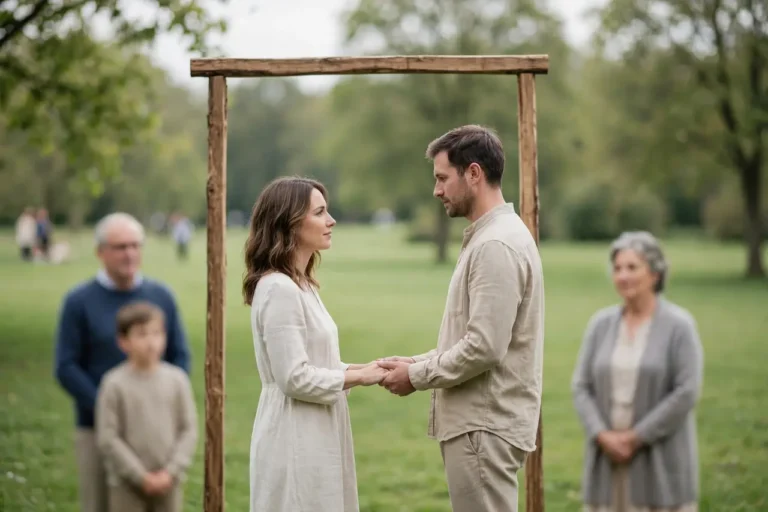
Sometimes the best inspiration comes from watching a real couple celebrate their love story. This beautiful vow renewal film captures the emotion, the personal details, and the intimate atmosphere that make small anniversary gatherings so powerful. Notice how the couple weaves their history into the ceremony, how the guests react to personal touches, and how the whole event feels both relaxed and deeply meaningful — exactly the tone to aim for at your own first-meeting anniversary gathering.
Frequently Asked Questions
What is a first meeting anniversary?
A first meeting anniversary marks the date you and your partner first met, as opposed to your wedding date or the date you started dating. Many couples celebrate it as a more personal, low-pressure alternative or complement to their wedding anniversary, often with a small gathering of close friends and family who know their origin story.
How many people should I invite to a small anniversary gathering?
Six to twelve guests is the sweet spot for intimacy and energy. Fewer than six can feel flat unless everyone is extremely close; more than twelve starts to need the logistics of a real party. Every guest should be someone who knows and cares about your story — that filter matters more than the exact number.
Should we recreate our first date exactly?
Recreating the spirit matters more than recreating the details. If the original restaurant is still open, by all means go back. If it has closed or you met somewhere unglamorous, capture the essence — the same cuisine, the same era’s music, the same kind of evening — rather than forcing an exact replica that feels more like a museum exhibit than a celebration.
What if we met online? How do we theme the party around that?
Lean into it with humor and heart. Display tasteful screenshots of your first messages (with permission-level redactions), use app-inspired decor like oversized chat bubbles as a photo backdrop, serve food from the place of your first in-person date, and name your signature cocktail after the app. The story of modern love is just as romantic as any other — own it.
Is it weird to celebrate a first-meeting anniversary if we are already married?
Not at all. Many married couples find the first-meeting anniversary becomes their favorite celebration precisely because it is free of wedding-day expectations. It honors the love itself rather than the ceremony, and it gives you a second annual occasion to gather the people who matter most.
How do we handle gifts at a small anniversary gathering?
For intimate gatherings, it is perfectly gracious to say “your presence is the present” on the invitation. If guests insist, suggest contributions to a shared experience — a group gift card for a future date night, or donations to a cause you both love. If you want keepsakes, ask guests to bring a written memory of your early days instead of a wrapped gift; those notes become priceless.
What is a good timeline for planning?
Six weeks is comfortable for most formats: lock the venue and guest list first, then menu and decor, then invitations at the three-week mark. A restaurant private room or vacation rental may need eight or more weeks of lead time. A casual backyard gathering can come together in two weeks if your guest list is small and your menu is simple.
How can we include guests who cannot attend in person?
Set up a video call during the toast so distant loved ones can watch and even say a few words. Record the story retelling and the toasts to share afterward. Some couples set up a simple video guest book — a tablet on a tripod where guests record messages — and send the compilation to anyone who could not make it.
Making It a Tradition
The first time you host a small first-meeting anniversary gathering, it is an event. The second time, it starts becoming a tradition — and traditions are what turn a relationship into a legacy. Keep a simple record each year: the guest list, the menu, one photo, and the funniest thing anyone said. In ten years, that little archive will be one of your most treasured possessions.
Consider adding one recurring ritual that grows with you. A time capsule opened every five years. A quiz with one new question added annually. A toast in which each guest names their favorite memory of you as a couple from the past year. Rituals give returning guests something to look forward to and give the evening a spine that holds it together as the years pass.
And remember the deeper point. Anniversaries are not really about the past; they are about choosing each other again, in front of witnesses, on purpose. A small gathering of the people who love you, centered on the truest story you own — that is not a lesser celebration than a big wedding anniversary. In many ways, it is the greater one. For more ways to keep the romance intentional all year, explore our first marriage anniversary date ideas and our anniversary party theme ideas for future milestone inspiration.