Watching a great MMA fight makes it look effortless — the takedowns, the scrambles, the submissions chained together like choreography. Learning it is anything but. MMA Training for Beginners is a humbling, exhilarating education in just how many skills a complete fighter needs: striking, wrestling, submissions, conditioning, and the mental composure to use them all under pressure. This guide maps out exactly how to start MMA training, what your first 90 days look like, how to choose a gym, and how to avoid the injuries and burnout that derail most newcomers.
What MMA Training Actually Involves
Unlike single-discipline martial arts, MMA training splits your week across multiple skill areas. A typical beginner’s training week at a real MMA gym includes:
- Striking classes: boxing, kickboxing, or Muay Thai fundamentals — punches, kicks, knees, elbows, and defense.
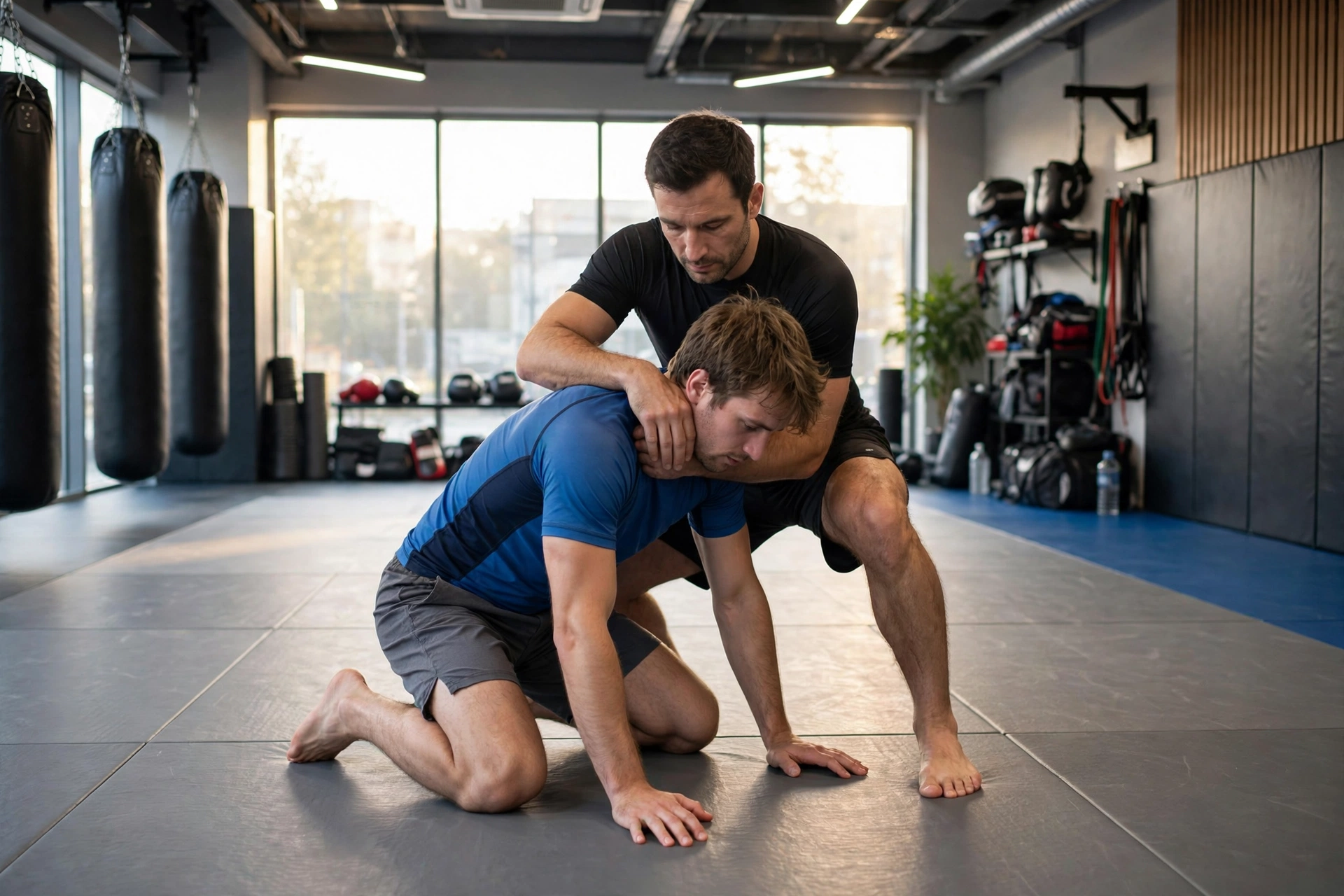
- Grappling classes: wrestling (takedowns, control, escapes) and Brazilian jiu-jitsu (submissions, guard work, positional control).
- MMA-specific classes: blending it all — cage work, ground-and-pound, defending strikes while grappling.
- Conditioning: strength training, cardio, and mobility work to survive the workload.
Beginners often ask which discipline to learn first. The honest answer: start with whatever your gym teaches best, but prioritize grappling defense early. A beginner who cannot defend a takedown or escape a bad position on the ground is helpless against even a mediocre grappler. Striking is more intuitive; grappling is where beginners are most lost — so close that gap first.
How to Choose the Right MMA Gym
Your gym choice matters more than any gear or workout plan. Look for:
- A real beginner program. The gym should have fundamentals classes separated from advanced sparring. If day one throws you into open mat with experienced fighters, walk away.
- Qualified coaches. Head coaches should have verifiable fight or high-level competition experience and coaching credentials — not just enthusiasm.
- Clean, safe facilities. Padded mats in good repair, clean bathrooms, and a culture of hygiene (staph infections from dirty mats are a real risk in grappling).
- Controlled sparring culture. Ask how sparring is supervised. Good gyms enforce light technical sparring for beginners, mandatory protective gear, and coach oversight. Gyms that glorify “gym wars” produce injuries, not fighters.
- Reasonable schedule and price. You need 3–5 sessions per week available at times you can actually attend. Typical US pricing: $100–$200/month.
Take trial classes at two or three gyms before committing. Pay attention to how coaches treat total beginners — patience and clear instruction on day one predict a good long-term experience.
The Core Disciplines, Explained for Newcomers
| Discipline | What You Learn | Beginner Priority |
|---|---|---|
| Boxing | Punch technique, head movement, footwork, combinations | High — striking fundamentals transfer everywhere |
| Muay Thai / Kickboxing | Kicks, knees, elbows, clinch striking, checking kicks | High — completes your stand-up game |
| Wrestling | Takedowns, sprawls, top control, getting back to your feet | Highest — takedown defense is survival |
| Brazilian Jiu-Jitsu | Submissions, escapes, guard passing, positional hierarchy | High — where most fights are finished |
| Judo / Sambo | Throws, trips, grip fighting | Medium — valuable but less central for most beginners |
Your First 90 Days: A Week-by-Week Roadmap
Days 1–30: Survive and Learn the Language
Your only goals in month one: show up consistently, learn basic positions, and avoid injury. Expect to be exhausted, confused on the ground, and sore in muscles you did not know existed. Train 3 days per week maximum — your body needs adaptation time.
- Striking: stance, jab-cross, basic kicks, keeping your guard up.
- Grappling: positional hierarchy (mount is bad for the bottom person, guard is neutral-ish), two escapes from the bottom, one takedown defense (the sprawl).
- Conditioning: general cardio — jogging, rowing, or cycling. Your sport-specific fitness will be terrible at first; that is normal.
- No hard sparring. Light positional drills only.
Days 31–60: Build the Base
Increase to 4 sessions per week. Techniques start connecting — you will hit your first clean combination on the pads and escape your first bad position live.
- Striking: hooks and uppercuts, basic combinations, checking leg kicks, introductory clinch.
- Grappling: guard retention, two submissions (e.g., rear-naked choke, armbar from mount), single-leg and double-leg takedown entries.
- MMA blending: your first MMA-specific classes — striking into takedowns, defending strikes on the ground.
- Sparring: light technical sparring may begin, with headgear and 16 oz gloves, under coach supervision.
Days 61–90: Put It Together
By month three, training 4–5 times per week, you will roll (grapple live) for full rounds, spar striking at controlled intensity, and start developing a personal style — maybe you are a pressure grappler, maybe a counter-striker.
- Striking: counter-punching basics, feints, kick setups.
- Grappling: chaining submissions, escaping the mount and back control, wrestling against the cage.
- Conditioning: add two strength sessions per week — compound lifts (squat, deadlift, press, pull-ups) build the durable strength MMA demands.
- First assessment: many gyms do a fundamentals review or first stripe/belt evaluation around this point.
Supplement your gym work with general athleticism — activities like rock climbing build grip strength and body awareness that transfer directly to grappling, while cycling builds the aerobic base every fighter needs.
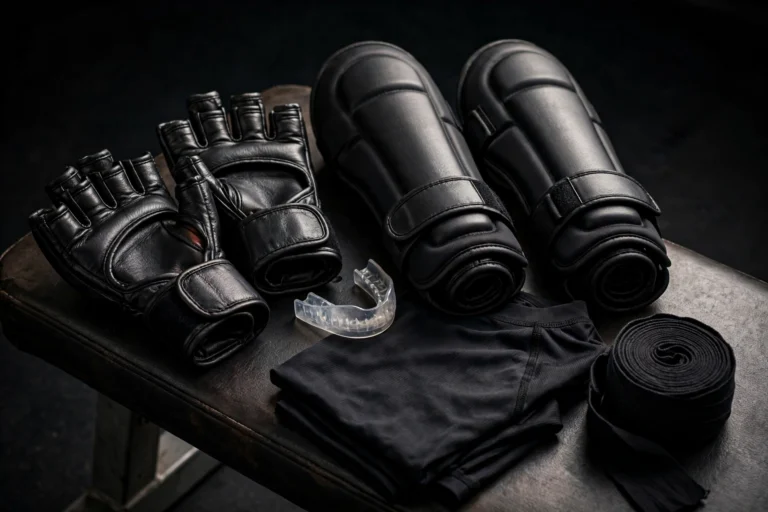
Essential Gear for Beginner MMA Training
MMA requires more gear than boxing because you are striking and grappling:
- MMA gloves (7 oz training pair): for bag and pad work; gyms provide sparring gloves.
- Boxing gloves (16 oz): for sparring — mandatory at reputable gyms.
- Hand wraps: 180-inch, for every striking session.
- Shin guards: for kick sparring and hard pad rounds.
- Headgear: for sparring.
- Mouthguard: custom-molded is worth it once you spar regularly.
- Rash guard and shorts: grappling attire — no zippers, pockets, or loose fabric.
- Groin protector: required for sparring.
Budget roughly $200–$300 for a complete starter kit. Buy mid-range gear from reputable combat-sports brands; ultra-cheap gloves fall apart and ultra-premium gear is wasted on a beginner.
Conditioning: Training Like a Fighter
MMA is among the most physiologically demanding sports in existence — it taxes the aerobic system (five-minute rounds), the anaerobic system (explosive scrambles), and muscular endurance simultaneously. A practical weekly template for beginners:
| Day | Training |
|---|---|
| Monday | Striking class + 20 min easy cardio |
| Tuesday | Grappling class |
| Wednesday | Strength training (full body, compound lifts) + mobility |
| Thursday | Striking class + core circuit |
| Friday | Grappling class (lighter, technique-focused) |
| Saturday | Long slow cardio (45–60 min jog, swim, or bike) — great paired with hiking |
| Sunday | Full rest |
Two conditioning principles matter most: build the aerobic base first (long, easy cardio improves recovery between rounds more than anything), and never skip mobility work — hips, shoulders, and neck take a beating in MMA, and ten minutes of daily mobility prevents months of injury rehab.
Sparring Etiquette: The Unwritten Rules
When your coach clears you for sparring, these rules keep you safe and welcome:
- Match your partner’s intensity. If they go light, you go light. Escalating against a lighter partner is the fastest way to lose training partners.
- Protect your partner, not just yourself. Pull power on head strikes, never crank submissions, and release immediately on a tap.
- Tap early, tap often. In grappling, tapping is learning — refusing to tap earns you injuries and no respect.
- Communicate. “Going light today — nursing a rib” is always respected. Hiding injuries is not.
- Leave the ego at the door. Everyone gets tapped, everyone gets hit. The people who improve fastest are the ones least bothered by it.
Nutrition Basics for New Fighters
You do not need a fighter’s diet on day one, but a few fundamentals accelerate everything:
- Eat enough protein: roughly 0.7–1 gram per pound of bodyweight daily supports recovery from hard training.
- Fuel around training: a carbohydrate-rich meal 2–3 hours before class, protein plus carbs within a couple of hours after.
- Hydrate aggressively: grappling sessions can cost 2–3 pounds of sweat; drink water before, during, and after.
- Sleep 7–9 hours: skill consolidation and tissue repair happen during sleep — it is the most underrated performance enhancer in combat sports.
Do not attempt weight cutting as a beginner. Train and compete (if you ever do) at or near your natural walking weight.
Common Beginner Mistakes
| Mistake | Consequence | Fix |
|---|---|---|
| Training too much, too soon | Overtraining, injury, burnout by month two | Cap at 3 sessions/week for the first month; add one day per month after |
| Only training the fun stuff | Huge holes (usually grappling defense) | Follow the gym’s fundamentals curriculum, not your preferences |
| Sparring too hard | Concussions, injuries, gym enemies | Technical sparring only until coaches approve more |
| Neglecting defense | You become a punching bag with good offense | Drill defense every session — slipping, sprawling, escaping |
| Poor hygiene | Skin infections (ringworm, staph) that sideline you for weeks | Shower immediately after class; wash gear every session; trim nails |
| Comparing yourself to others | Frustration and quitting | Compare yourself to last month’s you — that’s the only fair metric |
How Much Does MMA Training Cost?
- Gym membership: $100–$200/month at most US MMA gyms.
- Starter gear: $200–$300 for gloves, wraps, shin guards, headgear, mouthguard, and grappling attire.
- Private lessons: $50–$100/hour — valuable occasionally for fixing specific problems.
Many gyms offer a free trial week. Use it to evaluate coaching quality, class structure, and whether the schedule fits your life before signing a contract — and be wary of long-term contracts at gyms you have not trained at for at least a month.
Frequently Asked Questions
How long does it take to become good at MMA?
Expect 6–12 months to feel competent in fundamentals across striking and grappling, and 3–5 years of consistent training to become genuinely skilled. MMA has the steepest learning curve in combat sports because you are learning several arts at once.
Do I need experience in another martial art first?
No. Most MMA gyms are built for complete beginners, and many top fighters started MMA with no prior background. Previous experience in wrestling, boxing, or BJJ helps, but it is not required.
Is MMA training safe for beginners?
With a reputable gym, yes. Beginner programs emphasize technique over contact, sparring is introduced gradually with protective gear, and coaches control intensity. The biggest risks — skin infections and overtraining — are managed with hygiene and sensible scheduling.
How many days a week should a beginner train MMA?
Three days per week for the first month, building to four or five by month three. Rest days are when your body adapts — training seven days a week as a beginner is a fast track to injury.
Can I do MMA training just for fitness?
Absolutely. Many gym members never spar hard or compete — they train for the workout, the skills, and the community. Tell your coaches your goals on day one so they can guide you appropriately.
What is the best age to start MMA training?
Kids can start around 8–10 with youth programs; adults can start at any age. MMA gyms regularly welcome beginners in their 30s and 40s. Your goals and training intensity should match your age and recovery capacity, not anyone else’s.
Do I need to be in shape before my first MMA class?
No — the classes themselves build your conditioning. A basic level of general fitness (you can jog for 15–20 minutes) makes the first weeks more pleasant, and easy cross-training like running helps, but coaches scale everything to beginners.
Injury Prevention: Staying on the Mats
MMA training is demanding, but most injuries are preventable. The common culprits and their fixes:
| Injury | Common Cause | Prevention |
|---|---|---|
| Sprained wrists/knuckle damage | Poor wrapping, thin gloves, overtraining volume | Wrap every striking session; 14–16 oz gloves for bag work; build volume gradually |
| Cauliflower ear | Repeated ear trauma in grappling | Wear soft ear guards during hard grappling; drain promptly if swelling appears |
| Knee injuries | Explosive takedowns, scrambles, poor mat awareness | Strengthen quads/hamstrings; learn to fall safely; tap early to leg locks |
| Rib injuries | Body shots, heavy top pressure | Core strengthening; communicate with partners; sit out when bruised |
| Skin infections | Dirty mats, poor hygiene | Shower immediately post-class; wash all gear every session; never train with open wounds |
| Overtraining syndrome | Too much volume too soon | Follow the 3→5 day progression; sleep 8+ hours; take a deload week monthly |
The Mental Game: What MMA Teaches You
Physical technique is half the education. The other half is psychological:
- Composure under pressure: staying technical when exhausted and someone is trying to submit you builds a calm that transfers to every stressful situation in life.
- Ego management: you will be dominated by smaller, older, less athletic training partners for months. Learning to enjoy the process of losing — because every tap teaches something — is the sport’s great character filter.
- Comfort with discomfort: MMA systematically expands your tolerance for being uncomfortable, tired, and under pressure. That resilience compounds.
- Humility and respect: combat sports have the strongest etiquette culture in athletics precisely because the stakes are real. The mat humbles everyone equally.
Training Solo: What to Do Between Classes
You can’t learn MMA alone, but you can accelerate gym learning with solo work:
- Shadowboxing (15–20 min): the single best solo striking drill. Focus on one technique per session.
- Shadow grappling (“ghost wrestling”): drill takedown entries, sprawls, and transitions solo — high reps build the neural pathways.
- Flow rolling visualization: mentally rehearse escapes and transitions. Sports science confirms visualization improves motor learning.
- Conditioning: roadwork, sprints, strength training, and mobility — all solo-friendly and all directly transferable.
- Film study: watch fights analytically. Pick one fighter and study only their footwork, or only their guard passing, for an entire bout.
When Are You Ready to Compete?
Most beginners wonder about amateur competition. Honest benchmarks from coaches:
- Minimum: 6–12 months of consistent training (3+ days/week), coach’s explicit approval, and comfort with hard sparring.
- Readiness signs: you can defend yourself competently in all areas, you stay composed when tired and pressured, and you want to compete for the experience — not to prove something.
- Amateur rules vary by state but generally include headgear, shin guards, shorter rounds, and enhanced medical supervision.
There’s no shame in never competing. The vast majority of MMA practitioners train for fitness, skill, and community. Competition is one path, not the destination.
Building Your Support System
MMA is an individual sport built on community. Your training partners hold pads for you, let you practice submissions on them, and push you through conditioning. Invest in those relationships: be a good partner (controlled, communicative, hygienic), help new people the way seniors helped you, and show up consistently. The gym becomes a second family — one of the most commonly cited reasons people stay in combat sports for decades.
Tracking Your Progress: The Beginner’s Logbook
MMA improvement is invisible day-to-day and obvious month-to-month — if you track it. Keep a simple training log: date, classes attended, techniques drilled, rounds sparred/rolled, and one thing you learned. Review monthly. You’ll spot patterns (your guard retention improving, your striking defense lagging) that guide what to prioritize. Many practitioners also film their sparring occasionally — uncomfortable to watch, but the fastest way to see the gap between what you think you do and what you actually do.
Final Word: Start Where You Are
The biggest barrier to MMA training isn’t fitness, age, or athleticism — it’s walking through the door the first time. Every fighter you admire was once a nervous beginner who didn’t know a jab from a sprawl. Find a reputable gym with a real beginner program, commit to three sessions a week for 90 days, and trust the process. The skills compound, the fitness follows, and somewhere around week eight, you’ll realize you’re thinking like a fighter. That’s when the real journey begins.