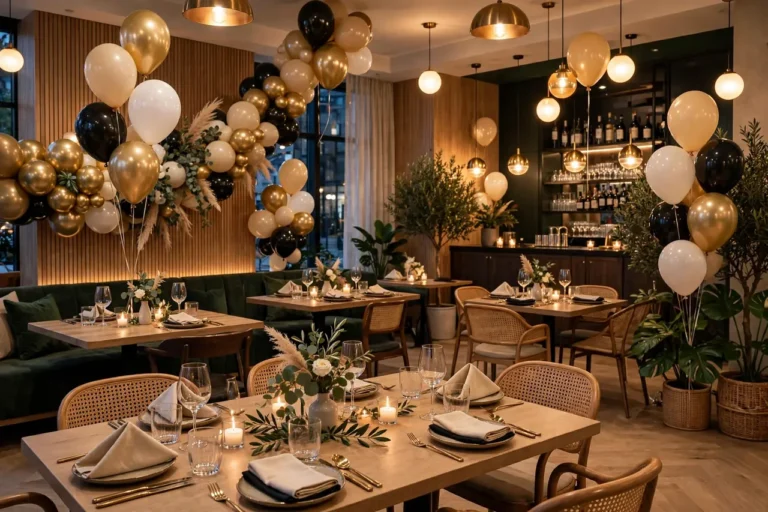
Luxury is the most misunderstood word in business gifting. It isn’t price — a $500 gift can feel cheap and a $150 gift can feel luxurious. True luxury in business anniversary gift ideas for partners is a composition: rarity, craftsmanship, personal relevance, and ceremonial presentation, combined in proportions that make the recipient feel the weight of the relationship. This guide is for the moments that warrant it — landmark anniversaries, transformative partnerships, relationships measured in decades: 26 luxury gift ideas across four categories, the anatomy of what makes a gift feel luxurious, tier frameworks, the presentation ritual that doubles perceived value, etiquette and compliance guardrails, and an honest examination of when luxury backfires.
A word on when luxury is appropriate — because restraint is part of luxury. Luxury partner gifting fits three situations: landmark milestones (10th, 25th, 50th anniversaries of the partnership or the company), transformative relationships (the partner without whom your company’s story would be fundamentally different), and cultural expectation (in some business cultures — Gulf states, parts of Asia — the gift’s stature is the message, and modesty reads as disrespect). Outside these situations, luxury risks the twin failures of overspending and obligation-creation. The question isn’t “can we afford it?” but “does the relationship warrant it?” — and the answer should make you slightly nervous. If it doesn’t, you’re probably over-gifting. For the words that carry luxury’s weight without groveling, our professional wishes collection offers peer-level language that honors without diminishing.
Anatomy of Luxury: What Makes a Gift Feel Luxurious
Deconstruct luxury and five elements emerge. Rarity: limited editions, bespoke commissions, things that cannot be bought off a shelf — scarcity is luxury’s engine. Craftsmanship: visible human skill — hand-stitching, hand-blown glass, hand-finishing. Machine-perfect is premium; human-touched is luxury. Materials: full-grain leather, solid brass, crystal, hardwoods — substances with weight, patina, and permanence. Personal relevance: the luxury gift that references your shared history outperforms the merely expensive one by an order of magnitude — a $200 commissioned piece beats a $600 generic watch. Ceremony: the presentation — packaging, timing, the handover moment — contributes roughly half the perceived luxury. A $300 gift presented ceremonially feels more luxurious than a $600 gift handed over casually. Internalize this anatomy and you can compose luxury at any budget: maximize rarity, craft, materials, relevance, and ceremony within your means, and cut anything that doesn’t serve those five.
26 Luxury Business Anniversary Gift Ideas for Partners
Desk & Office: The Power Objects (7 ideas)
- Hand-finished leather briefcase — bespoke ($850+). Full-grain, hand-stitched, made to measure where possible, monogrammed with blind embossing. A bespoke briefcase isn’t a bag — it’s a daily companion for decades, developing a patina that tells the story of a career. Commission from a heritage maker; the maker’s name is part of the gift.
- Solid brass or crystal desk sculpture ($400). A museum-quality desk object — an abstract bronze, a hand-cut crystal obelisk, a precision-engineered kinetic sculpture — engraved with the partnership years. It anchors their office with permanent, silent gravitas. Choose pieces with genuine artistic merit, not corporate-catalog “executive” clichés.
- Heritage fountain pen — limited edition ($500+). A numbered limited-edition fountain pen from a storied maker, presented in a lacquered box with the anniversary documentation. Pens are the classic luxury gift because they’re used in the moments that matter — signings, decisions, commitments.
- Hand-bound partnership chronicle ($350). A leather-bound, gilt-edged volume chronicling your companies’ shared history — letterpress printed, hand-sewn binding, archival paper. Part book, part artifact. It belongs in a boardroom bookcase, not on a desk.
- Precision desk clock — mechanical ($600). A mechanical (not quartz) desk clock from a respected horologist, engraved with the anniversary. Mechanical movements — visible gears, hand-wound ritual — embody the craftsmanship element of luxury. Time, honored mechanically.
- Bespoke stationery suite ($280). Custom-milled paper, letterpress printed with their name and a subtle anniversary mark, in a linen-bound box. In the digital age, physical correspondence is the ultimate luxury signal — and beautiful stationery gets used for the messages that matter.
- Executive valet collection — leather & brass ($320). A coordinated set — valet tray, watch box, card case — in matching full-grain leather with solid brass fittings, monogrammed throughout. The coordination is the luxury: a system of beautiful objects rather than a single item.
Travel: The Journey Gifts (6 ideas)
- Heritage luggage piece — cabin case ($900+). A hand-finished leather or aluminum cabin case from a heritage luggage maker, monogrammed. It travels with them for life, aging beautifully, carrying your anniversary mark to every destination. Luggage is the most visible luxury gift — airports are runways.
- Private aviation credit or charter contribution ($2,000+). For truly landmark relationships: a contribution toward private charter for a meaningful trip. Extraordinary, unforgettable, and appropriate only where the relationship genuinely warrants it — with compliance clearance documented.
- Luxury hotel private experience ($1,200+). A curated weekend at a landmark property — suite, private dining, bespoke experiences arranged by the hotel’s team. The curation (not just the booking) is the luxury; arrange details they’d never arrange themselves.
- Bespoke travel wardrobe piece ($700). A made-to-measure travel blazer, a cashmere travel set, or a hand-finished weekender from a heritage clothier. Travel luxury is about arriving well — gift the arrival.
- First-class journey — the route that matters ($1,500+). Upgrade a trip they’re already taking, or fund the journey they’ve mentioned wanting — first-class, the scenic route, the long way. The thoughtfulness of which journey makes it personal rather than merely expensive.
- Global Entry / VIP travel membership ($500+). Fund premium travel memberships — lounge access, expedited services, concierge travel support — for a year. Practical luxury that removes friction from every trip they take. Understated, useful, deeply appreciated.
Wine, Dining & Sensory: The Connoisseur Gifts (7 ideas)
- Founding-vintage wine — the anniversary bottle ($400+). A bottle (or case) from your founding year or the partnership’s first year, sourced through a reputable merchant with provenance documentation. The temporal symbolism is perfect: a wine that has aged exactly as long as the relationship. Include professional tasting notes and the story.
- Private chef’s-table evening ($900+). A renowned chef cooking privately for the partner’s principals and guests — at a top restaurant’s chef’s table or in a private venue. The exclusivity and sensory theater create a memory no object can match. Arrange dietary intelligence discreetly in advance.
- Rare spirits collection ($500). A curated set of rare or aged spirits — vintage Armagnac, single-cask whiskey, small-batch sake — with tasting notes and proper glassware. Spirits keep indefinitely, appreciate with knowledge, and the ritual of tasting is itself the gift.
- Vineyard or distillery private experience ($750). A behind-the-scenes day at a prestigious vineyard, distillery, or estate — blending your own cuvée, tasting from the cask, lunch with the maker. Access is the luxury; the bottle you take home is the souvenir.
- Bespoke fragrance — private blend ($350). A private fragrance consultation resulting in a bespoke scent, presented in crystal flacons. Intensely personal, utterly unique, and the consultation experience is half the gift. (Know their taste territory first — this is for close relationships.)
- Truffle and caviar tasting chest ($450). A temperature-controlled chest of the world’s finest delicacies — caviar, truffles, foie gras, vintage champagne — with serving guidance. Decadent, theatrical, and the unboxing is an event in itself.
- Annual dining tradition — endowed ($1,000/year). Establish a yearly tradition: the anniversary dinner at a landmark restaurant, funded in perpetuity (or for a decade). The first dinner is a gift; the tradition is an institution — and institutions outlast objects.
Art, Craft & Keepsakes: The Permanent Gifts (6 ideas)
- Commissioned original artwork ($1,200+). A significant original piece from a respected artist — ideally referencing your shared industry, history, or values. Art is the ultimate luxury gift: one-of-one, appreciating, and permanently displayed. Work with a reputable gallery; provenance matters.
- Hand-knotted rug or textile ($800+). A hand-knotted rug, a bespoke tapestry, or a heritage textile for their office or home. Textiles carry craft visibly — every knot is human hours — and they transform spaces for generations.
- Master-crafted timepiece ($2,500+). For the once-in-a-generation relationship: a genuinely fine mechanical watch from a respected manufacture, engraved with the anniversary. This is the summit of partner gifting — reserve it for partnerships that built companies.
- Bronze portrait bust or relief ($1,500+). A sculpted portrait of the partner principal or a relief commemorating the partnership, cast in bronze. Museum-grade permanence — the gift becomes part of institutional history.
- Illuminated partnership charter ($600). A calligraphed, illuminated document — styled like a historic charter — formalizing the partnership’s values and milestones, framed in museum glass. Ceremony made physical; it belongs on a boardroom wall.
- Heritage book — first edition, relevant ($700). A first edition of a work central to your shared industry or their intellectual passions, in fine binding with an anniversary bookplate. For the reader-leader, nothing surpasses the right first edition.

Luxury Tier Framework
| Tier | Occasion | Budget Range | Gift Character | Presentation |
|---|---|---|---|---|
| Refined | Milestone years (5th, 10th), strong partnerships | $250–$600 | Crafted, personal, permanent materials | Premium packaging, handwritten note, personal delivery |
| Prestige | Major milestones (15th, 20th), strategic partners | $600–$1,500 | Bespoke elements, rare materials, commissioned | Ceremonial handover, executive-to-executive |
| Heritage | Landmark (25th+), transformative relationships | $1,500–$5,000+ | One-of-one, museum-grade, legacy pieces | Full ceremony — event, speech, documentation |
The tiers aren’t just budgets — they’re ceremony levels. A Refined gift delivered with Prestige ceremony feels more luxurious than a Prestige gift handed over casually. When budget-constrained, invest the marginal dollar in presentation rather than a pricier object: the anatomy of luxury says ceremony is half the perception.
The Presentation Ritual: Doubling Perceived Value
Luxury lives or dies in the presentation. The packaging: rigid, fabric-lined boxes; tissue sealed with wax; ribbon in a considered color; no visible vendor branding — the box should feel like it came from an atelier, not a warehouse. The note: heavyweight stationery, handwritten, specific — never printed, never generic. The note is read first and remembered longest; write it like it matters, because it does. The timing: deliver 3–5 days before the anniversary, never on a Friday afternoon, never buried in holiday season. The handover: for Prestige and Heritage tiers, hand-deliver — your executive to theirs, with a few spoken words. The spoken sentence (“This represents what we’ve built together”) does what no object can. The reveal: where appropriate, make the opening a moment — a private lunch, a quiet office visit, a pause in the meeting. The documentation: photograph the piece (with permission) for both companies’ archives — today’s gift is tomorrow’s heritage. The follow-up: a call within the week, executive to executive. The ritual isn’t decoration; it’s the mechanism by which luxury registers. Skip it and you’ve just overspent.

Etiquette & Compliance at the Luxury Level
Higher value means higher scrutiny — navigate it deliberately. Know both policies: your cap and theirs; the lower governs. Many multinationals cap at $100–$350 — luxury tiers often require written exceptions, so start the approval process 8–12 weeks out. Document the occasion: the anniversary context is your compliance shield — record the milestone, the business rationale, and the relationship history in writing. International anti-bribery: FCPA, UK Bribery Act, and equivalents all scrutinize high-value gifts to anyone with government touchpoints — when in doubt, legal review is mandatory, not optional. Cultural calibration: in the Gulf and parts of Asia, substantial gifts are expected and modesty offends; in Scandinavia and Germany, restraint is the virtue — calibrate the tier to the culture, not just the relationship. Tax treatment: luxury gifts to clients are generally deductible only up to $25/recipient/year in the U.S. — the rest is non-deductible goodwill; budget accordingly and tell finance upfront. The reciprocity conversation: for Heritage-tier gifts, a quiet word through relationship managers prevents the asymmetric-surprise problem — “we’re planning something significant; no reciprocation expected or wanted.” Luxury without compliance is just liability with ribbon on it.
When Luxury Backfires: The Honest Chapter
Luxury is powerful and dangerous in equal measure. The obligation trap: a gift so lavish the recipient feels indebted rather than honored — the relationship becomes transactional in the worst way. Antidote: keep gifts within the relationship’s emotional scale, and explicitly release reciprocation pressure. The values mismatch: a $2,000 watch for a partner whose culture prizes modesty reads as tone-deaf, not generous. Antidote: cultural intelligence before budget. The timing disaster: luxury arriving during their layoffs, your pricing dispute, or a market downturn looks obscene regardless of intent. Antidote: read the room; delay if the moment is wrong. The hollow core: an expensive gift compensating for a neglected relationship — partners see through it instantly, and it insults them twice. Antidote: luxury rewards strong relationships; it cannot repair weak ones. The compliance incident: the gift that triggers an investigation, a policy violation, or a headline. Antidote: the entire compliance section above, followed to the letter. The common thread: luxury amplifies whatever the relationship already is — strong relationships get stronger, weak ones get exposed. Never use luxury to create warmth; use it to crown warmth that exists.
Investment vs. Expense: The CFO Conversation
Luxury gifting dies in budget reviews when it’s framed as generosity. Reframe it as relationship capital expenditure: the cost of the gift against the value of the relationship it protects. A $1,500 heritage gift guarding a $2M annual partnership costs 0.075% of one year’s revenue — the cheapest insurance in the P&L. The math that convinces CFOs: replacement cost (acquiring an equivalent partner: years and millions), concentration risk (what percentage of revenue flows through this relationship?), and competitive exposure (rivals are courting them too — what signals are you sending?). Present the gift alongside the relationship’s lifetime value, document the compliance clearance, and frame the ceremony as the executive relationship maintenance it actually is. Finance doesn’t hate luxury; finance hates unjustified luxury. Justify it.
Watch: Luxury Corporate Gifts in Focus
See the world of high-end corporate gifting — premium selections designed to leave a lasting impression on top-tier clients and partners:
The 16-Week Luxury Gifting Timeline
Luxury cannot be rushed — lead time is part of the luxury. Week 16–14: confirm the tier, the recipient, and both compliance policies; secure written exceptions where needed; begin legal review for Heritage tier. Week 14–12: commission bespoke pieces (art, sculpture, custom manufacturing need the longest lead); book experiences (private venues, chefs, travel). Week 12–8: production and crafting period — request progress confirmation at the midpoint. Week 8–6: receive pieces; quality-inspect ruthlessly (luxury has zero tolerance for flaws); commission packaging. Week 6–4: draft the handwritten note (write three versions, choose the best); prepare the ceremony plan. Week 4–2: confirm delivery logistics; brief the presenting executive on the spoken words. Week 2–0: deliver 3–5 days before the anniversary; execute the handover ritual. After: the executive follow-up call; archive photography; file the compliance documentation. Every luxury disaster story — the late commission, the flawed piece, the missing approval — is a timeline story. Start early enough that nothing is ever rushed, because rush is the opposite of luxury.
Sourcing Luxury: Where the Best Gifts Come From
Heritage makers: the storied houses for pens, leather, timepieces, crystal — their names are part of the gift’s value. Buy from authorized sources; provenance matters at this level. Commissioned artists: galleries and artist agents for original art and sculpture — start with the story you want told, and let the gallery match the artist. Master artisans: bookbinders, calligraphers, woodworkers, jewelers — often found through craft guilds and maker marketplaces; their human touch is literally the luxury element. Wine and spirits merchants: established merchants with provenance documentation for vintage bottles — never buy significant vintages without it. Experience curators: luxury travel designers and private event firms who arrange what money alone can’t — the access, the after-hours, the impossible reservation. The vetting rule: at luxury levels, verify everything — credentials, provenance, references, insurance. A Heritage-tier gift with a questionable source is worse than no gift at all. For guidance on the presentation details that elevate any gift, our gift presentation ideas show how thoughtful finishing transforms even modest items — the same principles scale to luxury.
The Un-Gift: When Restraint Is the Luxury
There’s a final luxury move most guides won’t mention: not giving the object at all. For the partner who has everything, the most luxurious gesture can be a perfectly chosen absence — a private letter from your founder, a donation that dwarfs any object, or simply your undivided executive attention for an afternoon. True luxury is the confidence to say “our relationship doesn’t need a price tag to prove itself.” This works only from genuine strength — attempted by companies trying to save money, it reads as cheap. But when a Heritage-tier relationship receives a handwritten letter and a meaningful conversation instead of another crystal decanter, the restraint itself becomes the statement. Luxury is knowing exactly how much is enough — including when enough is nothing you can wrap. The rarest gift of all is certainty: the certainty that the relationship transcends transactions.
Frequently Asked Questions
Direct answers on luxury partner gifting — budgets, etiquette, compliance, sourcing, and the judgment calls in between.
What counts as a luxury business gift vs. just an expensive one?
Luxury is a composition — rarity, craftsmanship, fine materials, personal relevance, and ceremony — not a price tag. A $200 commissioned piece referencing your shared history is luxury; a $600 generic watch is merely expensive. Apply the five-element anatomy: the more elements present, the more luxurious the gift feels regardless of cost.
How much should we spend on luxury anniversary gifts for partners?
The tier framework: $250–$600 (Refined) for milestone years, $600–$1,500 (Prestige) for major milestones, $1,500–$5,000+ (Heritage) for landmark relationships. Always governed by the lower of both companies’ compliance caps. When budget-constrained, invest marginal dollars in presentation — ceremony is half the perceived luxury.
Is it ever inappropriate to give luxury gifts to partners?
Yes — when the relationship doesn’t warrant it (luxury can’t create warmth, only crown it), when compliance forbids it, when the timing is wrong (their crisis, your dispute), or when the culture values modesty. The appropriateness test: does this gift honor the relationship, or does it perform wealth? Only the former qualifies.
Should luxury gifts be branded with our logo?
Minimally or not at all. True luxury whispers — a blind emboss, an engraving inside the lid, the anniversary years discreetly marked. Loud logos convert luxury into merchandise. The recipient should know it’s from you because of the note and the relationship, not because of the branding.
How do we handle luxury gifting across different cultures?
Calibrate the tier to the culture: substantial gifts are expected in Gulf and many Asian business cultures; restraint is valued in Scandinavia and Germany. Research symbolism (colors, numbers, materials), presentation rituals (both hands, wrapping significance), and prohibitions (clocks in China, alcohol in many Middle Eastern contexts). Local counsel review is mandatory for Heritage-tier international gifts.
What documentation do we need for high-value partner gifts?
Record: the anniversary occasion, the business rationale, the relationship history, both companies’ policy compliance (with written exceptions where needed), the gift’s value, and legal review for anything touching government-adjacent recipients. This file is your shield if questions ever arise — build it before sending, not after.
Can luxury gifts be experiences instead of objects?
Absolutely — and often preferably. The private chef’s table, the vineyard day, the endowed annual dinner create memories objects can’t match, sidestep the “what do I do with this” problem, and are inherently shared (deepening the relationship directly). The most luxurious gifts are often the least ownable.
How do we avoid creating a sense of obligation?
Match the gift to the relationship’s emotional scale, deliver it as celebration rather than transaction, and explicitly release reciprocation pressure for Heritage-tier gifts (“no reciprocation expected — this is our joy to give”). Obligation comes from asymmetry; keep the gesture within the relationship’s mutual comfort zone.
What if our partner’s compliance policy is stricter than ours?
Theirs governs — always. A gift that violates the recipient’s policy isn’t generous; it’s a burden that forces them to decline or report. Ask about their policy early (it’s a normal professional question), design within it, and consider the charitable-donation or experience paths that often fit stricter regimes.
How do we make a luxury gift feel personal rather than just pricey?
The personal-relevance element of the luxury anatomy: reference the shared history (the partnership chronicle, the founding vintage, the commissioned piece about your story). Personalization is what separates luxury from mere expense — a $400 gift about your shared story will always outperform a $1,000 gift about nothing.
Luxury, done right, is the opposite of extravagance — it’s precision. Rarity, craft, materials, relevance, ceremony: compose those five deliberately, calibrate to the relationship and the culture, document the compliance, and present with ritual, and never rush. The gift will be remembered for years; the relationship it crowns will outlast it by decades. For the everyday thoughtfulness that keeps partnerships warm between the landmark moments, our networking guide is worth revisiting — because the grand gestures only work when the ordinary ones never stopped.