Here’s the secret nobody on Instagram tells you: most “budget travel” advice is either obvious (“pack light!”) or impractical (“just sleep in airports!”). Real budget travel is a skill — a set of repeatable habits and timing tricks that can cut 30–50% off a typical trip without making it feel cheap. This guide is built from those habits: 52 specific, numbered tips organized by category, each one something you can actually do on your next trip.
You don’t need to use all 52. Even ten of them will meaningfully change what a trip costs. The tips are ordered within each section from the biggest savings to the nice-to-haves, so start at the top of each category and work down until you hit your comfort level. And if you’re looking for where to go once you’ve got the how-to down, our roundup of the cheapest places to travel in the USA pairs perfectly with this guide.
Flights (Tips 1–10)
Airfare is usually the single biggest line item in a trip budget — and the one with the most room to maneuver. A $400 fare can become $180 with the right timing and tools.
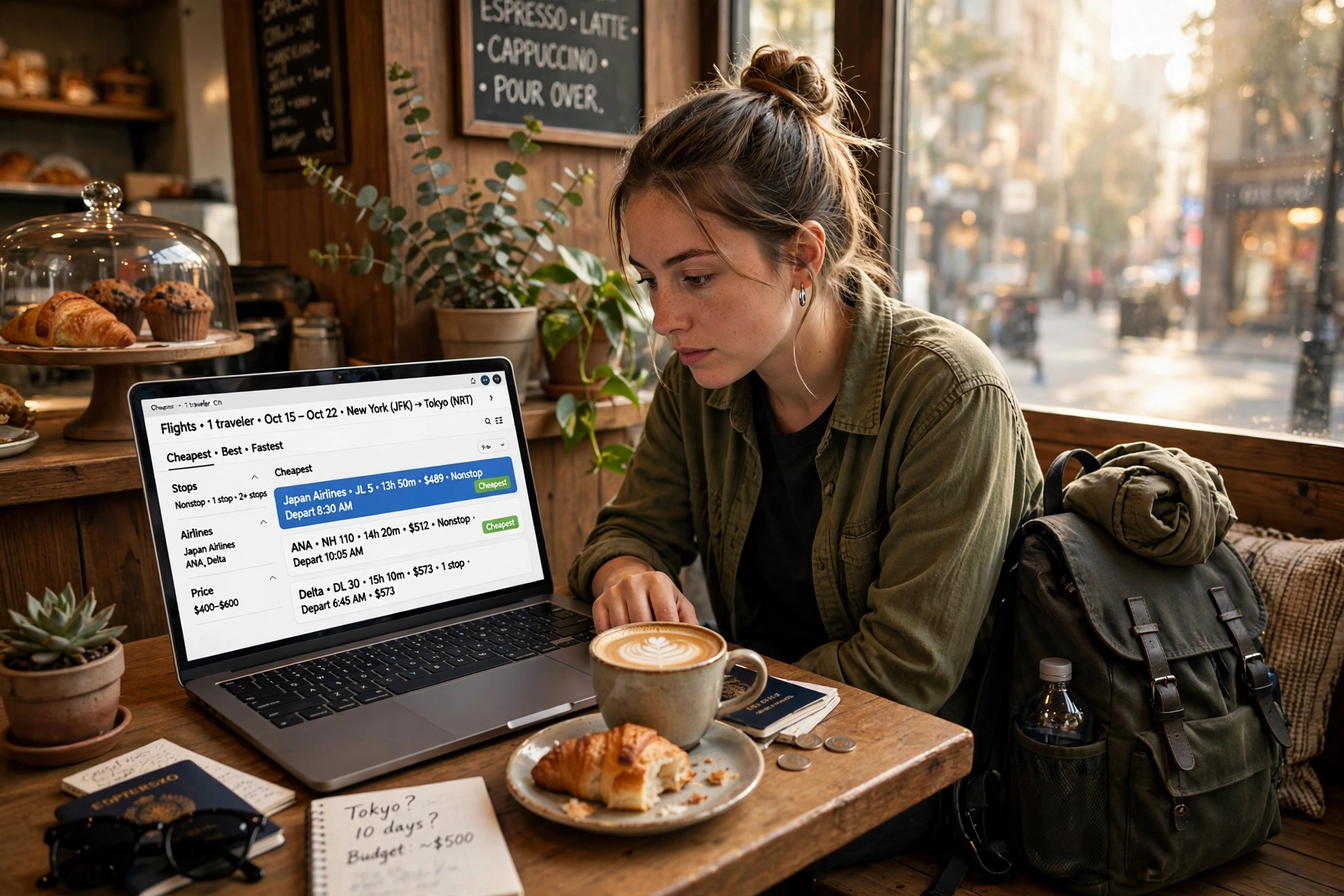
- Let Google Flights’ price tracking do the work. Set up alerts on Google Flights for your route and dates, and also track the “anywhere” and “any dates” grid views. Fares fluctuate daily, and tracked prices routinely drop 15–25% in the 6–10 week window before domestic trips. Turn on email alerts so you catch the dips instead of checking obsessively.
- Fly on the cheapest days of the week. Tuesday, Wednesday, and Saturday departures are consistently cheapest for domestic US flights — often $50–$120 less per person than Friday and Sunday departures. If your schedule has any flex, shifting a trip from Thursday–Sunday to Wednesday–Saturday can save a couple hundreds of dollars before you do anything else.
- Be airport-flexible. Check fares from every airport within a 90-minute drive of home, and into every airport near your destination. Flying into Fort Lauderdale instead of Miami, Oakland instead of SFO, or Providence instead of Boston routinely saves $80–$200 per ticket. For the full playbook, see our guide to finding cheap flights.
- Use incognito mode — or better, a fresh browser profile — for fare searches. While the “cookies inflate prices” claim is debated, airlines and booking sites do run price tests and personalized pricing. A clean search environment costs you nothing and rules out the possibility you’re seeing a marked-up price.
- Book one-way tickets separately. Round-trip pricing isn’t always the best deal. Searching two one-ways lets you mix airlines — Southwest outbound, Frontier return — and often beats the round-trip fare by $30–$80. This also opens up positioning flights: a cheap flight to a hub, then a separate budget fare to your final destination.
- Check budget carriers directly. Southwest, Frontier, Spirit, Allegiant, and Avelo often don’t appear in Google Flights or other aggregators. Southwest alone can undercut the big three by 20–40% on overlapping routes — but remember budget carriers charge for bags ($35–$65 per bag each way) and seat selection, so price the total trip before celebrating.
- Fly with only a personal item when possible. The most reliable $35–$65-per-flight savings in existence. A well-packed personal item (under most airlines’ 18x14x8 inch limits) works for trips up to 4–5 days if you plan laundry or rewear. This also gets you out of the airport faster — time is part of the budget too.
- Book at the right time — not too early, not too late. For domestic US flights, the sweet spot is typically 3–6 weeks out; for international, 2–4 months. Booking 8+ months early rarely gets you the best price (airlines often release seats at higher fares first), and booking inside 7 days almost guarantees paying a premium. Our cheapest time to travel guide maps this out by destination type.
- Sign up for fare-deal alerts. Services like Going (formerly Scott’s Cheap Flights) and Jack’s Flight Club send mistake fares and flash deals — think $250 round-trips to Europe or $98 to Hawaii. The free tiers are genuinely useful; act fast when one lands, because mistake fares can vanish in hours.
- Use points strategically, not emotionally. A credit card sign-up bonus (often 60,000–80,000 points, worth $600–$1,000+ in travel) can fund an entire trip. But don’t hoard points “for someday” — they devalue over time. The best rule: earn with intention for a specific trip, then spend them. Never buy stuff you don’t need just to earn points; that’s not saving, that’s spending with extra steps.
Lodging (Tips 11–18)
After flights, lodging is the next-biggest expense — and the easiest to cut without noticing, because you mostly sleep there.
- Price-compare hotels against vacation rentals and hostels for every trip. Don’t assume one category is always cheaper. In cities, a well-reviewed hostel private room ($60–$90/night) often beats a budget hotel ($110–$160). For groups of 3+, a vacation rental with a kitchen ($150–$250/night split 3–4 ways) usually wins. Check all three before booking anything.
- Stay slightly outside the center. Lodging one metro stop or a 10-minute drive from downtown typically costs 25–40% less than the equivalent room in the heart of things. You trade a short commute for real money — and neighborhood stays often have better, cheaper food nearby anyway.
- Travel with a kitchen — or at least a fridge and microwave. A rental with a kitchen lets you eat breakfast and pack lunches for a fraction of restaurant prices. Even a hotel room with a mini-fridge saves $15–$25/day: grocery breakfasts, leftover dinners, and drinks from a store instead of the $6 hotel vending machine.
- Look for the free breakfast. It’s the most underrated line item in budget travel. A decent hotel breakfast saves two people $20–$30/day — over a week, that’s $140–$210 back in your pocket. When comparing two similarly priced hotels, the one with breakfast almost always wins on true cost.
- Try house-sitting and home exchanges. Platforms like TrustedHousesitters connect you with homeowners who need pet-sitters — you stay free in exchange for pet care. Home-exchange platforms work similarly with no money changing hands. It’s not for everyone, but for flexible travelers it’s the single biggest lodging savings available: $0/night.
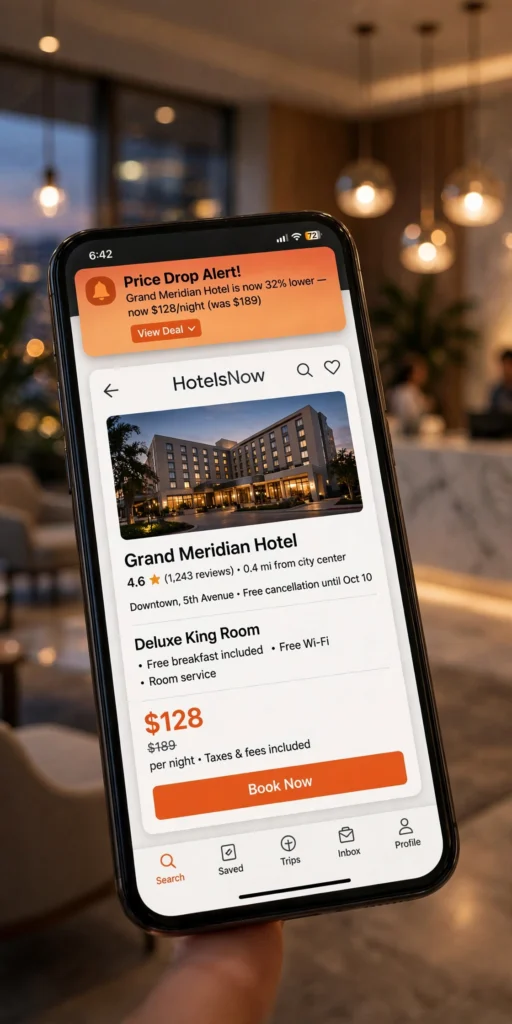
- Book refundable rates and re-check prices. Hotel prices fluctuate just like airfare. Book a refundable rate early, then check back weekly — if the price drops, rebook and cancel the original. This takes five minutes and can save $50–$200 per stay. Our hotel savings guide walks through the full version of this trick.
- Use loyalty programs even if you’re not loyal. Signing up is free, and member rates are often 5–10% lower than public rates at major chains. You don’t need to chase elite status — just the baseline discount plus occasional free-night redemptions adds up across a few trips a year.
- Consider university housing in summer. Many colleges rent dorm rooms to travelers from May through August, often $50–$80/night in great locations — including cities like Boston, Chicago, and London. Search “[city] university summer housing” and you may find the cheapest clean bed in town.
Food & Drink (Tips 19–26)
Food is the budget category most travelers underestimate — $60–$100/day per person is normal if you’re eating three restaurant meals. These tips cut that in half without cutting the joy.
- Eat your big meal at lunch. Lunch menus at the same restaurants typically cost 30–50% less than dinner for nearly identical food. Make lunch the splurge, then do a light grocery or street-food dinner. Over a week, this habit alone saves $100–$200 per person.
- Hit a grocery store on day one. Spend $30–$50 on breakfast supplies, snacks, water, and sandwich fixings. Breakfast out costs $12–$18 per person; a grocery breakfast costs $3–$4. Snacks alone — the $5 airport granola bar, the $4 museum gift-shop water — are where food budgets quietly bleed.
- Follow the locals, not the influencers. Restaurants within two blocks of a major attraction charge tourist prices. Walk 10 minutes in any direction and prices typically drop 20–40% while quality goes up. The rule of thumb: if the menu is in four languages and there’s a guy outside waving you in, keep walking.
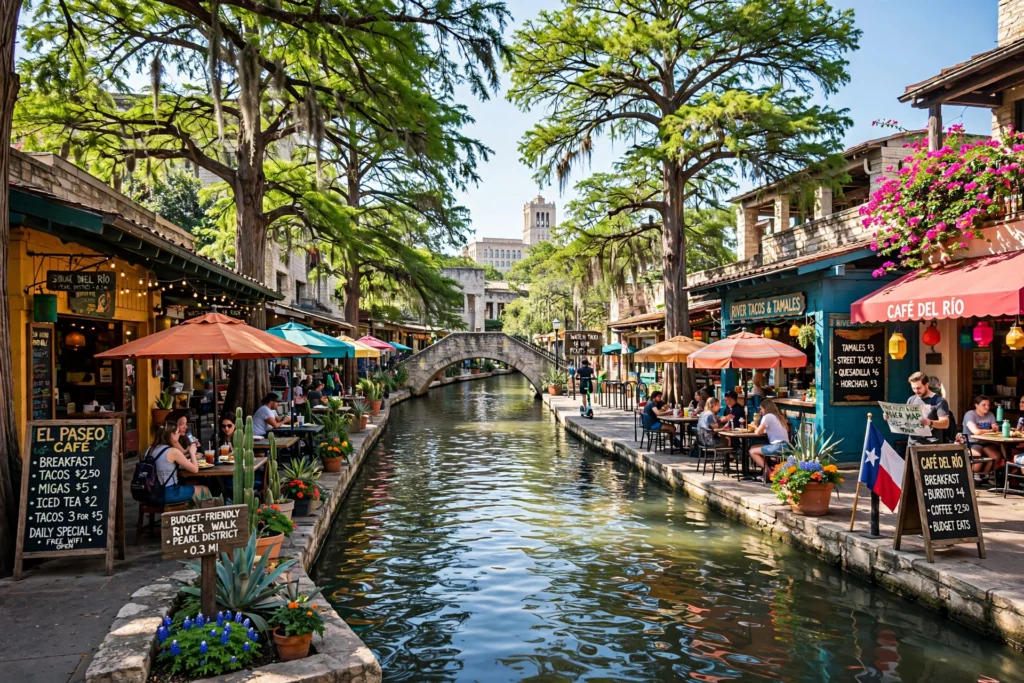
- Embrace street food, food halls, and markets. Some of the best food in any city costs $8–$14 from a cart, truck, or market stall. Food halls let everyone in your group eat what they want while you pay street-food prices instead of sit-down prices. Markets double as free sightseeing.
- Drink strategically. Alcohol is the fastest way to double a restaurant bill — a $16 entree becomes a $32 meal with two beers. Set a drinks budget, enjoy happy hours (typically 4–6pm, with $5–$8 drinks), or buy a bottle from a shop for the cost of two bar drinks. Nobody’s saying skip it; just don’t let it run on autopilot.
- Pack a reusable water bottle and coffee setup. Bottled water at $3–$5 a pop and $6 daily coffees add up to $15–$20/day without you noticing. A refillable bottle and a travel French press or instant coffee packets pay for themselves in the first two days.
- Ask locals where they eat — specifically. “Where’s good around here?” gets you the tourist answer. “Where did you eat last Tuesday?” gets you the real one. Hotel staff, rideshare drivers, and shopkeepers will point you to the $11 lunch spot they’d never put on a list.
- Cook one “nice” meal in. If your lodging has a kitchen, buy local ingredients and cook a proper dinner one night. It’s often the most memorable meal of the trip — shopping a foreign grocery store is an experience in itself — and costs a third of the restaurant equivalent.
Ground Transport (Tips 27–33)
Getting around a destination can quietly cost $30–$60/day if you default to rideshares. A little planning flips that to under $10.
- Price out the whole transport picture before you go. A $40/day rental car looks cheap until you add $25/day parking, gas, and tolls. Compare the all-in cost against transit passes and a few rideshares — in cities with good transit (New York, Chicago, DC, Boston, San Francisco), skipping the car usually saves $200–$400 per trip.
- Buy transit passes, not single rides. A 7-day unlimited transit pass ($34 in NYC, similar elsewhere) pays for itself in about 2.5 days of normal sightseeing. Many cities also have tourist transit cards that bundle airport transfers — do the math on your expected rides before buying.
- Walk the “walkable” trips. Anything under a mile is almost always faster on foot than waiting for a ride. Budget travelers who default to walking for short hops save $10–$20/day and — bonus — actually see the city instead of watching it through a car window.
- Use rideshares surgically. Rideshares are for late nights, bad weather, and splitting costs among 3–4 people — not for every 8-minute hop. One shared ride split four ways costs less per person than transit; one solo ride taken six times a day is a budget killer. Set a daily rideshare cap and stick to it.
- Check airport transfer options before landing. Airport taxis and rideshares run $25–$70 in most US cities. Airport express buses, trains, and shared shuttles typically cost $5–$15 per person and take only 10–15 minutes longer. Look this up before you land, not while you’re jet-lagged in the arrivals hall.
- Rent bikes where it makes sense. Many cities have bike-share programs ($12–$18/day) that are perfect for flat, scenic areas — waterfronts, park loops, beach towns. It’s transport and an activity in one, and it beats paying for parking.
- If you must rent a car, rent off-airport. Airport rental locations bake concession fees into the price — off-airport locations for the same companies are often 20–35% cheaper. A $12 shuttle or transit ride to the rental office can save $100+ on a week-long rental. Also decline the prepaid fuel option; return it full yourself.
Activities & Sightseeing (Tips 34–41)
Here’s the good news: the best things in most destinations are free. The trick is knowing which paid attractions are worth it and which aren’t.
- Build your itinerary around free attractions first. Parks, beaches, hiking trails, historic districts, public markets, free museum days, self-guided walking tours — most destinations have 2–3 full days of genuinely great free activities. Start there, then add paid experiences only where they fill a real gap. Our free things to do while traveling list is a good template.
- Check for city tourist passes — but do the math. CityPASS and similar bundles save 30–50% off attraction gate prices if you’d visit most of the included sights anyway. List the attractions you actually want, add up individual ticket prices, and compare. If you’d only do two of six, skip the pass.
- Visit national parks with the America the Beautiful pass. At $80/year, the pass covers entrance fees to 2,000+ federal recreation sites. A single park visit costs $20–$35 per vehicle — so the pass pays for itself in 3–4 visits and makes every additional park essentially free.
- Take free walking tours. Tip-based walking tours run in most major cities — pay what you think it was worth ($10–$20 per person is customary). You get a local guide, orientation, and history for less than half the cost of a bus tour. Book the morning of day one to orient yourself.
- Look for free museum days and discounted hours. Many major museums have weekly free evenings or pay-what-you-wish hours. Check each museum’s website before paying full price.
- Prioritize experiences over souvenirs. The data is consistent: people remember experiences far longer than things. Set a small souvenir budget ($20–$30 for the whole trip) and redirect the rest to one memorable paid experience — a food tour, a kayak rental, a sunset sail. You’ll remember the sail; you won’t remember the third keychain.
- Use the library — yes, really. Many public libraries offer free museum passes, park passes, and attraction tickets to anyone with a library card (some extend this to visitors). It’s an odd trick, but “museum pass library [city]” is worth a search before every trip.
- Have a rainy-day plan that doesn’t cost money. Bad weather is when budgets die — everyone retreats to malls, movies, and expensive indoor attractions. Pre-plan free indoor options: libraries, churches and cathedrals, university campuses, hotel common areas with board games, window-shopping districts.
Planning & Booking Strategy (Tips 42–52)
The meta-tips: habits that make every trip cheaper, trip after trip.
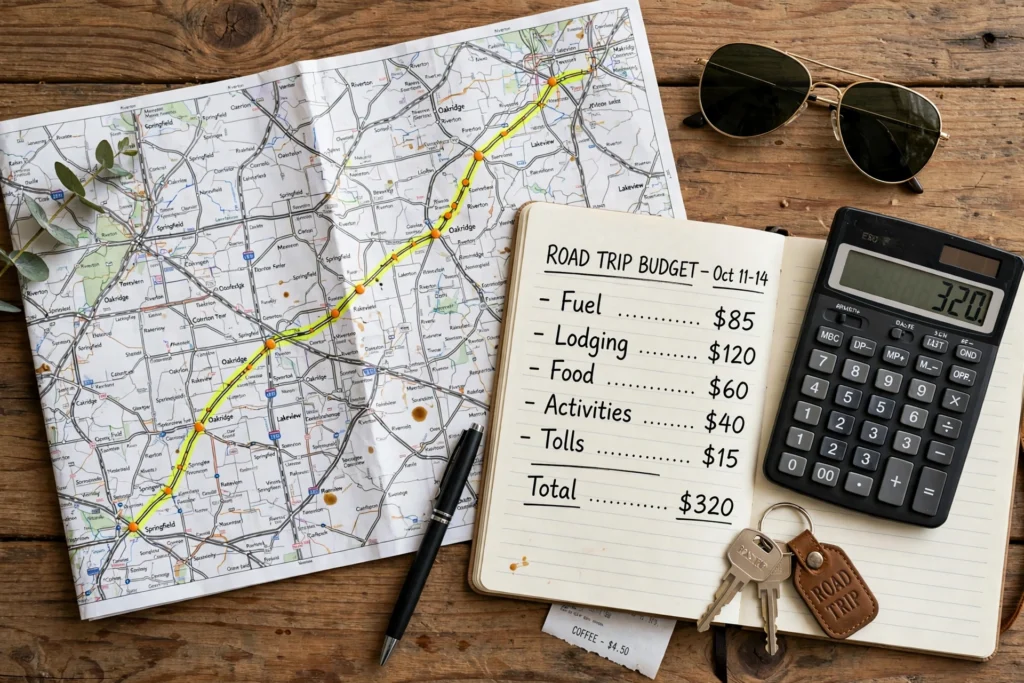
- Set a daily budget before you go. Decide on a per-day spending target (say, $125/day per person all-in for a budget US trip) and track it loosely in a notes app. Travelers who set a number spend 15–25% less than those who “just try to be careful” — awareness is the whole game.
- Travel in shoulder season. The weeks just before and after peak season offer 20–40% lower prices on flights and hotels with 80% of the good weather. Think late April/May and September/October for most US destinations, or early December (before the holidays) for cities.
- Be destination-flexible. If you just want a beach trip, price 4–5 beach destinations and go where the deals are — the savings (often $300–$500 per trip) dwarf any preference between, say, Gulf Shores and Myrtle Beach. Let the deals pick the destination sometimes.
- Book directly with hotels when the price matches. If the hotel’s own site matches the booking-platform price, book direct — you’ll get better cancellation terms, easier changes, and loyalty credit. Only use third-party sites when they’re genuinely cheaper, and screenshot the price.
- Travel with a group when it makes sense. Splitting a vacation rental 3–4 ways, sharing rental cars, and splitting restaurant bills family-style cuts per-person costs dramatically. A $250/night house is $125 per couple — cheaper than two hotel rooms and far nicer.
- Get travel insurance for expensive trips. This sounds like the opposite of saving, but a $150–$250 policy on a $3,000+ trip protects you from the budget-nuking disaster: the cancelled flight, the medical emergency, the lost week. For cheap domestic trips, skip it; for big ones, it’s the cheapest peace of mind in travel.
- Withdraw cash wisely abroad (and at home). Use a no-foreign-transaction-fee debit card at bank ATMs, decline the ATM’s “convert for you” offer (their rate is always worse), and avoid airport currency exchanges entirely — their markups run 8–15%. At home, the same principle applies to avoiding ATM fees: plan withdrawals at your bank’s ATMs.
- Pack to avoid buying things. The $25 forgotten phone charger, the $18 sunscreen, the $40 umbrella — “replacement purchases” are a hidden trip tax. Keep a packing checklist on your phone and reuse it every trip. Sunscreen, basic meds, chargers, and a small umbrella cover 90% of forced purchases.
- Slow down. The fastest way to spend more is to move more — every relocation costs transport money, wastes a half-day, and resets your local knowledge. Five days in one place is almost always cheaper (and better) than five one-night stops. Depth beats breadth on a budget.
- Track prices, not just spending. After each trip, jot down what things actually cost — hotel/night, typical meal, transport. In two or three trips you’ll have a personal price database that makes future trip planning twice as fast and your budgets twice as accurate.
- Remember what the money is for. Budget travel isn’t about spending as little as possible — it’s about spending deliberately so you can travel more. Every $200 you save is a future weekend trip. The goal was never deprivation; it’s maximizing trips per dollar. Keep that frame and the tradeoffs feel like wins, not sacrifices.
Frequently Asked Questions
How much money do I need to travel on a budget in the US?
For a budget-conscious domestic trip, plan on $100–$150 per person per day all-in: roughly $40–$60 for lodging (hostel, budget hotel split, or off-center Airbnb), $30–$45 for food (groceries plus one restaurant meal), $10–$20 for local transport, and the rest for activities. A long weekend for two can comfortably run $600–$900 total, and a week $1,400–$2,100, before flights. Traveling in shoulder season or to cheaper regions drops this further.
What is the cheapest way to travel long distances in the US?
For most routes, budget airlines booked 3–6 weeks out win on price — $80–$180 each way is common for cross-country fares on Frontier, Spirit, or Southwest sales. For shorter distances (under 400 miles), driving usually beats flying once you factor in airport time and baggage fees, especially with 2+ people splitting gas. Buses (Greyhound, FlixBus, Megabus) are the absolute cheapest at $20–$60 for regional routes, though they’re slow.
How can I save money on food while traveling?
The 80/20 of travel food savings: eat breakfast from groceries ($3–$4 vs. $12–$18 out), make lunch your main restaurant meal (30–50% cheaper than dinner at the same places), and keep snacks and water on you to kill impulse spending. Street food, food halls, and markets deliver the best quality-per-dollar of any dining category. Two people can eat very well on $50–$70/day combined with these habits.
Is it cheaper to book flights and hotels as a package?
Sometimes — bundles can save 10–20% versus booking separately, especially for resorts and international trips. But always price the components individually first; packages sometimes quietly use higher base rates. The bundle wins most often for simple flight + hotel combos in competitive markets (Las Vegas, Orlando, Cancun). For complex trips, separate bookings give you more control and usually a better total.
When is the cheapest time to book a vacation?
For domestic US travel, book flights 3–6 weeks ahead and hotels 2–4 weeks ahead; for international, extend both windows (flights 2–4 months, hotels 1–2 months). Travel during shoulder season — late April through May and September through October for most destinations — for 20–40% lower prices across the board. Midweek departures (Tuesday/Wednesday) beat weekends by $50–$120 per ticket.
Are travel credit cards worth it for budget travelers?
Only if you pay the balance in full every month — interest charges instantly erase any rewards. If you do, a single sign-up bonus (typically 60,000–80,000 points) can cover $600–$1,000+ of a trip, which is the highest-ROI move in budget travel. Beyond the bonus, use the card for normal spending you’d do anyway. Never carry a balance or buy things just for points.
How do I find free things to do at my destination?
Start with the destination’s official tourism site and search “[city] free things to do” — tourism boards maintain these lists because they want you to visit. Check for free museum days, public parks, waterfronts, historic districts, farmers markets, and tip-based walking tours.
What’s the single biggest mistake budget travelers make?
Not setting a daily budget. Without a number, every spending decision is made in the moment — and moments favor spending. Travelers who set even a rough per-day target ($125/day, say) and glance at it each evening spend 15–25% less with no real loss of enjoyment. The second-biggest mistake: over-scheduling relocations. Every move between cities costs money and a half-day; slowing down is free.