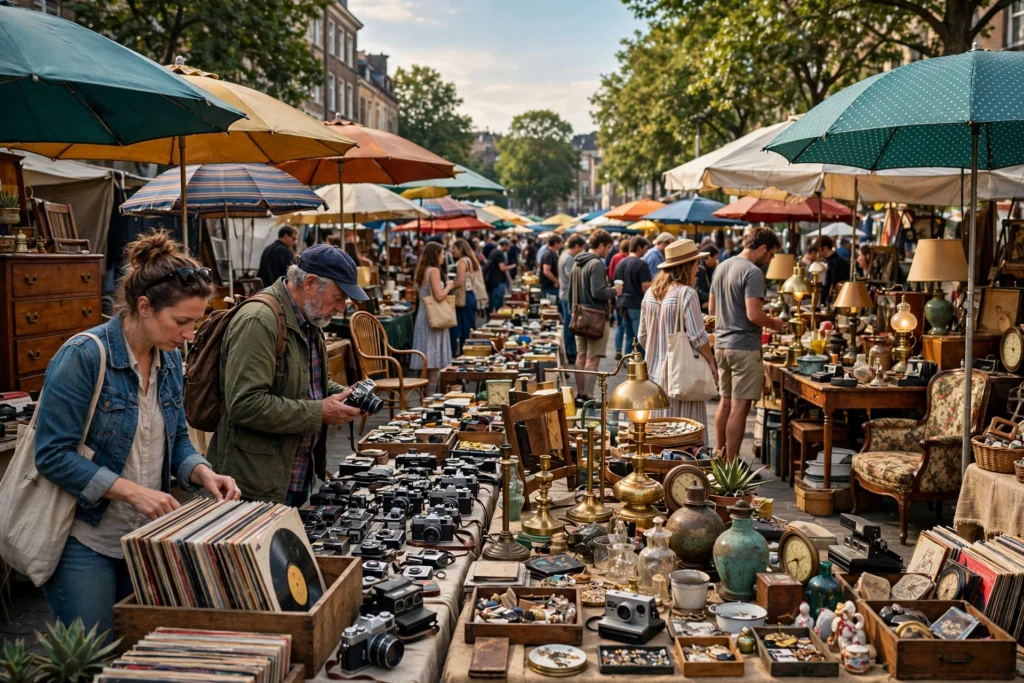
Learning how to find local events near you is the difference between weekends that blur together and weekends you’ll actually remember. Most towns — even small ones — host far more events than most residents ever hear about: farmers markets, gallery nights, outdoor movie screenings, food truck rallies, charity 5Ks, neighborhood cleanups, and seasonal festivals that never make it onto your social media feed.
The good news is that finding these events takes minutes once you know where to look. This guide walks you through every reliable method for discovering local events near you, from the big platforms like Eventbrite and Facebook Events to the underused local sources — tourism boards, city calendars, library boards, and neighborhood apps — that surface the hidden gems. By the end, you’ll have a repeatable weekly routine that surfaces the best things happening around you, every single week.
Why Most People Miss Great Local Events
It’s not that events aren’t happening — it’s that event promotion is fragmented. A neighborhood block party might only be advertised on a flyer at the local coffee shop. A pop-up night market might live entirely inside a single Instagram account. A free concert series might be listed only on the parks department’s calendar page that nobody visits.
Event organizers, especially small and community-based ones, rarely have marketing budgets. They post in one or two places and hope for the best. That means no single platform lists everything, and the person who knows how to check multiple sources always finds more to do than the person who checks one.
The fix is simple: build a small discovery system. Once it’s set up, maintaining it takes about ten minutes a week.
Step 1: Set Up Eventbrite for Your Location
Eventbrite is the single highest-value platform for local event discovery in the US. Millions of events are listed there, many of them free, and its location-based browsing is excellent.
How to use it well
- Enter your city or ZIP code and browse the “Things to do” feed — filter by date, category, and price (including free).
- Create a free account and follow organizers whose events you like. You’ll get notified when they post something new.
- Use the “Collections” feature to save interesting events in one place, even if you’re not sure you’ll attend yet.
- Check the “Online Events” tab only when you want virtual options; for local discovery, stay on the location feed.
Eventbrite’s strength is breadth: workshops, classes, networking events, food events, and performances all live there. Its weakness is that hyper-local community events — the block party, the church rummage sale — often aren’t listed. That’s what the later steps are for.
Step 2: Master Facebook Events
Despite everything, Facebook remains one of the richest sources of local event listings, especially for community-driven and informal events. The Events tab lets you browse “Popular in your area,” filter by category, and see what your friends are interested in.
Getting the most from Facebook Events
- Join local community groups (search “[your city] events,” “[your city] happenings,” “[your neighborhood]”) — members constantly share things that never make it to formal listings.
- Follow local venues, bars, breweries, bookstores, and community centers. Their pages announce events first.
- Tap “Interested” on events you might attend — Facebook’s algorithm then surfaces similar events.
- Check the “This Weekend” view every Thursday or Friday morning as a ritual.
One caveat: Facebook shows you what its algorithm thinks you want. If you only ever click concerts, you’ll stop seeing the farmers market. Deliberately browse the full category list once a month to reset your discovery.
Step 3: Check Your City and County Tourism Boards
Tourism boards (also called visitors bureaus or “destination marketing organizations”) maintain some of the most complete local event calendars in existence — and almost nobody who lives in the city checks them.
What to look for
- Search “[your city] official events calendar” or “[your county] tourism events.” The official tourism site almost always has a calendar.
- Look for annual signature events — the festivals, parades, and seasonal celebrations the city is known for — and note their typical months.
- Sign up for the tourism board’s email newsletter. These often round up the month’s highlights in one email.
- Don’t skip the county and regional tourism sites. Events in nearby suburbs and small towns often appear there, not on the big-city calendar.
Tourism calendars are especially good for free family events, seasonal festivals, and recurring series like summer concert programs and holiday markets.
Step 4: Use Your City Government’s Calendar
Parks departments, libraries, and community centers run a huge share of free local events — and they list them on municipal websites that are ugly but goldmines.
Where the free events hide
- Parks & recreation: outdoor movies, fitness classes, nature walks, youth sports sign-ups, and facility open houses.
- Public libraries: author talks, craft workshops, book clubs, kids’ story hours, and free classes. Library event calendars are criminally underused.
- Community and senior centers: dances, game nights, art classes, and holiday parties, many open to all ages.
- City clerk / special events office: permits for street fairs, parades, and block parties are public record — the calendar often lists them weeks out.
Step 5: Add Neighborhood Apps to the Mix
Hyper-local apps catch the events that are too small for Eventbrite and too informal for the tourism board.
The ones worth installing
- Nextdoor: the events section surfaces yard sales, meetups, neighborhood cleanups, and local fundraisers posted by actual neighbors.
- Meetup: best for recurring interest-based gatherings — hiking groups, language exchanges, board game nights, photography walks.
- Eventful and local alt-weekly sites: many cities still have an alt-weekly (print or digital) with a curated events section that reflects local taste better than any algorithm.
- AllTrails / local outdoors groups: if you’re into hiking, paddling, or cycling, group outings are often posted in outdoor communities rather than event platforms.
Step 6: Follow Local Media and Influencers
Local journalists, bloggers, and Instagram accounts that cover “things to do in [city]” do the curation work for you. Find two or three and follow them.
- Search Instagram and TikTok for “[your city] events,” “[your city] things to do,” or “[your city] weekend.”
- Subscribe to one local newsletter — many cities have a “weekend roundup” email (often free) that lists the five to ten best things happening.
- Check your local newspaper’s events or “things to do” section, especially the Thursday/Friday editions.
- Local radio stations often maintain online event calendars and promote community events on air.
Step 7: Build Your Weekly Discovery Routine
Knowing the sources is only half the battle. The other half is checking them consistently without it feeling like homework. Here’s a routine that takes about ten minutes:
The Thursday ten-minute scan
- Minutes 0–3: Open Facebook Events → “This Weekend.” Mark anything interesting.
- Minutes 3–6: Check Eventbrite for your city, filtered to this weekend and next, free events included.
- Minutes 6–8: Glance at your city’s tourism calendar and parks department calendar for anything new.
- Minutes 8–10: Skim one local newsletter or Instagram account’s latest “weekend roundup” post.
Do this every Thursday and you’ll consistently know about more interesting events than 95% of people in your city. For bigger planning — festivals, holiday events, seasonal series — do a deeper monthly check using our family event planning guide approach: pick one anchor event per month and plan around it.
Platform Comparison: Where Each Source Shines
| Source | Best For | Cost | Effort |
|---|---|---|---|
| Eventbrite | Classes, workshops, performances, food events | Free to browse | Low |
| Facebook Events | Community events, parties, informal gatherings | Free | Low |
| Tourism board calendar | Festivals, seasonal events, signature happenings | Free | Low |
| City/parks/library calendars | Free events, kids’ programs, outdoor series | Free | Medium |
| Nextdoor | Neighborhood-level events, yard sales, meetups | Free | Low |
| Meetup | Recurring hobby and interest groups | Free / some paid groups | Low |
| Local newsletters & Instagram | Curated weekend picks, hidden gems | Free | Low |
Common Mistakes That Keep You Missing Out
- Only checking one platform. As noted, no single source lists everything. Two or three sources is the minimum for good coverage.
- Searching only by the weekend. Many great events — weekday evening classes, Thursday gallery nights, Tuesday trivia — happen midweek. Check the full week occasionally.
- Ignoring the suburbs. Some of the best festivals, markets, and outdoor series happen in neighboring towns, not the city center.
- Not following organizers. Finding a great event once is luck; following the organizer means you’ll hear about the next ten.
- Forgetting seasonal patterns. Outdoor movie series run in summer, tree lightings in December, harvest festivals in fall. Knowing the seasonal rhythm helps you look at the right time. Our roundup of the best family events in the USA is organized with these seasonal patterns in mind.
- Waiting until the day of. Popular free events and small-venue shows can fill up or sell out. The Thursday scan gives you a head start.
Finding Events for Specific Interests
Free events
Filter Eventbrite and Facebook by “free,” check library and parks calendars, and watch for recurring series (first Fridays, summer movies, holiday markets) that are free by design.
Family-friendly events
Libraries, parks departments, children’s museums, and community centers are your best sources. Many cities have a dedicated “family events” calendar or parenting blog with weekly roundups.
Outdoor and seasonal events
Tourism boards and parks departments list these first. Search “[your city] summer events series” or “[your city] holiday events” to find the annual lineups.
Networking and professional events
Eventbrite, Meetup, and your local chamber of commerce calendar cover these. LinkedIn Events has also become a solid source for professional gatherings.
Volunteering and community service
VolunteerMatch, local United Way chapters, and parks departments list cleanup days, food bank shifts, and community build projects.
Using Google the Smart Way
Google is an underrated event-discovery tool if you search with intent. Generic searches like “events near me” return a mixed bag, but specific queries work well:
- “[your city] events this weekend” — surfaces roundup articles and calendar pages.
- “[your city] free events [month]” — catches seasonal roundups from local blogs.
- “[your city] [interest] events” — e.g., “Austin live music events,” “Denver hiking events.”
- “site:eventbrite.com [your city] [interest]” — restricts results to Eventbrite listings.
Google’s own event carousel (the list of dated events that appears above some search results) pulls from structured data on event pages — it’s worth a glance, but it only shows events whose organizers added proper markup, so treat it as a supplement, not the main source.
New in Town? Jump-Start Your Event Discovery
If you just moved, you don’t have the local knowledge yet — no favorite venues, no community groups, no sense of the seasonal rhythm. Here’s how to catch up fast:
- Week 1: Set up Eventbrite and Facebook Events for your new location. Join two or three “[city] events” groups.
- Week 2: Find the tourism board calendar and sign up for its newsletter. Identify the city’s signature annual events and note when they happen.
- Week 3: Get a library card and check the library’s event calendar. Libraries are the fastest way to find free, welcoming community events.
- Week 4: Follow two local “things to do” Instagram accounts and subscribe to one weekend-roundup newsletter.
Within a month, you’ll have a fuller social calendar than most people who’ve lived there for years.
Saving Money on Local Events
Finding events is one thing; affording the good ones is another. A few strategies:
- Go early in the season. Many festivals and series offer early-bird pricing months ahead.
- Volunteer. Festivals, races, and community events almost always need volunteers — and volunteers usually get free entry plus perks.
- Check for free days. Museums, gardens, and attractions often have monthly free days or free evening hours.
- Look for promo codes. Local newsletters and Instagram accounts frequently share discount codes for events.
- Bring friends to group-rate events. Some venues and tours discount groups of 6–10.
Frequently Asked Questions
What is the best app for finding local events?
Eventbrite and Facebook Events together cover the most ground for most US cities. Eventbrite is stronger for ticketed events, classes, and performances; Facebook is stronger for free community events and informal gatherings. Use both.
How do I find free events near me?
Filter Eventbrite and Facebook Events by “free,” check your public library’s calendar, your parks department’s calendar, and your city’s tourism board site. Many cities also run recurring free series — outdoor movies in summer, holiday markets in winter — that are listed on municipal calendars.
How can I find out about events before they sell out?
Follow organizers and venues directly (on Eventbrite, Facebook, and Instagram) so you hear about events when they’re announced. Sign up for local newsletters, and do your event scan on Thursdays rather than Saturdays — you’ll catch things with time to spare.
Are there local events during the week, or only on weekends?
Plenty happens midweek: trivia nights, gallery openings, classes, book clubs, open mics, and weeknight performances. If you only check weekend listings, you’re missing roughly half of what’s available.
How do I find events in a small town?
Small towns rely more on Facebook groups, the town’s official website, the library, churches, and physical bulletin boards (grocery stores, coffee shops, post offices). The chamber of commerce — if one exists — is also worth checking.
What’s the difference between Eventbrite and Facebook Events?
Eventbrite is a ticketing platform where organizers formally list events — it’s structured, searchable, and reliable. Facebook Events is social and informal — it captures everything from ticketed shows to a neighbor’s backyard barbecue. They complement each other.
The Bottom Line
Knowing how to find local events near you isn’t about downloading one magic app — it’s about building a small, repeatable system across the platforms where events actually get listed. Set up Eventbrite and Facebook Events, bookmark your tourism board and parks calendars, join a couple of local groups, and run a ten-minute scan every Thursday. Do that consistently, and you’ll never again wonder “what’s even happening this weekend” — you’ll be choosing between options instead.
Event Discovery by Season: What to Look For When
Local events follow a seasonal rhythm, and knowing the pattern helps you search at the right time. Here’s what typically peaks in each season across most US cities:
Spring (March–May)
Garden tours, cherry blossom and wildflower festivals, farmers markets reopening, spring art fairs, charity 5K and fun-run season, outdoor dining weeks, and Easter-season community events. This is also when summer series (outdoor movies, concert programs) announce their schedules — sign up for notifications now.
Summer (June–August)
The busiest event season in most cities: outdoor movies in the park, Shakespeare in the park, street fairs and block parties, night markets, food truck rallies, free fitness classes in parks, Fourth of July celebrations, and county fairs. Check parks department calendars in May so you don’t miss the start of weekly series.
Fall (September–November)
Harvest festivals, Oktoberfest celebrations, haunted houses and Halloween events, fall art walks, holiday market announcements, and Thanksgiving-season charity events like turkey trots and food drives. Cultural organizations also launch their fall programming — symphony, theater, and lecture seasons.
Winter (December–February)
Tree lightings, holiday markets, New Year’s Eve events, winter restaurant weeks, indoor craft fairs, and Valentine’s-season events. January and February are quieter, which makes them ideal for classes, workshops, and indoor hobby meetups — and many venues offer off-season discounts.
Aligning your searches with the season — “summer events” in May, “holiday events” in November — surfaces the timely roundups that local media publishes each year.