The best farmers markets in the USA are about far more than groceries. They’re Saturday-morning rituals, community gathering spots, and some of the most enjoyable free entertainment a city offers — live music, food vendors, flower stalls, and a chance to meet the people who grow your food. Whether you’re a serious home cook hunting for heirloom tomatoes or just looking for a great way to spend a weekend morning, America’s top farmers markets deliver.
This guide rounds up the country’s standout markets — from century-old institutions to modern weekly gatherings that draw tens of thousands — plus practical tips for making the most of your visit, a seasonal produce cheat sheet, and answers to the most common questions. If you want to go deeper on what to buy and cook once you’re there, our farmers market food guide covers shopping strategy in detail.
What Makes a Great Farmers Market
Not every market with a few tents qualifies as great. The best farmers markets in the USA share a handful of traits:
- Producer-only rules: the best markets require vendors to grow or make what they sell — no reselling wholesale produce.
- Scale and variety: dozens (or hundreds) of vendors across produce, meat, dairy, baked goods, flowers, and prepared foods.
- Year-round or long seasons: the greats run most of the year, not just six weeks in summer.
- Community energy: live music, chef demos, kids’ activities, and food vendors that turn shopping into an outing.
- Accessibility: central locations, public transit access, and acceptance of SNAP/EBT benefits.
The 12 Best Farmers Markets in the USA
1. Portland State University Farmers Market — Portland, Oregon
Held on the Portland State University campus every Saturday year-round, this is widely considered one of the finest farmers markets in the country. With well over 100 vendors at peak season, it offers an extraordinary range of Pacific Northwest produce, artisan cheeses, fresh seafood, and prepared foods. The setting — a tree-lined park blocks campus — makes it as pleasant as it is productive. Arrive before 10 a.m. in summer; the popular vendors sell out.
2. Union Square Greenmarket — New York City
Operating four days a week in Manhattan’s Union Square, the Greenmarket is the flagship of the GrowNYC network and a New York institution. Regional farmers from within a few hours’ drive bring just-picked produce, and the market’s “producer-only” rule is strictly enforced. Mondays, Wednesdays, Fridays, and Saturdays year-round — Saturday is the biggest day. It’s as much a sightseeing stop as a shopping trip.
3. Ferry Plaza Farmers Market — San Francisco, California
Set against the backdrop of the Ferry Building on the Embarcadero, this market runs three days a week and showcases the absurd abundance of Northern California agriculture. The Saturday market is the main event, with top Bay Area chefs shopping alongside regulars. The prepared-food options — from wood-fired pizza to fresh oysters — make it easy to turn a shopping run into lunch.
4. Dane County Farmers’ Market — Madison, Wisconsin
Encircling the Wisconsin State Capitol building on Saturdays (and Wednesdays in summer), this is one of the largest producers-only markets in the country. Everything sold here is grown or made in Wisconsin. The cheese curds alone are worth the trip, and the setting — a full loop around the Capitol Square — makes for one of the most scenic market walks in America. It typically runs outdoors from spring through fall, moving indoors in winter.
5. Eastern Market — Detroit, Michigan
Operating since the 1800s, Eastern Market is a Detroit landmark and one of the oldest continuously running market districts in the US. Saturday is the flagship day, with hundreds of vendors across several large sheds. Beyond produce, the surrounding district is packed with food businesses, murals, and shops, making it a full-day destination. Tuesday and Sunday markets run in season as well.
6. Pike Place Market — Seattle, Washington
Yes, it’s touristy — and yes, it’s still genuinely great. Pike Place has operated since 1907 and remains a working market where Seattleites actually shop. The produce vendors along Pike Place, the flower stalls (some of the cheapest spectacular bouquets in the country), and the fish-throwing fishmongers make it unmissable. Go early on weekday mornings to beat the crowds.
7. Santa Monica Farmers Market — Santa Monica, California
A favorite of Los Angeles chefs, the Wednesday Santa Monica market is where serious produce people shop — it’s smaller and more focused on top-tier growers than the weekend tourist markets. The Saturday market at the same location is larger and more festive. If you care about peak-season stone fruit, citrus, and avocados, this is the market.
8. Boulder County Farmers Market — Boulder, Colorado
Saturdays in downtown Boulder (with a Wednesday evening market in summer), this market is known for its strict standards, beautiful setting along Boulder Creek, and strong prepared-food scene. Colorado’s high-altitude growing season is short but intense — late-summer visits deliver legendary sweet corn, peaches from the Western Slope, and heirloom tomatoes.
9. Des Moines’ Downtown Farmers’ Market — Des Moines, Iowa
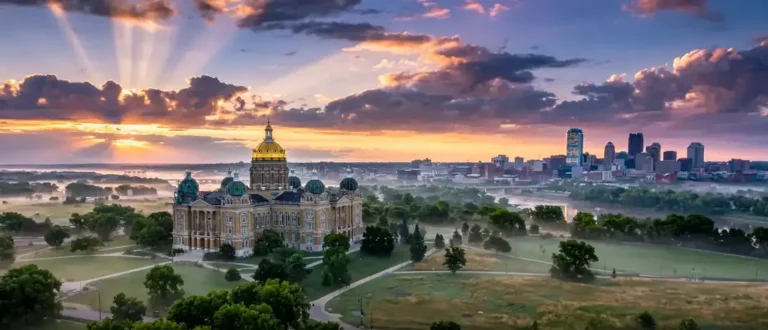
Running Saturday mornings from spring through fall in the historic Court District, this market regularly draws tens of thousands of visitors and hundreds of vendors. It’s a showcase for Iowa agriculture at its best — sweet corn, pork, eggs, and baked goods — plus a lively atmosphere with street performers and breakfast vendors. One of the best markets in the Midwest, full stop.
10. Charleston Farmers Market — Charleston, South Carolina
Held Saturdays in Marion Square from spring through fall, this market captures Lowcountry food culture: local shrimp, stone-ground grits, benne wafers, and produce from the surrounding Sea Islands. The setting — moss-draped oaks in one of America’s prettiest downtowns — doesn’t hurt. Pair your visit with a walk through the historic district.
11. SFC Farmers’ Market — Austin, Texas
Run by the Sustainable Food Center, Austin’s Saturday market downtown (plus a Tuesday market) is the heart of the city’s local food scene. Expect Texas produce, pasture-raised meats, farmstead cheeses, and a strong showing of prepared foods reflecting Austin’s food culture — breakfast tacos made with market ingredients are a rite of passage. Many vendors also appear at the city’s beloved food truck gatherings around town.
12. Minneapolis Farmers Market — Minneapolis, Minnesota
Operating since the 1800s near downtown Minneapolis, this market runs daily in season with weekends as the peak. It’s a true working market — wholesale buyers shop alongside families — which keeps prices honest and the produce turnover fast. Sweet corn season in August is the stuff of local legend.
Quick Comparison: The Top Markets at a Glance
| Market | City | Main Day | Season | Known For |
|---|---|---|---|---|
| PSU Farmers Market | Portland, OR | Saturday | Year-round | PNW produce, artisan foods |
| Union Square Greenmarket | New York, NY | Saturday (also M/W/F) | Year-round | Producer-only, regional farms |
| Ferry Plaza | San Francisco, CA | Saturday (also Tu/Th) | Year-round | NorCal abundance, chef scene |
| Dane County | Madison, WI | Saturday | Spring–fall (winter indoors) | Capitol loop, cheese curds |
| Eastern Market | Detroit, MI | Saturday | Year-round | Historic sheds, scale |
| Pike Place | Seattle, WA | Daily | Year-round | Flowers, fish, history |
| Santa Monica | Santa Monica, CA | Wednesday & Saturday | Year-round | Chef-grade produce |
| Boulder County | Boulder, CO | Saturday | Spring–fall | Creek setting, strict standards |
| Des Moines Downtown | Des Moines, IA | Saturday | Spring–fall | Scale, Iowa agriculture |
| Charleston | Charleston, SC | Saturday | Spring–fall | Lowcountry foods, setting |
| SFC Austin | Austin, TX | Saturday | Year-round | Texas produce, food culture |
| Minneapolis | Minneapolis, MN | Daily (peak weekends) | Spring–fall | Working market, sweet corn |
Tips for Making the Most of Any Farmers Market
Go early for selection, late for deals
The best produce sells out — popular vendors at top markets can be picked over within the first hour. But if you’re bargain hunting, the last 30 minutes often bring discounts as vendors prefer to sell rather than pack up. Decide which matters more before you go.
Bring cash, bags, and a cooler
Most vendors now take cards, but cash is still faster and some smaller growers are cash-only. Bring sturdy reusable bags and, in warm weather, a cooler with ice packs for dairy, meat, and seafood.
Walk the whole market before buying
Do a full loop first. Prices and quality vary between vendors selling the same crop, and the stall at the far end often has the best deal on what you want. This is the single biggest beginner mistake — buying at the first attractive stall.
Talk to the growers
Ask what’s at peak, what’s coming next week, and how to store or cook something unfamiliar. Growers love these questions, and you’ll eat better for it. Many will tell you honestly which of their crops is best right now versus just okay.
Eat breakfast there
The prepared-food vendors at great markets — breakfast burritos, wood-fired pastries, fresh-pressed cider — are half the fun. Arrive hungry. If you’re plant-based, many markets now have excellent vegan options; our vegan food guide can help you spot the best plant-based vendors.
Seasonal Produce Cheat Sheet
Timing your visit to the season makes all the difference. Here’s what’s typically at peak when:
- Spring (March–May): asparagus, strawberries, peas, spring onions, leafy greens, rhubarb, artichokes (California), morel mushrooms.
- Early summer (June): cherries, blueberries, summer squash, green beans, fresh herbs, snap peas.
- High summer (July–August): tomatoes, sweet corn, peaches, nectarines, blackberries, eggplant, peppers, melons.
- Fall (September–November): apples, pears, winter squash, pumpkins, Brussels sprouts, cranberries, sweet potatoes.
- Winter (December–February): citrus (California, Texas, Florida), root vegetables, storage apples, greenhouse greens.
These are general patterns — exact timing shifts by region and year. When in doubt, ask a grower what’s best “right now.”
Farmers Markets vs. Grocery Stores: Is It Worth It?
For peak-season produce, farmers markets usually win on flavor — sometimes dramatically. A tomato picked ripe yesterday tastes nothing like one picked green and shipped across the country. For out-of-season items, grocery stores are often cheaper and the quality gap narrows.
Price-wise, markets are competitive on in-season staples (corn, zucchini, apples in fall) and pricier on specialty items (artisan cheese, pasture-raised meat). The honest value proposition: you’re paying for freshness, variety you can’t find in stores (dozens of tomato varieties, unusual greens), and keeping money in the local farm economy.
Beyond Shopping: Markets as Community Events
The best farmers markets in the USA function as weekly community festivals. Many host live music, cooking demonstrations by local chefs, kids’ activities, and seasonal celebrations — harvest festivals in fall, strawberry festivals in spring. Some partner with local organizations for health screenings, voter registration, or composting programs.
If you’re new to a city, the Saturday farmers market is one of the fastest ways to get a feel for the local culture. You’ll overhear restaurant recommendations, learn which neighborhoods people love, and get a genuine cross-section of the community — all while buying great food.
Frequently Asked Questions
Are farmers markets cheaper than grocery stores?
Sometimes. In-season produce at peak harvest is often competitively priced or cheaper, especially at large markets. Specialty and artisan products usually cost more than their grocery equivalents, but the quality is typically higher. The best value is buying what’s abundant right now.
Do farmers markets accept SNAP/EBT?
Many do — and many offer matching programs that double SNAP benefits for produce purchases. Look for an information booth when you arrive; staff can explain how the token or card system works at that market.
What’s the best day to visit a farmers market?
Saturday is the flagship day at most markets, with the most vendors and the liveliest atmosphere. But weekday markets (like Santa Monica’s Wednesday market) often have better selection for serious shoppers and smaller crowds.
Can I bring my dog to a farmers market?
It depends on the market — many prohibit dogs in the food-vending areas for health-code reasons, while others are dog-friendly. Check the market’s website before bringing your pet.
How do I find a farmers market near me?
The USDA’s National Farmers Market Directory, LocalHarvest.org, and your state’s agriculture department website all maintain searchable listings. Your city tourism board’s event calendar is another good source.
What should I avoid buying at a farmers market?
Be skeptical of stalls selling out-of-season produce that couldn’t possibly be local (strawberries in January in Minnesota, for example) — those vendors may be reselling wholesale goods. Producer-only markets eliminate this problem by rule.
The Bottom Line
The best farmers markets in the USA reward the effort of getting there early and often. Pick the market closest to the top of this list that’s within reach, go hungry, walk the full loop before you buy, and talk to the growers. Do it a few Saturdays in a row and it stops being an errand — it becomes the best part of your weekend.
More Standout Markets Worth a Road Trip
Twelve markets barely scratch the surface. If you’re traveling, these regional standouts are worth planning a Saturday around:
- Saturday Market — Portland, Oregon (downtown waterfront): distinct from the PSU farmers market, this is the country’s longest-running arts-and-crafts market, operating since the 1970s along the Willamette River. All items are handmade by the vendors themselves.
- Reading Terminal Market — Philadelphia, Pennsylvania: an indoor public market in a former train shed, operating since the 1890s. Pennsylvania Dutch vendors bring whoopie pies, scrapple, and roast pork sandwiches alongside produce — a uniquely Philly food experience, rain or shine.
- Burlington Farmers Market — Burlington, Vermont: a compact but exceptional market reflecting Vermont’s strong local-food culture — artisan cheeses, maple everything, pasture-raised meats, and flowers, set against the backdrop of Lake Champlain.
- Nashville Farmers’ Market — Nashville, Tennessee: a year-round indoor/outdoor market near the state capitol with a strong prepared-food hall. Hot chicken, Southern produce, and live music make it a genuine Nashville experience.
- Honolulu Farmers Market — Honolulu, Hawaii: held multiple days a week at different locations, showcasing tropical produce you simply can’t get on the mainland — apple bananas, lilikoi, fresh turmeric, and poke made with just-caught fish.
- Santa Fe Farmers’ Market — Santa Fe, New Mexico: in the Railyard district, this market celebrates high-desert agriculture: Hatch-adjacent chile varieties, blue corn products, and heirloom beans, with the Sangre de Cristo mountains in the distance.
Supporting Local Farms Beyond Market Day
If the farmers market habit sticks, there are deeper ways to support the growers you meet:
- Join a CSA (Community Supported Agriculture): pay upfront for a season’s share of a farm’s harvest, usually picked up weekly. Many market vendors run CSA programs — ask at their stall.
- Visit farm stands and U-pick farms: in agricultural regions, roadside stands and pick-your-own operations offer the freshest produce at the lowest prices, especially for berries, apples, and pumpkins.
- Shop winter markets: many top markets run smaller indoor winter versions. The selection shifts to storage crops, meats, cheeses, and preserved goods — and the crowds thin out.
- Follow your favorite farms on social media: growers post about peak harvests, seconds sales (imperfect produce at steep discounts), and special events like farm dinners.
The relationship goes both ways: regulars who show up weekly, buy consistently, and bring friends are the reason small farms survive. Your Saturday habit is genuinely keeping local agriculture alive.
A Note on Market Schedules
Market days and hours change with the seasons, and special events (holiday markets, night markets, harvest festivals) get added throughout the year. Before making a special trip — especially to one of the destination markets on this list — check the market’s official website or social media for the current schedule. A quick confirmation takes thirty seconds and saves you from arriving at a dark parking lot.