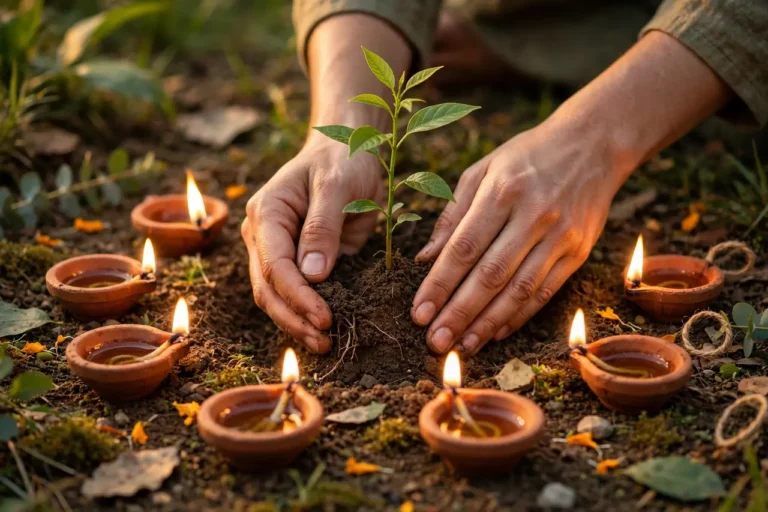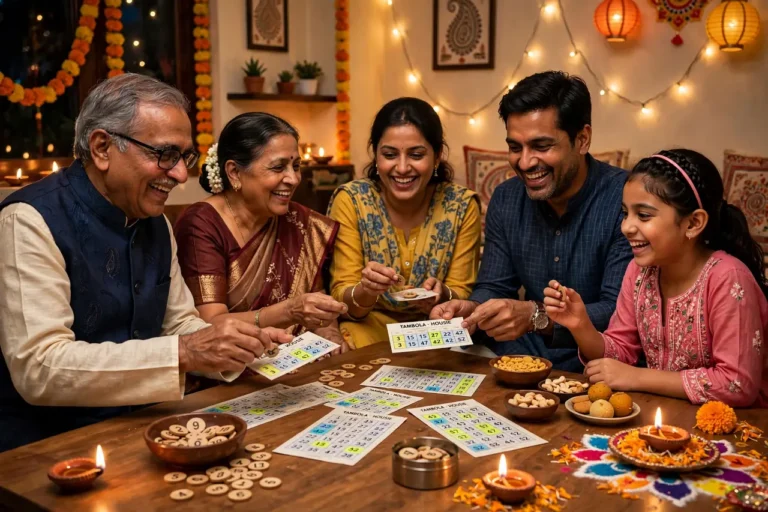
Diwali through a child’s eyes is pure magic: the first diya they light themselves, the rangoli colors under small fingers, the taste of a warm gulab jamun, the crackle of a sparkler held tight in a parent’s hand. Learning how to celebrate Diwali with kids is about channeling their boundless excitement into activities that are fun, safe, and quietly full of meaning. This guide covers everything: age-by-age celebration ideas from toddlers to teens, step-by-step craft tutorials, the stories of Diwali told in kid-friendly ways, festive foods children love, safety rules that keep the joy intact, and how to handle school celebrations and screen time. In 2026, the main Diwali night falls on Sunday, November 8, so use the weeks before to build anticipation with small daily activities. The goal is simple: children who feel Diwali in their hands and hearts, not just watch it happen around them.
Why Celebrating Diwali with Kids Matters
Children learn culture by doing, not by being told. When a child rolls a ladoo, paints a diya, or places a marigold on the rangoli, the festival becomes a personal memory rather than background noise. Psychologists note that family rituals give children a sense of identity and belonging, and Diwali’s five days of rituals, stories, and togetherness are a masterclass in both. For families living far from India or from extended family, involving kids actively is also how traditions survive a generation: the child who helped make the toran this year is the adult who hangs one in their own home twenty years from now. The ideas below are organized by age so you can pick what fits your children, but the principles are universal: give kids real jobs (not token ones), explain the meaning behind each ritual in simple words, keep safety non-negotiable, and let the celebration be a little messy. A perfect Diwali with kids is a myth; a joyful one is a choice.
Toddlers (Ages 1-3): Sensory and Simple
For the youngest celebrants, Diwali is about senses: colors, lights, textures, and tastes. Keep activities short (ten to fifteen minutes), always supervised, and focused on sensory play rather than finished products.
Safe Sensory Activities
Let toddlers squish and pat colored playdough into diya shapes or simple rangoli mandalas on a tray; add dried lentils, large pasta shapes, and flower petals for texture. Fill a shallow tray with water, marigold petals, and floating LED candles for a mesmerizing (and completely safe) sensory bin. Give them chunky crayons and Diwali coloring pages featuring diyas, lanterns, and fireworks. Toddlers can also “help” string large wooden beads onto a cord to make a chunky garland for their bedroom door. Dress them in comfortable festive clothes, soft cotton kurtas rather than scratchy embroidered outfits, and let them nap on schedule even on Diwali day; an overtired toddler at the evening puja helps no one. Keep all real diyas, matches, and small decorative items (beads, coins) completely out of reach, and use only LED candles in rooms where toddlers play.
Involving Toddlers in Rituals
Even very young children can participate in the puja: let them hold a flower to offer (guided by your hand), ring a small bell, or clap during the aarti. Narrate what is happening in simple words: “We are lighting lamps to say thank you.” They will not remember the words, but they will remember the warmth, the singing, and being held close during the family’s special moment.
Preschoolers (Ages 4-6): Little Helpers
Preschoolers want to do everything the big kids do, and with slight adaptations, they can. This is the golden age for Diwali crafts: they have the motor skills for painting and gluing and the enthusiasm to do it for hours.
Craft Projects for Ages 4-6
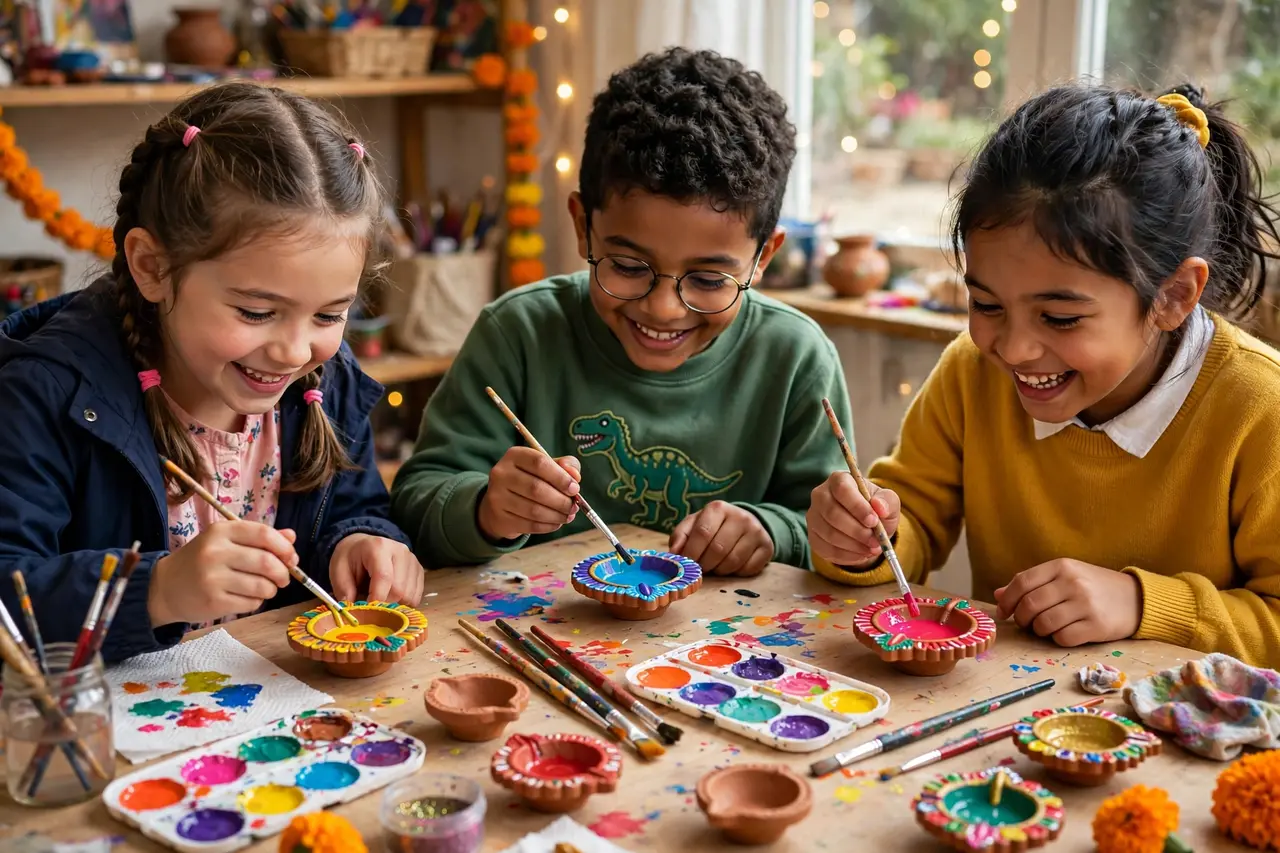
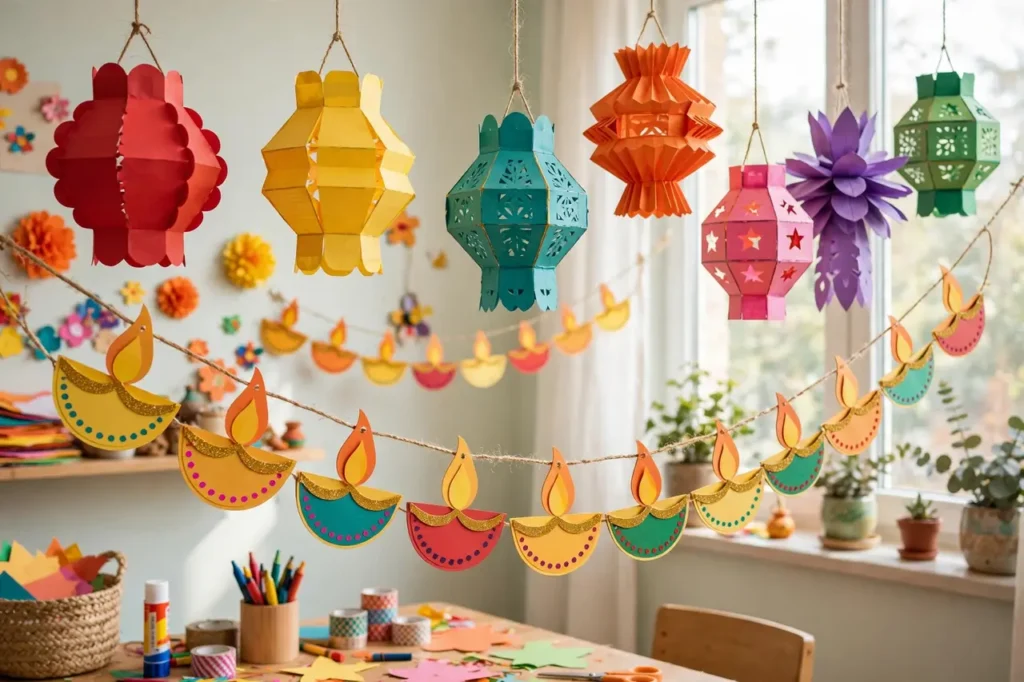
Paper plate rangoli is perfect: cut a paper plate into a decorative shape, glue on colored paper cutouts in patterns, and add sequins. Handprint diya cards, where the child’s handprint becomes the flame above a paper diya, make adorable cards for grandparents. Let them paint clay diyas with washable paints (an adult can add detail work after). Tissue-paper marigold garlands are easy: scrunch orange and yellow tissue squares around a string. Preschoolers can also decorate paper lanterns (akash kandils) with stickers and crayons. Display their creations prominently; a child’s artwork on the living room wall is worth more than any store-bought decoration.
Stories and Meaning
Tell the Diwali story in five minutes using simple language and lots of expression: the good prince Rama, the long journey home, and the people lighting lamps to welcome him. Picture books about Diwali make excellent bedtime reading in the weeks before the festival. Ask questions as you go: “Why do you think they lit lamps instead of just waiting in the dark?” Children’s answers are often surprisingly profound.
School-Age Kids (Ages 7-10): Creators and Learners
Seven-to-ten-year-olds can handle multi-step projects, understand the festival’s stories in depth, and take genuine responsibility for parts of the celebration. Give them ownership: “You are in charge of the entrance rangoli this year.”
Step-by-Step: Paper Diya Garland
Fold orange, red, and yellow construction paper into diya shapes (a rounded base with a flame on top), decorate with glitter glue and sequins, punch a hole in each, and string them on yarn. Kids can make twenty in an afternoon, enough to garland a doorway. This project teaches measuring, patterning, and patience, and the result looks genuinely festive.
Step-by-Step: Quilled Diya Decorations
Paper quilling, rolling thin strips of colored paper into coils and shapes, is ideal for this age. Kids can quill flowers and paisleys and glue them onto paper diyas or cards. It is meditative, impressive-looking, and develops fine motor skills. Pre-cut the strips to save time.
Step-by-Step: Salt-Dough Diyas
Mix two cups of flour, one cup of salt, and one cup of water into a dough; shape small diyas; bake at low heat until hard; then paint. Unlike clay, salt dough is forgiving and uses kitchen ingredients. Kids can make a whole set for gifting to teachers and neighbors.
The Five-Day Challenge
Turn the five days of Diwali into a kids’ challenge chart: Day 1, learn one Diwali fact; Day 2, help clean one room; Day 3, light your own diya (LED or supervised); Day 4, make a card for someone; Day 5, call grandparents with a Diwali greeting. Stickers on a chart make tradition feel like an adventure.
Tweens and Teens (Ages 11+): Ownership and Depth
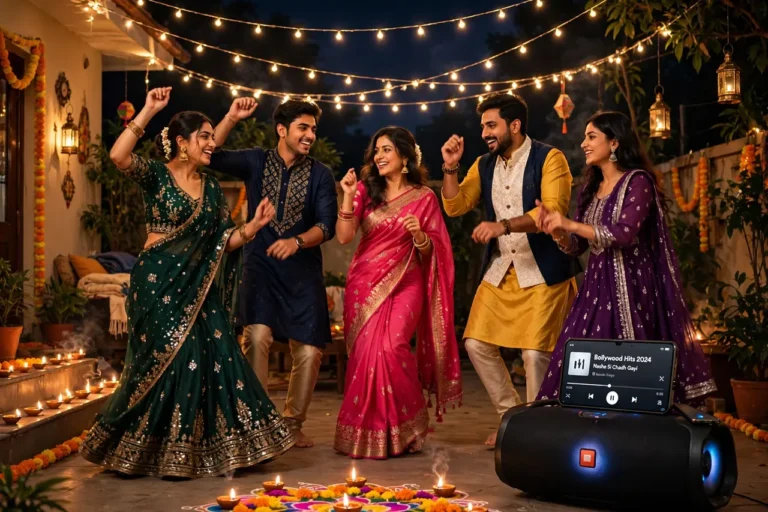
Older kids often drift from family celebrations toward their phones; the trick is giving them roles with real responsibility and creative freedom. Put a teen in charge of the family’s Diwali playlist, the photo and video documentation, or the fairy-light installation (with safety supervision). Teens can research and present one regional Diwali tradition to the family, design the year’s Diwali card on a computer, or manage the virtual call with distant relatives. Cooking is a great hook: challenge teens to make one sweet entirely on their own, from recipe research to serving. Many teens also enjoy the entrepreneurial angle: making extra painted diyas or sweets to sell at a school fair or gift to friends. Respect their growing independence by letting them invite a friend to the celebration; explaining Diwali to a friend deepens their own understanding. And have the screen-time conversation early: agree on phone-free windows during the puja and dinner, with the promise of a dedicated photo-sharing session afterward.
Diwali Crafts: 5 Detailed Tutorials
These tutorials are written so kids can follow along with an adult nearby. Each lists materials, steps, and the age range it suits best.
1. Painted Clay Diyas (Ages 4+, 45 minutes)
Materials: plain clay diyas, acrylic paints, brushes, a cup of water, newspaper, glitter glue (optional), clear varnish or mod podge (optional). Steps: Cover the table with newspaper. Paint a base coat on each diya and let dry for fifteen minutes. Add patterns: dots around the rim, stripes, or simple flowers. Younger kids can do dot patterns with cotton swabs; older kids can attempt paisleys. Add glitter glue accents and let dry completely. Optionally seal with varnish for shine. Safety note: keep paint away from the diya’s oil cup interior if the diya will actually be lit; use these as decorative pieces or with LED tea lights.
2. Paper Lanterns (Ages 6+, 30 minutes)
Materials: colored paper or cardstock, scissors, glue stick, ruler, LED tea light. Steps: Fold the paper in half lengthwise. Cut slits from the folded edge, stopping one inch from the open edge. Unfold, roll into a cylinder, and glue the short edges together. Attach a paper strip handle. Decorate with stickers or drawings. Place an LED tea light inside (never a real flame in paper). Hang from the ceiling with string.
3. Marigold Paper Flowers (Ages 7+, 40 minutes)
Materials: orange and yellow tissue paper, green pipe cleaners, scissors. Steps: Stack six squares of tissue paper. Fold accordion-style. Tie the center tightly with a pipe cleaner, leaving a stem. Round the ends with scissors. Gently separate the layers, fluffing upward to form a flower. Make a dozen and string them into a garland, or stick them on a toran base.
4. Rangoli with Stencils (Ages 5+, 30 minutes)
Materials: rangoli stencil or a homemade cardboard stencil, colored rangoli powder or dyed rice, a tray. Steps: Place the stencil flat on the floor or tray. Spoon colored powder over the cut-out areas. Lift the stencil straight up carefully. Add diyas or flower petals around the design. This method gives young kids the pride of a beautiful rangoli without requiring freehand skill.
5. Diwali Greeting Cards (Ages 4+, 25 minutes)
Materials: blank cards or folded cardstock, crayons, stickers, glitter glue, pre-cut diya shapes. Steps: Decorate the front with a big diya drawing or glued-on paper diya. Write “Happy Diwali” inside (adults can help younger kids). Add a personal message or drawing. Deliver to grandparents, teachers, and neighbors. For more kid-friendly holiday craft ideas that work year-round, see our Christmas crafts for kids guide.
Food Kids Love at Diwali
Plan the festive menu with young palates in mind alongside traditional dishes. Kid-approved Diwali foods include mini samosas, paneer tikka bites, sweet corn chaat, fruit chaat with chaat masala, and mild versions of festive curries. For sweets, gulab jamun, jalebi, and chocolate barfi are perennial kid favorites; rasmalai and kheer work for younger children. Involve kids in making no-cook treats: chocolate-dipped dry fruits, coconut ladoos (no baking needed), and decorated cookies with Diwali motifs. Set up a “kids’ thali” at dinner with small portions of everything so they can taste the festival without waste. Keep some familiar backup food ready for very picky eaters; Diwali dinner is not the night for food battles. And remember the prasad rule: sweets offered in the puja are shared first, so keep the kids’ portions aside before the adults descend.
Safety Rules: Non-Negotiable
Fun and safety are not opposites; clear rules let everyone relax. The table below covers the essentials by hazard.
| Hazard | Rule for Kids | Adult’s Job |
|---|---|---|
| Open flames (diyas, candles) | Never touch or blow out diyas; admire from a step back | Place diyas out of reach; never leave unattended; keep water nearby |
| Fireworks and sparklers | Only with an adult holding or directly supervising; one sparkler at a time | Buy only legal fireworks; keep a bucket of water ready; tie back loose clothing and hair |
| Hot oil and cooking | Stay out of the kitchen during deep-frying | Turn pot handles inward; keep kids three feet from the stove |
| Small decorations | Do not put beads, coins, or small diyas in mouth (toddlers) | Keep small items out of toddler reach; vacuum after decorating |
| Noise and smoke | Cover ears or go inside if fireworks are loud | Consider low-noise or no fireworks; keep pets and babies indoors |
| Allergies | Tell an adult immediately about itching or swelling | Label dishes with nuts; keep allergy medicine accessible |
The single most important safety decision is supervision: designate one adult as the “safety captain” during high-activity moments like sparkler time, and make sure that person is not also cooking, photographing, or hosting. Sparklers burn at extremely high temperatures and are the most common cause of Diwali burns in children; many safety experts recommend glow sticks or LED wands as substitutes for young kids. Where fireworks are restricted or you prefer a quieter celebration, a “light show” of fairy lights, LED diyas, and a family dance party delivers plenty of excitement with zero risk.
School Diwali: Celebrations and Show-and-Tell
Many schools now mark Diwali, and kids love sharing their festival with classmates. Help your child prepare a short show-and-tell: a painted diya, a photo of the family rangoli, or a box of sweets to share (check the school’s food policy first). Practice a two-minute explanation: what Diwali is, what your family does, and what the diya symbolizes. If the school allows, volunteer to do a simple craft activity with the class, like paper diya garlands or coloring pages. Be prepared for curious questions and coach kind, simple answers. For teens, school Diwali can be a moment of cultural pride; encourage them to participate rather than hang back. If your child’s school does not mark Diwali, a polite note to the teacher with an offer to share a craft or story often opens the door for next year.
Diwali Science: Light Experiments for Curious Kids
Diwali is the festival of lights, which makes it a perfect occasion for simple science experiments that connect the celebration to how the world works. These activities satisfy curious minds and give school-age kids something to show off.
Oil Lamp Science
With close adult supervision, demonstrate how a diya works: the cotton wick draws oil upward through capillary action, and the flame needs oxygen to burn. Cover a lit tea light (in a safe holder) with a glass jar and let kids time how long the flame lasts; it goes out when the oxygen is used up. Explain that this is why we never leave diyas in closed cupboards. Older kids can compare how long different oils burn or how wick thickness changes the flame size, turning it into a genuine experiment with observations to record.
Shadow Play
In a darkened room with a single diya or flashlight, have kids make shadow puppets on the wall and experiment with moving closer and farther from the light to change shadow sizes. It is a magical, screen-free activity that teaches how light travels in straight lines. Tell the Diwali story with shadow puppets for a double dose of meaning and fun.
Color Mixing with Rangoli
Let kids mix rangoli powders to discover color theory hands-on: red plus yellow makes orange, blue plus yellow makes green. Ask them to predict results before mixing, just like real scientists. For toddlers, do the same with finger paints on paper. These experiments turn the festival’s visual beauty into a learning opportunity, and teachers love hearing that Diwali included science.
Diwali Around the World: How Kids Celebrate Elsewhere
Children love knowing that kids like them celebrate the same festival differently around the world. In Trinidad and Tobago, Diwali is a national holiday and children participate in massive community diya-lighting events. In Nepal, where the festival is called Tihar, kids celebrate Kaag Tihar (worshipping crows) and Kukkur Tihar (worshipping dogs) by offering food and marigold garlands to animals; children adore this tradition. In Malaysia and Singapore, kids visit Little India districts glowing with street decorations and enjoy public cultural performances. In the UK, cities like Leicester host some of the largest Diwali celebrations outside India, with children joining lantern parades through the streets. In Fiji, kids get a public holiday and the whole island lights up. Sharing these global traditions broadens children’s understanding: Diwali is not just their family’s festival but a worldwide celebration of light. If you have friends from different Diwali-celebrating cultures, invite them to share their version; kids remember these exchanges vividly.
Kid-Friendly Diwali Recipes Table
These recipes are chosen for kid appeal and for how easily children can help make them.
| Recipe | Kid’s Job | Time | Why Kids Love It |
|---|---|---|---|
| Coconut ladoos (no-cook) | Mixing and rolling balls | 20 min | Sweet, hands-on, no heat involved |
| Chocolate-dipped dry fruits | Dipping and sprinkling | 25 min | Chocolate makes everything exciting |
| Mini vegetable samosas | Folding (with help) and brushing oil | 45 min | Crispy, dippable, fun shapes |
| Sweet corn chaat | Mixing and squeezing lemon | 15 min | Tangy, colorful, quick |
| Decorated sugar cookies | Cutting shapes and icing | 60 min | Diya and firework shapes with icing |
| Mango lassi | Adding ingredients to the blender (adult blends) | 10 min | Creamy, sweet, festive color |
| Paneer tikka bites | Threading onto skewers | 30 min | Like kebabs, kid-sized |
| Fruit chaat with chaat masala | Chopping soft fruits (with safe knife) and mixing | 15 min | Rainbow colors, sweet-tangy |
Diwali Books and Movies for Kids
Build anticipation in the weeks before Diwali with stories. Picture books about Diwali, such as tales of Rama’s return retold for young readers, make wonderful bedtime reading; look for books with vibrant illustrations of diyas and rangolis that mirror what kids will see at home. For early readers, simple nonfiction books about how Diwali is celebrated around the world satisfy curiosity. Family movie nights can feature animated retellings of the Ramayana or festive Bollywood films with joyful song-and-dance sequences that get kids moving. After reading or watching, ask kids to draw their favorite scene; their artwork often reveals what the festival means to them. Libraries and bookstores typically display Diwali titles in October and November, so browse together and let children choose. Stories plant the meaning of the festival in young minds far more effectively than explanations, and a child who has heard Rama’s story ten times will light their diya with genuine understanding.
Watch: Kids Decorating Diyas for Diwali
See how much fun children have decorating their own diyas in this joyful video, perfect inspiration for your family’s craft table.
Frequently Asked Questions
What is the best age to start celebrating Diwali with kids?
From birth, in age-appropriate ways. Toddlers enjoy sensory activities like petal play and LED lights; preschoolers love crafts; school-age kids take on real responsibilities. There is no minimum age for being included in the family’s joy.
How do I explain the meaning of Diwali to a young child?
Keep it to one sentence per big idea: “Diwali is the festival of lights. We light lamps to celebrate good winning over bad, and to say thank you for our blessings.” Add details as they grow; the Ramayana story can be told in five minutes with plenty of expression.
Are sparklers safe for kids?
Sparklers burn hot enough to cause serious burns and should only be used with direct adult supervision, one at a time, with a bucket of water nearby. Many families with young children use LED wands or glow sticks instead, which are completely safe and still exciting.
How can kids participate in the Lakshmi Puja?
Give them real jobs: holding the flower basket, ringing the bell, offering petals, and distributing prasad afterward. Explain each step simply as it happens. Keep the puja reasonably brief when young children are included.
What crafts are best for a Diwali party with kids?
Painted clay diyas, paper lanterns, tissue-paper marigolds, stencil rangoli, and greeting cards all work well for groups. Set up stations so kids can rotate, and have adults pre-cut materials to keep things moving.
How do we handle bedtime on Diwali night?
Let young children nap late in the afternoon so they can stay up for the puja and a short celebration after. It is okay for bedtime to shift by an hour or two on festival night; return to routine the next day. An overtired child enjoys nothing, so protect the nap.
What should kids wear for Diwali?
Comfortable festive clothes in soft fabrics. Avoid scratchy embroidery, long trailing dupattas near flames, and shoes that pinch. Dress kids after messy activities and keep a comfortable change ready for after dinner.
How can we celebrate Diwali with kids if we live abroad?
Recreate the essentials at home: decorate, cook festive food, do a small puja, video-call family in India, and connect with the local Indian community for public celebrations. Many cities have Diwali melas that are wonderful for kids.
What gifts are appropriate for kids on Diwali?
Books about Indian festivals, art and craft kits, traditional clothes, small toys, or money in a festive envelope (shagun) are all traditional. Experience gifts, like a family outing, are increasingly popular and clutter-free.
How do I teach kids about eco-friendly Diwali?
Involve them directly: make natural rangoli colors from turmeric and petals, choose clay diyas over plastic, compost garlands together, and discuss why the family skips loud fireworks. Children who participate in green choices carry them into adulthood.
Keep Exploring Festival Ideas
For more family celebration inspiration, see our Christmas crafts for kids for year-round craft ideas, our guide to New Year’s Eve party ideas for kids for another family countdown celebration, and our DIY Christmas ornaments for handmade decoration tutorials kids can adapt for Diwali.