Your storefront is the largest advertisement you will ever own — and on grand opening day, it works harder than any ad campaign ever could. Every driver who slows down, every pedestrian who crosses the street for a closer look, every photo that includes your facade is the direct result of grand opening decoration ideas for your storefront executed with intention. The interior can be perfect, but if the outside whispers while the occasion shouts, you are leaving your most valuable marketing asset underused.
Storefront decoration is its own discipline, different from interior styling. It must work at three distances — across the street, on the sidewalk, and at the door — in daylight and after dark, in person and in photographs. This guide covers the full exterior playbook: facade elements that command attention, window displays that sell before customers enter, sidewalk strategies that capture foot traffic, lighting that keeps the celebration glowing into the evening, and the landlord and permit rules you must check before you hang a single banner. Your storefront is your handshake with the neighborhood. Make it firm, warm, and unforgettable — because on opening day, your exterior gets about ten seconds to earn the next ten minutes of a stranger’s attention, and every one of those seconds counts.
The Three-Distance Rule: Design for Every Viewpoint
Great storefronts are designed for three viewing distances, and each needs different decoration. Walk your block and check all three before you finalize your plan.
Distance 1: Across the street (50–100 feet). At this range, only big, bold, high-contrast elements register: your main sign, a large banner, a balloon arch, feather flags. Details are invisible; color and scale are everything. Ask yourself: from across the street, does my storefront clearly say “grand opening celebration happening here”? If not, go bigger.
Distance 2: The sidewalk (10–30 feet). Now pedestrians see the details: window displays, A-frame signs, planters, the red carpet, chalk art. This is the conversion zone — the decorations here turn lookers into enterers. Every element should answer “what’s happening?” and “why should I go in?”
Distance 3: The door (0–10 feet). At the threshold, guests notice craftsmanship: the welcome mat, the door garland, the ribbon display, the scent, the greeting. These intimate details set the emotional tone for everything inside. Never let the door zone feel like an afterthought — it is the last thing guests see before deciding how they feel about your business.
Test all three distances the week before your opening. Stand across the street and photograph the facade. Walk the sidewalk approach and note what catches your eye. Stand at the door and look for scuffs, gaps, and unfinished edges. What reads as festive from across the street can look sloppy up close — the three-distance check catches both problems. For the principles behind entrances that convert, our first-impression decoration guide applies the same curb-appeal thinking.
Facade Elements: Commanding the Streetscape
The facade is your canvas. These elements work at Distance 1 and establish the celebration’s scale.
Your permanent signage, perfected. Before adding a single decoration, make sure your actual business sign is immaculate — cleaned, lit, level, and fully working. Nothing undermines grand opening decor like a flickering sign or a burnt-out letter. If your sign is not yet installed, a large temporary banner with your business name in the sign band is essential, not optional.
The grand opening banner. One large, professionally printed vinyl banner across the facade — business name, “Grand Opening,” date. Keep it to seven words or fewer; drivers read at speed. Hang it straight, tension it so it does not sag, and position it above eye level where it will not be blocked by the balloon arch.
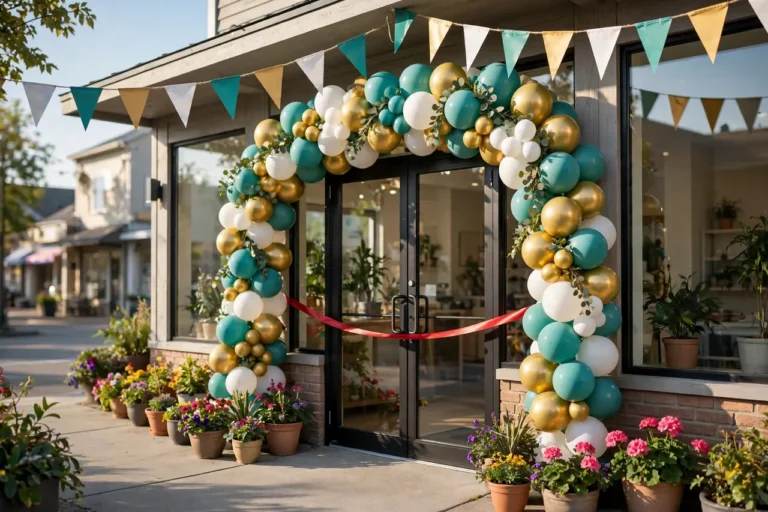
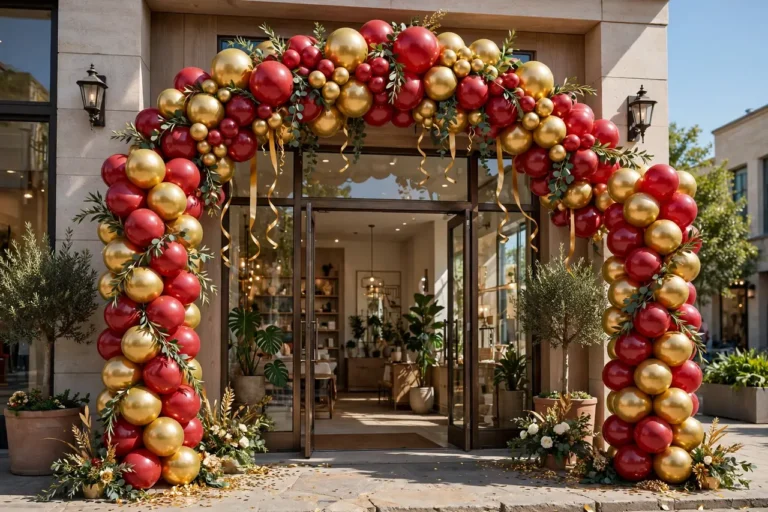
Balloon arch or garland on the facade. Framing the entire storefront — not just the door — with a balloon garland creates a landmark visible from down the block. For wide facades, organic garlands that follow the architectural lines look more designed than a standard arch. Budget $300–$800 professionally installed, or $80–$150 DIY.
Feather flags. Two to four tall feather flags in brand colors, staked or weighted on either side of the storefront, add motion that catches drivers’ eyes. They are the highest-visibility-per-dollar facade element for street-facing locations.
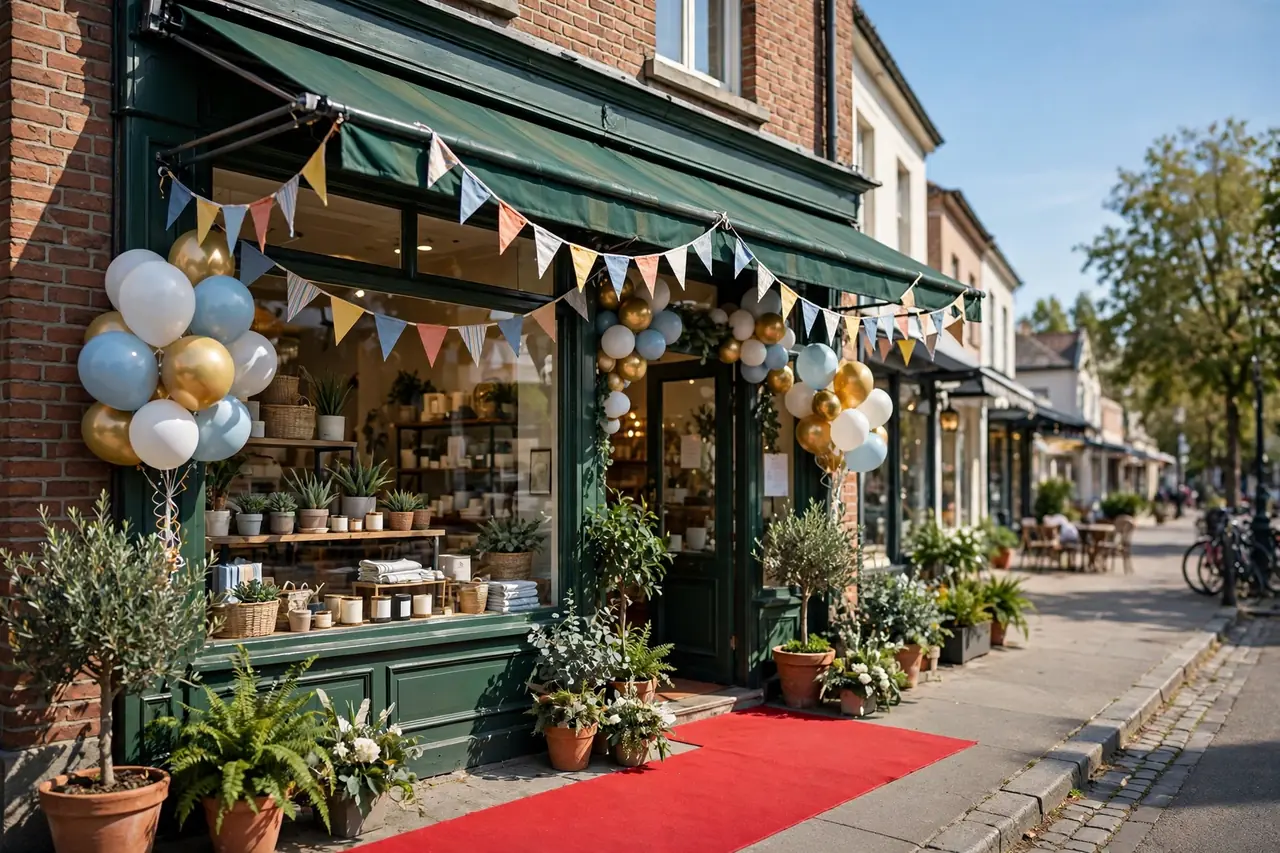
Awnings dressed for the day. If you have an awning, dress it: garland along the edge, balloons at the corners, a banner hung from the valance. The awning is prime real estate most owners forget to decorate.
Upper-floor windows. If your building has upper windows, hang simple vertical banners or balloon clusters in them. They extend the celebration vertically and are visible from far down the street — a trick flagship stores use that costs almost nothing.
Window Displays That Sell Before Customers Enter
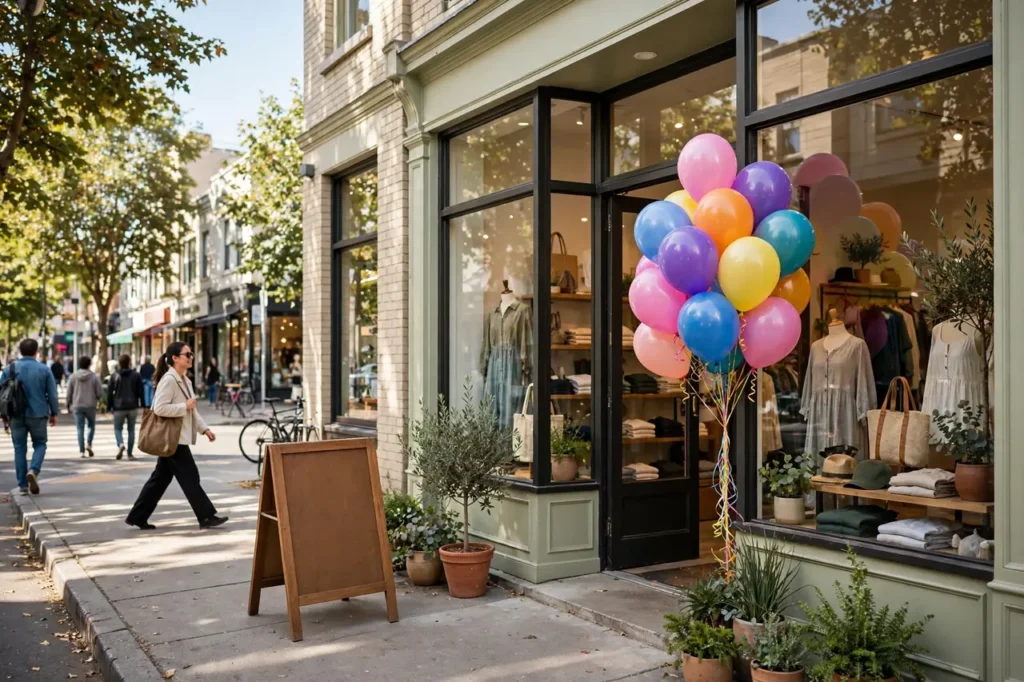
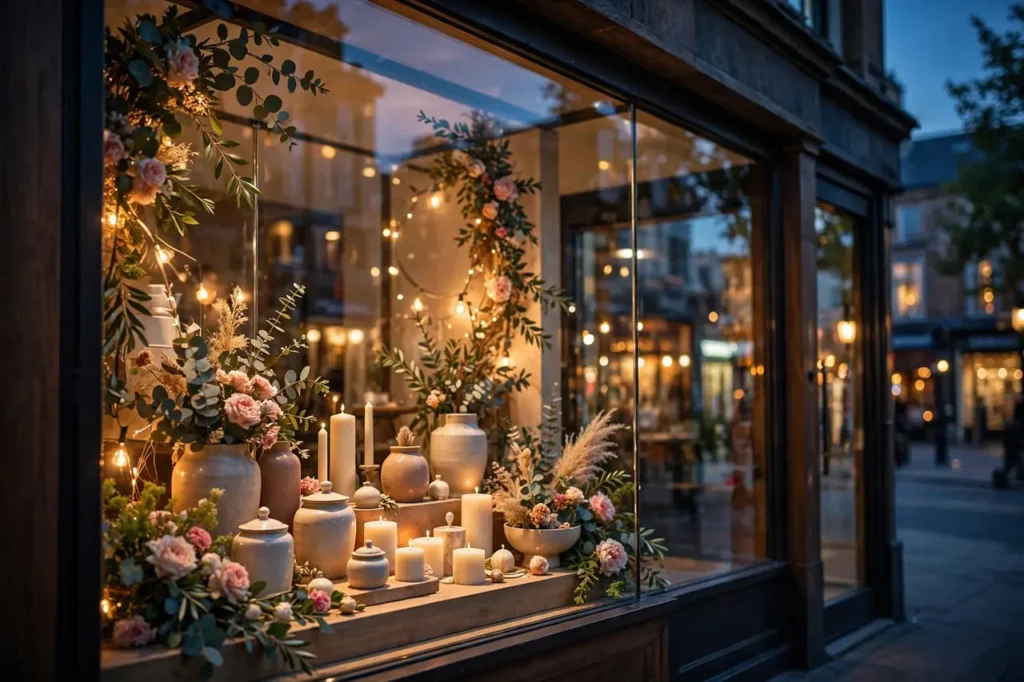
Your windows are silent salespeople. On grand opening day, they should do three things: announce the celebration, showcase what you offer, and make passersby feel they are missing out by not entering.
The celebration window. Dedicate at least one window entirely to the grand opening: large “Grand Opening” lettering (vinyl decals or hand-painted), the date, and a glimpse of the festivities inside. Keep the design bold and readable from the sidewalk — this window’s job is announcement, not subtlety.
The product window. The second window showcases your best offering styled at its absolute peak — hero products on risers, perfect lighting, minimal clutter. A bakery shows its most beautiful loaves; a boutique shows its signature looks; a salon shows its style portfolio. One stunning window outperforms three crowded ones.
The story window. If you have a third window, tell your story: before-and-after photos of the buildout, a timeline of your journey, press mentions. It gives lingering pedestrians something to read and a reason to feel connected before they walk in.
Window lighting. Illuminate window displays from within, even during the day — lit windows read as “open and alive” while dark windows read as “closed,” regardless of the actual door status. For evening events, window lighting becomes your most important decor element; invest in a few clip-on spotlights aimed at the displays.
Keep glass spotless. It sounds basic, but grand opening week is when you discover every smudge. Clean interior and exterior glass the morning of — dirty windows undermine every other decoration. Assign this explicitly; everyone assumes someone else did it.
Sidewalk Strategies: Capturing Foot Traffic
The sidewalk is where browsers become buyers. These strategies turn pedestrian flow into grand opening attendance.
The red carpet. Run it from the curb to your door — not just at the entrance. A red carpet on the sidewalk is irresistible; people follow it out of pure curiosity. Weight the edges so it lies flat and does not become a trip hazard.
A-frame sign sequence. Place three to five A-frames along the sidewalk approach, each carrying one line of a message: “Something new…” / “…is baking…” / “…on Main Street…” / “Grand Opening Today →”. Pedestrians read them in sequence like a story, and the narrative pulls them to your door.
Sidewalk chalk art. A professional or talented-amateur chalk mural — your logo, “Grand Opening,” playful arrows — delights the whole street and photographs beautifully. It is also the decor most likely to be shared on neighborhood social media. Budget $50–$150 for an artist, or DIY with $15 of chalk.
Sample stations outside. If your business involves food, scent, or touch, put a sample table on the sidewalk with a friendly team member. A taste, a smell, or a touch converts at rates no banner can match. Check local health and permit rules for outdoor food service first.
Stanchions and rope. A velvet-rope line outside — even a short one — signals that something exclusive is happening. It organizes entry during busy periods and makes arriving guests feel like VIPs. Four stanchions and 20 feet of rope transform a queue from a problem into a photo opportunity.
Music spill. Position a speaker near the entrance so music spills onto the sidewalk. Sound is invisible decor — it tells pedestrians from half a block away that a celebration is underway. Keep volume neighbor-friendly; festive, not nightclub.
For budget-friendly exterior ideas that punch above their cost, our budget decoration guide covers the same high-impact, low-cost principles applied to storefronts.
Lighting: Day Presence, Night Magic
Most grand openings run from morning into the afternoon, but the smartest storefronts plan for both — because your decorations work all day, and evening events or late-day photos need the facade to glow.
Daytime: maximize natural advantage. Position light-colored and metallic decor where sunlight hits it — gold balloons, shimmer garlands, and glass elements sparkle in sun and photograph with natural brilliance. Avoid placing dark decor in shadowed recesses where it disappears. If your storefront faces away from the sun, compensate with brighter colors and more lighting than you think you need.
Transition: the golden hour. If your event runs into late afternoon, the hour before sunset is the most photogenic light of the day — schedule your official group photos then if possible. Have your photographer ready; golden-hour facade shots with the decor glowing are the images you will use for years.
Evening: create the glow. String cafe lights across the facade and around the entrance — $30–$60 per strand, and they transform the storefront after dark. Uplight the facade with two or three outdoor spotlights aimed at the sign and entrance ($25 each). Light the window displays from within. A storefront that glows in the evening photographs like a much more expensive event and signals to evening foot traffic that the celebration continues.
practical lighting checklist: test all permanent sign lighting a week before (replace dead bulbs immediately); bring two battery-powered spotlights as backup; keep extension cords taped down and out of walkways; and if you use candles or open flames anywhere outside, check fire codes first — most jurisdictions restrict them near storefronts.
Landlord, Permit, and Neighbor Rules
Exterior decoration lives in a regulated world. Check these before you hang, stake, or amplify anything — violations can mean fines or forced teardown on ceremony day.
| What to check | Who to ask | Typical rules |
|---|---|---|
| Facade banners and signage | Landlord + city sign code | Size limits, no covering windows beyond X%, temporary permits for oversized banners |
| Sidewalk use (carpet, signs, tables) | City public works / business district | Must maintain 4–6 ft clear pedestrian path; permits for tables or amplified sound |
| Staked elements (flags, signs) | Landlord + utility locate service | Call before digging — underground utilities; some areas prohibit staking entirely |
| Amplified sound outdoors | City noise ordinance | Daytime decibel limits; usually fine 9 AM–8 PM at moderate volume |
| Balloon releases | State/local environmental law | Banned in many states — never plan a release; secure all balloons |
| Historic district facades | Historic commission | Restrictions on attachments, colors, and signage in designated districts |
| Fire codes (tents, heaters, flames) | Fire marshal | Tent permits over certain sizes; open flames often prohibited near buildings |
| Neighbor notification | Courtesy (but do it) | Warn adjacent businesses about noise, crowds, and parking impacts a week ahead |
The pattern: when in doubt, ask. A five-minute call to the landlord and a check of the city website beats a confrontation on opening morning. And the neighbor notification — while not always legally required — is the highest-ROI courtesy in this table. Adjacent business owners who feel respected become allies; ones who are surprised by a marching band become enemies. Bring them cookies with the notification. Seriously.
Storefront Decor by Business Type
Different businesses need different exterior statements. Tailor the playbook to your category:
Retail and boutiques: Your windows are everything — style them like a magazine shoot with your best merchandise, and let the product be the decoration. Add a sidewalk rack with opening-day specials to pull browsers inside. A “spin the wheel” prize display near the door creates sidewalk interaction and gets people through the entrance.
Restaurants and cafes: Scent is your secret weapon — position the kitchen exhaust or a sample station to catch the breeze. Outdoor tables with branded umbrellas signal “sit and stay.” A menu board on the sidewalk with opening-day specials converts hungry pedestrians at remarkable rates. String lights are nearly mandatory; they say “evening destination.”
Salons and spas: Elegance over exuberance — a restrained palette (black, white, gold), orchid planters flanking the door, and a red carpet read as luxury. Avoid clutter; one perfect balloon garland in sophisticated colors beats ten random decorations. A champagne-style toast setup visible through the window suggests indulgence.
Professional offices (law, dental, real estate): Credibility is the message. Crisp navy-and-white or brand-color decor, a polished banner, topiary planters, and a clean red carpet. Skip the wacky props — your exterior should say “trust us,” and restraint is what communicates it. The ribbon cutting itself provides the festivity.
Fitness and wellness: Energy is the message — bold colors, an outdoor demo area (a trainer doing mini-sessions on the sidewalk draws crowds), branded athletic banners, and a smoothie sample station. Movement and activity outside the door tell the whole story.
The Exterior Day-Of Timeline
Exterior setup has its own rhythm. Two days before: confirm all permits, test sign lighting, charge spotlight batteries. Day before: hang the facade banner, install the step-and-repeat, place planters, run string lights (test at dusk). Morning of (3 hours before): inflate and hang all balloons — helium lasts 8–12 hours, so fresh is non-negotiable; lay the red carpet last to keep it clean; set out A-frames and chalk art; position stanchions. One hour before: final three-distance walk — photograph from across the street, adjust anything the camera reveals, wipe down the door glass, turn on all lighting even in daylight (it reads as “ready”). After the ceremony: refresh wilted elements, straighten anything the crowd disturbed, and switch to evening lighting mode as the sun drops. The exterior is a living installation on opening day — tend it like one.
7 Storefront Mistakes That Undermine Grand Openings
| Mistake | What guests conclude | The fix |
|---|---|---|
| Decorations only at the door, bare facade | “Something small is happening, maybe” | Extend decor across the full facade — go wide, not just tall |
| Handwritten paper signs taped to glass | “This wasn’t fully planned” | One professional vinyl banner beats ten paper signs |
| Clashing colors with no scheme | “Chaotic” (even if the inside is lovely) | Two colors plus one metallic, everywhere, no exceptions |
| Dark windows during the event | “Are they even open?” | Light every window from within, day and night |
| Blocking the sidewalk | Annoyance — and potential fines | Keep a clear 4–6 ft path; pull decor toward the building line |
| Nothing visible after dark | The celebration “ended” at sunset | String lights + uplights on a timer; glow until close |
| Forgetting the approach from the parking side | Half your guests see the back first | Decorate every public-facing side, especially the parking approach |
The parking-side mistake deserves emphasis: most customers arrive by car and approach from the lot or garage — which is often the building’s least-decorated face. Walk your own arrival route as a customer would, and decorate what they actually see first. Your grand opening has no “back” — only entrances you forgot.
Watch: A Grand Opening Storefront Tour
The video below walks through a real grand opening’s exterior and entrance decor — balloon installations, branded displays, and the kind of street presence that stops traffic. Watch how the storefront functions as a three-distance design: bold from afar, detailed up close.
Even at big-box scale, the principles are identical to a small boutique: a bold entrance statement, clear branding, balloon work in brand colors, and an exterior that photographs as a destination. Scale the ideas down, keep the intention identical. For more on making any entrance unforgettable, our surprise decoration ideas show how small exterior touches create outsized delight.
Frequently Asked Questions
How do I decorate a storefront for a grand opening on a budget?
Focus $200–$400 on the three highest-impact elements: a DIY balloon garland framing the entrance ($80–$150), a professional vinyl “Grand Opening” banner ($25–$60), and a red carpet runner ($30). Add chalkboard A-frames with hand-lettered messages ($30 each) and clean your windows and signage to perfection (free). Concentrated spending on the entrance outperforms thin spending across the whole facade every time.
Do I need permission to decorate my storefront exterior?
Usually yes, from at least your landlord. Most commercial leases require approval for facade banners, signage changes, and anything attached to the building. Cities regulate sidewalk use (maintain a clear pedestrian path), sign sizes, amplified sound, and staked elements. Check the table in this guide, make two calls (landlord + city), and get approvals in writing. It takes an afternoon and prevents opening-day disasters.
What is the most effective storefront decoration for attracting foot traffic?
A balloon arch or garland framing the entrance — it is visible from down the block, universally reads as “celebration,” and photographs beautifully. Second is a large, high-contrast “Grand Opening” banner readable from across the street. Third is sidewalk-level engagement: A-frame signs, chalk art, or a sample table that gives pedestrians a reason to stop. Combine all three and your storefront becomes a landmark for the day.
How should I decorate storefront windows for a grand opening?
Dedicate windows by job: one celebration window (grand opening lettering, date, festive design), one product window (your best offering styled perfectly with great lighting), and optionally one story window (your journey in photos). Light all windows from within, keep glass spotless, and keep designs bold and readable from the sidewalk. Windows should announce, showcase, and invite — in that order.
How do I make my storefront look good in photos?
Design for the camera: symmetrical arrangements photograph best, so flank the entrance evenly. Ensure your business sign or a branded banner is visible in every wide shot. Shoot the three-distance check the week before and fix what the camera reveals. Schedule key photos for golden hour when possible, light the facade for evening shots, and keep the ceremony zone background clean — hide dumpsters, parked cars, and clutter from the camera’s view.
What lighting do I need for an evening grand opening?
Cafe-style string lights across the facade ($30–$60 per strand), two to three outdoor uplights aimed at your sign and entrance ($25 each), lit window displays, and battery-powered spotlights as backup. Test all permanent sign lighting a week before and replace dead bulbs immediately. A glowing storefront photographs like a premium event and keeps evening foot traffic engaged. Tape down all cords and keep them out of walkways.
Can I put decorations on the public sidewalk?
Usually yes, with conditions: most cities require maintaining a 4–6 foot clear pedestrian path, and some require permits for tables, amplified sound, or anything beyond simple A-frame signs. Staking into the sidewalk is often prohibited — use weighted bases instead. Check with your city’s public works department, and always keep the path wheelchair-accessible. When in doubt, keep sidewalk decor close to your building line.
How do I handle bad weather for outdoor storefront decorations?
Weight everything: water-weighted balloon bases, sandbagged signs, wind-rated installations. Choose fabric over paper, secure all banners with full tensioning, and have a tent on standby for the ceremony zone. Put “rain or shine” on invitations from the start, and make the go/no-go call by 7:00 AM on ceremony day. Decorations that survive weather look intentional; decorations that do not look abandoned. Engineer for the forecast, not the hope.
Should the storefront decor match my interior branding?
Absolutely — the exterior is the first chapter of the same brand story. Use the same two-to-three color palette inside and out, repeat logo placement from facade to interior, and carry one signature element through (the same floral variety, the same ribbon color, the same style of signage). Consistency makes the business feel established and intentional rather than decorated for a day. Every exterior photo becomes brand reinforcement.
What should I do with storefront decorations after the grand opening?
Transition, do not trash. Keep the best elements as permanent or semi-permanent decor: quality planters, string lights, the neon sign, window decals. Replace “Grand Opening” messaging with “Now Open” for the first month, then settle into your everyday look. Donate usable balloons and decor to schools or community groups. A storefront that stays polished after the celebration tells the neighborhood the business is here to stay — which is the whole point.
Your storefront is where your grand opening meets the world — design it with the same care you put into everything inside. Check the three distances, command the facade, sell through the windows, work the sidewalk, light it for the evening, clear the rules with your landlord and city, tailor the statement to your business type, and keep the brand story consistent from curb to register. Do that, and your storefront will not just decorate your grand opening — it will be your grand opening, in every photo, every memory, and every new customer who crossed the street because something beautiful caught their eye.