No decoration says “grand opening” faster than balloons. They are visible from down the block, they photograph in every light, they delight every age group, and they transform the most ordinary storefront into a celebration in under an hour. Grand opening balloon decoration ideas are the highest-impact, lowest-cost decor category in existence — which is why nearly every successful opening in history has featured them prominently.
But there is a wide gap between a sad cluster of drugstore balloons and a jaw-dropping organic garland that stops traffic. This guide closes that gap. You will learn the balloon types that professionals actually use, more than 30 specific balloon decoration ideas for grand openings organized by placement and effect, the color palettes that photograph best, DIY techniques that deliver pro-looking results, honest cost comparisons, and the weather and longevity tips that keep your balloons beautiful from the first guest to the last photo.
Balloon 101: Know Your Materials
Professional results start with professional materials. The table below covers what to buy — and what to skip.
| Type | What it is | Best for | Notes |
|---|---|---|---|
| Standard latex (11″) | The workhorse balloon | Arches, garlands, columns, clusters | Buy professional brands (Qualatex, Tuftex, Kalisan) — they last longer and match colors better |
| Large latex (16″–36″) | Oversized statement balloons | Focal points, photo moments | 36″ balloons are dramatic but need high ceilings and strong anchors |
| Small latex (5″) | Filler balloons | Adding density and texture to garlands | The secret ingredient — small balloons make garlands look lush, not gappy |
| Foil / Mylar | Metallic, shaped balloons | Accents, numbers, letters, stars | Last for days; use sparingly as jewelry, not the main structure |
| Letter/number foils | Giant alphabet balloons | Spelling “OPEN” or “GRAND OPENING” | 16″–40″ sizes; anchor well outdoors — they catch wind |
| 260Q twisting balloons | Long skinny balloons | Tying garlands together, structural work | Essential tool for DIY garlands, not really decor themselves |
| Clear “bubble” balloons | Transparent spheres | Premium accents with confetti or smaller balloons inside | Stunning but pricey; use for VIP areas and photo spots |
Two purchases separate amateurs from pros more than any technique: an electric balloon pump ($20–$35 — inflating 200 balloons by mouth or hand pump is a special kind of misery) and a balloon sizer ($8 — a simple template that ensures every balloon is the same size, which is what makes arches look professional instead of lumpy). Buy both before you buy a single balloon.
Balloon Arches: The Grand Entrance (Ideas 1–8)
1. The classic spiral arch. Alternating colors in a tight spiral over the entrance — the timeless grand opening look. A balloon strip ($8–$12) and 80–120 balloons build a full arch in about 90 minutes. Anchor the bases with water weights.
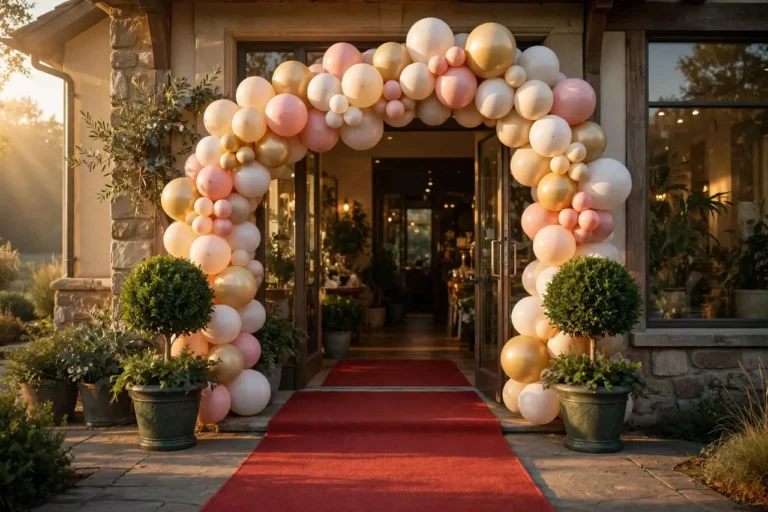
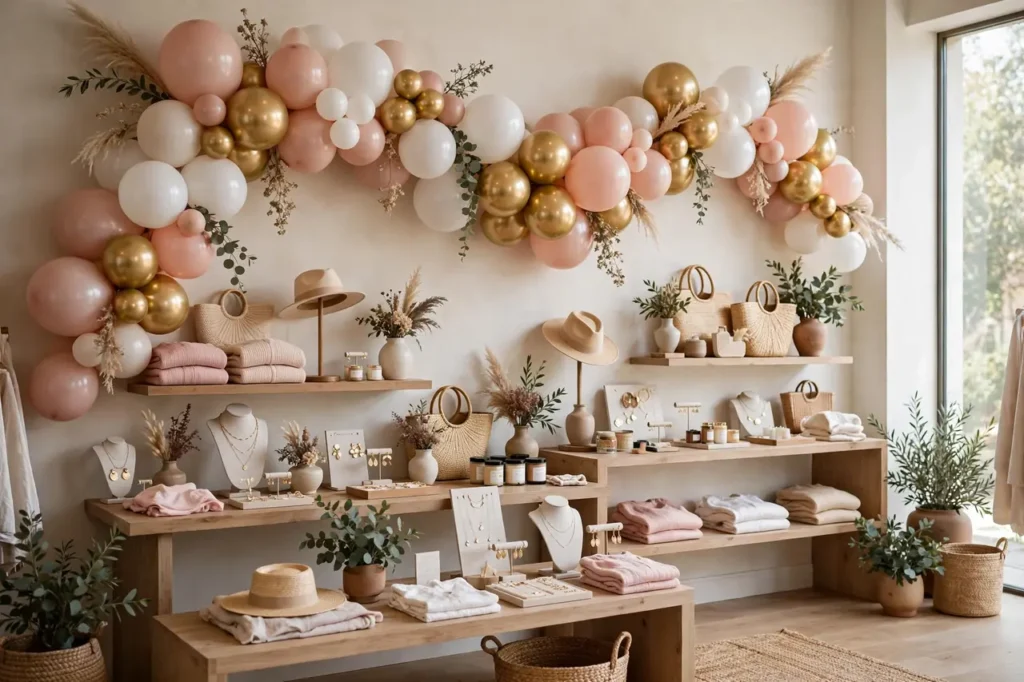
2. The organic demi-arch. The modern, high-end look: asymmetrical garland in varied sizes (5″, 11″, 16″) clustered organically over one side of the entrance. It photographs as premium event styling and costs the same as a classic arch in materials — the difference is entirely technique.
3. The double arch. Two arches — one at the sidewalk, one at the door — create a processional feel that builds anticipation. Guests walk through celebration to reach celebration.
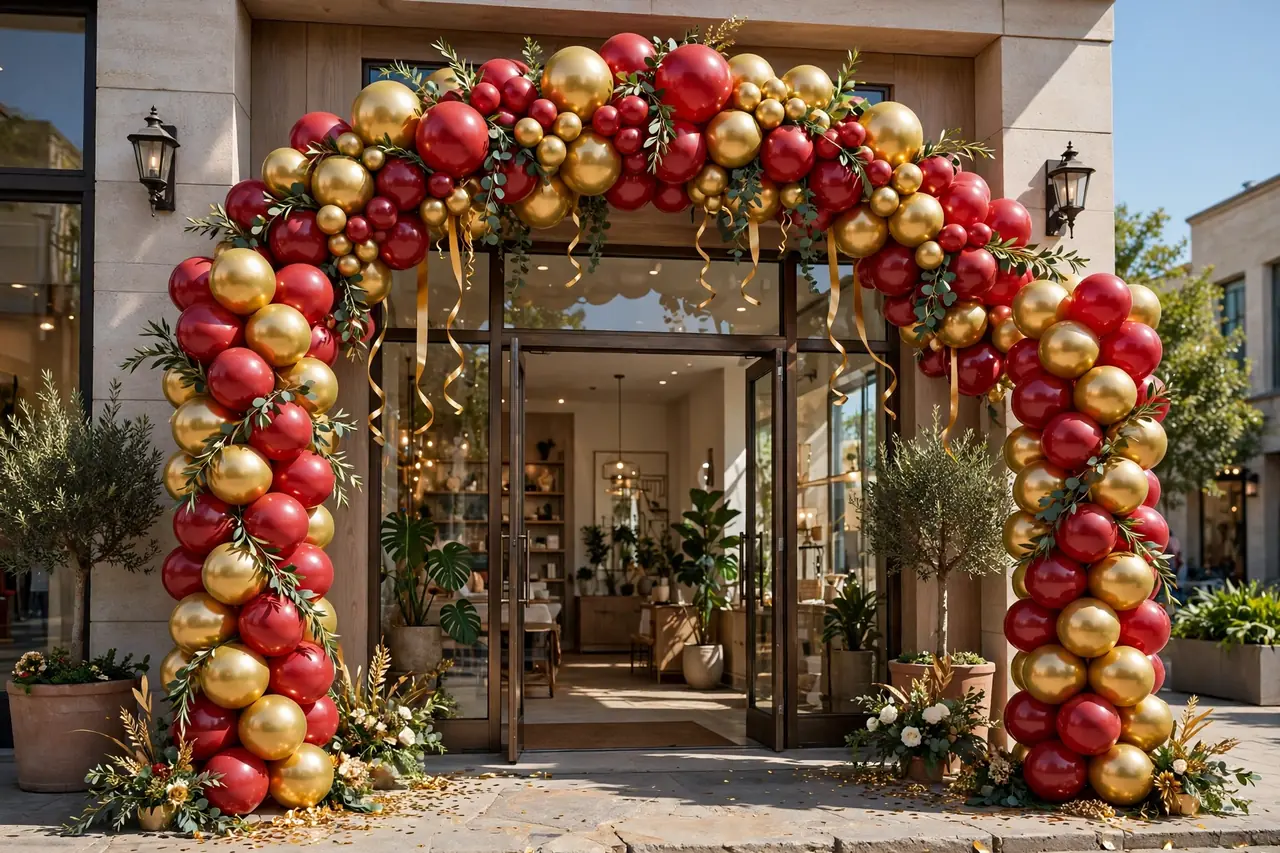
4. The branded arch. Weave your brand colors through the arch and add foil letter balloons spelling your business name across the top. Every entrance photo becomes a branded asset.
5. The “OPEN” arch topper. Giant foil letters spelling OPEN mounted on the arch’s peak — readable from across the street and unmistakable in photos. Anchor them independently; foil letters are wind sails.
6. The greenery-blend arch. Weave faux eucalyptus or ruscus through a balloon arch for an organic-luxe look that suits spas, cafes, and boutiques. The green softens the balloon colors and photographs beautifully.
7. The nighttime arch. Thread battery-operated fairy lights through the arch for evening events. A lit balloon arch after dark is pure magic and costs under $20 in lights.
8. The confetti-balloon arch. Mix clear balloons filled with confetti into the arch. They catch light beautifully and add a premium sparkle — save them for the front-facing side where cameras see them.
Balloon Garlands: The Versatile Workhorse (Ideas 9–16)
Garlands — freeform clusters of varied-size balloons — are more forgiving than arches and work almost anywhere: along facades, over windows, framing the ceremony backdrop, dressing the interior.
9. The facade garland. Run an organic garland along the entire storefront cornice. It frames the building like a celebration border and is visible from far down the street.
10. The ceremony backdrop garland. Frame your step-and-repeat or ribbon cutting area with a lush garland. This is the garland that appears in every hero photo — make it your best work or hire it out.
11. The window frame garland. Outline display windows with garland to draw eyes exactly where you want them — on your products and your celebration messaging.
12. The staircase/railing garland. If your space has stairs or a railing, drape garland along it. It turns architecture into decor and guides guests upward.
13. The table runner garland. A low, lush garland running down the center of the refreshment or display table — keep it under 12 inches high so guests can see over it.
14. The photo wall garland. Frame your photo backdrop with an extra-full garland. Photo spots deserve the densest, most colorful work — they generate the most images.
15. The hanging garland. Suspend garlands horizontally from the ceiling at varying heights for a floating-cloud effect. Stunning in photos, especially with good lighting.
16. The two-tone ombre garland. Arrange balloons in a gradient — white to blush to rose, for example. Ombre garlands look expensive and designed, and the technique is simply sorting balloons by shade before clustering.
Balloon Columns and Towers (Ideas 17–20)
17. Classic spiral columns. Floor-to-ceiling spirals flanking the entrance or ceremony area — the most formal balloon look. Build on PVC pipe stands with water-weighted bases; each column takes 30–50 balloons and about 45 minutes.
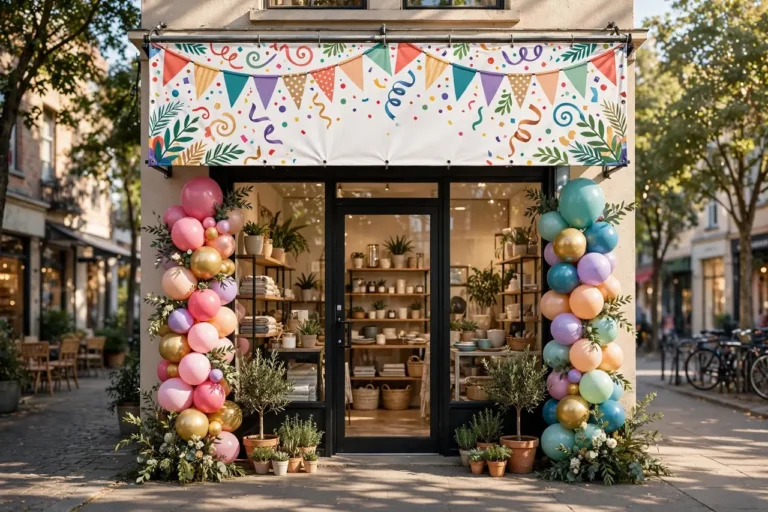
18. Topiary columns. A round balloon “bush” on top of a column — playful and distinctive. Great for garden centers, family businesses, and anything with a fresh, natural brand.
19. Character topper columns. Crown columns with a giant foil star, number, or themed shape (a giant cupcake balloon for a bakery, scissors-shaped foil for a salon). The topper personalizes an otherwise standard column.
20. The “grand opening” column pair. Two columns with foil letter balloons stacked vertically spelling G-R-A-N-D on one and O-P-E-N on the other. Bold, readable, unmistakable.
Balloon Walls and Photo Backdrops (Ideas 21–24)
21. The full balloon wall. A 8×8 foot grid completely filled with balloons — the most Instagrammed decor element in event history. Build on a portable backdrop frame with balloon strips; 150–200 balloons. Dense, colorful, irresistible.
22. The ombre wall. A balloon wall arranged in a color gradient. More designed-looking than a random mix, and the gradient photographs as intentional artistry.
23. The logo wall. Build the wall in your brand colors and mount a large logo cutout or neon sign at the center. This is the photo backdrop that markets your business in every single guest photo.
24. The half-wall with seating. A 4-foot balloon wall behind a bench or loveseat creates a photo lounge — guests sit, pose, and linger. The seated format produces more natural, varied photos than standing backdrops.
Ceiling and Hanging Ideas (Ideas 25–28)
25. The helium canopy. 50–100 helium balloons with curling ribbon floating against the ceiling — the fastest interior transformation available. Vary string lengths for a cloud effect. Budget $75–$150 including helium.
26. Hanging balloon chandeliers. Cluster 7–9 balloons at varying heights from a single ceiling point, finished with ribbon tassels. Repeat across the space for a chandelier effect that costs a fraction of real lighting.
27. The balloon drop. A net of 100+ balloons suspended from the ceiling, released at the moment of the ribbon cutting. The single most dramatic indoor moment possible — coordinate the release with the countdown and warn the photographer. (Use a simple DIY net of tablecloth material; practice the release once.)
28. Floating table balloons. Single large (24″–36″) balloons on elegant weighted bases as table centerpieces — one per table, in brand colors. Simple, striking, and they do not block conversation sightlines.
Details and Accents (Ideas 29–33)
29. Balloon bouquets at the welcome table. Classic helium bouquets in brand colors mark the welcome table from across the room and give guests something to find.
30. Confetti-filled clear balloons. Scatter clear balloons filled with metallic confetti among standard latex — they catch light and add a premium glint to every arrangement.
31. Balloon-popping prize wall. A grid of balloons each hiding a prize slip — guests pop one to win. Interactive, exciting, and it keeps energy high through the open house. (Stock earplugs for the staff.)
32. Branded balloon printing. Custom-printed balloons with your logo ($0.50–$1.50 each in bulk) turn every balloon into advertising. Use them mixed through arches and garlands, not exclusively — a wall of logos looks corporate; accents look celebratory.
33. The farewell balloon. As the event winds down, give each departing guest (especially kids) a balloon to take home. Your celebration literally walks down the street, and the kids will remember your business fondly forever.
For coordinating balloons with your broader party design, our DIY party decoration guide covers the same clustering and color techniques in a celebration context.
Color Palettes That Photograph Best
Balloon color is where grand opening decor succeeds or fails. These palettes are proven winners:
Classic celebration: red, white, and gold — timeless, festive, reads “grand opening” instantly. The safest choice for any business.
Premium minimal: black, white, and gold (or rose gold) — sophisticated, modern, perfect for salons, boutiques, and upscale brands.
Brand match: your two brand colors plus white — every balloon becomes brand reinforcement. The smartest marketing choice.
Fresh and natural: sage green, cream, and gold with eucalyptus woven in — ideal for wellness, cafes, florists, and organic brands.
Bold and playful: hot pink, orange, and turquoise — high energy for kids’ businesses, fitness studios, and party venues.
Two professional rules: limit yourself to three colors maximum (plus white) — more reads as chaotic — and buy all balloons from one manufacturer because “red” varies wildly between brands. A garland of three different reds looks accidental; a garland of one true red looks designed. Chrome/metallic finishes photograph as premium; matte finishes photograph as modern. Pick one finish family and commit.

DIY Techniques: Pro Results Without Pro Prices
You can achieve genuinely professional balloon decor yourself with three techniques and the right tools.
Technique 1: The balloon strip garland. Thread inflated balloon knots through the holes of a plastic decorating strip, alternating sizes (two 11″, one 5″, repeat). Hang the strip and fill gaps by tucking in additional 5″ balloons with glue dots. A 10-foot garland takes about an hour and $25 in materials. This single technique builds arches, garlands, and columns.
Technique 2: The quad cluster. Inflate four balloons to identical size (use the sizer), tie them into a cluster by twisting necks together. Quads are the building blocks of spiral columns and dense garlands — uniform clusters are what make professional work look uniform.
Technique 3: The 260Q tie. Use long twisting balloons to lash quads to frames, pipes, and each other. A 260Q tied around a quad’s center and then around the structure holds everything invisibly and securely — no tape, no string, no visible mechanics.
Essential toolkit: electric pump ($25), balloon sizer ($8), decorating strips ($10 for a multi-pack), 260Q balloons ($8), glue dots ($6), water weights or sandbags for bases, and a good pair of scissors. Total under $75, reusable for every future event. Watch one video tutorial for the strip technique before you start — twenty minutes of learning saves two hours of fumbling.
Cost Breakdown: DIY vs. Professional
| Element | DIY cost | Pro cost | DIY time | Verdict |
|---|---|---|---|---|
| Entrance arch | $60–$100 | $250–$500 | 2–3 hours | DIY-able; pro looks notably better |
| Organic garland (10 ft) | $25–$40 | $150–$300 | 1–1.5 hours | Best DIY value — technique matters more than skill |
| Balloon wall (8×8) | $80–$150 | $400–$800 | 3–4 hours | DIY if you have helpers; pro for flawless density |
| Spiral columns (pair) | $40–$70 | $150–$300 | 2 hours | DIY-friendly with quad technique |
| Helium canopy (75 balloons) | $75–$150 | $200–$400 | 1.5 hours | DIY — simplest high-impact element |
| Custom printed balloons (100) | $50–$150 | $100–$200 | Order 3 weeks ahead | Order regardless; mix into any design |
The smart hybrid: hire a pro for the single most-photographed element (usually the entrance arch or ceremony backdrop garland, $250–$400), DIY everything else. You get the pro polish where cameras point and save $500+ everywhere else. Book balloon pros four to six weeks out — Saturdays book fast. For more celebration styling on a budget, our party ideas collection shares the same high-impact, low-cost philosophy.
Weather, Longevity, and Safety Tips
Heat: latex balloons oxidize (get cloudy and dull) in direct sun within hours and can pop in extreme heat. For outdoor summer events, build decor in shade, install as late as possible, and choose lighter colors that absorb less heat. Foil balloons handle sun far better than latex.
Wind: the eternal enemy. Weight every base (water weights minimum 20 lbs per arch leg), tie garlands to structures at multiple points, and never use helium balloons outdoors without tethering. If winds exceed 20 mph, take down tall elements — a flying arch is a liability, not decor.
Cold: balloons contract and look deflated in cold air; helium balloons sink faster. Build slightly over-inflated (carefully) for cold-weather events, and keep spares indoors to swap in.
Longevity: air-filled latex lasts 24–48 hours looking good; helium floats 8–12 hours (use Hi-Float treatment to extend to 2–3 days for special pieces). Build air-filled structures the day before, helium elements the morning of.
Safety: keep balloons away from power lines, never do balloon releases (illegal in many states and terrible for wildlife), keep small balloon pieces away from young children (choking hazard — assign someone to pop and collect fallen balloons), and tape down all cords and weights to prevent trips.
Your Grand Opening Balloon Shopping List
Here is the complete buy list for a well-decorated small-business opening (entrance arch, two garlands, helium canopy, photo wall accents). Adjust quantities to your venue.
| Item | Quantity | Purpose | Est. cost |
|---|---|---|---|
| 11″ latex, color 1 | 150 | Arch and garland base | $25 |
| 11″ latex, color 2 | 150 | Arch and garland base | $25 |
| 11″ latex, white | 100 | Contrast and breathing room | $18 |
| 5″ latex, assorted | 100 | Filler for lush density | $15 |
| 16″ latex, accent color | 20 | Focal points in garlands | $12 |
| Foil stars / shapes | 10 | Accents and toppers | $20 |
| Giant foil letters (OPEN) | 1 set | Arch topper | $25 |
| 260Q tying balloons | 20 | Structural ties | $8 |
| Balloon decorating strips | 4 packs | Garland and arch building | $12 |
| Glue dots | 2 packs | Gap filling | $8 |
| Helium tank (small) | 1 | Canopy and bouquets | $40 |
| Electric balloon pump | 1 | Sanity preservation | $25 |
| Balloon sizer | 1 | Uniform sizing | $8 |
| Water weights / sandbags | 4 | Base anchoring | $20 |
Total: roughly $260 in materials for a fully balloon-decorated opening — less than a single professional arch. Buy from one manufacturer for color consistency, order two weeks ahead, and keep 20% spares. This list, the three techniques, and a Saturday work party are everything standing between you and a spectacularly decorated grand opening.
Watch: Build an Organic Balloon Garland Step by Step
The video below is a complete masterclass in the organic garland technique — the single most useful balloon skill for grand openings. Watch how varied balloon sizes, proper clustering, and thoughtful color placement create the lush, premium look, then apply it to your entrance, backdrop, and photo wall.
Watch on YouTube: ORGANIC BALLOON GARLAND – DIY step by step
Notice the video’s emphasis on size variety — the mix of 5″, 11″, and larger balloons is what separates organic garlands from lumpy ones. That single principle, applied consistently, is 80% of professional-looking balloon work. For tying your balloon design into the full party plan, our party theme guide shows how to coordinate every element around your palette.
Frequently Asked Questions
How many balloons do I need for a grand opening?
For a standard small-business opening: 100–150 for an entrance arch or garland, 50–75 for a helium ceiling canopy, 150–200 for a photo wall, and 30–50 per column pair. A well-decorated opening typically uses 300–500 balloons total. Buy 20% more than your estimate — pops, defects, and last-minute additions are inevitable. At roughly $0.15–$0.30 per quality latex balloon, the balloons themselves are the cheapest part; your time and helium are the real costs.
Should I use helium or air-filled balloons?
Use air-filled for structures (arches, garlands, walls, columns) — they last 24–48 hours, need no helium, and are cheaper and more wind-resistant. Use helium only for floating elements (ceiling canopies, bouquets, table balloons), and inflate those the morning of since helium lasts 8–12 hours. Never use helium outdoors without secure tethering. The pro ratio for most openings is 80% air-filled, 20% helium.
How far in advance can I set up balloon decorations?
Air-filled structures (arches, garlands, walls) can be built the day before and look great for 24–48 hours if kept cool and out of direct sun. Helium elements must be inflated the morning of the event. Foil balloons last for days and can be prepared earliest. Schedule accordingly: build structures the day before, inflate helium the morning of, and do a 30-minute refresh (replace pops, tighten sagging sections) one hour before guests arrive.
What do professional balloon decorators charge for a grand opening?
Typical ranges: $250–$500 for an entrance arch, $150–$300 for a 10-foot organic garland, $400–$800 for a full balloon wall, $150–$300 for a column pair. A complete professional package for a small-business opening runs $800–$2,000. Book four to six weeks out. The hybrid approach — pro for the most-photographed element, DIY for the rest — delivers 90% of the impact for 40% of the cost.
How do I keep outdoor balloons from popping or deflating?
Build in shade whenever possible, install as late as you can, and choose light colors that absorb less heat. Weight every base heavily (20+ lbs per arch leg), tie structures at multiple points, and avoid helium outdoors unless securely tethered. Keep a repair kit on hand: spare inflated balloons, a hand pump, glue dots, and 260Qs for quick fixes. In winds over 20 mph, take down tall elements — safety beats decor.
Are balloon releases okay for a grand opening?
No — do not plan a balloon release. They are illegal in many states, terrible for wildlife and the environment, and increasingly viewed negatively by the public. A balloon drop (indoors, into a net, with all balloons collected afterward) delivers the same dramatic moment responsibly. If you want a skyward moment, consider biodegradable confetti cannons or bubble machines instead.
What is the best balloon color scheme for a grand opening?
Three colors maximum plus white: classic red/white/gold for traditional festive energy, black/white/gold for premium brands, your own brand colors plus white for the smartest marketing, or sage/cream/gold for natural brands. Buy all balloons from one manufacturer to avoid dye-lot mismatches, and commit to one finish family (all chrome or all matte). Consistency is what makes balloon decor look designed.
Can I decorate with balloons myself or should I hire someone?
DIY the simple stuff (helium canopies, basic garlands with a strip, bouquets) and hire a pro for the most-photographed element (entrance arch or ceremony backdrop). The three techniques in this guide — strip garlands, quad clusters, 260Q ties — plus a $75 toolkit produce genuinely professional results with a little practice. Watch one tutorial video, do a practice garland a week before, and recruit two helpers for build day. Balloons are the most DIY-friendly decor category that exists.
How do I make balloons last through an all-day event?
Use Hi-Float treatment in helium balloons to extend float time to 2–3 days, keep air-filled structures out of direct sun, and do a midday refresh — walk the venue with spare balloons and a pump, replacing pops and tightening sagging sections. It takes fifteen minutes and keeps everything camera-ready. For multi-day celebrations, rebuild helium elements each morning; air-filled structures usually survive with minor touch-ups.
What should I do with balloons after the grand opening?
Give them away — especially to kids. Deflate and save foil balloons (they last for weeks and are reusable). Pop latex responsibly and dispose of pieces where children and animals cannot reach them. Donate intact garlands to schools, nursing homes, or community centers — they love them. And photograph your decor before teardown; those images are portfolio pieces for your business’s story and genuinely useful if you ever plan another event.
Balloons are the rare decoration that is simultaneously the cheapest, the fastest, the most photogenic, and the most joyful. Learn the three techniques, commit to a three-color palette, weight everything, build air-filled structures the day before and helium the morning of, and give every kid a balloon on the way out. Your grand opening will look like a celebration from down the block, feel like one from the sidewalk, and photograph like one from every angle. Now plug in that electric pump — you have got about 300 balloons to inflate, and it is going to be wonderful.