Free Things to Do in Raleigh: 15 Free Gems in the City of Oaks
Raleigh calls itself the City of Oaks, and the nickname fits more than the street trees suggest: this is a city with deep roots and wide branches — three world-class free museums, a state capitol you can tour for nothing, 100+ miles of greenway trails, and a park system that includes one of America’s best-loved urban playgrounds. As the anchor of North Carolina’s Research Triangle, Raleigh pairs Southern charm with capital-city culture, and an astonishing amount of it is free.
This guide rounds up 15 of the best free things to do in Raleigh, from the free-admission natural sciences museum with its living conservatory to the sunset views at Dorothea Dix Park, from Pullen Park’s historic carousel grounds to the quiet trails of Umstead State Park. Whether you’re a prospective NC State parent, a Triangle local, or a road-tripper on I-40, here’s Raleigh for $0.
How We Picked the Best Free Things to Do in Raleigh
Raleigh’s secret weapon is its free museums — several are always free, no asterisks. We built this list from places that cost nothing every day: the free museums, the capitol, the parks, the greenways, the historic districts. Paid attractions with meaningful free components are noted honestly. If it needs a ticket, it’s not here.
Free Museums & the Capitol
1. North Carolina Museum of Natural Sciences
Area: Downtown | Best time: Weekday mornings to avoid school groups
Plan your visit: You’ll find it in Downtown — aim for Weekday mornings to avoid school groups, when the experience is at its best. Like everything on this list, there’s no admission fee and no ticket to book; just show up.
The largest natural history museum in the Southeast is free — every day, no catch. Four floors of dinosaurs, whales, live animals, and North Carolina ecosystems, plus the stunning Nature Research Center wing with its glass-walled working laboratories where you can watch real scientists at work. The Living Conservatory, a glass-enclosed tropical forest with butterflies, sloths, and 200+ plant species, is the kind of thing other museums charge $25 for; here it’s part of the free admission.
The museum anchors downtown Raleigh’s free cultural corridor — it’s across the plaza from the History Museum, steps from the Capitol, and the whole cluster makes a world-class free day. Kids go feral (happily) for the dinosaur skeletons and the SECU Daily Planet theater’s three-story screen; adults linger in the gem hall and the coastal exhibits. Allow at least three hours. Free museums this good are vanishingly rare — Raleigh has one downtown.
Don’t miss the SECU Daily Planet’s three-story theater (free shows) and the Nature Research Center’s glass-walled working labs.
2. North Carolina Museum of History
Area: Downtown | Best time: Pair with the Natural Sciences museum next door
Plan your visit: You’ll find it in Downtown — aim for Pair with the Natural Sciences museum next door, when the experience is at its best. Like everything on this list, there’s no admission fee and no ticket to book; just show up.
Across Bicentennial Plaza from its natural-sciences sibling, the NC Museum of History is also completely free — 55,000+ square feet of exhibits tracing North Carolina from its first peoples through the Wright brothers, the civil rights movement, and stock-car racing. The Story of North Carolina, the museum’s core exhibit, is a genuinely excellent walk through 14,000 years, with artifacts ranging from a 1920s general store to a restored farmhouse.
The museum’s free programming — lectures, performances, family festivals — is among the best in the state, so check the calendar. The plaza between the two museums hosts food trucks and has become downtown’s favorite lunch spot. Two world-class free museums facing each other across a plaza: that’s Raleigh showing off, and you should let it.
The museum’s free programming (lectures, family festivals) is among the state’s best — check ncmuseumofhistory.org before visiting.
3. North Carolina State Capitol
Area: Downtown | Best time: Weekdays for guided tours; grounds anytime
Plan your visit: You’ll find it in Downtown — aim for Weekdays for guided tours; grounds anytime, when the experience is at its best. Like everything on this list, there’s no admission fee and no ticket to book; just show up.
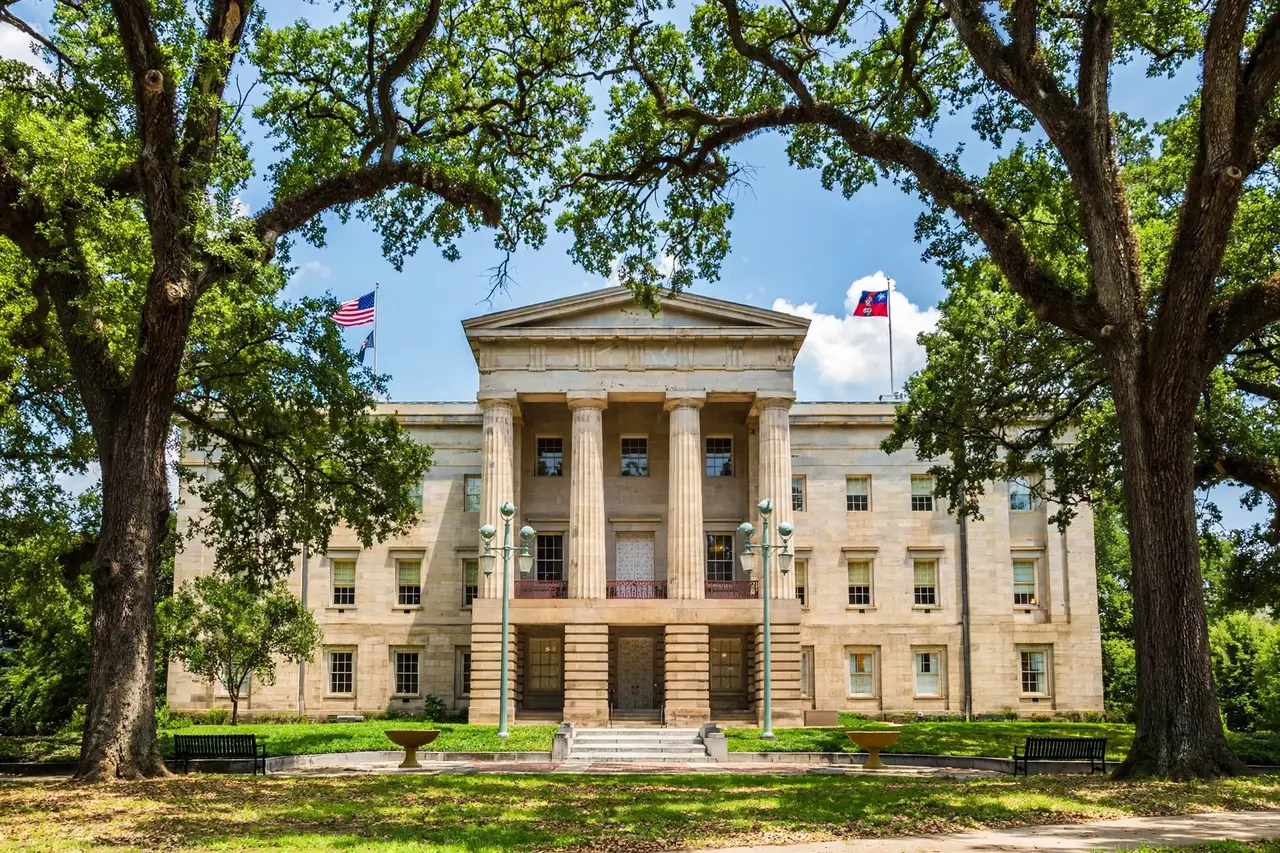
One of the best-preserved Greek Revival capitols in America, Raleigh’s 1840 State Capitol is free to tour — and it’s a stunner. The rotunda, the original House and Senate chambers (frozen in 19th-century style), and the state library’s grand rooms tell the story of North Carolina government in a building that still feels alive. Free guided tours run regularly; self-guided visits with the brochure are equally rewarding.
The Capitol grounds, with their monuments, massive oaks, and the statues of North Carolina’s notable figures, are a free park in the heart of downtown. Combine the Capitol with the two free museums and you’ve done Raleigh’s civic core for $0 — a capital-city experience that would cost real money in most states. History buffs: ask the guides about the building’s Civil War stories.
Ask the guides about the Capitol’s Civil War stories — the building’s 1840s history includes occupation and narrow escapes.
4. JC Raulston Arboretum
Area: NC State campus | Best time: Spring blooms; fall for Japanese maples
Plan your visit: You’ll find it in NC State campus — aim for Spring blooms; fall for Japanese maples, when the experience is at its best. Like everything on this list, there’s no admission fee and no ticket to book; just show up.
Tucked into NC State’s campus, the JC Raulston Arboretum is 10.5 acres of world-class horticulture — free, every day. The arboretum is a national leader in plant trials and introductions, which means you’re walking through cutting-edge collections: the Japanese garden, the perennial borders, the conifer collection, and the famous ‘garden rooms’ that demonstrate landscape design. It’s intimate, immaculate, and almost absurdly free for the quality.
Spring brings azaleas and redbuds; fall sets the Japanese maples on fire; winter shows off bark and structure. The arboretum hosts free lectures and plant sales (the sales aren’t free, but browsing is). Pair it with a walk through NC State’s handsome campus — the Memorial Belltower is a Raleigh icon — for a perfect free half-day on the university side of town.
The arboretum’s plant trials mean you’re seeing future garden introductions first — the spring azalea display is world-class.
Parks, Greenways & Outdoors
5. Pullen Park
Area: Near NC State | Best time: Weekends; ride tickets are cheap if you splurge
Plan your visit: You’ll find it in Near NC State — aim for Weekends; ride tickets are cheap if you splurge, when the experience is at its best. Like everything on this list, there’s no admission fee and no ticket to book; just show up.
Pullen Park has been Raleigh’s playground since 1887 — one of America’s oldest amusement parks — and entry to the park itself is free. The grounds hold the historic 1911 Dentzel carousel (rides cost a couple of dollars), pedal boats on Lake Howell, a miniature train, playgrounds, and acres of old-growth shade trees. Even if you ride nothing, strolling the park’s paths past the lake, watching the carousel spin, and picnicking under the ancient oaks is a perfect free outing.
The park’s history is part of the charm: this was the first public park in North Carolina, and its amusement heritage gives it a nostalgic glow that newer parks can’t manufacture. Locals bring birthday parties and family reunions; visitors should bring a picnic and a camera. The carousel building alone, with its hand-carved menagerie, is worth the walk-through — and the park is free.
The 1911 Dentzel carousel’s hand-carved menagerie is a work of art; even non-riders should step inside the pavilion (free to view).
6. William B. Umstead State Park
Area: Northwest Raleigh | Best time: Fall color; spring wildflowers
Plan your visit: You’ll find it in Northwest Raleigh — aim for Fall color; spring wildflowers, when the experience is at its best. Like everything on this list, there’s no admission fee and no ticket to book; just show up.
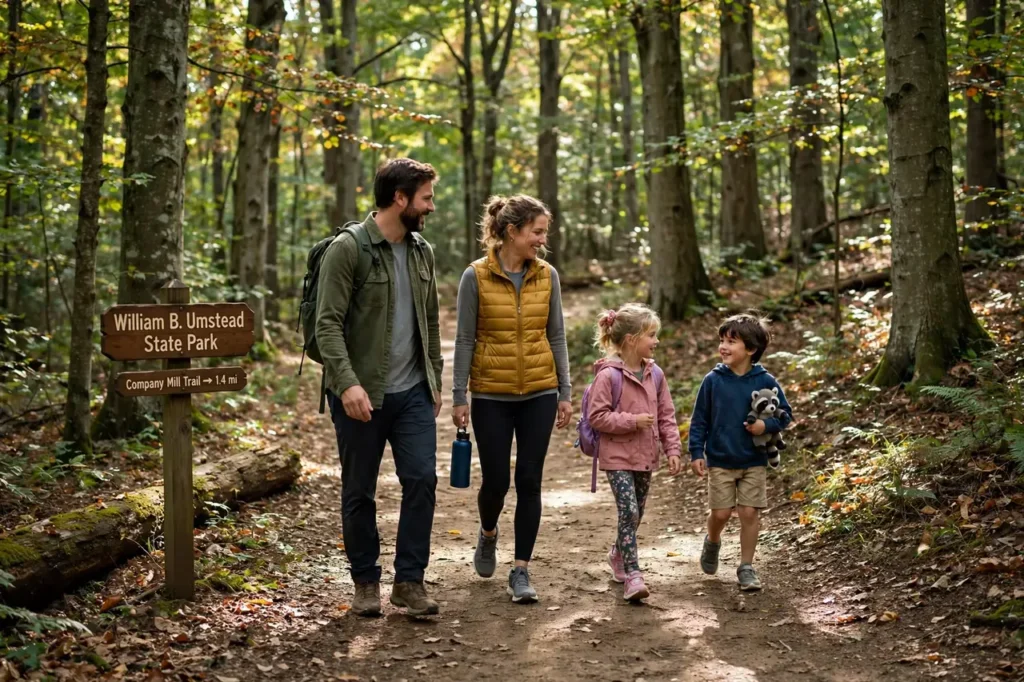
Umstead’s 5,599 acres of Piedmont forest sit 15 minutes from downtown Raleigh, and entry is free — a staggering gift. Thirteen miles of multi-use trails and 20+ miles of hiking-only paths wind through beech and oak forest past old homestead sites, with Big Lake offering fishing and canoeing (rentals cost; the views don’t). The park’s Company Mill and Sycamore trails are local legends, and the historic cabins and picnic shelters date to CCC construction.
This is real woods, not a city park — deer, foxes, pileated woodpeckers, and the deep quiet of Piedmont forest. Trail runners, mountain bikers, and solitude-seekers all claim Umstead, and the park absorbs them all. For a free escape that feels an hour from civilization while being minutes from the Capitol, nothing in Raleigh beats it.
Trail runners revere the Company Mill trail’s creek crossings; the Sycamore trail’s old homestead sites reward history buffs.
7. Dorothea Dix Park
Area: Downtown south | Best time: Sunset for the skyline view; spring for sunflowers
Plan your visit: You’ll find it in Downtown south — aim for Sunset for the skyline view; spring for sunflowers, when the experience is at its best. Like everything on this list, there’s no admission fee and no ticket to book; just show up.
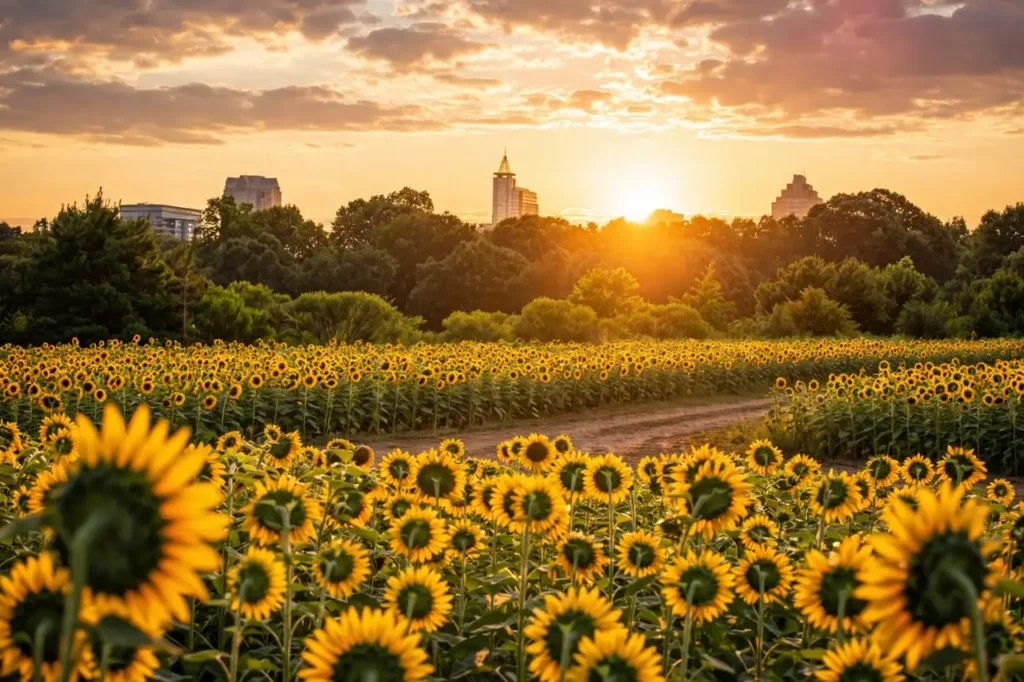
Dix Park is Raleigh’s great 21st-century bet: 308 acres of former hospital grounds being transformed into one of America’s most ambitious new parks — and the parts that are open are already spectacular and free. The big field’s sunset view of the downtown skyline is Raleigh’s signature vista, the sunflower fields (planted seasonally) draw joyful crowds, and the oak groves and old hospital buildings give the park a haunting, beautiful character.
The park hosts free events year-round — movies, concerts, festivals — and the greenway connections make it a hub for the city’s trail network. Come at golden hour, spread a blanket on the hill, and watch the skyline light up. Dix Park is Raleigh’s future happening now, and it’s free to witness.
The sunflower fields (planted seasonally) are the park’s famous photo op — check dixpark.org for bloom timing.
8. Neuse River Greenway Trail
Area: East Raleigh | Best time: Spring and fall; early mornings
Plan your visit: You’ll find it in East Raleigh — aim for Spring and fall; early mornings, when the experience is at its best. Like everything on this list, there’s no admission fee and no ticket to book; just show up.
Raleigh’s Capital Area Greenway system spans 100+ miles, and the Neuse River Trail — 27+ miles of paved path following the river through forests and wetlands — is its crown jewel. This is a genuine wilderness corridor inside the city: herons, beavers, deer, and miles of riverside forest, all on a flat, well-maintained trail that’s free to everyone. Trailheads with free parking dot the route.
You don’t need to ride all 27 miles — the Anderson Point Park section, with its bridges, wetlands boardwalks, and river overlooks, makes a perfect 2-3 mile free outing. The greenway connects to the wider system, so ambitious cyclists can ride from the Neuse all the way to Umstead. It’s one of the best urban trail systems in the Southeast, and every mile is free.
Anderson Point Park’s wetlands boardwalks are the trail’s highlight — herons, beavers, and river overlooks in a 2-mile loop.
Historic Districts & Neighborhoods
9. Historic Oakwood
Area: Oakwood | Best time: December for the Candlelight Tour exteriors; spring for gardens
Plan your visit: You’ll find it in Oakwood — aim for December for the Candlelight Tour exteriors; spring for gardens, when the experience is at its best. Like everything on this list, there’s no admission fee and no ticket to book; just show up.
Oakwood is Raleigh’s Victorian showpiece: the largest intact 19th-century residential neighborhood in North Carolina, with 600+ homes in Queen Anne, Second Empire, and Craftsman styles, all free to admire from the sidewalk. A self-guided walking tour (free maps online) takes you past the grandest Victorians, the 1870s Oakwood Cemetery (itself a beautiful, free, historic walk), and the neighborhood’s famous porch culture.
The December Candlelight Tour opens select homes (ticketed), but the exteriors — dressed in holiday finery — are free to enjoy from the street, and the neighborhood is lovely year-round. Spring gardens, fall color, and the sheer density of architectural detail make Oakwood Raleigh’s best free walking neighborhood. It’s a living museum of Southern urban history, no admission required.
The free walking-tour maps (online) cover 600+ Victorian homes; the December exteriors in holiday dress are magical.
10. Raleigh Rose Garden
Area: Near NC State | Best time: May–June for peak roses
Plan your visit: You’ll find it in Near NC State — aim for May–June for peak roses, when the experience is at its best. Like everything on this list, there’s no admission fee and no ticket to book; just show up.
Behind the Raleigh Little Theatre, the Raleigh Rose Garden hides 1,200+ rose bushes in 60 varieties across formal beds — free, and at peak bloom, glorious. The garden’s amphitheater setting, with stone walls and trellises, makes it one of the city’s most romantic free spots, and its relative obscurity means you’ll often have the blooms to yourself. June is the month; go then.
The adjacent Raleigh Little Theatre’s grounds and the surrounding neighborhood add to the stroll. It’s a small garden, not a day-long destination — but as a free, fragrant half-hour in the middle of the city, it’s perfect. Picnic optional; camera mandatory.
The garden hides behind the Raleigh Little Theatre — most visitors miss it, which means you’ll have the roses to yourself.
11. Moore Square & City Market
Area: Downtown | Best time: Weekends for market energy
Plan your visit: You’ll find it in Downtown — aim for Weekends for market energy, when the experience is at its best. Like everything on this list, there’s no admission fee and no ticket to book; just show up.
Moore Square, one of Raleigh’s original 1792 public squares, anchors the revitalized east side of downtown: a green lawn with the historic 1857 Briggs building, splash pad in summer, and a calendar of free events. The adjacent City Market — historic brick storefronts around a cobblestone courtyard — offers free browsing through local shops and frequent free festivals.
The square’s history (it was a 19th-century public gathering place, for better and worse) is interpreted on plaques, and the modern redesign made it downtown’s living room. Combine with the nearby free museums for a full downtown day. It’s Raleigh’s past and present in one free square block.
Moore Square’s 1857 Briggs building and the square’s 1792 origins (one of Raleigh’s original public squares) reward a slow look.
Only-in-Raleigh
12. Lake Johnson Park
Area: Southwest Raleigh | Best time: Sunset; fall for reflections
Plan your visit: You’ll find it in Southwest Raleigh — aim for Sunset; fall for reflections, when the experience is at its best. Like everything on this list, there’s no admission fee and no ticket to book; just show up.
Lake Johnson’s 300 acres wrap a 150-acre lake with 5+ miles of trails — paved greenway on the east, rugged natural surface on the west — making it Raleigh’s most varied free lake outing. The Thomas G. Crowder Woodland Center (free exhibits) anchors the east side, while the west-side trails feel properly wild. Paddlers, anglers, runners, and picnickers all share the lake peacefully.
The sunset views across the water, with the pines silhouetted, are spectacular and free. The park’s loop trails make it easy to customize your distance, and the woodland center’s free programs add an educational layer. It’s the kind of multi-use lake park that every city wants and few have — and Raleigh’s is free.
The 300-acre lake’s west-side natural trails feel wild; the east-side greenway is the easy family loop — do both.
13. Historic Yates Mill County Park
Area: South Raleigh | Best time: Weekends when the mill tours run (small fee; grounds free)
Plan your visit: You’ll find it in South Raleigh — aim for Weekends when the mill tours run (small fee; grounds free), when the experience is at its best. Like everything on this list, there’s no admission fee and no ticket to book; just show up.
Yates Mill is Wake County’s last surviving gristmill — a 1756 water-powered mill on a 174-acre park — and the grounds are free to explore daily. The millpond, with its reflections and resident herons, is one of the most photographed spots in Raleigh, and the trails loop through hardwood forest past the mill’s stone foundation. The mill interior tours cost a few dollars; everything else is free.
The park’s history center (free exhibits) tells the mill’s 250-year story, from colonial gristmill to Civil War landmark. It’s a perfect free half-day: pond, trails, history, and the kind of quiet that makes you forget the beltline is ten minutes away. Fall color here is exceptional.
The 1756 mill’s stone foundation and the millpond’s herons make this Wake County’s most photographed historic site.
14. Annie Louise Wilkerson Nature Preserve
Area: North Raleigh | Best time: Spring wildflowers; any quiet weekday
Plan your visit: You’ll find it in North Raleigh — aim for Spring wildflowers; any quiet weekday, when the experience is at its best. Like everything on this list, there’s no admission fee and no ticket to book; just show up.
This 157-acre preserve in North Raleigh is a locals’ secret: ponds, meadows, and hardwood forest with 2+ miles of trails, all free and rarely crowded. The preserve’s meadows explode with wildflowers in spring, the ponds host frogs and dragonflies in summer, and the whole place has a hushed, discovered feel that the bigger parks can’t match.
It’s the perfect free outing for nature lovers who’ve done Umstead and want something quieter — or for anyone who just needs an hour of green. The trails are easy, the parking is free, and the solitude is real. Raleigh’s park system runs deep, and Wilkerson is one of its hidden depths.
This 157-acre preserve is the locals’ quiet alternative to Umstead — the spring wildflower meadows are spectacular.
Most Photogenic Free Spots in Raleigh
Bring your camera (or just your phone) — these five free spots deliver Raleigh’s best photos, with timing advice for each.
Dorothea Dix Park
What: Urban park (free) | Go: Sunset for the skyline view; spring for sunflowers
Timing matters most — visit when it’s at its best (Sunset for the skyline view; spring for sunflowers) for the finest light and fewest crowds. Look for the Downtown south angle that most visitors walk right past.
Historic Oakwood
What: Historic neighborhood (free) | Go: December for the Candlelight Tour exteriors; spring for gardens
Timing matters most — visit when it’s at its best (December for the Candlelight Tour exteriors; spring for gardens) for the finest light and fewest crowds. Look for the Oakwood angle that most visitors walk right past.
Raleigh Rose Garden
What: Public garden (free) | Go: May–June for peak roses
Morning light is kindest here: soft, angled, and crowd-free. Get close for detail shots, then step back for the full composition — the Near NC State setting rewards both.
Lake Johnson Park
What: Lake park (free) | Go: Sunset; fall for reflections
Timing matters most — visit when it’s at its best (Sunset; fall for reflections) for the finest light and fewest crowds. Look for the Southwest Raleigh angle that most visitors walk right past.
North Carolina Museum of Natural Sciences
What: Museum (free) | Go: Weekday mornings to avoid school groups
Timing matters most — visit when it’s at its best (Weekday mornings to avoid school groups) for the finest light and fewest crowds. Look for the Downtown angle that most visitors walk right past.
Free Things to Do in Raleigh: At-a-Glance
Every attraction below is free to visit — no tickets, no catch. Use this table to plan your Raleigh days by interest and timing.
| Attraction | Type | Area | Best Time to Visit |
|---|---|---|---|
| North Carolina Museum of Natural Sciences | Museum (free) | Downtown | Weekday mornings to avoid school groups |
| North Carolina Museum of History | Museum (free) | Downtown | Pair with the Natural Sciences museum next door |
| North Carolina State Capitol | Historic site (free tours) | Downtown | Weekdays for guided tours; grounds anytime |
| JC Raulston Arboretum | Arboretum (free) | NC State campus | Spring blooms; fall for Japanese maples |
| Pullen Park | Historic amusement park (free entry) | Near NC State | Weekends; ride tickets are cheap if you splurge |
| William B. Umstead State Park | State park (free entry) | Northwest Raleigh | Fall color; spring wildflowers |
| Dorothea Dix Park | Urban park (free) | Downtown south | Sunset for the skyline view; spring for sunflowers |
| Neuse River Greenway Trail | Greenway trail (free) | East Raleigh | Spring and fall; early mornings |
| Historic Oakwood | Historic neighborhood (free) | Oakwood | December for the Candlelight Tour exteriors; spring for gardens |
| Raleigh Rose Garden | Public garden (free) | Near NC State | May–June for peak roses |
| Moore Square & City Market | Historic square & market (free) | Downtown | Weekends for market energy |
| Lake Johnson Park | Lake park (free) | Southwest Raleigh | Sunset; fall for reflections |
| Historic Yates Mill County Park | Historic park (free grounds) | South Raleigh | Weekends when the mill tours run (small fee; grounds free) |
| Annie Louise Wilkerson Nature Preserve | Nature preserve (free) | North Raleigh | Spring wildflowers; any quiet weekday |
How to Do Raleigh for Free: Practical Tips
Getting around without spending
Raleigh’s GoRaleigh buses are affordable and the free R-Line downtown circulator connects the museums, Capitol, and Moore Square — genuinely useful for a free downtown day. The greenway system is the real transit for park-hopping cyclists. For Umstead and outer parks, you’ll want a car.
Parking
Free at all parks, preserves, and trailheads. Downtown street parking is metered on weekdays but free evenings and weekends; the free museums have nearby free options on weekends. Raleigh is refreshingly easy for free parking. For more ways to keep trip costs down, see our guide to Best Aquariums in the USA — the strategies work for day trips too.
When to visit
Spring (April–May) is Raleigh’s peak — azaleas, dogwoods, perfect temperatures, and the museums’ spring programming. Fall (October–November) brings gorgeous color to Umstead and Dix Park. Summer is hot and humid; hit trails early and museums at midday. Winter is mild with bare-tree views at the parks.
Rainy-day backup plan
The two free downtown museums (Natural Sciences + History) can fill an entire rainy day at $0 — start there. The State Capitol’s free tours are indoors, and the JC Raulston Arboretum’s conservatory areas offer partial shelter. Pullen Park’s covered carousel area works for light rain. If you’re building a longer itinerary, our roundup of Best Zoos in the USA pairs well with a Raleigh day.
What to bring
A free day in Raleigh goes best with water (more than you think), sun protection, comfortable walking shoes, a portable phone charger for photos and maps, and a small picnic kit — many of the parks and waterfronts above are perfect picnic spots. A light layer handles the early-morning or evening temperature swings that most of these outdoor attractions bring.
A Perfect Free Day in Raleigh: Sample Itinerary
Only have one day and want it to cost $0? Here’s how we’d stack the highlights above into a single unforgettable free day in Raleigh — with timing that follows the light, the crowds, and the temperature.
7:00 a.m. — sunrise start
Start before the crowds at North Carolina Museum of Natural Sciences. Early morning is the insider’s hour at Raleigh’s outdoor icons: softer light for photos, cooler air for walking, and the place largely to yourself. Bring coffee and give it a full hour — the first stop sets the tone for the whole day.
9:30 a.m. — the morning anchor
Walk or ride to North Carolina Museum of History while the morning is still young. Mid-morning is prime time for Raleigh’s big outdoor attractions: trails are at their best, gardens are fresh, and you’ll be done before the midday heat or crowds peak. This is the stop to linger at — two unhurried hours here beats rushing through three places.
12:30 p.m. — midday culture and shade
As the day warms, head to Pullen Park. Midday is made for the cultural and shaded entries on this list — museums, historic interiors, gardens, and tree-canopied streets — when the sun is high. Pack a picnic or grab a cheap bite nearby; many of Raleigh’s parks are made for it.
3:00 p.m. — neighborhoods and wandering
Spend the afternoon around Historic Oakwood and its surrounding streets. This is the time for unstructured wandering: pop into free galleries, photograph the streetscapes, find a bench, and watch Raleigh live its daily life. Afternoon light is flattering, the pace is relaxed, and the best discoveries of any trip happen in these unplanned hours.
Golden hour — the view
Position yourself at Lake Johnson Park for sunset. The free experiences that end with golden light are the ones you’ll remember longest, and Raleigh’s overlooks and waterfronts were made for this hour. Arrive 45 minutes before sunset for the best spot, stay for the afterglow, and take the photo you’ll use as your wallpaper.
Evening — the nightcap
End the day at Annie Louise Wilkerson Nature Preserve and its surroundings. Raleigh’s evenings — whether that’s a lit-up landmark, a bustling district, or a quiet park at dusk — are the gentle landing to a full free day. Total admission spent: $0. Total memories: considerable.
Free Annual Events in Raleigh Worth Planning Around
Raleigh’s free calendar runs deeper than the daily attractions above. These annual events are all free to attend (food and extras aside) — time your trip for one and your $0 day gets even better.
Artsplosure — May
Downtown Raleigh’s spring arts festival — free — brings juried artists, free concerts, and interactive art to Moore Square and the streets. The festival’s 40+ years and the downtown energy make it a perfect free spring weekend.
Wide Open Bluegrass — Late September–October
The IBMA’s free street festival — multiple stages of bluegrass on Fayetteville Street, all free — is Raleigh’s best free music event. The pickin’, the food vendors (browsing free), and the downtown crowds are pure joy, $0.
First Friday — Monthly
Downtown’s galleries and museums open free on First Fridays — art, music, and the streets’ energy, $0. The free R-Line circulator connects the venues; the museums’ free nights are the anchor.
Raleigh Christmas Parade — November
One of the Southeast’s largest Christmas parades — free to watch from the downtown route. The floats, the bands, and the holiday crowds make it a beloved free tradition.
BugFest — September
The Natural Sciences museum’s free BugFest — celebrating insects with scientists, exhibits, and the famous buggy foods (free samples for the brave) — is delightfully weird and $0. It’s Raleigh’s nerdiest free party.
Best Free Raleigh Experiences for Every Occasion
Best for families with kids
The free Natural Sciences museum (dinosaurs + butterflies), Pullen Park’s carousel grounds and playgrounds, and Lake Johnson’s easy trails — Raleigh is a superb free family city. Two more kid-approved winners from the list above: Pullen Park in Near NC State (best: Weekends; ride tickets are cheap if you splurge) and William B. Umstead State Park in Northwest Raleigh. Between the three, you’ll fill a full family day without spending a dollar.
Best for a date
Sunset at Dorothea Dix Park’s skyline hill, then a stroll through the Raleigh Rose Garden — free romance, City of Oaks style. For a longer romantic day, add Dorothea Dix Park in Downtown south — go when it’s at its best (Sunset for the skyline view; spring for sunflowers) and let the setting do the work.
Best for solo explorers
Bike the Neuse River Trail’s Anderson Point section in the morning, then spend the afternoon lost in the two free downtown museums. Solo Raleigh is deeply satisfying. If you want one more solo-friendly stop, Neuse River Greenway Trail rewards independent explorers — go at your own pace, stay as long as you like, and enjoy the freedom of answering to no one’s schedule but your own.
Best for first-time visitors
Morning at the two free museums + Capitol, afternoon at Pullen Park or Dix Park, sunset on the Dix Park hill. That’s Raleigh’s essence in a day, free. Short on time? Prioritize North Carolina Museum of Natural Sciences in the morning and Annie Louise Wilkerson Nature Preserve toward evening — the two together capture Raleigh’s essence in a single day. For inspiration on structuring it, check out Best Theme Parks in the USA.
Watch: 15 Free Things To Do in Raleigh NC (Explore the City on a Budget!)
Want a visual preview before you go? This video tour covers the highlights of Raleigh — including several spots from this list:
Frequently Asked Questions About Free Things to Do in Raleigh
Are Raleigh’s museums really free?
Yes — the NC Museum of Natural Sciences and NC Museum of History are both free every day, no timed tickets required. They’re among the best free museums in America. The State Capitol’s tours are free too.
What is Raleigh known for?
The City of Oaks is North Carolina’s capital, home to NC State University, part of the Research Triangle, and famous for its free museums, oak-lined streets, historic Oakwood neighborhood, and 100+ miles of greenway trails.
How many days do you need in Raleigh?
Two days covers the free highlights: day one downtown (both free museums, Capitol, Moore Square, Dix Park sunset); day two for Umstead or the Neuse River Trail plus Pullen Park and the arboretum. Related reading: 50 Most Famous Landmarks in the USA 2026: Iconic Places Everyone Should Visit.
What’s free to do in Raleigh with kids?
The Natural Sciences museum (free dinosaurs and butterflies!), Pullen Park’s playgrounds and carousel grounds, Lake Johnson’s easy trails, and the greenway system — Raleigh is one of America’s best free family cities.
Is Raleigh walkable?
Downtown is — the free museums, Capitol, and Moore Square cluster within easy walking distance, served by the free R-Line circulator. For parks like Umstead and the outer greenways, you’ll want a car or bike.
When is the best time to visit Raleigh?
Spring (April–May) for azaleas, dogwoods, and perfect weather; fall (October–November) for color at Umstead and Dix Park. Summer is hot — plan outdoor time for mornings and museum time for midday.
What should I pack for a free day out in Raleigh?
Water and sun protection first — most of the free highlights here are outdoors. Add comfortable walking shoes, a portable charger, and a light layer for morning/evening swings. Spring (April–May) is Raleigh’s peak — azaleas, dogwoods, perfect temperatures, and the museums’ spring programming.
Can I enjoy Raleigh’s free attractions without a car?
Largely, yes. Raleigh’s GoRaleigh buses are affordable and the free R-Line downtown circulator connects the museums, Capitol, and Moore Square — genuinely useful for a free downtown day. The greenway system is the real transit for park-hopping cyclists. For Umstead and outer parks, you’ll want a car.
The Bottom Line
Raleigh doesn’t shout; it invites. The free museums that rival paid institutions anywhere, the 250-year-old millpond, the sunset hill at Dix Park, the hundred miles of greenway — it’s all free, all well-kept, and all infused with that particular Triangle blend of Southern warmth and capital-city ambition. Come for the oaks, stay for the museums, and leave wondering why more cities don’t do it this way.