

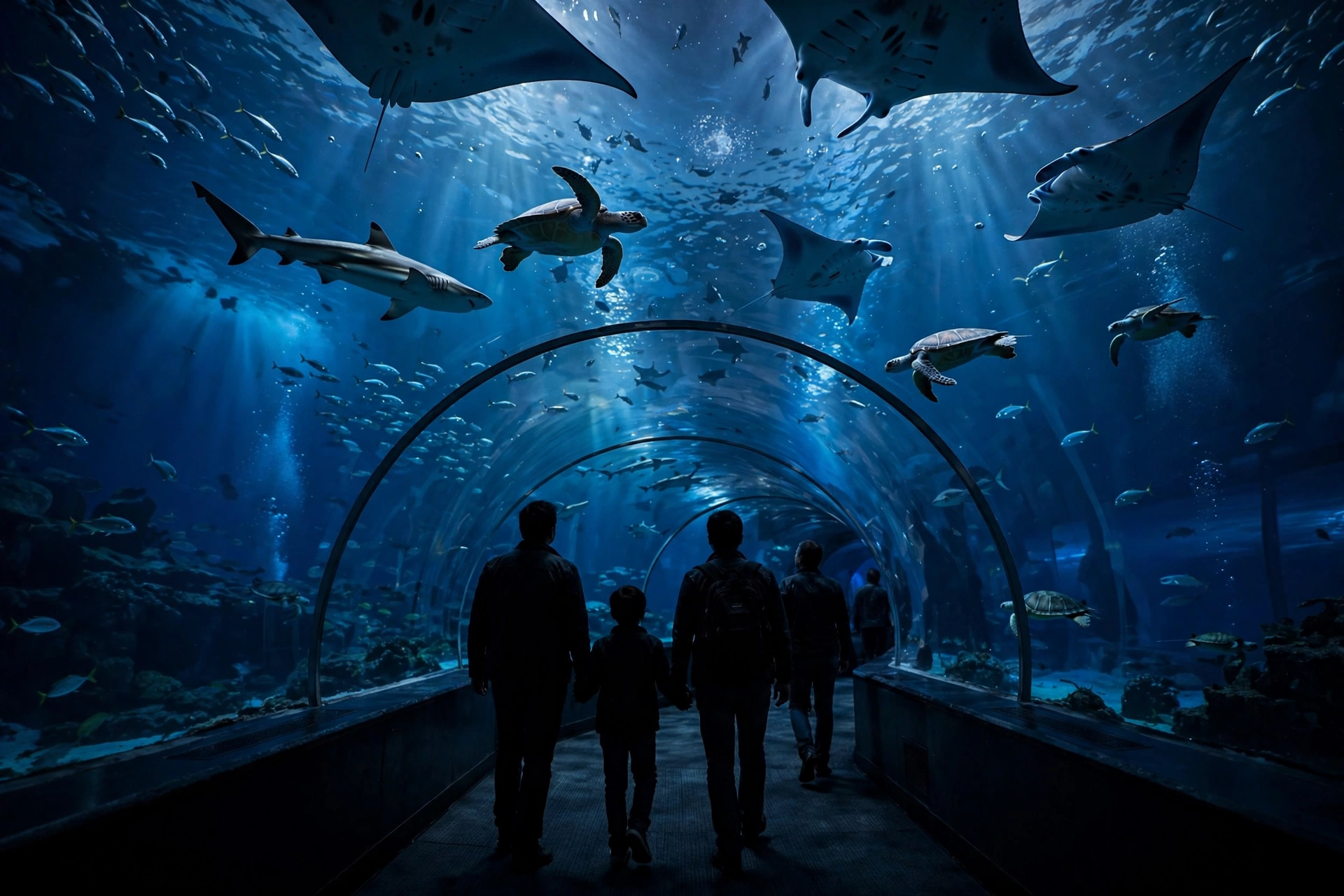
The Best Aquariums in the USA are some of the most beloved family attractions in the country — and the 2026 season is a great time to visit. From the Georgia Aquarium’s whale sharks (the largest fish on Earth, viewable in only a handful of places worldwide) to the Monterey Bay Aquarium’s towering kelp forest and OdySea’s one-of-a-kind rotating aquarium ride, America’s top aquariums blend jaw-dropping marine life with serious conservation science. This guide ranks the 12 best aquariums in the United States for 2026, compares ticket prices and signature exhibits in one table, breaks down the best picks by region and age group, and answers the questions every family asks before buying tickets.
The 12 Best Aquariums in the USA: 2026 Comparison
| Rank | Aquarium | Location | Signature Exhibit | Adult Tickets From* |
|---|---|---|---|---|
| 1 | Georgia Aquarium | Atlanta, Georgia | Ocean Voyager — whale sharks, manta rays | $45 |
| 2 | Monterey Bay Aquarium | Monterey, California | Kelp Forest — one of the tallest exhibits on Earth | $60 |
| 3 | Shedd Aquarium | Chicago, Illinois | Wild Reef — sharks, sea turtles, belugas | $45 |
| 4 | National Aquarium | Baltimore, Maryland | Blacktip Reef; dolphin colony | $45 |
| 5 | Aquarium of the Pacific | Long Beach, California | Sea turtle rehab center; Pacific collections | $45 |
| 6 | New England Aquarium | Boston, Massachusetts | Giant Ocean Tank — 4-story Caribbean reef | $37 |
| 7 | OdySea Aquarium | Scottsdale, Arizona | Voyager — world’s only rotating aquarium ride | $45 |
| 8 | Florida Aquarium | Tampa, Florida | SeaTREK reef dive experience | $35 |
| 9 | Texas State Aquarium | Corpus Christi, Texas | Caribbean Journey; dolphin presentations | $35 |
| 10 | Adventure Aquarium | Camden, New Jersey | Shark Realm — 81-ft bridge over sharks | $35 |
| 11 | Tennessee Aquarium | Chattanooga, Tennessee | River Journey + Ocean Journey; penguins | $36 |
| 12 | Audubon Aquarium | New Orleans, Louisiana | Gulf of Mexico + Amazon exhibits | $35 |
*2026 advance online prices; most aquariums use timed-entry ticketing with dynamic pricing.
How this ranking was made: we weighed exhibit scale and uniqueness, AZA accreditation and conservation impact, hands-on experiences, family-friendliness, and 2026 visitor-review sentiment across millions of traveler ratings. Price and regional balance were tiebreakers, not drivers — a great aquarium earns its place on the merits of the visit.
Why These Are the Best Aquariums in America
The Best Aquariums in the USA do three things exceptionally well. First, scale and spectacle — the great ones build exhibits so large and immersive you forget the glass is there, from million-gallon ocean tanks to walk-through tunnels. Second, conservation credibility: Monterey Bay’s Seafood Watch program reshaped sustainable seafood worldwide, Georgia Aquarium leads whale shark research, and the Shedd and National Aquarium run major rescue and rehabilitation programs. Third, hands-on engagement — touch tanks, behind-the-scenes tours, animal encounters, and keeper talks that turn a walk-through into a memory. Every aquarium below delivers all three, which is why they anchor family vacations rather than just filling an afternoon.
Aquarium-by-Aquarium Guide
1. Georgia Aquarium — Atlanta, Georgia
The largest aquarium in the Western Hemisphere and the only one outside Asia where you can see whale sharks — the biggest fish in the ocean — gliding through the 6.3-million-gallon Ocean Voyager habitat alongside manta rays. Add beluga whales, California sea lions, African penguins, and sea otters, and Georgia Aquarium is the one American aquarium that competes on a world scale. The dolphin and sea lion presentations are included with admission, and behind-the-scenes tours (including swimming or diving with whale sharks for certified divers) are bucket-list experiences. Tickets from around $45 online; the Anytime ticket costs more but skips timed-entry constraints. Plan 4–5 hours minimum. Pair your visit with downtown Atlanta’s other draws — our best family attractions in the USA guide has more ideas for the trip.
2. Monterey Bay Aquarium — Monterey, California
Perched on historic Cannery Row above the Pacific, Monterey Bay is the aquarium other aquariums study. The Kelp Forest — a 28-foot-tall living forest of giant kelp with leopard sharks and schooling sardines — is one of the tallest aquarium exhibits on the planet, and the Open Sea gallery’s million-gallon tank holds ocean sunfish, sea turtles, and schooling tuna. The sea otter program (rescue, rehabilitation, and release) is the heart of the institution, and Seafood Watch, the aquarium’s sustainable-seafood program, influences restaurants nationwide. Timed tickets from around $60 sell out on weekends — book days ahead. The sardine run feeding in the Kelp Forest and the afternoon otter feeding are the two don’t-miss moments.
3. Shedd Aquarium — Chicago, Illinois
Chicago’s lakefront landmark houses 32,000 animals in a landmark 1930s Beaux-Arts building. The Wild Reef gallery recreates a Philippine coral reef with sharks, rays, and sea turtles; the Abbott Oceanarium’s belugas, Pacific white-sided dolphins, and sea otters headline the marine-mammal side; and the Amazon Rising flooded-forest exhibit is a lush standout. The 4-D theater and animal encounters (penguin and beluga encounters book out fast) round out a full day. Tickets from around $45; the CityPASS bundles Shedd with four other Chicago attractions at a solid discount. See our free things to do in Chicago for budget pairings around the visit.
4. National Aquarium — Baltimore, Maryland
Baltimore’s Inner Harbor icon is built around the Atlantic Coral Reef and the multi-level Blacktip Reef, but the real showpiece is the dolphin colony — one of the largest in the country — and the immersive Australia: Wild Extremes and Upland Tropical Rain Forest exhibits that put you inside the habitat. The behind-the-scenes “Dolphin Training Session” and the 4-D Immersion Theater are worth the upcharge. Tickets from around $45 with timed entry. Combine it with the harbor’s historic ships and the Maryland Science Center for a full Inner Harbor day — more inspiration in our best things to do in the USA roundup.
5. Aquarium of the Pacific — Long Beach, California
Southern California’s premier aquarium focuses exclusively on the Pacific — the world’s largest ocean — across three regions: Southern California/Baja, the Tropical Pacific, and the Northern Pacific. The sea turtle rehabilitation center, where you can watch rescued turtles recovering, is a unique draw, and the lorikeet forest, shark lagoon touch pools, and June Keyes Penguin Habitat give kids constant hands-on moments. Tickets from around $45; the combo ticket with the Queen Mary next door is a classic Long Beach day. Whale-watching boats depart from the adjacent harbor in winter and spring.
6. New England Aquarium — Boston, Massachusetts
The Giant Ocean Tank — a four-story, 200,000-gallon Caribbean coral reef you spiral around on a ramp — is one of the most dramatic single exhibits in American aquariums, holding sea turtles, stingrays, eels, and hundreds of reef fish. The penguin colony at the base and the New Balance Foundation Marine Mammal Center’s fur seals and sea lions round out the main building, while seasonal whale-watching cruises depart from the dock outside (April–October, and genuinely world-class — Stellwagen Bank is prime humpback territory). Tickets from around $37. The Simons Theatre IMAX and the harbor seal exhibit on the plaza are free to view from outside.
7. OdySea Aquarium — Scottsdale, Arizona
The largest aquarium in the Southwest does something no other aquarium on Earth does: the OdySea Voyager, the world’s only rotating aquarium experience, carries seated guests on a slowly revolving theater through massive shark, sea turtle, and reef habitats. Add the walk-through SeaTREK helmet dive, the Rivers of the World freshwater galleries, and the Penguin Point colony, and OdySea justifies its place on any national list. Tickets from around $45. The surrounding OdySea in the Desert complex (butterfly wonderland, mirror maze, dinosaur adventure) makes this an easy full-day stop on a Phoenix-area trip.
8. The Florida Aquarium — Tampa, Florida
Tampa’s aquarium punches above its size with genuinely unique experiences: the SeaTREK guided reef dive lets non-divers walk the ocean floor in a dive helmet among reef fish, and the new Moffitt Cancer Center Sea Turtle Rehabilitation Center showcases working conservation. The Wetlands Trail’s alligators, otters, and free-flying birds and the Journey to Madagascar lemur exhibit give it range beyond the tanks. Tickets from around $35 — among the cheapest on this list. The Splash Pad and the outdoor Wild Dolphin Cruise (separate ticket) extend the day for families.
9. Texas State Aquarium — Corpus Christi, Texas
The largest aquarium in Texas anchors the Corpus Christi bayfront with the Caribbean Journey’s 400,000-gallon H-E-B Caribbean Sea exhibit (sharks, stingrays, angelfish), the Flower Garden Banks reef, and dolphin presentations in the H-E-B Splash Park. The wildlife rescue program — sea turtles, shorebirds, marine mammals — is central to the mission, and the behind-the-scenes tours show it off. Tickets from around $35. Combine with the USS Lexington museum ship across the harbor and Padre Island’s beaches for a full Gulf Coast weekend.
10. Adventure Aquarium — Camden, New Jersey
The shark capital of American aquariums: the 40-foot Shark Tunnel and the 81-foot Shark Realm suspension bridge — where you walk over a swirling school of sand tiger sharks — are unmatched anywhere in the country. The Hippo Haven (among the few places to see hippos at an aquarium), the Little Blue Penguin colony, and touch-a-shark experiences round out a visit that’s a quick trip from Philadelphia. Tickets from around $35. The riverside location across from the Philly skyline makes for great photos at golden hour.
11. Tennessee Aquarium — Chattanooga, Tennessee
The only aquarium on this list built around freshwater: the River Journey building follows a raindrop from the Appalachian mountains to the Gulf of Mexico through river otters, alligators, sturgeon, and paddlefish — then the Ocean Journey building delivers penguins, sharks, and a butterfly garden. It’s the best freshwater aquarium in America and the anchor of Chattanooga’s revitalized riverfront. Tickets from around $36 for both buildings. The IMAX theater and the riverboat cruise (seasonal) extend the day; downtown Chattanooga’s walkable riverfront is one of the South’s best.
12. Audubon Aquarium — New Orleans, Louisiana
Fresh off a major reimagining, the Audubon Aquarium on the Mississippi riverfront pairs a 400,000-gallon Gulf of Mexico exhibit (sea turtles, stingrays, schooling fish) with an Amazon rainforest gallery — jaguars, macaws, piranhas — that feels like a different continent. The sea otter habitat and the penguin colony are family favorites. Tickets from around $35, with combo tickets covering the Audubon Zoo and Insectarium for a full nature weekend. The French Quarter is minutes away — see our best tourist attractions in the USA for more New Orleans ideas.
Aquarium Conservation: Why Your Ticket Matters
The Best Aquariums in the USA are conservation engines disguised as attractions, and your admission directly funds work you will never see from the gallery floor. Monterey Bay’s Seafood Watch program — launched in 1999 — now guides the purchasing decisions of thousands of restaurants and retailers and has shifted entire fisheries toward sustainability. The Georgia Aquarium’s research on whale sharks and belugas has produced peer-reviewed science on species that are nearly impossible to study in the wild. The Shedd Aquarium’s rescue teams rehabilitate stranded sea turtles and Great Lakes wildlife; the National Aquarium’s Animal Care and Rescue Center treats stranded seals and sea turtles along the mid-Atlantic; and the Florida Aquarium’s coral ark program is growing threatened coral species for reef restoration. AZA-accredited aquariums collectively contribute hundreds of millions of dollars to field conservation each year. When you choose an accredited aquarium over a roadside marine attraction, you are voting — with your wallet — for rescue, research, and rewilding. Ask at the information desk about each aquarium’s current field projects; the staff love talking about them, and it gives kids a conservation story to carry home.
Best Aquariums by Traveler Type
- Best overall experience: Georgia Aquarium (scale), Monterey Bay (beauty + science). If you visit one aquarium in your life, make it one of these two.
- Best for toddlers and young kids: Aquarium of the Pacific, Florida Aquarium, and Shedd — all heavy on touch tanks, shallow pools, and play areas.
- Best for shark lovers: Adventure Aquarium (Shark Realm bridge), Georgia Aquarium (whale sharks), OdySea (rotating shark theater).
- Best value: Florida Aquarium, Texas State Aquarium, and Audubon Aquarium — all around $35, roughly half the cost of a Disney day for a comparable-length visit.
- Best for a rainy day: Any aquarium — they’re almost entirely indoors. Shedd, National Aquarium, and New England Aquarium are classic bad-weather saves in their cities.
- Best paired with a zoo trip: several cities (Chicago, Atlanta, New Orleans) let you pair an aquarium day with more wildlife — see our best family attractions in the USA for the full lineup.
How to Get the Most From Your Aquarium Visit
- Book timed tickets in advance. Post-2020, nearly every major aquarium requires timed entry. Weekend slots sell out — book 3–7 days ahead, and choose the first slot of the day for the emptiest galleries.
- Plan around feedings and talks. Shark feedings, otter feedings, penguin parades, and diver presentations are the day’s highlights. Screenshot the daily schedule when you arrive and build your route around it.
- Do the behind-the-scenes tour. The top aquariums’ backstage tours — Georgia’s whale shark programs, Monterey’s feeding tours, Shedd’s shark feeding — are consistently visitors’ favorite memories and usually cost $15–$35 extra.
- Budget 3–5 hours. The big three (Georgia, Monterey, Shedd) genuinely need half a day; the regional aquariums take 2.5–4 hours. Rushing an aquarium is the most common visitor regret.
- Check for combo tickets. CityPASS and Go City passes bundle aquariums with other attractions in Chicago, Atlanta, Boston, and San Diego at 30–40% savings.
- Visit on weekday mornings. School groups typically arrive late morning; the first 90 minutes after opening are the quietest — and marine animals are often most active then.
FAQ: Best Aquariums in the USA
What is the best aquarium in the USA in 2026?
The Georgia Aquarium in Atlanta is widely considered the best aquarium in the USA thanks to its whale sharks — viewable in only a few places worldwide — and its sheer scale. The Monterey Bay Aquarium is the critics’ favorite for its beauty, kelp forest, and conservation leadership.
Which US aquarium has whale sharks?
The Georgia Aquarium in Atlanta is the only aquarium in the Western Hemisphere with whale sharks. Four whale sharks live in its 6.3-million-gallon Ocean Voyager habitat alongside manta rays.
How much do aquarium tickets cost?
Adult tickets at the top US aquariums run $35–$60 in 2026: around $45 at Georgia, Shedd, National, Pacific, and OdySea; around $60 at Monterey Bay; and $35–$37 at the regional standouts (Florida, Texas State, Adventure, New England). Kids’ tickets are typically 30–40% less, and children under 3 are free.
Are aquariums good for toddlers?
Yes — aquariums are among the best toddler attractions: dark, calm, stroller-friendly, full of movement and color, and almost entirely indoors. The touch tanks and shallow pools at the Aquarium of the Pacific and Florida Aquarium are particular toddler hits. For more ideas, see our best family attractions in the USA.
What is the largest aquarium in the USA?
The Georgia Aquarium in Atlanta, with more than 11 million gallons of water and tens of thousands of animals, is the largest aquarium in the Western Hemisphere. OdySea in Arizona is the largest in the Southwest; Shedd is the largest indoor facility in Chicago.
Can you sleep overnight at an aquarium?
Yes — many top aquariums run overnight programs: Georgia Aquarium, Shedd, National Aquarium, and Adventure Aquarium all offer family sleepovers with evening tours, midnight snacks, and waking up to the tanks. They sell out months ahead, so book early.
What is the best time of year to visit an aquarium?
Weekday mornings in late fall and winter are the sweet spot: school groups thin out, crowds are light, and many aquariums run discounted off-season admission. Summer and spring-break weeks are the busiest — if you must go then, book the first timed-entry slot of the day and head straight for the headline exhibits (dolphin presentations, shark tunnels) before the lines build. Aquariums are also ideal rainy-day and winter destinations since nearly everything is indoors.
Are aquariums ethical for the animals?
Accredited aquariums (look for AZA accreditation) fund a significant share of marine conservation, rescue, and rehabilitation work — many of their resident sea turtles, seals, and otters are non-releasable rescues. The best facilities publish their conservation spending and participate in breeding programs for endangered species. If ethics matter to you, prioritize accredited institutions and skip roadside attractions with no published animal-care standards.
How long should you plan to spend at a major aquarium?
Plan a half day for mid-size aquariums and a full day for the giants like Georgia Aquarium or Shedd, especially if you want to catch scheduled feedings, 4D theater shows, and behind-the-scenes tours. Arrive at opening, work from the farthest galleries back toward the entrance to dodge the midday wave, and build in a lunch break — most large aquariums have solid cafes, and re-entry with a hand stamp lets you step out without losing your spot.


