Free Things to Do in Louisville: 13 Ways to Love Derby City for $0
Louisville is a city of grand contradictions — the fastest two minutes in sports and the slowest afternoons on a Olmsted-designed lawn, bourbon heritage and free museum lobbies, a pedestrian bridge to another state and a cemetery that reads like a novel. The free things to do in Louisville capture all of it: the Ohio River, the Victorian streetscapes, the parks, and the art, all without an admission fee.
This guide rounds up 13 free experiences in Louisville, Kentucky, from the Big Four Bridge to Cherokee Park, Cave Hill Cemetery, Old Louisville, and the city’s remarkable free park system. Everything below is genuinely free — no tickets, no tour fees, no catch. Whether you are here for Derby season, passing through on an Ohio River road trip, or exploring Kentucky on a budget, start here. For more no-cost ideas, see our 50 best free attractions in the USA.
How We Chose the Best Free Things to Do in Louisville
Louisville’s paid attractions — Churchill Downs, the Slugger Museum, the Ali Center — are world-class, but the city’s free experiences are just as defining, and we chose accordingly. Every entry had to be truly free and truly Louisville: the river, the Olmsted parks, the Victorian architecture, and the public art that locals actually use.
We leaned into the city’s extraordinary park system — Frederick Law Olmsted himself designed several of Louisville’s parks — and its walkable historic districts. The result is a list that rewards walkers, cyclists, and anyone who believes the best city experiences happen outdoors. For general free-travel tactics, our free things to do while traveling guide is a useful companion.
1. Walk the Big Four Bridge — Waterfront
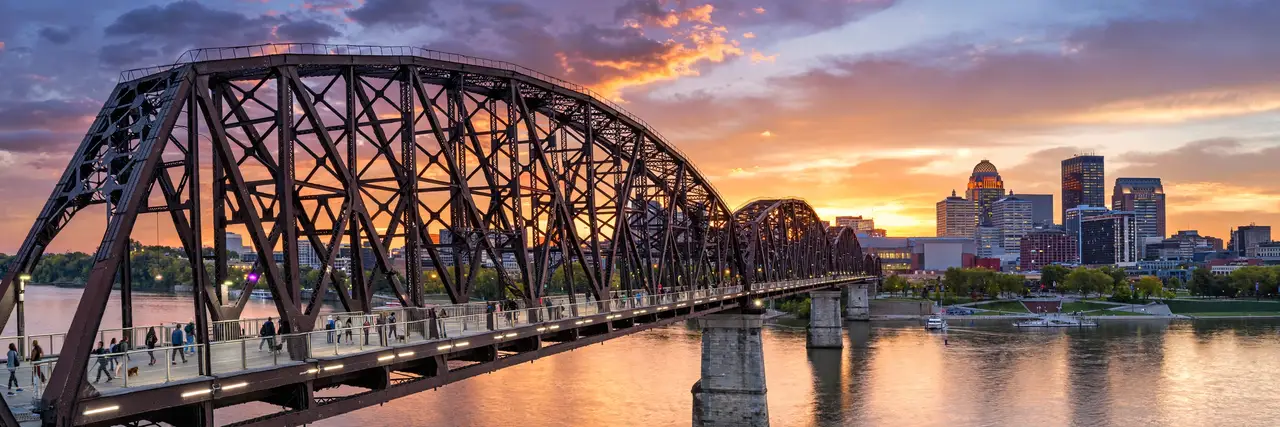
The Big Four Bridge is Louisville’s signature free experience: a former railroad bridge converted into a pedestrian and cycling crossing over the Ohio River, connecting Waterfront Park to Jeffersonville, Indiana. Walking it means strolling a half-mile over the water with the Louisville skyline behind you and the river rolling beneath — and crossing a state line on foot for free.
The bridge is lit at night with a programmable LED display, making evening crossings particularly spectacular. The views in both directions — downtown Louisville’s skyline, the river’s broad sweep, the Indiana shore’s parks — are the best free panorama in the city. Cyclists, walkers, and joggers share the wide deck.
Combine with Waterfront Park on the Kentucky side and the Falls of the Ohio on the Indiana side for a full free river day. The bridge is open daily; allow 45 minutes to an hour for the round trip, longer if you linger for photos.
2. Louisville Waterfront Park — Downtown Riverfront
Louisville Waterfront Park is 85 acres of free riverfront green space — lawns, gardens, playgrounds, and festival grounds stretching along the Ohio. It is the city’s front yard: the great lawn hosts free concerts and events through the warmer months, and on any sunny day the park fills with picnickers, frisbee games, and skyline-gazers.
The park’s design frames the river and the bridges beautifully, with the Big Four Bridge as its centerpiece. The children’s play areas are excellent, the walking paths are flat and accessible, and the sunset views over the water are genuinely lovely. Free events — from movie nights to cultural festivals — run through the season.
Visit in the evening for the golden light on the river and the lit bridge. The park is at its best from spring through fall; check the events calendar for free concerts. Combine with the Big Four Bridge walk for the essential free Louisville outing.
3. Cherokee Park — Highlands
Cherokee Park is Frederick Law Olmsted’s Louisville masterpiece — 409 acres of free parkland designed by the father of American landscape architecture, and one of the finest urban parks in the country. The park’s scenic loop, wooded hills, open meadows, and the beloved Hogan’s Fountain area make it the Highlands’ green heart.
The 2.4-mile scenic loop is closed to cars on select days, creating a perfect free walking, running, and cycling circuit. The park’s mature forest, wildflower meadows, and creek valleys feel remarkably wild for a city park. Baringer Hill offers one of the best views in Louisville.
Visit on a car-free day for the full experience, or any day for the trails and scenery. The park is spectacular in fall, when the hardwoods turn. Allow one to two hours; the loop alone is worth the trip. For more great green spaces, see our best parks for families roundup.
4. Cave Hill Cemetery — East Louisville
Cave Hill Cemetery is 296 acres of free arboretum, lake, and history — the resting place of Muhammad Ali, Colonel Sanders, and generations of Louisville notables, set among specimen trees and serene water. It is open to the public daily at no charge, and it is one of the most beautiful cemeteries in America.
The cemetery functions as a botanical garden, with labeled trees, flowering plantings, and peaceful lakes. The Ali memorial draws visitors from around the world; the Sanders gravesite is a pilgrimage for fried-chicken faithful. But the real pleasure is the landscape itself — rolling, wooded, and meticulously maintained.
Visit with respect: this is an active cemetery, not a park. Stay on the roads and paths, keep voices low, and check the visitor guidelines. Allow one to two hours for a driving or walking tour of the grounds.
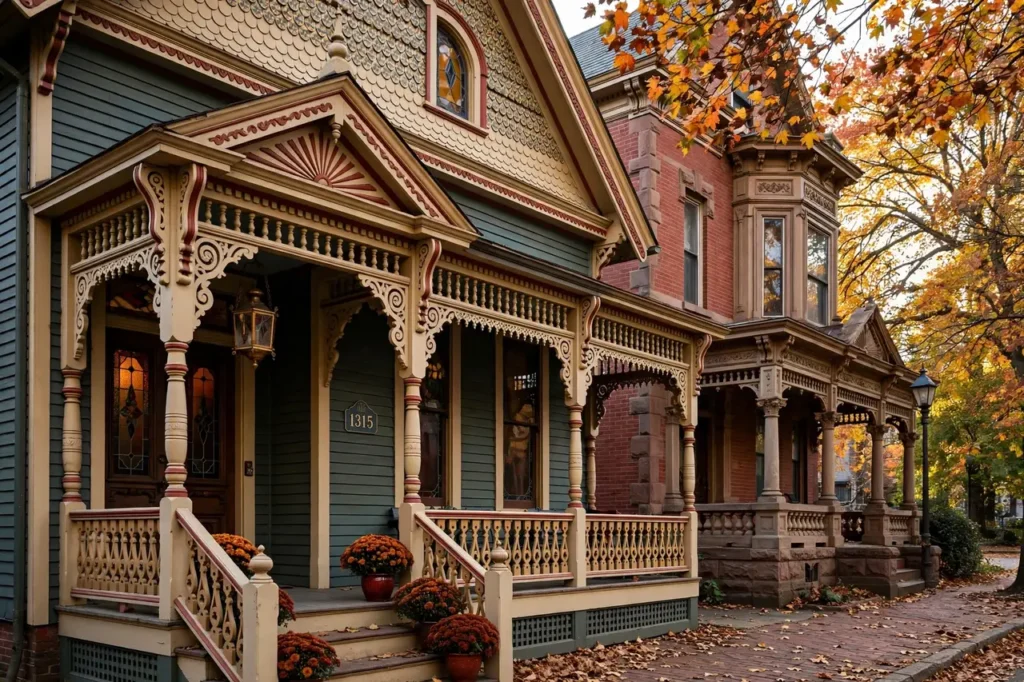
5. Old Louisville Walking Tour — Old Louisville
Old Louisville contains the largest collection of Victorian homes in America — and walking its streets is free. The neighborhood’s St. James Court, Belgravia Court, and surrounding blocks hold hundreds of Richardsonian Romanesque, Queen Anne, and Italianate mansions, many with the original stained glass, turrets, and wrought iron intact.
The self-guided walk is the experience: start at St. James Court’s fountain, wander the gaslit streets, and admire the architectural detail — the gargoyles, the carved stone, the carriage houses. The neighborhood’s scale is intimate and walkable, and every block offers new discoveries. The annual St. James Court Art Show (October, free to attend) is the neighborhood’s showcase weekend.
Central Park, the neighborhood’s Olmsted-designed green, anchors the district and hosts free Shakespeare in the Park performances in summer. Allow one to two hours for the walking tour; architecture lovers will want longer.
6. 21c Museum Hotel Lobby — Downtown
The 21c Museum Hotel’s downtown lobby is a free contemporary art museum hiding in plain sight. The hotel’s public spaces — lobby, corridors, and the Proof restaurant area — display rotating exhibitions of contemporary art, all free and open to the public whether or not you are a guest.
The exhibitions are genuinely ambitious: the 21c collection is one of the most significant contemporary holdings in the region, and the downtown Louisville location shows it off in style. The red penguins — the hotel’s signature sculptural greeters — have become local celebrities. Exhibitions rotate regularly, so repeat visits pay off.
Combine with a downtown walk or a NuLu stroll. The lobby is open daily; allow 30 to 45 minutes. It is the best free indoor art experience in Louisville and a perfect rainy-day stop.
7. Falls of the Ohio State Park — Clarksville, Indiana
Just across the Big Four Bridge in Indiana, the Falls of the Ohio State Park preserves 390-million-year-old fossil beds — one of the largest exposed Devonian fossil beds in the world — and it is free to explore the outdoor areas. When the river is low, the ancient coral beds emerge, and you can walk among fossils older than dinosaurs.
The park’s riverside trails offer the best views back toward the Louisville skyline, and the fossil beds themselves are a genuine wonder — horn corals, brachiopods, and ancient sea life frozen in stone. The interpretive center (paid) is optional; the outdoor fossil experience is the free star.
Check river levels before visiting — the fossil beds are only exposed when the Ohio is low, typically late summer and fall. Combine with the Big Four Bridge walk for a two-state free day. Allow one to two hours.
8. Jefferson Memorial Forest — South Louisville
Jefferson Memorial Forest is the largest municipal urban forest in America — over 6,700 acres of free wilderness on Louisville’s south side, with 35 miles of hiking trails. It is Louisville’s wild heart: ridges, hollows, creeks, and second-growth forest that feels far from the city.
The trail system ranges from easy nature walks to challenging ridge hikes, with the forest’s extensive trail network offering options for every fitness level. The welcome center provides maps and exhibits. Fall foliage here is spectacular; spring wildflowers are nearly as good.
This is real hiking — wear proper footwear, carry water, and allow two to four hours for the longer trails. The forest is a carry-in, carry-out facility. For a wilder free experience within city limits, nothing in Louisville compares.
9. NuLu District Stroll — East Downtown
NuLu — New Louisville — is the city’s revitalized East Market Street corridor, and strolling it is free. The district’s galleries, boutiques, murals, and historic storefronts make it Louisville’s most walkable shopping-and-art outing, with a distinctly local character.
The district’s public art — murals, sculptures, and installations — rewards a camera-carrying wander. Galleries are generally free to browse, and the street’s energy peaks on weekend afternoons. The architecture, a mix of restored industrial and Victorian commercial, tells the story of the district’s rebirth.
Combine with the 21c lobby and a downtown walk. The district is compact; 45 minutes to an hour covers it, though the shops invite lingering. It is at its best in the late afternoon, when the light hits the murals.
10. Iroquois Park — South Louisville
Iroquois Park is Olmsted’s other Louisville masterpiece — 725 acres of free parkland on a wooded knob with one of the best views in the city. The park’s summit overlook frames downtown Louisville against the Ohio River valley, and the winding park road makes it accessible to all.
The park offers hiking trails through mature forest, open meadows, and the scenic overlook that locals consider the city’s best free viewpoint. The amphitheater hosts free summer concerts. Like Cherokee Park, Iroquois reflects Olmsted’s genius for creating naturalistic landscapes within the city.
Drive or hike to the summit for the view — it is worth it at any hour, but sunset is transcendent. The park is spectacular in fall. Allow one to two hours; combine with Jefferson Memorial Forest for a south-side free day.

11. The Parklands of Floyds Fork — East Louisville
The Parklands of Floyds Fork is one of America’s most ambitious new park projects — nearly 4,000 acres of free parkland along Floyds Fork in eastern Louisville, with trails, playgrounds, and natural areas. It is free, it is vast, and it is still growing.
The park’s four sections offer different experiences: from the active playgrounds and spraygrounds of one area to the quiet bottomland trails of another. The paved Louisville Loop trail connects sections for cyclists and walkers. The park’s scale means solitude is easy even on busy weekends.
This is the best free family park in Louisville — the playgrounds are destination-quality, and the trails suit all ages. Allow two to three hours; the park’s size rewards a full visit. Check the events calendar for free programming.
12. E.P. “Tom” Sawyer State Park — East Louisville
E.P. “Tom” Sawyer State Park is 554 acres of free state parkland in eastern Louisville — unusual in that Kentucky’s state parks typically charge, but day use here is free. The park offers trails, sports facilities, an archery range, and open meadows.
The park’s trails wind through woods and fields, and its facilities include some of the city’s best sports infrastructure. The badminton center hosts events; the trails are quiet and well-maintained. It is a local favorite that visitors rarely discover.
Combine with the Parklands for an east-side free day. The park is at its best in spring and fall. Allow one to two hours for the trails.
13. Blackacre State Nature Preserve — East Louisville
Blackacre State Nature Preserve protects 271 acres of free fields, forest, and farmland in eastern Louisville — including a historic homestead with 18th-century buildings. The preserve’s trails wind through meadows and woods, past the old farmstead that anchors its history.
The preserve offers a quieter, more intimate nature experience than the city’s bigger parks. The homestead buildings — a stone house, barns, and outbuildings — tell the story of Kentucky settlement. Trails are easy and well-marked, suitable for families.
Visit in spring for wildflowers or fall for foliage. The preserve is rarely crowded, making it one of Louisville’s best-kept free secrets. Allow one to two hours.
Free Things to Do in Louisville: At-a-Glance Comparison
| Activity | Type | Best For | Good to Know |
|---|---|---|---|
| Big Four Bridge | Pedestrian bridge | Views, sunsets | Crosses to Indiana; lit at night |
| Waterfront Park | Riverfront park | Picnics, events | 85 acres; free concerts |
| Cherokee Park | Olmsted park | Walking, cycling | 409 acres; car-free days |
| Cave Hill Cemetery | Cemetery/arboretum | History, nature | Ali, Sanders gravesites |
| Old Louisville | Historic district | Architecture | Largest Victorian collection |
| 21c Museum Hotel | Art (lobby) | Art lovers | Free; rotating shows |
| Falls of the Ohio | Fossil beds | Geology, views | Best at low river |
| Jefferson Memorial Forest | Wilderness | Hikers | 6,700 acres; 35 mi trails |
| NuLu stroll | Arts district | Shopping, murals | Galleries free to browse |
| Iroquois Park | Olmsted park | Views, sunsets | 725 acres; summit overlook |
| The Parklands | Park system | Families | 4,000 acres; playgrounds |
| Tom Sawyer Park | State park | Trails, sports | Day use free |
| Blackacre Preserve | Nature preserve | Quiet walks | Historic homestead |
How to Do Louisville for Free: Budget Tips
Louisville’s free experiences cluster along the river (Big Four Bridge, Waterfront Park, Falls of the Ohio) and in the Olmsted parks (Cherokee, Iroquois). Plan one river day and one parks day, and you will cover the essentials with minimal driving. The downtown cluster — 21c, NuLu, Old Louisville — makes a third free day on foot.
The parks are the picnic capital of free Louisville. Cherokee Park’s meadows, Waterfront Park’s lawn, and Iroquois Park’s summit all invite a blanket and a takeout spread. Louisville’s local delis and the farmers markets make picnic assembly easy and delicious.
Time the river right. The Big Four Bridge and the Falls of the Ohio are best in the late afternoon — golden light on the water, the bridge lighting up at dusk. The fossil beds need low river levels, typically late summer and fall; check conditions before making the trip.
Finally, remember that Louisville’s greatest free asset is its Olmsted legacy. Two of America’s finest Olmsted parks are free and open daily — a claim few cities can make. Walk them slowly; they were designed for exactly that. Our free museums guide covers more no-cost culture for the region.
Best Free Things to Do in Louisville for Every Occasion
Best free date idea
Sunset walk across the Big Four Bridge, then dinner in NuLu — the bridge at dusk is one of the most romantic free experiences in Kentucky. For a daytime date, the Old Louisville walking tour followed by Central Park is equally charming.
Best free family outing
The Parklands’ playgrounds plus Waterfront Park’s lawn make a full free family day. Add the 21c lobby’s red penguins for the “wow” factor that kids remember.
Best free solo adventure
Jefferson Memorial Forest’s ridge trails are perfect solo hiking — challenging, quiet, and close to town. Follow with Cave Hill Cemetery’s contemplative grounds for a full day of reflection.
Best free photo spots
The Big Four Bridge at night, Iroquois Park’s summit overlook at sunset, the Falls of the Ohio fossil beds at low water, and St. James Court’s Victorian streetscapes. Four iconic shots, zero dollars.
Best free rainy-day option
The 21c Museum Hotel lobby’s rotating exhibitions are the best free indoor option. Or drive the Olmsted park roads — Cherokee and Iroquois are beautiful in the rain from the warmth of your car.
Free Louisville Through the Seasons: Your $0 Year
Spring and fall: the golden seasons
Spring brings the Derby Festival’s free events — the marathon’s sidelines, the steamboat race’s river views, the Pegasus Parade’s free stretches — plus the parks at their greenest. Fall delivers the foliage, the perfect walking weather, and the harvest markets. These are Louisville’s finest free months, when the whole city seems designed for $0 outings.
Summer and winter: water and lights
Summer means the Waterfront Park’s splash areas, the Big Four Bridge at golden hour, and the free outdoor concerts. Winter brings the holiday lights, the quiet museums, and the cozy cafe culture (the browsing is free). Louisville’s free experiences genuinely span the calendar — every season has its $0 signature.
One Perfect Free Weekend in Louisville
Two days, zero dollars, the best of Derby City. This itinerary strings the free highlights into a weekend that flows — river to parks to neighborhoods, with no admission fee anywhere.
Saturday: the river and the city
Start on the Big Four Bridge — walk the span at mid-morning, when the Ohio sparkles and the Louisville skyline frames the shot. Descend into Waterfront Park for the fountains and the great lawn, then cross into NuLu for gallery browsing and the district’s creative energy. Spend the afternoon walking Old Louisville’s Victorian streets — the largest Victorian neighborhood in America, free to wander — and finish at the 21c Museum Hotel lobby, where the rotating contemporary art is always free. Dinner in NuLu or the Highlands (the eating costs; the evening stroll doesn’t).
Sunday: parks and the falls
Devote Sunday to Louisville’s legendary park system. Start at Cherokee Park — the scenic loop, the Big Rock, the Olmsted design — then pay respects at Cave Hill Cemetery’s garden grounds and famous residents. After lunch, cross to the Falls of the Ohio for the fossil beds and the river views, one of the region’s great free natural wonders. If time allows, the Parklands of Floyds Fork offers a final golden-hour walk. Two days, the river to the fossils, and not a dollar spent.
Watch: Exploring Louisville, Kentucky: The Best FREE Things to Do!
Want the video tour? This guide walks through Louisville’s best free experiences, including several highlights from this list:
Frequently Asked Questions About Free Things to Do in Louisville
Is the Big Four Bridge free?
Yes — walking or cycling the Big Four Bridge is completely free. The bridge connects Louisville’s Waterfront Park to Jeffersonville, Indiana, and is open daily. It is lit at night and offers the best free views in the city. Allow 45 minutes to an hour for the round trip.
What is free to do in Louisville with kids?
Plenty: Waterfront Park’s playgrounds and lawn, the Parklands’ destination playgrounds, Cherokee Park’s trails, the 21c lobby’s art (kids love the penguins), and the Falls of the Ohio fossil beds. Louisville is one of the most kid-friendly free cities in the region.
When is the best time to visit Louisville?
Spring (April-May) for Derby season energy and blooming parks, fall (October) for foliage in the Olmsted parks. Summer brings free concerts and events; winter is quiet, with the free indoor options (21c, libraries) at their most peaceful. For wider free-travel tactics, see our free things to do while traveling guide.
Can you visit Churchill Downs for free?
The track’s grounds are ticketed on race days, but the Kentucky Derby Museum area and the track’s exterior can be viewed from surrounding streets. For the free horse experience, the city’s parks and the scenic drives through horse country deliver — though Louisville’s free strength is its river and parks rather than its horses.
Is downtown Louisville walkable?
The riverfront (Waterfront Park, Big Four Bridge), downtown (21c), and NuLu form a walkable cluster. Old Louisville is walkable within itself. The Olmsted parks and Jefferson Memorial Forest require a car or bike. One walking day plus one driving day covers the essential free experiences.
Are there free bourbon experiences in Louisville?
Distillery tours are paid, but the Urban Bourbon Trail’s streetscapes, the historic distillery architecture, and the bourbon culture visible in NuLu and downtown are free to absorb. The free side of Louisville is its river, parks, and architecture — bourbon is the paid complement, not the main event.
One Perfect Free Day in Louisville
Morning: Start at Cherokee Park for the scenic loop as the city wakes — walk or bike the car-free circuit, then drive to Cave Hill Cemetery for the arboretum grounds and the historic gravesites.
Afternoon: Old Louisville walking tour through St. James Court and the Victorian streets, then the 21c Museum Hotel lobby for free contemporary art and the famous penguins. Picnic lunch in Central Park.
Evening: Waterfront Park as the light turns golden, then walk the Big Four Bridge at sunset — crossing into Indiana as the bridge lights up and the Louisville skyline glows. The definitive free Derby City day.
The Bottom Line
Louisville is a city that gives its best away: the river, the Olmsted parks, the Victorian streets, the bridge to another state. The free things to do here are not the consolation bracket — they are the main draw, the experiences that locals love and visitors remember.
Walk the bridge, wander the parks, lose yourself in Old Louisville, and leave understanding why Derby City inspires such loyalty. The best of Louisville has always been free.