Diwali Party Ideas 2026: Food, Decor, and Games for Hosting Guests
Hosting a Diwali party is one of the great joys of the festival season — the house glowing with diyas, the table groaning under platters of mithai, old friends catching up over chai while kids dart between rooms with sparklers of the safe, handheld variety. But anyone who has hosted knows the other side too: the 6 p.m. panic when the snacks are not ready, the guests are arriving, and you are still in a bathrobe stringing fairy lights. The difference between a stressful evening and a legendary one is not budget or a bigger house. It is a plan.
This guide is your complete Diwali party playbook for 2026: a week-by-week hosting timeline, seven party themes that actually work in real homes, decor ideas that look expensive and cost very little, a full menu framework (chaat counter, mithai spread, drinks, dinner), games that keep every generation entertained, music and lighting notes, guest etiquette, and the mistakes that even experienced hosts make. Whether you are throwing an intimate dinner for eight or an open-house for forty, you will find a plan here that fits.

A quick note on scale before we begin: the best Diwali parties are not the biggest ones. They are the ones where the host is relaxed enough to actually enjoy the evening. Every recommendation below is designed to be delegable, make-ahead, or store-bought-without-shame. Your job as host is to set the stage and then be present in it — not to perform exhaustion as hospitality.
The Diwali Party Hosting Timeline
Great parties are built in the weeks before, not the day of. Work backward from your party date with this timeline, and the final day becomes assembly, not construction.
Three to four weeks before: lock the foundations
Set the date and time first — Diwali week fills up fast, so send a save-the-date message early, even before the formal invitation. Decide your guest count honestly: a sit-down dinner caps around 10–12 in most homes, while a standing cocktail-and-chaat format comfortably handles 25–40. Choose your theme (see below) because it drives every later decision: menu, dress code, decor, and games. Set a budget and write it down — party costs creep invisibly without one. This is also the moment to order anything that ships: themed decor, diyas in bulk, disposable-but-classy serveware, and any outfit you need tailored.
Two weeks before: menu and logistics
Finalize the menu and decide what you will cook, what you will outsource, and what guests can bring. Book any help now — a cook for the day, a cleaner for the morning after, or a teenager from the neighborhood to manage the drinks counter. Send formal invitations with the essentials: date, time, address, dress code, parking notes, and whether kids are welcome. Plan the room layout: where does the food go, where do people sit, where is the quiet corner for elders, and where can kids be kids? For party-planning structure that works for any celebration, our party planning timeline guide breaks the same backward-planning method into an 8-week checklist you can adapt to Diwali.
One week before: prep week
Deep-clean the party zones (guests see the living room, dining area, entryway, and one bathroom — prioritize ruthlessly). Test every string of fairy lights and charge every LED diya. Make anything freezable: samosa filling, chutneys, cookie dough, and gravy bases all freeze beautifully. Confirm RSVPs with a friendly nudge and finalize the headcount. Buy non-perishables: nuts, dry fruits, disposable serveware, candles, and drinks. Lay out serving dishes and label what goes in each — future-you, mid-party, will be grateful.
Two days before: the cooking sprint
Cook the mithai and namkeen that keep well — laddoo, barfi, chakli, mathri, and shankarpali all hold for days in airtight containers. Prep chaat components separately (tamarind chutney, mint chutney, boiled potatoes, chopped onions) so assembly takes minutes. Set up the decor that does not involve fresh flowers: hang lights, arrange cushions, set the table, build the rangoli base outline.
Party day: assembly mode
Morning: fresh flowers, toran on the door, rangoli colors, and the entryway setup. Afternoon: cook fresh items (pakoras, tikkis, and anything fried go last), set up the drinks station, lay out the buffet with labels. Two hours before: shower, dress, light the diyas, start the music, and pour yourself something cold. One hour before: final walkthrough with fresh eyes — bathroom stocked, entryway lit, first snacks out. When the doorbell rings, you should be a guest at your own party.
7 Diwali Party Themes That Actually Work
1. Classic Royal Diwali
Deep jewel tones — maroon, emerald, royal blue, gold — with brass diyas, brocade table runners, and a formal sit-down dinner. Dress code: ethnic formal. This theme suits smaller guest lists (8–16) and hosts who love a structured, elegant evening. Menu: multi-course North Indian dinner with a proper mithai platter. Music: classical and ghazal playlists early, Bollywood classics later.
2. Modern Minimalist Glow
All-white and gold palette, clean lines, LED candles in glass hurricanes, a single dramatic floral installation. Dress code: contemporary festive (pastels, metallics, indo-western). Perfect for apartments and design-conscious crowds. Menu: modern Indian small plates — paneer tikka sliders, dahi kebab bites, mini kulhads of phirni. This theme photographs beautifully, which your guests will appreciate.
3. Bollywood Retro Night
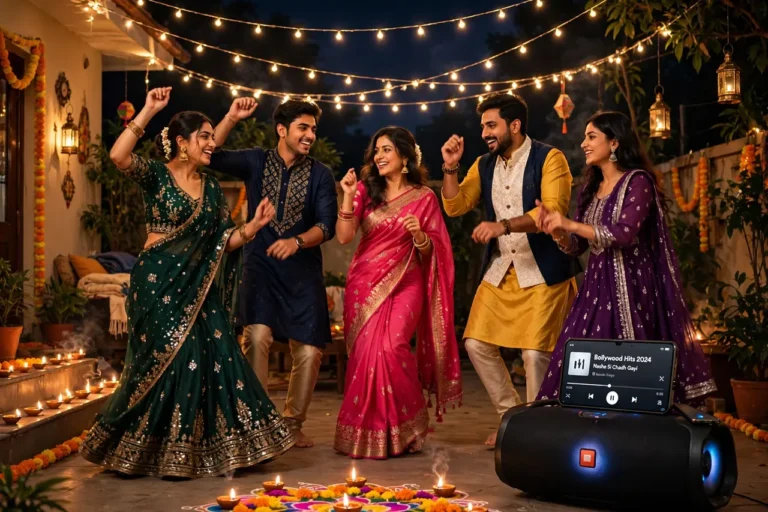
Guests come as their favorite Bollywood character or era, the playlist is wall-to-wall filmy hits, and the decor goes maximalist — think disco balls next to diyas. Games lean into the theme: dumb charades with movie titles, antakshari, a dance-off judged by the elders (who always win). Menu: street-food style — chaat counter, pav bhaji, gola stall. High energy, huge fun, and the photos are priceless.
4. Regional Spotlight: A Taste of [Your State]
Build the entire party around one region’s Diwali traditions — a Bengali Kali Puja evening with mishti and dhunuchi dance, a Gujarati celebration with fafda-jalebi and garba, a South Indian Deepavali with filter coffee and murukku. This theme is deeply personal, wonderfully educational for mixed-culture guest lists, and gives the menu an authentic backbone instead of generic “Indian food.”
5. Diwali Brunch Party
Who says Diwali parties must be at night? A late-morning celebration with a lavish brunch — masala dosa station, poha, jalebi-rabri, cutting chai — catches guests when energy is high and ends before anyone is exhausted. Decor in daylight: fresh flowers, colorful rangoli, sheer curtains. Ideal for families with young kids and elders who prefer not to drive at night.
6. Kids’ Diwali Carnival
Diya painting, rangoli competitions, a treasure hunt with diya-shaped clues, tattoo stickers, and a supervised sparkler moment — a party designed around children, where adults get to be kids too. Keep food simple and kid-friendly (mini pizzas with paneer tikka, fries chaat, cupcakes with diya toppers). Schedule it for late afternoon so little ones are home by bedtime.

7. Open-House Drop-In
The lowest-stress format: a 4–5 hour window (say 3–8 p.m.) during which guests drift in and out. No seating plan, no courses — just a generous grazing table, a self-serve chai and drinks counter, and the house looking beautiful. Perfect for large, mixed guest lists where a formal dinner is impractical. The key is food that holds at room temperature for hours: mithai, namkeen, fruit chaat, and sturdy snacks.
Diwali Party Decor: High Impact, Low Effort
The entryway: first impressions
Your entryway sets the entire tone, so concentrate decor firepower here. A fresh marigold toran on the door, a vibrant rangoli (or a beautiful ready-made rangoli mat if time is short), a row of lit diyas along the steps, and a small welcome sign or chalkboard with “Shubh Deepavali.” Five elements, ten minutes of guest attention, and the party feels special before anyone crosses the threshold.
Lighting: the real decoration
At a Diwali party, light IS the decor. Dim the overheads and let warm light sources do the work: clusters of diyas on every surface, fairy lights draped over curtains and bookshelves, LED candles inside glass hurricanes on the dining table, and a few statement pieces like a large brass urli with floating flowers and candles. Warm-white light (2700K) flatters everyone and everything; avoid cool blue-white tones that make food and faces look harsh. One safety note: with crowds and kids, lean on LED diyas in high-traffic areas and reserve real flames for supervised, out-of-reach spots.
Table styling that looks catered
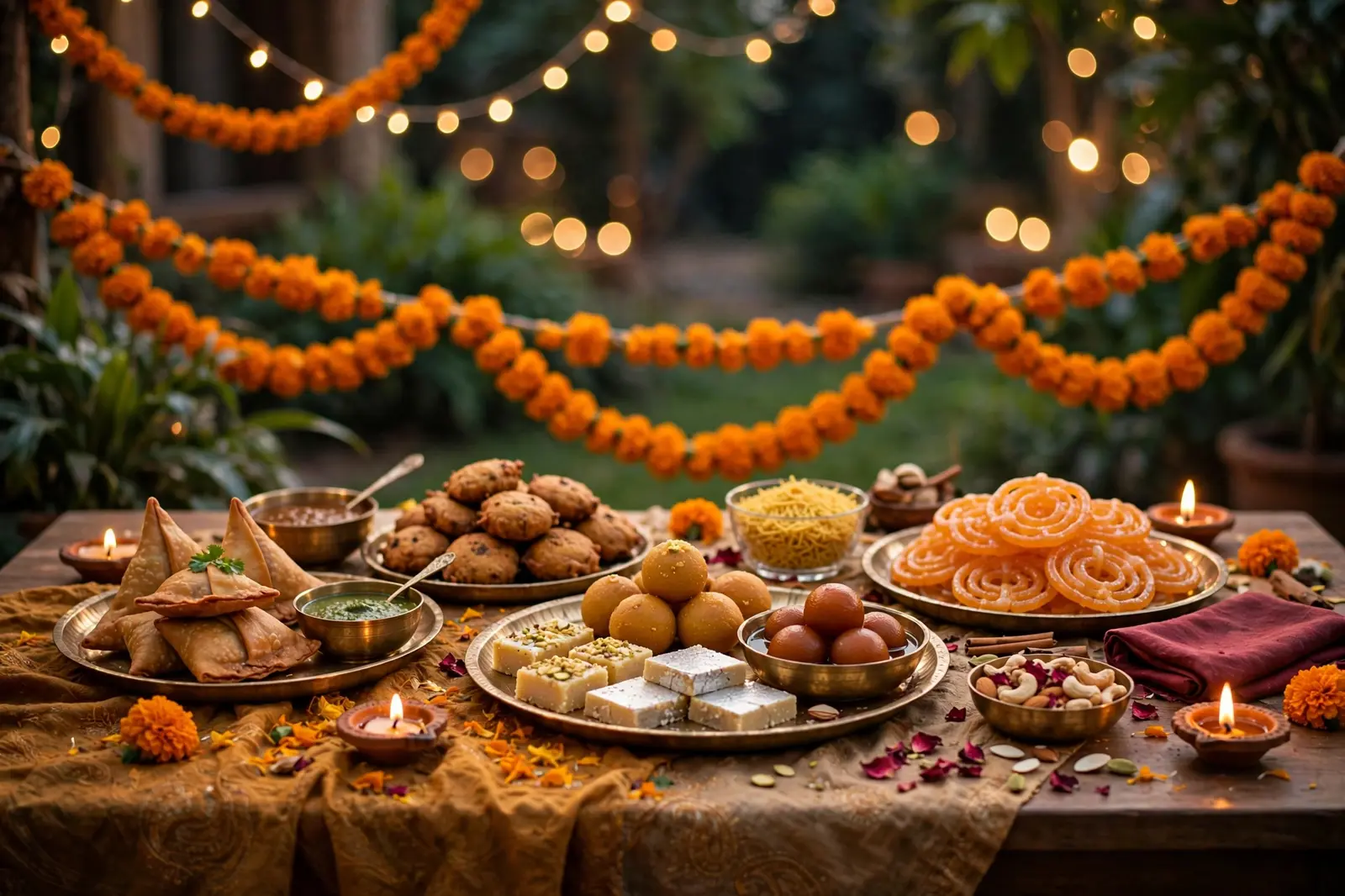
You do not need a stylist — you need a formula. Start with a base: a jewel-toned tablecloth or runner (an old silk saree works beautifully). Add height: cake stands and overturned bowls under platters create levels. Add light: a runner of small diyas or tea lights down the center. Add nature: scattered marigold heads, rose petals, or eucalyptus sprigs. Add labels: small tent cards naming each dish — it looks professional and helps guests with dietary restrictions. Finish with cloth napkins (paper napkins in festive colors are fine) and you have a table that photographs like a magazine spread.
The photo corner
Every Diwali party needs a designated photo spot, or guests will take over your bedroom for selfies. Dedicate one well-lit corner: a backdrop of draped fabric or a flower wall (even faux marigold strings work), a couple of floor cushions, good lighting (a ring light or a bright floor lamp), and a small basket of props — diyas, sparklers for photos, fun signs. Announce it once when guests arrive and it will be busy all evening.
The Diwali Party Menu Framework
The chaat counter (your secret weapon)
A live chaat counter is the single highest-impact food decision you can make. It is interactive, vegetarian-friendly, endlessly customizable, and it keeps guests grazing happily while dinner finishes. Set out: papdi or golgappa shells, boiled potatoes, chickpeas, chopped onions and tomatoes, yogurt, tamarind chutney, mint chutney, sev, pomegranate seeds, and chaat masala. One enthusiastic volunteer (a teenager or a foodie friend) mans the counter, assembling plates to order. Prep everything ahead; assembly takes seconds per plate.
Mains: the crowd-pleasers
For a buffet, you need: one showstopper (paneer butter masala, dal makhani, or a biryani), one dal, two vegetable sides (one dry, one with gravy), breads (order naan fresh or set up a small tawa station for hot rotis), rice or pulao, raita, salad, and papad. For non-vegetarian guests, add one chicken or mutton curry and clearly label everything. Cook for 10% more than your headcount — running out of food is the one unforgivable hosting sin. Label every dish with its name and key info (veg/non-veg, contains nuts, spicy level); it is thoughtful and prevents the same three questions all night.
Mithai and dessert spread
Diwali without a mithai spread is just dinner. Offer 4–6 varieties: two homemade (laddoo and barfi are the classics), two store-bought premium (kaju katli, motichoor laddoo), and one wildcard (rasmalai cups, gulab jamun cheesecake, or chocolate-dipped dry fruits). Arrange them on tiered stands with small labels. Add a cutting-chai or filter-coffee station nearby — hot drinks with sweets is the combination guests remember.
Drinks: festive and fuss-free
Set up a self-serve drinks station so you are not playing bartender all night: a big dispenser of masala shikanji or aam panna, a second of sweet lassi or mango lassi, chilled water with cucumber and mint, and soft drinks on ice. If serving alcohol, two signature cocktails (a saffron-infused gin and tonic, a mango mojito mocktail/cocktail pair) plus wine and beer is plenty — a full bar is unnecessary. Always have equally festive non-alcoholic options; many Diwali guests do not drink, and they should never feel like an afterthought.
Diwali Party Games for Every Generation
Games are what turn a nice dinner into a party people talk about for months. The trick is choosing games that include everyone — the competitive uncle, the shy teenager, the grandmother who claims she is “just watching” (she will end up playing).
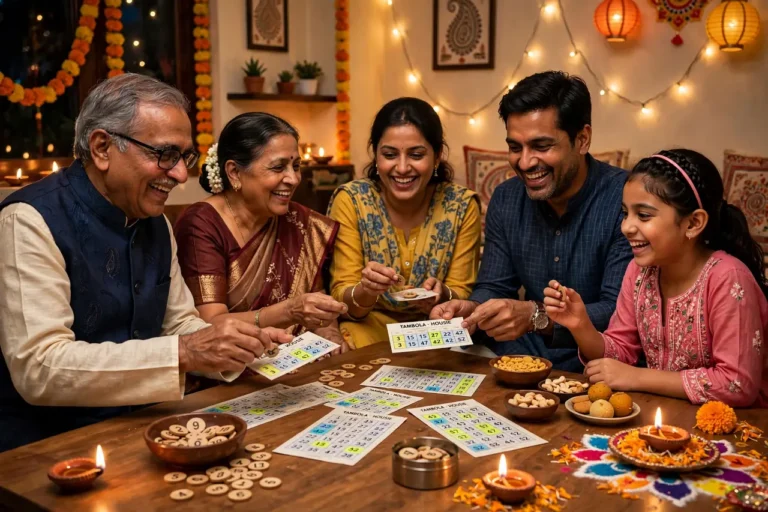
Tambola (Indian bingo). The undisputed king of Diwali party games. Buy or print tambola tickets, appoint a dramatic caller, and offer small prizes for lines, corners, and full house. It needs zero skill, accommodates unlimited players, and generates the loudest cheers of the night. Pro tip: run two quick rounds rather than one long one.
Antakshari. Split the room into two teams and battle it out Bollywood-style. It works across ages because everyone knows some songs, and the team format means shy guests participate without solo pressure. Keep rounds short and the judging loose.
Dumb charades: Diwali edition. Movie titles, Diwali-themed words (diya, rangoli, mithai), or celebrity names — the acting gets gloriously silly after the second round of snacks.
Rangoli competition. Give teams 30 minutes, a bag of colors or petals, and a patch of floor. Judge on creativity, not perfection. This doubles as decor — the winning rangoli becomes the party’s centerpiece.
Diya-painting contest. Set out plain diyas and paints with a 20-minute timer. Guests take their creations home as party favors — decor, activity, and return gift in one.
Card games. A Diwali tradition in many families — teen patti or rummy with low stakes. Keep it friendly, set a clear buy-in limit, and make sure non-players have something equally fun happening nearby.
Treasure hunt for kids. Hide diya-shaped clues around the house leading to a small gift box. It occupies children for a solid 45 minutes, which every parent at the party will thank you for.

Music, Timing, and Flow
Build your playlist in three acts. Act one (arrival, first hour): warm, upbeat, conversational — festive Bollywood, acoustic covers, light classical. Keep the volume low enough for conversation; nothing kills a party faster than shouting over music at 7 p.m. Act two (dinner and games): higher energy, recognizable hits, antakshari-friendly classics. Act three (late evening): dance numbers for the willing, mellow wind-down tracks for the rest. Prepare 4–5 hours of music so it never loops awkwardly, and download it offline — Wi-Fi always fails at the worst moment.
On timing: tell guests a start time 30 minutes before you actually need them (Indian Standard Time is real, even at Diwali). Plan the meal for 60–90 minutes after the stated start. Schedule games between dinner and dessert, when energy dips. And have a soft end time in mind — “the party winds down around 11” in the invitation prevents the awkward 1 a.m. lingering.
Guest Comfort: The Details That Matter
The difference between a good host and a great one lives in small comforts. Keep the entryway well-lit and the house number visible — guests arriving in the dark should not have to guess. Have a designated spot for shoes with a small bench or chair (elderly guests will bless you). Stock the guest bathroom like a hotel: fresh towels, soap, a candle, and an empty bin. Keep a phone-charging corner with a couple of multi-cables. If kids are invited, set up one room or corner with coloring books, cushions, and a screen with a movie queued — contained kids mean relaxed parents. And always, always ask about dietary restrictions in the invitation; a guest who cannot eat anything at your Diwali party will remember it longer than the decor.
The Complete Diwali Party Checklist
| When | Task | Status Check |
|---|---|---|
| 4 weeks out | Date, guest list, theme, budget set | Save-the-dates sent |
| 3 weeks out | Order decor, diyas, serveware; plan outfits | Deliveries confirmed |
| 2 weeks out | Menu finalized; help booked; invitations sent | RSVP deadline set |
| 1 week out | Deep clean party zones; test lights; freeze-ahead cooking | Headcount confirmed |
| 2 days out | Mithai + namkeen cooked; non-floral decor up | Chutneys and prep done |
| Morning of | Flowers, toran, rangoli; entryway ready | House photo-ready |
| Afternoon | Fresh cooking; buffet labeled; drinks station set | Food tasting done |
| 2 hours before | Diyas lit; music on; host dressed and calm | Walkthrough complete |
| During | Games, photos, food flow; enjoy your own party | Phone on silent, host mode on |
| Next morning | Leftovers packed; thank-you messages sent | Cleaner booked or recovery planned |
Hosting Tips From Serial Diwali Hosts
Cook less than you think, then add one dish. Hosts chronically overcook. A tight menu executed well beats a sprawling one executed frantically. Four excellent dishes outshine eight mediocre ones.
Outsource your weakest link. Hate making mithai? Buy it from the best halwai in town with zero guilt. Bad at decor? Hire a college student for the afternoon. Your energy is the party’s most precious resource — spend it where you shine.
Accept help gracefully. When guests ask “what can I bring,” have an answer ready: a dessert, a bottle, ice, or extra chairs. A specific request beats “oh, just yourselves” every time — people genuinely want to contribute.
Build in host breaks. Step into the kitchen for five quiet minutes mid-party. Refill, breathe, reset. No one notices, and you return recharged instead of frayed.
Photograph early. Take your decor and food photos in the first 30 minutes when everything is pristine. Later, put the phone away and be present — you hired no photographer, so the memories are yours to make, not to document.
Mistakes Even Good Hosts Make
Starting to cook on party day. Anything that can be made ahead should be. Party-day cooking should be limited to fresh frying, reheating, and assembly — if you are chopping onions at 5 p.m., the timeline slipped.
Forgetting the “boring” logistics. Parking, extra seating, trash bins, coat space, and phone chargers are unglamorous and absolutely essential. A guest circling the block for parking arrives already annoyed.
One playlist, one volume, all night. Music needs acts and dynamics. The same high-energy playlist at conversation volume from 7 p.m. to midnight exhausts everyone.
No plan for dietary restrictions. In 2026, every guest list includes vegetarians, vegans, gluten-free eaters, or diabetics. Label dishes, offer real alternatives (not just “the salad”), and ask in advance. For more celebration-planning inspiration across occasions, browse our party ideas for hosting friends — many of the hosting principles transfer directly.
Skipping the thank-you. A quick message the next day — with one shared photo — turns a great party into a lasting memory. It takes two minutes and guests genuinely cherish it. Pair it with a line from our Diwali festival guide if you want to add a meaningful festive touch.
Watch: Easy DIY Diwali Decoration Ideas
Need visual inspiration for your party decor? This video demonstrates three easy DIY Diwali decoration ideas you can make at home — perfect for dressing up your party space on a budget:
Frequently Asked Questions About Hosting a Diwali Party
How far in advance should I invite guests to a Diwali party?
Send save-the-dates 3–4 weeks ahead since Diwali week calendars fill fast, and formal invitations with all details (dress code, timing, parking) 2 weeks before. Ask for RSVPs one week out so you can finalize food quantities. A gentle reminder 2–3 days before the party dramatically reduces no-shows.
How much food should I prepare per guest?
For a buffet dinner, plan roughly 500–600 grams of total food per adult (across all dishes), plus 4–6 pieces of mithai per person. Always cook for about 10% more than your confirmed headcount — running out is far worse than leftovers, and Diwali leftovers are a beloved tradition in themselves.
What is a good Diwali party dress code?
“Festive ethnic” or “ethnic formal” works for most themes — it gives guests clear direction without being restrictive. For modern minimalist themes, “contemporary festive” invites indo-western looks. Always state the dress code explicitly in the invitation; guests would rather be told than guess wrong.
How do I keep kids entertained at a Diwali party?
Dedicate a kids’ zone with diya painting, coloring, and a treasure hunt — structured activities beat hoping they entertain themselves. Schedule the kids’ highlight (like supervised sparklers or the treasure hunt reveal) for early evening before they tire. And feed them first; hungry kids derail parties faster than anything.
What should I do if guests have dietary restrictions?
Ask about restrictions in the invitation itself, label every dish clearly (veg/non-veg, nuts, gluten, spice level), and ensure at least two substantial options for each common restriction — not just side dishes. Keep ingredient lists handy for your main dishes in case of allergy questions.
How do I end the party gracefully?
Signal the wind-down naturally: dim the music, bring out the final chai and mithai boxes as take-home favors, and start your own goodbyes warmly. Mention the end time in the invitation (“join us 6–10 p.m.”) so no one feels rushed. The take-home mithai box is the perfect closing ritual — guests leave with something sweet, literally.
Conclusion: Host the Party You Want to Attend
The secret of great Diwali hosting is embarrassingly simple: plan early, keep the menu tight, light everything, and then actually enjoy your own party. Guests do not remember whether the barfi was homemade or from the halwai — they remember whether the host was laughing with them or stress-cooking in the kitchen. They remember the tambola round that had everyone shouting, the chaat counter with the perfect imli chutney, the doorway glowing with diyas as they arrived.
So pick your theme, work the timeline backward, delegate without guilt, and when the doorbell rings on party night, take one breath and open the door with a real smile. The diyas are lit, the music is on, the mithai is out — everything else is just details. Shubh Deepavali, and happy hosting.