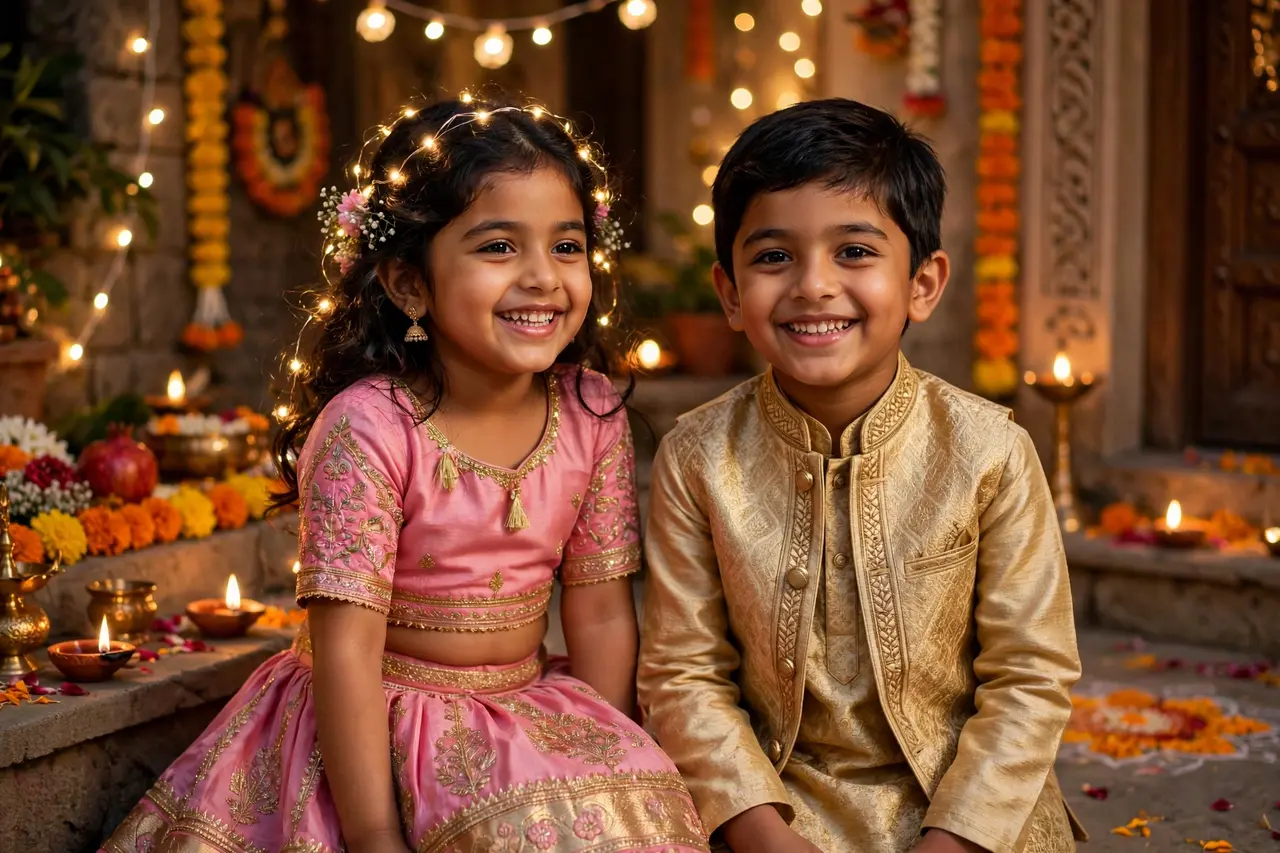
There is nothing quite like a child dressed up for Diwali. The tiny kurta, the miniature lehenga that twirls, the serious concentration on a little face lighting a diya, these are the images that end up framed on mantels and forwarded in family groups for years. But any parent who has dressed a small human for a festival knows the truth behind those perfect photos: kids are wriggly, they spill mithai, they grow out of everything in six months, and comfort matters more than couture.
This guide to diwali outfit ideas for kids is written by parents, for parents. It covers adorable, practical festive outfits for babies, toddlers, and older kids, boys and girls alike, with honest advice on fabrics that do not itch, closures that survive bathroom breaks, price points that respect how fast children grow, and styling tricks that keep them looking picture-perfect from the puja to the last sparkler. Because the best-dressed kid at Diwali is the comfortable one who is still smiling at 9 PM.
We will walk through outfit ideas by age group, special sections for girls and boys, twin and sibling matching looks, safety considerations around diyas and fireworks, and a realistic shopping timeline so you are not panic-buying the night before. Let us dress the little ones.
What Makes a Great Kids’ Diwali Outfit
Adult festive fashion is about looking impressive. Kids’ festive fashion is about surviving the day while looking adorable. The hierarchy of needs is different, and smart parents shop accordingly.
The Five Rules of Dressing Kids for Diwali
- Comfort is non-negotiable. If it itches, pinches, or restricts movement, the child will cry, and no photo is worth that. Soft cotton linings under embroidered fabrics are essential.
- Easy on, easy off. Toddlers need frequent bathroom breaks and diaper changes. Front buttons, back zips, and elastic waists beat complicated drapes every time.
- Buy for growth, not for the moment. A slightly roomy kurta with rolled sleeves looks charmingly oversized; a tight one is unwearable by next month. Kids grow fast, plan for it.
- Stain strategy. Diwali involves oil, sweets, rangoli colors, and marigold pollen. Choose colors and fabrics that forgive, and keep a backup outfit in the car.
- Safety around fire. Diyas and sparklers are everywhere. Avoid long, flowing dupattas and loose sleeves near open flames, and choose natural fabrics over synthetics, which melt rather than burn.
“Dress the child for the celebration they will actually have, running, eating, hugging, and playing, not the still photograph you are imagining.”
Diwali Outfit Ideas for Baby Girls (0 to 2 Years)
Babies need softness above all. At this age, the outfit is mostly for photos and the puja, so prioritize gentle fabrics and minimal fuss.
- The soft cotton lehenga set. A lightweight cotton lehenga with an elastic waist and a simple printed top. No heavy embroidery, no stiff cancan, just soft twirl-able fabric.
- The anarkali-style frock. A flowy anarkali-cut dress in festive colors with a soft cotton lining. Easy to slip on, adorable in motion.
- The kurta pajama onesie. For the youngest babies, a kurta-printed onesie gives the festive look with zero discomfort. Perfect for the puja.
- The tiny saree drape. Pre-stitched baby sarees in soft georgette are made for photos. Keep wearing time short, twenty minutes of pictures, then back to comfort.
- The dhoti-style diaper cover set. A kurta top with a dhoti-style bottom that accommodates a diaper. Practical and precious.
- The bandhani print dress. Traditional tie-dye prints in bright colors, soft cotton, festive without any embellishment to irritate skin.
Diwali Outfit Ideas for Toddler Girls (2 to 5 Years)
Toddlers are mobile, opinionated, and messy. Dress them for movement and let the twirl factor do the talking.
- The twirl-approved lehenga choli. A lehenga with a full, light skirt that spins. This is the number one request from little girls, and it photographs like a dream.
- The sharara set. Wide-legged sharara pants with a short kurti. Comfortable for sitting cross-legged during the puja and stylish enough for parties.
- The palazzo and crop top set. A festive crop top with palazzo pants in matching prints. Modern, comfortable, and easy to move in.
- The ethnic gown. A floor-length gown with Indian embroidery or prints. For the little girl who wants to feel like a princess, with none of the saree hassle.
- The kurti with leggings. A bright embroidered kurti over soft leggings. The everyday-friendly festive option for long days of visiting.
- The jacket lehenga. A simple lehenga paired with a little embroidered jacket. The jacket adds formality and can be removed when she gets warm.
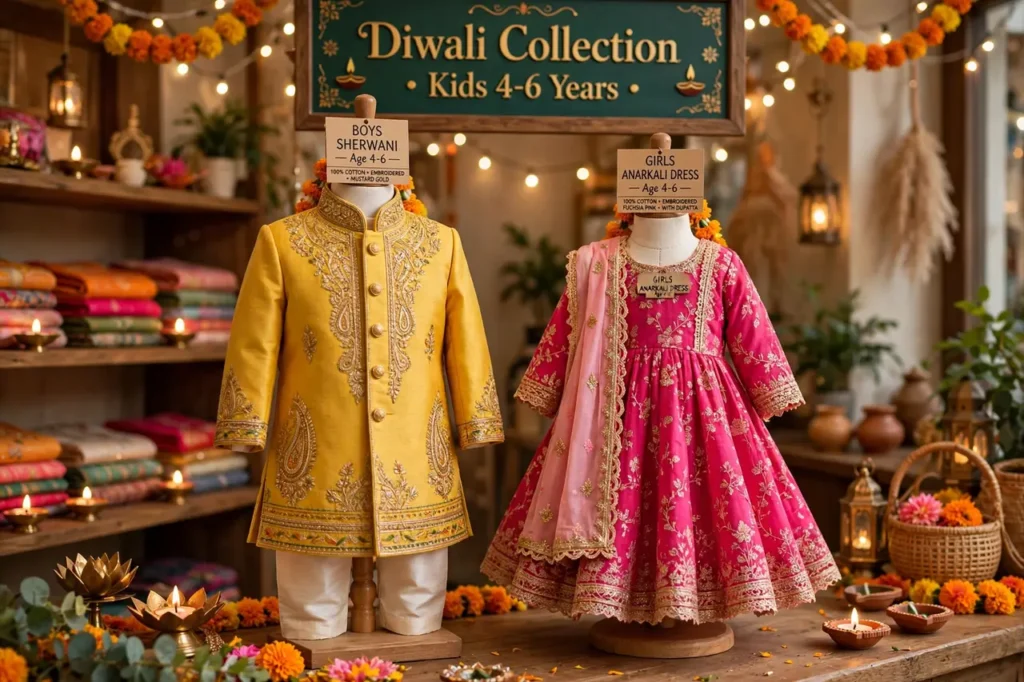
” alt=”Children’s ethnic Diwali outfits including a miniature sherwani and anarkali dress”>
Diwali Outfit Ideas for Older Girls (6 to 12 Years)
Older girls have opinions, and involving them in the choice prevents morning-of meltdowns. These picks balance their growing style sense with festive tradition.
- The classic lehenga choli with dupatta. By this age she can manage a lightweight dupatta, and the full traditional look is stunning for Diwali night.
- The anarkali suit. The flowing silhouette is elegant and age-appropriate, and it moves beautifully in photos.
- The indo-western dhoti set. Dhoti pants with a crop top and shrug. Fashion-forward and comfortable for active kids.
- The pre-draped saree. Modern pre-stitched sarees for kids are easy to wear and look incredibly festive. A great Bhai Dooj option.
- The ethnic jumpsuit. A jumpsuit with Indian prints or embroidery. Cool, comfortable, and completely playground-proof.
- The long shrug over a simple dress. An embroidered long shrug transforms a plain dress into a festive outfit, and layers handle temperature changes.
Diwali Outfit Ideas for Baby Boys (0 to 2 Years)
Little boys need the same softness-first approach, with outfits designed around diapers and naps.
- The soft kurta pajama set. Fine cotton kurta with a drawstring pajama. The essential baby boy festive outfit.
- The dhoti kurta with elastic dhoti. A dhoti-style bottom with an elastic waist over a diaper, paired with a soft kurta top.
- The Nehru jacket onesie set. A kurta onesie with a tiny Nehru-style vest. Maximum cuteness, zero fuss.
- The pathani-style romper. A romper cut like a pathani suit. Festive shape, baby practicality.
Diwali Outfit Ideas for Toddler Boys (2 to 5 Years)
- The classic kurta pajama. A bright kurta in silk-blend or cotton with a comfortable pajama. The workhorse of boys’ festive wear.
- The kurta with Nehru jacket. A mini Nehru jacket over a plain kurta makes any toddler look like the guest of honor.
- The dhoti kurta set. A traditional dhoti kurta in festive colors. Charming, cultural, and great for puja photos.
- The pathani suit. The collared pathani in a rich color is handsome and slightly more structured than a kurta.
- The bandhgala-style jacket set. A little bandhgala jacket over kurta pajama for the main Diwali night. He will look like a tiny prince.
- The kurta with jeans. A festive kurta over dark jeans for casual daytime events. Comfortable for a full day of running around.
Diwali Outfit Ideas for Older Boys (6 to 12 Years)
- The silk kurta pajama. By this age, he can handle richer fabrics. A silk-blend kurta in a jewel tone is the classic Diwali night pick.
- The sherwani-style set. A knee-length sherwani-style kurta with churidar for the main celebration. Regal and memorable.
- The indo-western asymmetric kurta. Asymmetric hemlines and modern cuts appeal to style-conscious older boys.
- The bandhgala suit. A full bandhgala in a festive color for grand family events. He will remember wearing it.
- The kurta with waistcoat. A festive waistcoat over a plain kurta, sleeves rolled up. Relaxed, cool, and party-ready.
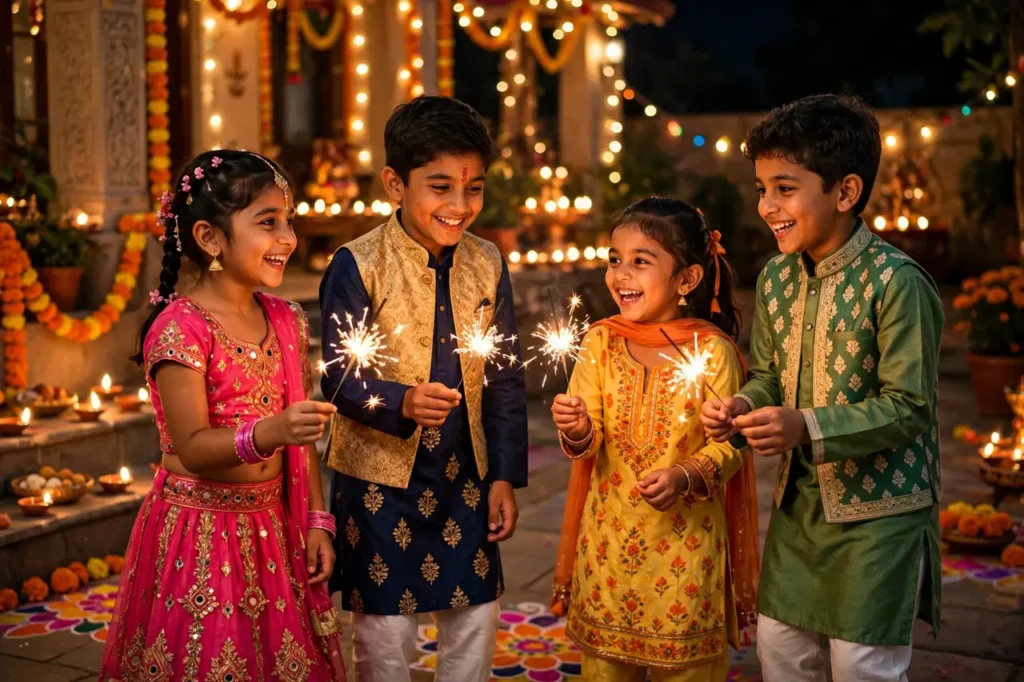
” alt=”Happy children in traditional festive clothes holding sparklers on Diwali night”>
Sibling and Family Matching Looks
Coordinated family outfits make for unforgettable Diwali photos, and kids love matching their siblings. The key is coordination, not identical uniforms, which can look costume-y.
- Color-family matching: everyone in different shades of the same color, like maroon, rust, and blush pink. Cohesive but individual.
- Brother-sister pairs: matching embroidery motifs or prints in different silhouettes, her lehenga and his kurta in the same fabric.
- Father-son twinning: miniature versions of dad’s kurta or Nehru jacket. The photos are irresistible.
- Mother-daughter sets: same print, her saree and her lehenga. A classic for a reason.
- The full family palette: pick three coordinating colors and let each person choose their favorite. The group photo looks styled without being stiff.
For the grown-ups’ side of the matching equation, our guide to wedding day morning photo ideas has posing and coordination tips that work beautifully for Diwali family portraits too.
Fabrics That Kids Actually Tolerate
| Fabric | Comfort Level | Festive Look | Best For |
|---|---|---|---|
| Fine cotton | Excellent | Good with prints | Daytime events, toddlers |
| Cotton-silk blend | Very good | Excellent sheen | Evening puja, photos |
| Georgette (lined) | Good | Flowy, elegant | Girls’ lehengas, gowns |
| Raw silk | Moderate | Rich texture | Older kids, short wear |
| Velvet | Moderate | Luxurious | Jackets, winter Diwalis |
| Net (with lining) | Poor if unlined | Pretty overlay | Only with full soft lining |
The golden rule: if you can feel embroidery, sequins, or netting against your own inner wrist and it bothers you, it will bother your child ten times more. Always check that embellished fabrics have a soft cotton lining between the decoration and the skin.
Safety First: Diwali Night Essentials
Diwali’s beauty comes with real hazards for small children, and outfits play a part in safety planning.
- Keep hemlines away from flames. Long lehengas and flowing dupattas should be pinned up or removed when diyas are being lit.
- Choose natural fibers near fire. Cotton and silk singe; synthetics melt onto skin. This alone is worth remembering.
- Footwear matters. Bare feet near diyas risk burns from hot oil or knocked-over lamps. Soft juttis or closed sandals protect little feet.
- Supervise sparklers closely. Sparklers burn extremely hot. An adult should hold the sparkler with the child, never hand it over unsupervised.
- Have a change of clothes ready. Between sweets, colors, and excitement, a backup outfit is not pessimism, it is parenting.
Shopping Smart: Budget and Timing
Kids outgrow festive wear at terrifying speed, so spending strategy matters more here than in any other category.
- Shop early. Start looking four to six weeks before Diwali for the best selection and tailoring time. Last-minute shopping means limited sizes and no alterations.
- Set a per-child budget. A sensible range covers a beautiful outfit without waste, since it will likely be worn a handful of times.
- Buy slightly big. A tailor can take in, but cannot add fabric. Roomy with rolled sleeves beats tight and tearful.
- Check the hand-me-down chain. Festive kids’ clothes are often worn once. Cousins and friends are goldmines.
- Prioritize the main night. Spend the most on the Diwali night outfit; daytime looks can be simpler and more comfortable.
- Think resale and reuse. Quality kids’ ethnic wear resells well. Buy classic colors and styles that the next family will want too.
When the whole family is dressed and the diyas are lit, you will want the story behind the celebration too. Our Diwali festival of lights guide is a lovely read to share with older kids, and our Happy Diwali quotes collection has the perfect captions for all those adorable photos.
Diwali Outfits for Teens (13 to 17 Years)
Teenagers live in the overlap between kids’ festive wear and adult fashion, and they want outfits that feel grown-up without losing the fun. Involve them fully in the choice, because a teen who hates their outfit will radiate it in every photo.
- Teen girls: lehenga cholis in trendy colors, pre-draped sarees, anarkalis with modern necklines, or indo-western co-ord sets with ethnic prints. Pastel and jewel tones both work; let her pick.
- Teen boys: kurta pajamas in sophisticated colors, Nehru jackets, bandhgala-style jackets, or kurta with trousers for a modern edge. Many teen boys prefer the structured look of a jacket over a plain kurta.
- The confidence factor: teens photograph best when they feel good. A well-fitted outfit in a color they chose beats a fancier one imposed on them.
- Footwear freedom: teens can handle juttis, loafers, or embellished sneakers for fusion looks. Comfort still rules for long celebration days.
Dressing Kids for Each Day of Diwali
Five days of celebrations means five opportunities, but also five laundry cycles. Plan the week’s wardrobe like a capsule:
| Day | Girls | Boys | Notes |
|---|---|---|---|
| Dhanteras | Printed cotton kurti with leggings | Cotton kurta pajama | Comfortable for shopping and prep |
| Choti Diwali | Sharara set or palazzo set | Kurta with Nehru jacket | Festive but not the main outfit |
| Diwali night | Best lehenga or anarkali | Best kurta set or sherwani-style | The star outfits, saved for tonight |
| Govardhan Puja | Anarkali frock (repeat-friendly) | Pathani suit | Comfortable for daytime gatherings |
| Bhai Dooj | Ethnic gown or pre-draped saree | Kurta with jeans (fusion) | Relaxed, photogenic, fun |
Repeating an outfit across non-consecutive days with different accessories is completely fine. A change of dupatta, jacket, or jewelry makes the same base look new in photos.
Accessories: The Cute Details That Complete the Look
Accessories are where kids’ Diwali outfits go from nice to unforgettable, and they are also the easiest way to refresh a repeated outfit.
- For girls: small jhumka earrings or studs, colorful bangles sized for little wrists, a maang tikka for older girls, hair adorned with fresh gajra or artificial flower clips, and a tiny embellished clutch for teens.
- For boys: a pocket square in the Nehru jacket, a simple bracelet, a brooch on the jacket placket, and festive mojari-style shoes.
- Hair accessories: flower crowns for little girls, decorative hairbands, and for boys, a neatly styled look with a touch of product.
- The safety rule: avoid long necklaces on toddlers, anything with small detachable parts for babies, and heavy headpieces that slide and frustrate.
- Temporary tattoos and bindis: festive sticker bindis and washable temporary tattoos are huge hits with kids and wash off easily.
Hair and Styling Ideas for Picture-Perfect Kids
Hair can make or break the festive look, and it needs to survive hugs, wind, and excitement.
- Little girls: two braids with ribbon, a high ponytail with a flower scrunchie, soft curls with a decorative clip, or a simple braid adorned with gajra.
- Older girls: a low bun with fresh flowers, a side braid with embellished pins, or loose waves with a maang tikka.
- Boys: a neat side part, softly spiked texture, or a clean fade shape-up a few days before. Avoid heavy product that looks wet in photos.
- The practical tip: style hair after the outfit is on to avoid snags, and pack a small emergency kit with extra clips, a brush, and tissues.
Caring for and Storing Kids’ Festive Wear
Children’s festive clothes often look nearly new after one season, which makes them perfect for hand-me-downs, resale, or donation. After Diwali, treat stains promptly, since turmeric and oil set fast. Wash cotton pieces gently and dry-clean silk, velvet, and embroidered items. Store in breathable bags with a lavender sachet, labeled by size, so next year’s search is easy. Take a photo of each child in each outfit and keep a simple list; when cousins ask what size to buy, you will have the answer. Passing beautiful festive clothes to another family extends the joy of Diwali well beyond the festival.
Common Mistakes Parents Make (and How to Avoid Them)
- Buying too early in the wrong size. Shopping two months ahead is great, but buy with growth room and confirm the fit a week before, not the morning of.
- Choosing adult fabrics for small bodies. Heavy brocade and stiff netting that look stunning on adults can overwhelm and irritate children. Scale the richness to the child.
- Skipping the trial run. Have your child wear the full outfit, including shoes and accessories, for an hour at home a few days before. You will discover every itch, pinch, and tripping hazard in time to fix it.
- Forgetting the weather. Diwali evenings can be cool. Layer a jacket, shawl, or shrug into the plan rather than discovering the shivers at 8 PM.
- Over-accessorizing toddlers. A toddler wearing six bangles, a necklace, a headpiece, and anklets will remove all of them within twenty minutes, possibly mid-puja. Pick one or two pieces.
- No backup plan. The backup outfit is the most important outfit. Pack it, with wipes and a stain stick, before you leave the house.
Special Situations: Newborns, Sensory Sensitivities, and More
Every family has its own considerations, and festive dressing should adapt to the child, not the other way around.
- Newborns: keep it to a soft kurta-printed onesie or a gentle cotton wrap in festive colors. Newborns regulate temperature poorly, so dress for warmth first and photos second.
- Sensory-sensitive kids: skip tags, seams, embroidery, and anything stiff. Seamless cotton festive wear in bright colors looks celebratory without the distress. Let them choose between two parent-approved options to give them control.
- Kids who hate photos: do not force it. Candid shots during the celebration capture more joy than posed battles. A comfortable outfit they like increases cooperation enormously.
- Outdoor celebrations: add layers, choose closed footwear, and pick darker colors that hide grass and dirt.
- Matching the family pet: a festive bandana or collar in your color palette includes furry family members in the photos without stressing them.
Whatever your family’s situation, the goal is the same: a child who feels good, looks adorable, and remembers Diwali as fun. Everything else is details.
Watch: Styling Kids for the Festive Season
See real kids’ ethnic outfits styled for Diwali, with mix-and-match ideas that stretch a small wardrobe across the whole festival:
Frequently Asked Questions
How can I make a repeated outfit look new in photos?
Change the accessories, not the outfit. A different dupatta, jacket, jewelry set, or hairstyle transforms the same base completely in photographs. Shooting in a different location or with different lighting also makes repeats invisible. Nobody at a different event will compare, and even within the family album, the refreshed styling reads as a new look. This is also the most sustainable approach to festive dressing, getting more joy from clothes you already own instead of buying new ones every season.
What should kids wear for Diwali?
Girls typically wear lehengas, anarkalis, sharara sets, or ethnic gowns, while boys wear kurta pajamas, dhoti kurtas, pathani suits, or Nehru jacket sets. The best choice balances festive looks with comfort, easy bathroom access, and safety around diyas.
How do I keep my toddler comfortable in ethnic wear?
Choose soft cotton or cotton-silk with full linings under any embroidery, elastic waists instead of drawstrings, and front-opening styles for easy changes. Let them try the outfit at home before the big day to catch any itchiness early.
What is the safest outfit for kids around diyas and fireworks?
Natural fibers like cotton and silk are safer than synthetics near open flames. Avoid long flowing dupattas and loose sleeves during the diya-lighting, pin them up, and always supervise children closely around fire.
Should I buy expensive festive clothes for kids?
Usually not. Children outgrow festive outfits quickly, so mid-range outfits in classic colors offer the best value. Spend instead on tailoring for a good fit and keep one backup outfit ready for spills.
How do I match sibling outfits for Diwali?
Coordinate rather than clone: use the same color family, matching prints in different silhouettes, or father-son and mother-daughter pairings. Everyone looks connected in photos while keeping their individual style.
When should I start shopping for kids’ Diwali outfits?
Start four to six weeks before Diwali. This gives you the best size selection, time for alterations, and a trial wear at home to check comfort before the festival.
What footwear is best for kids on Diwali?
Soft juttis or embellished sandals protect feet near diyas while looking festive. For very young children, soft-sole ethnic shoes work. Avoid slippery soles on polished floors and keep a comfortable backup pair.
Can kids wear Indo-western outfits for Diwali?
Absolutely. Ethnic jumpsuits, dhoti pants with crop tops, and kurtas with jeans are all popular modern choices that let active kids move freely while looking festive.
A Final Note for Parents
Years from now, you will not remember whether the lehenga was silk or cotton-silk, or whether the kurta cost forty dollars or ninety. You will remember the twirl, the sticky fingers reaching for one more ladoo, the solemn pride on a small face carrying a diya across the room. Dress them with love, prioritize their comfort, take a hundred photos, and then put the camera down and be in the celebration with them. The best-dressed kids at Diwali are not the ones in the fanciest outfits. They are the ones having the most fun, and that joy is what every photograph will remember. Happy Diwali to you and your little lights.