Diwali is not a single day — it is a five-day festival, a complete spiritual journey from preparation to celebration to renewal. Each of the five days has its own name, its own legend, its own rituals, and its own meaning, and together they tell a story: cleanse yourself, conquer your darkness, welcome the light, give thanks, and cherish your loved ones. This guide explains the Diwali five days one by one — Dhanteras, Naraka Chaturdashi (Choti Diwali), the main Diwali (Lakshmi Puja), Govardhan Puja, and Bhai Dooj — so you can celebrate each day with full understanding.
Whether you observe all five days traditionally or are discovering the festival’s structure for the first time, this day-by-day breakdown gives you the rituals, stories, foods, and significance of each day. By the end, you will see why Diwali’s five-day arc is one of the most thoughtfully designed celebrations in human culture.
Overview: The Five-Day Journey
The five days of Diwali fall in the Hindu lunisolar month of Kartik (October–November), running from the thirteenth lunar day (Trayodashi) of the waning moon to the second day (Dwitiya) of the waxing moon. The arc is deliberate: it begins with preparation and purification (Dhanteras), moves through the confrontation with darkness (Choti Diwali), reaches its blazing climax (Diwali proper), pauses in gratitude (Govardhan Puja), and closes in love (Bhai Dooj).
Think of it as a five-act play. Act One sets the stage. Act Two introduces the conflict. Act Three delivers the triumph. Act Four gives thanks. Act Five celebrates the relationships that make it all worthwhile. No other major festival structures its meaning so elegantly across consecutive days.
Day 1: Dhanteras — The Festival Begins
When: Trayodashi, the 13th day of the waning moon — two days before the main Diwali.
The meaning: “Dhan” means wealth, “teras” refers to the thirteenth day. Dhanteras honors Dhanvantari, the divine physician who emerged from the churning of the cosmic ocean carrying the pot of amrita (nectar of immortality), and by extension celebrates health as the greatest wealth. It is also the day Lakshmi is said to have emerged from the ocean — making it doubly auspicious for prosperity.
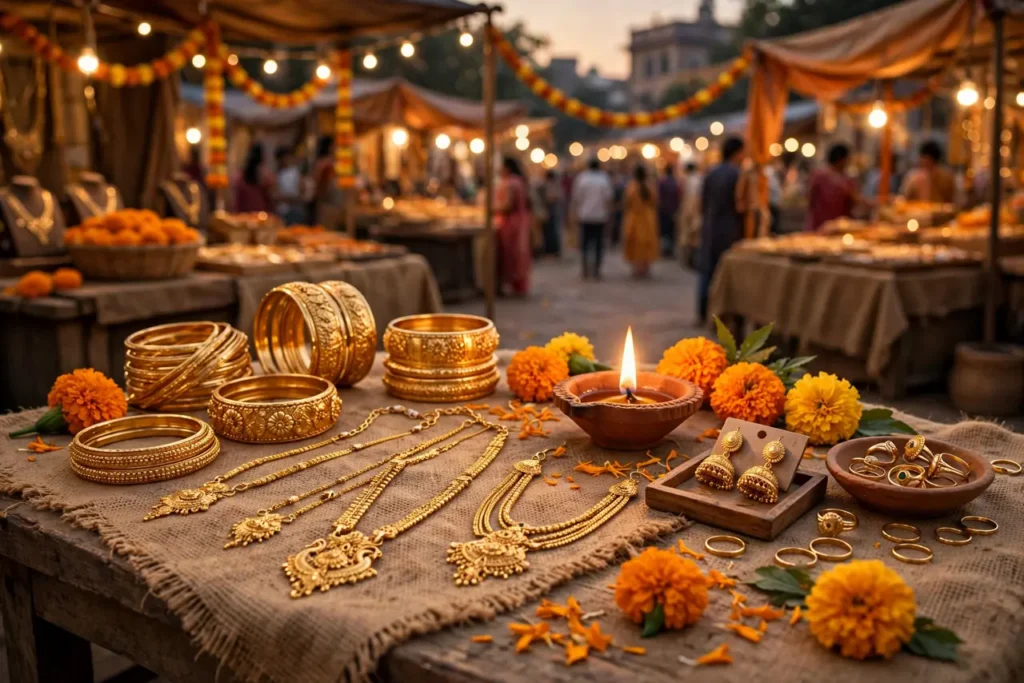
What people do: Homes get their final deep clean. In the evening, families light a special diya — the Yama Deepam — facing south to honor Yama, the god of death, praying for protection from untimely death. The day’s most famous custom is shopping: Dhanteras is considered the year’s most auspicious day to buy gold, silver, utensils, and new items for the home. Jewelry shops stay open late; markets buzz with festive energy.
The legend: The story of King Hima’s son, fated to die by snakebite on his fourth wedding day, whose clever wife kept him awake all night with lamps, music, and piles of gold and silver — when Yama arrived disguised as a serpent, he was blinded by the glitter and the lamps, and left without claiming the prince. Hence the lamps lit for Yama on Dhanteras night: light as protection against death itself.
Foods and customs: Sweets are prepared in bulk for the coming days. In Maharashtra, a special naivedya of pounded coriander seeds and jaggery is offered. Business communities begin preparing for the new account books.
Day 2: Naraka Chaturdashi / Choti Diwali — Victory Over Darkness
When: Chaturdashi, the 14th day — the day before the main Diwali. Called “Choti Diwali” (small Diwali) in the North.
The meaning: This day commemorates Krishna’s victory over the demon Narakasura, who had imprisoned 16,000 women and terrorized the three worlds. Krishna — with his wife Satyabhama, who delivered the final blow — slew the demon at dawn. The day celebrates the defeat of entrenched evil and, symbolically, the conquest of our own inner demons: laziness, greed, hatred, and ignorance.
What people do: The centerpiece ritual is the pre-dawn oil bath (abhyanga snan) — a full-body massage with warm sesame oil followed by a bath with ubtan (herbal paste), symbolizing the washing away of impurities and negativity. New clothes are worn. In the South, this is the main celebration day, with sunrise crackers and feasting. In Goa, giant effigies of Narakasura are paraded and burned at dawn.
The deeper reading: Choti Diwali is Diwali’s most psychologically astute day. Before you can welcome the light (tomorrow), you must confront the darkness — in yourself. The oil bath is a ritual of self-purification; the demon’s defeat is a promise that no darkness, however entrenched, is permanent. It is the festival’s “dark night of the soul,” resolved by dawn.
Foods and customs: The South feasts on Deepavali legiyam, idli, vada, and sweets. The North lights the first rows of diyas — a preview of tomorrow’s blaze. Hanuman is also worshipped on this day in some traditions.
Day 3: Diwali / Lakshmi Puja — The Festival of Lights
When: Amavasya, the new moon — the darkest night of the month, and the festival’s blazing center.
The meaning: This is the day the festival is named for. Multiple legends converge here: Rama’s return to Ayodhya, Lakshmi’s emergence and marriage to Vishnu, Krishna’s coronation, the Pandavas’ return. The unifying meaning: on the darkest night, light triumphs — in the world, in the home, and in the heart.
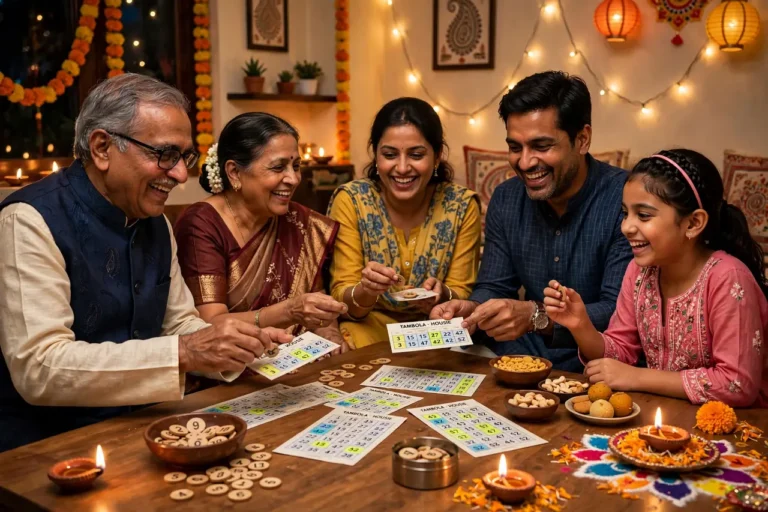
What people do: The day begins with festive preparations and exchanging greetings. As dusk falls, families perform the Lakshmi Puja — invoking Ganesha first, then welcoming Lakshmi with sixteen offerings, chanting her 108 names, and closing with the “Om Jai Lakshmi Mata” aarti. Then the celebration explodes: rows of diyas are lit everywhere, fireworks fill the sky, sweets and gifts are exchanged, card games are played, and feasts are shared late into the night.
The puja in brief: Clean altar, idols or images of Lakshmi and Ganesha, diyas, incense, flowers, sweets, coins. Invoke Ganesha (“Om Gan Ganapataye Namah”), invite Lakshmi, offer flowers and food, chant “Om Shree Mahalakshmyai Namah,” perform the aarti circling a lamp, share prasad. Fifteen sincere minutes complete it; an hour with all sixteen offerings fulfills the classical form.
Foods and customs: The grand feast — region-specific everywhere, abundant everywhere. New clothes are worn. Elders bless the young. The night belongs to light: diyas, candles, fairy lights, sparklers, and fireworks in a collective blaze against the moonless dark.
Day 4: Govardhan Puja — Gratitude to Nature
When: Pratipada, the first day of the waxing moon — the day after Diwali.
The meaning: Govardhan Puja commemorates Krishna’s lifting of Mount Govardhan to shelter the villagers of Vrindavan from Indra’s wrathful storms. When the proud villagers had been worshipping Indra for rain, Krishna taught them to honor Govardhan Hill instead — the actual source of their pasture, water, and sustenance. The seven-day miracle taught a revolutionary lesson: worship nature, not power; gratitude, not fear.
What people do: Devotees build small replicas of Govardhan Hill from cow dung (or food) and worship them with flowers and sweets. The Annakut (mountain of food) tradition sees temples pile enormous mounds of vegetarian dishes as offerings — some temples prepare hundreds of items. Cows, central to the legend, are decorated and worshipped. In Gujarat, this day is Bestu Varas — the New Year — with Chopda Pujan, the blessing of new account books.
The deeper reading: After the blaze of Diwali night, Govardhan Puja is a day of grounding. The festival pauses its fireworks to say thank you — to the earth, to the animals, to the food on the table. It is Diwali’s environmental conscience, centuries before the term existed: prosperity means nothing without the nature that sustains it.
Foods and customs: The Annakut feast — mountains of food shared communally. In the North, the day is also called Padwa. Newly married couples are often honored; in Maharashtra, husbands give gifts to wives on this day (Diwali Padwa).
Day 5: Bhai Dooj — Celebrating Siblings
When: Dwitiya, the second day of the waxing moon — the festival’s tender finale.
The meaning: Bhai Dooj (also Bhaiya Dooj, Bhai Tika, or Yama Dwitiya) celebrates the bond between brothers and sisters. The legend: Yama, the god of death, visited his sister Yamuna on this day; she welcomed him with a tilak, a feast, and garlands, and he granted her a boon — that any brother who receives his sister’s tilak on this day will be blessed with long life. The festival closes not with cosmic triumph but with family love.
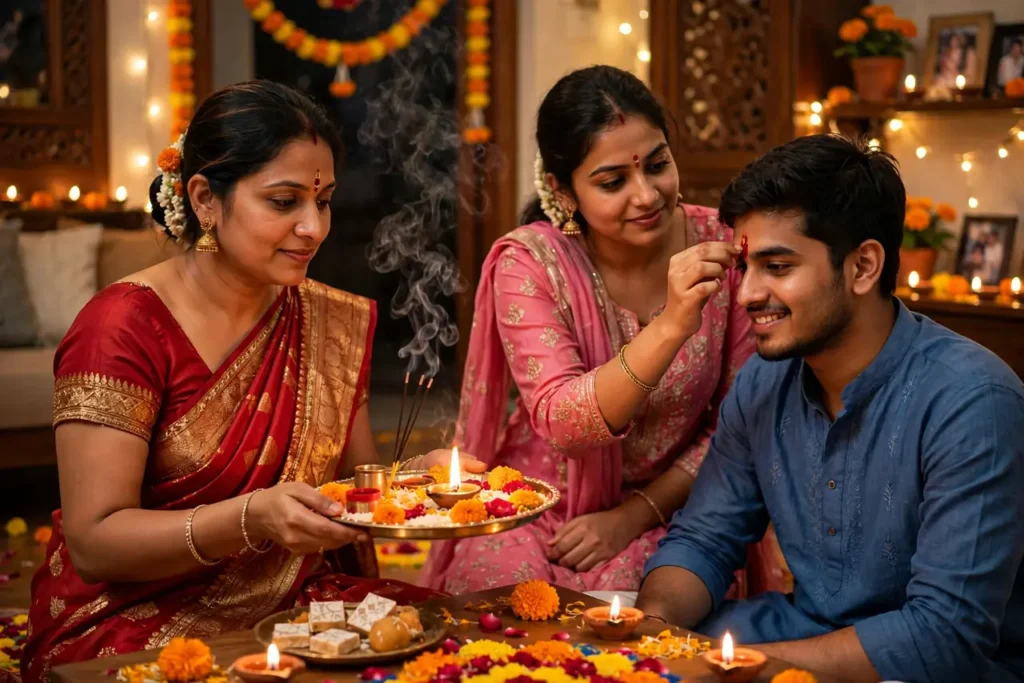
What people do: Sisters pray for their brothers’ long life and prosperity, apply a ceremonial tilak (vermilion mark) on their foreheads, perform aarti, and feed them sweets. Brothers pledge protection, give gifts (money, clothes, or jewelry), and share a festive meal. In Bengal it is Bhai Phonta; in the South, Yama Dwitiya has similar sibling customs; in Maharashtra, sisters are invited to brothers’ homes for the Bhau Beej feast.
The deeper reading: After five days of cosmic drama — demons slain, goddesses welcomed, mountains lifted — the festival ends with the simplest, most human ritual: a sister’s prayer and a brother’s promise. It is a narrative masterstroke. The light that conquered darkness finally settles where it belongs: in the love between people. Diwali begins with lamps and ends with family.
Foods and customs: Sisters cook their brothers’ favorite dishes. Gifts are exchanged. The mood is intimate and joyful — the festival’s exhale after four days of intensity.
The Five Days at a Glance
| Day | Name | Lunar Date | Central Ritual | Core Theme |
|---|---|---|---|---|
| 1 | Dhanteras | Trayodashi (13th waning) | Yama Deepam; gold shopping | Preparation & health as wealth |
| 2 | Naraka Chaturdashi / Choti Diwali | Chaturdashi (14th waning) | Dawn oil bath; Narakasura effigies | Victory over inner darkness |
| 3 | Diwali / Lakshmi Puja | Amavasya (new moon) | Lakshmi Puja; diyas; fireworks | Light’s triumph; welcoming prosperity |
| 4 | Govardhan Puja / Padwa | Pratipada (1st waxing) | Annakut; hill worship | Gratitude to nature |
| 5 | Bhai Dooj | Dwitiya (2nd waxing) | Sister’s tilak; sibling feast | Family love |
How to Celebrate All Five Days (Practical Guide)
Dhanteras: Finish deep cleaning. Buy something lasting (gold, silver, utensils — or even a book). Light the Yama Deepam at dusk facing south. Prepare sweets for the week.
Choti Diwali: Take the ritual oil bath before dawn. Wear new clothes. Light the first diyas in the evening. Reflect on one “inner demon” to conquer this year.
Diwali: Perform Lakshmi Puja at the evening muhurta. Light every diya you own. Exchange greetings and gifts. Feast, play cards, watch fireworks — celebrate fully.
Govardhan Puja: Visit a temple for Annakut if possible. Thank someone who sustains you — a farmer, a cook, a provider. In Gujarat, open your new account books.
Bhai Dooj: Sisters: prepare the tilak and aarti. Brothers: bring a thoughtful gift. Share a meal. Call siblings who are far away — the ritual works over video too.
Regional Variations Across the Five Days
The five-day framework is pan-Indian, but each region emphasizes different days. In Tamil Nadu, Naraka Chaturdashi (Day 2) is the climax — the pre-dawn oil bath and sunrise crackers matter more than the main night’s puja. In Bengal, the third night belongs to Kali Puja rather than Lakshmi Puja, with all-night vigils replacing the standard ceremony. In Gujarat, the fourth day (Bestu Varas) overshadows all others as the New Year, with Chopda Pujan of account books as the central ritual.
Punjab’s fifth-day energy flows into Bandi Chhor Divas commemorations, while Maharashtra stretches the festival with Vasu Baras before Dhanteras and Tulsi Vivah after Bhai Dooj. These variations are not deviations from a “correct” Diwali — they are proof of the festival’s living, adaptive nature. The five-day skeleton is ancient; the regional flesh is ever-renewing.
Celebrating the Five Days Outside India
The Indian diaspora — over 30 million strong — has adapted the five days to new realities. In the United States, Dhanteras shopping becomes a weekend mall trip; the main puja is often shifted to the nearest weekend evening so working families can gather. In the UK, Leicester’s famous Diwali lights switch-on draws tens of thousands, and community centers host five-day programs with each day’s rituals explained for the younger generation.
Trinidad, Guyana, Fiji, and Mauritius — where indentured laborers carried Diwali in the 19th century — preserve some of the oldest continuous traditions, including unique local customs like the lighting of deyas along public roads and community Ramleela performances. In Australia and Canada, the festival increasingly appears in public calendars, with schools and workplaces acknowledging the days.
The diaspora has also innovated: virtual pujas connecting grandparents in India with grandchildren abroad, Diwali meal-kit deliveries for the time-pressed, and social media “day counters” that teach the five days’ meanings to a global audience. The arc survives every translation because its structure — prepare, confront, celebrate, thank, love — is universal.
The Five Days as a Personal Retreat
Beyond ritual, the five days offer a ready-made framework for an annual personal retreat — no ashram required. Use Dhanteras to declutter one room and one habit. Use Choti Diwali to name one fear or resentment and consciously release it. Use the main Diwali to set three intentions for the year ahead, written down as the diyas burn. Use Govardhan Puja to thank five people who sustain your life. Use Bhai Dooj to call every sibling and close friend.
This is the festival’s quiet genius: it is simultaneously a religious observance, a cultural celebration, and a psychological technology for renewal. The five days work whether you approach them as a devotee, a cultural participant, or simply a human being who wants a better year. Light the lamps, follow the arc, and let the ancient structure do its work.
Watch: The Five Days Explained
A clear, engaging walkthrough of each day’s meaning — from Dhanteras to Bhai Dooj.
Explore More
Deepen your festival knowledge with DayZora’s related guides. Boxing Day traditions explore the day after another great festival, our Christmas morning traditions show how families build sacred routines, and the Diwali festival of lights guide covers the complete celebration.
The Five Days in Mythology: Deeper Stories
Each day’s legend rewards closer telling. Dhanteras: When Dhanvantari emerged from the churning ocean, he carried not just amrita but the entire science of Ayurveda — which is why the day honors physicians and health. The Yama Deepam legend of King Hima’s son adds the poignant note that even death can be delayed by vigilance, light, and a clever wife’s devotion.
Naraka Chaturdashi: Narakasura had stolen the earrings of Aditi (mother of the gods) and imprisoned 16,000 women. Krishna’s victory was thus both cosmic and deeply human — the liberation of captives. Satyabhama, Krishna’s wife, is said to have driven the chariot and struck the final blow, making this a rare festival day honoring a goddess-warrior’s triumph. The dawn timing matters: evil is defeated at first light, never at midnight.
Diwali: The Ayodhya legend’s most moving detail is often missed — the citizens lit lamps not just to celebrate but to guide: Rama was returning through dark forests, and the lights were practical love, illumination as hospitality. Every diya you light continues that act: making the path brighter for someone coming home.
Govardhan Puja: The full story spans seven days and nights of Krishna holding the mountain on his little finger while Indra hurled storms — a child’s finger against the king of heaven’s wrath. When Indra finally surrendered, the lesson was sealed: devotion to the sustaining earth outranks fear of cosmic power. It is Hinduism’s most explicit environmental parable.
Bhai Dooj: Yamuna’s welcome of Yama included the aarti, the tilak, and a feast so loving that the god of death himself was moved to grant boons. The story’s quiet radicalism: love can negotiate with death. The sister’s prayer creates a protective circle no darkness can cross — the festival’s final word is that bonds outlast everything.
Diwali Across the Calendar: Related Observances
The five days sit within a longer festive season. Two days before Dhanteras comes Dussehra (Vijaya Dashami), celebrating Rama’s victory over Ravana — the triumph that the Diwali lamps later commemorate as homecoming. The season thus runs from victory (Dussehra) through preparation, confrontation, celebration, gratitude, and love (Bhai Dooj) — a seven-week arc of meaning.
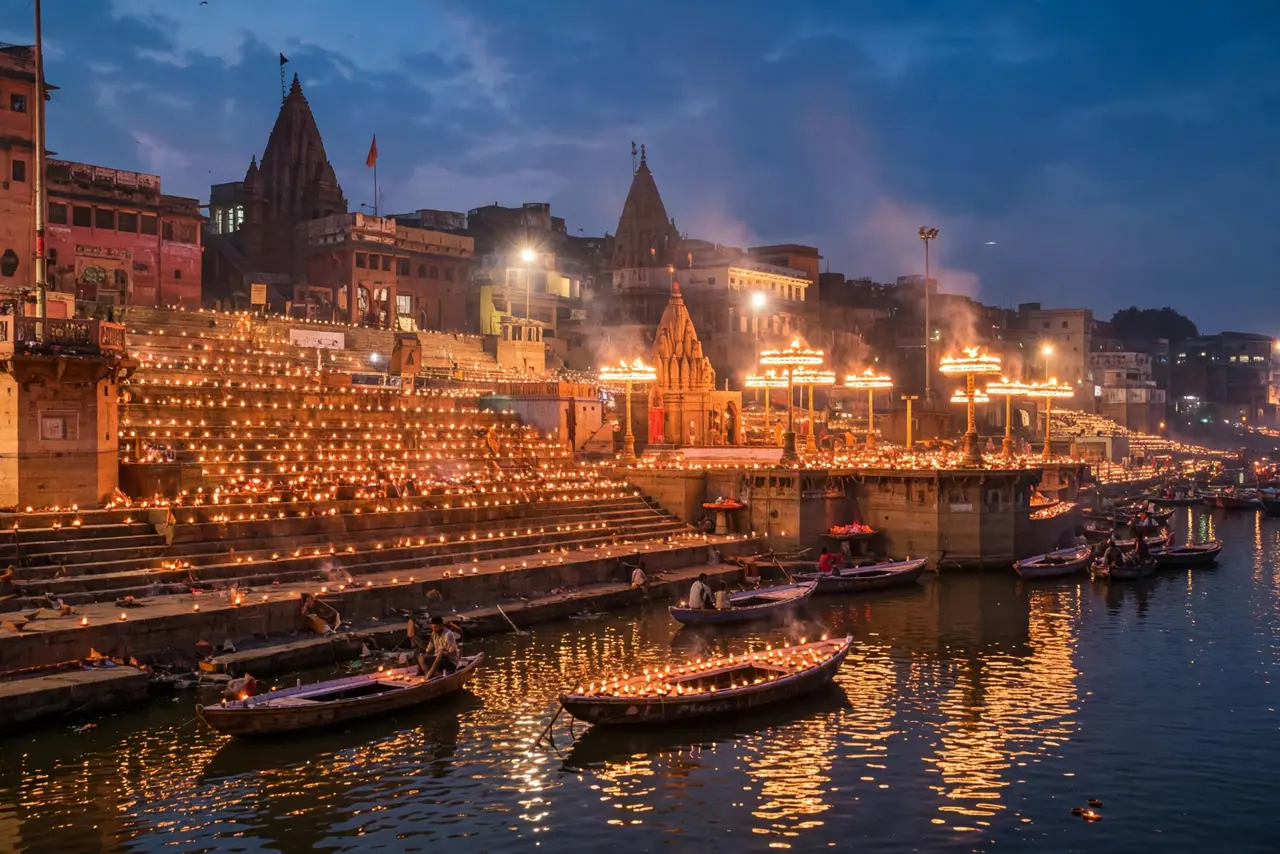
Fifteen days after Bhai Dooj comes Dev Deepavali in Varanasi, the gods’ own Diwali on Kartik Purnima — the season’s luminous coda. And in many traditions, Tulsi Vivah follows, the ceremonial marriage of the holy basil plant to Vishnu, marking the end of the monsoon inauspicious period and the opening of the wedding season. Diwali is not an isolated festival but the blazing center of autumn’s sacred calendar.
The Five Days and the Five Senses
A beautiful way to experience the festival is through the senses, each day emphasizing a different one. Dhanteras — touch: feel the weight of new utensils, the texture of gold, the smoothness of freshly cleaned surfaces. The day is tactile — prosperity you can hold. Run your hands over the new account books, feel the coins, touch the marigolds as you string them.
Choti Diwali — smell: the sesame oil of the dawn bath, the ubtan’s sandalwood and turmeric, the first agarbatti of the season. Scent is memory’s strongest trigger; the festival deliberately perfumes itself into your past. Diwali — sight: the day of overwhelming vision — a million flames, rangoli colors, new clothes, fireworks painting the sky. Keep a “sight journal”: note the single most beautiful thing you see each Diwali night.
Govardhan Puja — taste: the Annakut’s mountain of flavors, the prasad’s sanctified sweetness, the season’s richest feast. Taste mindfully — the tradition insists food offered to the divine deserves attention. Bhai Dooj — sound: the sister’s blessings spoken aloud, the family’s laughter over the meal, the quiet after the fireworks when you can finally hear each other. End the festival listening — to the people the lights were lit for.
Celebrating Mindfully: Health and Safety Through the Five Days
The festival’s intensity demands care. Dhanteras: pace the shopping — the crowds and excitement can exhaust before the festival truly begins. Eat before you shop; the markets’ sweets are tempting on an empty stomach. Choti Diwali: the ritual oil bath is wonderful, but those with skin sensitivities should patch-test ubtan ingredients first. The pre-dawn start means an early night beforehand — rest is part of the ritual.
Diwali night: fireworks safety is non-negotiable — adult supervision for all children, open spaces away from homes, water buckets nearby, and no relighting of duds. Those with asthma or respiratory conditions should limit outdoor exposure during peak bursting hours; the green Diwali’s diyas-and-sparklers approach is kinder to every lung. Pets should be kept indoors with comforting company — the festival’s joy should not be their terror.
Govardhan Puja and Bhai Dooj: the feasting days — enjoy, but remember the festival also honors health (Dhanteras’s first lesson). Balance the mithai with the festival’s own wisdom: abundance includes the abundance of well-being. Drink water between sweets, walk between feasts, and let the five days nourish rather than overwhelm. End each night by noting one beautiful moment — the festival deserves a diary.
Frequently Asked Questions
What are the five days of Diwali called?
Dhanteras (Day 1), Naraka Chaturdashi or Choti Diwali (Day 2), Diwali/Lakshmi Puja (Day 3, the main day), Govardhan Puja or Padwa (Day 4), and Bhai Dooj (Day 5). Each has distinct rituals and meanings forming a complete arc from preparation to celebration to family love.
Which day is the main Diwali?
The third day — the new moon (Amavasya) of Kartik — is the main Diwali, when Lakshmi Puja is performed and the great illumination happens. But traditionally all five days are part of the festival, each with its own significance.
What happens on Dhanteras?
Dhanteras honors Dhanvantari (divine physician) and the emergence of Lakshmi. Families finish cleaning, light the Yama Deepam lamp at dusk, and shop for gold, silver, and utensils — it is the year’s most auspicious shopping day.
Why is the second day called Choti Diwali?
“Choti” means small — it is the “small Diwali” before the main day. It commemorates Krishna’s victory over Narakasura, celebrated with pre-dawn oil baths, and in South India it is often the most important day of the festival.
What is Govardhan Puja?
The fourth day commemorates Krishna lifting Mount Govardhan to shelter villagers from Indra’s storms. Devotees build symbolic hills, temples prepare Annakut (mountains of food), and the day emphasizes gratitude toward nature. In Gujarat it is also the New Year (Bestu Varas).
What do siblings do on Bhai Dooj?
Sisters pray for their brothers’ long life, apply a ceremonial tilak, perform aarti, and feed them sweets; brothers pledge protection and give gifts. It celebrates and renews the sibling bond, closing the festival with family love.
Do I need to celebrate all five days?
No — many families emphasize two or three days based on regional tradition (the South centers Naraka Chaturdashi; Gujarat centers the New Year). But knowing all five days’ meanings enriches whichever days you observe.
What are the lunar dates of the five days?
Trayodashi (13th waning moon) for Dhanteras, Chaturdashi (14th) for Choti Diwali, Amavasya (new moon) for the main Diwali, Pratipada (1st waxing) for Govardhan Puja, and Dwitiya (2nd waxing) for Bhai Dooj — all in the month of Kartik.
How long does the Diwali season last?
The core festival is five days, but the season stretches from Dussehra (about three weeks before) through Dev Deepavali in Varanasi (fifteen days after). Markets, decorations, and festive mood typically span a full month.