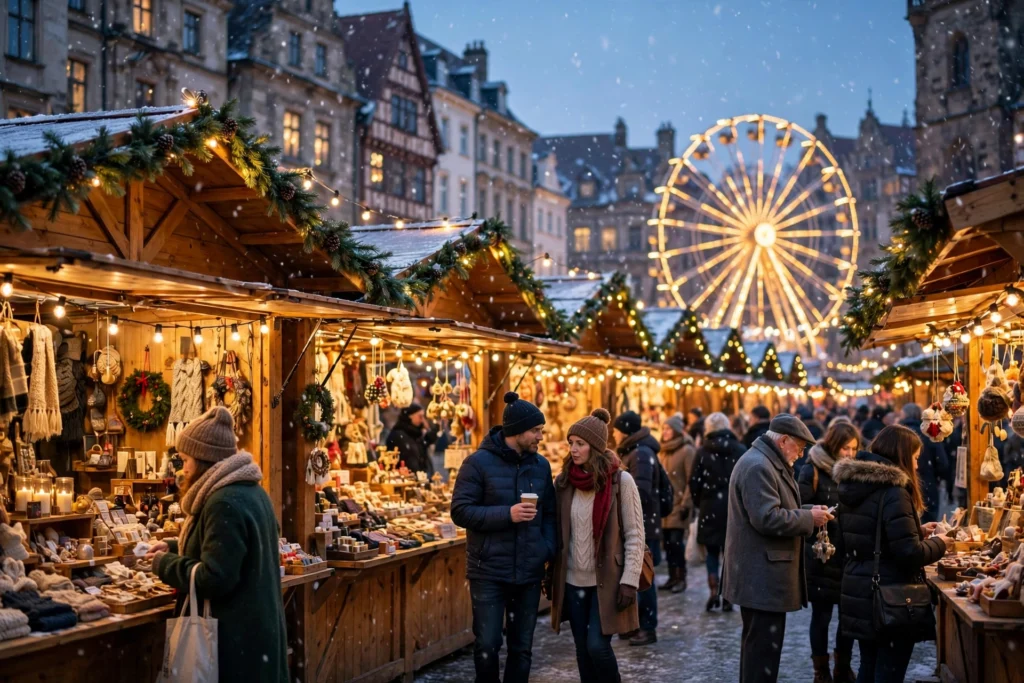
If you grew up in the United States, December 26th is probably just “the day after Christmas” — a blur of returns, leftovers, and travel. But across the United Kingdom, Canada, Australia, New Zealand, South Africa, and much of the Commonwealth, December 26th has a name, a history, and a full slate of traditions: Boxing Day. This explainer on what is Boxing Day traditions — where the name comes from, how different countries celebrate, and what the day means in 2026 — opens a window onto one of the English-speaking world’s most distinctive holidays.
Boxing Day is a public holiday in all of those countries (and several others), which means it shapes the entire rhythm of the Christmas week: shops hold their biggest sales, football stadiums fill, families gather a second time, and in some places the day carries centuries of charitable meaning. Yet it remains genuinely mysterious to many Americans — most US adults have heard the term but can’t explain it. This guide to what is Boxing Day traditions fixes that: the real history, the competing origin theories, country-by-country traditions, how the day is celebrated today, and how to observe it yourself wherever you live.
What Is Boxing Day? The Short Answer
Boxing Day is the public holiday observed on December 26th (or the nearest weekday when the 26th falls on a weekend) in the UK, Ireland, Canada, Australia, New Zealand, South Africa, and a number of other Commonwealth nations. Its modern character blends three threads: historic charitable giving (boxes of gifts or money for servants, tradespeople, and the poor), sport (football, cricket, rugby, and horse racing fixtures), and commerce (the year’s biggest retail sales). Families typically gather, eat Christmas leftovers, watch sport, and — in recent decades — hunt for bargains.
It is not, despite the name, anything to do with the sport of boxing. That is the single most common misconception, and clearing it up is step one.
Where Does the Name “Boxing Day” Come From?
Historians genuinely debate the origin, and the honest answer is that several traditions likely merged. The leading theories:
Theory 1: Servants’ Christmas Boxes
The most widely cited explanation: in Victorian and earlier Britain, domestic servants were required to work on Christmas Day serving their employers’ celebrations. As compensation, they were given the following day off along with a “Christmas box” — a gift of money, food, or presents from their employer. December 26th thus became the servants’ own Christmas, and the boxes gave the day its name. This theory is supported by period diaries and the famous line in Samuel Pepys’ diary (1663) recording giving his servants’ “Christmas box.”
Theory 2: Church Alms Boxes
Medieval churches placed alms boxes near the door for collections through Advent; these were opened on December 26th — the Feast of St. Stephen — and the contents distributed to the poor. The “boxing” here is literal: opening the boxes. St. Stephen’s Day remains the formal name of December 26th in Ireland and much of Europe, and the carol “Good King Wenceslas” describes exactly this charitable act (“…on the Feast of Stephen”).
Theory 3: Tradesmen’s Boxes
In 18th- and 19th-century Britain, tradespeople — milkmen, postmen, chimney sweeps — collected “Christmas boxes” (tips) from households on the day after Christmas in return for year’s service. This custom survived well into the 20th century in some form; older Britons still remember tipping the postman at Christmas.
The likeliest truth is a blend: charitable boxes, servants’ boxes, and tradesmen’s boxes all existed, and the name stuck because it described a day defined by giving containers of things to people. What matters for the modern holiday is the throughline — Boxing Day began as a day oriented toward generosity and rest for working people, a meaning worth remembering amid the sales frenzy.
Boxing Day in the United Kingdom: The Heartland
Britain is where Boxing Day traditions run deepest, and the day has a distinctive texture found nowhere else.
Sport: The Sacred Fixtures
Boxing Day football is an institution. The Premier League and lower leagues traditionally schedule a full round of fixtures on December 26th, and attending (or watching) is a ritual for millions — the post-Christmas outing that gets the family out of the house. Rugby league and rugby union also stage fixtures, and horse racing meets at Kempton Park (the King George VI Chase, one of jump racing’s premier events) and other courses draw huge crowds. The sporting calendar effectively makes Boxing Day Britain’s biggest day of live sport attendance.
The Sales
The Boxing Day sales were, for decades, the undisputed biggest shopping event in the British retail calendar — queues forming before dawn outside department stores, a genuine cultural phenomenon. The rise of Black Friday (imported from the US in the 2010s) and online shopping has softened the frenzy, but December 26th remains a major sale day, now spread across the full week between Christmas and New Year.
Food and Family
The traditional Boxing Day meal is built on Christmas leftovers: cold turkey, ham, pickles, and bubble and squeak (fried leftover potatoes and cabbage — a dish that exists precisely for this day). Many families gather a second time, less formally than Christmas Day itself. The atmosphere is deliberately low-key: pyjamas, board games, and the good kind of doing nothing.
Fox Hunting (and Its Controversy)
Historically, Boxing Day was the premier day of the fox-hunting season, with ceremonial meets drawing crowds. Since the Hunting Act 2004 banned hunting wild mammals with dogs in England and Wales (Scotland’s ban dates to 2002), traditional hunts now stage trail hunts — and the day remains contentious, with pro- and anti-hunt demonstrations both common. Visitors should know the history without needing to take a side to understand the day.
Pantomime and Entertainment
Boxing Day is peak pantomime season — the uniquely British musical-comedy theatre tradition (“Oh no it isn’t!”). Families attending panto on or around Boxing Day is a cherished ritual, especially with children.
Boxing Day in Canada
Canada observes Boxing Day as a public holiday in most provinces (it’s a federal statutory holiday), and Canadian traditions blend British roots with North American flavor:
- The sales dominate. Boxing Day is Canada’s biggest shopping day of the year — bigger than Black Friday in cultural weight. Malls open early, deals run deep, and “Boxing Week” sales stretch through New Year’s. Cross-border shoppers from the northern US sometimes join in.
- Hockey, naturally. The World Junior Ice Hockey Championship traditionally begins on Boxing Day, and Canada’s national junior team playing on the 26th is appointment viewing. NHL games fill the evening.
- Family time: like Britain, a second gathering — often the “other side” of the family from Christmas Day — with leftovers and relaxation.
- Outdoor traditions: in milder regions, Boxing Day hikes and walks are popular; the day-after-Christmas outing is a recognized ritual.
Boxing Day in Australia and New Zealand
In the Southern Hemisphere, Boxing Day unfolds in summer — which transforms its character completely:
- The Sydney to Hobart Yacht Race starts on Boxing Day — one of the world’s great ocean races, watched by millions. It’s Australia’s signature Boxing Day sporting event.
- The Boxing Day Test at the Melbourne Cricket Ground: cricket’s most famous annual fixture, drawing crowds of 70,000+. In New Zealand, cricket and summer festivals fill the day.
- The sales are Australia’s biggest retail event, with city centers packed and online sales surging. “Boxing Day sales” advertising begins weeks in advance.
- Outdoor living: beach trips, backyard cricket, barbecues with Christmas leftovers (cold ham and salads suit the heat). The day feels like a summer festival that happens to follow Christmas.
- Public holiday structure: when December 26th falls on a weekend, Australia and New Zealand both add substitute holidays — so the Christmas break often stretches across four or five days.
Boxing Day in South Africa and Ireland
- South Africa: December 26th is officially the “Day of Goodwill” — a name adopted in 1994 that reframes the holiday around generosity and community rather than colonial history. It’s a public holiday marked by family gatherings, beach outings (summer again), and charitable activities. The name itself is a lovely distillation of the day’s oldest meaning.
- Ireland: December 26th is St. Stephen’s Day (Lá Fhéile Stiofáin), and its signature tradition is the Wren Day (Lá an Dreoilín): costumed “wren boys” in straw outfits go door to door with music and dancing, collecting money for charity — a folk custom with pre-Christian roots. It’s one of Europe’s most colorful surviving folk traditions.
Elsewhere: St. Stephen’s Day Across Europe
Much of continental Europe marks December 26th as St. Stephen’s Day (a public holiday in Germany, Austria, Poland, the Czech Republic, Croatia, and Scandinavia among others), though without the “Boxing Day” name or its specific customs. Traditions include second-day family visiting, church services honoring the first Christian martyr, and in Germany the Christmas markets’ final days. The shared thread is the same: Christmas is a two-day celebration, and the 26th belongs to extended family and rest.
Boxing Day in 2026: How the Day Is Evolving
Several trends are reshaping the holiday. Online shopping has decentralized the sales — the “queue at dawn” spectacle is largely gone, replaced by a week of digital deals. Sport remains the day’s anchor, but viewing has fragmented across streaming. The charitable origin is enjoying a quiet revival: food-bank drives, “reverse advent calendars” (donating an item daily through December, delivered on Boxing Day), and volunteer shifts are increasingly framed as Boxing Day activities. And in multicultural Commonwealth cities, the day is absorbing new traditions — from community cricket to Boxing Day dim sum — as immigrant communities make the public holiday their own.
For readers planning a fuller holiday season, Boxing Day pairs naturally with our Christmas volunteering and give-back ideas — the day’s oldest meaning is generosity, after all — and with Christmas on a budget strategies for navigating the sales wisely rather than impulsively.
How to Observe Boxing Day (Wherever You Live)
You don’t need to live in the Commonwealth to adopt the day’s best ideas. Here’s a template for a meaningful December 26th:
- Morning: the outing. Take the traditional post-Christmas walk, hike, or beach trip — the ritual of getting everyone out of the house after two days indoors is universal.
- Midday: leftovers, elevated. Host the casual second gathering: cold cuts, bubble and squeak, pie, and zero formality. Invite the friends or family you didn’t see on the 25th.
- Afternoon: sport or games. Watch a match, play backyard cricket or touch football, or run a board-game tournament. The day should feel recreational.
- Evening: give back. Honor the day’s origin — drop donations at a food bank, volunteer for a shift, or deliver the reverse-advent-calendar box. Even small acts reconnect the day to its charitable roots.
- The sales: if you shop, do it with a list. Boxing Day discounts reward the prepared and punish the impulsive — decide in advance what you actually need (next year’s wrapping paper and cards at 70% off are the classic smart buys).
Boxing Day vs. Black Friday: Understanding the Sales Landscape
Americans often ask how Boxing Day sales compare to Black Friday. Historically, Boxing Day was the Commonwealth’s Black Friday — the single biggest discount day. The difference today: Black Friday (late November) now dominates in the UK and Canada too, which has stretched Boxing Day into “Boxing Week,” a longer, softer sale period. The deepest discounts on Christmas-specific merchandise (decorations, wrapping, seasonal food) still cluster on and just after December 26th, while electronics and big-ticket items peak at Black Friday. Smart shoppers use both: November for tech, late December for seasonal goods and next year’s supplies.
Frequently Asked Questions
What is Boxing Day and why is it called that?
Boxing Day is the public holiday on December 26th observed across the UK, Canada, Australia, New Zealand, South Africa, and other Commonwealth nations. The name most likely comes from the “Christmas boxes” — gifts of money or food — given to servants, tradespeople, and the poor on the day after Christmas in Victorian Britain, though church alms boxes opened on St. Stephen’s Day are another likely source. It has nothing to do with the sport of boxing.
Which countries celebrate Boxing Day?
The United Kingdom, Ireland (as St. Stephen’s Day), Canada, Australia, New Zealand, South Africa (as the Day of Goodwill), and numerous other Commonwealth nations including Trinidad and Tobago, Jamaica, and Hong Kong historically. Much of continental Europe marks December 26th as St. Stephen’s Day with related but distinct traditions.
Is Boxing Day a public holiday?
Yes, in all the countries that observe it. When December 26th falls on a weekend, most countries add a substitute weekday holiday — in Australia and New Zealand this can extend the Christmas break significantly. Banks, government offices, and most businesses close.
What do people do on Boxing Day?
The classic trio: sport (football in the UK, cricket in Australia, hockey in Canada, the Sydney to Hobart yacht race), sales (the year’s biggest retail discounts), and family (a casual second gathering built on Christmas leftovers). Many also use the day for charitable giving, honoring its origins.
Why doesn’t the United States celebrate Boxing Day?
The US broke from British customs after independence, and December 26th never took root as a holiday — American retail culture instead built its post-Christmas shopping around after-Christmas sales without the name. The traditions (sales, leftovers, football) exist informally; only the name and the day off are missing.
What is the Day of Goodwill in South Africa?
It’s South Africa’s official name for December 26th, adopted in 1994. The renaming deliberately reframed the colonial-era “Boxing Day” around generosity, community, and goodwill — arguably the closest any country has come to restoring the holiday’s original charitable meaning.
Boxing Day in Popular Culture
The day has left fingerprints across literature and media. The “Christmas box” appears in Dickens-era writing as a marker of class relations — the annual reckoning between employers and servants. “Good King Wenceslas,” the carol explicitly set “on the Feast of Stephen,” is sung worldwide on December 26th, often without singers realizing they’re celebrating the day’s charitable core. In modern film and television, Boxing Day sales stampedes have become visual shorthand for consumer frenzy, while British Christmas specials routinely use the day’s football fixtures and family leftovers as storytelling backdrop. For visitors, recognizing these references transforms the holiday from a confusing calendar entry into a living tradition.
Planning a Boxing Day Trip: Experiencing It Firsthand
For travelers, Boxing Day offers a distinctive window into Commonwealth culture — but it requires planning, because the public holiday reshapes everything:
- London: book pantomime tickets weeks ahead, expect the West End and markets to be busy, and note that public transport runs on reduced holiday schedules. The sales on Oxford Street are an experience in themselves. Our best places to spend Christmas guide covers the broader festive travel picture.
- Melbourne: the Boxing Day Test at the MCG is a bucket-list sporting event — tickets for the opening day sell fast. Combine it with the city’s summer festival atmosphere.
- Sydney: watch the yacht race start from the harbor heads, then join the beach crowds at Bondi. Book accommodation early; the Christmas–New Year week is peak season.
- Toronto/Montreal/Vancouver: malls open early for the sales; the World Juniors provide the sporting anchor. Winter weather makes this a true cold-weather Christmas-trip experience.
- Practical notes: restaurants and attractions often operate on holiday hours — check ahead. Many museums and galleries in the UK open on Boxing Day and are pleasantly quiet compared to the shops.
Whether you observe it as a shopper, a sports fan, a traveler, or simply someone who appreciates a second day of Christmas calm, Boxing Day rewards attention. It’s a holiday about rest after labor, generosity after abundance, and play after ceremony — and in a season that often feels like a sprint, a whole day dedicated to the exhale might be its wisest tradition of all.
Boxing Day Food: The Art of the Leftovers
Boxing Day cuisine deserves its own chapter because it may be the holiday’s most universally loved tradition. The principles: no cooking from scratch, everything casual, and the turkey must be transformed, not merely reheated.
- Bubble and squeak (UK): the canonical Boxing Day dish — fried leftover potatoes, cabbage, and any roasted vegetables, crisped in a pan until golden. It exists for this day.
- Turkey curry (UK): the great British answer to leftover turkey — a Boxing Day evening staple in millions of homes.
- Cold ham, pickles, and good bread (universal): the ploughman’s-style spread that requires zero cooking and satisfies everyone.
- Turkey sandwiches, elevated (Canada/US-adjacent): cranberry sauce, stuffing, and gravy as a sandwich spread — the “Thanksgiving sandwich” technique applies perfectly.
- Braai leftovers (South Africa): Christmas braai (barbecue) becomes Boxing Day beach picnic — cold meats, salads, and fruit in the summer heat.
- The “use it up” pie (Australia/NZ): leftover ham and turkey baked into a pie or quiche for the Boxing Day Test viewing session.
The deeper point: Boxing Day food is anti-performative by design. After Christmas Day’s culinary theater, the 26th is about comfort, grazing, and nobody standing over a stove. If you’re hosting, our Christmas dinner ideas help you plan the 25th so the 26th practically cooks itself.
The Future of Boxing Day
What will Boxing Day look like in another generation? The charitable core is quietly resurging as younger celebrants, skeptical of pure consumerism, reclaim the day’s giving roots — food-bank volunteering and community meals are increasingly framed as “the real Boxing Day.” Sport remains untouchable as the day’s anchor; the fixtures are tradition now, not just entertainment. Retail will keep evolving toward a diffuse “Boxing Week” of online deals, but the ritual of the post-Christmas bargain hunt — the list, the early start, the triumph — isn’t going anywhere. And as Commonwealth cities grow more diverse, the day keeps absorbing new traditions, from Lunar New Year-adjacent community feasts to Caribbean-inspired Boxing Day parties. A holiday that began with boxes for servants has become a day the whole culture shares — rest, play, generosity, and leftovers. That’s a future worth keeping.