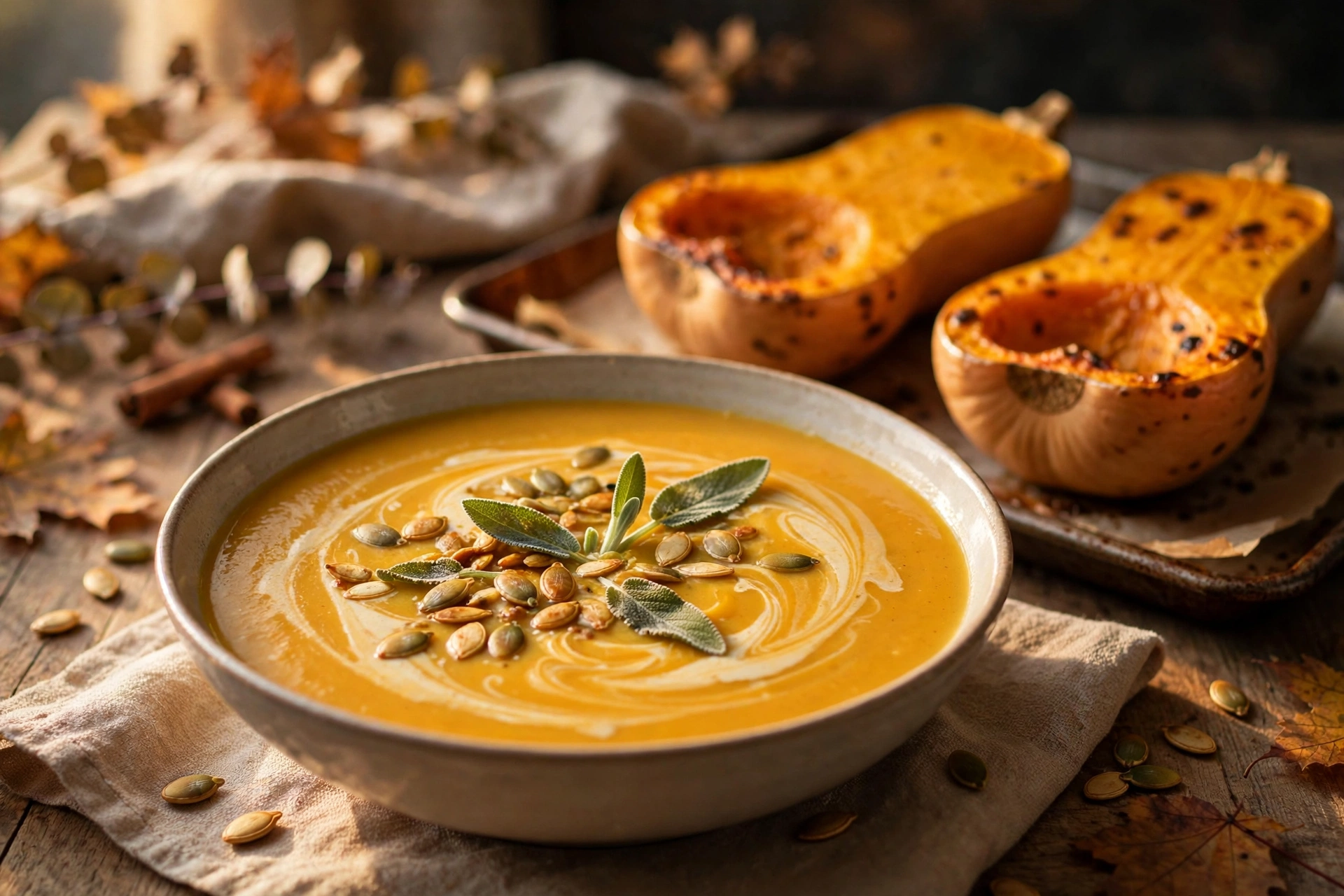
There is a reason butternut squash soup appears on fall menus everywhere from farmhouse tables to fine dining rooms: when made well, it is pure velvet — silky, naturally sweet, deeply savory, with a complexity that belies its humble ingredients. When made poorly, it is baby food: flat, one-dimensional, and forgettable. The difference is technique, and this guide covers all of it: how to coax maximum flavor from the squash (roasting versus sautéing), how to build a savory foundation that keeps the soup from tasting like dessert, the blending method that produces genuine silkiness, and the garnish bar that turns a simple soup into a memorable Thanksgiving first course.
Butternut squash soup earns its place as a Thanksgiving starter honestly. It can be made entirely ahead (it reheats beautifully and even improves overnight), it is naturally vegetarian and easily vegan, it is gentle on appetites before the main feast, and its warm orange color sets the autumn tone for everything that follows. Served in small cups or bowls as guests arrive, it turns the pre-dinner hour from awkward waiting into an occasion.
Why Butternut Squash Makes Extraordinary Soup
Butternut squash is almost engineered for soup. Its flesh is dense and low in moisture compared to watery squashes, which means it blends into a naturally thick, creamy purée without much added starch or dairy. Its flavor is sweet but not aggressively so, with nutty, almost butterscotch undertones that deepen dramatically with roasting. And its smooth, fine-grained flesh — no stringiness like pumpkin, no wateriness like zucchini — produces the silkiest texture of any winter squash when properly blended.
Choosing a good squash matters. Look for one with a long, thick neck and a small seed bulb — the neck is solid flesh, so more neck means more usable squash per pound. The skin should be matte (shiny skin indicates under-ripeness), deep tan, and free of soft spots or cracks. A ripe butternut feels heavy for its size. Avoid squash with green streaks on the skin, which signal it was picked too early and will taste bland. Butternut keeps for weeks in a cool, dark spot, so buy ahead without worry.
A Note on Pre-Cut Squash
Pre-cut butternut chunks are convenient and perfectly acceptable for soup — you are going to blend it anyway, so perfect cubes do not matter. But buy them fresh (not browning at the edges) and check the date; cut squash deteriorates faster than whole. For roasting, pat pre-cut pieces dry — they are often damp from packaging, and moisture inhibits caramelization. Whole squash you peel and cube yourself will always taste slightly fresher, but the difference in a blended soup is minor.
Roasting Versus Sautéing: The Flavor Decision
How you cook the squash before blending is the most consequential choice in the recipe, because it determines the soup’s entire flavor profile.
Roasting: Maximum Depth
Roasting halved or cubed squash at 400°F (200°C) until caramelized at the edges triggers Maillard browning and caramelization, concentrating the squash’s sugars and adding nutty, toasty complexity. Roasted-squash soup tastes deeper, richer, and more “autumnal” — this is the restaurant flavor people try to replicate at home. The trade-off is time (40 to 50 minutes of roasting) and a second pan to wash. For Thanksgiving, when the oven is already running, roasting is the obvious choice — the squash can share the oven with other dishes.
Roast cut-side down if halved (the flesh steams in its own moisture and caramelizes where it meets the pan), or in cubes tossed with oil for maximum browned surface area. Either way, roast until the edges are deeply golden and the flesh is completely tender — under-roasted squash makes bland soup.
Sautéing: Faster, Brighter
Cooking cubed squash directly in the soup pot with the aromatics — sweating it in butter or oil before adding liquid — is faster (one pot, no oven) and produces a brighter, cleaner squash flavor. Without caramelization, the soup tastes more purely of squash: sweet, fresh, delicate. Some cooks prefer this lighter profile, especially when the soup will carry bold garnishes. If you sauté, give the squash a full 10 minutes with the onions before adding liquid — you want it softened and lightly golden, not just warmed through.
The Hybrid: Best of Both
For the ultimate soup, roast half the squash for depth and sauté half for brightness. You get caramelized complexity plus fresh squash sweetness — a layered flavor that tastes like more than the sum of its parts. It is slightly more work, but for a holiday first course, the difference is noticeable.
Building the Savory Foundation
The number one flaw in homemade butternut squash soup is one-dimensional sweetness — it tastes like dessert, not dinner. The fix is a proper savory foundation built before the squash ever meets the pot.
The Aromatic Base
Onion is essential — one large yellow onion, diced and softened slowly in butter until translucent and sweet, about 8 minutes. Add celery (one or two ribs, diced) for vegetal depth and carrot (one, diced) for earthy sweetness; this classic mirepoix trio gives the soup a savory backbone that squash alone cannot provide. Garlic joins for the last minute. Do not rush this stage — properly softened aromatics dissolve into the soup, while rushed ones stay harsh and distinct.
Spices: Warm, Not Sweet
The classic butternut spice palette is warm but should lean savory: nutmeg (freshly grated, ¼ teaspoon), a pinch of cayenne or white pepper for gentle heat, and fresh sage or thyme. Curry powder is a legitimate variation (see below), but the default should whisper, not shout. Add ground spices to the hot fat with the aromatics for 30 seconds before adding liquid — blooming them in fat unlocks fat-soluble flavor compounds that water alone cannot extract. This small step dramatically improves spice integration.
Choosing Your Liquid
Good vegetable or chicken broth is the standard — it adds savory depth that water cannot. Use a quality broth; the soup is simple enough that the broth’s flavor shows. For the richest result, use homemade stock if you have it. Water works in a pinch but produces a noticeably flatter soup — compensate with extra aromatics and seasoning. The liquid quantity controls thickness: start with less (you can always thin), because an over-thin soup cannot be un-thinned without a long reduction.
Ingredients: The Master Recipe
- 1 large butternut squash (about 3 pounds), halved, seeded, or 2½ pounds pre-cut chunks
- 3 tablespoons unsalted butter (or olive oil for vegan)
- 1 large yellow onion, diced
- 2 ribs celery, diced
- 1 medium carrot, diced
- 3 cloves garlic, minced
- 1 teaspoon fresh thyme leaves (or ½ teaspoon dried)
- 6–8 fresh sage leaves (optional, for frying as garnish)
- ¼ teaspoon freshly grated nutmeg
- Pinch of cayenne pepper
- 4 cups quality vegetable or chicken broth, plus more as needed
- ½ cup heavy cream (or coconut milk for vegan/dairy-free)
- 1½ teaspoons kosher salt, plus more to taste
- ½ teaspoon freshly ground black pepper
- 1 tablespoon apple cider vinegar or lemon juice (for finishing)
The Silkiness Technique: Blending Like a Professional
Silkiness is not about adding cream — it is about particle size. A truly silky soup has its solids blended so fine that the tongue perceives no graininess at all. Here is how to get there.
Blend Hot, Blend Long
A high-powered blender (Vitamix, Blendtec, or similar) produces the silkiest results — blend the hot soup in batches for a full 2 to 3 minutes per batch, longer than feels necessary. The extended blending pulverizes fiber that shorter blending leaves behind. An immersion (stick) blender is more convenient but produces a slightly less refined texture; if using one, blend for at least 5 minutes, moving it through all areas of the pot. Either way, never fill a blender more than half full with hot liquid — steam expansion can blow the lid off. Remove the center cap and cover with a towel to vent.
Strain for Perfection
For restaurant-level silkiness, strain the blended soup through a fine-mesh sieve, pressing with a ladle or spatula. This catches the fibrous bits that even good blending misses. It is an extra step and an extra dish to wash, and for family-style Thanksgiving it is optional — but for a first course you want people to remember, it is worth it. You will be shocked how much pulp the sieve catches.
The Cream Question
Cream adds richness and rounds the flavors, but it should be a finishing touch, not the texture strategy — a well-blended squash soup is already thick and creamy without dairy. Add cream off the heat at the end (boiling can curdle it) and taste before adding more; you want the squash to star. For vegan soup, coconut milk adds lovely richness (use the full-fat canned kind), or use a swirl of good olive oil — the fruity, peppery kind — which is arguably more elegant.
Seasoning in Passes
Season the soup three times: salt the aromatics while they soften, salt the pot when the liquid goes in, and — critically — re-season after blending. Blending and the addition of cream dull perceived seasoning, so a soup that tasted perfectly salted before blending will taste flat after. The final seasoning pass, including the vinegar or lemon juice, is what makes the flavors vivid. Acid is the secret weapon of squash soup: a tablespoon of cider vinegar at the end does not make it taste sour, it makes it taste like more.
Step-by-Step: Silky Roasted Butternut Squash Soup
Serves 8 as a first course. Total time: about 1 hour 15 minutes (plus optional straining).
- Roast the squash. Preheat the oven to 400°F (200°C). Halve the squash lengthwise, scoop out seeds, rub the cut faces with a tablespoon of oil, and place cut-side down on a lined sheet pan. Roast 40 to 50 minutes until the flesh is completely tender and the cut faces are caramelized. (Alternatively, peel and cube the squash, toss with oil and salt, and roast 30 to 35 minutes, turning once.)
- Build the base. While the squash roasts, melt the butter in a large Dutch oven over medium heat. Add the onion, celery, and carrot with a pinch of salt; cook 8 to 10 minutes, stirring, until soft and translucent. Add the garlic, thyme, nutmeg, and cayenne; cook 1 minute until fragrant.
- Combine and simmer. Scoop the roasted squash flesh into the pot (discard skins). Add 4 cups of broth. Bring to a simmer and cook 15 minutes so the flavors meld. The squash should be falling apart.
- Blend until silky. Blend in batches for 2 to 3 minutes per batch until completely smooth. For ultimate silkiness, strain through a fine-mesh sieve back into the pot.
- Finish. Return to low heat. Stir in the cream (do not boil). Add the vinegar or lemon juice. Taste and adjust: more salt (likely), more cayenne for warmth, more broth if too thick. The soup should coat a spoon but pour easily.
- Serve. Ladle into warm bowls. Add your chosen garnishes (see the garnish bar below) and serve immediately.
The Garnish Bar: Turning Soup Into an Event
A plain bowl of butternut squash soup is lovely; a bowl with a thoughtful garnish is memorable. For Thanksgiving, set out 4 to 6 garnishes in small bowls and let guests customize — it turns the first course into an interactive moment and accommodates different tastes and diets effortlessly.
The Essentials
- Fried sage leaves: Fry whole sage leaves in hot oil or butter for 30 seconds until crisp. They turn translucent, shatteringly crisp, and intensely savory — the single best butternut soup garnish in existence.
- Toasted pepitas (pumpkin seeds): Toast in a dry skillet until they pop, then toss with salt and a pinch of smoked paprika. Crunchy, nutty, and thematically perfect.
- Cream swirl: A thin drizzle of heavy cream, coconut milk, or crème fraîche, swirled with a toothpick into a pattern. Visual elegance in ten seconds.
- Brown butter: Cook butter until it foams, smells nutty, and turns amber; drizzle over each bowl. Adds toasty depth that echoes the roasted squash.
Going Further
- Candied pecans or walnuts: Chopped, for sweet crunch.
- Crispy pancetta or bacon bits: For the meat-lovers’ bowl — salty crunch against silky soup.
- Chili oil or harissa drizzle: For heat seekers; a few drops transform the bowl.
- Pomegranate seeds: Jewel-like bursts of tartness and stunning color contrast.
- Crumbled goat cheese or feta: Tangy creaminess that cuts the squash’s sweetness.
- Microgreens or chive batons: Fresh, green, and pretty.
Variations
Curried Butternut Squash Soup
Bloom 2 tablespoons of curry powder with the aromatics, swap the cream for coconut milk, and finish with lime juice instead of vinegar. Garnish with cilantro, toasted coconut, and a swirl of coconut milk. Warming, fragrant, and naturally vegan — a completely different personality from the classic.
Apple and Butternut Soup
Add 2 tart apples (like Granny Smith), peeled and diced, with the aromatics. The apples’ acidity and brightness lift the squash beautifully — a classic New England harvest combination. Finish with a drizzle of maple syrup and candied walnuts.
Roasted Garlic Butternut Soup
Roast a whole head of garlic alongside the squash (cut the top off, drizzle with oil, wrap in foil) and squeeze the soft cloves into the pot. Doubles down on the roasted, savory depth — for garlic lovers, this is the pinnacle.
Smoky Chipotle Butternut Soup
Add 1 to 2 chipotle peppers in adobo (minced) with the garlic. The smoke and heat play spectacularly against the squash’s sweetness. Finish with lime crema and toasted pepitas. A bold choice for a Friendsgiving crowd.
Troubleshooting
The Soup Tastes Flat or Like Baby Food
Under-seasoning and missing acid — the two great squash soup sins. Add salt aggressively in passes, tasting after each addition, until the flavor “turns on.” Then add the vinegar or lemon juice — this single step is the most dramatic fix in the entire guide. Also check: did you roast the squash deeply enough? Pale, under-roasted squash makes pale, under-flavored soup. A pinch more cayenne adds warmth that reads as complexity.
The Texture Is Grainy, Not Silky
Under-blending. Blend longer — much longer than feels reasonable — and strain through a fine-mesh sieve. An immersion blender needs a full 5 minutes of thorough blending. Also, make sure the squash was fully tender before blending; undercooked squash has fibrous bits that no blender fully conquers.
It Is Too Thick / Too Thin
Too thick: thin with warm broth, a splash at a time, until it pours easily but coats a spoon. Too thin: simmer uncovered to reduce, or blend in a scoop of the roasted squash you held back (always roast a little extra for this purpose). Remember that the soup thickens as it cools, so aim for slightly thinner than your target when serving hot.
The Soup Separated or Looks Oily
Usually from boiling after the cream was added, or from an excess of oil. Fix: blend again — re-blending re-emulsifies most separations. Prevention: add cream off the heat, never boil after, and measure oil for roasting rather than pouring freely.
It Tastes Too Sweet
Some squash is just very sweet, especially after deep roasting. Counter with more salt (salt suppresses sweetness perception), more acid (vinegar/lemon), savory garnishes (fried sage, pancetta, cheese), and a pinch of cayenne. The soup should taste balanced — sweet, but unmistakably savory.
Make-Ahead, Storage, and Reheating
Butternut squash soup is a make-ahead champion — arguably better on day two, when the flavors have married. Cook completely (through blending, before adding cream), cool, and refrigerate up to 4 days. Add the cream and final seasoning when reheating. It also freezes beautifully for up to 3 months (freeze before adding cream; add cream fresh on reheating). Thaw overnight in the refrigerator.
Reheat gently over medium-low heat, stirring, until steaming — do not boil. Thin with broth if it thickened in storage, and re-season: cold dulls salt perception, so taste carefully. For Thanksgiving Day, reheat the soup while the turkey rests and hold it in the pot on the lowest heat, or transfer to a slow cooker on warm for up to 2 hours. Prepare garnishes ahead: fry sage leaves and toast pepitas in the morning; they hold at room temperature for hours.
Leftover soup is endlessly useful: thin it into a sauce for pasta, use it as the base for a curry, stir it into risotto, or serve it as a dip with crusty bread. It also makes an excellent packed-lunch thermos soup.
Serving: The First Course
Serve butternut squash soup as the opening act — small bowls or even mugs as guests arrive, with the garnish bar alongside. It should be a taste, not a meal: ¾ cup per person leaves appetite for the feast. Pair the course with a crisp white wine or sparkling cider, and follow with roast turkey and the full spread from our Thanksgiving dinner menu. For a second soup option on the table — or to compare squash personalities — our pumpkin soup recipe takes a spicier, coconut-kissed direction. Round out the sides with Thanksgiving side dishes, and browse all our Thanksgiving recipes for the complete collection.
In Pictures: Butternut Squash Soup
Butternut squash soup is fall in a bowl — velvety, gently sweet, and endlessly riffable. The bowl, swirled with cream.
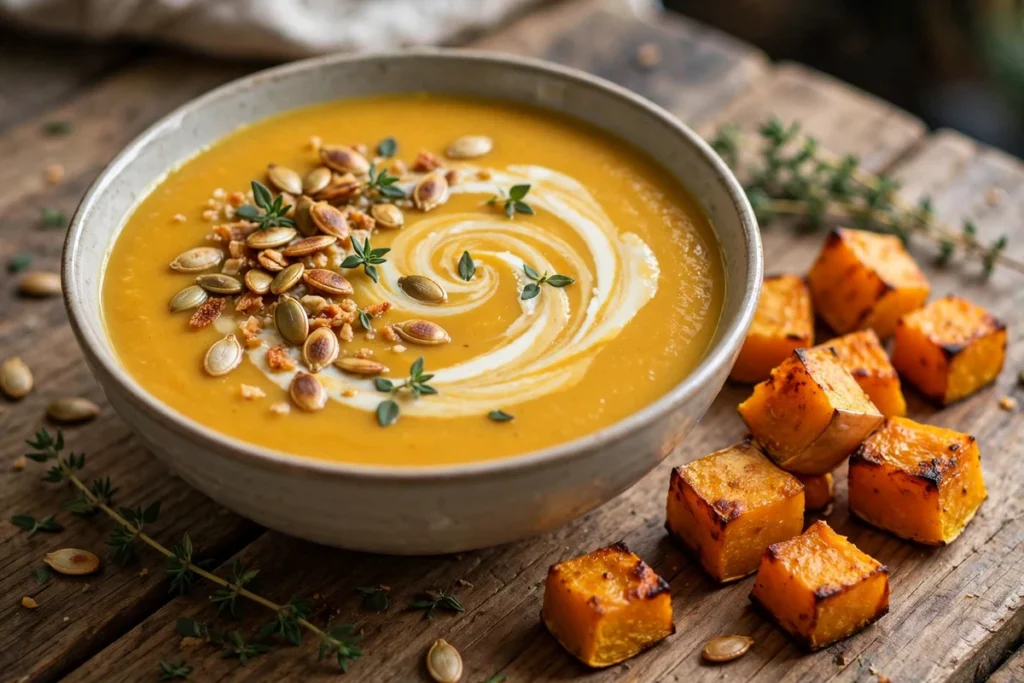
A bowl of velvety butternut squash soup with a swirl of cream and toasted seeds on top.
Watch: Butternut Squash Soup
Ina Garten’s butternut squash soup is the benchmark: onion and squash simmered in stock, puréed silky with an immersion blender, and finished with half-and-half and crème fraîche.
At a Glance: Butternut Squash Soup
Roasting versus sautéing and the savory foundation, from the guide.
| Topic | Notes |
|---|---|
| Roasting | Maximum depth — caramelized edges give the soup a roasted sweetness |
| Sautéing | Faster and brighter, letting the squash’s fresh flavor lead |
| The hybrid | Sauté aromatics, add roasted squash — the best of both |
| The aromatic base | Onion, carrot, and celery build the savory foundation under the sweetness |
| Blending | An immersion blender gives a silky texture with no extra dishes |
| Timing | About 1 hour 15 minutes total |
Frequently Asked Questions
Can I make butternut squash soup without cream?
Yes — a well-blended squash soup is naturally thick and creamy without any dairy. Finish with a swirl of good olive oil instead, or use coconut milk for richness. The soup is easily made fully vegan by using olive oil and vegetable broth throughout. No one will miss the cream if the blending is thorough.
Do I have to roast the squash, or can I just boil it?
You can simmer cubed squash directly in the broth (about 20 minutes until tender), and the soup will be good — brighter and cleaner-tasting. But roasting adds caramelized depth that simmering cannot replicate. If the oven is already on for Thanksgiving, roasting costs you nothing but a sheet pan. The hybrid method (half roasted, half simmered) gives the most complex flavor.
How do I get my soup really silky?
Three things: blend much longer than you think necessary (2 to 3 minutes per batch in a high-powered blender), make sure the squash is completely tender before blending, and strain through a fine-mesh sieve. Silkiness is about particle size — thorough blending plus straining is the professional formula.
Can I freeze butternut squash soup?
Yes, beautifully — for up to 3 months. Freeze the soup before adding cream (dairy can separate when frozen). Thaw overnight in the refrigerator, reheat gently, then stir in the cream and re-season. The texture after thawing is nearly identical to fresh.
Why does my squash soup taste bland?
The usual trio: under-salted, no acid finish, and under-roasted squash. Salt in passes until the flavor turns on, add a tablespoon of cider vinegar or lemon juice at the end (transformative), and roast the squash until deeply caramelized. A pinch of cayenne adds background warmth that reads as complexity.
What is the difference between butternut squash soup and pumpkin soup?
Butternut squash has denser, sweeter, silkier flesh that needs little help — the classic preparation is simple, elegant, and savory-leaning. Pumpkin (especially fresh pumpkin) is more watery and vegetal, and pumpkin soup traditionally leans on bolder spicing — curry, coconut, ginger — for character. We cover the pumpkin approach in detail in our pumpkin soup recipe; the two soups are distinct dishes, not interchangeable ones.
Conclusion
Exceptional butternut squash soup is a study in restraint and technique: deeply roasted squash, a proper savory foundation, patient blending, bold final seasoning, and garnishes chosen with intention. None of it is difficult — it just requires caring about the details that separate velvet from baby food. Make it ahead, set out the garnish bar, and let your Thanksgiving begin with a bowl of pure autumn. For the rest of your holiday menu, from starters to sweets, explore our Thanksgiving recipes collection — and do not skip the fried sage.