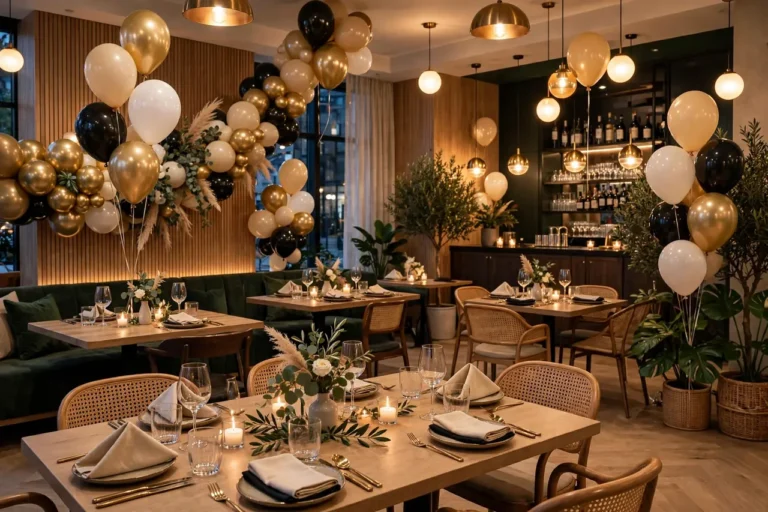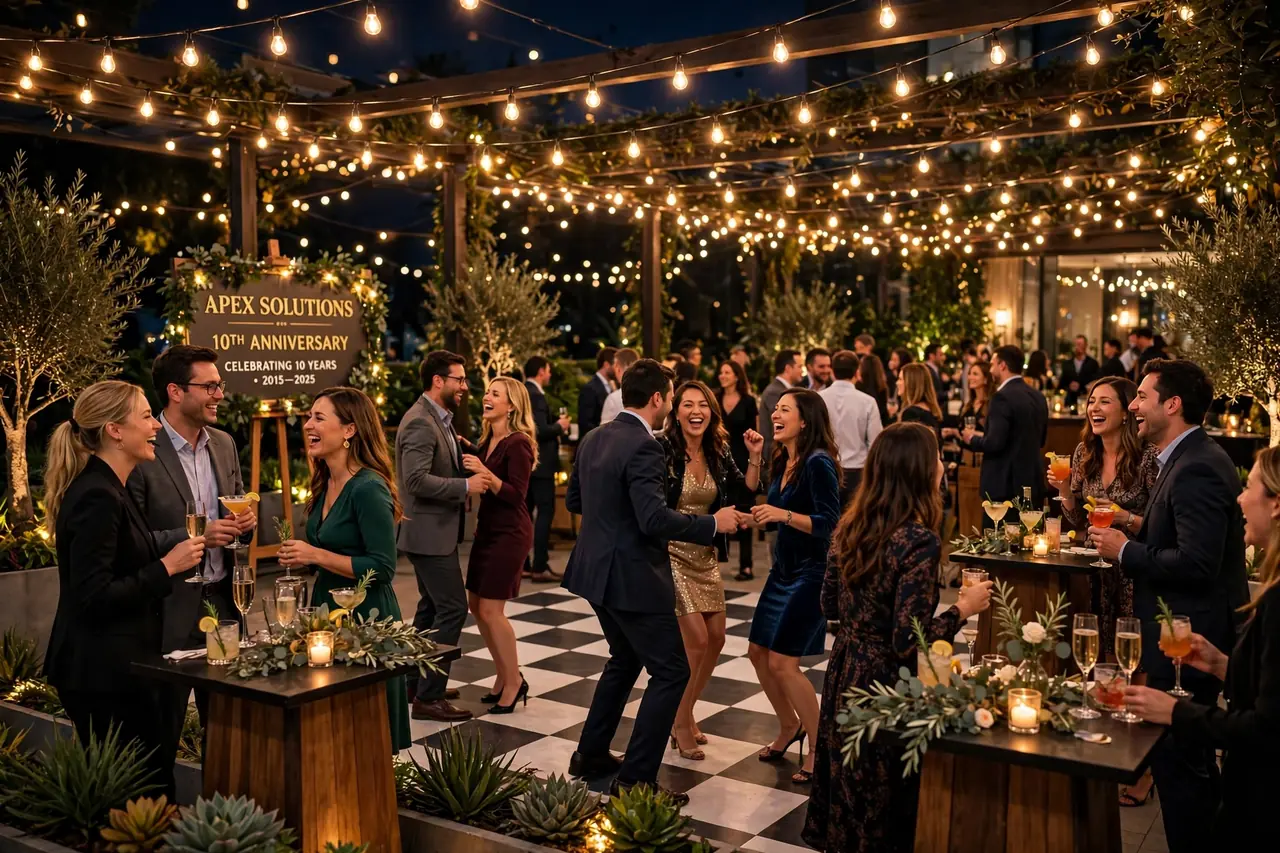
The anniversary party is the centerpiece of every business milestone celebration — the night (or day) when the whole story comes together in one room. But “let’s throw a party” is where most anniversary planning goes vague, and vague parties are forgettable parties. These business anniversary party ideas cover everything: 40+ themes, eight proven formats, a complete run-of-show framework, food and entertainment guidance, and the planning discipline that separates legendary parties from awkward ones.
A great anniversary party does three jobs at once. It thanks the people who built the business. It tells the company’s story in a way guests can feel. And it creates the photos, videos, and memories that market the business for years afterward. This guide shows you how to design all three deliberately — whether you are planning an intimate dinner for twenty or a blowout for five hundred.
First, Choose Your Format
Theme is decoration; format is architecture. Pick the format before the theme, because the format determines the guest experience, the budget, and the planning workload:
- The gala dinner. Seated, formal, program-driven. Best for: milestone years (10, 25, 50), impressing VIPs and press. Requires: real budget, professional planning.
- The cocktail party. Standing, mingling, light program. Best for: 100–300 guests, mixed audiences of staff and customers. Requires: good venue flow, great drinks.
- The open house. Drop-in, tours and demos, family-friendly. Best for: engaging the community and customers’ families. Requires: a space worth showing off.
- The festival. Outdoor, multi-activity, all-day. Best for: big teams, family-inclusive celebrations, community goodwill. Requires: weather planning and logistics muscle.
- The awards night. Ceremony-centered with entertainment. Best for: honoring employees and partners. Requires: genuine awards worth winning.
- The intimate dinner. 12–30 guests, private room, conversation-first. Best for: founders’ circles, VIP clients, first anniversaries. Requires: a great restaurant or chef.
- The virtual party. Produced online event with interactive elements. Best for: distributed teams, far-flung customers. Requires: good production and shipped celebration kits.
- The week-long celebration. A series of small events instead of one big one. Best for: retail and hospitality businesses, tight budgets. Requires: stamina and a content plan.
Match the format to the milestone’s weight and the audience’s expectations. A tenth anniversary deserves at least cocktail-party production; a first anniversary shines as an intimate dinner. When the guest list includes valuable strangers — prospects, press, officials — everyone on the team should be ready to represent the company well; how to network effectively is worth a pre-party read, and our Career & Success section has more professional-polish guides.
40+ Business Anniversary Party Themes
The theme is the party’s personality — it guides decor, dress code, food, music, and invitations. Pick one that fits the company’s character, not just what’s trendy. The best themes connect to the business’s actual story.
Story-Driven Themes (1–12)
- Through the Decades. Each room or table represents an era of the company. Guests journey through time as they mingle.
- Founding Year Throwback. Recreate the year the business started — music, fashion, prices, news headlines. Nostalgia with research behind it.
- Then & Now. Every decor element pairs the past with the present: old logo/new logo, first office/today, original team/now.
- The Timeline Party. A physical timeline winds through the venue; each milestone station has food, photos, and a story.
- Origin Story. Decorate like the founding moment — the garage, the first shop, the original city. Honor the humble start lavishly.
- Milestone Masquerade. Formal gala where each mask or table represents a company milestone. Mystery plus meaning.
- Legacy Builders. An elegant theme honoring everyone who built the company — with a hall-of-fame wall as the centerpiece.
- The Next Chapter. Futuristic theme focused on where the company is headed. Less nostalgia, more launch energy.
- Customer Heroes. Every table named for a legendary customer, with their story displayed. Guests love finding “their” table.
- Team Legends. Like above, but honoring employees — the characters and stories that define the culture.
- Around the World. If the business expanded geographically, each area celebrates a market or office location.
- Product Evolution. Display every version of the product ever made, from prototype to current. A museum of your own making.
Atmosphere Themes (13–26)
- Golden Anniversary Gala. All gold, black-tie, timeless. Works for any milestone; the gold ties to the “golden” achievement.
- Roaring Twenties. Jazz, art deco, glamour — perfect if the founding era or company personality has vintage flair.
- Hollywood Premiere. Red carpet, paparazzi-style photos, award-show program. Everyone feels famous for a night.
- Carnival / Fairground. Games, prizes, food stalls, fun for all ages. Proven winner for family-inclusive company parties.
- Garden Party. Outdoor elegance: string lights, lawn games, farm-to-table food. Relaxed but beautiful.
- Rooftop Soirée. Skyline views, cocktails, DJ. Modern, photogenic, and effortlessly cool.
- Masquerade Ball. Mystery and elegance; the masks make for spectacular photos.
- Neon Nights. Bold, modern, high-energy — great for younger teams and creative industries.
- Vintage Speakeasy. Craft cocktails, jazz, hidden-room vibes. Intimate and stylish.
- Tropical Escape. Tiki torches, island food, steel drums. Transforms any venue into a vacation.
- Winter Wonderland. For cold-season anniversaries: whites, silvers, candlelight, cozy luxury.
- Enchanted Forest. Greenery, fairy lights, organic textures. Magical without being childish.
- Casino Royale. Gaming tables (for prizes, not cash), glamour, high-stakes fun.
- Superhero HQ. Playful and team-spirited — every department gets a hero identity. Surprisingly moving when done with heart.
Activity-Centered Themes (27–40)
- Talent Showcase. Employees perform — music, comedy, magic. The hidden talents reveal always steals the show.
- Cook-Off Celebration. Departments compete in a cooking contest judged by guests. Delicious team-building.
- Art Night. Collaborative mural, live painters, or a gallery of employee art. The mural becomes permanent decor.
- Game Tournament. Trivia, ping-pong, video games, or field-day competitions with an anniversary trophy.
- Wine & Paint / Craft Party. Guided creative activity plus drinks. Guests leave with something they made.
- Murder Mystery. A themed mystery where the plot weaves in company history. Unforgettable and hilarious.
- Decades Dance Party. DJ plays one set per era of the company; costume changes encouraged.
- Food Truck Festival. Multiple trucks, outdoor seating, live music. Casual, crowd-pleasing, and logistically simple.
- BBQ & Brews. Smoked meats, local beers, lawn games. The ultimate relaxed company celebration.
- Brunch Bash. A daytime anniversary brunch — mimosas, great food, sunlight. Family-friendly and budget-smart.
- Wellness Day Party. Yoga, massages, healthy food, mindfulness. A celebration that actually restores people.
- Volunteer Celebration. The party is a service project followed by a feast. Meaningful and press-worthy.
- Sports Day. Company Olympics with silly and serious events. Competitive bonding at its best.
- Karaoke Night. Private rooms or a stage; liquid courage and legendary performances guaranteed.
Watch: A 65th Anniversary Turned Into a Parking-Lot Carnival
Themes come alive in execution. This video shows how one company transformed its own parking lot into a full carnival for its 65th anniversary — midway games, an on-site grill, and a day employees’ families still talk about. Proof that the best theme is the one your people will actually enjoy:
The Run-of-Show: Engineering the Perfect Evening
Great parties feel effortless because someone engineered every minute. Build your run-of-show backward from the emotional arc you want: warm welcome, rising energy, emotional peak, joyful release. Here is a proven 4-hour template for a 150-guest anniversary party:
| Time | Segment | Purpose & Notes |
|---|---|---|
| 0:00–0:30 | Arrival & welcome drinks | First impressions: music playing, timeline installation visible, greeters at the door. No program — let people settle. |
| 0:30–1:15 | Mingling & appetizers | Energy builds. Photo booth opens. Founder works the room personally — this is prime connection time. |
| 1:15–1:30 | Welcome & founder toast | Short, genuine, under 5 minutes of speaking. Thank the room; set the emotional tone. |
| 1:30–2:15 | Dinner service | Tables become conversation zones. Play the tribute video on screens during dessert — captive, emotional audience. |
| 2:15–2:45 | Awards & surprises | The emotional peak: tenure awards, customer honors, the surprise tribute. Keep it tight — 30 minutes max. |
| 2:45–3:30 | Celebration & dancing | Release the energy: live music or DJ, dessert bar, open mingling. This is the joy guests remember. |
| 3:30–4:00 | Farewell | Anniversary favors at the exit, team at the door thanking guests. End on warmth, not a slow fizzle. |
The non-negotiable rules: never let the formal program exceed 45 minutes total, never serve the emotional peak (awards, tribute video) before guests have eaten, and always have the farewell moment designed — parties that just “wind down” leave guests with a fading memory instead of a warm one.
Budgeting the Party: Where the Money Goes
| Category | Share of Budget | Spend Smart | Save Here |
|---|---|---|---|
| Venue | 20–30% | Character and flow matter more than square footage | Use your own space; go off-peak (Thursday, January) |
| Food & drink | 30–40% | Quality over quantity; one signature item beats a sprawling mediocre spread | Brunch or lunch instead of dinner; beer/wine instead of full bar |
| Entertainment | 10–15% | One memorable act beats three forgettable ones | Curated playlist + employee talent showcase |
| Decor & theme | 10–15% | Lighting transforms cheap decor; invest in light, not linens | DIY photo timeline; borrow before buying |
| Photo/video | 10% | Non-negotiable — this is the permanent record | Student photographers with a shot list for smaller parties |
| Contingency | 10% | Something always costs more or breaks | — |

Food and Drink: The Make-or-Break Element
Guests forgive mediocre decor; they never forgive bad food. For anniversary parties, the menu should do double duty: satisfy and storytell. Name a signature cocktail after the founding year or a legendary product. Serve a dish from the original menu alongside its modern version. The anniversary cake is not optional — it is the photographic centerpiece — so make it spectacular and on-theme.
Plan quantities generously: running out of food is the single most damaging party failure. For cocktail parties, plan 6–8 appetizer pieces per person for a 2-hour event, 10–12 for longer. For seated dinners, confirm dietary needs in the RSVP and have the caterer prepared for 10% more guests than confirmed — no-shows are offset by plus-ones and staff. And always, always have water everywhere; dehydrated guests leave early.
Entertainment That Actually Entertains
The entertainment should match the theme and the audience’s energy curve. Early evening wants background — a jazz trio, an acoustic set, a roaming magician. The post-dinner peak wants participation — a live band with dance floor, an interactive game, the awards with real production value. Late night wants release — DJ, dancing, the photo booth at full chaos.
The secret weapon of anniversary parties is the employee talent reveal. Every company has hidden musicians, comedians, and performers; a 20-minute employee showcase routinely outperforms hired entertainment on emotional impact, because the audience knows the performers. Audition casually, rehearse once, and watch the room erupt. Just keep it voluntary and short — forced fun is the enemy of actual fun.
For the mingling portions, give guests something to do besides stand with a drink. The timeline installation, the then-and-now photo wall, and a “predict the future” station (guests write predictions for the next milestone) all spark conversations between strangers — which is the actual point of bringing everyone together.
Invitations and RSVP: Getting the Right People in the Room
The party is only as good as its guest list. Build it in tiers: must-invite (team, top customers, key partners), should-invite (alumni, community leaders, press), and nice-to-invite (prospects, neighbors, friends of the company). Send save-the-dates 8–12 weeks out for large parties, formal invitations 4–6 weeks out. Make the invitation itself beautiful — it sets expectations and becomes a keepsake.
Track RSVPs obsessively and follow up personally with non-responders in the final two weeks; a phone call converts far better than a third email. Plan for 10–15% attrition on the RSVP count, and have a small waitlist or standby list for high-demand events. For VIPs, the founder should invite personally — a call or handwritten note, not a mass email. Being personally invited by the founder is itself an honor that increases attendance.

Day-Of Coordination: The Invisible Machine
On party day, the planning team should be invisible and the celebration should feel inevitable. That requires a minute-by-minute run sheet, a single decision-maker (the “show caller”), and radios or a group chat for the team. Vendors get arrival times, setup windows, and one point of contact — never let five staffers give the caterer five different instructions.
Build a 30-minute buffer into the setup schedule; something always runs long. Do a full walkthrough two hours before doors: test the AV with the actual tribute video file (not a similar one), check the lighting at event brightness, taste the food, and confirm the photographer knows the must-have shots. Station greeters at every entrance with the guest list and a genuine welcome — the first 60 seconds set the tone for the whole evening.
Assign one person to guest experience and nothing else: watching for the overwhelmed newcomer, the empty drink station, the timeline display that fell over. Great parties are not just planned; they are actively hosted in real time.
Party Mistakes That Kill the Vibe
- The endless program. More than 45 minutes of speeches, awards, and videos will empty the room. Ruthlessly cut.
- Bad sound. If guests cannot hear the speeches, the emotional centerpiece fails. Hire a real AV tech for anything over 80 guests.
- Running out of food or drink. The unforgivable sin. Over-order by 10% and have a backup plan.
- No flow. Bottlenecks at the bar, the buffet, or the entrance create frustration. Map guest movement like a designer.
- Forgetting the introverts. Not everyone dances. Provide quiet zones, activities, and conversation starters for the mingling-averse.
- Skipping the farewell. Parties that fizzle out leave a fading last impression. Design the goodbye: favors, thanks, a final moment.
- No capture plan. The biggest post-party regret, every time. Professional photo/video is the highest-ROI line item.
- Founders hiding in the green room. The anniversary is about the people — the founder should be the most visible, most grateful person in the room.
After the Party: Extending the Value
The party is the middle of the campaign, not the end. Within 48 hours: personal thank-yous to VIPs, vendors, and the team. Within a week: the photo gallery published and shared, the highlight reel cut, press follow-ups sent with the best images. Within two weeks: the metrics debrief — attendance vs. RSVP, social engagement, press pickups, new contacts, revenue impact.
Promote the anniversary content strategically afterward. The tribute video becomes the website’s about-page centerpiece. The best photos become permanent wall decor and a year’s worth of social throwbacks. The digital marketing playbook for small business covers how to squeeze lasting value from event content across email and social. And when guests exchange cards at the party, a quick refresher on business card etiquette beforehand ensures those new connections start right.
Your Anniversary Party Checklist
- Choose the format, then the theme — in that order.
- Set the budget with a 10% contingency before booking anything.
- Build the guest list in tiers; send save-the-dates early.
- Book venue, caterer, entertainment, and photo/video 3+ months out.
- Design the run-of-show around the emotional arc; cap formal program at 45 minutes.
- Collect anniversary content: photos, videos, stories, testimonials.
- Plan food generously; confirm dietary needs; never run out.
- Rehearse AV, brief speakers, and walk the venue before doors.
- Host actively on the day; designate a guest-experience lead.
- Follow up within 48 hours; publish galleries; debrief metrics.
Signature Moments: 10 Party Elements Guests Never Forget
Beyond the standard program, the parties people talk about for years have signature moments — designed surprises that become legend. Borrow freely:
- The surprise tribute film. Secretly recorded messages from customers, alumni, and families, premiered mid-party. Emotional dynamite.
- The anniversary time capsule sealing. Guests add predictions and notes; the capsule is sealed on stage with ceremony.
- The founder’s unscripted story. One true, never-before-told story from the early days. Vulnerability in front of a crowd is unforgettable.
- The reveal. A new product, new branding, or new location unveiled live. The collective gasp is the moment.
- The flash-mob toast. The whole team rises at a signal for a synchronized toast. Simple, powerful, photogenic.
- The legacy award. A surprise honor for someone who never expected it — the quiet hero finally seen.
- The decade dessert. A spectacular cake reveal with sparklers, or a dessert representing each era of the company.
- The confetti drop. Timed to the emotional peak, not the end. A $200 effect with a $20,000 feeling.
- The midnight (or 9 PM) announcement. One piece of genuine news saved for the party — guests love being insiders.
- The final song. End with the company’s unofficial anthem or a meaningful group singalong. Shared music bonds a room like nothing else.
Pick two or three, execute them flawlessly, and keep the rest of the party simple. Signature moments work because they contrast with the familiar — a mostly classic party with two astonishing surprises beats a party where everything screams for attention.
Common Anniversary Party Mistakes (and How to Avoid Them)
The most common mistake anniversary party hosts make is over-scheduling. A minute-by-minute agenda that races from speeches to games to dinner leaves guests no room to mingle, eat, or simply enjoy the moment. An anniversary party is a celebration, not a conference. Build the schedule around two anchor moments — the welcome toast and the milestone tribute — and leave generous open time between them. Guests who can relax will stay longer and remember more.
The second trap is neglecting the non-drinkers. When the bar is the center of attention, a third of your guests can feel invisible. Set up an equally attractive alcohol-free station — a mocktail bar, a specialty coffee cart, or infused sparkling water served in real glassware — so everyone holds something worth sipping. Thoughtful hosts are remembered for this detail.
Third, do not let the slideshow run long. Five minutes of photos and tributes lands beautifully; twenty minutes empties the room. Keep it tight, keep it moving, and let the stories continue in conversation afterward instead of on a screen.
Finally, plan the exit as carefully as the entrance. A rushed or awkward goodbye — lights up, music off, everyone shuffled toward the door — undoes the warmth of the entire evening. End with a parting favor at the door, a short thank-you announcement from the host, and clear directions to the exit. Guests remember the last five minutes almost as vividly as the first five, so make them feel appreciated all the way out.
Frequently Asked Questions
How far in advance should we plan a business anniversary party?
For a large party (100+ guests): 4–6 months. For a mid-size party (30–100): 2–3 months. For an intimate dinner: 4–6 weeks. Venues and quality vendors book out first, so those are always the critical-path items. Whatever the size, start the memory-collection (photos, videos, stories) earlier than you think necessary — it always takes longer than planned.
How much does a business anniversary party cost?
Realistic ranges: $2,000–$8,000 for an intimate party of 20–40; $8,000–$30,000 for a mid-size celebration of 50–150; $30,000–$100,000+ for a large gala. The biggest cost drivers are venue, catering, and headcount. Per-person costs typically run $75–$250 depending on market and format.
Should we hire a professional event planner?
For 100+ guests or budgets above $20,000, usually yes — planners earn their fee in vendor negotiations, day-of coordination, and crisis prevention. For smaller parties, a disciplined internal team with a clear checklist works well. Either way, hire professional photography; it is the highest-ROI spend at any scale.
How do we choose between a formal gala and a casual party?
Match the format to the milestone, the audience, and the company culture — in that order. Milestone years (10, 25, 50) and VIP-heavy guest lists lean formal; team-centered celebrations and creative industries lean casual. When in doubt, choose the format your guests will enjoy most, not the one that photographs most impressively. A joyful casual party beats a stiff gala every time.
What is the ideal party length?
Three to four hours for evening parties; two to three for open houses or daytime events. Shorter feels abrupt, longer exhausts guests and staff. The formal program (speeches, awards, videos) should never exceed 45 minutes within that window.
How do we handle plus-ones and families?
Decide explicitly and communicate clearly on the invitation. For team-centered parties, including families usually increases attendance and warmth. For VIP or networking-heavy events, plus-ones can dilute the purpose — it is acceptable to keep those adults-only. Whatever you decide, state it plainly; ambiguity creates awkwardness.
What if it rains on our outdoor anniversary party?
Always have a weather plan decided at booking: a tent, an indoor backup space, or a rain date communicated in advance. For anything over 50 guests outdoors, a tent is insurance worth buying. Check the forecast at 7 days, 3 days, and 24 hours, and make the call early enough to execute the backup well.
How do we make a party memorable on a small budget?
Invest in the three things guests actually remember: genuine warmth (the founder present and grateful), good food (even simple food, done well), and one surprise (an unexpected tribute, a reveal, a performance). Everything else is supporting cast. A $3,000 party with heart outperforms a $30,000 party without it.
Should speeches be rehearsed?
Yes — every speaker gets a time limit and at least one rehearsal. The best anniversary speeches sound spontaneous because they were prepared. Give speakers the framework: one true story, specific thanks, one forward look, under five minutes. Offer to review drafts; most people are relieved to get help.
How do we measure whether the party was worth it?
Track attendance vs. RSVP, guest satisfaction (a quick post-event survey), social and press coverage, new contacts and leads generated, and team morale in the following weeks. Compare against the goals you set before planning — which is why setting goals first matters. And count the intangibles honestly: sometimes the ROI is a team that would run through walls for the company, and that is worth more than any metric.
The Bottom Line
A business anniversary party is not just a celebration — it is the company’s story told in three dimensions, with food. Get the format right, choose a theme with genuine connection to the story, engineer the evening’s emotional arc, feed people well, and capture everything. Above all, make it human: the founder visible and grateful, the team honored specifically, the guests feeling like insiders in something that matters. Do that, and the party will not just be remembered — it will become part of the legend the next anniversary tells.