

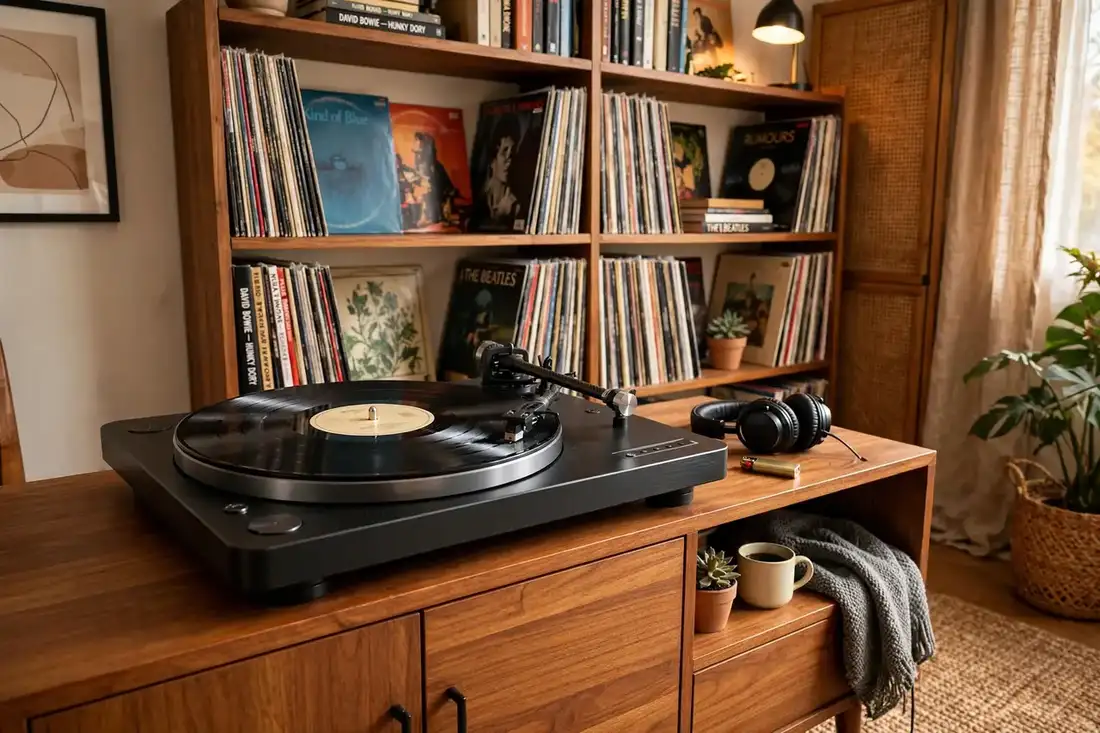
Best Turntable for Beginners: Start Your Vinyl Journey
The best turntable for beginners makes vinyl’s magic accessible: warm analog sound, the ritual of dropping the needle, album art at full scale — without the frustration of cheap all-in-one players that damage records and sound terrible. A proper starter turntable ($150–$350) sounds dramatically better than suitcase players and treats your vinyl right.
Beginner priorities: quality tonearm and cartridge (tracking without damaging records), adjustable counterweight and anti-skate (proper setup matters), built-in phono preamp (simplifies connection to any speakers), and upgradability (better stylus/cartridge later). This guide picks turntables that respect both your ears and your records.
Whether you’re inheriting a collection, crate-digging, or just curious about the vinyl revival, the right turntable starts the journey properly. Drop the needle.
Why Not a Suitcase Player
The honest warning: cheap suitcase/all-in-one players ($50–$100) use heavy, non-adjustable tonearms with ceramic cartridges that track too heavily — they wear records faster and sound thin and harsh. They’re the #1 regret purchase in vinyl; countless beginners ‘upgrade’ within months, having damaged their first records.
The minimum viable turntable ($150+) has: adjustable counterweight (proper tracking force), a magnetic cartridge (gentler, better sounding), and a real tonearm (balanced, not spring-loaded). The Audio-Technica AT-LP60X ($150) is the floor — fully automatic, decent sound, record-safe. Below this, you’re buying a toy that eats vinyl. Spend the minimum properly.
- Heavy tracking: Suitcase players wear records; avoid.
- AT-LP60X floor: $150; automatic, record-safe minimum.
- Adjustable weight: Proper tracking force protects vinyl.
- Magnetic cartridge: Gentler and better sounding.
- Regret purchase: #1 vinyl mistake; buy right once.
Related reading: Best Golf Clubs for Beginners: A Smart Buying Guide.
Top Pick: Best Overall Beginner Turntable
The Audio-Technica AT-LP120X ($350) is the beginner benchmark: direct drive (consistent speed, durable), adjustable everything (counterweight, anti-skate, VTA), VM95 cartridge series (excellent, upgradable stylus), built-in phono preamp (connect to any speakers), and USB output (digitize records). It’s the turntable that grows with you — upgrade the stylus, not the deck.
Alternatives: Fluance RT81 ($250; belt drive, warm sound, beautiful wood plinth — the aesthetic pick), Pro-Ject Debut Carbon EVO ($500; audiophile entry, carbon tonearm — the ‘buy once’ choice). Any of these properly set up delivers genuine vinyl magic. The LP120X wins on versatility and upgrade path.
- AT-LP120X: $350; the benchmark; grows with you.
- Fluance RT81: $250; belt drive, beautiful, warm.
- Pro-Ject Debut EVO: $500; audiophile entry point.
- Upgradable stylus: VM95 series; improve without new deck.
- Built-in preamp: Connect to any powered speakers.
Related reading: Best Running Shoes for Beginners.
Belt Drive vs. Direct Drive
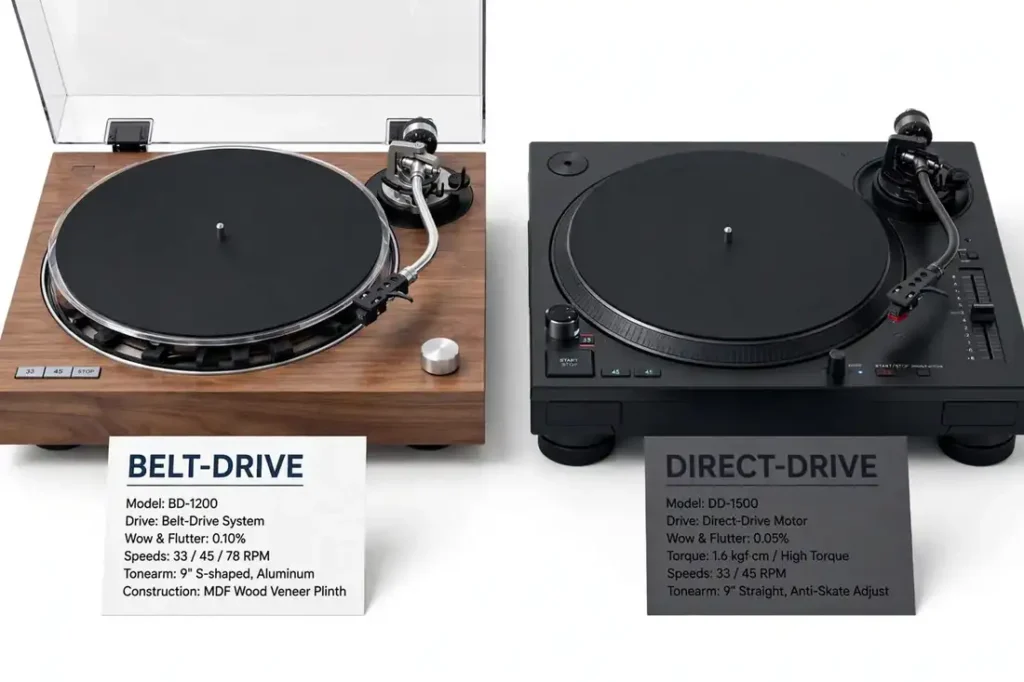
The drive debate: belt drive (motor isolated by elastic belt — less vibration, theoretically quieter; Fluance, Pro-Ject, Rega) vs. direct drive (platter on motor spindle — consistent speed, durable, DJ-friendly; Technics, AT-LP120X). For home listening, both sound excellent — the differences are subtle and endlessly debated.
Beginner guidance: don’t choose by drive type; choose by overall package (tonearm, cartridge, build, features). Belt drives need occasional belt replacement ($20, every few years); direct drives run for decades. Either serves beginners beautifully — the cartridge and setup matter far more than the drive mechanism.
- Belt: Isolated motor; subtle quietness edge.
- Direct: Consistent speed; decades durable.
- Both excellent: Differences subtle; debated endlessly.
- Package matters: Tonearm and cartridge over drive type.
- Maintenance: Belts replace every few years; $20.
Related reading: Best Tennis Rackets for Beginners: 2026 Buying Guide.
Cartridges and Styli Explained
The cartridge (with its stylus/needle) is the turntable’s voice: it converts groove vibrations to signal. Beginner cartridges: Audio-Technica VM95 series (excellent, $50–$200 stylus upgrades), Ortofon 2M Red ($100; detailed, lively), Sumiko Rainier ($150; warm, musical). The stylus wears — replace every 800–1000 hours (a worn stylus damages records).
The upgrade path is the point: a $350 turntable with a $150 stylus upgrade outperforms $500 turntables with basic cartridges. Learn to align cartridges (protractors; free printables) and set tracking force (scale; $15) — proper setup extracts the cartridge’s best and protects records. The stylus is where the music meets the machine.
- VM95 series: Excellent; $50–$200 stylus upgrades.
- Replace styli: 800–1000 hours; worn damages records.
- Upgrade path: $150 stylus transforms $350 decks.
- Align properly: Protractor + scale; setup matters.
- Tracking force: Correct weight; protects vinyl.
Related reading: The Best Anniversary Dinner Background Music Playlist: A Course-by-Course Guide.
Phono Preamps and Speakers
The signal chain: turntable → phono preamp (boosts and equalizes the tiny cartridge signal) → amplifier/speakers. Many beginner turntables include switchable preamps (use it if your amp lacks ‘phono’ input; bypass it if your amp has one — usually better). Speaker options: powered speakers (simplest — Edifier, Klipsch; plug and play), or passive speakers + amp (better long-term).
Budget allocation: turntable $250–$350, speakers $150–$300 (don’t pair a $350 turntable with $50 speakers — the chain is only as strong as its weakest link), accessories $50. A balanced $500–$700 total system sounds genuinely wonderful. Upgrade speakers before the turntable — transducers make the biggest sonic difference.
- Preamp needed: Built-in or amp’s phono stage.
- Powered speakers: Simplest; Edifier/Klipsch; plug and play.
- Balance budget: $350 deck deserves $150+ speakers.
- Speakers first: Transducers; biggest sonic upgrade.
- $500–$700 total: Genuinely wonderful starter system.
Setting Up Properly
Setup essentials: level the turntable (bubble level; uneven platters mistrack), set tracking force (manufacturer spec via counterweight + scale), set anti-skate (matching value; prevents inward skating), align the cartridge (protractor; proper geometry), and place on a stable surface (away from speakers — feedback; wall shelves are ideal).
These 30 minutes determine everything: proper setup sounds dramatically better and treats records gently; poor setup sounds dull and wears vinyl. Learn it once (video tutorials walk through your exact model), verify annually. Setup is the free upgrade — the difference between vinyl magic and vinyl disappointment.
- Level it: Bubble level; uneven mistracks.
- Tracking force: Spec value; scale-verified.
- Anti-skate: Match tracking force; prevents skating.
- Stable surface: Away from speakers; wall shelf ideal.
- 30 minutes: The free upgrade; learn once.
Caring for Records
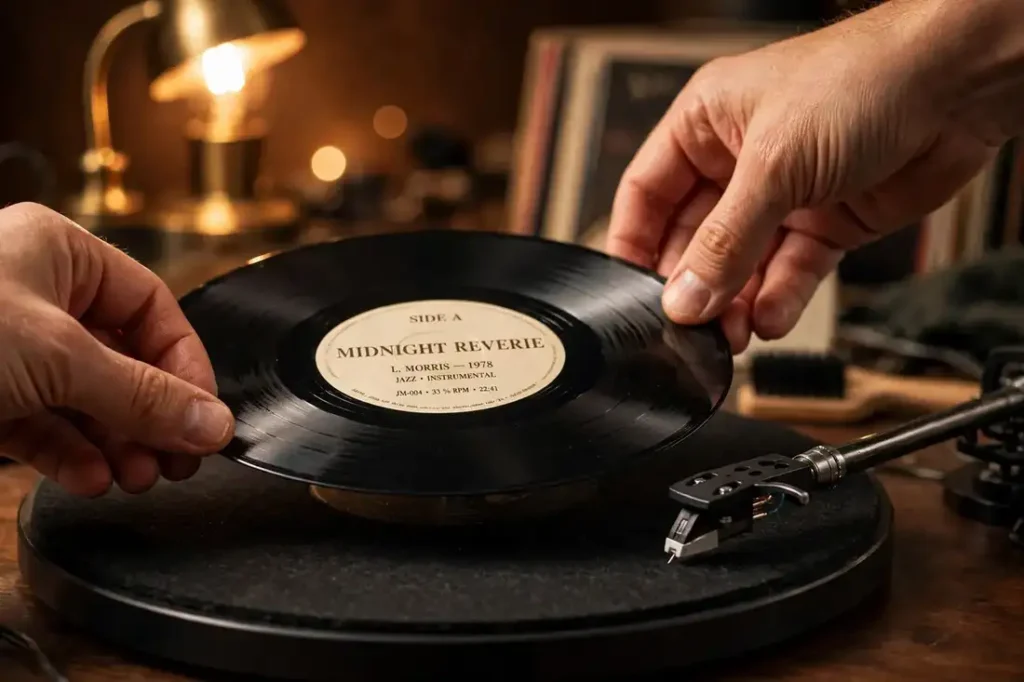
Vinyl care: handle by edges/labels (fingerprints attract dust and cause noise), clean before playing (carbon fiber brush; $15; every play), deep clean periodically (spin-clean or vacuum machines for used records), store vertically (never stack; warps), use inner sleeves (anti-static; replace paper sleeves), and keep away from heat/sun (warping is permanent).
Used record buying: inspect visually (scratches catch light; hold at angle), check for warps (sight along the surface), clean before first play (used bins are dusty), and grade honestly when reselling. Well-kept vinyl lasts generations; abused vinyl is noise. The ritual of care is part of vinyl’s pleasure — mindful listening starts with mindful handling.
- Edges only: Fingerprints cause noise; handle carefully.
- Brush every play: $15 carbon fiber; essential habit.
- Store vertical: Never stack; warps are permanent.
- Anti-static sleeves: Replace paper; reduce dust.
- Inspect used: Light-angle check; warp sighting.
Building a Collection
Collecting strategy: buy what you love (not what’s ‘collectible’ — taste first), start with favorites (albums you know; the joy is immediate), explore used bins ($1–$5 discoveries; the thrill of the hunt), check pressings (original vs. reissue; Discogs guides quality), and set a budget (vinyl is gloriously, dangerously collectible).
Where to buy: local record stores (community, listening stations, fair prices), Discogs (the marketplace; graded, vast), estate sales and thrift stores (dollar-bin gold), and new releases (support artists; modern pressings are excellent). A collection built on love beats one built on investment — play your records, don’t vault them.
- Taste first: Love over collectibility; joy immediate.
- Used bins: $1–$5; the thrill of the hunt.
- Discogs: Graded marketplace; pressing guidance.
- Budget it: Gloriously dangerous hobby; set limits.
- Play them: Collections are for listening.
Vinyl Sound: What to Expect
Honest sound expectations: vinyl’s ‘warmth’ is real but subtle (gentle high-frequency roll-off, harmonic richness), surface noise exists (pops and crackles; part of the charm for most, cleaned by good pressings and care), and mastering matters more than format (a great digital master beats a bad vinyl pressing). Vinyl doesn’t ‘beat’ digital technically — it offers a different, ritual-rich experience.
What vinyl does uniquely: the ritual (selecting, cleaning, dropping the needle — intentional listening), album-length attention (no shuffle; the artist’s sequence), tangible connection (artwork, liner notes, physical media), and the hunt (crate digging is joy). The sound is wonderful; the experience is the point. Expect magic, not miracles.
- Warmth real: Subtle; harmonic richness, gentle roll-off.
- Surface noise: Pops exist; charm or annoyance, your call.
- Mastering rules: Great master beats format debates.
- Ritual value: Intentional listening; album attention.
- Magic, not miracles: Experience over technical supremacy.
Growing the Hobby
The vinyl journey deepens: upgrade stylus (the best $150 in audio), explore genres (jazz and classical shine on vinyl; your taste will expand), join communities (record clubs, Discogs groups, local stores’ events), learn basic maintenance (belt changes, cartridge alignment — satisfying DIY), and consider the endgame (only if passion demands: $1000+ decks, tube phono stages).
Keep perspective: the $500 system plays music beautifully; the $5000 system plays it slightly more beautifully. Diminishing returns hit hard in audio — spend on records, not just gear. The hobby’s heart is the music and the ritual; everything else serves that. Spin daily, dig often, and enjoy every pop and crackle.
- Stylus upgrade: Best $150 in audio; transformative.
- Explore genres: Taste expands with the format.
- Diminishing returns: Records over gear; music first.
- DIY maintenance: Satisfying; keeps systems singing.
- Spin daily: The ritual is the reward.
Turntable Setup and Calibration
Setup essentials: level (the bubble; the foundation), tracking force (the gauge; the grams; the manual), anti-skate (the match; the balance), cartridge alignment (the protractor; the geometry), and the belt (the seated; the direct). The order: level (first; the base), force (the dial; the spec), alignment (the careful; the precise), and the test (the record; the listen).
The details: tracking force (too light; the mistrack; too heavy; the wear), anti-skate (the inward; the compensation), VTA (the advanced; the parallel), and the azimuth (the expert; the level). Tools: scale (the digital; $15), protractor (the printed; the free), level (the bubble; the app), and the patience (the virtue; the essential).
The payoff: calibrated (the sound; the preservation), records last (the gentle; the correct), and the music (the reward; the vinyl). Setup is the ritual; the calibrated turntable sings. Learn once; enjoy forever.
- Level first: Bubble; the foundation.
- Tracking force: Gauge; the spec.
- Anti-skate: Match; the balance.
- Align cartridge: Protractor; geometry.
- Too light mistracks: Too heavy wears.
- $15 scale: Digital; the essential.
- Calibrated sings: Sound; preservation.
- Learn once: Enjoy forever.
Cartridges and Styli Guide
The cartridge: MM (moving magnet; the standard; the affordable), MC (moving coil; the refined; the expensive), the stylus (the diamond; the tip), and the shapes (conical; elliptical; the detail). Upgrades: stylus first (the cheap; the huge), cartridge (the next; the character), and the phono (the stage; the match).
Stylus care: brush (the carbon; the back-to-front), gel (the dip; the ZeroDust), hours (the 1000; the replace), and the handling (the careful; the cantilever). The sound: worn (the dull; the sibilant), fresh (the detail; the air), and the records (the preserved; the gentle).
Choosing: budget (AT-VM95E; the king; $70), mid (Nagaoka; the warm; the beloved), high (the diminishing; the taste), and the match (the tonearm; the compliance). The stylus is the instrument’s voice; the diamond reads the groove. Respect the tip; it rewards.
- MM standard: Affordable; the starter.
- Stylus first: Cheap upgrade; huge.
- Brush back-front: Carbon; the care.
- 1000 hours: Replace; the lifespan.
- AT-VM95E $70: King; the budget.
- Worn = dull: Sibilant; replace.
- Tip = voice: Diamond; the groove.
- Match compliance: Tonearm; the pairing.
Vinyl Care and Cleaning
Record care: sleeves (the anti-static; the MoFi), handling (the edges; the label), storage (the vertical; the cool), and the cleaning (the routine; the sound). Cleaning: brush (the carbon; the before-play), wet clean (the solution; the microfiber), machines (the vacuum; the ultrasonic; the investment), and the frequency (the new; the used; the always).
The enemies: dust (the crackle; the brush), fingerprints (the oils; the edges), heat (the warp; the sun), and the wear (the mistracking; the setup). The ritual: brush (every play; the habit), sleeves (the upgrade; the $0.50), clean (the used; the deep), and the enjoy (the music; the point).
The payoff: quiet (the background; the black), detail (the revealed; the clean), longevity (the preserved; the decades), and the experience (the ritual; the vinyl). Clean records sound better and last longer; the care is the hobby. Respect the wax.
- Anti-static sleeves: MoFi; the upgrade.
- Edges only: Handling; the oils.
- Vertical storage: Cool; the warp-free.
- Brush every play: Carbon; the habit.
- Wet clean used: Solution; the deep.
- Dust = crackle: Enemies; the brush.
- Heat warps: Sun; the never.
- Respect wax: Care; the hobby.
Starting a Record Collection
Collecting: taste (the you; the music), genres (the explore; the deep), pressings (the original; the reissue; the debate), and the budget (the monthly; the discipline). Sourcing: local shops (the dig; the community), Discogs (the database; the market), fairs (the hunt; the deals), and the thrift (the luck; the cheap).
The knowledge: pressings (the matrix; the deadwax), condition (the Goldmine; the grading), pricing (the Discogs; the sold), and the wantlist (the hunt; the patient). The thrill: the find (the bins; the grail), the first play (the needle; the magic), and the shelves (the library; the you).
The wisdom: buy music (not investments; the love), play records (not shelves; the point), curate (the taste; the collection), and the share (the friends; the listening). Collections are autobiographies in wax; the shelves tell your story. Dig; discover; enjoy.
- Taste = you: Music; the love.
- Local dig: Shops; community.
- Discogs: Database; market.
- Goldmine grading: Condition; the standard.
- Wantlist: Hunt; the patient.
- Buy music: Not investments.
- Play records: Not shelves; point.
- Autobiography: Wax; your story.
Turntable Upgrades Worth It
Upgrade path: stylus (first; the huge), mat (the cork; the tweak), phono stage (the separate; the clarity), cartridge (the next; the character), and the table (the last; the foundation). The order: source (the stylus; the groove), then chain (the phono; the amp), then everything (the diminishing; the taste).
Tweaks: isolation (the feet; the platform; the vibration), clamp (the weight; the warp), alignment (the recheck; the precise), and the belt (the fresh; the speed). The truth: setup (the free; the biggest), records (the clean; the source), and the room (the speakers; the placement).
The philosophy: enjoy (the music; the point), upgrade slowly (the need; the heard), diminishing (the curve; the honest), and the endgame (the personal; the enough). The best system is the one playing music; the upgrades serve the listening. Listen more; tweak less.
- Stylus first: Huge; the cheap.
- Setup free: Biggest; the calibration.
- Phono stage: Separate; clarity.
- Isolation: Feet; vibration.
- Clean records: Source; the sound.
- Upgrade slowly: Need; the heard.
- Diminishing: Curve; the honest.
- Listen more: Tweak less.
Vinyl vs. Digital: Honest Comparison
The debate: the ritual (the vinyl; the loved), the convenience (the digital; the won), the sound (the mastered; the debated), and the truth (the preference; the personal). The vinyl: the tactile (the sleeve; the held), the focused (the side; the listened), and the warm (the euphonic; the enjoyed).
The digital: the lossless (the FLAC; the perfect), the portable (the everywhere; the phone), the cheap (the streamed; the $10), and the precise (the measured; the accurate). The mastering: the loud (the CD; the crushed), the dynamic (the vinyl; the often), and the variable (the both; the release).
The honest: the blind (the tested; the 50/50), the system (the revealing; the mattered), and the enjoyment (the real; the metric). The collecting: the owned (the vinyl; the kept), the rented (the streamed; the gone), and the supported (the artists; the bought).
The both: the streamed (the discovered; the daily), the vinyl (the loved; the kept), and the wise (the listener; the enjoyed). The format: the servant; the music is the master. Listen; the format follows.
- Ritual: Vinyl; the loved.
- Convenience: Digital; the won.
- Mastering matters: Debated; the variable.
- Blind 50/50: Tested; the honest.
- Owned kept: Vinyl; the collected.
- Streamed discovered: Daily; the cheap.
- Preference personal: Truth; the enjoyed.
- Music master: Format; the servant.
Building a Budget Hi-Fi System
The system: the source (the turntable; the $300), the phono (the built; the separate), the amp (the integrated; the $200), and the speakers (the bookshelf; the $300). The total: the $800 (the real; the musical), the used (the $400; the smart), and the upgraded (the slowly; the enjoyed).
The priorities: the speakers (the 50%; the heard), the source (the 30%; the vinyl), and the amp (the 20%; the enough). The used: the speakers (the safe; the tested), the amps (the robust; the vintage), and the turntables (the serviced; the checked).
The room: the placement (the triangle; the toed), the treatment (the rug; the curtains), and the listening (the chair; the sweet). The tweaks: the free (the placement; the biggest), the cheap (the isolation; the $20), and the later (the cables; the debated).
The enjoyment: the daily (the played; the ritual), the discovery (the records; the shops), and the friends (the shared; the listening). The hi-fi: the music; the revealed. Build slowly; the listening rewards.
- $800 real: System; the musical.
- Speakers 50%: Heard; the priority.
- Used $400: Smart; the tested.
- Triangle: Placement; the toed.
- Rug curtains: Treatment; the cheap.
- Placement free: Biggest; the tweak.
- Upgrade slowly: Enjoyed; the later.
- Listening rewards: Built; the music.
Record Fairs and Digging Culture
The fairs: the annual (the city; the 50 dealers), the monthly (the local; the regular), the huge (the Austin; the pilgrimage), and the etiquette (the patient; the polite). The digging: the early (the 9am; the dealers), the boxes (the $1; the flipped), the lists (the want; the sought), and the serendipity (the found; the kept).
The dealers: the regulars (the known; the held), the haggle (the polite; the cash), the knowledge (the asked; the shared), and the respect (the business; the sustained). The finds: the grails (the sought; the finally), the cheap (the $1; the thrilled), and the stories (the told; the retold).
The preparation: the cash (the small; the many), the bag (the sturdy; the records), the list (the Discogs; the want), and the time (the hours; the planned). The after: the cleaned (the washed; the played), the cataloged (the added; the Discogs), and the displayed (the spins; the now).
The community: the collectors (the bonded; the traded), the DJs (the spun; the shared), and the culture (the kept; the vinyl). The digging: the hunt; the vinyl. Dig; the wax rewards.
- 9am early: Dealers; the picked.
- $1 boxes: Flipped; the thrilled.
- Want list: Discogs; the sought.
- Cash haggle: Polite; the small.
- Regular dealers: Held; the known.
- Serendipity: Found; the kept.
- Clean after: Washed; the played.
- Hunt: Wax; the rewards.
Turntable Setup Mistakes to Avoid
The mistakes: the unlevel (the skipped; the bubble), the heavy (the worn; the gauge), the dusty (the crackled; the brush), and the sun (the warped; the shaded). The setup: the leveled (the first; the checked), the forced (the gauged; the spec), and the aligned (the protractor; the done).
The placement: the speakers (the isolated; the feedback), the wobble (the table; the sturdy), and the traffic (the bumped; the safe). The care: the brushed (the every; the carbon), the sleeved (the anti-static; the upgraded), and the covered (the dust; the lid).
The upgrades: the too-soon (the setup; the first), the stylus (the worn; the replaced), and the matched (the system; the balanced). The records: the cleaned (the washed; the new), the handled (the edges; the always), and the stored (the vertical; the cool).
The listening: the volume (the moderate; the neighbors), the attention (the given; the side), and the joy (the felt; the why). The learning: the manual (the read; the followed), the videos (the watched; the setup), and the community (the asked; the forums).
The truth: the setup (the 80%; the sound), the gear (the 20%; the later), and the music (the 100%; the point). The mistakes: the avoided; the read. Setup right; the vinyl sings.
- Level first: Bubble; the checked.
- Gauge force: Spec; the worn-avoided.
- Brush every: Carbon; the crackle.
- No sun: Warped; the shaded.
- Isolate speakers: Feedback; the placed.
- Sturdy table: Wobble; the safe.
- Anti-static sleeves: Upgraded; the $0.50.
- Vertical cool: Stored; the records.
- Setup 80%: Sound; the truth.
- Read manual: Followed; the learned.
Best Turntable for Beginners: Quick Comparison
| Turntable | Drive | Price range | Best for |
|---|---|---|---|
| Audio-Technica AT-LP60X | Belt | $150 | Minimum viable; automatic |
| Fluance RT81 | Belt | $250 | Warm sound, beautiful build |
| Audio-Technica AT-LP120X | Direct | $350 | Best overall; upgrade path |
| Pro-Ject Debut Carbon EVO | Belt | $500 | Audiophile entry |
Frequently Asked Questions
What is the best cheap turntable that won’t damage records?
The Audio-Technica AT-LP60X ($150) — fully automatic, adjustable enough to be record-safe, and decent sounding. Avoid suitcase players; they track too heavily.
Do I need speakers with a turntable?
Yes — turntables need speakers (powered) or an amp + passive speakers. Budget $150–$300 for speakers worthy of a $250–$350 turntable.
What is a phono preamp?
It amplifies the turntable’s tiny signal to line level. Many beginner turntables include one; use it unless your amplifier has a ‘phono’ input (usually better).
How often should I replace the stylus?
Every 800–1000 hours of play. A worn stylus damages records — track hours roughly and replace proactively.
Is vinyl actually better sounding than digital?
Different, not definitively better — vinyl offers warmth and ritual; digital offers precision and silence. Mastering quality matters more than format. The experience is vinyl’s true edge.
Can I connect a turntable to Bluetooth speakers?
Some turntables (AT-LP60XBT) have Bluetooth out, or add a Bluetooth transmitter. Wired sounds better, but Bluetooth offers convenience for casual listening.
Watch: Best Turntable for Beginners: Start Your Vinyl Journey Video Guide
The best turntable for beginners respects your records and your ears — the AT-LP120X’s benchmark versatility, Fluance’s warm beauty, or the LP60X’s honest minimum. Skip the suitcase players, set up properly, pair with worthy speakers, and care for your vinyl. Then drop the needle on a beloved album and listen — really listen — the way the artist intended. That’s not nostalgia; that’s music as a full-contact experience. Welcome to the vinyl journey.


