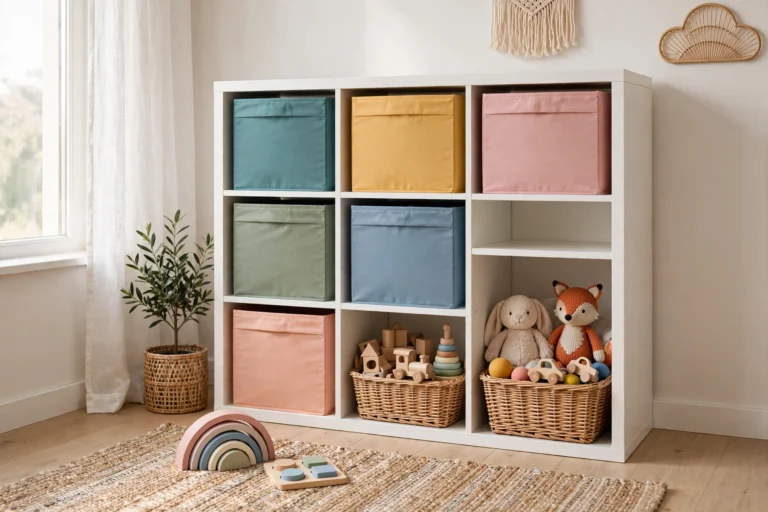
Shopping for the Best Toys for 1 Year Olds means shopping for a tiny scientist. At twelve to twenty-four months, children learn almost entirely through touch, mouthing, dropping, banging, and repeating — and the right toys turn those instincts into powerful developmental work. This guide explains what one-year-olds actually need from toys, ranks the best toy types for this age, and helps you avoid the flashy gadgets that entertain for a day and teach nothing.
You’ll find recommendations organized by developmental benefit — motor skills, language, sensory play, and early problem-solving — plus safety essentials, what to expect to pay, and answers to the questions parents ask most. Every suggestion here is chosen for real one-year-old behavior: short attention spans, everything goes in the mouth, and repetition is the whole point.
How 1-Year-Olds Play (and Learn)
Understanding the developmental stage is the key to buying well. Between their first and second birthdays, children are in what psychologists call the sensorimotor stage: they learn by doing things with their bodies and senses. A one-year-old doesn’t “play” with a shape sorter the way a three-year-old does — they mouth the shapes, bang them together, drop them, and watch you react. All of that is learning.
Key abilities emerging at this age include walking (or cruising toward it), the pincer grasp for picking up small objects, first words, and early cause-and-effect understanding. The best toys meet children exactly here: chunky enough to grab, sturdy enough to survive throwing, simple enough to “work” on the first try, and interesting enough to invite repetition. If a toy requires adult operation to be fun, it’s not a great one-year-old toy — the child should be the one making things happen.
The Best Toy Types for 1 Year Olds
1. Soft Stacking and Nesting Toys
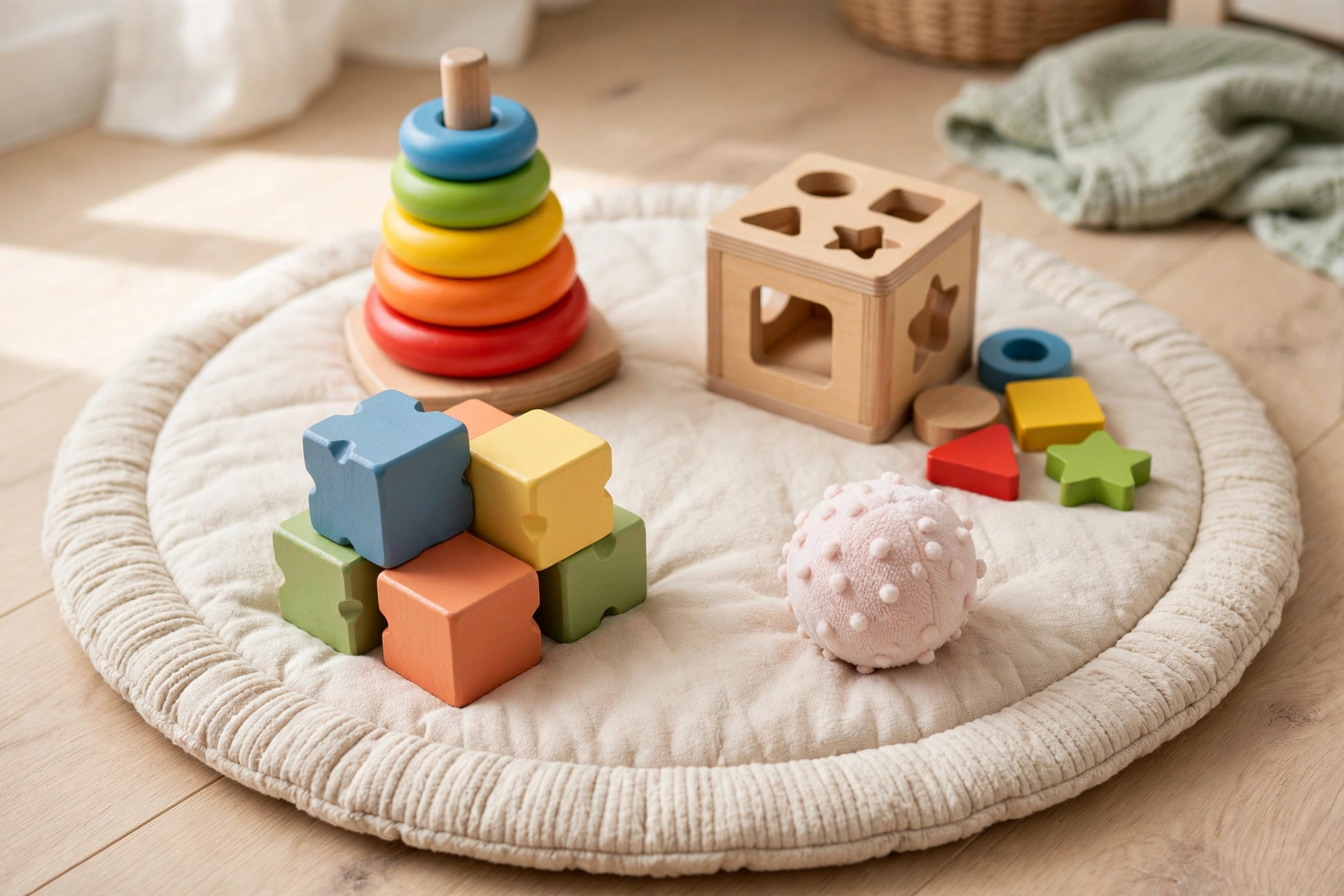
Stacking rings and nesting cups are classics for a reason: they teach size ordering, hand-eye coordination, and early problem-solving through pure repetition. Soft or rounded versions are ideal for this age since towers will be knocked over — enthusiastically and often. Look for sets with varied textures or colors to add sensory interest, and washable materials since everything will be chewed.
2. Push and Pull Toys
Once babies start walking, push toys (like a chunky popper that clicks balls as it rolls) and pull toys (a friendly animal on a string) become favorites. They reward movement, build leg strength and balance, and give new walkers the confidence to cruise across the room. Choose push toys with wide, stable bases that won’t tip, and pull toys with short strings to avoid entanglement hazards.
3. Simple Shape Sorters
A basic shape sorter with three to five large shapes introduces problem-solving: the circle only fits in the circle hole, and discovering that rule is genuine cognitive work. At one, children will mostly mouth the pieces and bang the box — that’s fine. The sorting clicks around 15 to 18 months with practice. Pick sorters with oversized pieces and a container that’s satisfying to open and close.
4. Chunky Building Blocks
Large, lightweight blocks sized for small hands build fine-motor skills, spatial awareness, and — most importantly at this age — the joy of knocking things down. Mega-sized soft blocks or big interlocking bricks work best; standard small bricks are a choking hazard and too fiddly. Don’t expect actual building yet: stacking two blocks is a triumph at fourteen months, and that’s exactly as it should be.
5. Balls of Every Kind
Never underestimate the ball. Rolling, chasing, throwing, and catching (badly) develop gross-motor skills, tracking with the eyes, and turn-taking when you roll it back and forth. Keep a variety: a soft fabric ball for indoors, a textured sensory ball for tactile exploration, and a lightweight bouncy ball for the yard. Balls are also among the cheapest high-value toys you can buy.
6. Bath Toys
Bath time is prime sensory play, and good bath toys make it richer: pouring cups teach volume concepts, squirters build hand strength, and floating toys invite imaginative play. Look for toys that drain fully and dry quickly — standing water inside bath toys grows mold fast. A mesh bag for storage keeps everything organized and lets toys air-dry between baths.
7. Simple Musical Instruments
Shakers, drums, and xylophones let one-year-olds explore cause and effect through sound: hit it, and noise happens. Music play supports rhythm awareness, listening skills, and joyful self-expression. Choose instruments sized for small hands with no small detachable parts. And yes, it will be loud — consider it an investment in their auditory development (and your patience).
8. Board Books and Interactive Books
Books count as toys at this age, and they’re among the most important ones. Sturdy board books with flaps, textures, or simple pictures build language, attention, and the association of reading with comfort. Follow your child’s lead: let them chew the corners, flip pages randomly, and demand the same book forty times. Repetition is how vocabulary grows. Keep a small basket of books where your child can reach them independently.
9. Sensory and Texture Toys
Textured balls, crinkly fabric toys, and simple sensory bins (closely supervised) feed the tactile exploration that dominates this stage. Sensory play calms some children, energizes others, and builds neural connections either way. DIY options work beautifully here: a sealed bottle with water and glitter, a basket of fabric scraps with different textures, or cooked pasta for squishing. Always supervise sensory play with small or mouthed items.
10. Simple Puzzles (2–4 Pieces)
Knob puzzles with two to four large pieces introduce matching and spatial reasoning. The knobs are crucial — they give small fingers something to grip. Start with single-shape puzzles (one circle, one square) and graduate to simple picture puzzles as skills grow. Expect your child to prefer removing the pieces to placing them at first; the placing comes with practice and is worth celebrating loudly.
11. Ride-On Toys (Push-Powered)
A low, stable ride-on that babies propel with their feet builds leg strength, balance, and independence. At this age, skip anything electric or with pedals — simple push-powered designs are safest and most appropriate. Look for a wide wheelbase, no pinch points, and a weight limit well above your child’s size. These shine both indoors on rainy days and outdoors on smooth paths.
12. Toy Phones and Cause-and-Effect Toys
Toys with big buttons that light up or play sounds when pressed teach the foundational tech skill of cause and effect: I do this, that happens. A few such toys are fine and genuinely engaging. The caution is quantity — a toy box full of button-pressing gadgets teaches less than a mix that includes open-ended toys. Choose one or two good ones, and favor toys with volume control and an off switch.
Best Toys for 1 Year Olds by Developmental Goal
| Developmental Goal | Best Toy Types | What to Look For |
|---|---|---|
| Gross motor (walking, balance) | Push toys, pull toys, balls, ride-ons | Wide stable bases, lightweight, indoor/outdoor use |
| Fine motor (grasping, stacking) | Stacking rings, chunky blocks, knob puzzles | Oversized pieces, easy-grip shapes, washable |
| Language development | Board books, interactive books, toy phones | Clear pictures, flaps and textures, simple words |
| Sensory exploration | Texture balls, bath toys, musical instruments | Varied textures, water-safe, no small parts |
| Problem-solving | Shape sorters, nesting cups, simple puzzles | 3–5 pieces max, self-correcting designs |
Safety Essentials for One-Year-Old Toys
Safety isn’t a footnote at this age — it’s the first filter. One-year-olds mouth everything, so every toy must pass the small-parts test: if a piece (or a broken-off chunk) fits through a toilet-paper tube, it’s a choking hazard. Follow the age grading on packaging strictly; “3+” warnings exist because of small parts, not because younger kids wouldn’t enjoy the toy.
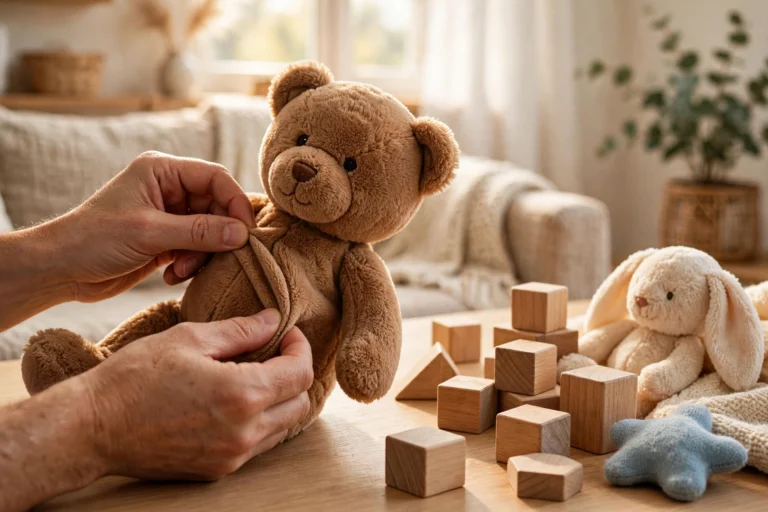
- Check for sturdy construction. Seams on stuffed toys should be tight, eyes should be embroidered (not plastic buttons that can be chewed off), and battery compartments must be screwed shut — button batteries are extremely dangerous if swallowed.
- Avoid long strings and cords. Pull toys should have short strings, and crib toys should never have cords long enough to wrap around a neck. The general guidance is keeping strings under 7 inches for young toddlers.
- Choose non-toxic materials. Look for BPA-free plastics, lead-free paint (required on U.S. toys but worth verifying on secondhand or imported toys), and washable fabrics. When buying secondhand, check the CPSC recall database first — older toys may predate current safety standards.
- Supervise water and sensory play. Bath toys and sensory bins are wonderful with an adult present and should be put away afterward. Never leave a one-year-old unattended with water, even shallow water.
- Inspect regularly. One-year-olds are destructive testers. Check toys monthly for cracks, loose parts, peeling paint, or exposed stuffing, and retire anything that’s breaking down.
Typical Price Ranges
Outfitting a one-year-old doesn’t require a big budget — many of the best toys are simple. Typical price ranges at major retailers (always verify current prices, which change with sales):
| Toy Type | Typical Price Range |
|---|---|
| Balls, bath toys, texture toys | Typically $5–$15 |
| Stacking rings, nesting cups, simple puzzles | Typically $8–$20 |
| Board books (each) | Typically $5–$12 |
| Shape sorters, chunky block sets | Typically $15–$35 |
| Push/pull toys, ride-ons | Typically $20–$50 |
| Musical instrument sets | Typically $15–$30 |
Toys to Skip for 1 Year Olds
- Toys rated 3+. The age grading is about safety, not snobbery. Small parts, long cords, and complex mechanisms are genuine hazards.
- Overly complex electronic toys. If the toy does everything and the child just watches, the toy is playing, not the child. One or two simple cause-and-effect toys are plenty.
- Toys with small magnets. High-powered small magnets are among the most dangerous toy hazards for young children if swallowed — avoid them entirely at this age.
- Trampolines and large climbing equipment. Pediatric safety guidance advises against trampolines for young toddlers; save big climbing structures for later with supervision.
- Too many toys at once. Research suggests toddlers play more creatively and longer with fewer choices. Try toy rotation: keep half stored away and swap every few weeks.
Making the Most of Playtime at One
You are your one-year-old’s favorite toy, and your participation multiplies every toy’s value. Narrate what they’re doing (“you stacked the red ring!”), follow their lead rather than directing play, and celebrate effort over results. Read together daily — even five minutes builds vocabulary and bonding. Get on the floor: being at their level invites interaction in a way that watching from the couch doesn’t.
Don’t worry about “educational” pressure. At one, the curriculum is: explore safely, repeat endlessly, and feel delighted by discovery. A cardboard box, a wooden spoon, and your undivided attention will compete with any toy on this list. The best toys simply give those instincts better raw material. For more ideas on structuring your toddler’s days, our Toddler Activities guide is packed with age-perfect inspiration, and Indoor Family Activities for Winter covers cold-day play. When the weather’s fine, Free Family Events lists outings your one-year-old will love.
FAQs
Should I keep toys out of the crib?
Yes. Safe-sleep guidance recommends a bare crib for infants: no pillows, blankets, bumpers, or stuffed animals for the youngest babies. Once your child moves to a toddler bed (usually between 18 months and 3 years), a favorite stuffed animal or comfort object is fine and often helps with the transition. During awake playtime in the crib, a couple of soft toys are okay with supervision — but for sleep, bare is best. If your child is attached to a lovey, introduce it at the age your pediatrician recommends and keep it small and breathable.
How can I tell if my 1-year-old’s play is on track developmentally?
Look for progression, not perfection. By 12–15 months, most children bang, mouth, and drop toys intentionally; by 15–18 months, they start stacking, pushing buttons purposefully, and imitating you (pretending to talk on a toy phone); by 18–24 months, simple pretend play emerges (feeding a doll, “cooking”). Every child develops at their own pace, and ranges are wide. If your child isn’t engaging with toys at all, seems uninterested in people during play, or loses skills they once had, mention it to your pediatrician — early check-ins are always worthwhile and usually reassuring.
How many toys does a 1-year-old need?
Fewer than you think. A well-chosen set of 8 to 12 toys covering the categories above is plenty — and many families find toy rotation (storing half and swapping monthly) keeps interest higher than a overflowing toy box. One-year-olds often prefer household objects anyway: wooden spoons, plastic containers, and cardboard boxes are legitimate play materials.
Are electronic toys bad for 1-year-olds?
Not bad, but limited. Simple cause-and-effect electronic toys (press a button, hear a sound) are fine in moderation and genuinely engaging. The concern is when passive electronic toys crowd out open-ended play — stacking, building, pretending, and exploring. Keep electronics to one or two toys, and prioritize toys where the child drives the action.
What toys help a 1-year-old learn to walk?
Sturdy push toys with wide bases are the classic walking aid — they give new walkers something stable to lean on while rewarding each step with motion and sound. Avoid baby walkers with wheels that babies sit inside; pediatric guidance has long discouraged them due to injury risk and because they can delay walking milestones. Good old-fashioned cruising along furniture plus a push toy is the safest path.
Should I buy gender-specific toys for my 1-year-old?
There’s no developmental reason to. At one, children don’t have gendered play preferences — they like what interests them: things that roll, stack, make noise, and fit in their mouths. Buy based on the child’s emerging interests and the developmental benefits above, not the color of the packaging.
Are secondhand toys safe for 1-year-olds?
Often yes, with checks: verify the toy has no recalls on the CPSC website, confirm age grading is appropriate, inspect for broken parts or peeling paint, and wash thoroughly. Avoid secondhand toys with unknown paint (possible lead in very old toys), degraded plastic, or missing safety-tested parts. When in doubt, buy new for mouth-heavy toys.
My 1-year-old just throws everything. Is that normal?
Completely normal — and actually developmental. Throwing teaches cause and effect, arm strength, and (eventually) aim. Provide safe throwing outlets like soft balls and beanbags, calmly redirect hard or dangerous throwing, and know that the phase peaks and passes. Toys designed to be knocked down, like stacking towers and block towers, channel the impulse productively.
When should I introduce puzzles?
Start around 12 to 15 months with single-piece knob puzzles or simple two-piece puzzles. The knob gives little fingers a grip point, and early “success” builds persistence. Graduate to 3–4 piece puzzles as skills grow, usually between 18 and 24 months. Let your child work at their own pace — placing one piece correctly deserves genuine celebration.
Do I need expensive “developmental” toy brands?
No. Developmental benefit comes from how a toy is played with, not its price or branding. A $10 set of nesting cups played with daily outperforms a $80 electronic gadget used twice. Spend your budget on a few sturdy, open-ended basics, and invest the rest in your time — reading, narrating, and playing together matter more than any purchase.
The Best Toys for 1 Year Olds share one trait: they let a small child be the boss of the play. Choose chunky, sturdy, simple toys; keep safety first; rotate to keep things fresh; and remember that your attention remains the most developmental “toy” of all. For ongoing inspiration as your little one grows, explore our Toddler Activities collection — and enjoy this wonderfully chaotic, endlessly fascinating year.