Every parent wants playtime to be safe playtime. This Toy Safety Guide for Parents distills the essential knowledge every family needs: how to read age labels, the hazards the U.S. Consumer Product Safety Commission (CPSC) warns about most, how to check for recalls, and room-by-room habits that keep kids safe. No fear-mongering — just clear, practical guidance you can use from the toy aisle to the playroom.
You’ll learn the “big five” toy hazards, how safety standards work, what to check before you buy (new or secondhand), how to maintain toys as kids grow, and what to do if something goes wrong. Safety isn’t about wrapping kids in bubble wrap — it’s about removing the preventable risks so kids can play boldly and freely.
How Toy Safety Works in the U.S.
Toys sold in the United States must meet federal safety requirements enforced by the CPSC. The key standard is ASTM F963, which covers mechanical hazards (small parts, sharp points), flammability, and chemical limits (lead, phthalates). Reputable manufacturers test their products against these standards, and packaging often notes compliance. Age grading — the “Ages 3+” labels — isn’t about skill level; it’s a safety determination based on choking hazards and developmental testing.
Important context: standards reduce risk; they don’t eliminate it. Supervision, proper use, and maintenance remain parents’ jobs. And the secondhand market — hand-me-downs, thrift stores, garage sales — sits partly outside these protections, since older toys may predate current standards. That’s not a reason to avoid secondhand toys (they’re economical and sustainable), but it is a reason to inspect them carefully, as this guide explains.
The Big Five Toy Hazards
1. Choking on Small Parts
Choking is the most serious toy hazard for young children, and the rules are simple: for children under 3, avoid any toy or part that fits through a small-parts cylinder (roughly the size of a toilet-paper tube). This includes detachable small pieces, balls under 1.75 inches in diameter, and — critically — parts that can break off during normal play. Inspect toys regularly: a toy that was safe when new can become hazardous when cracked or chewed. Keep older siblings’ small-piece toys (building sets, game pieces, collectibles) stored out of babies’ and toddlers’ reach.
2. High-Powered Magnets
Small, powerful magnets — sometimes found in building sets, desk toys, or novelty items — are among the most dangerous objects a child can swallow. If two or more are swallowed, they can attract through intestinal walls, causing severe internal injuries. The CPSC has taken strong action on these products. Guidance: keep any toys with small detachable magnets away from young children entirely, buy magnetic toys only from reputable brands with securely enclosed magnets, and seek immediate emergency care if you suspect a child has swallowed magnets.
3. Button Batteries
Coin and button batteries power countless toys — and they cause devastating injuries when swallowed, burning through tissue in as little as two hours. The rules: battery compartments must be secured with screws (check that they actually are, especially on secondhand toys), keep loose batteries locked away like medicine, and treat any suspected swallowing as an emergency — go to the ER immediately; don’t wait for symptoms. When buying, prefer toys with screwed-shut compartments, and tape over compartments on older toys if screws are missing.
4. Lead and Toxic Chemicals
Federal limits restrict lead in children’s products and lead in paint on toys, and reputable manufacturers comply. Risk concentrates in very old toys (pre-1978 paint may contain lead), some imported toys from unknown sellers, and cheap costume jewelry. Practical steps: buy from reputable retailers and brands, be cautious with vintage toys intended for mouthing-age children (display, don’t play), wash children’s hands after playing with older toys, and check CPSC recall notices — lead violations are a common recall reason.
5. Strangulation and Entanglement
Cords, strings, and ribbons on toys can wrap around young children’s necks. Guidance: crib toys should have no long cords; pull-toy strings should be short; keep blind cords, and any toy with a cord, away from cribs and sleeping areas. For costumes and dress-up, avoid long cords or sashes for young children. This hazard is entirely preventable with a quick scan of every toy that enters your home.
Reading Labels Like a Safety Expert
| What the Label Says | What It Means | What You Do |
|---|---|---|
| “Ages 3+” | Safety-tested for children 3 and older; small parts present | Keep away from under-3s; follow strictly in mixed-age homes |
| “Ages 0–3” / “0+” | Designed and tested for babies and toddlers | Still inspect regularly; safe doesn’t mean indestructible |
| Choking hazard warning | Small parts or small ball present | Heed it literally — it’s the most important warning on the box |
| “Adult assembly required” | Assembly involves hazards (small parts, tools, complexity) | Assemble yourself; don’t let kids “help” with hazardous steps |
| “Adult supervision required” | The toy needs an adult present during use | Actually supervise — this means you, undistracted |
| ASTM F963 / “meets CPSC requirements” | Tested against U.S. toy safety standards | A good sign; still follow age grading and inspect |
Before You Buy: The Safety Checklist
- Check the age grading first. It’s a safety label, not a suggestion. In homes with mixed ages, buy for the youngest child who’ll access the toy, or store older kids’ toys separately.
- Do the toilet-tube test. For under-3s: if a part fits through a toilet-paper tube, it’s a choking hazard. Test detachable parts and anything that could break off.
- Inspect battery compartments. They should be secured with screws. If a compartment opens with just a fingernail, that’s a red flag for button-battery risk.
- Look for sturdy construction. Seams tight, no sharp edges or points, paint intact, no strong chemical smell. Give it a firm tug — parts shouldn’t detach with normal-force pulling.
- Check for recalls. Before buying secondhand (or if you have doubts about anything), search the CPSC recall database. It takes two minutes and it’s free.
- Consider the play environment. A trampoline needs space and surfacing; a chemistry kit needs supervision; ride-ons need helmets. The toy’s safety depends partly on where and how it’s used — plan that before purchase.
- Buy from reputable sources. Established retailers and brands have supply chains that comply with safety standards. Be extra cautious with unknown third-party sellers, especially for toys with magnets, batteries, or paint.
Secondhand Toy Safety
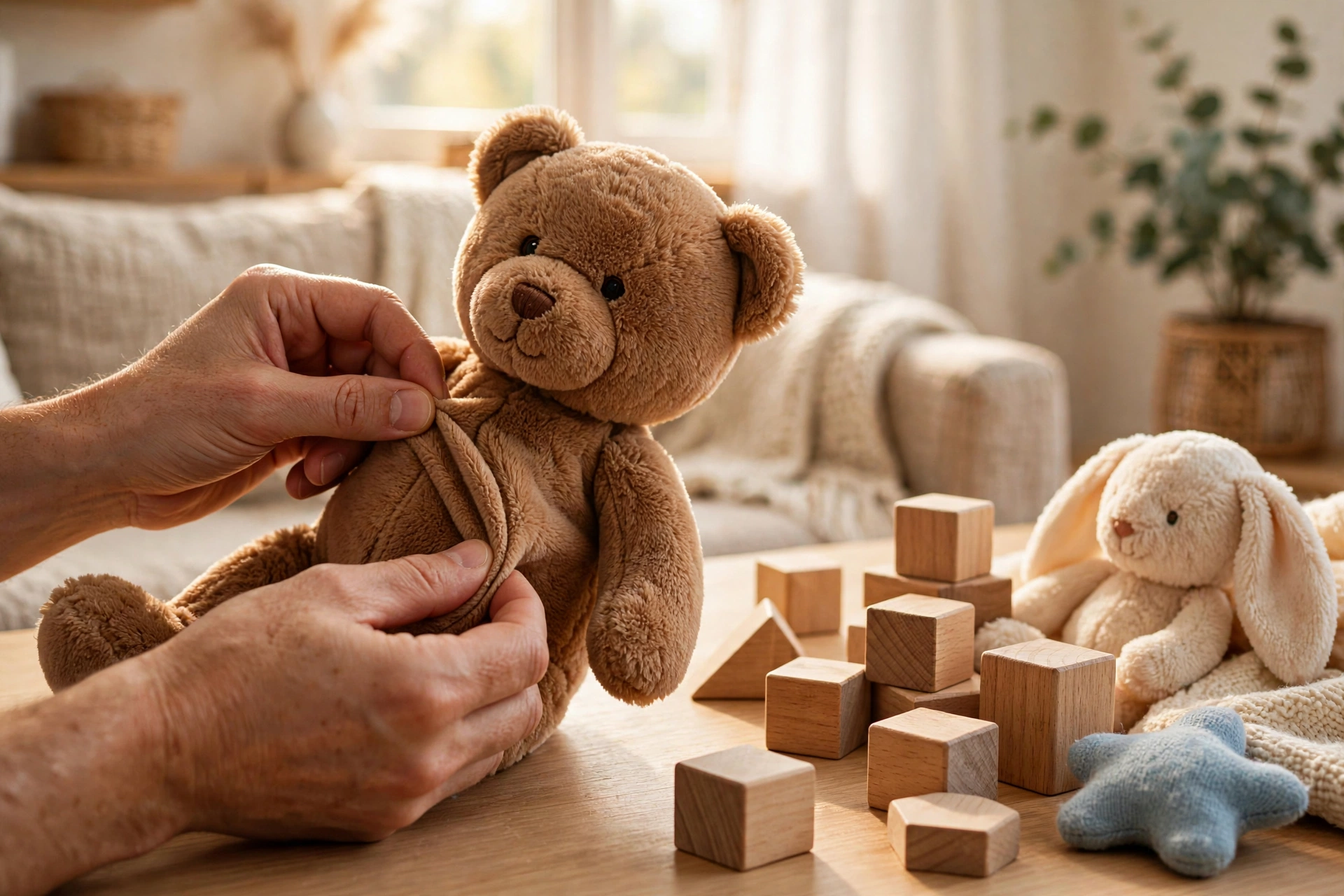
Hand-me-downs and thrift finds are wonderful — economical and sustainable. Make them safe with this routine: search the CPSC database for recalls on the specific product; verify age grading is still appropriate; inspect thoroughly for cracks, loose parts, peeling paint, worn fabric, and degraded plastic; wash everything (machine-washable plush, soapy water for plastic, following manufacturer guidance); replace batteries and check compartments; and retire anything you can’t verify. Special caution: very old painted toys (possible lead), old cribs or playpens (standards changed significantly — check current guidance before using vintage nursery equipment), and any toy with unknown small magnets.
Ongoing Maintenance: The Monthly Toy Audit
Toys degrade — that’s normal. What matters is catching it. Once a month (tie it to something routine, like the first of the month), do a quick pass: check for broken or cracked pieces, loose parts, peeling paint, exposed stuffing or sharp edges; test battery compartments are still screwed shut; look for recalled items you may have missed; clean what needs cleaning; and remove anything broken beyond safe repair. Get kids involved as they grow — “toy doctor” sessions teach responsibility and extend the habit into their own future households. Our Toddler Activities guide includes safe play ideas for the youngest toy users.
Room-by-Room Safety Habits
The Playroom
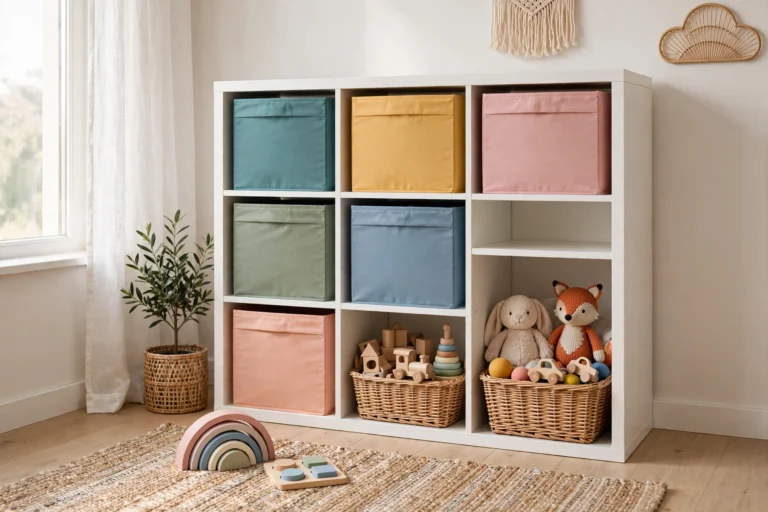
Store small-piece toys on high shelves or in lidded containers if toddlers share the space. Anchor bookshelves and heavy furniture to walls — tip-overs injure thousands of children yearly. Keep a clear floor to prevent trips, ensure good lighting, and keep cleaning products and medications in locked areas far from toy storage.
Bedrooms
No cords near cribs — including monitor cords, which should be at least three feet from the crib. Stuffed animals are fine for older babies per current safe-sleep guidance milestones, but keep cribs bare for young infants. Toy chests should have spring-loaded lids that won’t slam, ventilation holes, and no latches that could trap a child inside.
Bathrooms (Bath Toys)
Bath toys must drain and dry fully between uses — squeeze out water and store in a mesh bag. Discard toys with mold inside (you can’t effectively clean sealed squirters once mold grows). Never leave children unattended with water, even shallow water, even “just for a second.” Empty buckets and tubs after use.
Outdoors
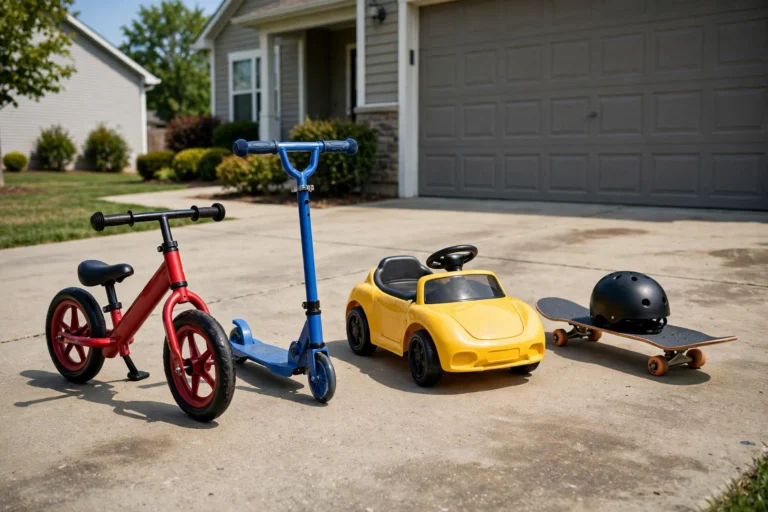
Anchor play equipment, maintain soft landing surfaces, inspect for rust/wasps/damage each spring, and enforce helmet rules for wheels. Store outdoor toys to prevent weather degradation and pest nesting. Check that gates and fences are secure before independent play.
What to Do If Something Goes Wrong
- Suspected swallowing (magnets, batteries, small parts): go to the emergency room immediately. For button batteries, time matters enormously — don’t wait for symptoms. Call Poison Control (1-800-222-1222) en route for guidance.
- Choking: if the child can’t breathe, cough, or cry, begin age-appropriate choking first aid (back blows and chest thrusts for infants; Heimlich for older children) and call 911. Every parent should take an infant/child CPR and first-aid course — it’s the single highest-value safety investment you can make.
- Injury from a toy: treat the injury, preserve the toy and packaging, and report the incident to the CPSC at saferproducts.gov. Reports drive recalls that protect other children.
- Recall notices: if a toy you own is recalled, stop using it immediately and follow the remedy instructions (refund, repair, or replacement). Register new toys with manufacturers when possible so recall notices reach you directly.
Toy Safety While Traveling
Travel scrambles normal safety routines — plan for it. Pack a small “safe play kit”: a few age-appropriate toys you know are intact, rather than relying on hotel or rental finds. Inspect unfamiliar play areas on arrival: vacation rentals may have older toys, unsecured furniture, accessible cords, or pools without fencing — do a safety sweep before kids roam. For car travel, avoid hard or projectile toys as in-car playthings (a sudden stop turns them into hazards); soft toys, books, and magnetic play boards are the safe bets. If visiting family with older kids’ toys around, do a small-parts sweep of reachable areas on arrival — grandparents’ homes are classic mixed-age hazard zones. And keep your pediatrician’s number and Poison Control (1-800-222-1222) saved in your phone before every trip.
FAQs
Are toys from dollar stores and discount bins safe?
Price alone doesn’t determine safety — many discount toys meet the same standards as expensive ones. But discount channels deserve extra scrutiny: check age grading carefully (it’s sometimes missing or vague on ultra-cheap imports), inspect construction quality, verify battery compartments are screwed shut, and be wary of toys with strong chemical smells. The CPSC recalls products across all price points, so the recall database is your equalizer: a two-minute search matters more than the price tag.
How should I dispose of broken or recalled toys?
Don’t donate broken toys — you’re just passing the hazard along. For recalled toys, follow the CPSC remedy instructions (many offer refunds or replacements, even years later). For broken non-recalled toys: remove batteries for proper recycling (never trash lithium batteries), recycle plastic and electronic components where facilities exist, and trash the rest. Some manufacturers and retailers run toy take-back or recycling programs — worth a quick search before you bin anything electronic.
How do I check if a toy has been recalled?
Search the CPSC’s recall database at cpsc.gov/Recalls — you can search by product name, brand, or category, and sign up for email alerts. It’s free and takes moments. Check before buying secondhand toys and periodically for toys you own. When registering new toys with manufacturers, you’ll also receive direct recall notifications.
Are wooden toys safer than plastic toys?
Not inherently — safety depends on design, manufacturing, and condition, not material. Quality wooden toys are durable and free of some chemical concerns, but they can splinter if poorly made or damaged. Quality plastic toys from reputable brands meet the same safety standards. Judge individual toys on construction, age grading, and condition rather than material alone.
What age is safe for toys with small parts?
The standard line is age 3, based on choking-hazard testing and developmental data on mouthing behavior. But children vary: some 4-year-olds still mouth objects, and developmental delays can extend the risk period. When in doubt, wait. And in mixed-age homes, the youngest child’s needs set the rule for shared spaces.
Are bath toys with holes safe?
They’re safe from a choking/injury standpoint but notorious for growing mold inside, which can be a health concern. Mitigate by squeezing out all water after each bath, storing in a breathable mesh bag, cleaning regularly with vinegar solution, and discarding any toy where you see or suspect internal mold. Solid (no-hole) bath toys avoid the problem entirely.
Should I worry about used stuffed animals?
Used plush toys are generally fine after proper cleaning: machine wash and dry thoroughly on hot settings if the toy allows, or surface-clean and air-dry. Inspect for loose eyes/noses (embroidered features are safest), torn seams, and worn fabric. Discard anything you can’t clean fully. For babies who mouth everything, new plush from reputable brands is the safest bet.
How often should I replace bike helmets?
Replace after any significant impact (even if damage isn’t visible — the foam crushes internally), and generally every 5 years as materials degrade. Also replace when your child outgrows the fit. A damaged or ill-fitting helmet offers little protection. When buying, look for CPSC certification on the label — it’s required for helmets sold in the U.S.
Are “non-toxic” labels reliable?
“Non-toxic” means the product meets specific toxicological standards (often ASTM D-4236 for art materials), which is meaningful but narrow — it addresses chronic toxicity, not choking or other hazards. It’s a useful data point, not a complete safety verdict. Continue to follow age grading and inspect for physical hazards regardless of non-toxic labeling.
My child puts everything in their mouth past age 3. What should I do?
Some children mouth objects longer than typical — it can be sensory-seeking behavior, anxiety, or simply habit. Mention it to your pediatrician, who can advise whether evaluation is warranted. In the meantime, extend small-parts precautions beyond age 3 for that child, provide safe chewing alternatives (designed for the purpose), and avoid shaming — it’s developmental, not defiance. Our Indoor Family Activities for Winter includes sensory-friendly play ideas.
This Toy Safety Guide for Parents comes down to a handful of habits: respect age labels, learn the big-five hazards, check recalls, inspect regularly, and supervise water and wheels without exception. Do those things, and you’ve removed the vast majority of preventable toy risk — leaving your kids free to do what toys are for: play hard, explore boldly, and grow. Planning a celebration? Our Kids Birthday Party Ideas guide includes safety tips for party settings too.