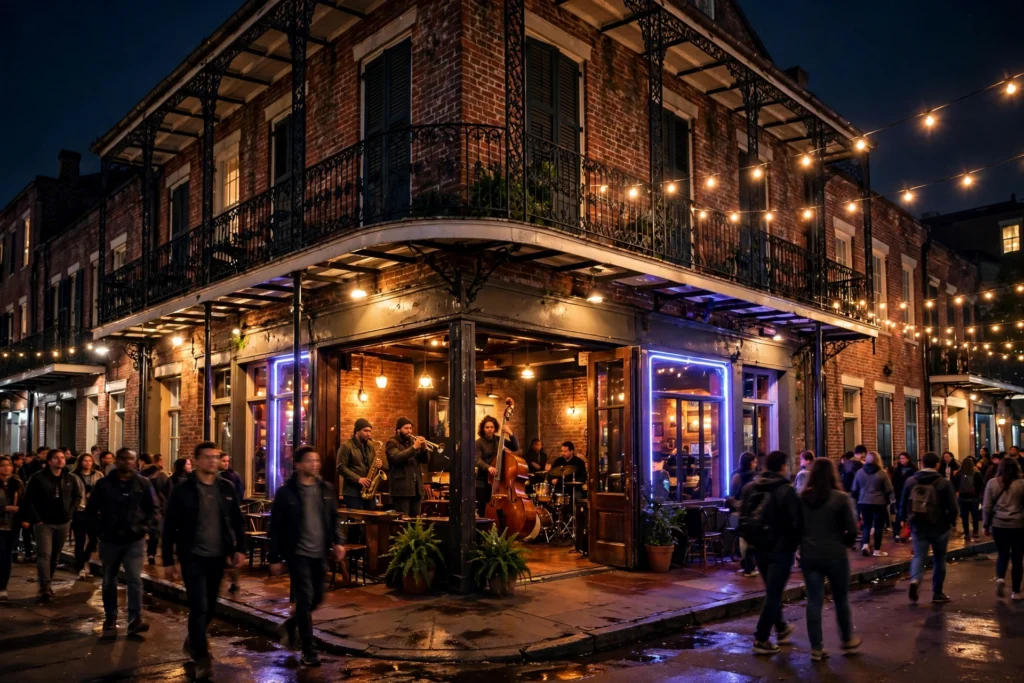
The Best Karaoke Bars in the USA are not all the same kind of place, and that is the first thing to understand before you plan a night out. In America, karaoke comes in two completely different formats: the private-room clubs where your group rents its own soundproofed suite for the night, and the classic open-mic bars where brave singers take turns in front of a room full of strangers. Both are wonderful, both have their own etiquette and pricing, and the best cities for karaoke tend to offer both. This guide explains how karaoke works in the United States, rounds up the standout cities and spots from New York to Seattle, and covers song selection, etiquette, pricing, and the questions first-timers always ask.
How Karaoke Works in America: Two Formats
Private-Room Karaoke: Your Own Concert for the Night
Private-room karaoke, known as noraebang in Korean culture and karaoke boxes in Japanese culture, is the dominant format in America’s big coastal cities. You rent a small, soundproofed room by the hour, usually for a group of 4 to 15 people. The room has its own screen, microphones, a song-selection tablet or remote, mood lighting, and often a service button for ordering food and drinks. Nobody outside your group hears you, which removes the performance anxiety entirely.
This format took off in the U.S. through Korean and Japanese immigrant communities, and the best rooms are still concentrated in Koreatown districts, in New York City and Los Angeles especially. Modern private-room spots offer enormous English-language song libraries alongside Korean, Japanese, Spanish, and Chinese catalogs, updated monthly with current hits. Rooms are typically priced per person per hour, with minimums on weekends.
Open-Mic Bar Karaoke: The Classic American Version
The other tradition is the open-mic karaoke bar: a regular bar with a karaoke host (KJ), a stage or corner with two microphones, and a rotation list. Singers sign up, wait their turn, and perform for the whole room. There is usually no cover charge, you just buy drinks, and the songbooks lean toward classic rock, pop standards, country singalongs, and guilty-pleasure anthems.
This format thrives in dive bars, neighborhood joints, and country bars across the country, and it is the heart of karaoke culture in cities like Nashville. The vibe is communal and unpredictable: a shy first-timer might follow a retired lounge singer, and the crowd cheers for effort as loudly as talent. If you want the full American karaoke experience, this is it.
The Best Karaoke Cities and Standout Spots
New York City: Koreatown’s Private-Room Capital
Manhattan’s Koreatown, centered on 32nd Street between Fifth and Sixth Avenues, is the densest cluster of private-room karaoke in America. Multi-story karaoke palaces here run dozens of themed rooms, from intimate four-person suites to party rooms with disco balls, and stay open until 2 or 4 a.m. on weekends. Well-known Ktown favorites include Maru, with its sleek modern rooms and strong food menu, and Gagopa, a longtime staple with a huge song library. Prices typically run $8 to $15 per person per hour on weeknights, rising on Friday and Saturday nights, with many spots offering happy-hour room discounts before 8 p.m. For the open-mic tradition, East Village and Lower East Side dive bars host legendary weekly karaoke nights where the rotation is long and the crowd is loud.
Los Angeles: Ktown Rooms and Late-Night Energy
LA’s Koreatown rivals New York’s for private-room quality, and the city’s karaoke culture runs later and looser. Max Karaoke Studio is a local favorite with polished rooms, an enormous multilingual catalog, and a party atmosphere that peaks after midnight. The Brass Monkey, also in Ktown, pairs private rooms with a lively bar scene. LA’s sprawling geography means karaoke nights often anchor a bigger evening out, so plan your neighborhood in advance. Our Los Angeles nightlife guide maps the surrounding late-night landscape if you want to keep the night going after your session ends.
Nashville: Where Karaoke Meets Honky-Tonk
Nashville does karaoke the Nashville way: in bars full of actual musicians. Lonnie’s Western Room in Printer’s Alley is the city’s most famous karaoke bar, a gloriously kitschy basement room with a live band karaoke night where you sing backed by real players, an experience that exists almost nowhere else in the country. Santa’s Pub, a double-wide trailer turned dive bar on the south side, runs beloved karaoke nights in a room decorated floor-to-ceiling in Christmas lights. The song selections lean country and classic rock, the crowds are encouraging, and the talent level is suspiciously high for a bar crowd.
Chicago: Neighborhood Rooms and Dive-Bar Nights
Chicago’s karaoke scene splits between private-room spots in neighborhoods like Lincoln Park and Lakeview and the city’s deep bench of dive bars with weekly KJ nights. Replay Lincoln Park is a standout multi-room venue with a vintage arcade-meets-karaoke concept, while countless corner bars in Wicker Park, Logan Square, and Andersonville run free open-mic nights on weeknights. Chicago’s take is unpretentious: show up, sign up, sing your heart out, and nobody will judge your song choice as long as you commit to it.
Seattle: Private Rooms, Rainy-Night Approved
Seattle’s karaoke crown belongs to Rock Box, a beloved private-room spot in the International District with stylish themed rooms, a deep song catalog, and a cocktail program well above karaoke-bar average. It is the perfect rainy-night activity and books out on weekends, so reserve ahead. The city’s dive bars also run strong open-mic nights, particularly on Capitol Hill, where the crowds skew theatrical and the performances can be genuinely spectacular.
Honorable Mentions Across the Country
- San Francisco: The Mint Karaoke Lounge offers upscale private rooms in a city that takes its singing seriously.
- Las Vegas: Several casino-adjacent karaoke lounges run private rooms built for bachelor parties and big groups.
- Portland: Voicebox Karaoke, a Portland original, helped popularize the private-room model in the Pacific Northwest with sleek design and great sound.
- Round1 locations nationwide: The Japanese entertainment chain’s U.S. arcades include private karaoke rooms, a reliable option in suburbs and smaller cities without a dedicated karaoke scene.
Song-Selection Tips: How to Pick a Winner
- Know your range, then ignore it. The best karaoke songs sit comfortably in your vocal range, but the best karaoke moments come from commitment. Pick something you love, not something that shows off.
- Crowd-pleasers beat deep cuts. Songs everyone knows get the room singing along, which carries any performance. Think anthems with big choruses: “Don’t Stop Believin’,” “Dancing Queen,” “Friends in Low Places,” “Wannabe.”
- Duets are the cheat code. Nervous? Grab a friend. Duets split the pressure, double the fun, and give you someone to laugh with when you miss a note.
- Watch the song length. “American Pie” and “Bohemian Rhapsody” are classics, but an eight-minute epic at 1 a.m. tests everyone’s patience. Save the epics for early in the night.
- Use the new-music filters. Private-room systems update catalogs monthly. Search by year or genre to find current hits rather than scrolling the default classics list.
- Have a backup ready. In open-mic bars, someone ahead of you may sing your song. Keep a second and third choice in mind, and the KJ will appreciate your flexibility.
Karaoke Etiquette: The Unwritten Rules
- Respect the rotation. In open-mic bars, the KJ’s list is law. Do not bribe, beg, or hover for a better slot. Tipping the KJ a few dollars is customary and appreciated.
- One song at a time. Sign up for one song, sing it, then rejoin the back of the line. Hogging the rotation is the fastest way to kill the room’s mood.
- Cheer for everyone. The social contract of karaoke is that effort gets applause. Clap for the nervous first-timer like you would for the ringer.
- Do not sing over other singers. In private rooms, pass the mic. On open-mic stages, the stage belongs to whoever is on it.
- Handle the equipment gently. Microphones are expensive. Do not drop them, swing them, or tap them to test if they are on.
- Keep it moving. When your song is called, get to the stage promptly. Dead air between singers drains the energy fast.
- Read the room on explicit lyrics. Some bars and mixed-age private-room groups prefer clean versions. When in doubt, choose the radio edit.
What Karaoke Costs in the USA
| Format | Typical Price | What is Included |
|---|---|---|
| Private room, weeknight | $8–$15 per person per hour | Room, mics, song system; food and drinks extra |
| Private room, weekend night | $12–$25 per person per hour | Same, often with a 2-hour minimum |
| Open-mic bar karaoke | Free (buy drinks) | Stage time; some bars have a $5 cover on weekends |
| Live band karaoke | $5–$15 cover | Sing backed by a real band; premium experience |
Prices vary by city, with New York and Los Angeles at the top of the range and smaller markets often cheaper. Most private-room venues require a credit card to hold the reservation, and weekend rooms in popular cities should be booked several days ahead.
Best Nights to Go
Private-room karaoke runs seven nights a week in major cities, but weeknights bring the best deals: happy-hour room rates, shorter waits, and more attentive service. Friday and Saturday nights are peak, with higher prices and rooms that sell out. Open-mic bar karaoke is typically a weeknight tradition, Tuesday through Thursday, when bars use it to draw crowds on slow nights. Live band karaoke nights, like Nashville’s, usually anchor one specific weeknight, so check the schedule before you go.
Private-Room vs Open-Mic: Which Format Should You Choose?
| Private Room | Open-Mic Bar | |
|---|---|---|
| Best for | Groups, parties, shy singers, celebrations | Solo singers, meeting people, spontaneous nights |
| Cost | $8–$25 per person per hour | Free with drinks |
| Song control | Unlimited, sing back-to-back | One song per rotation, waits of 30–90 min at peak |
| Audience | Just your group | The whole bar |
| Song library | Massive, multilingual, updated monthly | Curated classics, KJ-dependent |
| Booking | Reserve ahead, especially weekends | Walk in and sign up |
The honest answer is to try both. Private rooms are the better first experience: no stage fright, no waiting, and you can butcher a ballad with people who love you. Open-mic bars are the better story: the stranger who nails “Total Eclipse of the Heart,” the bachelorette party that adopts your table, the KJ who remembers your name by the third visit. Many karaoke devotees do rooms for birthdays and bar nights for Thursdays.
Beginner-Friendly Songs by Genre
If you are staring at a 50,000-song catalog in a panic, start here. These picks are forgiving, familiar, and engineered for crowd singalongs.
- Pop: “Dancing Queen” (ABBA), “Call Me Maybe” (Carly Rae Jepsen), “Shake It Off” (Taylor Swift)
- Rock: “Don’t Stop Believin'” (Journey), “Livin’ on a Prayer” (Bon Jovi), “Summer of ’69” (Bryan Adams)
- Country: “Friends in Low Places” (Garth Brooks), “Jolene” (Dolly Parton), “Wagon Wheel” (Old Crow Medicine Show)
- R&B and soul: “Respect” (Aretha Franklin), “Signed, Sealed, Delivered” (Stevie Wonder), “Ain’t No Mountain High Enough” (Marvin Gaye and Tammi Terrell)
- Hip-hop: “Lose Yourself” (Eminem), “Gold Digger” (Kanye West), “Juicy” (The Notorious B.I.G.)
- Guilty pleasures: “Wannabe” (Spice Girls), “All Star” (Smash Mouth), “Baby One More Time” (Britney Spears)
- Showstoppers (attempt with caution): “Bohemian Rhapsody” (Queen), “I Will Always Love You” (Whitney Houston), “My Way” (Frank Sinatra)
- Seasonal favorites: “All I Want for Christmas Is You” (Mariah Carey) in December, “Sweet Caroline” (Neil Diamond) at any sporting-event afterparty
Karaoke for Big Groups and Private Events
Private-room karaoke scales beautifully. Most major venues offer large party rooms that hold 15 to 30 people, with dedicated servers, bottle-service packages, and customizable playlists for birthdays, bachelor and bachelorette parties, office outings, and team celebrations. For corporate events, many Ktown venues provide itemized invoicing and semi-private buyouts on weeknights at a discount. Book party rooms at least a week ahead, confirm the room’s capacity against your headcount (fire codes are enforced), and ask whether outside cakes or decorations are allowed. A useful planning rule: budget one room per 8 to 10 guests for comfort, since cramming 15 people into a 10-person room kills the fun fast. If your group exceeds 30, call the venue about a full buyout or split across two adjacent rooms and rotate the brave singers between them.
Practice at Home: Karaoke Apps and Setup
A little rehearsal goes a long way. Free and low-cost karaoke apps let you practice with scrolling lyrics and pitch guides before your night out, and many private-room regulars arrive with a shortlist saved on their phones. For home practice, a basic Bluetooth microphone paired with a TV and a karaoke app delivers a surprisingly good rehearsal setup for under $50. Focus on nailing your entrances, the first line sets the tone, and on learning where the big notes sit so you are not caught flat in the chorus. Two or three run-throughs of your go-to songs will make you noticeably more confident, and confidence, more than range or technique, is what the crowd responds to.
Frequently Asked Questions
Do I need to be a good singer to do karaoke?
No, and that is the entire point. Karaoke rewards enthusiasm, song choice, and stage presence far more than vocal technique. Private rooms are the perfect low-pressure starting point since only your friends hear you, and open-mic crowds cheer effort as loudly as talent.
How do private karaoke rooms work?
You book a room for your group, usually online or by phone, and pay per person per hour. When you arrive, the staff shows you to a soundproofed room with a screen, microphones, and a song-selection tablet. You order food and drinks from the room via a call button or server. At the end of your time, you settle the bill and head out.
Can I bring my own group to an open-mic karaoke bar?
Absolutely. Groups are welcome, though each singer signs up individually and takes their turn in the rotation. For parties, private rooms are usually the better fit since everyone sings as much as they want without waiting.
What is the difference between karaoke and noraebang?
Noraebang is the Korean term for private-room singing, literally “song room.” In the U.S., the terms are often used interchangeably, but “karaoke bar” usually implies the open-mic format while “noraebang” or “karaoke rooms” implies private suites. Many American venues now offer both under one roof.
Is karaoke appropriate for a work outing or date night?
Private-room karaoke is one of the best group activities in nightlife: it works for team outings, birthdays, bachelor and bachelorette parties, and date nights alike. For a date, a small room for two is intimate and fun; for work groups, the private format keeps things professional while still breaking the ice.
What should I do after karaoke?
In most karaoke cities, the night is young when your session ends. Late-night food is the classic move, especially in Koreatown districts. If you want to graduate from singing to dancing, our nightclub guide for first-timers covers dress codes, cover charges, and everything else you need for the 1 a.m. pivot.