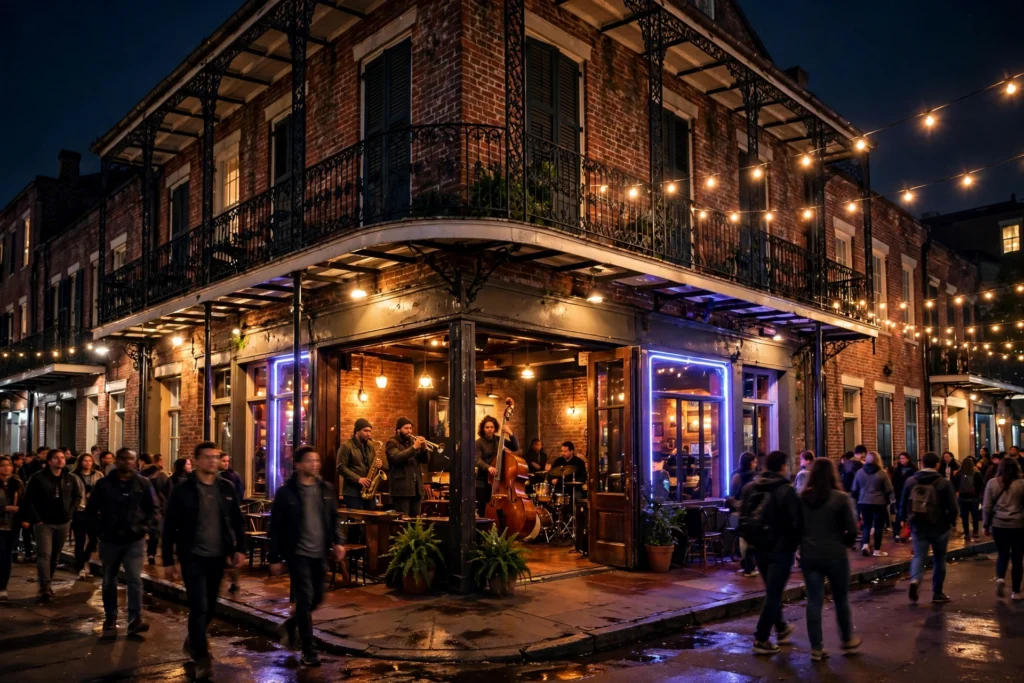
The Best Jazz Clubs in the USA share a quality that no streaming playlist can replicate: a room small enough that you hear the brushes on the snare, the breath between saxophone phrases, the pianist’s foot on the pedal. America’s jazz clubs are living history, from Greenwich Village basements where bebop was born to New Orleans courtyards where brass bands still parade. This guide tours the essential rooms city by city, covers what to expect on a night out (sets, cover charges, dress codes, and seating), shares ticket-buying tips, and answers the questions every first-timer asks before stepping into a jazz club.
New York City: The Capital of the Jazz Club
No city on earth has a deeper bench of jazz rooms than New York. On any given night, dozens of clubs across Manhattan and Brooklyn are hosting everyone from NEA Jazz Masters to twenty-something phenoms playing their first headlining set. These four are the canon.
Village Vanguard
The basement room at 178 Seventh Avenue South has been presenting jazz since 1935, and it remains the gold standard. The Vanguard’s triangular room seats just 123 people, every seat is close, and the no-talking-during-sets ethos is strictly kept. Legends from John Coltrane to Bill Evans recorded landmark live albums here, and the Monday-night Vanguard Jazz Orchestra residency is a New York institution. Sets run around 8:30 and 10:30 p.m., covers typically run $35 to $50 plus a drink minimum, and reservations are essential, this room sells out regularly.
Blue Note
Greenwich Village’s Blue Note is the most famous jazz club brand in the world, and the New York flagship earns the reputation. The room books a mix of straight-ahead jazz, fusion, soul, and R&B-adjacent acts, with two shows nightly and a late-night groove series on weekends. It is pricier than the Vanguard, covers often $30 to $75 depending on the artist, with a food and drink minimum, and the tourist-heavy crowd means booking ahead is wise. The sightlines are excellent and the sound system is superb.
Smalls
Downstairs on West 10th Street, Smalls is the musician’s club: a tiny, low-ceilinged basement where the cover has stayed remarkably reasonable (often $20 to $30) and the programming favors adventurous, working jazz musicians over big names. The vibe is intimate and unpretentious, the late sets run until the early morning hours, and the club’s livestream archive has made it a global hub for the modern scene. If you only visit one club for the music itself, make it this one.
Dizzy’s Club
Perched on the fifth floor of Jazz at Lincoln Center with floor-to-ceiling windows overlooking Columbus Circle, Dizzy’s pairs world-class programming with the best view in jazz. The room, part of Wynton Marsalis’s JALC complex, books top-tier artists in an elegant supper-club setting. Covers run $30 to $60 with food and drink minimums, and the early sets are ideal for pairing with dinner. The acoustics were designed from scratch, and it shows.
Chicago: The Blues’ Neighbor, Jazz’s Stronghold
Green Mill Cocktail Lounge
The Green Mill in Uptown is a time capsule: a 1907 roadhouse turned Prohibition-era speakeasy, complete with the booth where Al Capone allegedly drank, hosting jazz seven nights a week. The room’s art-deco interior, the poetry slam on Sundays, and the late-night weekend sets make it Chicago’s most atmospheric night out. Covers are modest, usually $10 to $20, and the Uptown location keeps the crowd local. Cash is still king here in spirit, though cards are accepted.
Jazz Showcase
Founded in 1947 by the legendary Joe Segal, the Jazz Showcase is the oldest jazz club in Chicago and one of the oldest in the country. Now located in the South Loop’s Dearborn Station, it presents national touring artists in a proper listening-room setting with excellent sightlines. Covers typically run $20 to $50, sets are at 8 and 10 p.m., and the club’s history, everyone from Dizzy Gillespie to contemporary stars has played here, hangs in the air.
Andy’s Jazz Club
On Hubbard Street in River North, Andy’s has been serving jazz and steaks since the 1970s. The two-level room hosts quartets and quintets nightly, with a dinner-club feel that makes it a favorite for date nights and visitors who want the classic jazz-club experience without the downtown trek. Covers run $15 to $30 with no drink minimum on most nights, and the kitchen keeps the tables turning between sets.
New Orleans: Where Jazz Was Born
Jazz was born in New Orleans, and the city’s clubs carry that weight lightly, with joy. The rooms here are less formal than New York’s, the brass is louder, and the line between the stage and the street regularly dissolves. If you are planning a music pilgrimage, pair these rooms with our New Orleans nightlife guide for the full late-night picture.
Preservation Hall
The most hallowed room in jazz sits in a weathered French Quarter building at 726 St. Peter Street. Preservation Hall has presented traditional New Orleans jazz since 1961 in a room with no air conditioning, no drinks, and benches packed shoulder to shoulder. Shows run about 45 minutes to an hour, tickets are around $25 to $50 depending on seating, and the experience, hearing “When the Saints Go Marching In” where it was meant to be heard, is genuinely moving. Book weeks ahead; every show sells out.
Snug Harbor Jazz Bistro
On Frenchmen Street, the city’s live-music main drag, Snug Harbor is the serious listening room of New Orleans: a proper club with a kitchen, table seating, and a calendar of modern jazz, funk, and brass-band-adjacent acts. Covers run $20 to $40, the food is a cut above typical club fare, and the Frenchmen Street location means you can bar-hop to a half-dozen other venues within two blocks after the set.
The Spotted Cat Music Club
Also on Frenchmen Street, the Spotted Cat is the quintessential New Orleans music bar: tiny, sweaty, joyful, with traditional jazz, swing, and gypsy jazz bands playing to a dancing crowd nightly. There is usually a modest cover ($10 to $20), the drinks are cheap, and the energy is the highest per square foot of any room in this guide. Arrive early for a spot near the band or embrace the beautiful crush at the back.
San Francisco Bay Area
SFJAZZ Center
The SFJAZZ Center in Hayes Valley is the first standalone building for jazz built in America: a $64 million, acoustically perfect hall that opened in 2013. The Robert N. Miner Auditorium seats 700 with pristine sound, and the programming spans jazz legends, global music, and adventurous commissions. Tickets run $25 to $100+, and the venue’s educational mission means the crowd skews genuinely knowledgeable. This is the Carnegie Hall of West Coast jazz.
Yoshi’s (Oakland)
Across the bay in Jack London Square, Yoshi’s pairs a serious jazz calendar with one of the Bay Area’s best Japanese restaurants. The 310-seat showroom books national touring jazz, soul, and R&B acts, and the dinner-and-show format makes for a polished night out. Covers typically run $25 to $65, and the restaurant’s sushi is worth arriving early for.
Hidden Gems Worth a Detour
Beyond the famous cities, these rooms reward the traveler willing to go slightly off the standard circuit.
- Blues Alley, Washington D.C.: Tucked into an alley in Georgetown since 1965, this brick-walled supper club has hosted everyone from Dizzy Gillespie to Wynton Marsalis. The setting is pure romance: exposed brick, candlelight, and a strict no-talking policy.
- The Velvet Note, Alpharetta, Georgia: An intimate 40-seat listening room north of Atlanta that regularly lands national touring artists in a space smaller than most living rooms. Reservations are a must.
- Sam First, Los Angeles: A tiny, audiophile-grade room near LAX where the sound system is the star and the programming leans modern and adventurous. The 7 p.m. start times suit the LA traffic reality.
- Dazzle, Denver: Denver’s premier jazz club pairs a strong national calendar with a full dinner menu in a sleek downtown room. A cornerstone of the Mountain West scene.
- The Django, New York City: Beneath the Roxy Hotel in Tribeca, this subterranean club channels 1920s Paris with gypsy jazz, swing, and late-night sets in a gorgeous art-deco room.
What to Expect on a Night Out
Sets and Showtimes
Most jazz clubs run two sets a night, typically around 8 and 10 p.m., with each set lasting 60 to 90 minutes. You buy a ticket per set, not per evening, though some clubs let early-set ticketholders stay for the late set if it is not sold out. Late-night sets, 11 p.m. or midnight starts at rooms like Smalls and the Green Mill, are often the most adventurous and the least crowded.
Cover Charges and Minimums
Covers range from $10 at neighborhood rooms to $75+ for big names at flagship clubs. Many clubs add a one- or two-drink minimum per set, and supper clubs may require food and beverage minimums instead. Budget $50 to $100 per person for a full night at a mid-tier club in a major city, more for the famous rooms.
Dress Code
Jazz clubs are generally smart casual. Dark jeans and a collared shirt or a nice top will work everywhere on this list. The supper clubs (Dizzy’s, Yoshi’s, Andy’s) reward dressing up a notch; the basement rooms (Smalls, Green Mill, Spotted Cat) are come-as-you-are. When in doubt, dress slightly up, it is a night out.
Seating
Seating is usually first-come, first-served within your ticketed set, and the best tables go to early arrivals. Many clubs seat strangers together at shared tables, which is part of the charm. If you want a front table, arrive 30 to 45 minutes before showtime.
The Listening Etiquette
Jazz clubs are listening rooms first. Keep conversation to a whisper between songs, silence your phone completely, and never use flash photography. Applause after solos, not just at the end of songs, is the tradition: when a musician finishes a standout solo, the room applauds them directly. It is one of the warmest rituals in live music.
Ticket Tips
- Book the famous rooms ahead. Village Vanguard, Preservation Hall, and the Velvet Note sell out regularly. Buy the moment your dates are firm.
- Check for artist residencies. Weekly residencies, like the Vanguard Jazz Orchestra on Mondays, are often cheaper and more relaxed than weekend headliner shows.
- Look for early-week discounts. Tuesday and Wednesday sets at many clubs carry lower covers than Friday and Saturday.
- Join club mailing lists. Rooms like SFJAZZ and Jazz Showcase announce presales and member discounts to subscribers first.
- Ask about student and under-30 discounts. Many clubs offer reduced covers for students and young listeners, part of jazz’s audience-building mission.
- Consider the late set. Second sets are frequently cheaper, less crowded, and looser, with musicians stretching out after the early crowd leaves.
The Live-Album Legacy: Rooms That Made History
Part of what makes these clubs sacred ground is what happened on their stages. John Coltrane’s “Live at the Village Vanguard” (1961) and Bill Evans’s “Sunday at the Village Vanguard” and “Waltz for Debby” (both 1961) remain among the most revered live jazz recordings ever made, cut in that tiny triangular basement. Cannonball Adderley’s “Mercy, Mercy, Mercy! Live at ‘The Club'” captured the Jazz Showcase’s predecessor room in 1966. Miles Davis, Thelonious Monk, and Charles Mingus all recorded career-defining live sets in New York clubs, while Preservation Hall’s house band has carried traditional jazz to audiences worldwide for over sixty years. When you sit in these rooms, you are sitting where the canon was written.
Planning a Jazz Club Road Trip
The great American jazz itinerary strings these cities together in a logical loop: start in New York for the Vanguard, Blue Note, and Smalls, then head to Chicago for the Green Mill and Jazz Showcase, drop south to New Orleans for Preservation Hall and Frenchmen Street, and finish on the West Coast at SFJAZZ and Yoshi’s. Budget three to four nights per city, buy tickets for the marquee rooms before you travel, and leave at least one night per city unplanned for the room you discover by wandering. Many clubs offer early-week discounts, so a Tuesday-to-Saturday swing through two cities can be surprisingly affordable. Fall and spring bring the strongest programming, as summer touring festivals pull some artists out of the clubs.
Jazz Beyond the Club: Festivals and Late-Night Sessions
The club calendar is only half the story. America’s jazz festivals, the New Orleans Jazz and Heritage Festival each spring, the Newport Jazz Festival in Rhode Island each summer, the Chicago Jazz Festival over Labor Day weekend, and the Monterey Jazz Festival each fall, let you hear dozens of artists in a few days and often at a lower cost per set than club covers. Back in the clubs, ask about late-night jam sessions: rooms like Smalls in New York and the Green Mill in Chicago run after-hours sessions where touring musicians sit in unannounced, and these loose, improvisational nights are frequently the most memorable music you will hear all year. They start late, often after midnight, and rarely require advance tickets.
Frequently Asked Questions
How much does a night at a jazz club cost?
Expect $30 to $60 per person at most clubs once you factor in the cover plus a drink or two. Flagship rooms with big-name artists can run $75 to $125 per person. Neighborhood rooms like the Green Mill or the Spotted Cat can be done for under $30.
Can I talk during a jazz performance?
Keep it to a whisper between songs. Jazz clubs are listening rooms, and talking over the music is the fastest way to earn glares from regulars and staff. If you want a social, conversational night, choose a supper club’s bar area or a more casual room like the Spotted Cat, where the vibe is looser.
What is the difference between a jazz club and a jazz bar?
A jazz club centers the music: ticketed sets, a listening-room layout, and an audience there for the band. A jazz bar centers the drinks, with live jazz as atmosphere. Both are wonderful, but if you want to really hear the music, choose the club.
Are jazz clubs good for a first date?
They are excellent for it. The music fills the silences, the setting is inherently romantic, and sharing a set gives you something to talk about afterward. Pick a supper club like Dizzy’s or Yoshi’s for the full dinner-and-show arc.
Do I need to know about jazz to enjoy a jazz club?
Not at all. Nobody quizzes the audience. Pick a room, sit close, and let the music do the work. If you want a gentle entry point, start with a vocalist or a soul-jazz organ trio rather than an avant-garde saxophone summit.
What pairs well with a jazz night in New York?
A jazz set ends early enough to keep the night going. Catch the 8 p.m. set at the Vanguard or Smalls, then walk to a late show at one of the best comedy clubs in NYC, jazz and stand-up is a classic Greenwich Village doubleheader.