Research reviewed September 26, 2026. Conditions and access can change; recheck the linked local authorities before travel.
The best beaches in the USA do not all offer the same kind of holiday. A Hawaiʻi beach with hotel access, a windswept Oregon shoreline and a Great Lakes swimming area solve different travel problems. This guide brings together 25 specific beaches across Florida, California, Hawaiʻi, the Gulf Coast, the Atlantic seaboard, the Pacific Northwest and the Great Lakes. The selection balances scenery with practical access, nearby accommodation, facilities and things to do when entering the water is not appropriate.
Use the comparison table to choose a region and trip style, then read the access and water notes before booking. Some choices suit a conventional beach day; others are strongest for walking, photography or coastal wildlife observation. The numbered map follows the list rather than implying a driving itinerary. Suggested stays and budget levels are editorial planning estimates, while linked park, city and tourism sources provide the operational information to recheck close to departure.
Beach comparison at a glance
Swipe the table sideways on mobile. Numbers match the map and profiles.
| Beach / map number | Best for | Best time | Water / suitability |
|---|---|---|---|
| 1. Siesta Beach Sarasota, Gulf Coast, Florida |
A full-service sand-and-sunset day | Spring or autumn | Assess surf, flags and water-quality notices |
| 2. Grayton Beach State Park South Walton, Panhandle, Florida |
Beach and coastal dune-lake scenery | Late spring or early autumn | Conditions vary; lagoon appearance does not establish swimming suitability |
| 3. Bahia Honda: Calusa Beach Lower Florida Keys |
A sandy Keys stop with old-bridge views | Winter or spring | Assess currents and wind; snorkeling is condition-dependent |
| 4. Coronado Central Beach San Diego County, California |
Broad sand and a town base | Late spring to early autumn | Cool Pacific water; check county water-quality notices |
| 5. Crystal Cove State Park Orange County, California |
Coves, tide pools and historic beach cottages | Spring or autumn; tide-aware | Surf and rocky areas; conditions vary |
| 6. Carmel Beach Carmel-by-the-Sea, Central Coast, California |
Scenic walking and a compact town | Spring or autumn; layers year-round | Cold water and hazardous waves; scenery-focused |
| 7. Kūhiō Beach, Waikīkī Oʻahu, Hawaiʻi |
A walkable tropical city stay | Spring or autumn; check island alerts | Enclosures do not guarantee calm or safe conditions |
| 8. Hanalei Bay at the Pavilion Kauaʻi, Hawaiʻi |
Mountain-backed bay scenery | Summer for a north-shore beach emphasis | Winter surf can be powerful; conditions vary year-round |
| 9. Hāpuna Beach Hawaiʻi Island, Hawaiʻi |
A broad sand beach with park facilities | Calmer summer days; conditions first | High surf produces powerful shorebreak and rip currents |
| 10. Gulf State Park Pavilion Beach Gulf Shores, Alabama |
Beach facilities and park trails | Late spring or early autumn | Rip-current and storm conditions vary |
| 11. Malaquite Beach Padre Island National Seashore, Texas |
A vehicle-free seashore section | Spring or autumn | Currents and sudden drop-offs; assess conditions |
| 12. Ocracoke Lifeguarded Beach Outer Banks, North Carolina |
Barrier-island beach with summer services | Summer for guarded-beach season | Atlantic waves and rip currents vary |
| 13. Coligny Beach Park Hilton Head Island, South Carolina |
Public beach hub with nearby meals | Late spring or early autumn | Tides and daily surf conditions matter |
| 14. Driftwood Beach Jekyll Island, Georgia |
Sculptural shoreline scenery | Spring or autumn; tide-aware | Scenery-first; not a default swimming selection |
| 15. Virginia Beach Oceanfront Virginia |
Beach and boardwalk convenience | Summer for fullest services | Follow city swimming zones and patrol guidance |
| 16. Rehoboth Beach Delaware |
Compact boardwalk and town | Summer | Atlantic surf and warnings vary |
| 17. Ocean City Beach New Jersey |
Beach-and-boardwalk family rhythm | Summer | Use currently guarded sections and local advice |
| 18. Coast Guard Beach, Eastham Cape Cod, Massachusetts |
Atlantic dunes and national-seashore scenery | Summer; autumn for walking | Cold water, waves and wildlife advisories; follow NPS guidance |
| 19. Ogunquit Beach Maine |
Tidal sand and a walkable coastal town | Summer | Cold water; river-mouth currents need particular caution |
| 20. Coopers Beach Southampton, New York |
Dune-backed beach and village stay | Summer | Atlantic surf; follow local lifeguards |
| 21. Cannon Beach at Haystack Rock Oregon |
Sea-stack scenery and tide-pool observation | Summer or early autumn | Cold water and sneaker waves; shore-exploration focus |
| 22. Ruby Beach Olympic Peninsula, Washington |
Sea stacks and forest-to-coast scenery | Summer or early autumn | Cold water, strong waves and moving driftwood; not a swimming-led visit |
| 23. Platte River Point Beach Sleeping Bear Dunes, Michigan |
Lake Michigan beach and dune scenery | Summer | Freshwater waves and river-mouth currents still matter |
| 24. West Beach, Indiana Dunes Indiana |
Dunes and a Lake Michigan day trip | Summer | Rip currents and waves occur in the Great Lakes |
| 25. Park Point Beach Duluth, Minnesota |
Lake Superior shore and city pairing | Summer | Lake Superior can be very cold; heed rip-current warnings |
Where the beaches are
Swipe within the map or open the full-size map. Numbers match the main list; markers show approximate beach locations, not entrances or routes.
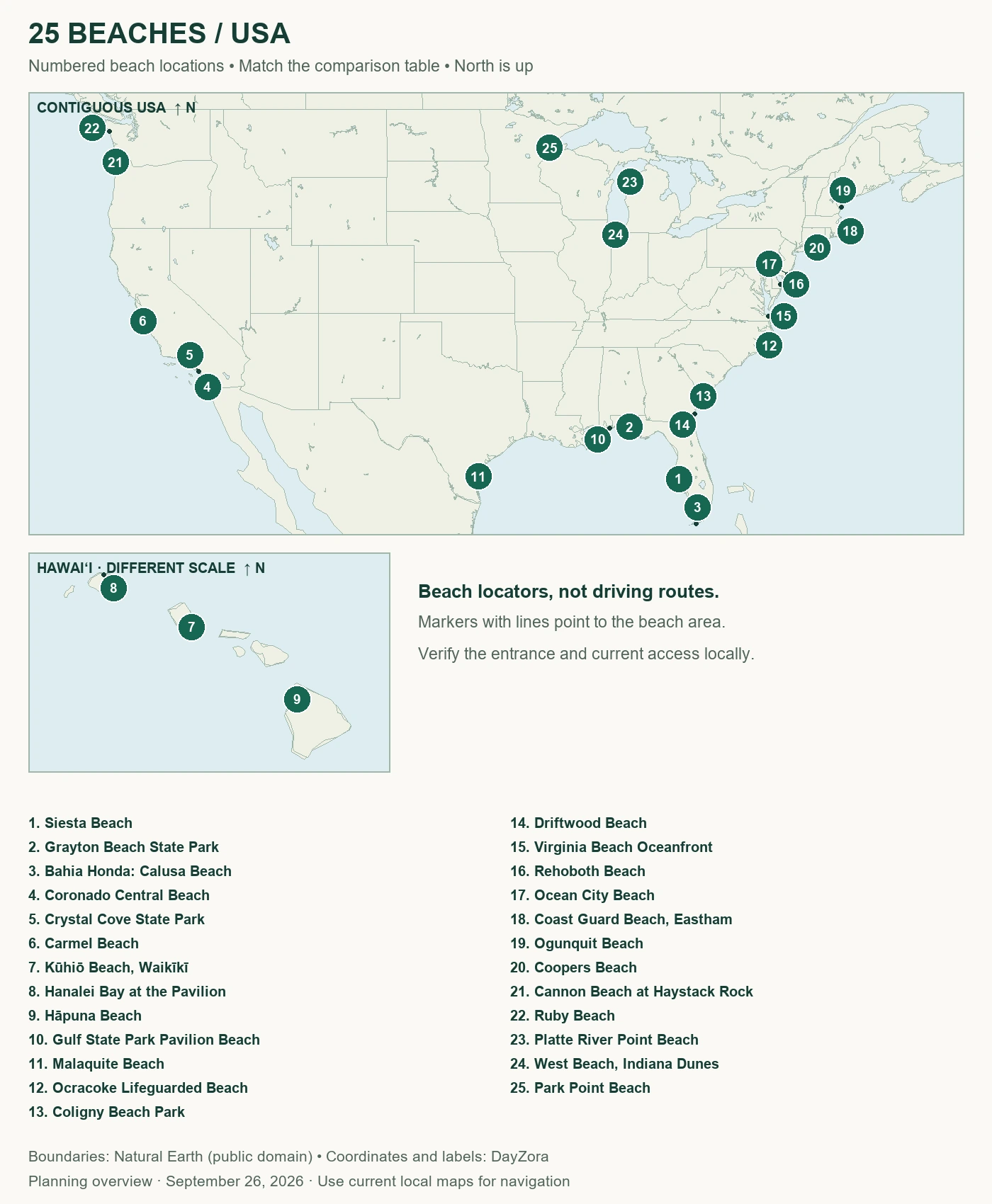
25 beaches to consider
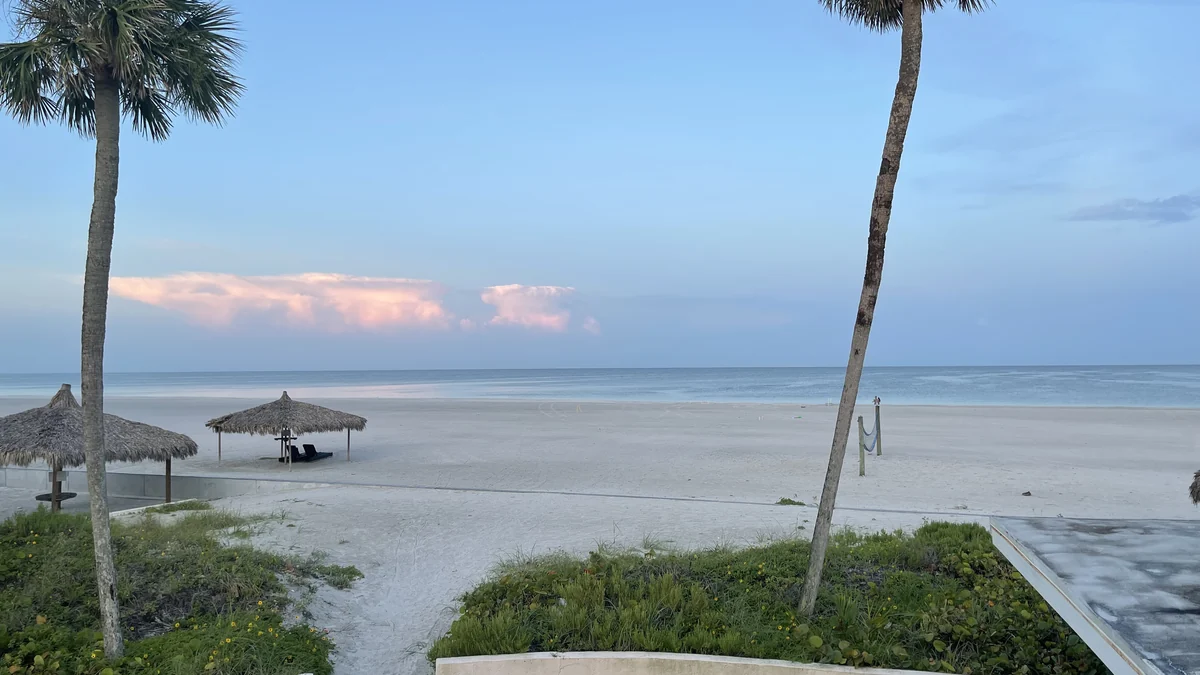
1. Siesta Beach
- Location: Sarasota, Gulf Coast, Florida
- Best for: A full-service sand-and-sunset day
- Suggested trip: One beach day within a 2–4-night regional stay
- Best time: Spring or autumn
- Swimming: Assess surf, flags and water-quality notices
- Lifeguards: County lifeguards; confirm staffed stretch and hours
- Getting there / access: Use the main public beach parking and marked paths
- Facilities: Restrooms, concessions, picnic areas, playground; beach wheelchairs listed
- Budget: Moderate; beachfront stays cost more
Why visit: Choose the main Siesta Beach park when facilities matter as much as the shoreline. It is a more practical first visit than picking an unserviced neighborhood access simply because both are on Siesta Key.
Beach experience: A wide, pale-sand shoreline creates room for walking and sand play, with a busy public-park atmosphere near the principal entrances.
Best things to do: Walk the shore, use the playground and picnic areas, and return for sunset if the weather permits. Swimming depends on the day; this is not a default reef-snorkeling outing.
When to go: Spring and autumn can make an outdoor day more comfortable than humid midsummer. Winter fronts can cool the air and water; summer afternoons need a thunderstorm backup.
Where to stay: Siesta Key for a beach-led stay; Sarasota for museums, restaurants and a wider range of accommodation.
Planning tip: The county lists a beach access mat and beach wheelchairs. Confirm availability and where the mat ends: it does not make the entire sand-to-water journey step-free.
Check current details: Siesta Beach visitor information.
2. Grayton Beach State Park
- Location: South Walton, Panhandle, Florida
- Best for: Beach and coastal dune-lake scenery
- Suggested trip: One beach day within a 2–4-night regional stay
- Best time: Late spring or early autumn
- Swimming: Conditions vary; lagoon appearance does not establish swimming suitability
- Lifeguards: Not confirmed; verify locally
- Getting there / access: State-park entrance; day-use admission
- Facilities: Restrooms, picnic facilities, trails and reservable camping/cabins
- Budget: Low–moderate day costs
Why visit: Grayton is a strong choice for visitors interested in the relationship between beach, dunes and coastal lake habitat. It adds an outdoor focus to a South Walton stay.
Beach experience: The sandy Gulf shore is backed by a landscape of vegetation and dune lakes rather than an uninterrupted high-rise strip.
Best things to do: Walk the beach or a marked trail, observe birds and consider a separately planned paddle when local conditions and access allow.
When to go: Late spring or early autumn are useful for combining outdoor activities. Summer weekends and holidays need earlier planning; winter is more a scenery trip than a guaranteed swimming break.
Where to stay: Grayton Beach or another nearby South Walton community; park camping or cabins require a separate reservation.
Planning tip: A coastal dune lake and the sea can change character after rain and tidal exchange. Choose the activity based on posted conditions, not the apparent stillness of one patch of water.
Check current details: Grayton Beach State Park visitor information.
3. Bahia Honda: Calusa Beach
- Location: Lower Florida Keys
- Best for: A sandy Keys stop with old-bridge views
- Suggested trip: One beach day within a 2–4-night regional stay
- Best time: Winter or spring
- Swimming: Assess currents and wind; snorkeling is condition-dependent
- Lifeguards: Not confirmed; verify locally
- Getting there / access: US1 at the park entrance; admission and capacity limits
- Facilities: Parking, restrooms, picnic pavilions and concession; shade limited
- Budget: Moderate; Keys lodging can be high
- Snorkeling: Condition-dependent; check visibility, currents, entry and local guidance before entering
Why visit: Bahia Honda is a useful corrective to the idea that every Florida Keys shoreline is a broad beach. Calusa offers a defined sandy stop beside the historic bridge scenery.
Beach experience: The compact bay-facing beach has a different aspect from the park’s Atlantic-side Loggerhead and Sandspur beaches. Choose a section based on current conditions and available space.
Best things to do: Walk, picnic and consider snorkeling only when conditions suit your ability. Offshore reef tours are separately operated trips, not something included with park entry.
When to go: Winter and spring are practical for outdoor time, but wind can affect water activities. Summer brings stronger heat and tropical-weather considerations.
Where to stay: Big Pine Key or Marathon; Key West is a separate base farther along the Overseas Highway.
Planning tip: The park can stop admitting visitors when day-use capacity is reached. Arrive early on busy dates and bring shade rather than relying on finding a tree beside your towel.
Check current details: Bahia Honda: Calusa Beach visitor information.
4. Coronado Central Beach
- Location: San Diego County, California
- Best for: Broad sand and a town base
- Suggested trip: One beach day within a 2–4-night regional stay
- Best time: Late spring to early autumn
- Swimming: Cool Pacific water; check county water-quality notices
- Lifeguards: City year-round service; confirm staffed zone
- Getting there / access: Use signed Ocean Boulevard access and legal parking
- Facilities: Restrooms and showers; village food nearby
- Budget: Moderate–high lodging
Why visit: Coronado is a practical choice when a beach stay must also support museums, the zoo and restaurants. Its broad sand provides a different experience from San Diego’s small coves.
Beach experience: The developed shoreline combines open sand with a residential and hotel backdrop. A pleasant town walk can be part of the same day.
Best things to do: Build sandcastles, walk the beach or explore the village. Put mainland attractions on another day so the bridge journey does not dominate a short visit.
When to go: Late spring through early autumn suits longer beach days, with possible coastal cloud. Winter is useful for walks; sunshine alone does not establish comfortable swimming temperatures.
Where to stay: Central Coronado for walking to meals; San Diego for a wider city itinerary and a separate beach journey.
Planning tip: Check both surf and water-quality notices immediately before visiting. A staffed lifeguard station does not override a water-contact advisory or closure.
Check current details: Coronado Central Beach visitor information.
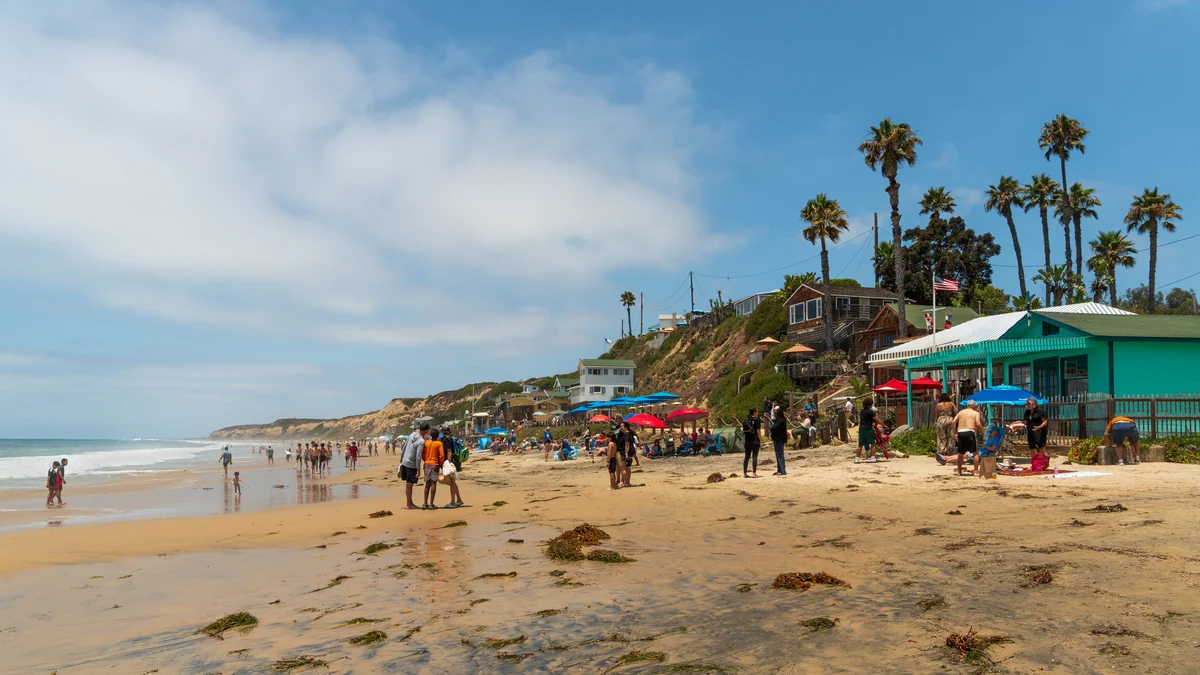
5. Crystal Cove State Park
- Location: Orange County, California
- Best for: Coves, tide pools and historic beach cottages
- Suggested trip: One beach day within a 2–4-night regional stay
- Best time: Spring or autumn; tide-aware
- Swimming: Surf and rocky areas; conditions vary
- Lifeguards: Verify staffed beach section and season
- Getting there / access: Signed lots off Pacific Coast Highway; trails or historic-district access
- Facilities: Restrooms and food in the historic district; facilities vary by cove
- Budget: Moderate day costs
Why visit: Crystal Cove combines a beach landscape with a historic cottage district, creating a useful alternative to the busier pier beaches. Choose one access rather than trying to cover every cove.
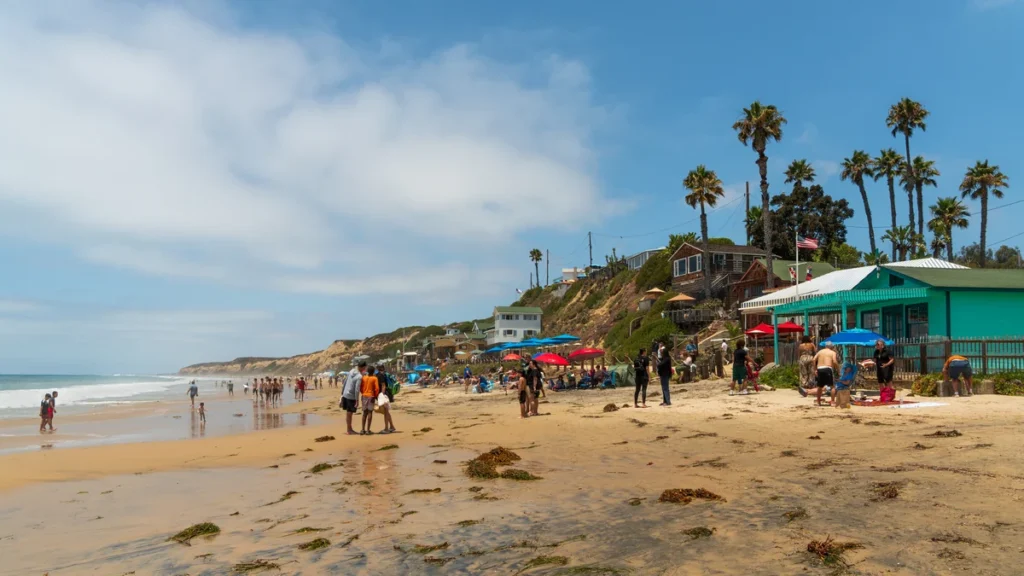
Beach experience: Sandy coves sit beneath coastal bluffs, interrupted by rocky intertidal areas. The historic district has a different atmosphere from the park’s quieter stretches.
Best things to do: Walk the beach, observe tide pools without touching organisms, or explore the historic district. A backcountry hike is another outing, not a compulsory add-on.
When to go: Spring and autumn can suit walking; summer brings more demand for parking. Tide-pool visibility requires the current tide table and appropriate wave conditions.
Where to stay: Laguna Beach or Newport Beach; historic cottages are a separate reservation challenge, not guaranteed accommodation.
Planning tip: Check which parking lot serves your intended beach. A place marked “Crystal Cove” can still involve a substantial descent, walk or transfer to the district you want.
Check current details: Crystal Cove State Park visitor information.
6. Carmel Beach
- Location: Carmel-by-the-Sea, Central Coast, California
- Best for: Scenic walking and a compact town
- Suggested trip: One beach day within a 2–4-night regional stay
- Best time: Spring or autumn; layers year-round
- Swimming: Cold water and hazardous waves; scenery-focused
- Lifeguards: No lifeguards, according to the city
- Getting there / access: Ocean Avenue sand ramp; additional signed stairways
- Facilities: Restrooms at Ocean Avenue and Santa Lucia area
- Budget: Moderate–high lodging
Why visit: Carmel Beach is a scenery-and-town choice, especially for travelers who value an evening walk and nearby dining more than swimming.
Beach experience: Pale sand curves below cypress-lined streets. The compact town makes the beach easy to pair with galleries and a meal, but the sand approach still requires effort.
Best things to do: Walk the shore or Scenic Pathway and enjoy the coastal view. Keep well back from breaking waves and do not let the town’s gentle atmosphere disguise the ocean’s power.
When to go: Spring and autumn can suit a quieter coastal stay. Fog, wind and cool water remain possible in every season; winter storms deserve extra distance.
Where to stay: Carmel-by-the-Sea for walking convenience; Monterey or Pacific Grove for a broader peninsula trip.
Planning tip: The city confirms there are no lifeguards. Check which stairways are open and use the sand ramp or marked access rather than cutting down fragile bluffs.
Check current details: Carmel Beach visitor information.
7. Kūhiō Beach, Waikīkī
- Location: Oʻahu, Hawaiʻi
- Best for: A walkable tropical city stay
- Suggested trip: Half to one day; 2–4 nights in the area
- Best time: Spring or autumn; check island alerts
- Swimming: Enclosures do not guarantee calm or safe conditions
- Lifeguards: Listed by Hawaiʻi tourism; verify staffed area
- Getting there / access: Walk from Waikīkī; public transport or paid urban parking
- Facilities: Showers, food and developed beach access
- Budget: Moderate–high
- Surfing: Use a qualified instructor and a suitable designated area; conditions and ability determine the choice
Why visit: Kūhiō is useful when the beach should be part of daily life rather than a separate expedition. Hotels, meals and Honolulu attractions support repeated short visits.
Beach experience: This is one segment of the connected Waikīkī shoreline, with an urban backdrop and protective walls in parts of the beach.
Best things to do: Walk the waterfront, spend time on the sand and use an appropriate guarded area if conditions allow. Surf instruction belongs with a qualified operator in a suitable zone.
When to go: Spring and autumn can balance demand and comfort. Island-specific storm and surf warnings still take priority over the season.
Where to stay: Waikīkī for walking convenience; reserve a car only for days that need wider-island travel.
Planning tip: Do not jump from the Waikīkī Wall. Pick the precise beach segment with the lifeguard, because nearby surf and swimming areas are not interchangeable.
Check current details: Kūhiō Beach, Waikīkī visitor information.
8. Hanalei Bay at the Pavilion
- Location: Kauaʻi, Hawaiʻi
- Best for: Mountain-backed bay scenery
- Suggested trip: Half to one day; 2–4 nights in the area
- Best time: Summer for a north-shore beach emphasis
- Swimming: Winter surf can be powerful; conditions vary year-round
- Lifeguards: Hanalei Bay listed as lifeguarded; verify exact zone
- Getting there / access: Hanalei Pavilion public park access; limited local parking
- Facilities: Park comfort stations and picnic facilities
- Budget: Moderate–high
Why visit: Hanalei is a scenery-led choice, combining a sweeping bay with a mountain backdrop and a small-town base. Choose the Pavilion access rather than treating the whole bay as one service area.
Beach experience: Sand curves around an open bay with rivers and changing surf. The picturesque setting does not simplify its water conditions.
Best things to do: Walk the beach, explore town and watch surfers from shore when the sea is unsuitable for casual recreation.
When to go: Summer generally fits a north-shore beach trip better than winter’s larger swells. Rain, runoff and access disruptions can occur outside any simple seasonal pattern.
Where to stay: Hanalei or Princeville, checking the actual route and driving requirements from the accommodation.
Planning tip: Confirm road and beach conditions before heading north. Do not substitute a nearby unguarded bay or river mouth when the staffed area has warnings.
Check current details: Hanalei Bay at the Pavilion visitor information.
9. Hāpuna Beach
- Location: Hawaiʻi Island, Hawaiʻi
- Best for: A broad sand beach with park facilities
- Suggested trip: Half to one day; 2–4 nights in the area
- Best time: Calmer summer days; conditions first
- Swimming: High surf produces powerful shorebreak and rip currents
- Lifeguards: State park lists lifeguards; verify current coverage
- Getting there / access: Signed state recreation-area entrance; nonresident fees apply
- Facilities: Restrooms, cold showers and picnic facilities
- Budget: Moderate day costs; resort-area lodging higher
Why visit: Hāpuna offers a substantial sandy shoreline on the Kohala Coast, making it a useful beach-focused day during a larger island trip.
Beach experience: Open sand and landscaped park areas face an exposed ocean. What looks inviting from above can have a forceful breaking-wave zone.
Best things to do: Walk, picnic and consider water entry only after checking lifeguard advice. Coastal walking is an alternative when swimming is unsuitable.
When to go: Calmer summer conditions often fit a beach-led plan, but no month removes ocean hazards. Check current island weather alerts before travel.
Where to stay: Kohala Coast or Waimea, comparing driving convenience with the total cost of the stay.
Planning tip: The park explicitly warns about pounding shorebreak during high surf. Do not carry a generic “beginner beach” label into a day with warning signs.
Check current details: Hāpuna Beach visitor information.
10. Gulf State Park Pavilion Beach
- Location: Gulf Shores, Alabama
- Best for: Beach facilities and park trails
- Suggested trip: Half to one day; 2–4 nights in the area
- Best time: Late spring or early autumn
- Swimming: Rip-current and storm conditions vary
- Lifeguards: Verify local staffing; no blanket coverage assumed
- Getting there / access: Paid public Pavilion parking off the coastal highway
- Facilities: Bathrooms, showers, ramps, picnic tables; seasonal concession
- Budget: Low–moderate day costs
Why visit: The Pavilion gives an Alabama beach holiday a clear, serviced starting point. Nearby park trails provide another outdoor option without requiring a new town every day.
Beach experience: A broad sandy Gulf shore sits beside a developed park facility, with more support than a remote access but less hotel frontage than some resort blocks.
Best things to do: Use the beach for one part of the day and a short park outing for another. Keep longer cycling trips out of the hottest hours.
When to go: Late spring and early autumn can suit a mixed activity trip. Summer heat, lightning and tropical weather make an indoor alternative useful.
Where to stay: Gulf Shores or Orange Beach, choosing by access and groceries rather than a generic ocean-view label.
Planning tip: The concession is seasonal. Carry water and verify food availability before relying on a beach lunch, especially outside the main summer period.
Check current details: Gulf State Park Pavilion Beach visitor information.
11. Malaquite Beach
- Location: Padre Island National Seashore, Texas
- Best for: A vehicle-free seashore section
- Suggested trip: Half to one day; 2–4 nights in the area
- Best time: Spring or autumn
- Swimming: Currents and sudden drop-offs; assess conditions
- Lifeguards: No lifeguards, confirmed by NPS
- Getting there / access: Park Road22 to visitor-center access; park pass rules
- Facilities: Parking, restrooms, rinse showers and picnic areas
- Budget: Low–moderate day costs
Why visit: Malaquite is useful for visitors who want a Gulf shoreline without public vehicles driving across their beach space. That distinction matters on a coast where nearby driving access exists.
Beach experience: An open sand beach stretches beside the national seashore visitor-center area. It feels more exposed and nature-oriented than a resort promenade.
Best things to do: Walk, observe birds and use the visitor center when open. Wildlife programs depend on the park’s current schedule, not on guaranteed sightings.
When to go: Spring and autumn can make walking more comfortable. Summer requires shade and water; wind and storms can change the plan in any month.
Where to stay: Corpus Christi or North Padre Island; this is not South Padre Island, which is a separate destination.
Planning tip: NPS confirms no lifeguard duty. Borrowed beach wheelchairs and visitor-center facilities improve access logistics, but they do not change water hazards.
Check current details: Malaquite Beach visitor information.
12. Ocracoke Lifeguarded Beach
- Location: Outer Banks, North Carolina
- Best for: Barrier-island beach with summer services
- Suggested trip: Half to one day; 2–4 nights in the area
- Best time: Summer for guarded-beach season
- Swimming: Atlantic waves and rip currents vary
- Lifeguards: Seasonal summer service; verify dates/hours
- Getting there / access: Ferry to Ocracoke, then NC12 to signed beach parking
- Facilities: Restrooms, showers and changing facilities
- Budget: Moderate; ferry and lodging logistics matter
Why visit: Ocracoke makes the journey part of the holiday. Choose it when a barrier-island stay appeals more than a quick highway beach stop.
Beach experience: A wide Atlantic sand beach lies outside the village, backed by national-seashore dunes rather than a continuous hotel strip.
Best things to do: Walk, spend time in the staffed area if conditions permit and explore the village separately. Do not plan every day around lengthy island transfers.
When to go: Summer aligns with seasonal lifeguard services. Shoulder seasons can be quieter but reduce services, while tropical weather can disrupt ferries.
Where to stay: Ocracoke village, with ferry arrangements planned before the lodging itinerary becomes fixed.
Planning tip: Choose the designated lifeguarded access, not just any beach turnout. Confirm the current ferry route and reservation requirements with the operator.
Check current details: Ocracoke Lifeguarded Beach visitor information.
13. Coligny Beach Park
- Location: Hilton Head Island, South Carolina
- Best for: Public beach hub with nearby meals
- Suggested trip: Half to one day; 2–4 nights in the area
- Best time: Late spring or early autumn
- Swimming: Tides and daily surf conditions matter
- Lifeguards: Verify seasonal patrol and staffed zone
- Getting there / access: Use official Coligny public parking/access; check current terms
- Facilities: Restrooms, showers and nearby shopping/food
- Budget: Moderate
Why visit: Coligny is a useful starting point when a family or mixed group wants recognizable facilities and nearby meals. It is more practical than choosing an unnamed island access.
Beach experience: A broad tidal beach meets an organized public park and a developed village area. The amount of usable sand changes through the day.
Best things to do: Walk, spend time on the sand or use island paths on a suitable bicycle route. A Coastal Discovery Museum outing offers a different focus.
When to go: Late spring and early autumn can balance heat and activity. Summer is busy and humid; ocean conditions still need a same-day check.
Where to stay: The Coligny area for walking convenience, or another island district chosen deliberately for its access.
Planning tip: A rental described as “Hilton Head beachside” may be far from this public hub. Check the actual door-to-access route with children and equipment in mind.
Check current details: Coligny Beach Park visitor information.
14. Driftwood Beach
- Location: Jekyll Island, Georgia
- Best for: Sculptural shoreline scenery
- Suggested trip: Half to one day; 2–4 nights in the area
- Best time: Spring or autumn; tide-aware
- Swimming: Scenery-first; not a default swimming selection
- Lifeguards: Not confirmed; do not assume guarded swimming
- Getting there / access: Jekyll Island entry/parking arrangements, then marked beach access
- Facilities: Limited beach services; plan food and restroom stops elsewhere on island
- Budget: Low–moderate day costs
Why visit: Driftwood earns its place for a distinctive coastal landscape rather than a conventional swimming holiday. It can be the memorable short outing within a broader Jekyll stay.
Beach experience: Weathered trees and exposed roots lie across a sand-and-tidal shoreline. The experience is about shape, light and coastal change.
Best things to do: Walk on an appropriate tide, observe the shore and combine the visit with another island attraction. Keep children away from unstable wood and approaching water.
When to go: Spring and autumn favor walking. Tide and weather are more important than a rigid sunrise or sunset appointment.
Where to stay: Jekyll Island for a short approach; Brunswick if a mainland base better fits the wider route.
Planning tip: Leave time to retreat as water rises. Do not climb unstable trees or treat a photographed low-tide route as usable throughout the day.
Check current details: Driftwood Beach visitor information.
15. Virginia Beach Oceanfront
- Location: Virginia
- Best for: Beach and boardwalk convenience
- Suggested trip: Half to one day; 2–4 nights in the area
- Best time: Summer for fullest services
- Swimming: Follow city swimming zones and patrol guidance
- Lifeguards: Seasonal city coverage; confirm dates and hours
- Getting there / access: Public streets and paid parking near the resort area
- Facilities: Public restrooms at selected streets, playgrounds and food
- Budget: Moderate
Why visit: The Oceanfront works for a trip where different ages need different activities close together. A beach day can be short without leaving the rest of the afternoon empty.
Beach experience: A long sandy urban beachfront is backed by a boardwalk and hotels. The exact block determines noise, meal access and walking distance.
Best things to do: Walk the boardwalk, use an appropriate beach section and choose one nearby attraction. Keep bicycles on the designated bike path.
When to go: Summer brings the fullest services and strongest crowds. Shoulder seasons work for a coastal town stay, but patrol and attraction calendars may be reduced.
Where to stay: Oceanfront accommodation chosen by the beach block and full parking total.
Planning tip: The city lists permanent restrooms at specific streets. Pick a meeting point near one instead of assuming every access has the same facilities.
Check current details: Virginia Beach Oceanfront visitor information.
16. Rehoboth Beach
- Location: Delaware
- Best for: Compact boardwalk and town
- Suggested trip: Half to one day; 2–4 nights in the area
- Best time: Summer
- Swimming: Atlantic surf and warnings vary
- Lifeguards: Verify city patrol season and daily zone
- Getting there / access: Town parking meters/permits and pedestrian access
- Facilities: Boardwalk-area restrooms and plentiful food
- Budget: Moderate–high peak lodging
Why visit: Rehoboth is useful when the goal is to park once and alternate beach, meals and small amusements. Its compact center can simplify a short family or couples break.
Beach experience: Sand sits beside a classic boardwalk and low-rise town streets. This is a social resort setting rather than a remote coast.
Best things to do: Walk, spend time at the beach and choose a modest Funland visit when operating. Leave room for repeating a favorite activity.
When to go: Summer aligns with the fullest attraction and patrol schedules. Spring and autumn are better framed as town-and-coast trips than guaranteed summer-style holidays.
Where to stay: Central Rehoboth for walking; outlying accommodation only after comparing parking and journey costs.
Planning tip: Check both parking rules and seasonal attraction calendars. An open beach does not mean every boardwalk business or lifeguard stand is operating.
Check current details: Rehoboth Beach visitor information.
17. Ocean City Beach
- Location: New Jersey
- Best for: Beach-and-boardwalk family rhythm
- Suggested trip: Half to one day; 2–4 nights in the area
- Best time: Summer
- Swimming: Use currently guarded sections and local advice
- Lifeguards: Seasonal Beach Patrol; check official beach list
- Getting there / access: Town parking plus seasonal beach-tag requirements
- Facilities: Boardwalk food and public facilities at designated locations
- Budget: Moderate–high peak lodging
Why visit: Ocean City suits a repeatable holiday pattern: beach, rest, dinner and a small boardwalk outing. It is a strong choice when convenience matters more than a new excursion every day.
Beach experience: A sandy Atlantic shore meets a developed boardwalk, with busier and quieter blocks depending on where you stay.
Best things to do: Spend time on the sand and budget a separate block for rides or miniature golf. Do not let every evening become an expensive full-length outing.
When to go: Summer supports the fullest services. Early or late season can reduce crowds but requires checking beach patrol and attraction operation.
Where to stay: A hotel or rental near the block you intend to use, with parking and linen arrangements checked.
Planning tip: This is Ocean City, New Jersey, not Maryland. Their beach-tag rules differ; verify the current season’s age requirements and dates before arrival.
Check current details: Ocean City Beach visitor information.
18. Coast Guard Beach, Eastham
- Location: Cape Cod, Massachusetts
- Best for: Atlantic dunes and national-seashore scenery
- Suggested trip: Half to one day; 2–4 nights in the area
- Best time: Summer; autumn for walking
- Swimming: Cold water, waves and wildlife advisories; follow NPS guidance
- Lifeguards: Verify seasonal staffing
- Getting there / access: Summer Little Creek parking/shuttle; confirm current arrangements
- Facilities: Seasonal visitor facilities; verify restroom availability
- Budget: Low–moderate day costs
Why visit: Coast Guard Beach offers a Cape Cod seashore experience centered on dunes and open Atlantic views. It is best when you can accept seasonal access logistics rather than insist on parking beside the towel.
Beach experience: A broad ocean-facing shore sits below the former Coast Guard station and dune landscape.
Best things to do: Walk, observe the coast and use a staffed swimming area only when conditions allow. Keep away from seals and follow current shark-awareness guidance without assuming sightings.
When to go: Summer brings beach services and parking controls. Autumn is attractive for walks, while water and air can be much colder than on southern beaches.
Where to stay: Eastham or nearby Outer Cape towns, choosing by the rest of the Cape itinerary.
Planning tip: Check the Little Creek shuttle arrangement before driving to the beach lot. Carry only what you can manage comfortably through the transfer.
Check current details: Coast Guard Beach, Eastham visitor information.
19. Ogunquit Beach
- Location: Maine
- Best for: Tidal sand and a walkable coastal town
- Suggested trip: Half to one day; 2–4 nights in the area
- Best time: Summer
- Swimming: Cold water; river-mouth currents need particular caution
- Lifeguards: Verify town patrol dates and staffed area
- Getting there / access: Main Beach parking or other named access; seasonal charges
- Facilities: Main access services and town food; check seasonal operation
- Budget: Moderate–high peak lodging
Why visit: Ogunquit combines a substantial sand beach with a compact town holiday. It suits visitors who enjoy coastal walking and meals as much as time in the water.
Beach experience: The beach changes dramatically with the tide, with ocean and river environments close together. A wide low-tide scene is not a permanent layout.
Best things to do: Walk the shore and enjoy town, with a separate coastal-path outing if it suits the group. Do not use the river mouth as a children’s swimming shortcut.
When to go: Summer is the clearest fit for a beach-centered Maine stay. Shoulder seasons favor scenery and town time, with reduced services and colder water.
Where to stay: Ogunquit near a suitable access; compare the walk across bridges and roads rather than just map distance.
Planning tip: Build the day around current tides and patrol guidance. The space available for sand play and the difficulty of the return walk can change substantially.
Check current details: Ogunquit Beach visitor information.
20. Coopers Beach
- Location: Southampton, New York
- Best for: Dune-backed beach and village stay
- Suggested trip: Half to one day; 2–4 nights in the area
- Best time: Summer
- Swimming: Atlantic surf; follow local lifeguards
- Lifeguards: Village lists guarded service; confirm season/hours
- Getting there / access: Meadow Lane public lot; current daily/permit parking rules
- Facilities: Bathrooms, showers and seasonal concession/rentals
- Budget: High peak lodging; parking can be significant
Why visit: Coopers is a practical Hamptons beach when a defined public access and facilities matter. It is a more useful first choice than assuming every Southampton shore entrance offers visitor parking.
Beach experience: Sand and dunes front a residential coastline, with a developed public facility at the main access.
Best things to do: Spend time on the beach and give Southampton village a separate meal or browsing block. Avoid a packed multi-town itinerary on a busy summer weekend.
When to go: Summer aligns with beach services but raises lodging and parking demand. Shoulder seasons are better for walks than for assuming the same staffed experience.
Where to stay: Southampton or another nearby South Fork base after checking travel time and parking eligibility.
Planning tip: Read the current parking policy before leaving the accommodation. A beach being public does not mean visitor vehicle access is free or unrestricted.
Check current details: Coopers Beach visitor information.
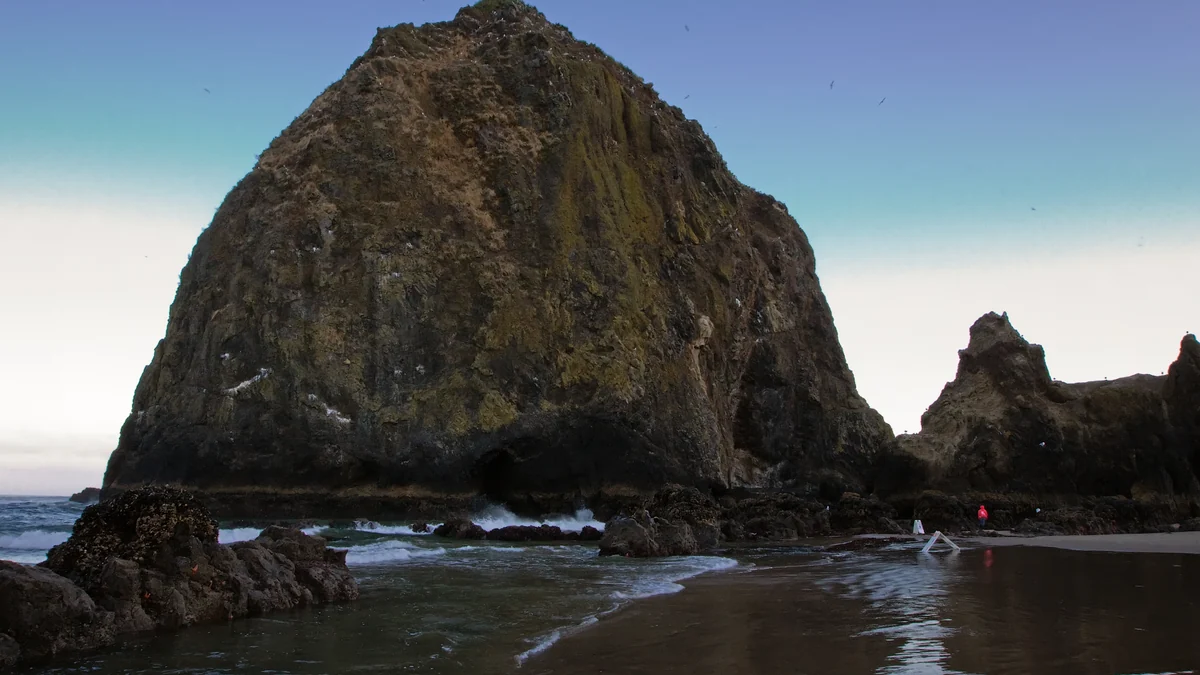
21. Cannon Beach at Haystack Rock
- Location: Oregon
- Best for: Sea-stack scenery and tide-pool observation
- Suggested trip: Half to one day; 2–4 nights in the area
- Best time: Summer or early autumn
- Swimming: Cold water and sneaker waves; shore-exploration focus
- Lifeguards: Do not assume a staffed swimming beach
- Getting there / access: Town parking and marked public access
- Facilities: Town restrooms/food; facilities vary by access
- Budget: Moderate–high lodging
Why visit: Cannon Beach is for travelers who want a dramatic coast without making swimming the measure of a successful beach day. Haystack Rock gives a short walk a memorable focal point.
Beach experience: Broad sand, offshore rock and a compact town create a cool-water Pacific Northwest experience.
Best things to do: Observe tide pools from permitted areas at an appropriate tide, join an available interpretation session and walk the shore well clear of incoming waves.
When to go: Summer and early autumn suit longer walks. Rain and wind remain possible; winter storms call for much greater distance from the water.
Where to stay: Cannon Beach for walking convenience, or a nearby coastal town if the wider road trip determines the stay.
Planning tip: Do not climb Haystack Rock or handle tide-pool wildlife. Stay away from logs that waves can move, and do not turn your back on the ocean.
Check current details: Cannon Beach at Haystack Rock visitor information.
22. Ruby Beach
- Location: Olympic Peninsula, Washington
- Best for: Sea stacks and forest-to-coast scenery
- Suggested trip: Half to one day; 2–4 nights in the area
- Best time: Summer or early autumn
- Swimming: Cold water, strong waves and moving driftwood; not a swimming-led visit
- Lifeguards: No guarded-swimming assumption
- Getting there / access: US101 parking, then a descending gravel trail
- Facilities: Parking-area restrooms and viewpoint; bring supplies
- Budget: Low day costs
Why visit: Ruby offers a dramatic Olympic coast visit directly from the highway, without a wilderness overnight. It is a useful choice for a road trip that needs a manageable coastal stop.
Beach experience: Rocky shore, sand, driftwood and sea stacks lie below coastal forest. The descent and loose material make the beach different from the accessible viewpoint.
Best things to do: Observe the shoreline and tide pools when conditions permit. Keep the walk short enough to return before rising water or worsening weather changes access.
When to go: Summer and early autumn often fit a road trip, but rain and wind remain possible. Use current tide information in every season.
Where to stay: Kalaloch or Forks, with food and fuel planned before reaching the coast.
Planning tip: Rialto’s Mora Road is currently closed through October15, 2026. Ruby is a separate coastal destination; check Olympic alerts rather than assuming the two share access conditions.
Check current details: Ruby Beach visitor information.
23. Platte River Point Beach
- Location: Sleeping Bear Dunes, Michigan
- Best for: Lake Michigan beach and dune scenery
- Suggested trip: Half to one day; 2–4 nights in the area
- Best time: Summer
- Swimming: Freshwater waves and river-mouth currents still matter
- Lifeguards: No lifeguard assumption; verify NPS guidance
- Getting there / access: End of Lake Michigan Road; park/pass and parking rules
- Facilities: Parking, restrooms and picnic facilities in access area
- Budget: Low–moderate day costs
Why visit: Platte River Point broadens a U.S. beach shortlist beyond ocean coasts. It is useful for a northern Michigan holiday that combines shore time with a national lakeshore landscape.
Beach experience: Sand and gravel meet Lake Michigan beside the river outlet, with changing beach shapes and wide water views.
Best things to do: Walk the lakeshore, picnic and choose a separate modest dune outing. River paddling is its own activity with an operator and current conditions to assess.
When to go: Summer is the best fit for a beach-led visit, though the lake can still be cold. Spring and autumn work better for scenery and walking.
Where to stay: Honor, Empire or nearby accommodation chosen by the part of Sleeping Bear you intend to explore.
Planning tip: Do not treat the river mouth as a protected children’s pool. Currents, boat traffic and lake waves require a different decision from simply finding shallow-looking water.
Check current details: Platte River Point Beach visitor information.
24. West Beach, Indiana Dunes
- Location: Indiana
- Best for: Dunes and a Lake Michigan day trip
- Suggested trip: Half to one day; 2–4 nights in the area
- Best time: Summer
- Swimming: Rip currents and waves occur in the Great Lakes
- Lifeguards: Seasonal service listed, but staffing may be limited; verify
- Getting there / access: North County Line Road public lot; park pass rules
- Facilities: Restrooms, water, seasonal bathhouse/showers and picnic shelters
- Budget: Low–moderate day costs
Why visit: West Beach is a useful Great Lakes option when you want a defined access with facilities and nearby dune trails. It can work as a short stay or a carefully planned regional day trip.
Beach experience: Sand and dunes frame the southern Lake Michigan shore. Fresh water changes the setting, not the need to assess conditions.
Best things to do: Use the beach or choose a manageable dune trail. The stair-heavy Dune Succession route is not an effortless add-on for every visitor.
When to go: Summer aligns with seasonal services. Cooler seasons favor walking, with the lake’s temperature and wind making a swimming-centered plan less suitable.
Where to stay: Portage, Chesterton or nearby communities; distinguish the national park from the separately managed state park.
Planning tip: NPS pages list seasonal lifeguards but also warn staffing can be limited. Confirm actual coverage instead of reading a seasonal schedule as a guarantee.
Check current details: West Beach, Indiana Dunes visitor information.
25. Park Point Beach
- Location: Duluth, Minnesota
- Best for: Lake Superior shore and city pairing
- Suggested trip: Half to one day; 2–4 nights in the area
- Best time: Summer
- Swimming: Lake Superior can be very cold; heed rip-current warnings
- Lifeguards: Verify current Beach House staffing and dates
- Getting there / access: Minnesota Avenue to Park Point Recreation Area
- Facilities: Recreation-area parking, picnic/play areas; confirm seasonal Beach House services
- Budget: Low–moderate day costs
Why visit: Park Point is a distinctive northern alternative for travelers who want a city break and a long freshwater shore. It is included for landscape and variety, not warm-water expectations.
Beach experience: A narrow sand peninsula separates Lake Superior from the harbor, with the lake side exposed to wind and waves.
Best things to do: Walk the beach, use the recreation area and pair the visit with Duluth’s harbor attractions. Keep the water plan optional.
When to go: Summer is the practical season for a beach-focused visit. Even then, cool lake water and a sudden wind change can shorten the outing.
Where to stay: Duluth for restaurants and harbor activities; select lodging by the wider trip rather than expecting a resort strip on the peninsula.
Planning tip: Check the city and local beach-hazard information on the day. Do not assume an operating park means the seasonal beach house and lifeguards are also available.
Check current details: Park Point Beach visitor information.
Which beach is right for you?
For families
Start with Coronado for a San Diego combination, Coligny for nearby meals or Ogunquit for a walkable New England base. Check the dedicated family comparison for age ranges, restroom planning and shorter outings.
For surfing
Hawaiʻi and California require a beach-specific choice rather than a state-wide assumption. Waikīkī has surf schools in the wider district, but the enclosed Kūhiō swimming area is not a place to improvise a surf lesson. Choose an authorized instructor and a suitable operating location.
For scenery and wildlife
Cannon, Ruby and Driftwood are strongest as walking and observation trips. Stay clear of moving logs and waves; respect nesting areas and tide-pool rules. These are not substitutes for a staffed swimming beach.
For tropical atmosphere
Kūhiō offers an urban Hawaiʻi base, Hāpuna an open sand beach and Bahia Honda a Keys setting. Compare flight time, accommodation totals and local conditions before choosing by water color.
For city plus beach
Coronado pairs with San Diego, Rehoboth with a compact boardwalk town and Virginia Beach with a developed oceanfront. A central room may save repeated parking and travel.
For a quieter trip
Consider Ocracoke with realistic ferry planning, or a Great Lakes outing at Platte River Point. Quieter does not mean empty, unregulated or suitable for entering the water.
Water conditions, weather and beach rules
Read the local signs and flag legend, ask an on-duty lifeguard and obey closures. Flag meanings can vary between destinations; an attractive photograph or an unstaffed tower is not a safety assessment. Waves, rip currents and shorebreak can affect capable swimmers, and Great Lakes beaches have dangerous currents too. Use the National Weather Service beach guidance before planning water activities. If in doubt, stay out.
Check the responsible health authority’s water-quality notices as well as the weather. Clear-looking water can still have an advisory, and runoff after rain may change conditions. Review NOAA tide predictions for U.S. locations and local hydrographic guidance elsewhere. Low tide is not permission to cross an inlet, enter a cave or walk to an offshore island.
Keep children under active adult supervision. For surfing or snorkeling, choose conditions and an operator suited to actual ability; do not enter alone or assume rentals include instruction. Give turtles, seals, seabirds and other wildlife space. Never feed, handle or disturb animals, nests or coral, and respect marked habitat closures.
Budget, access and a workable beach day
Compare the complete outing: accommodation, parking or beach tags, park admission, ferry or boat tickets, equipment and meals. Budget labels are relative editorial estimates, not live prices. Use the linked operator pages for current fees and booking rules. Public beach access does not automatically include a nearby hotel’s toilets, loungers or parking.
Confirm the exact entrance, current parking arrangements and the last return ferry or shuttle. If accessibility matters, ask about the full route: parking surface, gradients, stairs, mat endpoint, restroom layout and beach-wheelchair reservations. Carry drinking water, sun protection and layers appropriate to the coast; build in a weather alternative.
Check local rules before bringing pets or planning fires, alcohol, fishing, camping or overnight parking. Restrictions may differ by beach section, time or season. Stay on designated dune paths and take litter away. A quiet stretch of sand is not an invitation to ignore protected-area rules.
For Hawaiʻi, use Hawaiʻi Ocean Safety for current coastal advice. For the Atlantic and Gulf, review National Hurricane Center seasonal information and current forecasts: the Atlantic season runs June through November, but storms can occur outside it. A season is a planning consideration, not a forecast for a particular trip.
Frequently asked questions
Which U.S. beach is best for a first beach vacation?
Choose by travel time and the kind of day you want. Coronado, Clearwater and Kūhiō offer developed surroundings; Cannon and Ruby are better for scenery-focused visits. There is no single winner for every traveler.
Are Great Lakes beaches a good alternative to the ocean?
Yes for a summer regional trip, but freshwater does not remove wave, current or water-quality risks. Use local beach advisories and staffed areas where available.
How many beaches should I visit in one trip?
For a short break, choose one base and one or two nearby alternatives. Florida, California and Hawaiʻi are separate trips for most travelers, not a checklist to combine quickly.
Plan the rest of your trip
20 Best Beaches in Florida: Clear Water, White Sand & Beautiful Coastal Spots · 20 Best Beaches in California: From San Diego to Northern California · 15 Best Family Beaches in the USA for Kids & Parents · 20 Best Tropical Beaches in the World to Visit in 2026
Sources, selection and image credits
This is a research-based editorial selection, not a numerical ranking or a claim of firsthand visits. DayZora compared public access, setting, facilities, regional variety and practical travel fit using the linked park, government and visitor sources. Lifeguard availability is identified only where supported; unconfirmed service is explicitly marked. Suggested stays, age fit, accommodation areas and relative budgets are editorial judgments. Operational notices were reviewed for this edition and should be checked again before departure.
Featured photograph: Hāpuna Beach on the island of Hawaiʻi. Photo: Larry D. Moore (2021), CC BY 4.0. Cropped/resized; derivative retains source license. Archival illustration, not a current-condition report.