Research reviewed September 26, 2026. Conditions and access can change; recheck the linked local authorities before travel.
The best tropical beaches in the world can mean a walkable Caribbean shore, a public beach beside a Pacific lagoon or a boat-access stretch of sand in Australia. The right choice depends on the journey as much as the photograph: transfer time, seasonal weather, public access and the cost of staying nearby all shape the experience.
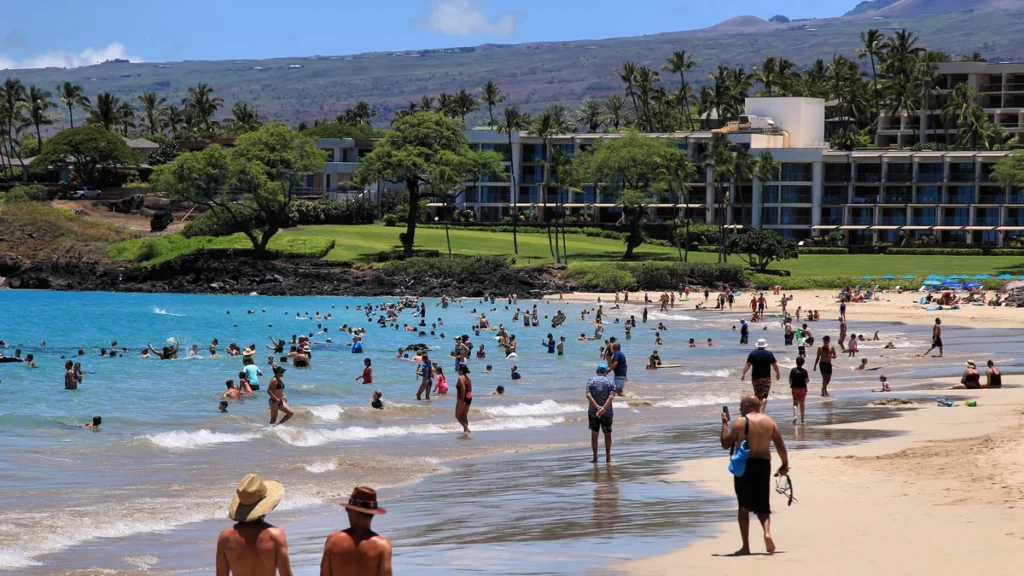
These 20 beaches span the Caribbean, Hawaiʻi, Mexico and Central America, the South Pacific, the Indian Ocean and Southeast Asia. They were selected to include independent beach trips as well as resort-based holidays, with enough variety for families, couples, snorkelers and travelers who want culture alongside the coast. Each profile distinguishes the beach from nearby private accommodation and identifies practical access questions. The regional map is a location guide, not a continuous itinerary. Dry seasons are broad patterns rather than forecasts; wind, swell, cyclones, monsoon conditions and seaweed can affect an individual beach differently. Recheck local advice before booking water activities or nonrefundable transfers.
Beach comparison at a glance
Swipe the table sideways on mobile. Numbers match the map and profiles.
| Beach / map number | Best for | Best time | Water / suitability |
|---|---|---|---|
| 1. Kūhiō Beach, Waikīkī Oʻahu, Hawaiʻi |
A walkable tropical city stay | Spring or autumn; check island alerts | Enclosures do not guarantee calm or safe conditions |
| 2. Hāpuna Beach Hawaiʻi Island, Hawaiʻi |
A broad sand beach with park facilities | Calmer summer days; conditions first | High surf produces powerful shorebreak and rip currents |
| 3. Trunk Bay St. John, U.S. Virgin Islands |
A national-park beach with a snorkeling trail | Winter or spring | Snorkeling depends on swell, visibility and ability |
| 4. Grace Bay Beach Providenciales, Turks and Caicos |
Long sand beach with independent access | Winter or spring | Assess wind, boat activity and daily conditions |
| 5. Seven Mile Beach Grand Cayman, Cayman Islands |
Beach with restaurants and accommodation choices | Winter or spring | Conditions and shoreline width vary by stretch |
| 6. Eagle Beach Aruba, southern Caribbean |
Wide sand and a low-rise hotel setting | Winter or spring; trade winds year-round | Wind and marine conditions vary; check locally |
| 7. Grand Anse Beach Grenada, Caribbean |
Beach and local food beyond a resort package | Winter or spring | Conditions vary; confirm local water guidance |
| 8. Playa Norte Isla Mujeres, Mexico |
A compact island stay near restaurants | Winter or spring | Shallow-looking water still needs supervision and current checks |
| 9. Tamarindo Beach Guanacaste, Costa Rica |
Surf-town activity and independent travel | Drier December–April period | Surf and estuary currents; use a qualified instructor |
| 10. Playa Manuel Antonio Manuel Antonio National Park, Costa Rica |
Forest trails and a protected-area beach | Drier season; check park opening days | Conditions vary; wildlife and park rules apply |
| 11. Matira Beach Bora Bora, French Polynesia |
A public beach on a renowned lagoon island | May–October drier season | Lagoon conditions, coral and boat traffic still require care |
| 12. Natadola Beach Viti Levu, Fiji |
A main-island beach without an outer-island transfer | May–October drier season | Waves, reef and currents vary; assess with local operators |
| 13. Whitehaven Beach Whitsunday Island, Queensland, Australia |
Boat-access silica-sand scenery | Drier-season trip; current marine forecast first | Marine stingers and other marine hazards; follow local advice |
| 14. Anse Source d’Argent La Digue, Seychelles |
Granite boulders and a slow island stay | April or October transition periods | Shallow reef areas still have tides and currents |
| 15. Belle Mare Public Beach East coast, Mauritius |
Independent access to an east-coast beach | Spring/autumn shoulder periods | Lagoon and reef conditions vary; wind exposure matters |
| 16. Maafushi Bikini Beach Kaafu Atoll, Maldives |
A local-island alternative to a private resort | December–April drier season | Assess currents, boat zones and local guidance |
| 17. Unawatuna Beach Southern Sri Lanka |
Beach plus Galle culture and independent lodging | December–March starting point | Monsoon and daily sea conditions govern swimming |
| 18. White Beach, Boracay Boracay, Philippines |
Walkable beach with varied budgets and nightlife | November–April drier-season starting point | Monsoon and typhoon conditions can alter sea state |
| 19. Nai Harn Beach Phuket, Thailand |
A bay beach near the island’s southern viewpoints | November–April; daily warnings still apply | Phuket authority advises against swimming May–October due to strong currents |
| 20. Tanjung Rhu Beach Langkawi, Malaysia |
Northern-island scenery and a quieter outing | Drier-season visit; confirm local forecast | Tidal channels and changing depth; do not walk to offshore islets |
Where the beaches are
Swipe within the map or open the full-size map. Numbers match the main list; markers show approximate beach locations, not entrances or routes.
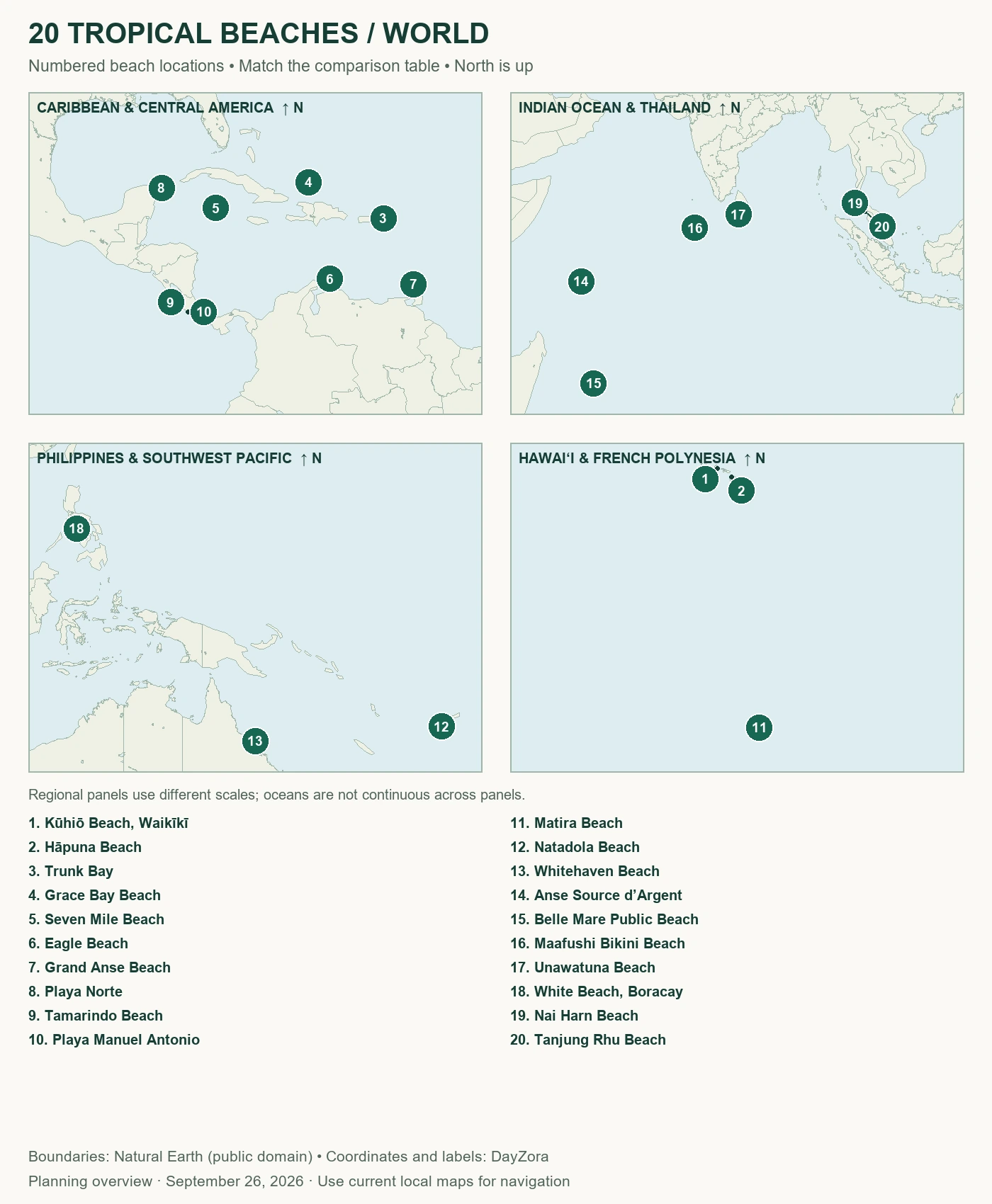
20 beaches to consider
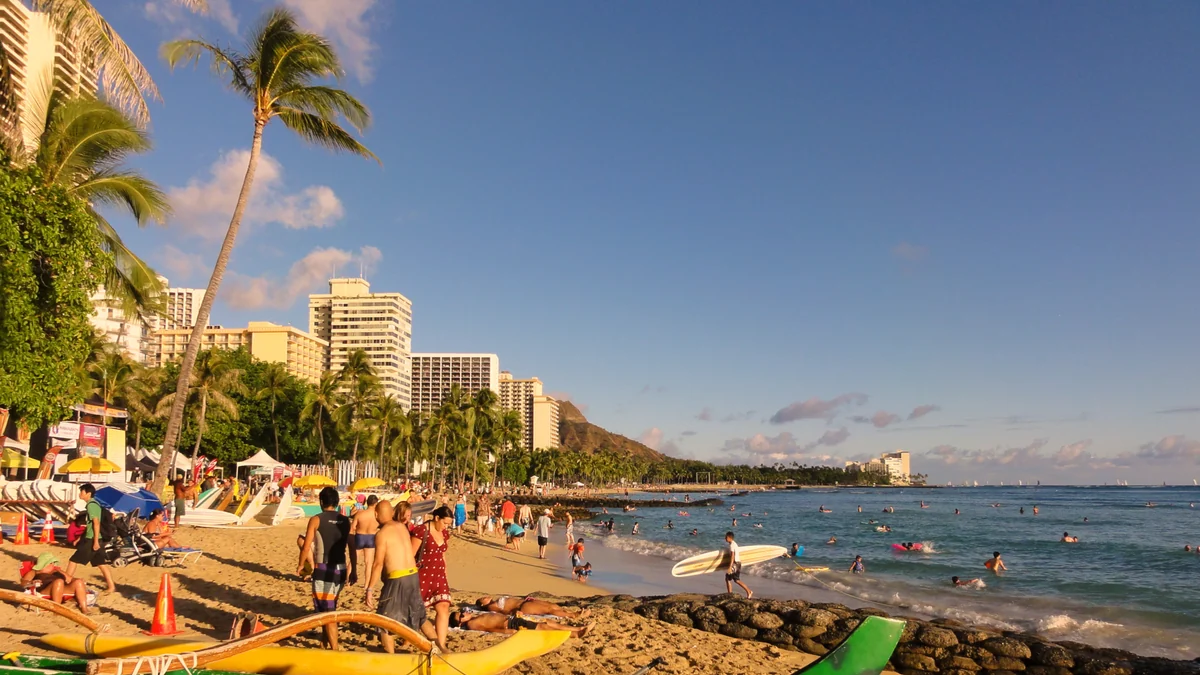
1. Kūhiō Beach, Waikīkī
- Location: Oʻahu, Hawaiʻi
- Best for: A walkable tropical city stay
- Suggested trip: Half to one day; 2–4 nights in the area
- Best time: Spring or autumn; check island alerts
- Swimming: Enclosures do not guarantee calm or safe conditions
- Lifeguards: Listed by Hawaiʻi tourism; verify staffed area
- Getting there / access: Walk from Waikīkī; public transport or paid urban parking
- Facilities: Showers, food and developed beach access
- Budget: Moderate–high
- Surfing: Use a qualified instructor and a suitable designated area; conditions and ability determine the choice
Why visit: Kūhiō is useful when the beach should be part of daily life rather than a separate expedition. Hotels, meals and Honolulu attractions support repeated short visits.
Beach experience: This is one segment of the connected Waikīkī shoreline, with an urban backdrop and protective walls in parts of the beach.
Best things to do: Walk the waterfront, spend time on the sand and use an appropriate guarded area if conditions allow. Surf instruction belongs with a qualified operator in a suitable zone.
When to go: Spring and autumn can balance demand and comfort. Island-specific storm and surf warnings still take priority over the season.
Where to stay: Waikīkī for walking convenience; reserve a car only for days that need wider-island travel.
Planning tip: Do not jump from the Waikīkī Wall. Pick the precise beach segment with the lifeguard, because nearby surf and swimming areas are not interchangeable.
Check current details: Kūhiō Beach, Waikīkī visitor information.
2. Hāpuna Beach
- Location: Hawaiʻi Island, Hawaiʻi
- Best for: A broad sand beach with park facilities
- Suggested trip: Half to one day; 2–4 nights in the area
- Best time: Calmer summer days; conditions first
- Swimming: High surf produces powerful shorebreak and rip currents
- Lifeguards: State park lists lifeguards; verify current coverage
- Getting there / access: Signed state recreation-area entrance; nonresident fees apply
- Facilities: Restrooms, cold showers and picnic facilities
- Budget: Moderate day costs; resort-area lodging higher
Why visit: Hāpuna offers a substantial sandy shoreline on the Kohala Coast, making it a useful beach-focused day during a larger island trip.
Beach experience: Open sand and landscaped park areas face an exposed ocean. What looks inviting from above can have a forceful breaking-wave zone.
Best things to do: Walk, picnic and consider water entry only after checking lifeguard advice. Coastal walking is an alternative when swimming is unsuitable.
When to go: Calmer summer conditions often fit a beach-led plan, but no month removes ocean hazards. Check current island weather alerts before travel.
Where to stay: Kohala Coast or Waimea, comparing driving convenience with the total cost of the stay.
Planning tip: The park explicitly warns about pounding shorebreak during high surf. Do not carry a generic “beginner beach” label into a day with warning signs.
Check current details: Hāpuna Beach visitor information.
3. Trunk Bay
- Location: St. John, U.S. Virgin Islands
- Best for: A national-park beach with a snorkeling trail
- Suggested trip: One beach day within a 4–7-night destination stay
- Best time: Winter or spring
- Swimming: Snorkeling depends on swell, visibility and ability
- Lifeguards: Coverage not confirmed; verify locally
- Getting there / access: Reach St. John by ferry, then road/taxi to park beach; day-use fee
- Facilities: Restrooms, showers, food concession and rentals listed
- Budget: Moderate–high destination costs
- Snorkeling: Condition-dependent; check visibility, currents, entry and local guidance before entering
Why visit: Trunk Bay offers a well-defined beach outing within Virgin Islands National Park, with an underwater trail that adds purpose to a suitable snorkeling day.
Beach experience: A compact pale-sand bay is framed by green hills. Popular arrival times can feel busy despite the national-park setting.
Best things to do: Use the underwater interpretive trail only in appropriate conditions, or walk and picnic if the sea is unsuitable. Do not stand on coral or pursue turtles.
When to go: Winter and spring are popular for a Caribbean trip. North swells can still affect this shore; hurricane-season travel needs flexibility rather than a blanket rejection or guarantee.
Where to stay: Cruz Bay or other St. John lodging selected by transport arrangements. St. Thomas adds a ferry leg to each visit.
Planning tip: A snorkeling trail is not a protected swimming pool. Check the current NPS beach notice and distinguish admission from equipment rental and transport costs.
Check current details: Trunk Bay visitor information.
4. Grace Bay Beach
- Location: Providenciales, Turks and Caicos
- Best for: Long sand beach with independent access
- Suggested trip: One beach day within a 4–7-night destination stay
- Best time: Winter or spring
- Swimming: Assess wind, boat activity and daily conditions
- Lifeguards: Coverage not confirmed; verify locally
- Getting there / access: Established public accesses; many have parking
- Facilities: Facilities vary; Rickie’s access has public restrooms
- Budget: High destination costs
Why visit: Grace Bay can work without an all-inclusive package because established public access points connect the shore to the surrounding district. Choose the access for facilities, not merely the nearest resort name.
Beach experience: A long sandy coastline fronts a developed hotel area. Resort loungers and guest services remain separate from public beach access.
Best things to do: Walk, relax or arrange a condition-appropriate boat outing. The main sand beach is not a continuous shore-snorkeling reef; choose a recognized reef site separately.
When to go: Winter and spring are popular; tropical weather can disrupt summer and autumn travel. Wind and currents influence both clarity and seaweed arrival.
Where to stay: Grace Bay for walking convenience; other Providenciales areas only after accounting for transport.
Planning tip: Use a named access such as Rickie’s when toilets matter. Do not assume every restaurant will allow noncustomers to use its facilities.
Check current details: Grace Bay Beach visitor information.
5. Seven Mile Beach
- Location: Grand Cayman, Cayman Islands
- Best for: Beach with restaurants and accommodation choices
- Suggested trip: One beach day within a 4–7-night destination stay
- Best time: Winter or spring
- Swimming: Conditions and shoreline width vary by stretch
- Lifeguards: Coverage not confirmed; verify locally
- Getting there / access: Use designated public access; respect private property routes
- Facilities: Public-beach and commercial facilities differ by access
- Budget: High destination costs
Why visit: Seven Mile Beach is useful when you want to choose your own meals and accommodation along a developed Caribbean coast. The particular stretch matters more than the broad name.
Beach experience: A sandy west-coast shoreline fronts hotels and residences. Erosion and local beach width can change the experience between neighboring properties.
Best things to do: Walk a currently passable stretch, relax or arrange watersports with a reputable operator. Snorkeling should use a recognized site rather than an arbitrary patch of sand.
When to go: Winter and spring are popular for outdoor stays. Summer and autumn need tropical-weather flexibility, and a west-coast location does not guarantee calm water.
Where to stay: The Seven Mile corridor for convenience; compare actual beach access and resort charges before booking.
Planning tip: Ask for a recent description of the beach directly in front of the accommodation. An old wide-sand photograph may not represent the current shoreline.
Check current details: Seven Mile Beach visitor information.
6. Eagle Beach
- Location: Aruba, southern Caribbean
- Best for: Wide sand and a low-rise hotel setting
- Suggested trip: One beach day within a 4–7-night destination stay
- Best time: Winter or spring; trade winds year-round
- Swimming: Wind and marine conditions vary; check locally
- Lifeguards: Coverage not confirmed; verify locally
- Getting there / access: Public beach access with nearby parking
- Facilities: Shade areas/huts and nearby hotels; confirm public toilets at chosen access
- Budget: Moderate–high
Why visit: Eagle is a useful alternative to a busier high-rise resort district. It combines a broad shore with low-rise accommodation nearby or across the road.
Beach experience: White sand, open sea views and characteristic fofoti trees create a recognizable landscape. Natural shade and beach huts are not unlimited.
Best things to do: Walk the beach, relax and choose a separately operated watersport only in suitable conditions. Keep away from marked turtle nests.
When to go: Winter and spring are popular, while persistent wind can shape the day at any time. Aruba is not a storm-free guarantee simply because it lies farther south.
Where to stay: The Eagle Beach area for proximity; compare the road crossing and walk from each property.
Planning tip: Hotel cabanas and loungers may be reserved for guests. A public beach does not confer use of a resort’s furniture, pool or restrooms.
Check current details: Eagle Beach visitor information.
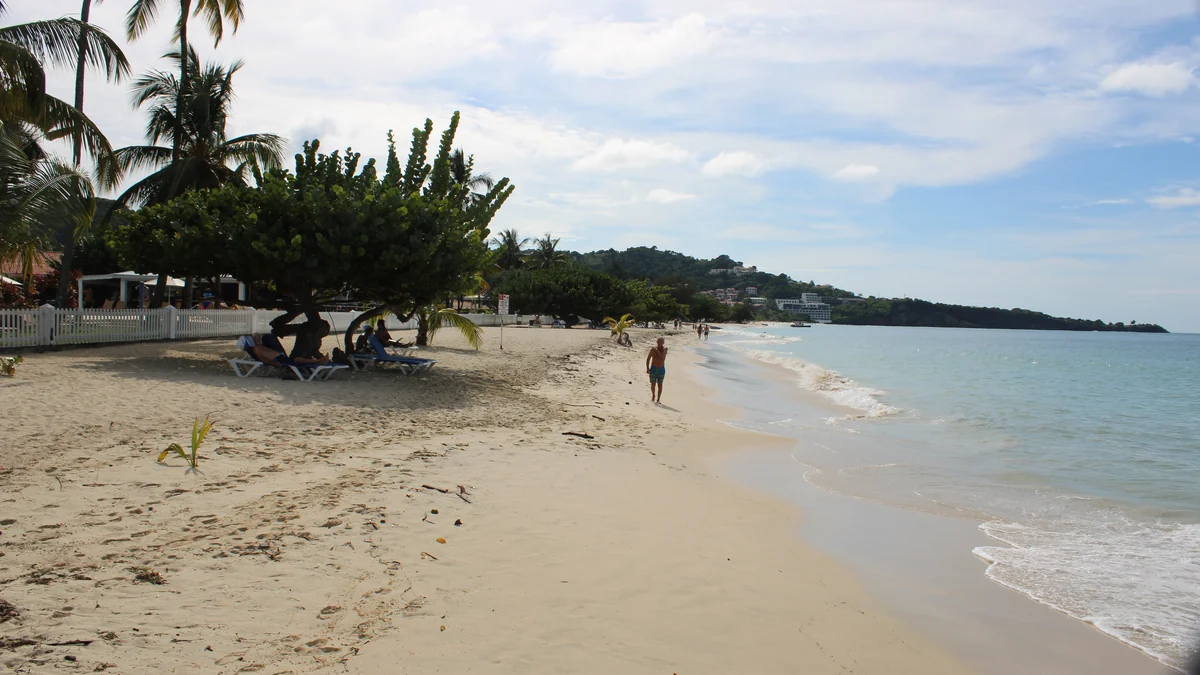
7. Grand Anse Beach
- Location: Grenada, Caribbean
- Best for: Beach and local food beyond a resort package
- Suggested trip: One beach day within a 4–7-night destination stay
- Best time: Winter or spring
- Swimming: Conditions vary; confirm local water guidance
- Lifeguards: Coverage not confirmed; verify locally
- Getting there / access: Road access from St. George’s/airport area; taxi or local transport
- Facilities: Restaurants and visitor businesses nearby; confirm toilets before settling in
- Budget: Moderate–high
Why visit: Grand Anse suits a traveler who wants a beach base with local meals and island outings available beyond one resort. A wider Grenada trip can include town and inland scenery.
Beach experience: A long curved sand beach lies below a developed but varied coastal district. Different sections have different levels of activity.
Best things to do: Walk, spend a relaxed beach morning and plan St. George’s or an inland outing separately. A boat trip is a distinct purchase and weather decision.
When to go: Winter and spring are a useful starting point for planning. The wetter part of the year requires flexibility; the southern Caribbean is not immune to tropical storms.
Where to stay: Grand Anse or nearby accommodation selected by the real route to the shore.
Planning tip: Ask where public facilities are operating and bring a payment method for meals or rentals. Do not treat nearby resort services as automatically open to day visitors.
Check current details: Grand Anse Beach visitor information.
8. Playa Norte
- Location: Isla Mujeres, Mexico
- Best for: A compact island stay near restaurants
- Suggested trip: One beach day within a 4–7-night destination stay
- Best time: Winter or spring
- Swimming: Shallow-looking water still needs supervision and current checks
- Lifeguards: Coverage not confirmed; verify locally
- Getting there / access: Ferry to Isla Mujeres, then walk/taxi to north-end access
- Facilities: Beach restaurants and paid commercial services; toilets may require purchase
- Budget: Moderate
Why visit: Playa Norte is useful for travelers who want an island beach without committing to a secluded resort transfer. Staying overnight changes the pace compared with a tightly timed Cancún day trip.
Beach experience: Pale sand and a developed beach-bar setting occupy the island’s northern end. Popular periods can be crowded and boats may be nearby.
Best things to do: Walk, relax and explore the town. Choose swimming space with local guidance and remain clear of vessel activity.
When to go: Winter and spring are popular. Rain, storms and sargassum conditions can vary; the beach’s orientation does not make it permanently seaweed-free.
Where to stay: Northern Isla Mujeres for walking convenience; a Cancún base requires return-ferry planning.
Planning tip: Check the last suitable ferry and allow time at the terminal. Boat timetables and queues are a more important constraint than an optimistic crossing-time headline.
Check current details: Playa Norte visitor information.
9. Tamarindo Beach
- Location: Guanacaste, Costa Rica
- Best for: Surf-town activity and independent travel
- Suggested trip: One beach day within a 4–7-night destination stay
- Best time: Drier December–April period
- Swimming: Surf and estuary currents; use a qualified instructor
- Lifeguards: Coverage not confirmed; verify locally
- Getting there / access: Road access from the Liberia region; local parking rules
- Facilities: Many town restaurants and lodging options; toilets often commercial
- Budget: Low–moderate to high
- Surfing: Use a qualified instructor and a suitable designated area; conditions and ability determine the choice
Why visit: Tamarindo is a better fit for active travelers than for someone seeking a silent cove. The town offers varied accommodation and meals without requiring a resort-only itinerary.
Beach experience: A broad sandy bay meets a busy surf-town district and an estuary environment. Surf breaks vary, so the town’s reputation does not classify every spot for beginners.
Best things to do: Book a lesson matched to ability, walk the shore or take a properly operated nature outing. Stay away from the river mouth unless a qualified activity operator directs an appropriate route.
When to go: The drier season is useful for a first beach-led stay, with higher demand. Rainier months can suit a flexible trip but change sea and road conditions.
Where to stay: Tamarindo town for walking to food; quieter outlying lodging adds transport decisions.
Planning tip: Choose an instructor based on supervision, group size and the day’s conditions, not merely the cheapest board rental. Snorkeling is not the main reason to select this beach.
Check current details: Tamarindo Beach visitor information.
10. Playa Manuel Antonio
- Location: Manuel Antonio National Park, Costa Rica
- Best for: Forest trails and a protected-area beach
- Suggested trip: One beach day within a 4–7-night destination stay
- Best time: Drier season; check park opening days
- Swimming: Conditions vary; wildlife and park rules apply
- Lifeguards: Coverage not confirmed; verify locally
- Getting there / access: Official timed/dated park ticket, then a trail walk; no direct beach parking
- Facilities: Park toilets and designated food-service area; check rules
- Budget: Moderate day costs
Why visit: This beach earns its place for the forest-and-coast combination. It is a park visit with a beach component, not an unrestricted town shore.
Beach experience: Sand and wooded headlands create a compact protected-area setting. Visitor limits and rules shape the experience.
Best things to do: Walk open trails, observe wildlife from a distance and use the beach when conditions permit. Never feed monkeys or leave food accessible.
When to go: The drier season can simplify a first visit, but tickets and opening days are equally important. The park currently closes Tuesdays.
Where to stay: Manuel Antonio or Quepos, comparing the journey to the actual park entrance.
Planning tip: Buy entry through SINAC’s official system. Punta Catedral trail is currently listed closed, and food is restricted to designated areas; do not promise a circuit or beach picnic from an old itinerary.
Check current details: Playa Manuel Antonio visitor information.
11. Matira Beach
- Location: Bora Bora, French Polynesia
- Best for: A public beach on a renowned lagoon island
- Suggested trip: One beach day within a 4–7-night destination stay
- Best time: May–October drier season
- Swimming: Lagoon conditions, coral and boat traffic still require care
- Lifeguards: Coverage not confirmed; verify locally
- Getting there / access: Main-island road access; airport arrival involves boat transfer
- Facilities: Picnic park nearby; confirm toilets and current services
- Budget: High travel costs; main-island stays can differ from motu resorts
- Snorkeling: Condition-dependent; check visibility, currents, entry and local guidance before entering
Why visit: Matira makes Bora Bora relevant beyond an overwater-bungalow booking. It is a public beach option on the main island, with a different cost structure from private resort motu.
Beach experience: Sand meets lagoon scenery at the island’s southern end. It is a real local shoreline, not an exclusive resort set.
Best things to do: Relax, walk or consider snorkeling in a locally recommended area when visibility and currents allow. Lagoon tours are separate activities.
When to go: May through October is generally drier; November through April is wetter and more humid. Wind can influence boat trips in either period.
Where to stay: Matira or other main-island lodging; confirm airport and resort transfers before comparing prices.
Planning tip: A room on an offshore motu may not provide simple independent access to Matira. Check transfer costs and schedules before assuming you can casually visit every evening.
Check current details: Matira Beach visitor information.
12. Natadola Beach
- Location: Viti Levu, Fiji
- Best for: A main-island beach without an outer-island transfer
- Suggested trip: One beach day within a 4–7-night destination stay
- Best time: May–October drier season
- Swimming: Waves, reef and currents vary; assess with local operators
- Lifeguards: Coverage not confirmed; verify locally
- Getting there / access: Road trip from Nadi or Coral Coast; arrange return transport
- Facilities: Local businesses and resorts; public toilet access not confirmed
- Budget: Moderate; resort use costs extra
- Surfing: Use a qualified instructor and a suitable designated area; conditions and ability determine the choice
- Snorkeling: Condition-dependent; check visibility, currents, entry and local guidance before entering
Why visit: Natadola is useful when Fiji’s main island fits the schedule better than another boat or flight connection. It can be a day trip or the focus of a Coral Coast stay.
Beach experience: A broad sandy bay faces reef and wave conditions that vary across the shoreline. The resort frontage is only part of the setting.
Best things to do: Walk, relax or arrange a suitable surf lesson. Tourism Fiji recognizes both surfing and snorkeling here, but the exact location and conditions need local advice.
When to go: May through October is generally drier. November through April is wetter and overlaps the regional cyclone season; flexible transport plans matter.
Where to stay: Natadola or the Coral Coast for proximity; Nadi for a day trip with a longer road transfer.
Planning tip: Confirm what a day visitor may use before arriving at a resort. Public shore access does not automatically include pools, changing rooms or loungers.
Check current details: Natadola Beach visitor information.
13. Whitehaven Beach
- Location: Whitsunday Island, Queensland, Australia
- Best for: Boat-access silica-sand scenery
- Suggested trip: One beach day within a 4–7-night destination stay
- Best time: Drier-season trip; current marine forecast first
- Swimming: Marine stingers and other marine hazards; follow local advice
- Lifeguards: Coverage not confirmed; verify locally
- Getting there / access: Commercial boat tour/transfer or properly planned private vessel
- Facilities: Non-flush toilets and picnic tables; no resort services
- Budget: Moderate–high due to transport
Why visit: Whitehaven is a boat excursion into an island national park, making the journey and operator choice central to the experience. It is not a beach reached by driving from a mainland hotel.
Beach experience: White silica sand and island vegetation form an undeveloped shoreline with long views across the Whitsundays.
Best things to do: Walk, picnic or choose a permitted trail. Ask whether a tour visits the southern beach, Hill Inlet area or both; these are not interchangeable landing plans.
When to go: A drier-season visit can be practical, but wind and sea state determine boat operation. Marine-stinger precautions remain relevant to water decisions.
Where to stay: Airlie Beach, Shute Harbour or Hamilton Island, matched to the actual departure point.
Planning tip: Confirm time ashore, food, shade, stinger protection and cancellation terms. The park lists no wheelchair-accessible facilities at the day-use area; ask operators about the whole transfer, not just their vessel.
Check current details: Whitehaven Beach visitor information.
14. Anse Source d’Argent
- Location: La Digue, Seychelles
- Best for: Granite boulders and a slow island stay
- Suggested trip: One beach day within a 4–7-night destination stay
- Best time: April or October transition periods
- Swimming: Shallow reef areas still have tides and currents
- Lifeguards: Coverage not confirmed; verify locally
- Getting there / access: Reach La Digue, then L’Union Estate route; verify current entry fee
- Facilities: Estate/nearby visitor services; confirm operating toilets and food
- Budget: Moderate–high
Why visit: Anse Source d’Argent is a landscape-led choice: granite formations distinguish it from a generic palm-and-sand beach. La Digue’s slower pace supports more than a hurried photo stop.
Beach experience: Small sandy sections and sculpted boulders border shallow-looking water. Tide height changes the available walking and water space.
Best things to do: Walk permitted paths, observe the coastline and explore the estate separately. Do not stand on coral or squeeze around a headland without a return plan.
When to go: April and October are useful transition-season starting points. Trade winds and rainfall vary, so select the beach day using current local advice.
Where to stay: La Digue guesthouses or hotels, checking the route from ferry arrival and luggage transport.
Planning tip: Confirm L’Union Estate admission and ferry connections before departure. A short distance on the island does not eliminate the time needed for inter-island travel.
Check current details: Anse Source d’Argent visitor information.
15. Belle Mare Public Beach
- Location: East coast, Mauritius
- Best for: Independent access to an east-coast beach
- Suggested trip: One beach day within a 4–7-night destination stay
- Best time: Spring/autumn shoulder periods
- Swimming: Lagoon and reef conditions vary; wind exposure matters
- Lifeguards: Coverage not confirmed; verify locally
- Getting there / access: Use the proclaimed public beach access; road transport needed
- Facilities: Public-beach facilities vary; confirm toilets and food locally
- Budget: Moderate; resorts can be high
Why visit: Belle Mare is useful for travelers who want an east-coast beach without assuming every shoreline service belongs to their hotel. The public beach is distinct from neighboring resort facilities.
Beach experience: A long sandy coast and lagoon scenery create a quieter alternative to a busy urban waterfront.
Best things to do: Walk and relax, or arrange a properly operated water activity only after checking conditions. Do not assume a lagoon is uniformly shallow or free of currents.
When to go: Shoulder periods can be a useful compromise. The east coast can be windy during the cooler season; summer is warmer and wetter with cyclone-season planning needed.
Where to stay: Belle Mare or nearby east-coast accommodation; compare road transfers before choosing a distant island base.
Planning tip: Ask about the specific public access and its current facilities. A resort’s photograph of showers, loungers or a beach club does not establish that those services are public.
Check current details: Belle Mare Public Beach visitor information.
16. Maafushi Bikini Beach
- Location: Kaafu Atoll, Maldives
- Best for: A local-island alternative to a private resort
- Suggested trip: One beach day within a 4–7-night destination stay
- Best time: December–April drier season
- Swimming: Assess currents, boat zones and local guidance
- Lifeguards: Coverage not confirmed; verify locally
- Getting there / access: Scheduled ferry or speedboat transfer from Malé/airport arrangements
- Facilities: Guesthouses and restaurants nearby; beach facilities vary
- Budget: Low–moderate relative to private-island resorts
Why visit: Maafushi is included for a different Maldives travel model: a lived-in island with guesthouses, local meals and separately purchased excursions.
Beach experience: A compact designated visitor beach sits beside a developed island community. It should not be marketed as a deserted private-island shoreline.
Best things to do: Relax on the designated beach or choose a reputable reef excursion. Offshore snorkeling and sandbank trips are separate weather-dependent activities.
When to go: December through April is generally drier; May through November is wetter. Sea state can disrupt transfers even when accommodation is available.
Where to stay: Maafushi guesthouses, comparing room taxes, meals and transfer totals rather than the nightly headline alone.
Planning tip: Use the designated bikini-beach area for swimwear and respect local dress expectations elsewhere. Confirm the last transfer and avoid a tight boat-to-international-flight connection.
Check current details: Maafushi Bikini Beach visitor information.
17. Unawatuna Beach
- Location: Southern Sri Lanka
- Best for: Beach plus Galle culture and independent lodging
- Suggested trip: One beach day within a 4–7-night destination stay
- Best time: December–March starting point
- Swimming: Monsoon and daily sea conditions govern swimming
- Lifeguards: Coverage not confirmed; verify locally
- Getting there / access: Road/rail journey to Galle area, then local transfer
- Facilities: Beach restaurants and accommodation services; public toilets not verified
- Budget: Low–moderate
Why visit: Unawatuna works when a beach stay should also include a culturally interesting town outing. Nearby Galle gives a reason to stay beyond a single afternoon on the sand.
Beach experience: A developed curved bay has restaurants and accommodation close to the shoreline. It is a social beach district rather than a secluded island escape.
Best things to do: Walk, relax and give Galle Fort a separate visit. Choose water activities with a reputable operator and avoid treating every bay section as equivalent.
When to go: December to March is a useful starting point for the southwest/south coast. The southwest monsoon and transition rains can make other periods rougher or wetter.
Where to stay: Unawatuna for beach access; Galle if historic-town evenings matter more than walking directly to the sand.
Planning tip: Pick the coast for the season. A general claim that Sri Lanka is year-round does not mean this particular southern beach has the same marine conditions every month.
Check current details: Unawatuna Beach visitor information.
18. White Beach, Boracay
- Location: Boracay, Philippines
- Best for: Walkable beach with varied budgets and nightlife
- Suggested trip: One beach day within a 4–7-night destination stay
- Best time: November–April drier-season starting point
- Swimming: Monsoon and typhoon conditions can alter sea state
- Lifeguards: Coverage not confirmed; verify locally
- Getting there / access: Caticlan-area arrival, boat crossing, then island transfer
- Facilities: Restaurants and accommodation along the shore; toilets often commercial
- Budget: Low–moderate to high
Why visit: White Beach is useful for travelers who want a tropical beach district with many independent choices. Selecting the right station changes the holiday more than choosing a generic Boracay label.
Beach experience: A long pale-sand shore is divided into three commonly used station areas, with different concentrations of hotels, shops and evening activity.
Best things to do: Walk, enjoy a sunset and choose a limited water activity when conditions permit. A quieter daytime plan can balance an evening in the busier central district.
When to go: November through April is a common drier-season preference. Monsoon shifts and tropical storms can still affect boat transfers and the beach.
Where to stay: Station1 for a broader high-end beach atmosphere, Station2 for central activity, or Station3 for a generally quieter budget mix.
Planning tip: Confirm current island arrival requirements, boat charges and the final transfer to your lodging. A cheap flight is not the complete door-to-beach cost.
Check current details: White Beach, Boracay visitor information.
19. Nai Harn Beach
- Location: Phuket, Thailand
- Best for: A bay beach near the island’s southern viewpoints
- Suggested trip: One beach day within a 4–7-night destination stay
- Best time: November–April; daily warnings still apply
- Swimming: Phuket authority advises against swimming May–October due to strong currents
- Lifeguards: Coverage not confirmed; verify locally
- Getting there / access: Road access in the Rawai/Nai Harn area; arrange return transport
- Facilities: Nearby businesses; verify public toilet and patrol operation
- Budget: Low–moderate to high
Why visit: Nai Harn is a useful Phuket choice when a southern-island base and scenic outings suit the trip. Its bay shape should not be mistaken for permanent protection from the sea.
Beach experience: A curved sandy beach sits near an inland freshwater lagoon and wooded slopes, with development around the access area.
Best things to do: Walk, relax and consider a separate viewpoint outing. Swimming belongs only in an appropriate currently advised area.
When to go: November to April is the more practical starting point for a beach-led visit. The provincial guidance specifically discourages swimming from May to October because of strong currents.
Where to stay: Nai Harn or Rawai, checking the walk or drive from the actual property rather than assuming all southern Phuket lodging is beachside.
Planning tip: Respect the posted no-swimming instructions even if other visitors enter. A travel guide’s seasonal preference cannot override a red flag or local closure.
Check current details: Nai Harn Beach visitor information.
20. Tanjung Rhu Beach
- Location: Langkawi, Malaysia
- Best for: Northern-island scenery and a quieter outing
- Suggested trip: One beach day within a 4–7-night destination stay
- Best time: Drier-season visit; confirm local forecast
- Swimming: Tidal channels and changing depth; do not walk to offshore islets
- Lifeguards: Coverage not confirmed; verify locally
- Getting there / access: Road journey to the public access; verify current parking arrangements
- Facilities: Local visitor businesses; resort facilities are separate
- Budget: Low–moderate day costs
Why visit: Tanjung Rhu adds a quieter northern-coast day to a Langkawi stay. It is useful for scenery and relaxation without requiring the same level of development as the Cenang district.
Beach experience: Sand, casuarina trees and offshore island views create a spacious setting. Tides change the visible sand and the apparent distance to nearby land.
Best things to do: Walk the public shore, relax and consider a separately arranged nature outing. Do not use an exposed sandbar as an invitation to walk to offshore islands.
When to go: A drier-season trip is a practical starting point, but rain and marine conditions still vary. Confirm the current forecast for the exact day rather than importing another Malaysian coast’s monsoon calendar.
Where to stay: Northern Langkawi for quiet or Cenang for a wider choice of meals and lodging with a road trip to the beach.
Planning tip: Some tourism descriptions mention walking to islands at low tide. This guide does not recommend it: changing water and an uncertain return route can strand visitors.
Check current details: Tanjung Rhu Beach visitor information.
Which beach is right for you?
Travel distance and transfers
Compare door-to-beach time, including immigration, ferries and boat connections. Whitehaven is an excursion, Matira is part of a Bora Bora stay and Anse Source d’Argent requires a La Digue plan; they are not interchangeable airport-to-hotel trips.
Budget and independent travel
Maafushi, Tamarindo and Unawatuna offer established independent-travel bases, although flights and excursions still add up. Grace Bay, Bora Bora and Hawaiʻi can carry high accommodation costs. Budget labels are relative planning judgments, not live quotes.
Snorkeling or simply relaxing
Trunk Bay has a marked underwater trail; Matira and Natadola offer snorkeling contexts that still need local condition checks. A photogenic sandy beach is not automatically a reef-snorkeling site. Use a responsible operator where local knowledge is necessary.
Culture and food
Choose a town or local-island base if you want meals and community life beyond a resort. On Maafushi, use designated swimwear areas and follow local dress rules elsewhere. On every island, public sand and private hotel amenities are different things.
Honeymoon or family trip
For couples, compare privacy, transfer reliability and the room’s actual beach access. For families, prioritize shade, toilets and manageable travel days over remoteness. Resort pools and kids’ clubs require property-specific checks; they are not beach facilities.
Match the regional season
Caribbean storm patterns, Indian Ocean monsoons and South Pacific cyclone seasons differ. Nai Harn has a specific monsoon swimming warning, while Whitehaven needs marine-stinger advice. Pick a region first, then examine its local forecast.
Water conditions, weather and beach rules
Read the local signs and flag legend, ask an on-duty lifeguard and obey closures. Flag meanings can vary between destinations; an attractive photograph or an unstaffed tower is not a safety assessment. Waves, rip currents and shorebreak can affect capable swimmers, and Great Lakes beaches have dangerous currents too. Use the National Weather Service beach guidance before planning water activities. If in doubt, stay out.
Check the responsible health authority’s water-quality notices as well as the weather. Clear-looking water can still have an advisory, and runoff after rain may change conditions. Review NOAA tide predictions for U.S. locations and local hydrographic guidance elsewhere. Low tide is not permission to cross an inlet, enter a cave or walk to an offshore island.
Keep children under active adult supervision. For surfing or snorkeling, choose conditions and an operator suited to actual ability; do not enter alone or assume rentals include instruction. Give turtles, seals, seabirds and other wildlife space. Never feed, handle or disturb animals, nests or coral, and respect marked habitat closures.
Budget, access and a workable beach day
Compare the complete outing: accommodation, parking or beach tags, park admission, ferry or boat tickets, equipment and meals. Budget labels are relative editorial estimates, not live prices. Use the linked operator pages for current fees and booking rules. Public beach access does not automatically include a nearby hotel’s toilets, loungers or parking.
Confirm the exact entrance, current parking arrangements and the last return ferry or shuttle. If accessibility matters, ask about the full route: parking surface, gradients, stairs, mat endpoint, restroom layout and beach-wheelchair reservations. Carry drinking water, sun protection and layers appropriate to the coast; build in a weather alternative.
Check local rules before bringing pets or planning fires, alcohol, fishing, camping or overnight parking. Restrictions may differ by beach section, time or season. Stay on designated dune paths and take litter away. A quiet stretch of sand is not an invitation to ignore protected-area rules.
Regional seasons differ. The Atlantic hurricane season runs June–November; Fiji’s climate guide explains its wetter, cyclone-prone summer. Tahiti’s seasonal guide distinguishes its warmer wet season and cooler dry season. Check each destination’s meteorological warnings and transport operator before departure.
Seaweed varies by beach and day. NOAA’s sargassum overview helps explain regional patterns, but it cannot promise conditions at your hotel. Ask for recent local information. For snorkeling, never stand on coral, chase marine animals or use clear water as your only indication that an outing is suitable.
Frequently asked questions
When is the best time for a tropical beach vacation?
There is no worldwide best month. Select a region, review its rainfall and cyclone patterns, then check local wind, swell and beach conditions. Shoulder seasons can trade lower demand for less predictable weather.
Can public beach visitors use resort loungers?
Public shoreline access does not include private loungers, pools, toilets, parking or transfers. Ask the operator about permitted access and any day-use arrangement before relying on those facilities.
Can I avoid seaweed by choosing the right month?
No month guarantees a seaweed-free beach. Sargassum conditions vary by current, wind, shoreline and day; regional monitoring and recent local reports are more useful than a permanent destination label.
Plan the rest of your trip
25 Best Beaches in the USA to Visit in 2026 · 20 Best Beaches in Florida: Clear Water, White Sand & Beautiful Coastal Spots · 20 Best Beaches in California: From San Diego to Northern California · 15 Best Family Beaches in the USA for Kids & Parents
Sources, selection and image credits
This is a research-based editorial selection, not a numerical ranking or a claim of firsthand visits. DayZora compared public access, setting, facilities, regional variety and practical travel fit using the linked park, government and visitor sources. Lifeguard availability is identified only where supported; unconfirmed service is explicitly marked. Suggested stays, age fit, accommodation areas and relative budgets are editorial judgments. Operational notices were reviewed for this edition and should be checked again before departure.
Featured photograph: Granite boulders and shoreline at Anse Source d’Argent, Seychelles. Photo: Norbert Nagel (2025), CC BY-SA 4.0. Cropped/resized; derivative retains source license. Archival illustration, not a current-condition report.