Research reviewed September 26, 2026. Conditions and access can change; recheck the linked local authorities before travel.
The best beaches in Florida range from developed Gulf Coast parks to Atlantic surf beaches, quiet Panhandle stretches and compact coves in the Keys. Choosing among them involves more than looking for white sand or turquoise water. Parking, storm recovery, restroom availability and the distance from your accommodation can have a larger effect on the day than the color of a promotional photograph.
These 20 choices cover the Gulf Coast, Panhandle, Atlantic Coast, South Florida and Florida Keys. They were selected for different travel styles, with particular attention to public access, useful facilities, distinctive landscapes and practical nearby bases. The comparison table and map help narrow the geography before the individual profiles explain the tradeoffs. Water clarity is variable: wind, waves, tides, currents, rainfall, runoff and environmental conditions can change it quickly. No beach on this list comes with a promise of clear water or safe swimming. Check the linked local source and current advisories before setting out.
Beach comparison at a glance
Swipe the table sideways on mobile. Numbers match the map and profiles.
| Beach / map number | Best for | Best time | Water / suitability |
|---|---|---|---|
| 1. Siesta Beach Sarasota, Gulf Coast |
A full-service sand-and-sunset day | Spring or autumn | Assess surf, flags and water-quality notices |
| 2. Clearwater Beach Pinellas County, Gulf Coast |
Walkable beach district and evening outings | Spring or autumn | Conditions vary; follow city lifeguards |
| 3. Honeymoon Island State Park Dunedin, Gulf Coast |
Beach plus birding and pine-forest trails | Spring or autumn | Do not cross the northern sandspit cut |
| 4. Caladesi Island State Park Off Dunedin, Gulf Coast |
A boat-access island day | Spring or autumn | Assess local conditions; boat access does not imply calm swimming |
| 5. Fort De Soto North Beach Tierra Verde, Gulf Coast |
Beach, picnic and park variety | Spring or autumn | Conditions vary; stay away from inlet and boating currents |
| 6. St. Pete Beach Public Access Pinellas County, Gulf Coast |
A hotel-and-restaurant beach break | Spring or autumn | Clarity and surf vary with weather and runoff |
| 7. Caspersen Beach Venice, Gulf Coast |
A less-developed coastal walk | Cooler months; check repairs | Conditions vary; prioritize a shore walk |
| 8. Delnor-Wiggins Pass State Park North Naples, Gulf Coast |
Barrier-island shoreline and birding | Winter or spring | Follow closed-area signs; do not swim in the pass |
| 9. Henderson Beach State Park Destin, Panhandle |
Dunes and a managed park beach | Late spring or early autumn | Rip currents and shorebreak can occur |
| 10. Grayton Beach State Park South Walton, Panhandle |
Beach and coastal dune-lake scenery | Late spring or early autumn | Conditions vary; lagoon appearance does not establish swimming suitability |
| 11. St. Andrews State Park Panama City Beach, Panhandle |
A park day with different shoreline settings | Late spring or early autumn | Jetties and inlet currents require caution |
| 12. Langdon Beach Fort Pickens, Pensacola Beach |
National-seashore beach and fort history | Late spring or early autumn | Follow NPS surf warnings; open Gulf exposure |
| 13. Anastasia State Park Beach St. Augustine, Atlantic Coast |
Beach with trails and a historic-city base | Spring or autumn | Atlantic surf varies; ask about staffed zones |
| 14. Cocoa Beach at Lori Wilson Park Brevard County, Atlantic Coast |
Surf-town atmosphere and a park access | Spring or autumn | Waves and rip-current risk vary |
| 15. Sebastian Inlet State Park Beach Between Melbourne Beach and Vero Beach |
Surf watching and inlet scenery | Spring or autumn | Powerful currents near inlet; not a beginner default |
| 16. Blowing Rocks Preserve Jupiter Island, Atlantic Coast |
Rocky-coast scenery and a short nature visit | Cooler months; tide-aware visit | Scenery-focused; rough water and rocks make swimming a poor default |
| 17. South Beach Miami Beach, South Florida |
City culture, food and beach in one stay | Winter or spring | Check municipal flags, surf and water-quality notices |
| 18. Bill Baggs Cape Florida Beach Key Biscayne, South Florida |
Lighthouse scenery and a park beach | Winter or spring | Conditions vary; no assumption of sheltered swimming |
| 19. Bahia Honda: Calusa Beach Lower Florida Keys |
A sandy Keys stop with old-bridge views | Winter or spring | Assess currents and wind; snorkeling is condition-dependent |
| 20. Fort Zachary Taylor Beach Key West, Florida Keys |
Beach, snorkeling and fort history | Winter or spring | Rocky bottom; snorkeling depends on visibility and currents |
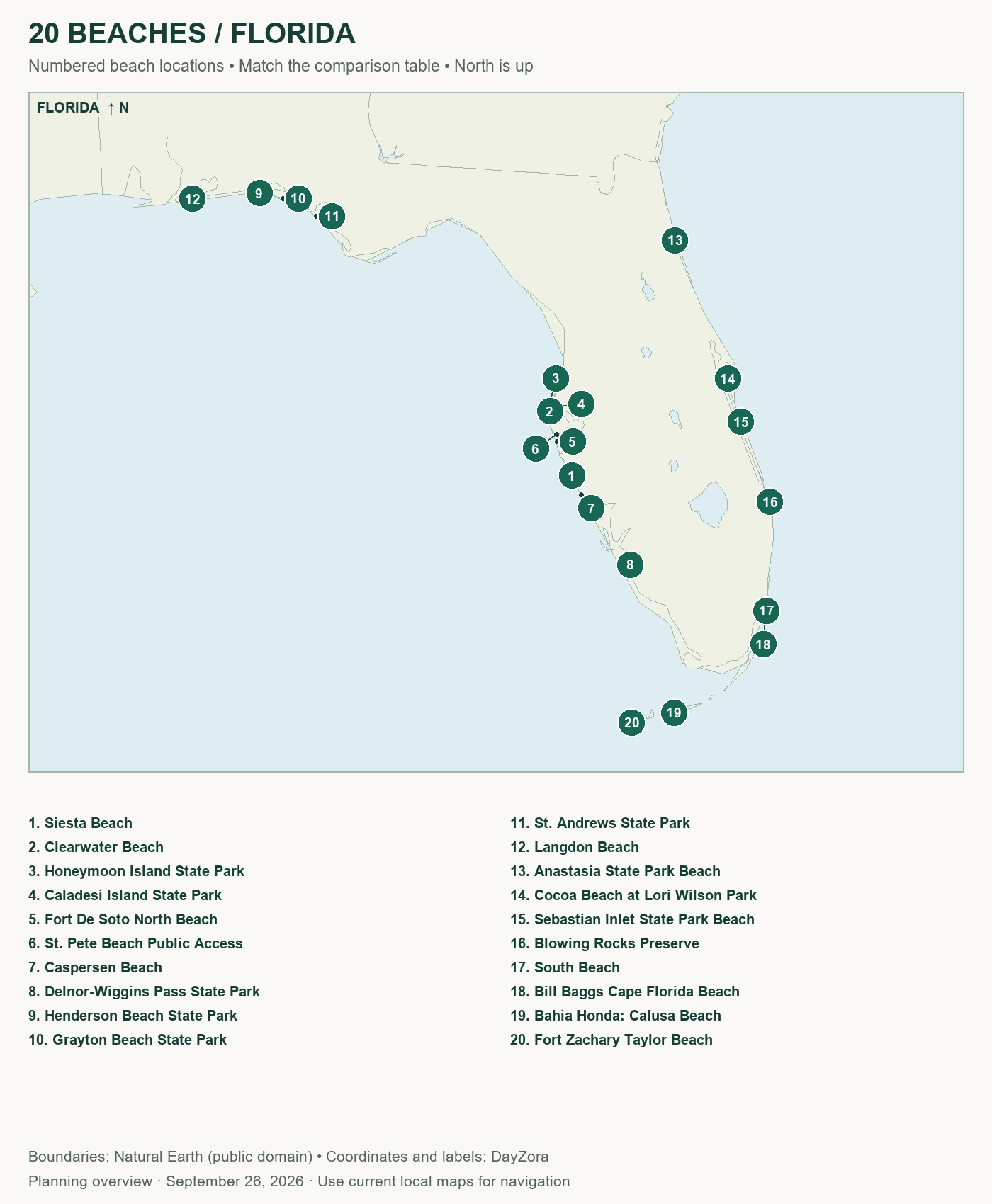
Where the beaches are
Swipe within the map or open the full-size map. Numbers match the main list; markers show approximate beach locations, not entrances or routes.
20 beaches to consider
1. Siesta Beach
- Location: Sarasota, Gulf Coast
- Best for: A full-service sand-and-sunset day
- Suggested trip: Half to one day; 2–4 nights in the area
- Best time: Spring or autumn
- Swimming: Assess surf, flags and water-quality notices
- Lifeguards: County lifeguards; confirm staffed stretch and hours
- Getting there / access: Use the main public beach parking and marked paths
- Facilities: Restrooms, concessions, picnic areas, playground; beach wheelchairs listed
- Budget: Moderate; beachfront stays cost more
Why visit: Choose the main Siesta Beach park when facilities matter as much as the shoreline. It is a more practical first visit than picking an unserviced neighborhood access simply because both are on Siesta Key.
Beach experience: A wide, pale-sand shoreline creates room for walking and sand play, with a busy public-park atmosphere near the principal entrances.
Best things to do: Walk the shore, use the playground and picnic areas, and return for sunset if the weather permits. Swimming depends on the day; this is not a default reef-snorkeling outing.
When to go: Spring and autumn can make an outdoor day more comfortable than humid midsummer. Winter fronts can cool the air and water; summer afternoons need a thunderstorm backup.
Where to stay: Siesta Key for a beach-led stay; Sarasota for museums, restaurants and a wider range of accommodation.
Planning tip: The county lists a beach access mat and beach wheelchairs. Confirm availability and where the mat ends: it does not make the entire sand-to-water journey step-free.
Check current details: Siesta Beach visitor information.
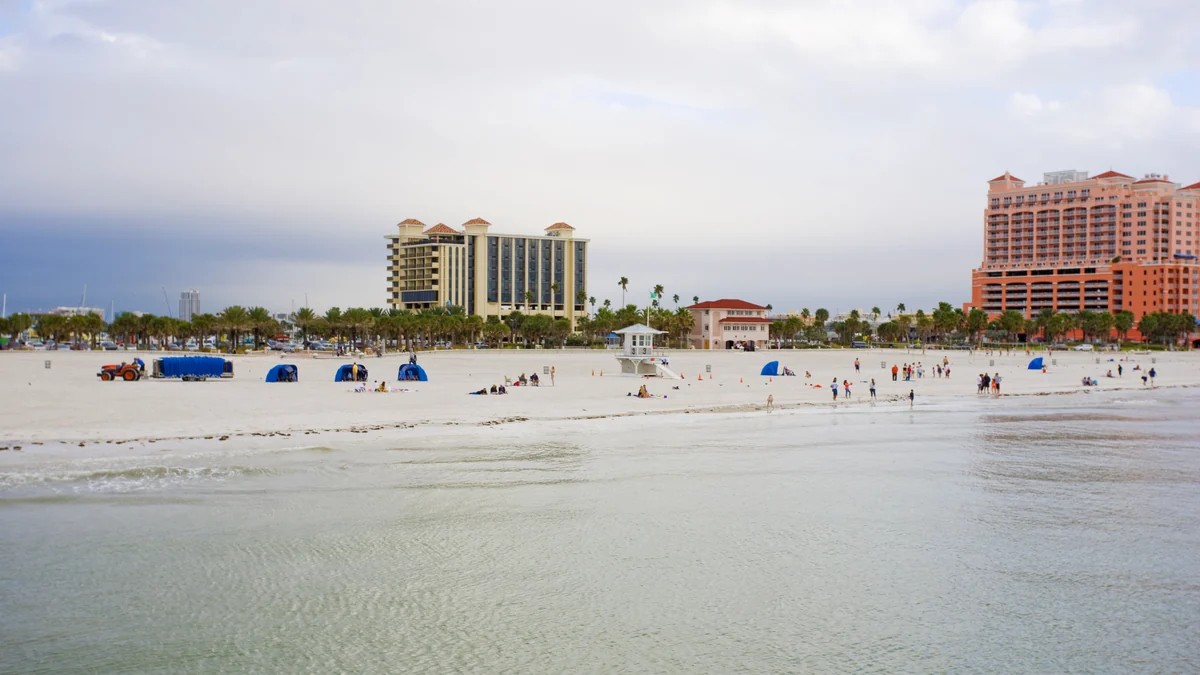
2. Clearwater Beach
- Location: Pinellas County, Gulf Coast
- Best for: Walkable beach district and evening outings
- Suggested trip: Half to one day; 2–4 nights in the area
- Best time: Spring or autumn
- Swimming: Conditions vary; follow city lifeguards
- Lifeguards: Year-round city service; verify current hours and zones
- Getting there / access: Paid beach-area parking; compare current trolley or ferry options
- Facilities: Restrooms and food around the developed beach district
- Budget: Moderate–high
Why visit: Clearwater suits travelers who want meals and an evening promenade close to their beach base. The convenience is the reason to choose it over a quieter barrier-island park.
Beach experience: Broad sand meets a built-up hotel district. Expect a sociable beach day rather than secluded nature, especially near Pier 60.
Best things to do: Combine sand time with a Beach Walk stroll. Keep an aquarium visit as a separate half-day instead of squeezing it into the hottest part of a full beach schedule.
When to go: Shoulder-season weekdays can ease crowd pressure. Summer brings warm weather, humidity and storm interruptions; winter is useful for walks even when swimming is less appealing.
Where to stay: Central Clearwater Beach for walking convenience; mainland Clearwater for a different lodging budget and a drive to the coast.
Planning tip: Choose accommodation using the complete parking and resort-charge total. A cheaper room far from the sand can create a parking expense every beach day.
Check current details: Clearwater Beach visitor information.
3. Honeymoon Island State Park
- Location: Dunedin, Gulf Coast
- Best for: Beach plus birding and pine-forest trails
- Suggested trip: Half to one day; 2–4 nights in the area
- Best time: Spring or autumn
- Swimming: Do not cross the northern sandspit cut
- Lifeguards: Not confirmed; verify locally
- Getting there / access: Drive across Dunedin Causeway; state-park admission applies
- Facilities: Parking, restrooms, showers, picnic areas and concession listed
- Budget: Low–moderate day costs
Why visit: Honeymoon gives a beach day a second purpose: pine-forest walking and bird observation. It is useful when some of the group wants to explore while others prefer the shore.
Beach experience: The barrier-island shoreline is shaped by erosion and sand migration. Some stretches are rocky, so it should not be sold as one uniform expanse of soft sand.
Best things to do: Choose a marked trail, visit the nature center if operating, and spend the remaining time on an open beach section. Observe nesting wildlife without approaching it.
When to go: Milder spring and autumn days suit both beach and trail time. In summer, move walks out of midday and recheck thunderstorms before leaving the car.
Where to stay: Dunedin for a town-and-park break; Clearwater Beach if a more developed beach district is also important.
Planning tip: The park warns that a cut separates the northernmost sandspit. Do not wade through it: depth, currents and hidden hazards change.
Check current details: Honeymoon Island State Park visitor information.
4. Caladesi Island State Park
- Location: Off Dunedin, Gulf Coast
- Best for: A boat-access island day
- Suggested trip: Half to one day; 2–4 nights in the area
- Best time: Spring or autumn
- Swimming: Assess local conditions; boat access does not imply calm swimming
- Lifeguards: Not confirmed; verify locally
- Getting there / access: Boat access; ferry from Honeymoon Island, with separate access costs
- Facilities: Restrooms, showers and picnic amenities; food service may be limited
- Budget: Moderate; ferry adds cost
Why visit: Caladesi rewards visitors willing to plan around a boat departure. The extra transfer creates a different experience from driving directly to Clearwater’s hotel-lined shore.
Beach experience: Sand, dune vegetation and mangroves dominate the island setting. Keep the day simple rather than expecting a waterfront shopping district.
Best things to do: Walk an open shoreline section, watch birds and picnic. Paddling requires a separate assessment of conditions and ability; the crossing is not a casual substitute for the ferry.
When to go: Choose a day with suitable boating weather as well as comfortable air temperatures. Wind or disruption can matter more than the nominal best month.
Where to stay: Dunedin or Clearwater; Caladesi is a day outing for most visitors rather than a conventional hotel base.
Planning tip: The June 29, 2026 notice says ferry/day use resumed, but overnight marina accommodation remains unavailable and dock utilities are absent. Check recovery notices and carry water and lunch.
Check current details: Caladesi Island State Park visitor information.
5. Fort De Soto North Beach
- Location: Tierra Verde, Gulf Coast
- Best for: Beach, picnic and park variety
- Suggested trip: Half to one day; 2–4 nights in the area
- Best time: Spring or autumn
- Swimming: Conditions vary; stay away from inlet and boating currents
- Lifeguards: Not confirmed for this stretch; verify locally
- Getting there / access: Drive via Pinellas Bayway; parking and possible road toll costs
- Facilities: Restrooms, picnic shelters, playgrounds and concession facilities in the park
- Budget: Low–moderate day costs
Why visit: Fort De Soto is a useful compromise between a city beach and a remote shore. The wider park supplies cycling, history and picnic options without turning the outing into a resort day.
Beach experience: North Beach sits within a chain of low islands, with open sand and parkland rather than a dense row of hotels.
Best things to do: Make one beach area your base, then choose either the historic fort or a short trail outing. Distances within the park still require a plan.
When to go: Spring and autumn favor mixed beach-and-walk days. Summer visitors should arrange shade and a sheltered alternative when thunderstorms arrive.
Where to stay: Tierra Verde or St. Pete Beach; downtown St. Petersburg works if museums and dining share the itinerary.
Planning tip: Check Pinellas County’s temporary-closure notices for the precise facilities you need. The designated dog beach is a separate area; it does not make every park beach dog-friendly.
Check current details: Fort De Soto North Beach visitor information.
6. St. Pete Beach Public Access
- Location: Pinellas County, Gulf Coast
- Best for: A hotel-and-restaurant beach break
- Suggested trip: Half to one day; 2–4 nights in the area
- Best time: Spring or autumn
- Swimming: Clarity and surf vary with weather and runoff
- Lifeguards: Coverage not verified; ask locally
- Getting there / access: Use the county public access; paid parking
- Facilities: Public-access restrooms; restaurants in the surrounding resort district
- Budget: Moderate–high
Why visit: This is the practical choice when an easy meal and a hotel room break are priorities. Choose a named public access rather than assuming a resort’s beachfront furniture is available to everyone.
Beach experience: A long sandy resort coast has a lively vacation atmosphere. It is distinct from downtown St. Petersburg, which is across the urban area on the bay side.
Best things to do: Walk the shore and plan a sunset meal nearby. Treat watersports as separately operated activities with their own weather limits and charges.
When to go: Spring and autumn are useful compromises between heat and crowds. Winter beach walks can be pleasant while water temperatures remain a separate question.
Where to stay: St. Pete Beach for repeated sand visits; St. Petersburg for a broader city stay with a beach excursion.
Planning tip: Check the exact walking route from the room to public access and the latest parking terms. “St. Pete” in a listing is not proof that a property is on the beach.
Check current details: St. Pete Beach Public Access visitor information.
7. Caspersen Beach
- Location: Venice, Gulf Coast
- Best for: A less-developed coastal walk
- Suggested trip: Half to one day; 2–4 nights in the area
- Best time: Cooler months; check repairs
- Swimming: Conditions vary; prioritize a shore walk
- Lifeguards: Not confirmed; verify locally
- Getting there / access: Currently pedestrian/bicycle access from South Brohard or Venetian Waterway Trail
- Facilities: Vehicle parking, restrooms and playground currently closed
- Budget: Low day costs; extra walking effort
Why visit: Caspersen offers a more natural Venice-area coast, but its current access limitations make it a deliberate choice rather than an easy family default.
Beach experience: The shore mixes sand with a less manicured coastal setting. The appeal is wandering and observing the coast, not a promise of full services at the car park.
Best things to do: Walk the beach and observe birds. Keep any beachcombing within posted collection rules and leave living organisms and protected natural features in place.
When to go: Cooler weather makes the longer approach more manageable. In warm months, the lack of operating restrooms and parking increases the planning burden.
Where to stay: Venice for restaurants and alternative beach access; choose a different nearby beach if mobility or toilet access is essential.
Planning tip: The county currently says Harbor Drive washed out in the 2024 storms. Do not navigate to the old parking lot expecting it to be open; recheck the repair notice before travel.
Check current details: Caspersen Beach visitor information.
8. Delnor-Wiggins Pass State Park
- Location: North Naples, Gulf Coast
- Best for: Barrier-island shoreline and birding
- Suggested trip: Half to one day; 2–4 nights in the area
- Best time: Winter or spring
- Swimming: Follow closed-area signs; do not swim in the pass
- Lifeguards: Not confirmed; verify locally
- Getting there / access: Drive to Gulfshore Drive park entrance; admission applies
- Facilities: Temporary restrooms; no drinking water in current notice
- Budget: Low–moderate day costs; Naples lodging can be high
Why visit: Delnor-Wiggins gives a Naples stay an undeveloped shoreline outing. It is best for visitors willing to bring supplies and work around storm-recovery limitations.
Beach experience: The barrier island separates Gulf beach scenery from estuary habitat. A beach walk feels different from a day centered on a hotel pool and loungers.
Best things to do: Walk the open shore, watch birds and use only currently permitted recreation areas. The pass and boat-launch setting require particular care around moving water and vessels.
When to go: Winter and spring are useful for longer outdoor visits; cold fronts can still change conditions. Summer requires more heat and thunderstorm flexibility.
Where to stay: North Naples for a shorter approach; central Naples if dining and other town outings matter more than immediate access.
Planning tip: Bring all drinking water. The park’s current notice specifies temporary toilets and no potable supply; its general amenities list should not override that notice.
Check current details: Delnor-Wiggins Pass State Park visitor information.
9. Henderson Beach State Park
- Location: Destin, Panhandle
- Best for: Dunes and a managed park beach
- Suggested trip: Half to one day; 2–4 nights in the area
- Best time: Late spring or early autumn
- Swimming: Rip currents and shorebreak can occur
- Lifeguards: No lifeguards provided in state-park Gulf guidance
- Getting there / access: State-park entrance off US98; admission and parking rules apply
- Facilities: Restrooms, picnic pavilions and a nature trail
- Budget: Low–moderate day costs
Why visit: Henderson provides a defined park access in a busy resort region. It works when you want dune scenery and a straightforward beach base without booking a beachfront resort.
Beach experience: Pale sand, dunes and coastal vegetation frame the shore. Water color varies, and the familiar emerald photographs are not a daily water-quality or clarity forecast.
Best things to do: Combine sand time with the short nature trail or a picnic. Use boardwalks and keep off dune vegetation that protects the beach system.
When to go: Late spring and early autumn can balance warmth with a less intense holiday atmosphere. Panhandle winters are cooler than the Keys; summer brings heat and storm risk.
Where to stay: Destin for nearby services; Fort Walton Beach or Okaloosa Island if you prefer a different accommodation mix and accept the drive.
Planning tip: The park is not the same place as a condo’s private access. Confirm where you can park, where facilities are located, and the day’s warnings before entering the water.
Check current details: Henderson Beach State Park visitor information.
10. Grayton Beach State Park
- Location: South Walton, Panhandle
- Best for: Beach and coastal dune-lake scenery
- Suggested trip: Half to one day; 2–4 nights in the area
- Best time: Late spring or early autumn
- Swimming: Conditions vary; lagoon appearance does not establish swimming suitability
- Lifeguards: Not confirmed; verify locally
- Getting there / access: State-park entrance; day-use admission
- Facilities: Restrooms, picnic facilities, trails and reservable camping/cabins
- Budget: Low–moderate day costs
Why visit: Grayton is a strong choice for visitors interested in the relationship between beach, dunes and coastal lake habitat. It adds an outdoor focus to a South Walton stay.
Beach experience: The sandy Gulf shore is backed by a landscape of vegetation and dune lakes rather than an uninterrupted high-rise strip.
Best things to do: Walk the beach or a marked trail, observe birds and consider a separately planned paddle when local conditions and access allow.
When to go: Late spring or early autumn are useful for combining outdoor activities. Summer weekends and holidays need earlier planning; winter is more a scenery trip than a guaranteed swimming break.
Where to stay: Grayton Beach or another nearby South Walton community; park camping or cabins require a separate reservation.
Planning tip: A coastal dune lake and the sea can change character after rain and tidal exchange. Choose the activity based on posted conditions, not the apparent stillness of one patch of water.
Check current details: Grayton Beach State Park visitor information.
11. St. Andrews State Park
- Location: Panama City Beach, Panhandle
- Best for: A park day with different shoreline settings
- Suggested trip: Half to one day; 2–4 nights in the area
- Best time: Late spring or early autumn
- Swimming: Jetties and inlet currents require caution
- Lifeguards: Not confirmed; verify locally
- Getting there / access: Drive to the park; admission; Shell Island transfer is separate
- Facilities: Restrooms/changing areas, boardwalks and picnic facilities
- Budget: Low–moderate; boat trips add cost
Why visit: St. Andrews suits a beach trip that needs alternatives within a larger park. Choose an open beach section deliberately rather than treating the entire peninsula as one swimming zone.
Beach experience: The park combines a white-sand Gulf shore with bay and inlet scenery. The built jetties are part of a working water environment, not a reason to assume protected water is risk-free.
Best things to do: Beach walk, picnic or use an open nature area. A Shell Island boat outing belongs in a separate plan with its own schedule and supplies.
When to go: Spring and autumn offer a useful outdoor balance. In summer, make heat, lightning and crowd management part of the day rather than adding too many activities.
Where to stay: Panama City Beach or a reserved park campsite; check travel distance from the actual property.
Planning tip: The park lists beach wheelchairs and elevated boardwalks, but some visitor-center facilities are unavailable. Reserve specialized equipment where recommended and check the current access notice.
Check current details: St. Andrews State Park visitor information.
12. Langdon Beach
- Location: Fort Pickens, Pensacola Beach
- Best for: National-seashore beach and fort history
- Suggested trip: Half to one day; 2–4 nights in the area
- Best time: Late spring or early autumn
- Swimming: Follow NPS surf warnings; open Gulf exposure
- Lifeguards: Seasonal coverage may change; verify with NPS
- Getting there / access: Fort Pickens Road; national-seashore entry rules
- Facilities: Parking, picnic and restroom facilities in the developed area; verify current operation
- Budget: Low–moderate day costs
Why visit: Langdon offers a beach-and-history combination at the western end of Santa Rosa Island. It is a more focused national-seashore outing than wandering the full Pensacola resort strip.
Beach experience: Pale sand and low dunes create an open Gulf setting. Bring shade and expect exposure to wind rather than a naturally sheltered cove.
Best things to do: Spend time on the beach and give nearby Fort Pickens its own exploration block. Keep to marked crossings through the dunes.
When to go: Late spring and early autumn can suit a mixed outdoor day. Storms can affect the road as well as swimming; a pleasant forecast inland is not enough.
Where to stay: Pensacola Beach for proximity; Pensacola if a town base and museums are part of the trip.
Planning tip: Check the Fort Pickens area status before driving west. Road access, staffing and beach facilities can change after severe weather.
Check current details: Langdon Beach visitor information.
13. Anastasia State Park Beach
- Location: St. Augustine, Atlantic Coast
- Best for: Beach with trails and a historic-city base
- Suggested trip: Half to one day; 2–4 nights in the area
- Best time: Spring or autumn
- Swimming: Atlantic surf varies; ask about staffed zones
- Lifeguards: Verify current season and coverage
- Getting there / access: Park entrance from Anastasia Island; admission
- Facilities: Restrooms, concessions, boardwalks, beach mat and loan wheelchairs listed
- Budget: Low–moderate day costs
Why visit: Anastasia lets you keep a nature-based beach morning separate from a busy St. Augustine sightseeing day. It is useful for travelers who want both without changing accommodation.
Beach experience: An Atlantic sand beach, dunes and nearby marsh habitat give the park more variety than a hotel-front shore.
Best things to do: Walk an open beach stretch, observe shorebirds or arrange a Salt Run paddle separately. Choose the water activity around conditions and experience.
When to go: Spring and autumn are practical for walking and city sightseeing. Summer is warmer but brings heat and storms; winter favors an active coastal day with layers.
Where to stay: Anastasia Island for shorter beach journeys; historic St. Augustine for evening walking and restaurants.
Planning tip: The park lists an elevated boardwalk, Mobi-Mat and beach wheelchairs. Confirm equipment availability and the current route to the sand before making an accessibility-dependent booking.
Check current details: Anastasia State Park Beach visitor information.
14. Cocoa Beach at Lori Wilson Park
- Location: Brevard County, Atlantic Coast
- Best for: Surf-town atmosphere and a park access
- Suggested trip: Half to one day; 2–4 nights in the area
- Best time: Spring or autumn
- Swimming: Waves and rip-current risk vary
- Lifeguards: Verify current county lifeguard coverage
- Getting there / access: Use Lori Wilson Park’s designated public access and parking
- Facilities: Park amenities and nearby food; verify operating restrooms before arrival
- Budget: Low–moderate
Why visit: A named park access makes Cocoa Beach easier to plan than a vague instruction to head for the ocean. It pairs well with a Space Coast stay that includes non-beach activities.
Beach experience: The sandy Atlantic shore has a surf-town setting. Expect wave action to shape the day rather than the lagoon-like water shown in some Florida advertisements.
Best things to do: Walk, watch surfers or book a lesson with a qualified local operator who assesses conditions. A space-center visit deserves its own day.
When to go: Spring and autumn offer a useful mix of outdoor comfort and activity. Summer heat and lightning can interrupt the afternoon; winter fronts can produce a very different beach experience.
Where to stay: Cocoa Beach for repeated visits; Cape Canaveral if port or other northern-area plans dominate.
Planning tip: Lori Wilson’s fenced dog park is not evidence that dogs are allowed on the adjoining beach. Read the city’s specific beach rules before bringing a pet.
Check current details: Cocoa Beach at Lori Wilson Park visitor information.
15. Sebastian Inlet State Park Beach
- Location: Between Melbourne Beach and Vero Beach
- Best for: Surf watching and inlet scenery
- Suggested trip: Half to one day; 2–4 nights in the area
- Best time: Spring or autumn
- Swimming: Powerful currents near inlet; not a beginner default
- Lifeguards: Not confirmed; verify locally
- Getting there / access: A1A/Jimmy Buffett Memorial Highway; bridge construction affects access planning
- Facilities: Park restrooms, picnic and camping facilities; check closures
- Budget: Low–moderate day costs
Why visit: Sebastian Inlet is a better choice for people interested in a dynamic surf-and-inlet landscape than for those seeking a universally gentle swimming beach.
Beach experience: An Atlantic shoreline meets a tidal inlet, with sand, jetties and boating activity. Different sides of the park can feel like different outings.
Best things to do: Watch experienced surfers from shore, walk an open beach section or explore the park’s interpretive options. Do not transfer expert surf conditions into beginner advice.
When to go: Choose a day with suitable coastal weather. Spring and autumn often suit a walk; strong swells or storms can make observation from well back on shore the only sensible plan.
Where to stay: Melbourne Beach or Vero Beach, choosing the side that reduces the route through construction.
Planning tip: A May 2026 park notice identifies bridge construction. Check current access instructions and do not build a tightly timed beach-to-airport day around an old journey estimate.
Check current details: Sebastian Inlet State Park Beach visitor information.
16. Blowing Rocks Preserve
- Location: Jupiter Island, Atlantic Coast
- Best for: Rocky-coast scenery and a short nature visit
- Suggested trip: Half to one day; 2–4 nights in the area
- Best time: Cooler months; tide-aware visit
- Swimming: Scenery-focused; rough water and rocks make swimming a poor default
- Lifeguards: Not confirmed; verify locally
- Getting there / access: Limited preserve parking; trails and gates have closing hours
- Facilities: Trails and viewing areas; picnics are not permitted
- Budget: Low day costs
Why visit: Blowing Rocks is included for geological variety, not as another white-sand swimming recommendation. Its limestone ledge gives this part of Florida a distinctive coastal profile.
Beach experience: Rock shelves and sand sit beside restored native vegetation. Wave spray can be dramatic, but powerful surf is a reason to keep your distance.
Best things to do: Use marked trails and viewing areas, observe the shoreline and look for wildlife without disturbing it. Tide and wave conditions determine what can be viewed responsibly.
When to go: Cooler months favor walking. Check tides, but do not equate a particular tide with safe access; wind and swell can alter the experience.
Where to stay: Jupiter or nearby mainland accommodation for restaurants and other beaches after this shorter visit.
Planning tip: The preserve prohibits picnics and commercial-style photo/video shoots and closes its parking gates. Check rules and finishing time before planning a sunset visit or organized shoot.
Check current details: Blowing Rocks Preserve visitor information.
17. South Beach
- Location: Miami Beach, South Florida
- Best for: City culture, food and beach in one stay
- Suggested trip: Half to one day; 2–4 nights in the area
- Best time: Winter or spring
- Swimming: Check municipal flags, surf and water-quality notices
- Lifeguards: Municipal Ocean Rescue; confirm staffed tower and hours
- Getting there / access: Walk from Miami Beach lodging or use public access; parking can be costly
- Facilities: Public facilities vary by access; abundant nearby restaurants
- Budget: Moderate–high
Why visit: South Beach works when architecture, food and an evening out matter as much as the sand. Its value is the combination, not solitude.
Beach experience: A broad urban Atlantic beach sits beside the Art Deco district. Busy paths and hotel activity create an energetic setting with considerable variation between blocks.
Best things to do: Pair a short beach visit with an Art Deco walk or South Pointe outing. Keep nightlife plans separate from swimming and boating decisions.
When to go: Winter and spring generally favor outdoor city time. Summer adds humid heat, frequent rain interruptions and tropical-weather planning.
Where to stay: South Beach for walking; Mid-Beach for a different hotel atmosphere. Mainland Miami requires a journey across the bay.
Planning tip: Read the actual tower’s instructions. Flag meanings and guarded areas are local, and a city beach being open does not mean water entry is advisable that day.
Check current details: South Beach visitor information.
18. Bill Baggs Cape Florida Beach
- Location: Key Biscayne, South Florida
- Best for: Lighthouse scenery and a park beach
- Suggested trip: Half to one day; 2–4 nights in the area
- Best time: Winter or spring
- Swimming: Conditions vary; no assumption of sheltered swimming
- Lifeguards: Not confirmed; verify locally
- Getting there / access: Rickenbacker Causeway to Key Biscayne, then park entrance; toll/admission costs
- Facilities: Restrooms, picnic and concession facilities; some areas under renovation
- Budget: Low–moderate day costs
Why visit: Cape Florida adds a park-and-lighthouse emphasis to a Miami stay. It suits a deliberate day away from the South Beach hotel strip.
Beach experience: Sand, coastal vegetation and the lighthouse create a quieter visual setting, although popular weekends can still be busy.
Best things to do: Walk the beach, use an open trail and check whether lighthouse access is available. A scheduled tower visit is separate from general park entry.
When to go: Winter and spring are useful for combining a walk with beach time. Summer demands shade and flexibility around thunderstorms.
Where to stay: Key Biscayne for proximity or Miami for a larger city trip; allow for causeway travel rather than judging the straight-line distance.
Planning tip: Current renovation notices affect some restrooms, beach access and pavilions. Confirm the precise facilities you need before arrival, especially with young children or mobility requirements.
Check current details: Bill Baggs Cape Florida Beach visitor information.
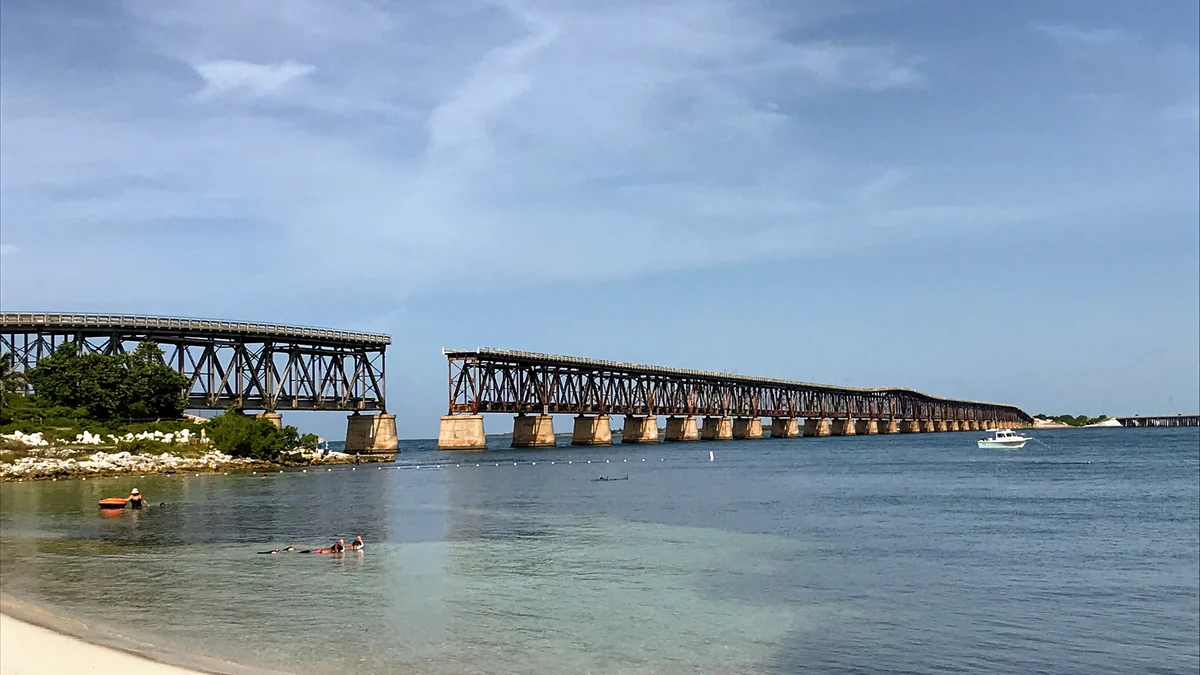
19. Bahia Honda: Calusa Beach
- Location: Lower Florida Keys
- Best for: A sandy Keys stop with old-bridge views
- Suggested trip: Half to one day; 2–4 nights in the area
- Best time: Winter or spring
- Swimming: Assess currents and wind; snorkeling is condition-dependent
- Lifeguards: Not confirmed; verify locally
- Getting there / access: US1 at the park entrance; admission and capacity limits
- Facilities: Parking, restrooms, picnic pavilions and concession; shade limited
- Budget: Moderate; Keys lodging can be high
- Snorkeling: Condition-dependent; check visibility, currents, entry and local guidance before entering
Why visit: Bahia Honda is a useful corrective to the idea that every Florida Keys shoreline is a broad beach. Calusa offers a defined sandy stop beside the historic bridge scenery.
Beach experience: The compact bay-facing beach has a different aspect from the park’s Atlantic-side Loggerhead and Sandspur beaches. Choose a section based on current conditions and available space.
Best things to do: Walk, picnic and consider snorkeling only when conditions suit your ability. Offshore reef tours are separately operated trips, not something included with park entry.
When to go: Winter and spring are practical for outdoor time, but wind can affect water activities. Summer brings stronger heat and tropical-weather considerations.
Where to stay: Big Pine Key or Marathon; Key West is a separate base farther along the Overseas Highway.
Planning tip: The park can stop admitting visitors when day-use capacity is reached. Arrive early on busy dates and bring shade rather than relying on finding a tree beside your towel.
Check current details: Bahia Honda: Calusa Beach visitor information.
20. Fort Zachary Taylor Beach
- Location: Key West, Florida Keys
- Best for: Beach, snorkeling and fort history
- Suggested trip: Half to one day; 2–4 nights in the area
- Best time: Winter or spring
- Swimming: Rocky bottom; snorkeling depends on visibility and currents
- Lifeguards: Not confirmed; verify locally
- Getting there / access: Enter the state park from Key West; admission applies
- Facilities: Restrooms, showers, picnic areas, café and equipment rentals
- Budget: Moderate day costs; high lodging potential
- Snorkeling: Condition-dependent; check visibility, currents, entry and local guidance before entering
Why visit: Fort Zachary Taylor makes a Key West beach outing more varied by adding a substantial historic fort. It is worth choosing for that combination rather than for the softest possible sand.
Beach experience: Sand and pebbles meet a rocky underwater edge, with shaded picnic space behind parts of the beach.
Best things to do: Explore the fort, picnic and consider a condition-appropriate snorkel. The fort’s operating hours differ from the park’s beach day.
When to go: Winter and spring often suit a walk-and-beach combination. Wind, visibility and local warnings should determine snorkeling plans in every season.
Where to stay: Old Town Key West for a compact stay; compare transport and parking if choosing accommodation elsewhere on the island.
Planning tip: Water shoes can help with the rocky bottom but do not remove current hazards. Keep the fort tour and water activity flexible so one does not depend on the other.
Check current details: Fort Zachary Taylor Beach visitor information.
Which beach is right for you?
Gulf Coast or Atlantic Coast?
Siesta and Clearwater offer developed Gulf beach days, while Cocoa and Sebastian Inlet have a stronger surf-oriented context. Neither coast guarantees gentle water. Wind direction, swell and the precise beach matter more than a broad coastal label.
Panhandle or South Florida?
Grayton and Henderson suit a beach-centered regional stay with a car. South Beach offers a busy urban district; Bill Baggs provides a park outing south of it. Panhandle winter weather can feel very different from Miami.
Keys or mainland?
Choose Bahia Honda or Fort Zachary Taylor for a Keys itinerary, accepting compact beaches, limited shade or rocky entry in places. Do not book the Keys expecting every waterfront hotel to have a broad sandy swimming beach.
Family convenience or nightlife?
Clearwater and Siesta have developed facilities; South Beach has more urban activity around it. Check the exact accommodation block and nighttime noise. A famous beach name does not tell you how far the bathroom is.
Relaxation or nature activities?
Caladesi requires ferry planning, Blowing Rocks is a timed preserve visit, and Caspersen currently needs special access planning. For a simple day with fewer moving parts, choose a fully serviced access and verify its current operation.
Water conditions, weather and beach rules
Read the local signs and flag legend, ask an on-duty lifeguard and obey closures. Flag meanings can vary between destinations; an attractive photograph or an unstaffed tower is not a safety assessment. Waves, rip currents and shorebreak can affect capable swimmers, and Great Lakes beaches have dangerous currents too. Use the National Weather Service beach guidance before planning water activities. If in doubt, stay out.
Check the responsible health authority’s water-quality notices as well as the weather. Clear-looking water can still have an advisory, and runoff after rain may change conditions. Review NOAA tide predictions for U.S. locations and local hydrographic guidance elsewhere. Low tide is not permission to cross an inlet, enter a cave or walk to an offshore island.
Keep children under active adult supervision. For surfing or snorkeling, choose conditions and an operator suited to actual ability; do not enter alone or assume rentals include instruction. Give turtles, seals, seabirds and other wildlife space. Never feed, handle or disturb animals, nests or coral, and respect marked habitat closures.
Budget, access and a workable beach day
Compare the complete outing: accommodation, parking or beach tags, park admission, ferry or boat tickets, equipment and meals. Budget labels are relative editorial estimates, not live prices. Use the linked operator pages for current fees and booking rules. Public beach access does not automatically include a nearby hotel’s toilets, loungers or parking.
Confirm the exact entrance, current parking arrangements and the last return ferry or shuttle. If accessibility matters, ask about the full route: parking surface, gradients, stairs, mat endpoint, restroom layout and beach-wheelchair reservations. Carry drinking water, sun protection and layers appropriate to the coast; build in a weather alternative.
Check local rules before bringing pets or planning fires, alcohol, fishing, camping or overnight parking. Restrictions may differ by beach section, time or season. Stay on designated dune paths and take litter away. A quiet stretch of sand is not an invitation to ignore protected-area rules.
Use Florida Healthy Beaches county water-quality results and local environmental advisories. Sargassum and other beach conditions vary with currents, weather and location; NOAA’s sargassum resources provide regional context. Atlantic hurricane season is June through November; monitor National Hurricane Center forecasts and local instructions before and during travel.
Frequently asked questions
Which Florida beach has the clearest water?
There is no reliable permanent winner. Visibility changes with weather, wind, waves, runoff, currents and environmental conditions. Use recent local reports rather than treating an old photograph as a forecast.
Is the Gulf Coast always calmer than the Atlantic?
No. Both have dangerous conditions at times. Compare the day’s flags, surf forecast and lifeguard guidance at the specific beach.
Can I visit Florida beaches during hurricane season?
Travel is possible, but flexibility matters. Review forecasts, local orders and booking cancellation terms; the seasonal calendar does not predict the weather on your dates.
Plan the rest of your trip
25 Best Beaches in the USA to Visit in 2026 · 20 Best Beaches in California: From San Diego to Northern California · 15 Best Family Beaches in the USA for Kids & Parents · 20 Best Tropical Beaches in the World to Visit in 2026
Sources, selection and image credits
This is a research-based editorial selection, not a numerical ranking or a claim of firsthand visits. DayZora compared public access, setting, facilities, regional variety and practical travel fit using the linked park, government and visitor sources. Lifeguard availability is identified only where supported; unconfirmed service is explicitly marked. Suggested stays, age fit, accommodation areas and relative budgets are editorial judgments. Operational notices were reviewed for this edition and should be checked again before departure.
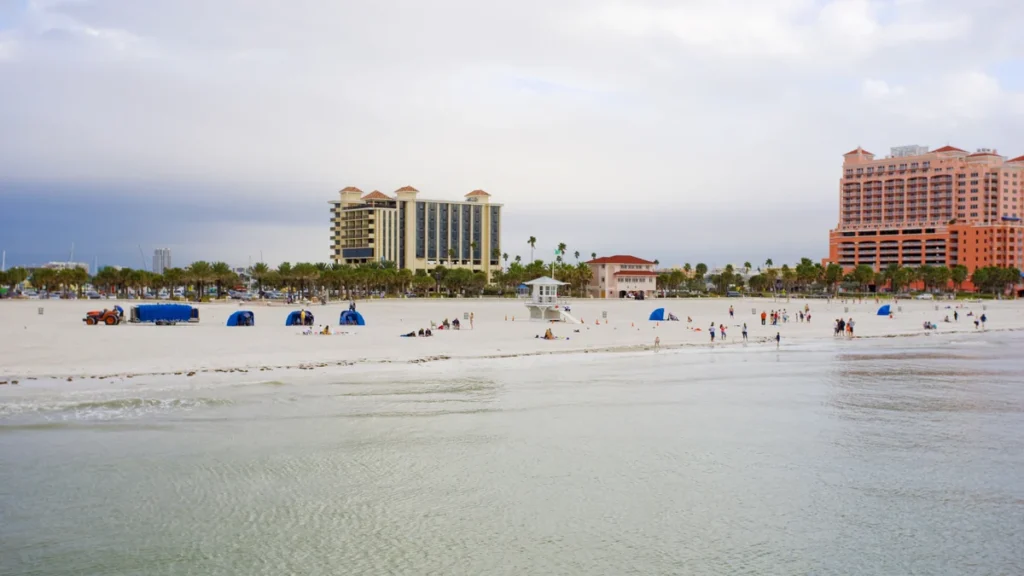
Featured photograph: Pale sand and shoreline at Siesta Beach in Florida. Photo: Justicemtran (2021), CC BY-SA 4.0. Cropped/resized; derivative retains source license. Archival illustration, not a current-condition report.