Of all the elements that make a Thanksgiving table memorable, candle centerpieces for Thanksgiving deliver the most atmosphere per dollar and per minute of effort. Long after guests forget the exact shade of your napkins, they will remember how the room felt — and that feeling is candlelight: the warm glow on faces, the flicker in glassware, the way a dining room transforms at dusk from a place you eat into a place you linger. Candle centerpieces are also uniquely forgiving. Unlike floral arrangements that demand design skill or produce displays that demand freshness, candles look good in almost any configuration, suit every decorating style from rustic farmhouse to sleek modern, and cost very little. This complete guide covers everything you need: the design principles behind great candle centerpieces, 20 styled ideas organized by aesthetic, how to choose the right candles (pillar, taper, votive, tea light — and when to go LED), flame safety rules that every host must know, scent strategy, and answers to the questions everyone asks. By the end, you will be able to build a candlelit centerpiece in twenty minutes that looks like it took all afternoon.
Why Candles Are Thanksgiving’s Secret Weapon
Thanksgiving dinner happens at the exact moment daylight dies. In late November, sunset arrives mid-afternoon in most of the United States, which means your lovingly styled table will spend its most important hours in artificial light. This is where candles earn their keep. Overhead lighting — even dimmed — flattens faces and washes out color. Candlelight does the opposite: it is warm (around 1800–2000K, warmer than any bulb), it moves (the flicker keeps the eye engaged), and it is flattering (soft shadows are kind to every face at the table).
Beyond the physics, candles carry psychological weight. Firelight is humanity’s oldest gathering signal — we are wired to relax around flames the way we are wired to relax around water. A table with candles reads as “evening, celebration, stay awhile” in a way no other decoration manages. And practically speaking, candles solve the two hardest centerpiece problems simultaneously: they add height without blocking sightlines (flames are visually present but physically insubstantial), and they work in every style — a brass taper holder suits a modern table as naturally as a mason-jar votive suits a rustic one. If your Thanksgiving decorating budget and time are both limited, spend them on candles first and everything else second.
Candle Types: Choosing Your Flames
Not all candles are equal, and choosing the right type for each role is the foundation of a professional-looking centerpiece.
Pillar candles are the workhorses: freestanding cylinders from two to twelve inches tall, available in every diameter. Use pillars as the anchors of a centerpiece — groups of three or five in varying heights create the classic clustered look. Ivory, cream, and beeswax tones suit Thanksgiving best; avoid heavily scented pillars in the dining room (more on scent below). A quality pillar burns 40–80 hours, so buy once and reuse for years.
Taper candles are the elegants: tall, slender, dripless (in theory) candles in holders. Tapers add height and formality — a row of tapers down a table reads as “special occasion” instantly. Traditional fall colors (burnt orange, deep red, forest green, classic ivory) all work. Tapers burn faster than pillars (a 10-inch taper lasts roughly 8–10 hours), so they are best for the main event rather than all-season display.
Votives and tea lights are the sparkle: small candles in glass holders, meant to be scattered generously. This is where quantity beats quality — a dozen inexpensive votives down a table runner creates more magic than one expensive pillar. Votives in amber, mercury glass, or seeded glass holders multiply the glow through reflection.
LED candles are the pragmatists: flameless, remote-controlled, timer-equipped, and utterly safe. Modern LED pillars and tapers with realistic flicker are genuinely convincing at table distance, especially inside frosted or amber holders. Use LED anywhere real flame is risky — near dried botanicals, on the kids’ table, outdoors in wind, or in a home with curious pets and toddlers. No one at a candlelit dinner has ever leaned in, squinted, and complained.
Scented vs. unscented: in the dining room, unscented wins. Competing fragrances fight your food — a cinnamon-apple candle battling the turkey’s aroma helps neither. Save scented candles for the entryway, living room, and bathroom, where they set the mood without competing with dinner. One exception: naturally scented beeswax pillars have a subtle honey aroma that complements rather than competes — they are the connoisseur’s choice for the table.
Design Principles for Candle Centerpieces
Odd numbers. Group candles in threes, fives, or sevens. Even groupings look static; odd groupings look natural. This applies to pillars clustered on a tray, tapers in a row (five or seven, never four or six), and votives scattered down a runner.
Vary the heights. A centerpiece where every candle is the same height looks like a choir lined up for inspection. Vary pillar heights by at least two inches between neighbors; mix tapers of different heights; scatter votives (low) among pillars (tall). The eye should travel up and down, not across a flat line.
Contain the composition. Candles scattered randomly across a table look like clutter; candles gathered on a tray, runner, or wooden board look like a centerpiece. The container — a long dough bowl, a marble tray, a reclaimed-wood box, a simple runner — is what signals intention. It also catches wax drips, which your tablecloth will appreciate.
Layer light temperatures. Combine candlelight with fairy lights woven through greenery for a double-layer glow — the fairy lights provide sparkle, the candles provide warmth. Add a dimmed lamp in the corner of the room so the space does not go cave-dark between the table and the walls.
Respect sightlines. The tallest flame should sit below eye level for seated guests — roughly under 12 inches above the table surface for pillars in the center, with tapers acceptable slightly higher since their flames are narrow. When in doubt, sit in a chair and look across: if a candle blocks a face, it is too tall or too central.
20 Candle Centerpiece Ideas by Style
Rustic and Farmhouse (1–6)
1. The dough-bowl cluster. Fill a long wooden dough bowl with pillar candles of varying heights, then tuck moss, pinecones, and small gourds around their bases. The quintessential rustic centerpiece — low, textural, and glowing. 2. Mason-jar votives. Line amber or clear mason jars with LED tea lights down the table runner, interspersed with eucalyptus sprigs and mini pumpkins. Costs almost nothing; looks like a country wedding. 3. Lantern row. Place three to five black or galvanized lanterns of graduated sizes down the table’s center, each holding a pillar candle. Lanterns contain the flame (safer around botanicals) and add architectural structure. 4. Wood-slice pillars. Set pillar candles directly on cross-cut wood slices of varying diameters, scattered with cranberries and rosemary sprigs. The wood slices are coasters, risers, and decor in one. 5. The harvest tray. On a large reclaimed-wood tray, arrange taper candles in brass holders among apples, pears, and wheat bundles. Produce plus flame plus wood: the rustic trinity. Pair with a cornucopia at one end for the full harvest statement. 6. Birch-log candles. Hollowed birch logs holding tea lights (sold as “birch candle holders”) bring the forest to the table. Group five or seven down a runner with scattered leaves.
Elegant and Traditional (7–11)
7. The taper row. Seven ivory tapers in matching brass or crystal holders, evenly spaced down the table’s center, with low greenery (eucalyptus or olive branches) woven between them. Formal, timeless, and stunning in photographs. 8. The candelabra moment. One great candelabra — brass, silver, or crystal — as the single centerpiece, flanked by low bowls of fruit or flowers. A candelabra says “this dinner matters” like nothing else. 9. Mercury-glass votives. A dozen mercury-glass votives in gold and silver scattered down the runner with loose cranberries and greenery. The mottled glass multiplies candlelight into a field of warm sparkle. 10. The low-and-luxe cluster. Five large ivory pillars of graduated heights on a marble or mirrored tray, surrounded by white pumpkins and seeded eucalyptus. Understated luxury — the centerpiece equivalent of a cashmere sweater. 11. Hurricane elegance. Tall glass hurricanes, each holding a single pillar on a bed of cranberries, dried beans, or sand, spaced down the table. The glass magnifies the flame and protects it from drafts — beautiful and practical.
Modern and Minimalist (12–15)
12. The black-and-ivory study. Matte black taper holders with ivory tapers, five in a row, nothing else — or with a single low line of eucalyptus beneath. Graphic, architectural, unforgettable. Our modern Thanksgiving decor guide builds a whole aesthetic on this discipline. 13. The concrete cluster. Pillar candles in concrete or stone holders of varying heights, grouped asymmetrically at the table’s center with a single branch of dried lunaria. Industrial-warm, perfect for lofts and contemporary homes. 14. The amber field. Fifteen to twenty amber glass votives scattered the length of the table at irregular intervals, with nothing else. Massed identical objects are the minimalist’s power move — the table becomes a field of warm light. 15. The single sculptural candle. One extraordinary candle — an oversized beeswax pillar, a hand-carved taper, a candle in a handmade ceramic vessel — placed off-center as the entire centerpiece, surrounded by negative space. Confidence as decor.
Creative and Unexpected (16–20)
16. The pumpkin candle holders. Hollow small pumpkins and gourds, fit them with LED tea lights or short votives in glass inserts (never an open flame inside a pumpkin — the flesh can smolder). A row of glowing pumpkins down the table is pure Thanksgiving magic. 17. The cranberry water candles. Fill low glass bowls with water, scatter fresh cranberries and a sprig of rosemary, and float a tea light on top. The cranberries glow ruby-red around the flame — breathtaking and nearly free. 18. The wheat-sheaf tapers. Tie small bundles of dried wheat around taper candles with twine (keeping the wheat well below the flame, or use LED tapers for zero risk), and stand them in a row. Harvest symbolism rendered in flame and grain. 19. The gratitude candles. Wrap each pillar with a band of kraft paper on which guests have written what they are thankful for (collected at arrival). The centerpiece becomes a ritual — read a few aloud before dessert. 20. The outdoor fire bowl. For patios and porches, a large fire bowl or chiminea surrounded by pumpkins and blankets extends the candlelit mood beyond the walls. See our outdoor Thanksgiving decorations guide for the full exterior plan.
Flame Safety: The Non-Negotiable Rules
Candles are fire, and fire demands respect — especially in a home full of guests, children, flowing sleeves, and excitement. These rules are absolute.
Never leave burning candles unattended. Designate one adult as the candle monitor during the pre-dinner chaos. Blow out table candles when the meal’s active phase ends — no one needs open flames during the post-dinner sprawl when people are leaning, reaching, and dozing.
Keep flames clear. Twelve inches minimum between any flame and anything flammable: dried botanicals, fabric runners, paper decor, curtains, and sleeves. Dried wheat, eucalyptus, and fall leaves are essentially kindling — beautiful kindling, but kindling. Either keep real flames well away from dried materials or switch those positions to LED.
Stable and contained. Every candle needs a stable, heat-resistant holder on a level surface. Tapers must fit snugly — a wobbling taper is a falling taper. Pillars need a plate or tray underneath to catch wax and heat. Never place candles where they can be knocked by elbows, children, or pets — which means the edge of the table and the kids’ zone are LED-only territory.
Trim wicks. Trim every wick to a quarter inch before lighting. Long wicks produce tall, smoky, drippy flames; trimmed wicks burn clean and steady. Keep a wick trimmer with your candle supplies — it is a small tool that makes a large difference.
Know your exits. Keep a small fire extinguisher accessible in the kitchen (you should own one regardless), and never use water on a wax fire — smother it. These are unlikely scenarios, but the host who has thought about them is the host whose guests are safe.
LED where it matters. Use flameless candles: on the kids’ table, outdoors in any wind, near dried botanicals, in bedrooms and bathrooms, and anywhere a candle would be unattended. Modern LED candles with moving-flame technology are convincing enough that guests will not notice — and the ones who do will approve.
Scent Strategy for the Whole Home
Scent is the invisible half of candlelight. The rule for Thanksgiving: one scent story, told quietly, in zones. Choose a single fragrance family for the whole home — warm spice (cinnamon, clove, amber), orchard (apple, pear, fig), or woodland (cedar, fir, eucalyptus) — and vary the delivery by room. Entryway: a scented candle or reed diffuser to greet arrivals. Living room: a simmer pot on the stove (sliced orange, cinnamon sticks, cloves, star anise, rosemary in water on low) scents the common areas naturally and authentically. Dining room: unscented candles only — let the food be the fragrance. Bathroom: a small scented candle or diffuser. Kitchen: no added scent — the cooking is the scent. The result is a home that smells like Thanksgiving without any single room announcing itself. And ventilate: crack a window during heavy cooking so the house smells like a feast, not a fog.
Candlelight Beyond the Dining Table
The dining table gets the glory, but candlelight should flow through the whole home on Thanksgiving. The entryway: a lantern with a pillar candle (real or LED) on the console table, lit before the first guest arrives — it is the warm handshake of your holiday. The mantel: three to five pillars of varying heights nestled into your garland, or a row of tapers in matching holders; the fireplace wall becomes the living room’s evening focal point. The bathroom: one small scented candle or a tea light in a pretty holder — guests notice, and it signals care in the room everyone visits but no one mentions. The kitchen: a single unscented pillar on the windowsill for the cook, who deserves atmosphere too during the long prep hours. The porch: lanterns flanking the door (LED for wind) so the house glows from the street. Carry one consistent candle color through all these spots — ivory everywhere, for example — and the whole home will feel unified, as though the candlelight itself is a single continuous gesture from the sidewalk to the table.
In Pictures: Candle Centerpieces for Thanksgiving
Nothing flatters a Thanksgiving table like candlelight — it softens everything, gilds the food, and makes the whole evening feel ceremonial. Here's a glowing take on the candlelit centerpiece.

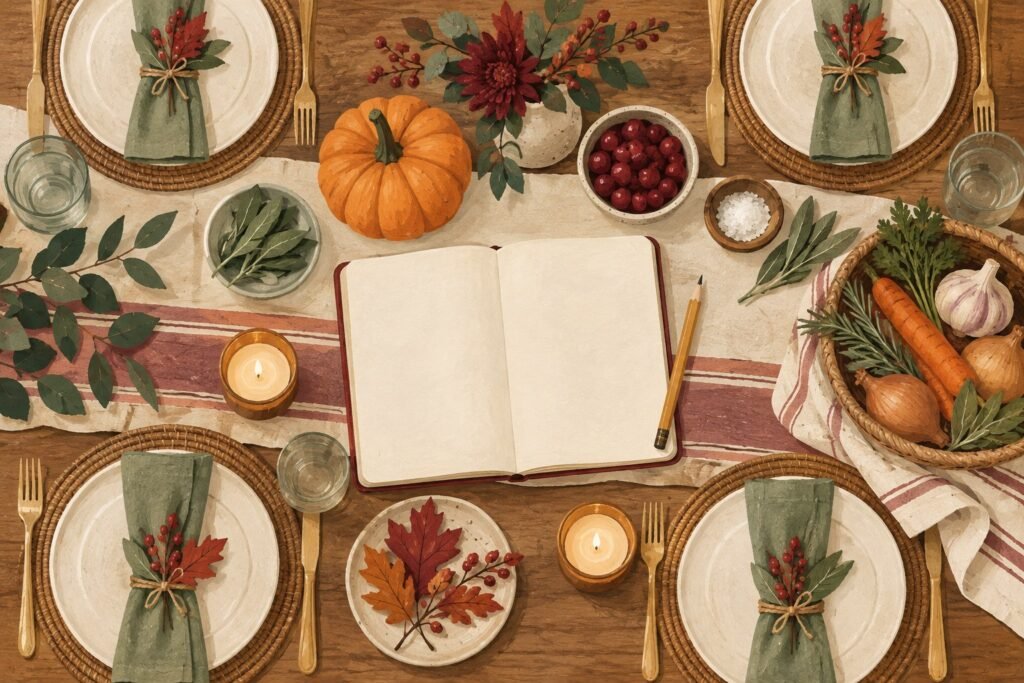
A Thanksgiving centerpiece of pillar candles in glass hurricanes surrounded by gourds, eucalyptus, and scattered cranberries.
Watch: Candle Centerpieces for Thanksgiving
Pottery Barn's tutorial for a gourd-and-candle centerpiece — a polished, store-worthy look you can build at home in an afternoon.
At a Glance: Candle Centerpieces for Thanksgiving
The pieces of a candle centerpiece that glows without going up in smoke.
| Element | Purpose | Tip |
|---|---|---|
| Pillar candles | The main glow | Vary heights (3, 6, 9 inches) for a natural, unstudied look |
| Glass hurricanes | Wind protection + elegance | Hurricanes keep flames steady and catch drips — essential near food |
| Tea lights | Scattered sparkle | Dot them between serving dishes where pillars won't fit |
| Gourds & mini pumpkins | Seasonal base | Nestle candles among gourds so the arrangement reads 'harvest', not just 'candles' |
| Eucalyptus & greenery | Freshness and scent | Keep greenery a few inches from open flames — or use LED candles near foliage |
| Mirrored or wood tray | Anchor and safety | A tray corrals wax, defines the centerpiece zone, and lifts the whole look |
Frequently Asked Questions
How many candles do I need for a Thanksgiving centerpiece? As a rule of thumb, one flame per two guests for an intimate glow, one per guest for a dramatic glow. A table for eight wants four to eight flames minimum; a table for twelve wants six to twelve. Votives and tea lights count individually — a “dozen votives” centerpiece is a normal quantity, not an extravagant one. When in doubt, add more small flames rather than fewer large ones; scattered small lights look more magical than a few big ones.
Real or LED candles — which should I choose? Use real flames where they are safe, visible, and attended: the adult dining table’s main centerpiece, the mantel (in stable holders, supervised), the entryway lantern. Use LED everywhere else: kids’ tables, outdoors, near dried botanicals, in bedrooms and bathrooms, and any spot that will be unattended. Many hosts use a hybrid — real pillars as the centerpiece anchors, LED votives scattered around them — and no guest can tell which is which at table distance.
How do I keep candle wax off my tablecloth? Contain every candle on a tray, plate, or runner — never place a candle directly on fabric. Use dripless tapers (and still use holders with drip cups, because “dripless” is aspirational). For pillars, a glass or metal plate underneath catches both drips and heat. If wax does hit fabric, let it harden completely, scrape off the excess, then iron the spot through brown paper bags — the heat melts the wax into the paper. It works remarkably well.
What colors of candles work best for Thanksgiving? Ivory, cream, and beeswax tones are the most versatile — they suit every style and flatter every palette. Traditional fall colors (burnt orange, deep red, forest green, chocolate) work in rustic and traditional settings. Matte black tapers suit modern tables. Avoid bright white (it reads as stark), pastels (they fight the season), and novelty colors. When in doubt, ivory — it is never wrong.
Can I use scented candles at the Thanksgiving table? It is better not to. Fragrance competes with food aromas and can genuinely interfere with taste — strong scent literally changes how flavors register. Keep the dining table unscented (beeswax’s natural honey aroma is the pleasant exception) and put your scented candles in the entryway, living room, and bathroom, where they build atmosphere without competing with the meal.
How do I style candles with a Thanksgiving garland? Beautifully — they are natural partners. Weave fairy lights through the garland first, then nestle pillar candles or lanterns into the foliage at intervals, keeping real flames at least a foot from any dried material (or use LED). Our Thanksgiving garland ideas guide covers mantel, staircase, and table garlands that all pair gorgeously with candlelight.
Conclusion
Candle centerpieces are Thanksgiving’s highest-return decoration: a modest investment of money and minutes buys you the warm, glowing, linger-a-little-longer atmosphere that defines the holiday. Choose your candle types with intention, group in odd numbers, vary the heights, contain the composition, respect the flame-safety rules without exception — and then light everything an hour before guests arrive and watch your dining room transform. The turkey brings them to the table; the candlelight keeps them there. For more ways to make your holiday glow, from garlands to front porches, explore our Thanksgiving collection. Happy Thanksgiving.