Thanksgiving place cards DIY projects are the small detail with the biggest hospitality payoff. A place card tells each guest “we thought about you specifically” — it eliminates the awkward seating shuffle, lets you seat people thoughtfully, and becomes a keepsake many guests take home. Best of all, handmade place cards cost pennies and take minutes each. This complete guide offers eighteen creative DIY place card ideas across four styles, full step-by-step tutorials, calligraphy basics for beginners, seating-strategy advice, and display ideas.
You do not need beautiful handwriting or crafting experience. Most designs below use basic supplies — card stock, markers, natural finds — and several are specifically designed for shaky hands and impatient crafters. Each tutorial includes realistic time estimates and the mistakes to avoid.
Why Bother with Place Cards?
Place cards solve three real hosting problems. First, the arrival shuffle: without assigned seats, guests hover uncertainly while the food cools. Place cards end it instantly — everyone finds their name and sits. Second, thoughtful seating: you can separate the relatives who bicker, place the shy guest near the warm conversationalist, seat kids near the fun aunt, and keep the cook near the kitchen for easy serving. Third, the personal touch: in an age of generic entertaining, a card with someone’s name on it — especially a handmade one — registers as genuine care.
There is also a practical benefit hosts overlook: place cards let you set dietary needs discreetly. A small symbol on the card (known only to you and the guest) marks the vegetarian, the nut allergy, the gluten-free diner — no announcements needed, no one singled out.
Place Card Basics: Size, Paper, and Writing
Size and Format
Standard tent cards are 3.5 x 2 inches folded (cut card stock into 3.5 x 4 inch pieces and fold in half). This size is readable from across the table but does not dominate the place setting. Flat cards (3 x 3 inches) work when tucked into napkins or laid on plates. Larger cards (4 x 3 inches) suit buffet-style seating where cards sit on a separate table.
Paper Choices
Card stock (65–110 lb) is the standard — sturdy enough to stand, easy to write on. Kraft card stock for rustic looks, white or ivory for formal, colored for modern. Watercolor paper adds beautiful texture for painted designs. Whatever you choose, test your pen on a scrap first — some markers bleed on porous papers.
Writing Tools
Fine-tip markers (0.5mm) for crisp names, brush pens for faux calligraphy, metallic gel pens on dark card stock, white gel pens on kraft paper. Pencil first, ink second — always. And write names the way guests like to be called (“Grandma” not “Margaret,” if that is what the kids call her).
Faux Calligraphy for Beginners
Real calligraphy takes practice; faux calligraphy takes ten minutes to learn. Write the name in your normal cursive or print, then thicken every downstroke (every line your pen draws going down) by drawing a second line parallel to it and filling in. That single trick — thick downstrokes, thin upstrokes — creates convincing calligraphy. Practice on scrap paper five times before touching the real cards.
Rustic DIY Thanksgiving Place Cards
1. Leaf Calligraphy Cards
Write names directly on large, flat fall leaves (magnolia leaves are ideal — sturdy, waxy, and hold ink beautifully) with a metallic gold or white paint pen. Lay each leaf on the plate or tuck it into the napkin. Free, gorgeous, and unmistakably autumn. Press leaves for a day first so they lie flat.
2. Mini Pumpkin Name Holders
Cut a small slit in the top of each mini pumpkin (a craft knife works; an adult job), and slide a small card stock name card into the slit. The pumpkin is both holder and decor — guests take them home. Alternatively, write names directly on the pumpkin with a paint pen and skip the card entirely.
3. Wood-Slice Place Cards
Write names on small wood slices (2–3 inches) with a wood-burning tool or paint pen. Rustic, substantial, and reusable — sand lightly and rewrite next year, or let the collection grow. Wood slices cost pennies in bulk bags.
4. Pinecone Name Holders
Stand a pinecone upright (hot-glue a small flat base if needed) and wedge a card stock name card between its scales near the top. Free, fast, and charmingly woodland. Works best with large, open pinecones.
5. Twine-Tied Cinnamon Stick Bundles
Tie three cinnamon sticks with twine, tuck in a sprig of rosemary and a small name tag. Fragrant, edible-adjacent, and beautiful on the plate. The whole bundle costs under 50 cents and smells like the holiday.
Elegant DIY Thanksgiving Place Cards
6. Gold-Edged Tent Cards
Fold ivory card stock into tent cards, write names in faux calligraphy, then edge the cards with a gold paint pen or gold washi tape. The metallic edge catches candlelight and elevates the simplest card to formal. Time: 3 minutes per card after practice.
7. Vellum Overlay Cards
Print or write the name on card stock, then overlay a slightly larger piece of translucent vellum, securing with a wax seal or a small brad. The layered translucency looks expensive and bespoke. Wax seals (a $10 stamp + sealing wax sticks) elevate every paper project you will ever make.
8. Agate Slice Place Cards
Write names on small agate slices with a white or gold paint pen, or prop a mini card against the slice. Agate slices (a few dollars each in bulk) are the modern-elegant place card — natural, unique, and a keepsake guests genuinely keep.
9. Champagne Cork Holders
Cut a slit in a champagne cork (saw gently with a serrated knife — adult job) and stand the name card in it. The cork’s celebratory association is perfect for the holiday, and they are free if you drink champagne. Stand corks on small wood slices for stability.
Creative and Playful Place Cards
10. Photo Place Cards
Print small photos of each guest (4 x 6 prints cut down, or instant-camera shots), write their name beneath, and prop on the plate. Guests love finding their photo — it is personal, fun, and doubles as a favor. Especially delightful for Friendsgiving and family reunions.
11. Scratch-Off Gratitude Cards
Write each guest’s name on a card, then add a “gratitude prompt” (e.g., “Share a favorite memory of…”) covered with scratch-off sticker paper. Guests scratch during dinner for conversation starters. The most interactive place card in this guide — and a genuine dinner-party game.
12. Seed-Packet Place Cards
Attach name tags to small seed packets (fall-planted seeds like garlic or wildflowers, or spring seeds as a promise). Guests plant them as a living memento of the holiday. The favor and the place card in one — efficient and meaningful.
13. Mini Chalkboard Cards
Small chalkboard signs (dollar-store, a few dollars for a set) on tiny easels, names written in chalk marker. Reusable forever — wipe and rewrite yearly. The chalkboard aesthetic suits farmhouse and casual tables perfectly.
Kid-Made Thanksgiving Place Cards
14. Handprint Turkey Cards
Kids trace their hands on card stock, decorate as turkeys (feathers, googly eyes, beak), and write each guest’s name on the body. The cards are impossibly charming, and kids take enormous pride in “their” table job. Assign each child 2–3 guests the day before.
15. Painted Rock Place Cards
Kids paint smooth stones in fall colors and an adult writes names with paint pen. Stones prop against glasses or lie on napkins — sturdy, spill-proof, and unbreakable. A genuinely kid-proof place card.
16. Acorn Cap Necklace Tags
Glue acorn caps to card stock tags, write names, and tie with twine. Simple enough for ages 5+, natural, and adorable. Collect acorns on a nature walk — the foraging is half the activity.
17. “Thankful For You” Cards
Each child writes (or dictates) one thing they appreciate about each guest on the back of that guest’s place card. The front has the name; the back has a personal note. Guests routinely keep these for years — it is the most emotionally valuable card in the guide.
18. Woven Paper Placemat Markers
Older kids weave paper strips into mini placemats (a classic craft), with the guest’s name woven into the design or written on a tag. The placemat IS the place card — functional, personal, and a full craft afternoon.
Full Tutorial: Faux-Calligraphy Tent Cards in 30 Minutes
Materials
- Ivory card stock, 110 lb
- Pencil and eraser
- Brush pen or fine marker + gold paint pen
- Paper cutter or scissors and ruler
- Guest list (finalized!)
Steps
Step 1: Cut and score (10 min). Cut card stock into 3.5 x 4 inch pieces. Score each at the 2-inch mark (run a bone folder or empty ballpoint along a ruler) and fold — the score gives a crisp tent fold that stands reliably.
Step 2: Pencil the names (10 min). Lightly pencil each name in large cursive or print, centered on the card’s front panel. Double-check every spelling against your guest list — misspelled names are the classic place-card disaster. Pencil first means mistakes erase.
Step 3: Ink with faux calligraphy (varies). Trace over the pencil with your marker, then thicken every downstroke. Work slowly; this is the step that creates the elegant look. Let ink dry fully before erasing pencil lines.
Step 4: Add the gold edge (5 min). Run a gold paint pen along the card’s top edge, or apply thin gold washi tape. This single detail elevates the whole card.
Step 5: Erase and stand (5 min). Gently erase pencil lines, fold, and stand each card to check it sits flat. Cards that wobble need a sharper score — refold firmly.
Time per card after practice: 2–3 minutes. Total for 12 guests: about 30 minutes.
Seating Strategy: Where to Put Everyone
Place cards are only as good as the seating plan behind them. Principles: seat the cook near the kitchen end for easy serving; put great conversationalists at the table’s middle to bridge both ends; separate known friction pairs with at least two seats; seat children near the adults who enjoy them most (not automatically near their parents — the fun aunt is often the better choice); place elderly guests away from the noisy kids’ end but near attentive adults; and put the guest of honor (or the eldest) at the table’s head or center of honor.
Draw the plan on paper first — a simple rectangle with names. Sleep on it if the family dynamics are complex. And have two blank cards ready on the day for surprise plus-ones.
Display Ideas: Beyond the Plate
Place cards do not have to sit on plates. Alternatives: tucked into folded napkins (the pocket fold holds cards perfectly), propped against wine glasses, tied to stemware with ribbon, pinned to a seating-chart board at the entry (one board instead of individual cards — good for large crowds), laid on the table runner above each plate, or attached to the favor each guest takes home. For buffet-style meals, arrange cards on a side table so guests collect them with their plates.
Coordinating with Your Table Design
Place cards should echo the table’s style, not introduce a new one. Rustic table → leaf, wood-slice, or kraft cards. Modern table → agate, monochrome, or minimalist tent cards. Farmhouse table → chalkboard, gingham, or burlap-accented cards. Formal table → gold-edged, vellum, or wax-sealed cards. The card is small, but a style mismatch is visible — a glittery card on a minimalist table sticks out. For the full table picture, see our Thanksgiving table settings guide and DIY centerpiece guide.
Budget and Time Planning
| Card Style | Cost per Card | Time per Card |
|---|---|---|
| Kraft tent card | $0.05 | 2 min |
| Leaf calligraphy | Free | 2 min |
| Mini pumpkin holder | $0.50–$1 | 3 min |
| Gold-edged calligraphy | $0.15 | 4 min |
| Agate slice | $2–$4 | 2 min |
| Photo card | $0.30–$0.50 | 5 min |
For twelve guests, even the fanciest option here costs under $10 total. The real budget is time — start place cards two days before Thanksgiving, not the morning of.
6 Place Card Mistakes to Avoid
1. Misspelled names. The unforgivable place-card sin. Verify every spelling with someone who knows — especially names from other cultures or with unusual spellings. When uncertain, ask the guest directly; they will appreciate the care.
2. Illegible writing. Beautiful calligraphy that cannot be read fails at its job. Prioritize legibility over flourish — guests should read their name from standing height in dim light. Test: hold the card at arm’s length. If you cannot read it, neither can they.
3. Cards that won’t stand. Test every card’s stand before the event. Weak folds, top-heavy designs, and humid air all cause collapses. Score folds firmly, and keep a glue stick handy for emergency reinforcement.
4. Forgetting plus-ones. Someone always brings someone. Keep blank cards and pens accessible — and a pre-planned flex seat — so surprises join smoothly instead of causing a reshuffle.
5. Seating couples apart thoughtlessly. Some hosts separate couples to “mix” guests; some couples hate it. Know your crowd — new partners often prefer sitting together, while long-married couples usually enjoy the separation. When in doubt, keep couples together.
6. Making the kids’ table feel lesser. If children sit separately, their table deserves the same care: place cards, a centerpiece, real (unbreakable) dishes. A neglected kids’ table breeds resentment; a celebrated one creates the holiday’s happiest corner.
Large Gatherings: Place Cards for 20+ Guests
Big Thanksgivings need systems. For 20+ guests, individual plate cards still work — but consider a seating-chart board at the entry (one large display instead of 25 cards) with table assignments, then simple name cards at each seat. Use multiple tables with themes or host assignments (“Aunt Linda’s table,” “the cousins’ table”) to simplify.
Logistics: finalize the guest list 3 days before (not the morning of), draw the seating map on paper, prepare 10% extra blank cards, and assign one calm person as the “seating concierge” during arrival chaos. For buffet-style large gatherings, place cards on the tables and let guests find seats before serving themselves — it prevents the bottleneck of 25 people hovering over the buffet wondering where to sit. Whatever the scale, the principle holds: everyone should know where they belong within 30 seconds of entering the dining area.
In Pictures: Thanksgiving Place Cards DIY
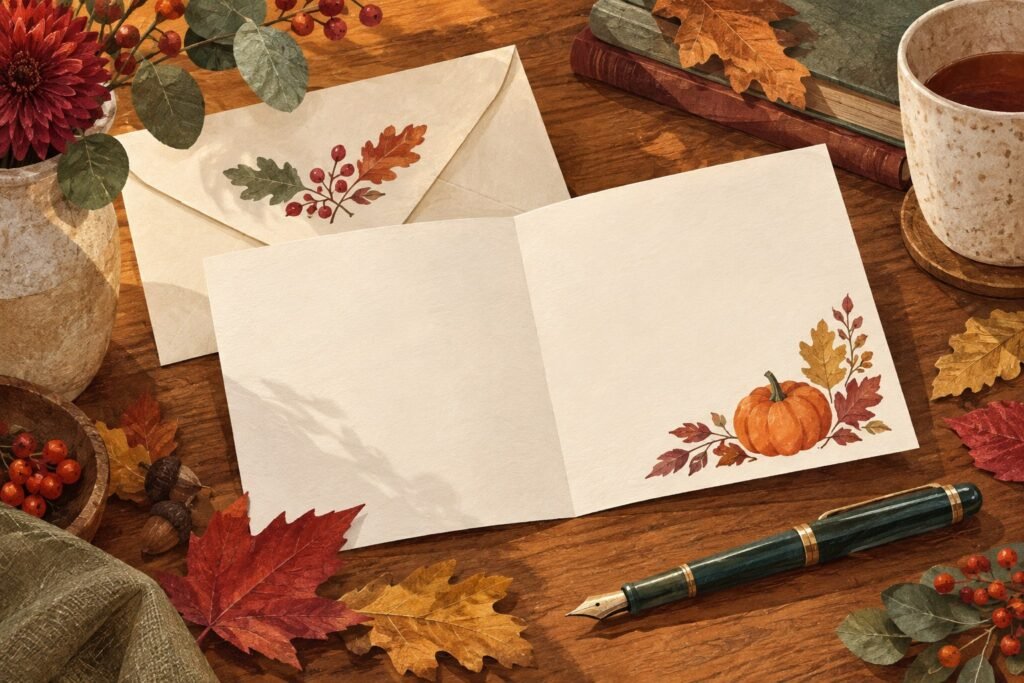
A place card says 'we saved you a seat' — these watercolor pumpkin place cards are simple, artsy, and completely handmade.
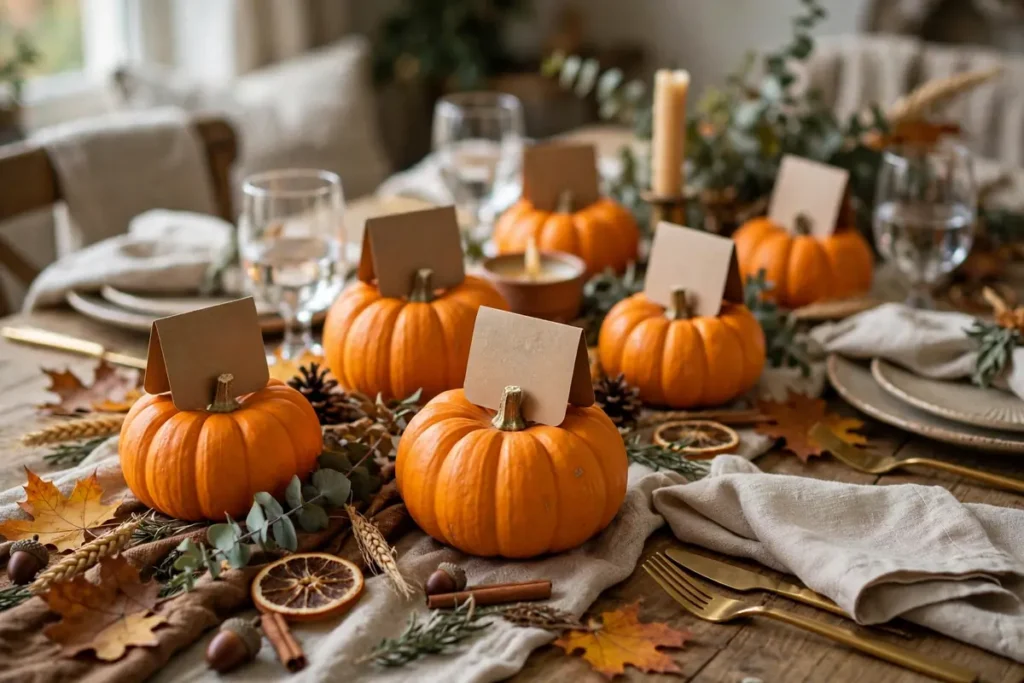
Handmade Thanksgiving place cards tucked into mini pumpkins on a beautifully set table.
Watch: Thanksgiving Place Cards DIY
Tombow's watercolor pumpkin place cards — dual brush pens, a damp paintbrush, and calligraphy for names, all in one quick tutorial.
At a Glance: Thanksgiving Place Cards DIY
Place card ideas from classic to edible.
| Style | Materials | Tip |
|---|---|---|
| Watercolor pumpkin | Watercolor paper, dual brush pens, burlap | Paint over pen lines with a damp brush for a soft watercolor look |
| Wooden pumpkin | Wooden pumpkin cutouts, acrylic paint, paint marker | Dollar-store wood shapes keep this under a few dollars |
| Calligraphy tent | Cardstock, brush pen, embossing powder | Folded tents stand on their own — no holder needed |
| Natural tag | Kraft tags, twine, rosemary sprig | Tie to a napkin for a two-in-one place setting accent |
| Edible | Chocolate bars, toothpick, powdered sugar | Engrave names into chocolate — guests eat their place card |
| Kids' table | Candy-filled place cards double as a favor and keep little ones happy | |
Frequently Asked Questions
Do I really need place cards for a casual Thanksgiving?
Even casual gatherings benefit — the arrival shuffle happens at every dinner party. For very casual meals, a seating-chart board or simply laying named cards on plates keeps it low-key while still organizing seating. Think of place cards as hospitality infrastructure, not formality.
How do I handle last-minute guest changes?
Keep blank cards and your pen kit accessible on Thanksgiving Day. Have a pre-decided “flex seat” (usually near the kitchen end or beside the most easygoing guest) for surprise additions. Do not redo the whole plan for one extra guest — slot them into the flex seat and enjoy the day.
What names should I write on place cards?
The name each guest actually goes by — “Grandma,” “Mike,” “Dr. Chen” if she prefers it. When in doubt, use first names for family and the guest’s preferred name for others. Never guess at spellings; check with someone who knows.
Can place cards mark dietary restrictions discreetly?
Yes — add a tiny symbol (a dot, a star, a colored underline) known only to you and the guest. Seat them where serving is easiest, and brief anyone serving family-style on who gets what. Discretion preserves dignity; the guest will notice and appreciate it.
Should kids get place cards?
Absolutely — children feel deeply included by a card with their name on it. Use the kid-made designs above, or simply make theirs a bit more playful than the adults’. At the kids’ table, place cards double as the seating organizer and the activity.
How do I display place cards for a buffet?
Set a small table at the buffet’s start with cards arranged alphabetically or grouped by table (if using multiple tables). Guests pick up their card with their plate. Alternatively, place cards directly on the dining tables and let guests find seats before serving themselves.
What if two guests have the same name?
Differentiate clearly: “Mike R.” and “Mike T.,” or use last initials, nicknames, or descriptors the family uses (“Cousin Mike” vs. “Uncle Mike”). Never leave it ambiguous — a guest who sits in the wrong Mike’s seat creates exactly the awkwardness place cards exist to prevent.
Can I print place cards instead of handwriting them?
Yes — printed cards in an elegant font look polished and solve handwriting worries. Use a classic serif or script font at large size, print on card stock, and cut with a paper trimmer for crisp edges. Handwrite a short personal note on the back of each printed card to keep the personal touch.
How do I make place cards for a kids’ table fun?
Let the cards be an activity: blank cards with markers so kids decorate their own, sticker-decorated cards, or cards with a joke or riddle under each name. The kids’ table cards can be playful where the adults’ are elegant — different rules, same care.
Should place cards include last names?
First names suffice for family gatherings where everyone knows each other. Include last names (or initials) at larger or mixed gatherings — Friendsgiving with plus-ones, blended families, work-adjacent dinners — where not everyone knows everyone. The card’s job is clarity; add whatever information serves it.
Conclusion
DIY Thanksgiving place cards are the definition of small effort, big warmth: pennies per guest, minutes per card, and a table where everyone feels personally welcomed. Pick a design that matches your table’s style, pencil before you ink, plan the seating with care, and keep blanks handy for surprises. Pair them with beautiful folds from our napkin folding guide and a runner from our table runner ideas — and watch guests smile when they find their names.