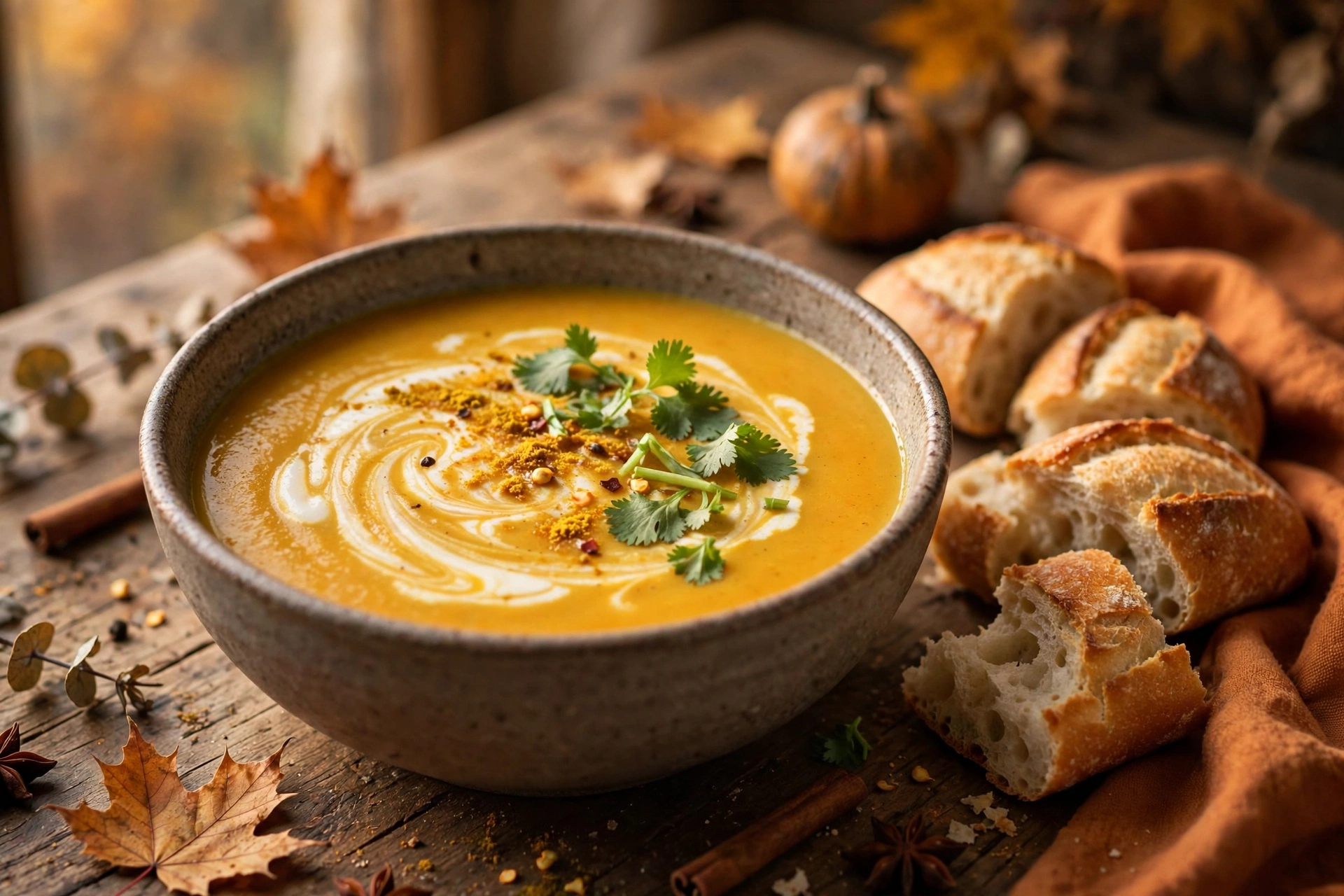
This pumpkin soup recipe is not a variation of butternut squash soup wearing a different name — it is a distinct dish with its own character, built for pumpkin’s unique personality. Where butternut squash is dense, sweet, and silky, pumpkin is lighter, more vegetal, and more watery, with an earthy flavor that comes alive under bold spicing. That is why the world’s great pumpkin soups — from Thai-inspired coconut versions to Caribbean-spiced bowls — lean into curry, ginger, coconut, and heat rather than whispering subtlety. This guide embraces pumpkin on its own terms: how to choose and prepare real pumpkin (and when canned purée is actually the smarter choice), the spice architecture that makes pumpkin sing, coconut milk technique, and the variations that take this soup around the world.
Pumpkin soup deserves its Thanksgiving moment for the same practical reasons as any good starter — make-ahead friendly, naturally vegetarian, gentle before the feast — plus one more: it is the soup that tastes most like the holiday itself. No other flavor says “Thanksgiving” the way pumpkin does, and opening the meal with it sets a thematic tone that butternut, for all its elegance, cannot quite match. If you are serving only one soup this holiday, make it count.
Pumpkin Is Not Butternut Squash (And That’s the Point)
Since our butternut squash soup guide covers the silky, savory-leaning approach in depth, let us be explicit about how pumpkin differs — because treating them interchangeably is the most common pumpkin soup mistake.
Texture: Butternut flesh is dense and fine-grained; it blends into natural silk. Pumpkin flesh is more watery and fibrous, especially in large carving pumpkins. It needs more help — longer cooking, thorough blending, and often a thickening ally like coconut milk, potato, or a touch of roux — to achieve comparable body.
Flavor: Butternut is sweet with nutty, butterscotch notes; it needs restraint to avoid tasting like dessert. Pumpkin is milder, more vegetal, almost savory-leaning on its own — which means it wants bold spicing. The warm spice blends (curry, garam masala, ginger, cumin) that would overwhelm butternut are exactly what pumpkin needs to become interesting.
Approach: Butternut soup succeeds through simplicity and technique. Pumpkin soup succeeds through composition — the thoughtful layering of spices, aromatics, and enrichments around a milder base. Think of butternut as a soloist and pumpkin as an ensemble player: it needs its band.
Choosing Your Pumpkin: Fresh Versus Canned (An Honest Assessment)
The Right Fresh Pumpkins
Not all pumpkins are soup pumpkins. The big Halloween jack-o’-lanterns are bred for size and carving, not flavor — their flesh is watery, stringy, and bland. For soup, choose sugar pumpkins (also sold as pie pumpkins): small (2 to 4 pounds), dense, sweet, and flavorful. Other excellent soup pumpkins include Japanese kabocha (intensely sweet, chestnut-like), French rouge vif d’Etampes (the Cinderella pumpkin), and butternut’s cousin the cheese pumpkin. Farmers’ markets in autumn are the best source; look for heavy-for-size pumpkins with intact stems and unblemished skin.
To prepare: halve, scoop out seeds and stringy pulp (save the seeds for roasting), and either roast cut-side down at 400°F (200°C) for 40 to 50 minutes or peel and cube for pot-cooking. Roasting concentrates flavor and is the better method — the caramelization compensates for pumpkin’s mildness.
The Case for Canned Pumpkin Purée
Here is an honest professional opinion: for pumpkin soup, high-quality canned pumpkin purée is often better than fresh carving-pumpkin flesh — and sometimes better than fresh sugar pumpkin too. Commercial canned pumpkin (which is typically made from Dickinson squash, a flavorful variety) is cooked down to a dense, consistent, deeply flavored purée with much of the water already driven off. It is reliable year-round, saves significant prep time, and produces a soup with better body than watery fresh pumpkin.
The rules: buy 100% pure pumpkin purée, not pumpkin pie filling (which contains sugar, spices, and other additives). Read the label — the ingredients should list only pumpkin. For this recipe, you need two 15-ounce cans (about 3½ cups). If using fresh roasted pumpkin, you will need about 2 small sugar pumpkins to yield the same amount, and you should roast the purée in the oven for 15 minutes after scooping to drive off excess moisture.
The Spice Architecture: Building Pumpkin’s Flavor
Because pumpkin is mild, the spice blend is not a garnish — it is the load-bearing structure of the dish. Understanding the architecture lets you improvise confidently.
Layer 1: Warm Spices
The foundation: ground cumin (earthy), ground coriander (citrusy-floral), turmeric (earthy, golden color), and a pinch of cinnamon (sweet warmth). This quartet gives the soup its characteristic “pumpkin soup” identity — savory-warm rather than pie-spiced. Use about 2 teaspoons total across the blend.
Layer 2: Heat and Brightness
Freshly grated ginger (1 tablespoon) is transformative — its bright heat cuts through the soup’s richness and adds a lively top note that dried spices cannot provide. A pinch of cayenne or a minced chili adds background warmth. These are the elements that keep the soup from tasting flat or monotonous.
Layer 3: The Curry Option
Two tablespoons of a good curry powder (or homemade blend) can replace Layers 1 and 2 entirely — curry powder is a warm-spice architecture in a jar. Bloom it in the hot fat for a full minute before adding liquid; blooming is non-negotiable with curry powder, as it tames raw harshness and unlocks depth. Thai red curry paste (2 tablespoons, fried in coconut oil until fragrant) takes the soup in a Southeast Asian direction that is spectacular.
Blooming: The Non-Negotiable Step
Ground spices contain fat-soluble flavor compounds that water cannot extract. Cooking them in hot fat for 30 to 60 seconds before adding liquid — until intensely fragrant — unlocks dramatically more flavor than stirring them into the finished soup. Skip this step and your soup will taste like spices on pumpkin rather than spices in pumpkin. It is the difference between good and great.
Ingredients: Coconut Curry Pumpkin Soup (Master Recipe)
- 3 tablespoons coconut oil (or unsalted butter)
- 1 large yellow onion, diced
- 3 cloves garlic, minced
- 1 tablespoon freshly grated ginger
- 2 tablespoons red curry paste (or 2 tablespoons curry powder)
- 1 teaspoon ground cumin
- ½ teaspoon ground turmeric
- ¼ teaspoon cayenne pepper (adjust to taste)
- Two 15-ounce cans (3½ cups) 100% pure pumpkin purée — or 3½ cups roasted fresh pumpkin
- 4 cups quality vegetable broth
- 1 can (14 ounces) full-fat coconut milk, plus more for swirling
- 1 tablespoon brown sugar or palm sugar
- 1½ teaspoons kosher salt, plus more to taste
- 2 tablespoons fresh lime juice (about 1 lime)
- 1 tablespoon fish sauce (optional, for depth — omit for vegan)
- For garnish: cilantro, toasted coconut flakes, chili oil, lime wedges, crushed peanuts
Coconut Milk Technique
Full-fat canned coconut milk is essential — light coconut milk is thin and disappointing. Shake the can well (the cream separates in storage), and add it in two stages: half with the broth for body during simmering, half stirred in at the end off the heat for fresh coconut flavor and silky richness. Never boil coconut milk hard — high heat can cause it to separate into oily and watery layers. A gentle simmer is the maximum.
The brown sugar is not about sweetness — a tablespoon in a full pot rounds the curry’s edges and balances the lime’s acidity without making the soup taste sweet. The fish sauce (a Southeast Asian secret weapon) adds profound savory depth without any fishiness; vegetarians can substitute soy sauce or simply add more salt.
Building the Soup: Layer by Layer
The Aromatic Base
Soften the onion in coconut oil over medium heat for 8 minutes until translucent and sweet. Add garlic and ginger; cook 1 minute. Add the curry paste (or powder plus cumin, turmeric, cayenne); fry, stirring constantly, for a full minute until the paste darkens slightly and smells intensely fragrant. This blooming stage is where the soup’s flavor is born — do not rush it, and do not let it scorch.
Adding Pumpkin and Liquid
Stir in the pumpkin purée, coating it thoroughly in the spiced oil — this toasts the purée lightly and marries it with the spices. Pour in the broth and half the coconut milk, scraping up any browned bits from the pot bottom (that fond is flavor). Bring to a gentle simmer and cook 20 minutes, stirring occasionally, so the flavors meld fully. The soup will look slightly broken at this stage; the final blending fixes it.
Blending and Finishing
Blend until completely smooth — 2 to 3 minutes per batch in a standing blender, or 5 minutes with an immersion blender. Return to low heat, stir in the remaining coconut milk, brown sugar, and fish sauce (if using). Then the critical final seasoning: lime juice, added off the heat, plus salt to taste. The lime juice is transformative — it brightens the entire pot the way lemon brightens butternut soup, but with a fragrance that suits the curry profile. Taste and adjust: more lime for brightness, more cayenne for heat, more sugar for balance, more salt until the flavors pop.
Step-by-Step: Coconut Curry Pumpkin Soup
Serves 8 as a first course. Total time: about 45 minutes.
- Soften aromatics. Heat the coconut oil in a large Dutch oven over medium heat. Add the onion with a pinch of salt; cook 8 minutes, stirring, until soft and translucent.
- Bloom the spices. Add garlic and ginger; cook 1 minute. Add the curry paste (or curry powder, cumin, turmeric, cayenne); stir constantly for 1 full minute until deeply fragrant and slightly darkened.
- Add pumpkin. Stir in the pumpkin purée, coating it in the spiced oil; cook 2 minutes, stirring, to lightly toast the purée.
- Simmer. Pour in the broth and half the coconut milk, scraping up any browned bits. Bring to a gentle simmer (never a hard boil) and cook 20 minutes, stirring occasionally.
- Blend. Blend until completely smooth — 2 to 3 minutes per batch in a standing blender (half-full max, vented lid) or 5 minutes with an immersion blender. For extra silkiness, strain through a fine-mesh sieve.
- Finish. Return to low heat. Stir in the remaining coconut milk, brown sugar, and fish sauce (if using). Off the heat, add the lime juice. Taste and adjust salt, heat, and lime until the flavors are vivid and balanced.
- Serve. Ladle into warm bowls. Swirl with coconut milk, and garnish with cilantro, toasted coconut, a drizzle of chili oil, and crushed peanuts. Serve lime wedges alongside.
Variations: Pumpkin Soup Around the World
Classic American Harvest (No Curry)
For traditionalists: skip the curry paste and coconut milk. Build the base with butter, onion, and a diced apple; season with nutmeg, cinnamon, and sage; use chicken or vegetable broth and finish with heavy cream. This is the pumpkin soup that tastes like Thanksgiving in New England — familiar, comforting, pie-spiced but savory. Garnish with fried sage leaves and toasted pepitas.
Thai Red Curry Pumpkin Soup
The master recipe above is essentially this — but push it further: add a stalk of lemongrass (bruised, removed before blending) and 3 kaffir lime leaves to the simmer, finish with Thai basil instead of cilantro, and float a spoonful of coconut cream on top. Restaurant-level Southeast Asian flavor from pantry-accessible ingredients.
Caribbean-Spiced Pumpkin Soup
Swap the curry paste for 1 tablespoon of Caribbean curry powder plus ½ teaspoon of allspice and a whole Scotch bonnet pepper simmered in the pot (removed before blending — do not blend it unless you want serious heat). Finish with coconut milk and lime. The allspice gives it the distinctive Caribbean warmth that is completely different from Indian or Thai profiles.
Moroccan-Spiced Pumpkin Soup
Use 2 teaspoons of ras el hanout (or a blend of cumin, coriander, cinnamon, and ginger) bloomed in olive oil, finish with a swirl of harissa and a dollop of yogurt. Garnish with toasted almonds and cilantro. North African warmth that pairs beautifully with the holiday table’s richness.
Roasted Pumpkin and Apple Soup
Roast cubed sugar pumpkin and tart apples together at 400°F until caramelized, then simmer with onion, ginger, and broth; finish with cream and maple syrup. The apples’ brightness and the roast’s depth make this the most “autumn harvest” of all the variations — excellent for the Thanksgiving table specifically.
Troubleshooting
The Soup Tastes Flat Despite the Spices
Three likely causes: the spices were not bloomed (raw spice harshness without depth), under-salting (salt is what makes spices taste like themselves), or missing acid (the lime juice at the end is transformative, not optional). Fix in order: add salt until flavors pop, add lime juice a teaspoon at a time, and if the spice flavor still seems raw, simmer 10 more minutes — time mellows and marries spices.
The Coconut Milk Separated / Looks Oily
The soup boiled too hard after coconut milk was added. Fix: blend again — re-blending usually re-emulsifies it. Prevention: once coconut milk goes in, keep the heat at a gentle simmer maximum, and add half the coconut milk at the very end off the heat. Also, always use full-fat coconut milk; light versions separate more readily.
It Is Too Thin
Pumpkin purée varies in water content, and fresh pumpkin is wetter than canned. Fix: simmer uncovered to reduce, or blend in a diced boiled potato (a classic soup thickener that disappears into the background). For next time, if using fresh pumpkin, roast the scooped flesh an extra 15 minutes to drive off moisture before it meets the pot.
The Curry Flavor Tastes Harsh or Raw
Under-bloomed spices. The curry paste or powder needs that full minute of frying in hot fat until fragrant and slightly darkened — this cooks out raw harshness. If the finished soup still tastes harsh, a longer simmer (20 extra minutes) plus the coconut milk and sugar will round it out. A dollop of yogurt on each serving also tames aggressive spice.
Too Spicy / Too Mild
Too spicy: stir in more coconut milk, add a spoonful of sugar or honey, and serve with yogurt or extra coconut cream — dairy and fat tame heat. Too mild: add cayenne a pinch at a time, or finish each bowl with chili oil so guests control their own heat. Remember that heat perception varies wildly; when serving a crowd, err on the milder side and put chili oil on the table.
Make-Ahead, Storage, and Reheating
Pumpkin soup is an outstanding make-ahead dish — the flavors genuinely improve overnight as the spices marry. Cook completely through blending, cool, and refrigerate up to 4 days (add the final coconut milk, lime juice, and fresh herbs on reheating for the brightest flavor). It freezes well for up to 3 months; thaw overnight in the refrigerator.
Reheat gently over medium-low heat, stirring — never boil, to protect the coconut milk emulsion. Thin with broth if needed, then finish with the remaining coconut milk, lime juice, and a fresh taste-and-adjust of salt and heat. On Thanksgiving Day, hold the reheated soup in a slow cooker on warm for up to 2 hours; set out garnishes in small bowls for a self-serve soup station that feels festive and effortless.
Leftover pumpkin soup transforms into: a curry sauce for vegetables or chicken (reduce it slightly), a pasta sauce (toss with parmesan and sage), a base for pumpkin chili (add beans and tomatoes), or a savory oatmeal topping (surprisingly good). It also makes excellent freezer portions for quick winter lunches.
Serving: Pumpkin Soup’s Place at the Feast
Serve as the opening course in small bowls — ¾ cup per person — with the garnish spread alongside. The coconut curry version is a conversation starter that signals a creative, confident cook; the classic harvest version is pure Thanksgiving tradition. Either way, follow with roast turkey and the full spread from our Thanksgiving dinner menu. For the elegant, subtle alternative, our butternut squash soup offers the silky, savory-leaning counterpoint — some hosts serve both in small cups for a soup tasting. Complete the sides with our Thanksgiving side dishes collection and explore all Thanksgiving recipes for the full feast.
In Pictures: Pumpkin Soup
Pumpkin soup deserves better than bland — layered spices turn it into the holiday’s best first course. The soup, garnished and steaming.
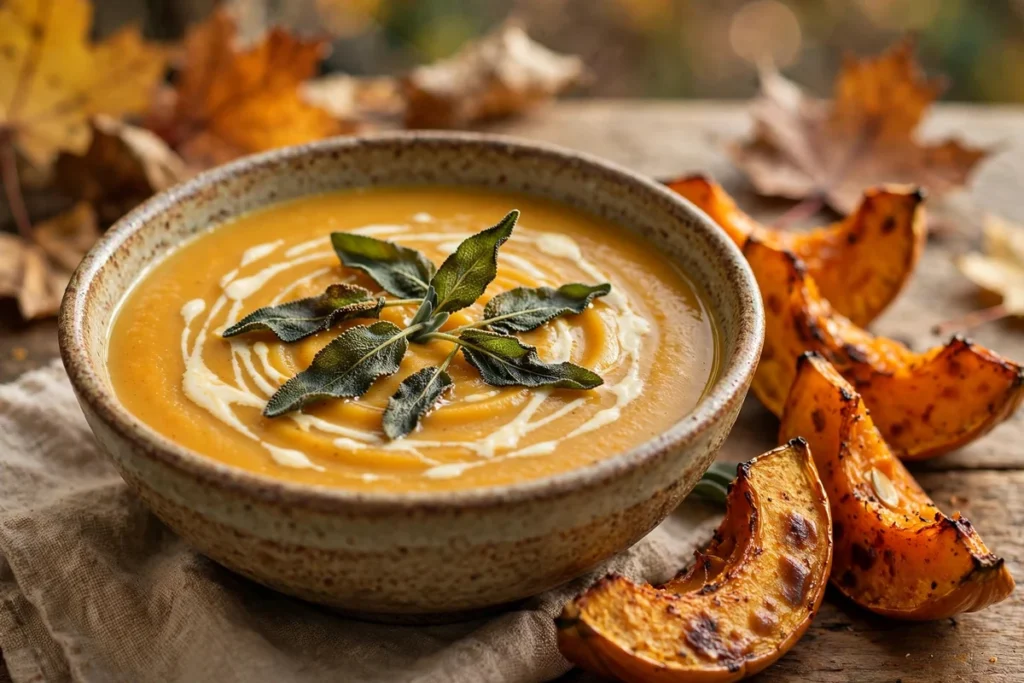
A rustic bowl of creamy pumpkin soup with crispy sage and a swirl of cream, steam rising.
Watch: Pumpkin Soup
Stay Snatched’s creamy pumpkin soup shows the weeknight path: canned pumpkin purée, sautéed aromatics, pumpkin pie spice, and a swirl of heavy cream.
At a Glance: Pumpkin Soup
Pumpkin’s flavor architecture, from the guide.
| Topic | Notes |
|---|---|
| Pumpkin vs. butternut | Pumpkin is earthier and less sweet — it needs bolder seasoning to shine |
| Fresh pumpkins | Choose small sugar pumpkins; roast before puréeing for the best flavor |
| The case for canned | Canned purée is consistent, smooth, and honestly excellent in soup |
| Spice layer 1: warm | Cinnamon, nutmeg, and clove — the familiar fall base |
| Spice layer 2: heat and brightness | A pinch of cayenne and a squeeze of citrus wake the soup up |
| Timing | About 45 minutes total |
Frequently Asked Questions
Can I use canned pumpkin purée instead of fresh?
Yes — and for soup, it is often the better choice. Canned 100% pure pumpkin purée is dense, consistent, and deeply flavored, with much of the water already cooked out. Use two 15-ounce cans (about 3½ cups). Make sure it is pure purée, not pumpkin pie filling, which contains added sugar and spices. Fresh sugar pumpkins work well too, but avoid large carving pumpkins — their flesh is watery and bland.
What is the difference between pumpkin soup and butternut squash soup?
Pumpkin is lighter, more vegetal, and more watery — it needs bold spicing (curry, ginger, coconut) and thickening help to become interesting. Butternut squash is denser, sweeter, and naturally silky — it succeeds through simplicity and roasting technique. They are distinct dishes with different flavor architectures, not interchangeable ones. We cover the butternut approach in our butternut squash soup guide.
How do I keep coconut milk from separating in the soup?
Use full-fat canned coconut milk, add half at the end off the heat, and never let the soup boil after coconut milk is added — a gentle simmer is the maximum. If it does separate, re-blending usually restores the emulsion. Light coconut milk separates more easily and tastes thinner; it is worth using the full-fat kind.
Can I make pumpkin soup vegan?
Easily — the master recipe is nearly vegan already. Use coconut oil instead of butter, vegetable broth, and omit the fish sauce (add a splash of soy sauce or extra salt for depth). Every garnish listed is plant-based except check your chili oil. The result is rich, creamy, and completely dairy-free.
How spicy should pumpkin soup be?
For a mixed Thanksgiving crowd, aim for gentle background warmth rather than real heat — most guests should perceive “warming spices,” not “spicy soup.” Serve chili oil or sliced fresh chiles on the side so heat lovers can customize. You can always add heat at the table; you cannot take it out of the pot.
Can I make it ahead for Thanksgiving?
Absolutely — it improves overnight. Cook through blending up to 4 days ahead and refrigerate; finish with coconut milk, lime juice, and fresh garnishes on reheating. It also freezes for 3 months. On the day, hold it in a slow cooker on warm for up to 2 hours with a garnish bar alongside.
Conclusion
This pumpkin soup recipe treats pumpkin as what it is: a mild, willing canvas that becomes extraordinary through bold, thoughtful composition — bloomed curry spices, fresh ginger, creamy coconut milk, and bright lime. It is a different creature from butternut squash soup, and that is its strength: where butternut whispers, pumpkin sings, given the right band. Make it ahead, set out the garnishes, and open your Thanksgiving with a bowl that tastes like the holiday feels. For the complete feast that follows, explore our Thanksgiving recipes collection — and do not skip the lime.