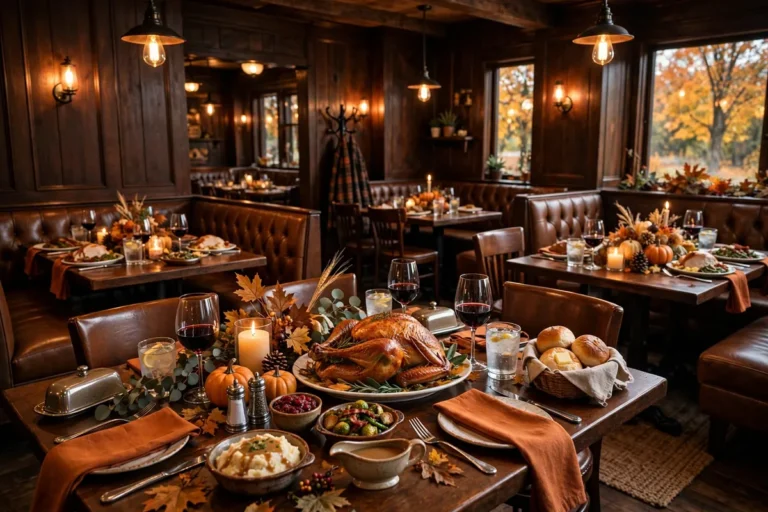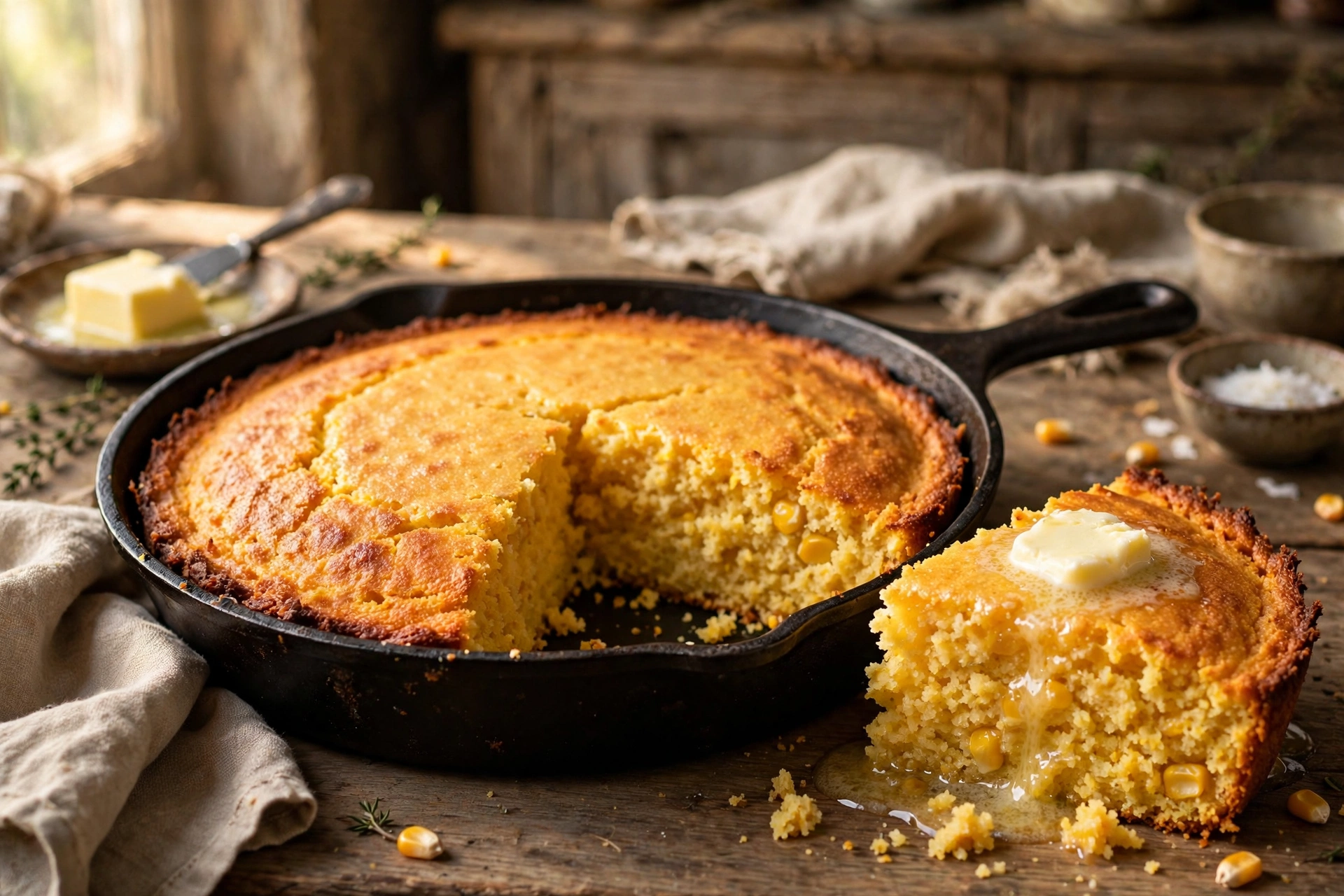
Few foods inspire fiercer loyalty — or friendlier arguments — than cornbread. This Southern cornbread recipe honors the traditional cast-iron method: a screaming-hot, buttered skillet, a batter of stone-ground cornmeal and buttermilk with no wheat flour to dilute it, and a bake that produces a shatteringly crisp, golden crust around a moist, tender crumb. It is savory, not sweet; sturdy, not cakey; and it tastes like corn, the way cornbread should. Whether you grew up with it or are meeting it for the first time this Thanksgiving, this guide will teach you the cast-iron technique, explain exactly why each traditional choice exists, and address the great sugar debate with the respect it deserves.
Cornbread belongs on the Thanksgiving table for reasons both practical and poetic. Practically, it bakes in twenty minutes in a single skillet, requires no yeast and no proofing, and serves as the perfect gravy delivery vehicle. Poetically, it is one of America’s oldest breads — a direct descendant of the corn-based breads Native peoples taught early settlers to make — and serving it connects your modern feast to centuries of harvest tables. It also happens to be the traditional base for Southern cornbread dressing, the stuffing variant that anchors holiday tables across the American South.
What Makes Cornbread “Southern”?
Regional cornbread styles are real, and the differences are not trivial — they reflect distinct histories, grains, and tastes. Understanding them helps you appreciate why this recipe makes the choices it does.
Southern-style cornbread is traditionally made with white or yellow stone-ground cornmeal, buttermilk, eggs, and fat (historically lard or bacon drippings; butter is the modern standard) — and crucially, little or no wheat flour and little or no sugar. It is baked in a preheated cast-iron skillet, which creates the signature crisp crust. The texture is crumbly and hearty, the flavor deeply corny and savory. This style descends from the cornbreads of the rural South, where wheat flour was expensive and corn was abundant.
Northern-style cornbread typically includes wheat flour and sugar (sometimes a generous amount), producing a sweeter, cakier, more bread-like result. It is often baked in a square pan rather than a skillet. Neither style is “wrong” — they are different breads with different lineages — but when a recipe calls itself Southern, it is making a promise about what is (and is not) in the batter. This recipe keeps that promise while explaining the reasoning, so you can make informed choices rather than following rules blindly.
The Great Sugar Debate (Handled With Respect)
Let us address the skillet in the room: sugar in cornbread. This is one of American cooking’s most passionate debates, and it deserves more nuance than it usually gets.
The traditional Southern position holds that sugar does not belong in cornbread — that sweetened cornbread is cake masquerading as bread, and that the corn’s natural sweetness, amplified by caramelization in a hot skillet, is sufficient. There is real culinary logic here: sugar changes the crumb structure (tenderizing it toward cakiness), masks the cornmeal’s earthy flavor, and pushes the bread away from its savory role alongside greens, beans, and gravy. Generations of Southern cooks have strong feelings because the unsweetened version is tied to identity, memory, and heritage — dismissing those feelings would be both rude and historically ignorant.
The counter-position is equally legitimate: many families across the South and beyond have always added a spoonful of sugar or honey, and their cornbread is no less authentic to their tables. A small amount of sugar (a tablespoon or two) does not turn cornbread into cake; it rounds out the cornmeal’s flavor, aids browning, and pleases palates accustomed to a touch of sweetness — including many children’s. Food traditions evolve, and the version your grandmother made is the “right” version for your family, whatever the internet says.
Here is our respectful resolution: this recipe is written in the traditional savory style, with an optional single tablespoon of sugar noted as a variation — because a tablespoon will not meaningfully sweeten the bread but will improve browning and round the flavor, and because your table, your rules. What we do not recommend is the quarter-cup-or-more approach, which genuinely produces a different bread — delicious, but Northern-style cake-cornbread rather than Southern skillet cornbread. Know what you are making, make it deliberately, and serve it proudly.
Ingredients: The Traditional Formula
- 2 cups (about 280g) stone-ground yellow or white cornmeal, medium grind
- 1 teaspoon baking soda
- 1 teaspoon baking powder
- 1 teaspoon fine sea salt
- 1 tablespoon granulated sugar (optional, traditionalists omit — see the debate above)
- 2 large eggs, at room temperature
- 1½ cups full-fat buttermilk, well-shaken
- ¼ cup unsalted butter, melted, plus 2 tablespoons for the skillet (or bacon drippings for the full traditional effect)
Cornmeal: Grind and Type Matter Enormously
Cornmeal is the soul of cornbread, and not all cornmeal is equal. Stone-ground cornmeal — ground slowly between stones — retains more of the corn’s natural oils and flavor, producing cornbread with genuine corn character and a pleasingly rustic texture. Steel-ground (degerminated) cornmeal, the shelf-stable supermarket standard, has the germ removed for longer storage; it is milder and more uniform but less flavorful.
Grind size shapes texture: fine grind makes a more delicate, cake-like crumb; medium grind (the traditional choice) gives the characteristic hearty, slightly nubby texture; coarse grind or polenta-style meal makes a crunchier, more rustic bread that some love and others find gritty. For this recipe, medium-grind stone-ground cornmeal is ideal. White cornmeal is the old-South traditional choice and makes a slightly more delicate bread; yellow cornmeal has a touch more robust flavor and makes a prettier golden loaf. Both are authentic — choose by taste and availability.
Avoid self-rising cornmeal mixes unless you adjust the leavening — they contain their own baking powder and salt, and using them with this recipe’s leavening will over-inflate and then collapse the bread. If self-rising mix is all you have, omit the baking powder, baking soda, and salt, and expect a slightly different (but still good) result.
Buttermilk and Eggs
Full-fat cultured buttermilk is traditional for the same reasons it matters in biscuits: its acidity activates the baking soda for lift, tenderizes the crumb, and adds a subtle tang that balances the corn’s sweetness. The eggs bind the crumb (cornmeal has no gluten, so eggs do the structural work), add richness, and help the bread brown. Room-temperature eggs incorporate more smoothly into the batter.
Fat: Butter, Drippings, or Lard
Butter in the batter adds flavor and tenderness. But the fat in the skillet is where tradition speaks loudest: bacon drippings, heated until shimmering in the cast iron, create an unmatched savory crust with faint smokiness. If you have drippings, use them — this is the old way and it is spectacular. If not, butter or even a neutral oil works; the screaming-hot skillet matters more than which fat you choose. For a vegetarian table, butter or oil keeps the recipe meat-free.
The Cast-Iron Method: Why the Skillet Is Everything
You can bake cornbread in any oven-safe pan, but cast iron is not a affectation — it is a functional choice with real consequences for the finished bread.
Thermal Mass and the Crust
Cast iron holds an enormous amount of heat and releases it steadily. When cold batter hits a preheated 425°F skillet, three things happen at once: the bottom and sides of the bread begin cooking immediately, creating the crisp, browned crust that is the hallmark of skillet cornbread; the intense bottom heat drives a strong oven spring, lifting the crumb; and the cornmeal at the contact surface fries lightly in the hot fat, developing toasty, almost nutty flavors you cannot get from a room-temperature pan.
This is why the recipe insists on preheating the skillet in the oven with the fat in it. A room-temperature skillet produces soft-sided cornbread — fine, but a different and lesser thing. The sizzle when batter meets hot fat is the sound of the crust being born. Do not skip it, and handle that screaming-hot skillet with serious respect and good oven mitts.
Seasoning and Sticking
A well-seasoned cast-iron skillet releases cornbread cleanly — the bread should practically jump out. If your skillet is new or poorly seasoned, be generous with the fat and make sure it is fully preheated; hot fat is the best non-stick insurance. Never soak cast iron or put it in the dishwasher; after baking, wipe it out, and if needed, scrub with coarse salt, rinse briefly, dry thoroughly over heat, and rub with a thin film of oil.
Skillet Size
A 10-inch skillet is the classic choice for this quantity of batter, producing a loaf about 1½ inches thick — thick enough for a tender interior, thin enough for maximum crust-to-crumb ratio. A 12-inch skillet makes a thinner, crisper loaf (reduce baking time by a few minutes); an 8-inch skillet makes a tall, cakey loaf (add a few minutes). The 10-inch hits the sweet spot.
Step-by-Step: Southern Skillet Cornbread
Makes one 10-inch skillet loaf (8 wedges). Total time: about 35 minutes.
- Heat the skillet. Place a 10-inch cast-iron skillet with 2 tablespoons of butter (or bacon drippings) in the oven, then preheat to 425°F (220°C). Let the skillet heat for at least 10 minutes once the oven reaches temperature — it should be screaming hot.
- Mix dry ingredients. In a large bowl, whisk together the cornmeal, baking soda, baking powder, salt, and sugar (if using) until thoroughly combined and evenly distributed.
- Mix wet ingredients. In a second bowl, whisk the eggs, buttermilk, and melted butter until smooth.
- Combine gently. Pour the wet ingredients into the dry and stir with a wooden spoon just until combined — 15 to 20 strokes. The batter will be lumpy and relatively thin; that is correct. Over-mixing develops what little structure the eggs provide into toughness.
- The sizzle. Wearing oven mitts, carefully remove the hot skillet from the oven. It should be shimmering. Pour the batter in — it should sizzle aggressively around the edges. This sizzle is the crust forming. Do not stir.
- Bake. Return to the oven immediately and bake 20 to 25 minutes, until the top is deep golden brown, the edges pull slightly away from the skillet, and a toothpick inserted in the center comes out clean or with a few moist crumbs.
- Rest and serve. Cool in the skillet for 5 to 10 minutes — the crust stays crispest if the bread does not steam under a cover. Run a knife around the edge, invert onto a cutting board or serve wedges straight from the skillet. Serve warm with butter.
Troubleshooting: Common Cornbread Problems
My Cornbread Is Dry and Crumbly
The most common complaint, with three usual causes. First, over-baking — even three extra minutes dries out a lean batter like this one, so start checking at 18 minutes and pull the bread when the toothpick shows moist crumbs, not when it is bone dry. Second, too much cornmeal relative to liquid — measure carefully, and if your cornmeal is very coarse, it may need an extra splash of buttermilk. Third, no rest for the batter: letting the mixed batter sit for 10 minutes before baking hydrates the cornmeal and noticeably improves moisture. (Mix the batter first, then preheat the skillet — the timing works out.)
It Stuck to the Skillet
Almost always an under-preheated skillet or under-seasoned iron. The skillet must be genuinely screaming hot with shimmering fat before the batter goes in — if you can hold your hand near it comfortably, it is not ready. Next time, extend the preheat and be generous with the fat. For a currently stuck loaf, let it cool for 10 minutes (it often releases as it contracts), then run a thin metal spatula firmly around and under it.
The Center Sank / It Is Gummy Inside
Under-baking or too much leavening. A sunken center with a gummy line usually means the bread was pulled before the interior set — the toothpick test does not lie, so trust it over the timer. Over-leavening (too much soda/powder, or self-rising mix plus added leavening) inflates the bread beyond what the egg structure can support, and it collapses as it cools. Measure leavening precisely.
The Crust Is Not Crisp
The skillet was not hot enough when the batter went in, or the bread steamed after baking. Preheat the full 10+ minutes, listen for the sizzle, and cool the bread uncovered — covering traps steam and softens the crust within minutes. Serving straight from the skillet keeps the bottom crust crisp longest.
It Tastes Bitter
Old cornmeal. The natural oils in stone-ground cornmeal go rancid over time, producing bitterness and off flavors. Taste your cornmeal raw — it should taste sweet and corny, not bitter or soapy. Store stone-ground cornmeal in the freezer to protect it, and buy in quantities you will use within a few months.
Variations: Honoring Tradition While Exploring
Cracklin’ Cornbread
The old-South celebration version: fold 1 cup of pork cracklings (crispy rendered pork skin, chopped) into the batter. Rich, savory, and unforgettable — the traditional accompaniment to greens and the centerpiece of many a Southern holiday table.
Jalapeño-Cheddar Cornbread
Fold in 1 cup of shredded sharp cheddar and 2 diced jalapeños (seeded for mild, unseeded for heat). The cheese creates molten pockets and the peppers add bright heat. This is a crowd-pleaser at Friendsgiving and pairs brilliantly with chili as well as turkey.
Hot-Honey Drizzle
Bake the traditional savory loaf, then drizzle warm slices with hot honey (honey infused with chili). The sweet-heat finish on the crisp, savory crust is a modern Southern-restaurant move that converts skeptics — it bridges the sugar debate deliciously.
Cornbread Muffins
Divide the batter among a buttered 12-cup muffin tin (preheat the tin like the skillet) and bake 15 to 18 minutes. Muffins maximize crust per bite and are perfect for a buffet where guests serve themselves. They also freeze beautifully.
Southern Cornbread Dressing (Thanksgiving Stuffing)
This is cornbread’s highest holiday calling. Bake the cornbread a day or two ahead, crumble it coarsely, and let it go slightly stale. Then combine with sautéed onion, celery, and sage, moistened with turkey or chicken broth and bound with beaten eggs, and bake until golden. Many Southern families consider this — not bread stuffing — the only proper Thanksgiving dressing. Our Thanksgiving dinner menu guide covers the full spread it belongs to.
Make-Ahead, Storage, and Reheating
Cornbread is best the day it is baked, but it keeps well. Store cooled cornbread tightly wrapped at room temperature for up to 2 days — the crust softens, but the flavor deepens. For longer storage, wrap wedges individually and freeze for up to 3 months; thaw at room temperature and refresh in a 350°F (175°C) oven for 10 minutes to re-crisp the crust.
To reheat, the oven or toaster oven beats the microwave (which makes it gummy). Split wedges and toast them cut-side down in a buttered skillet for the ultimate leftover treatment — the re-crisped crust with melting butter is arguably better than day one. Leftover cornbread also makes superb croutons, breakfast strata, and — crumbled into a glass with milk and a spoonful of sugar or honey — the old-fashioned Southern snack of cornbread and milk.
For Thanksgiving planning, bake the cornbread the morning of the feast — it takes 35 minutes start to finish and the skillet goes straight to the table. If you are making cornbread dressing, bake the loaf up to 3 days ahead so it stales properly for crumbling.
Serving: Cornbread’s Place at the Feast
Serve wedges warm from the skillet with plenty of butter — and, if your family leans that way, honey or sorghum syrup for drizzling (sorghum is the traditional Southern syrup and its earthy depth is magnificent on cornbread). Cornbread’s savory crunch is the perfect foil for roast turkey with gravy, and it belongs in any serious bread basket alongside buttermilk biscuits and fluffy dinner rolls — each brings a different texture to the table. Round out the Southern-leaning sides with creamy mashed potatoes and green bean casserole, and plan the whole menu with our Thanksgiving side dishes collection.
In Pictures: Southern Cornbread
Real Southern cornbread is savory, crisp-edged, and born in a screaming-hot cast-iron skillet. The skillet, full of golden wedges.
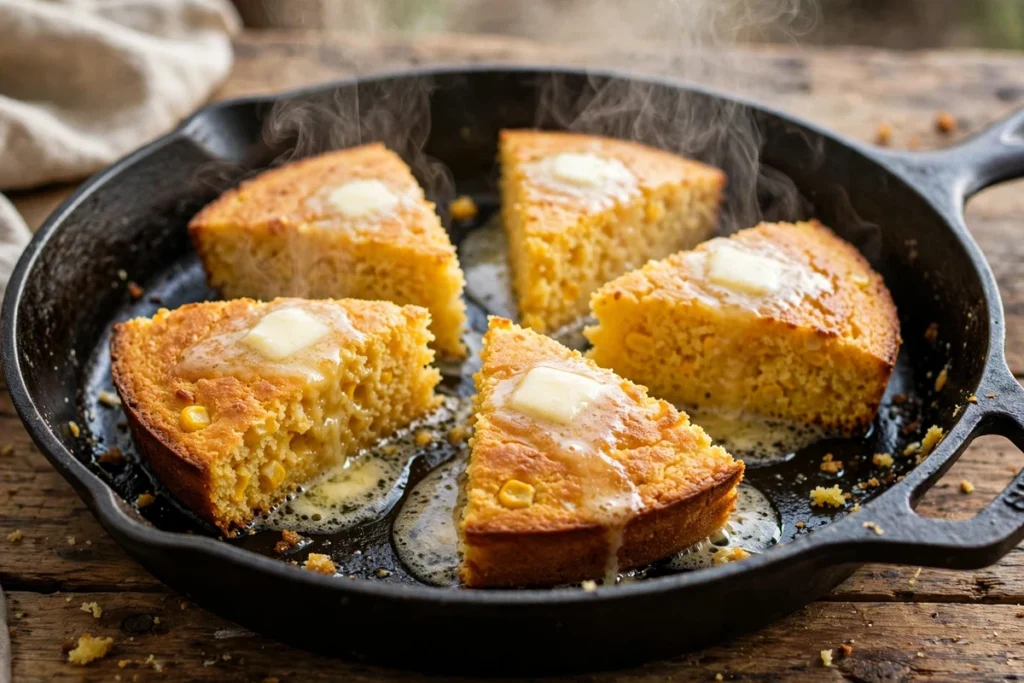
Golden wedges of Southern cornbread in a cast-iron skillet, with a crisp, browned crust.
Watch: Cornbread Recipe
Preppy Kitchen demonstrates cornbread. This is one recipe variation; adjust your choice to the savory or sweeter style you prefer.
Video by Preppy Kitchen. Watch on YouTube.
At a Glance: Southern Cornbread
What makes cornbread Southern, from the guide.
| Topic | Notes |
|---|---|
| The sugar debate | Traditional Southern cornbread is savory — sugar is optional and hotly debated |
| Cornmeal matters | Grind and type matter enormously; a medium grind gives the classic texture |
| Buttermilk and eggs | Buttermilk tenderizes and tangs; eggs bind the crumb |
| The fat | Butter, bacon drippings, or lard — each brings its own flavor to the crust |
| The cast-iron method | Preheat the skillet so the batter sizzles on contact — that is the crisp crust |
| Timing | About 35 minutes total; 25–30 minutes in a 425°F oven |
Frequently Asked Questions
Should Southern cornbread have sugar in it?
Traditional Southern cornbread is savory, with little or no sugar — the corn’s natural sweetness and the caramelized crust provide all the sweetness needed. That said, a tablespoon of sugar for browning will not meaningfully sweeten the bread, and many Southern families have always added a touch. What changes the bread’s character is larger amounts (¼ cup or more), which produce a sweeter, cakier Northern-style loaf. Know which bread you want to make and choose accordingly — there is no shame in either, only in not knowing the difference.
Can I make cornbread without a cast-iron skillet?
Yes, but the crust will not be the same. A preheated oven-safe skillet or heavy baking pan is the next best thing — preheat it with the fat just as you would cast iron. A room-temperature glass or ceramic baking dish produces soft-sided cornbread with no crisp crust; still tasty, but a different experience. If you love cornbread, a 10-inch cast-iron skillet is one of the best-value purchases in all of cookware.
Why did my cornbread turn out dry?
Usually over-baking or an un-hydrated batter. Start checking at 18 minutes and pull the bread when a toothpick shows moist crumbs. Letting the batter rest 10 minutes before baking hydrates the cornmeal and improves moisture noticeably. Also check your cornmeal’s freshness — stale, rancid cornmeal bakes up dry and bitter.
What is the difference between cornmeal and cornbread mix?
Plain cornmeal is just ground corn. Cornbread mix (like the familiar blue-and-white box) is cornmeal plus flour, leavening, salt, and sometimes sugar and powdered fat — a complete batter base. Mixes are convenient and consistent, but they produce a sweeter, cakier bread closer to Northern style. This from-scratch recipe gives you control over every variable and a more authentic Southern result.
Can I make cornbread ahead for Thanksgiving?
Bake it the morning of for the best crust, or up to 2 days ahead (wrapped at room temperature) and refreshed in a hot oven. For cornbread dressing, bake 2 to 3 days ahead deliberately — slightly stale cornbread crumbles better and absorbs broth without turning to mush.
Is cornbread gluten-free?
Cornmeal itself contains no gluten, and this recipe has no wheat flour — but it is only gluten-free if your cornmeal is certified gluten-free (cross-contamination in milling facilities is common) and your baking powder is gluten-free. With certified ingredients, this is a naturally gluten-free holiday bread, which is a genuine gift for gluten-sensitive guests.
Conclusion
This Southern cornbread recipe is a testament to the power of simplicity done right: stone-ground cornmeal, buttermilk, eggs, a screaming-hot cast-iron skillet, and the confidence to let corn taste like corn. Whether you stand with the traditionalists on sugar or add your family’s customary spoonful, the technique here — the sizzle, the crisp crust, the tender crumb — will serve you well. Bake it in the skillet, serve it warm, and watch it disappear. For the rest of your holiday planning, from bread baskets to desserts, explore our Thanksgiving recipes collection — and may your crust always crackle.