Teaching Kids About Memorial Day matters because the holiday’s meaning is easy to miss when you are eight years old and the long weekend means no school, a barbecue, and maybe the beach. This guide gives parents, grandparents, and teachers age-by-age scripts, book and movie recommendations, hands-on activities, and family traditions that explain — honestly and gently — that Memorial Day honors American service members who died in the country’s wars. The goal is not to frighten children but to plant understanding: the free weekend exists because of real sacrifice. For family outing ideas around the holiday, see our Best Family Events in the USA.
Why Kids Need the Real Story
Children absorb what the adults around them emphasize. If Memorial Day is presented purely as the start of summer, that is what it becomes to them — and a generation later, the remembrance at its core quietly fades. Veterans’ organizations consistently report that the single most effective preservation of the holiday’s meaning is parents explaining it simply and early.
The good news: kids are natural at remembrance. They understand fairness, they feel the weight of “someone died so we could be free” more directly than adults do, and they love ritual — flags, parades, moments of silence, poppies. You do not need a lecture. You need a few honest sentences and one shared activity.
Age-by-Age Scripts: What to Say
Ages 3–5: Keep it simple and concrete
At this age, abstract concepts like war and sacrifice do not land — and should not be pushed. Stick to one idea:
“Memorial Day is when we remember the brave soldiers who died keeping our country safe. We put flags on their graves to say thank you.”
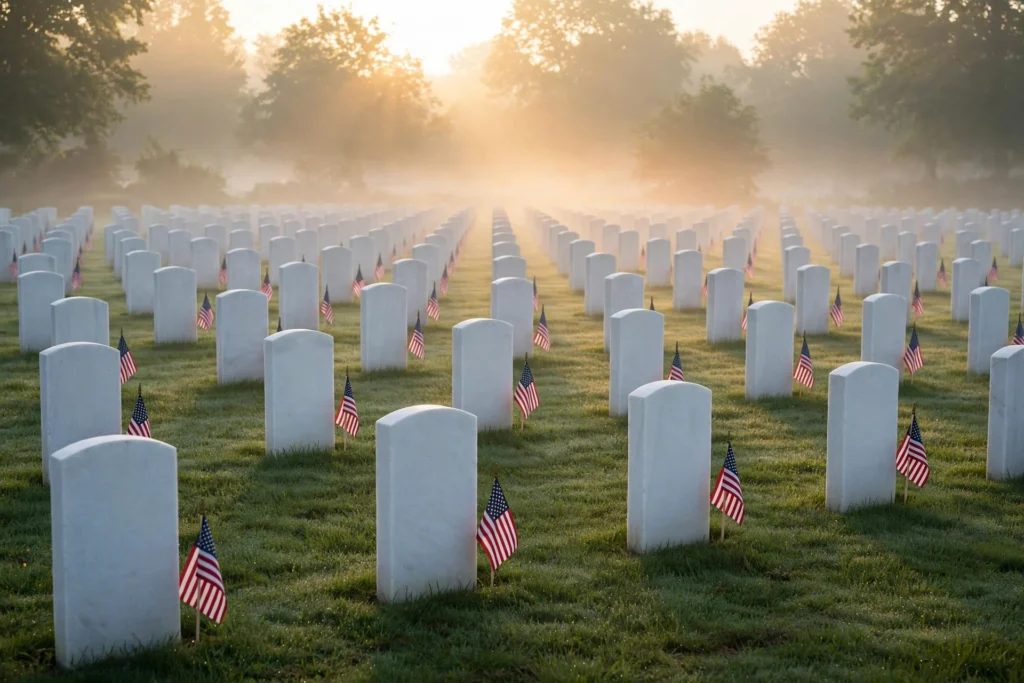
Let them carry a small flag, place it in the ground, and say “thank you.” That physical act is the whole lesson. Avoid details about combat or death; “died” is enough, stated matter-of-factly like any other fact.
Ages 6–9: Add the story
Early elementary kids can handle a simple narrative and will ask follow-up questions. A script that works:
“A long time ago, America had a big war called the Civil War, and so many soldiers died that people started decorating their graves with flowers every spring — that was called Decoration Day. Now we call it Memorial Day, and we remember all the American soldiers who died in all our wars. That’s why we have parades, why the flag flies low in the morning, and why we are quiet at 3 o’clock.”
Expect questions: “Did kids die?” (Answer honestly but briefly: “Most soldiers were grown-ups.” Move on.) “Will you die?” (Reassure: “I’m safe, and our family is safe.”) Answer the question asked, then stop — oversharing creates anxiety, not understanding.
Ages 10–13: Add the weight
Tweens can grasp that freedom has costs and that the holiday is contested — some people think it has become too commercial. Good conversation starters:
- “Why do you think we get a day off school for this?”
- “What’s the difference between Memorial Day and Veterans Day?” (Memorial Day: those who died. Veterans Day: everyone who served.)
- “If you were explaining this holiday to a friend from another country, what would you say?”
This is also the age to introduce one real story — a fallen service member from your town, perhaps found on a local memorial. A name and a hometown make the abstract concrete.
Ages 14+: Treat them as emerging citizens
Teenagers can handle the full picture: the Civil War origins, the political fight over the holiday’s date, the debate about commercialization, Gold Star families’ perspectives on “Happy Memorial Day.” Encourage them to attend a ceremony independently, volunteer at a cemetery flag-placing, or interview a veteran family member. The goal shifts from teaching to inviting participation.
Books That Explain Memorial Day to Kids
| Book | Ages | What It Covers |
|---|---|---|
| The Wall by Eve Bunting | 5–8 | A boy visits the Vietnam Veterans Memorial with his father; gentle, moving introduction to remembrance |
| Memorial Day Surprise by Theresa Golding | 4–8 | A child learns the holiday’s meaning through a school project |
| The Poppy Lady by Barbara E. Walsh | 6–10 | The true story of Moina Michael, who started the remembrance poppy tradition |
| H is for Honor by Devin Scillian | 6–10 | Military family life and the meaning of service, alphabet-book format |
| Rolling Thunder by Kate Messner | 8–12 | A child experiences the Rolling Thunder motorcycle tribute in Washington, D.C. |
| In Flanders Fields (illustrated editions) | 8+ | John McCrae’s famous poem with illustrations; explains the poppy symbol |
Read one together in the week before Memorial Day weekend. The Poppy Lady pairs especially well with wearing a real poppy on the holiday.
Hands-On Activities by Age
Make Remembrance Poppies (all ages)
Craft red crepe-paper or tissue poppies with black centers and green stems. Toddlers can help with gluing; older kids can make them assembly-line style to hand out at a parade or cookout. Attach a small card explaining the poppy’s meaning — it turns a craft into a teaching tool for every recipient.
Cemetery Flag-Placing (ages 4+)
The single most powerful activity on this list. Join an organized flag-placing at a veterans’ cemetery on the Saturday of Memorial Day weekend, or go independently with a bundle of small flags. Give each child a section of graves. Read a few names aloud. Let the quiet of the place do the teaching. Our Free Family Events guide can help you find organized community events near you.
Interview a Veteran or Military Family Member (ages 8+)
Help kids prepare 4–5 questions: “What does Memorial Day mean to you?” “Is there someone you remember on this day?” Record the answers (with permission) — families treasure these recordings for decades. If no veteran is in the family, many American Legion posts welcome respectful student interviewers in May.
Memorial Day Journal (ages 9+)
After attending a parade or ceremony, have kids write or draw: what they saw, one thing they learned, one name they remember. Revisiting the journal each year builds a personal remembrance tradition.
Service Project (ages 10+)
Channel understanding into action: organize a neighborhood poppy drive, write thank-you letters to Gold Star families through a recognized organization, clean up a local veterans’ memorial, or fundraise for a veterans’ cemetery wreath program. Action cements meaning.
Family Traditions That Teach the Meaning
One-off explanations fade; traditions stick. Adopt one or two of these and repeat them every year:
- The 3:00 p.m. pause as family ritual. Gather everyone — including guests — for the National Moment of Remembrance. Let the oldest child explain what the minute is for; the teaching then comes from a sibling, which lands differently.
- The remembrance toast. Before the cookout begins, raise glasses “to those who gave everything.” Thirty seconds, every year, unforgettable.
- One story a year. Each Memorial Day, learn about one fallen service member — from your state, your town, or your family’s history — and share their story at the table.
- The flag lesson. Teach kids to raise and lower the flag, and why it flies at half-staff until noon on Memorial Day. Physical ritual beats verbal explanation.
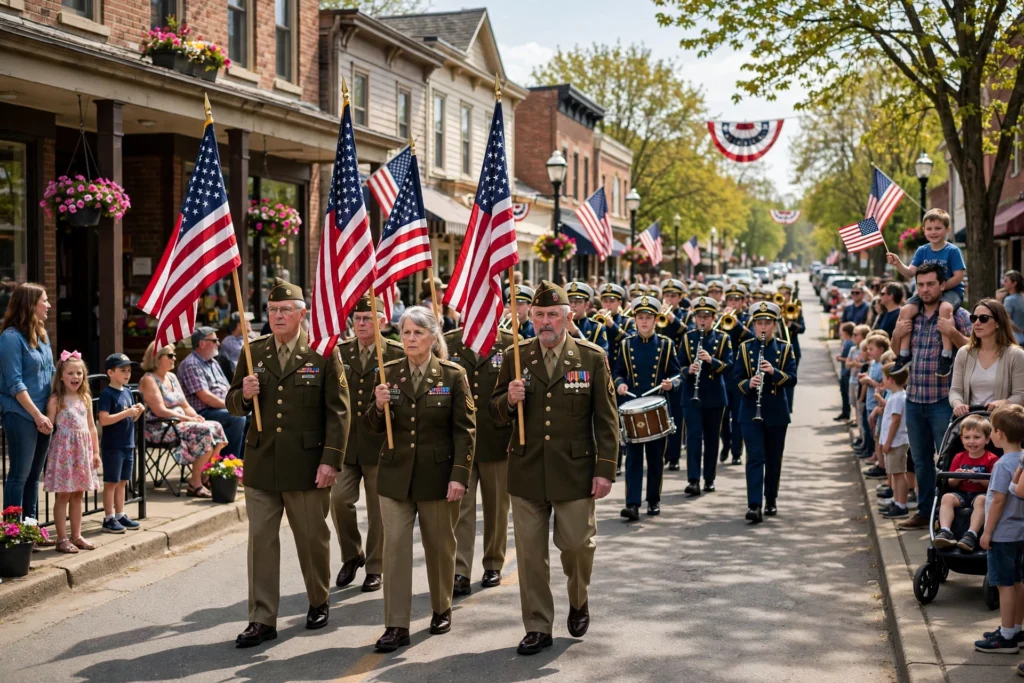
- Parade plus ceremony. Make the pair non-negotiable: the fun parade Saturday, the solemn ceremony Monday morning. Kids learn that both belong to the weekend.
- Thank-you letters. Write as a family to a Gold Star family organization or a deployed unit’s family support group. Gratitude practiced is gratitude learned.
What NOT to Do: Common Mistakes
| Mistake | Why It Backfires | Do This Instead |
|---|---|---|
| Graphic war details for young kids | Creates fear and nightmares, not understanding | Keep it to “brave soldiers who died”; add detail only as they age |
| “Happy Memorial Day!” as the lesson | Teaches kids it is a party holiday | Model “meaningful Memorial Day” language and explain why |
| Skipping the solemn parts | Kids conclude only the fun parts matter | Attend one ceremony or cemetery visit every year, briefly |
| Forcing emotions | Kids perform solemnity without feeling it | Let them be kids at the parade; the quiet moments teach themselves |
| One big lecture | Eyes glaze; nothing sticks | Short honest answers to their questions, plus one shared activity |
Answering Tough Questions Honestly
Kids ask direct questions. Direct, brief, honest answers work best:
- “What is war?” — “When countries can’t solve a big disagreement by talking, sometimes they fight with armies. It’s terrible, and that’s why remembering the people who died matters.”
- “Did children die in wars?” — “Most soldiers were adults. That’s one reason grown-ups work so hard to prevent wars.”
- “Why do we have a barbecue if it’s sad?” — “Because the soldiers died protecting our freedom to be together and happy. Enjoying the day is one way to honor them — as long as we remember, too.”
- “What’s the difference between Memorial Day and Veterans Day?” — “Memorial Day is for soldiers who died. Veterans Day is for everyone who served, including the ones still alive who we can thank.”
- “Do other countries have Memorial Day?” — “Many do — like Remembrance Day in November in Britain and Canada. Every country remembers its fallen in its own way.”
For Teachers: Classroom Ideas
Memorial Day falls near the end of the school year, making it a natural closing lesson:
- Read The Wall or The Poppy Lady aloud and discuss.
- Have students research one name from a local war memorial and present a two-minute tribute.
- Make a classroom poppy garden display for the hallway.
- Invite a veteran or Gold Star family member (through proper channels) to speak briefly.
- Observe a moment of silence on the Friday before the weekend and explain the 3:00 p.m. Monday tradition so families can join.
Museums with military history programming are excellent field trips — see our Best Children’s Museum Events for family-friendly options, and Family Festival Survival Guide for navigating outdoor events with kids.
Frequently Asked Questions
How do I explain Memorial Day to a 5-year-old?
Keep it to one sentence: “Memorial Day is when we remember the brave soldiers who died keeping our country safe.” Let them place a flag on a grave — the act teaches more than words at that age.
What is the difference between Memorial Day and Veterans Day for kids?
A simple version: “Memorial Day is for soldiers who died. Veterans Day is for all the soldiers, including the living ones we can thank.” Kids grasp this distinction quickly.
Should kids attend Memorial Day ceremonies?
Yes — ceremonies are family-friendly and short. Brief kids beforehand on what to expect (quiet parts, loud rifle salute) so nothing startles them.
Is it okay for kids to have fun on Memorial Day weekend?
Absolutely. Frame it positively: “We get to have fun together because soldiers protected our freedom.” Pair the fun with one remembrance activity.
What books explain Memorial Day to children?
The Wall by Eve Bunting (ages 5–8), The Poppy Lady by Barbara Walsh (ages 6–10), and Rolling Thunder by Kate Messner (ages 8–12) are excellent starting points.
How can my family volunteer on Memorial Day weekend?
Join a cemetery flag-placing (contact your local American Legion post or cemetery office in May), clean up a veterans’ memorial, or organize a neighborhood poppy drive.
What should I do if my child is scared by ceremony sounds?
The rifle salute startles many kids — warn them in advance (“there will be three loud bangs to honor the soldiers”), let them cover their ears, and sit near an easy exit. Most kids recover in seconds.
When is Memorial Day 2027?
Monday, May 31, 2027. The three-day weekend runs May 29–31, 2027 — plan your family activities around those dates.
Movies and Videos for Family Viewing
For older kids and teens, film can open conversations that lectures cannot. Choose based on maturity:
| Title | Ages | Why It Works |
|---|---|---|
| Taking Chance (2009) | 12+ | A Marine escorts a fallen comrade home; quiet, dignified, deeply moving — arguably the best Memorial Day film for families |
| The National Memorial Day Concert (annual broadcast) | All ages | Free on TV/streaming each Memorial Day weekend; music plus Gold Star family stories |
| Arlington National Cemetery virtual tour | 8+ | Online walkthroughs of the cemetery and Tomb of the Unknown Soldier prepare kids for a real visit |
| War Horse (2011) | 10+ | WWI through a horse’s eyes; war’s cost without graphic focus — a gentle entry for sensitive kids |
| Documentaries on D-Day / WWII memorials | 12+ | History-channel style docs give teens the factual backbone for remembrance |
Watch together, then talk: “What did you feel during the quiet parts?” Film gives kids emotional vocabulary for a holiday that is, at its core, about feeling something real.
Discussion Guide: The Car Ride Home
The best teaching moments come after events, when experiences are fresh. Keep these in your pocket for the drive home from a parade or ceremony:
- “What was the most interesting thing you saw today?”
- “Why do you think everyone got quiet during that part?”
- “If you could say one thing to a soldier who died for our country, what would it be?”
- “What’s one thing you’ll remember about today?”
- “How is Memorial Day different from the Fourth of July?” (One mourns the fallen; one celebrates independence — a distinction worth nailing early.)
Do not grade the answers. The goal is reflection, not correctness. A child who says “the loud bangs were scary but the music was pretty” has understood the day just fine.
When Kids Push Back
Some kids — especially tweens and teens — will test the solemnity: eye-rolls at the ceremony, complaints about the early parade, “this is boring.” This is normal, not failure:
- Do not force reverence. Required solemnity breeds resentment. Require respectful behavior (quiet, hats off, phones away); let the feelings arrive on their own schedule.
- Give them a job. Photographer, flag-carrier, poppy-distributor — responsibility converts boredom into investment.
- Connect to their world. “The soldiers we remember today were 18, 19, 20 — not much older than you” lands with teens in a way abstract history does not.
- Accept partial wins. A teen who attends the ceremony under protest and remembers one name has still learned the lesson. Understanding compounds over years.
Memorial Day Around the World: A Global Lesson
Older kids benefit from knowing remembrance is universal. A few comparisons that fascinate ages 10+:
- Anzac Day (Australia/New Zealand, April 25): dawn services honor the fallen — the closest thing to Memorial Day’s solemnity, and kids love the “dawn service” concept.
- Remembrance Day (UK/Canada, November 11): the same red poppy, the same minute of silence — showing kids that the poppy crosses borders makes it more meaningful.
- Yom Hazikaron (Israel): sirens sound nationwide and the entire country stops — even cars on highways. Kids find this image unforgettable.
The lesson: every country remembers its fallen. America’s way — parades, poppies, the 3:00 p.m. pause — is our version of a human universal.
Quick-Reference: The Whole Guide on One Page
| Question | Short Answer |
|---|---|
| What is Memorial Day? | The day America remembers service members who died in its wars. |
| When is it? | Last Monday of May — May 31, 2027. |
| What do we do? | Parade or ceremony, flag at half-staff till noon, quiet minute at 3:00 p.m. |
| What do I tell young kids? | “We remember the brave soldiers who died keeping us safe.” |
| What book should we read? | The Poppy Lady (ages 6–10) or The Wall (ages 5–8). |
| What activity matters most? | Placing flags on veterans’ graves — simple, physical, unforgettable. |
| Can we still have fun? | Yes — the fun honors the freedom they protected. Remember, too. |
Teaching the Other Holidays Too
Once kids grasp Memorial Day, they will ask about the neighbors on the calendar — especially Labor Day, the summer’s other three-day weekend. The explanation is simple: “Labor Day honors workers — the people who build, teach, heal, and keep the country running.” Our What Is Labor Day guide gives you the full history and meaning to share, so your family can tell all three summer holidays apart with confidence.