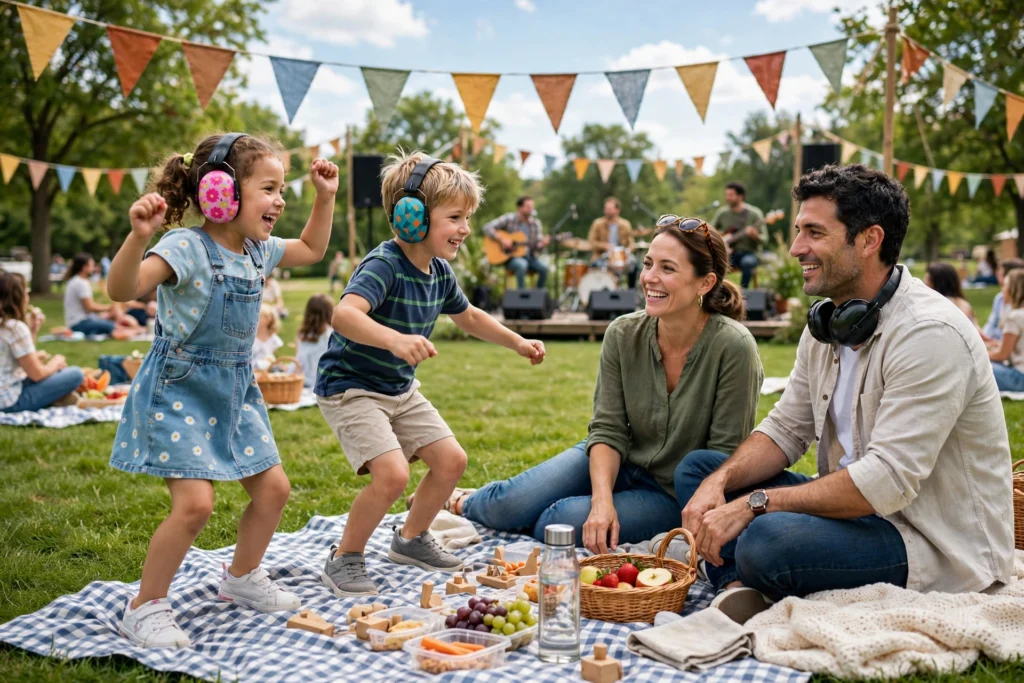
This Family Festival Survival Guide is the manual every parent wishes they’d read before their first big outdoor event with kids. Festivals are magical — live music, great food, new experiences — but they can turn miserable fast when a toddler melts down at noon, the sun beats down with no shade in sight, or you realize the diaper bag is back at the car a mile away. The difference between a core-memory day and a cautionary tale is almost entirely preparation.
Below you’ll find the complete playbook: the non-negotiable rules, detailed packing checklists for day trips and multi-day festivals, an hour-by-hour schedule template, safety protocols for crowds, food and weather strategies, and a recovery plan for the day after. Print the checklists, pack the night before, and walk in like a veteran.
The 10 Golden Rules of Festivals With Kids
- Arrive early, leave on a high. Gates open calm; by mid-afternoon everything is lines and heat. Plan your must-dos for the morning and be willing to leave while everyone’s still happy.
- One anchor activity per half-day. Kids can’t rally from stage to stage like adults. Pick one morning anchor and one afternoon anchor; everything else is bonus.
- Shade is strategy, not comfort. Scout the shade map (most festivals publish one) and plan your midday base around it. A shaded rest spot is worth more than any headliner.
- Hydrate on a schedule, not on request. Kids don’t notice thirst until it’s a problem. Water every 30 minutes in heat — set a phone timer if you have to.
- Every kid carries their own mini-kit. Even a 5-year-old can manage a small backpack with a water bottle, a snack, and a laminated emergency card. It builds ownership and saves your back.
- Establish the meeting point before you need it. Pick a landmark, walk everyone to it, and make each kid point at it. “Meet at the big yellow flag” beats “meet at the info tent” every time.
- Dress for the mess. Festivals involve mud, paint, food dye, and sunscreen. Nobody’s wearing their good clothes, and that’s the point.
- Budget the exit. The last hour is for winding down, not cramming in one more ride. Leave 30 minutes before closing to beat the parking-lot exodus.
- Protect the ears. Festival sound systems are brutally loud. Kid-size ear protection is non-negotiable near any stage.
- Your plan will change — that’s fine. The families having the best time are the ones who abandon the schedule cheerfully when the kids discover something better.
Packing Checklists
The Day-Festival Bag (one backpack per adult)
| Category | Pack | Why |
|---|---|---|
| Sun | Sunscreen (SPF 50), hats, sunglasses, UV shirts | Reapply every 2 hours; festival sun is relentless |
| Water & food | 2 refillable bottles per person, snacks, fruit, sandwiches | Festival food lines peak at noon; eat on your schedule |
| Comfort | Blanket or compact chairs, change of clothes per kid, wet wipes, trash bags | Spills are guaranteed; a fresh shirt resets moods |
| Safety | Kid ear protection, small first-aid kit, laminated emergency cards | Blister pads and bandages save trips to the med tent |
| Tech | Portable charger, phone, festival app downloaded offline | Cell service dies under crowd load; screenshot your tickets |
| Weather | Ponchos, ziplock bags for phones, light jackets | Afternoon storms are common; ponchos beat umbrellas in crowds |
Multi-Day Festival Add-Ons
- Camping gear: Tent with footprint, sleeping bags rated for the nighttime low, camp chairs, headlamps (one per kid — they’ll fight over one).
- Kitchen box: Cooler with ice, camp stove or sandwich supplies, paper goods, dish soap in a squeeze bottle, big water jug for refills.
- Comfort upgrades: A pop-up canopy for your campsite, outdoor rug, battery fan for hot nights, earplugs for everyone (festival campgrounds are loud until 2 a.m.).
- Kid-specific: Wagon (the single best multi-day investment — hauls kids and gear), portable potty for toddlers, nightlight for the tent, familiar bedtime items.
Baby and Toddler Add-Ons
- Double the diapers you think you need, plus a portable changing pad.
- Baby carrier (strollers struggle on grass and gravel; bring both if you have room).
- Pouches and familiar snacks — festival food is not baby food.
- A pop-up shade tent or UV beach tent for naps — the single item veteran parents recommend most.
- White-noise app on an old phone for tent naps amid the noise.
The Perfect Festival Day: Hour-by-Hour Template
| Time | What to Do | Notes |
|---|---|---|
| 8:00–9:00 | Arrive at gates-open, park close, sunscreen everyone | Shortest lines of the day for entry and popular rides |
| 9:00–11:30 | Morning anchor activity (headliner workshop, popular exhibit) | Kids are freshest; do the #1 must-do now |
| 11:30–12:30 | Early lunch at your blanket/base camp | Eat before the noon rush; rest in shade |
| 12:30–2:30 | Low-energy zone: crafts, shows, people-watching | Hottest hours — stay shaded, hydrate on schedule |
| 2:30–3:00 | Quiet break: nap, reading, playground | Non-negotiable for under-6s; older kids recharge too |
| 3:00–5:00 | Afternoon anchor activity | Second wind window — best energy after rest |
| 5:00–6:30 | Dinner, sunset stroll, souvenir shopping | Crowds thin as day-trippers leave |
| 6:30–7:30 | Evening show or wind-down, then exit | Leave on a high, beat the closing crush |
The Safety Playbook
Before You Go
- Laminated emergency cards: Each child’s pocket gets a card with parent names, phone numbers, and the meeting point. (Temporary tattoos with your phone number work even better for small kids — they can’t lose them.)
- Photo check: Take a phone photo of each kid that morning — what they’re wearing, right now. If anyone gets separated, you have an exact description.
- Buddy system: At crowded events, each adult is assigned specific kids. No assumptions, no “I thought you had her.”
At the Festival
- Walk to the meeting point together on arrival and have each kid point to it. Choose something unmissable — a giant sculpture, a uniquely colored tent.
- Teach the “stay put” rule: If lost, kids freeze and yell for you; they don’t wander looking for you. Practice it in the parking lot — it takes 60 seconds.
- Identify staff: Point out the uniformed staff and info tents: “If you can’t find us, go to a person in that shirt.”
- Sun and heat protocol: Shade breaks every hour in heat over 85°F; watch for flushed faces, crankiness, and headache — early signs of heat exhaustion. The med tent is free and non-judgmental; use it.
- Crowd navigation: In dense crowds, kids ride on shoulders or hold a strap on your bag — never just a hand, which slips. Move with the flow, not against it.
Food and Drink Strategy
Festival food is half the fun and most of the budget damage. The veteran approach: eat one “event meal” per day (the thing you’ll talk about — the lobster roll, the famous BBQ) and self-cater the rest. Pack a real lunch, bring substantial snacks, and let the festival food be the treat, not the plan. For kids, front-load protein at breakfast — a pancake-only morning guarantees a 10 a.m. crash.
Water deserves its own line: in heat, each person needs roughly half a liter per hour of active festival time. Refill stations exist at most large festivals but have lines at peak hours — fill up during off-peak (early morning, during headline sets). Frozen water bottles do double duty as ice packs in the morning and cold drinks by afternoon.
Weather Contingencies
- Heat: Cooling towels, misting fans, and a midday retreat to any air-conditioned building. Know the symptoms of heat exhaustion versus heatstroke — the latter (confusion, hot dry skin) is a 911 call.
- Rain: Ponchos for everyone (umbrellas are crowd hazards), ziplock bags for electronics, and a change of socks — wet socks end more festival days than rain itself. Many festivals continue in rain; only lightning clears the grounds.
- Lightning: If the festival evacuates, go immediately to your car, not under a tent or tree. Evacuations are the one scenario where you abandon all gear without hesitation.
- Cold snap: Layers beat one heavy jacket — kids heat up running around and cool down fast when still. Pack beanies; most body-heat loss drama aside, cold ears make kids miserable.
If weather cancels your plans entirely, don’t let the day go to waste — pivot to our Rainy Day Family Activities for a full backup plan of indoor adventures.
Choosing the Right Festival in the First Place
Not every festival deserves your family’s Saturday. Before committing, check: dedicated kids’ programming (not just “kids welcome”), the ratio of free to paid activities, shade and seating availability, the event’s rain/cancellation policy, and — honestly — the start time. A festival that opens at noon is friendlier to families than one built around late-night headliners. Our national ranking of the Best Family Events in the USA scores events specifically on kid-friendliness, and our Family Event Planning Guide helps you slot festivals into a year-round calendar so you’re never scrambling.
The Day After: Recovery Plan
Plan nothing for the morning after a big festival day. Seriously — block the calendar. Kids will be tired, sun-touched, and overstimulated; a slow morning with pancakes and a movie prevents the post-event crash from ruining the memories. Do a 10-minute debrief at breakfast: what was everyone’s favorite moment? Kids’ answers will surprise you (it’s never the headliner — it’s the face paint, the corn dog, the puddle). Write the highlights on the calendar for next year.
Frequently Asked Questions
What age is best for a first festival?
There’s no magic age — it depends on the festival. A chill daytime food festival works at any age with a carrier and shade tent; a loud multi-day music festival is better saved for ages 6+. Start small and daytime.
Should we bring a stroller or a wagon?
For day festivals on pavement, a sturdy stroller. For grass, gravel, or multi-day events, a wagon wins — it hauls kids plus all your gear, and kids can nap in it. Check the festival’s policy; a few restrict wagon sizes.
How do we handle naps at a festival?
Protect the nap even at the festival: a shaded, relatively quiet corner with the pop-up shade tent, white noise, and familiar lovey works for most toddlers. An overtired toddler will cost you the whole afternoon — the nap is the schedule.
What if our child gets lost?
Stay calm and go to the nearest staff member or info tent immediately with your morning photo. Festival staff drill for this; most lost kids are reunited within 15 minutes. This is why the morning photo and the stay-put rule matter.
Are festivals worth it with a baby?
Daytime, low-key festivals — absolutely, with a carrier, shade, and realistic expectations (you’ll do half what you planned). Overnight multi-day festivals with a baby are for experienced festival families only; there’s no shame in waiting a year.
Multi-Day Festivals: The Campground Chapter
Everything in this Family Festival Survival Guide scales up for multi-day festivals — with camping adding a whole second layer of logistics. Here’s what changes when you’re sleeping on-site:
Choosing and Setting Up Camp
- Arrive when gates open, not when it’s convenient. The best family camping spots — near (not next to) bathrooms, on high ground, within sight of a landmark — go in the first hours. A 9 a.m. arrival beats a 3 p.m. arrival by half a mile of walking.
- Claim shade or create it. A 10×10 pop-up canopy over your tent’s door transforms the campsite from an oven into a living room. Position it for afternoon shade; morning sun is fine and helps everyone wake up.
- Build the kid zone first. Before anything else: shade tent up, cooler accessible, familiar bedding laid out. Kids who see “their” spot established settle 10x faster.
- Neighbor diplomacy: Introduce yourselves to the camps around you on day one, especially if you have small kids. Neighbors who know you will forgive the 7 a.m. toddler wake-up; strangers just get annoyed.
The Campground Daily Rhythm
- Mornings are sacred. Festival campgrounds wake early and loud. Lean into it: big breakfast at camp, then hit the festival grounds at opening while day-trippers are still parking.
- Midday retreat is mandatory. Return to camp 12–3 p.m. for the heat peak. Nap the littles in the shade tent, recharge devices, refill water, eat real food. This single habit separates thriving families from melting ones.
- Evenings are earned. After the midday reset, everyone’s good for the evening program — sunset sets, night markets, fireworks. Kids who “can’t do evenings” usually just can’t do full days without the break.
- Night noise plan: Campgrounds stay loud until 1–2 a.m. Earplugs for everyone, white noise for babies, and a tent positioned away from main paths. Accept it; don’t fight it.
What to Skip (Multi-Day Edition)
Don’t over-schedule. One festival stage per half-day is plenty; the campground itself — new friends, impromptu games, people-watching — is half the experience. And build in a full rest day after you get home. Not a light day. A real one.
Festivals by Age: What Changes
| Age | Best Festival Type | Key Gear | Biggest Risk |
|---|---|---|---|
| 0–2 | Daytime food/cultural festivals | Carrier, shade tent, white noise | Heat and overstimulation — keep it to 3–4 hours |
| 3–5 | Fairs, kite festivals, daytime events | Wagon, ear protection, change of clothes | Midday meltdown — protect the nap/rest |
| 6–9 | Full day festivals, Renaissance fairs | Their own backpack, spending money | Over-walking — plan sit-down anchors |
| 10–12 | Music festivals (daytime), airshows | Phone/meeting plan, earplugs | Wanting independence — give supervised freedom |
| 13+ | Nearly anything, with content checks | Real ear protection, ride plan | Late nights — set the pickup time in advance |
The through-line: match the festival’s intensity to the child’s stamina, protect rest and food like they’re headliners, and remember that the best festival is the one everyone wants to repeat. For help choosing which festivals deserve your family’s limited weekends, our Best Family Events in the USA ranking scores events specifically for families — and our Family Event Planning Guide shows how to fit them into a year without burnout.
Festival First-Aid: The Parent’s Field Kit
Every Family Festival Survival Guide needs a medical chapter, because kids + festivals + sun = inevitabilities. Pack a dedicated pouch (separate from the general bag so you can grab it fast):
- Blister care: Moleskin or blister pads, not just bandages. Festival walking destroys feet — treat hot spots the moment they appear, not after the blister forms.
- Sun recovery: Aloe gel packets, children’s pain reliever, and oral rehydration salts. Sunburn + dehydration is the #1 festival medical visit for kids, and it’s entirely preventable with shade breaks and water discipline.
- Allergy response: If anyone has food allergies, the EpiPen (check the date!) plus antihistamines live in this kit, and every adult knows where it is. Festival food cross-contamination is real — when in doubt, ask the vendor directly.
- Sting and bite kit: Hydrocortisone cream, antihistamine, tweezers for splinters and ticks. Grass festivals mean bees; wooded festivals mean ticks — do a tick check at bedtime.
- The comfort items: Instant cold packs, electrolyte drink mix, ginger chews for queasy rides, and a spare pacifier or lovey if applicable. A calm, comfortable kid is a safe kid.
Know before you go: screenshot the festival map with the medical tent and info tent marked. Tell the oldest kid where they are. In a real emergency, you don’t want to be studying a map.
The Lost-Child Reunification Drill
It takes 90 seconds in the parking lot and it’s the most important safety prep in this guide:
- Show them the uniform. Point out actual staff members: “See the people in the yellow shirts? If you can’t find us, go to a yellow shirt.”
- Practice the freeze. “If you get lost, you FREEZE like a statue and yell our names loud. You don’t walk and look — walking makes it worse.” Have them practice freezing on the spot. Make it a game; they’ll remember it.
- The meeting point walk. Walk to it together. Have each child point at it and say what it is. Take a photo of the kids at the meeting point — now everyone has the reference.
- The info card check. Pat the pocket with the emergency card. “What’s on your card?” — they should know: names and phone numbers.
- The buddy assignment. Say it out loud: “Emma, you’re with Dad. Liam, you’re with Mom.” No ambiguity, ever.
Then relax. You’ve done the work — now enjoy the festival. Prepared parents are calm parents, and calm parents have more fun, which is the entire point.