Rainy weekend. Sweltering heat wave. A snowstorm that canceled everything. Or just… you don’t feel like going far, but you also don’t want to spend another evening scrolling on the couch wondering where the day went.
Being stuck inside doesn’t have to mean being bored inside. This guide collects 50 indoor activities for adults, split into two parts: at-home ideas (creative, cozy, and productive things you can do without leaving) and going-out ideas (cultural, active, and social things around town that keep you indoors). You’ll also find a comparison table rating each idea on cost, effort, and social factor, plus tips for matching activities to your mood.
One note before we start: “indoor activities for adults” sometimes gets treated as code for “things to do while waiting for real life to resume.” Forget that. Some of the best evenings, the most satisfying weekends, and the strongest friendships are built entirely indoors. The goal here isn’t to kill time — it’s to use it well.
Part 1: At-Home Ideas
Creative Pursuits
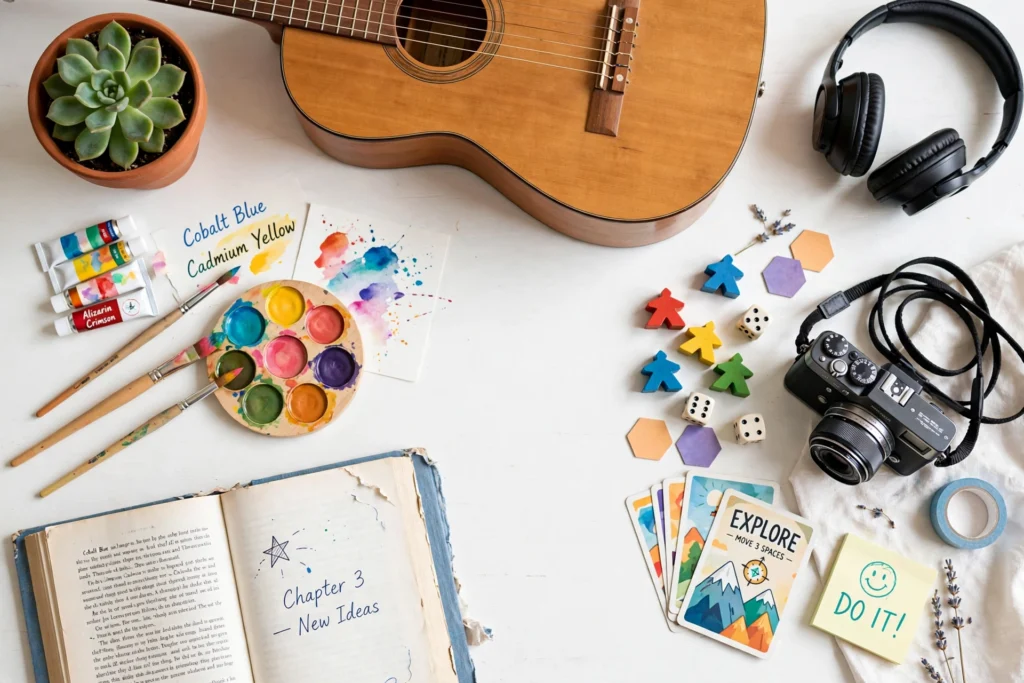
- Start a watercolor practice. You don’t need talent; you need a $15 starter set and a willingness to make ugly paintings for a while. Watercolor is forgiving, portable, and weirdly meditative. Follow along with a beginner YouTube series and paint the view from your window — bad paintings of your own street are more satisfying than good copies of someone else’s.
- Learn to draw properly. Grab a sketchbook and work through the classic exercises: contour drawing, shading spheres, sketching your coffee mug fifty times. Drawing on the Right Side of the Brain remains the gold standard for adult beginners. Thirty minutes a day for a month produces visible, shocking progress.
- Take up hand lettering or calligraphy. A brush pen, some practice sheets, and an evening of looping letters. It’s practical (beautiful cards, gift tags, journal headers) and deeply calming — the focus it demands is the point.
- Try pottery at home with air-dry clay. No kiln needed. Air-dry clay from any craft store becomes mugs, planters, incense holders, and gloriously lopsided bowls. Seal with acrylic paint and varnish. Your first five pieces will be wobbly; piece six will be the one you actually use.
- Start a creative writing habit. Not “write a novel” (unless you want to) — just write. Morning pages, short stories, flash fiction, fan fiction, a memoir chapter about your grandmother. Join a free online prompt community or do NaNoWriMo-style sprints with a friend over video call. The bar is “write badly and regularly,” and it’s transformative.
- Learn photography — indoors. You don’t need golden-hour landscapes. Practice still life: shoot your breakfast, your bookshelf, the way light hits your hallway at 4 p.m. Learn manual mode properly for once. A “52-week” photo challenge (one theme per week) gives the whole year structure.
- Make candles or soap. Candle-making kits cost $20–30 and produce genuinely giftable results in an afternoon. Soap-making takes a bit more care (lye safety — read the instructions), but the bars you make will be better than most store-bought. Both make your home smell incredible while you work.
- Build something with your hands. A bookshelf from a kit, a model ship, a Lego architecture set, a jigsaw puzzle you frame afterward. Adults underestimate how satisfying it is to make a physical thing in a life spent mostly pushing pixels. A 1,000-piece puzzle over a rainy weekend is a legitimate achievement.
- Start a garden — indoors. Herbs on the windowsill (basil, mint, chives — all forgiving), a pothos collection, or a full indoor herb garden with a grow light. Tending living things is grounding, and cooking with herbs you grew yourself never stops feeling like a small miracle.
- Learn an instrument (or restart one). That guitar in the closet, the keyboard you bought in 2019 — this is their moment. Thirty minutes a day with a structured app or YouTube teacher, and in three months you’ll play actual songs. Harmonica and ukulele are the fastest wins for total beginners: cheap, portable, and you can play a recognizable tune within a week.
- Try digital art. A basic drawing tablet or even an iPad with a stylus opens up digital painting, photo editing, and graphic design. Free software like Krita or Photopea means the startup cost is nearly zero. Redesign your favorite movie posters badly, then less badly.
- Cook or bake something ambitious. Not dinner — a project. Sourdough (the starter is a pet; name it), croissants (a two-day laminated-dough saga), homemade pasta, a layer cake with actual layers. Ambitious cooking eats an entire day in the best way and ends with something delicious.
Cozy & Restorative
- Build a reading ritual. Not “read more” as a guilt project — an actual ritual. Same chair, same blanket, tea in the good mug, phone in another room, 45 minutes. Join a reading challenge (a book set in every country, every decade) or finally tackle the classics shelf. Libraries have apps with free ebooks and audiobooks — no excuses, no cost.
- Have a proper film festival at home. Pick a theme — Studio Ghibli, 90s thrillers, every Best Picture winner, one director’s full filmography — and watch one a night for a week. Make it an event: themed snacks, no phones, intermission. A curated week of films beats a month of random scrolling.
- Take a luxurious bath — as an event. Not a quick soak: the full production. Epsom salts, essential oils, candles, a bath caddy with a book and a cold drink, a face mask, a playlist. Two hours. Lock the door. This is a legitimate wellness practice, not an indulgence.
- Do a puzzle or brain-teaser night. Jigsaw puzzles, escape-room-in-a-box games, logic puzzle books, a Rubik’s cube tutorial series. The tactile, screen-free problem-solving hits different from digital entertainment — your brain gets the workout without the eye strain.
- Start a journaling practice. Morning pages (three longhand pages, unfiltered), a gratitude journal, a “one line a day” five-year journal, or an art journal. Journaling is the cheapest therapy-adjacent habit there is, and rereading old entries a year later is genuinely moving.
- Learn to meditate — for real this time. Ten minutes a day with a free meditation app or a structured course. Not the “clear your mind” myth — just sitting, breathing, noticing. Two weeks of consistency changes your baseline stress more than most people expect.
- Create a home spa evening. Face masks, foot soak, hair treatment, DIY sugar scrub (sugar + coconut oil + essential oil), manicure. Put on a robe, play spa music, and treat it like an appointment you’d never cancel. Invite a friend and do it together over video call if you’re feeling social. Want to stretch it into a whole weekend? Our staycation ideas include a full spa-retreat theme that overlaps perfectly.
- Binge a prestige TV series — intentionally. There’s a difference between falling into six hours of autoplay and choosing a great series, watching two episodes a night, and savoring it. Pick the acclaimed show everyone mentions, make the good popcorn, and give it your full attention. That’s not wasting time; that’s culture.
- Rearrange and refresh a room. You don’t need new furniture — move what you have. Swap art between rooms, reorganize the bookshelf by color (controversial but joyful), change the lighting (lamps > overhead lights, always). A room that feels new without spending a dollar is a genuine mood upgrade.
- Digitize your memories. Scan old photos, organize your phone’s camera roll into albums, back everything up properly for once. It’s tedious for twenty minutes, then it becomes a trip down memory lane. Future you will be enormously grateful.
Productive & Skill-Building
- Take a free online course. Coursera, edX, Khan Academy — real university courses, free to audit. Learn the thing you’ve always been curious about: psychology, art history, coding basics, personal finance. One lecture a night with tea is a genuinely pleasant evening.
- Learn to code (just enough). Not a career change — just enough to build a small website, automate a boring spreadsheet task, or understand what your developer friends talk about. Free resources like freeCodeCamp’s first modules take a few evenings and demystify the whole field.
- Master a new cuisine. Pick one — Thai, Ethiopian, Korean, Mexican regional — and cook your way through it for a month. Buy one new spice or ingredient a week, learn the foundational techniques, and by month’s end you’ll have five dishes you can make without a recipe. International grocery stores are indoor adventures in themselves.
- Start a side project or micro-business. The Etsy shop for your candles, the newsletter about your obscure hobby, the freelance profile, the digital product. Indoor weekends are when side projects get built. Even two focused hours a weekend compounds fast.
- Do a financial reset. Review subscriptions (cancel the ones you forgot), set up a real budget, open the retirement account you’ve been meaning to open, read one personal finance book. Deeply unsexy, enormously satisfying. Future-you sends thanks.
- Learn a language. Fifteen minutes a day on a free app, plus one foreign film a week with subtitles, plus labeling objects around your house with sticky notes. In three months you won’t be fluent, but you’ll be started — and starting is the whole battle.
- Organize your digital life. Inbox zero (or at least inbox sanity), photo backup, password manager setup, desktop declutter, unsubscribe spree. It’s the indoor equivalent of cleaning the garage, and the mental clarity afterward is real.
- Plan your next trip in obsessive detail. Research neighborhoods, save restaurants, build the day-by-day itinerary, learn ten phrases in the local language. Trip planning is itself a joyful indoor activity — anticipation is a huge part of travel happiness, and it’s free. And if the trip involves a long drive, pack our road trip games and activities along.
Part 2: Going-Out Ideas
These all keep you indoors — no hiking required — but get you out of the house, around people, and into the world.
Cultural & Intellectual
- Museum day — the big one you’ve been skipping. Every city has a museum locals never visit. Go on a weekday morning, take the audio tour, and actually read the placards. Many museums have free or discounted days monthly — check before you pay full price. Give it three hours minimum; rushing a museum is like speed-reading poetry.
- Art gallery crawl. Gallery districts are made for wandering — most small galleries are free, uncrowded on weekday afternoons, and the staff will often talk to you about the work if you show interest. Make it a crawl: three galleries, one coffee stop, no purchase required.
- See live theater. Not just Broadway-ticket prices — community theater, improv nights, fringe festivals, university productions. Local theater is affordable, intimate, and often excellent. Check your city’s arts listings; there’s almost always something on this weekend.
- Catch a live music show in a small venue. The 200-person room beats the arena every time for actually feeling music. Jazz clubs, folk nights, local band showcases, open mics — many under $20. Go alone if no one’s free; small venues are the easiest places to enjoy solo.
- Visit a historic house, library, or architectural landmark. Grand old libraries, historic mansions with tours, beautiful churches, art deco lobbies — the built environment is full of indoor wonders hiding in plain sight. Many offer free or cheap guided tours on weekends.
- Take a class in person. Pottery studio, cooking school, watercolor workshop, improv 101, dance class, wine tasting course. One-off evening classes ($30–80) are low-commitment and high-reward — you leave with a skill, a story, and usually a new acquaintance or two.
- Browse a great bookstore for an hour. The big independent bookstores with cafés are designed for lingering. No purchase goal — just browse, read first chapters, eavesdrop on the staff picks shelf. Buy one book if something grabs you; the browsing was the point.
Active & Playful
- Go bowling — unironically. Bowling alleys have quietly become great again: craft beer, decent food, cosmic bowling nights. It’s active without being athletic, competitive without being serious, and fun with any group size from two to ten.
- Try an indoor climbing gym. Most have day passes ($15–25) with gear rental and beginner-friendly auto-belay walls — no experience or partner needed. It’s a full-body workout disguised as a puzzle, and the sense of progress (that wall you couldn’t do last time) is addictive.
- Book an escape room. Sixty minutes, a locked room, puzzles, and your group. It’s the rare activity that’s equally good for friend groups, date nights, and team outings. Book the medium difficulty if it’s your first — easy rooms feel short, hard rooms feel punishing.
- Go ice skating or roller skating indoors. Rinks run public sessions year-round, rentals included. You’ll be wobbly for twenty minutes, then something clicks. It’s joyful in a way that’s hard to explain — something about gliding. Hot chocolate after is mandatory.
- Try a trampoline park or indoor adventure park. Not just for kids’ birthday parties — adult open-jump sessions exist, and an hour of bouncing, dodgeball, and foam pits is a legitimate workout and an even more legitimate laugh. You’ll sleep well that night.
- Take a dance class — any style. Salsa, swing, ballroom, hip-hop basics. Beginner classes assume zero experience and are full of other nervous adults. It’s exercise, it’s social, it’s slightly out of your comfort zone in the best way. Many studios offer a cheap intro night.
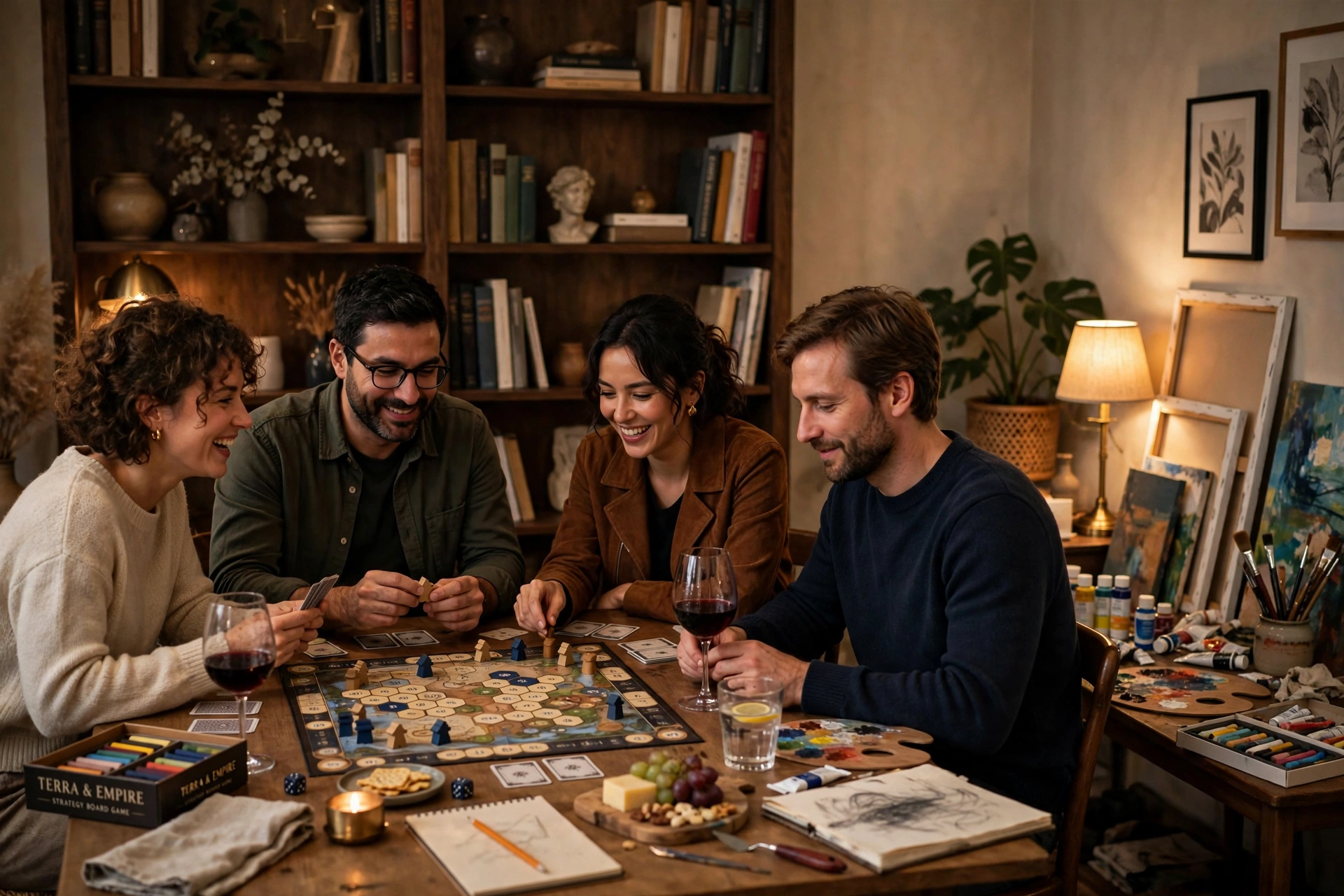
- Go to an arcade bar or board game café. Barcades (classic arcade games + drinks) and board game cafés (hundreds of games, staff who teach you) are purpose-built for adult indoor fun. A board game café is also the lowest-pressure first date or friend-date venue ever invented.
Social & Nightlife
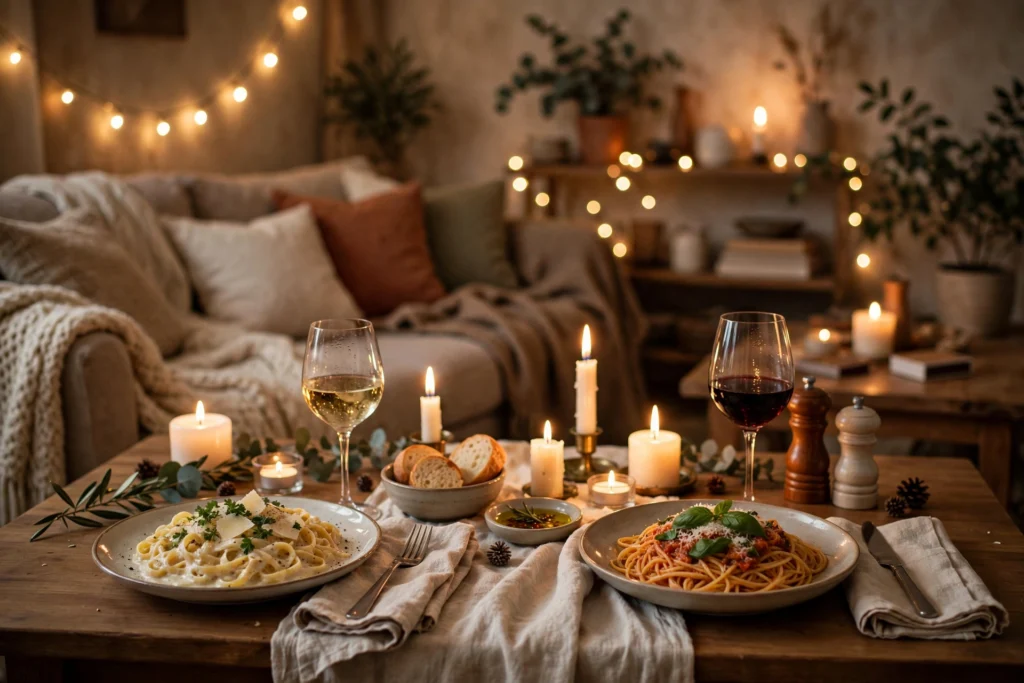
- Host a dinner party with a twist. Themed (everyone cooks a dish from the same country), competitive (mystery-ingredient cook-off), or structured (wine and cheese pairing night). Dinner parties beat restaurant dinners for conversation every time — and they cost a third as much.
- Start or join a book club. The book is the excuse; the wine and conversation are the point. Can’t find one? Start one — three friends, one book a month, rotating hosts. Libraries often have book-club-in-a-bag kits with multiple copies.
- Do a tasting night at home or out. Wine, whiskey, cheese, chocolate, coffee — pick one, get 4–5 varieties, and taste them properly (there are free tasting guides online). It’s educational, delicious, and gives the evening a structure that “hanging out” lacks.
- Go to a comedy show. Stand-up clubs, improv theaters, comedy open mics — laughter with a crowd hits differently than laughing at your phone. Tickets are usually $10–25, and even a mediocre show is a good night out. The open mic nights are the wildcards: sometimes terrible, sometimes the funniest thing you’ll see all year.
- Visit a planetarium or science center. Planetarium shows are stunning, science centers have adult-only evening events (often with drinks), and aquariums are open late on select nights. These places are ten times better without the daytime kid crowds.
- Have a spa day — the professional kind. Massage, facial, float tank session, or a day pass to a Korean spa or bathhouse. It’s the at-home spa evening (idea #19) leveled up. Book it for the middle of a brutal week, not just special occasions — maintenance beats rescue.
The Comparison Table: Cost, Effort & Social Factor
Use this to match an activity to your budget, energy, and company. Cost: $ = free/cheap, $$ = moderate, $$$ = pricey. Effort: low / medium / high. Social: solo / small group / crowd-friendly.
- 1. Watercolor practice — $, low, solo
- 12. Ambitious cooking project — $$, high, solo/small group
- 13. Reading ritual — $, low, solo
- 19. Home spa evening — $, low, solo/small group
- 23. Free online course — $, medium, solo
- 31. Museum day — $–$$, medium, solo/small group
- 32. Gallery crawl — $, low, solo/small group
- 40. Escape room — $$, medium, small group
- 44. Arcade bar / board game café — $$, low, small group
- 46. Book club — $, low, small group
- 50. Professional spa day — $$$, low, solo/small group
Reading the table: the cheapest quadrant is the at-home creative and cozy list — nearly all free, nearly all low effort. The best value-for-money going-out picks are gallery crawls, small-venue music, comedy shows, and bookstore afternoons. The highest “effort” items (instrument, coding, new cuisine, dinner party) are also the ones people report as most satisfying six months later — effort correlates with reward.
Tips for Different Moods
“I’m exhausted and want to do nothing” — and that’s fine. Pick from the cozy list: luxury bath (#15), intentional TV (#20), reading ritual (#13), puzzle night (#16). The trick is choosing your rest deliberately rather than collapsing into it — deliberate rest recharges; accidental scrolling doesn’t.
“I’m restless and need to get out” — gallery crawl (#32), bookstore (#37), bowling (#38), arcade bar (#44), comedy show (#48). Low planning, immediate change of scenery, other humans around.
“I want to feel productive” — financial reset (#27), digital organization (#29), free course (#23), ambitious cooking (#12), rearrange a room (#21). Pick one, finish it, enjoy the rare adult feeling of completion.
“I want to be social but low-key” — book club (#46), tasting night (#47), themed dinner party (#45), board game café (#44), home spa evening with a friend (#19). Structured enough to avoid awkwardness, relaxed enough to actually talk.
“I want to learn something real” — instrument (#10), language (#28), in-person class (#36), new cuisine (#25), coding basics (#24). Commit to 30 days and track it visibly — a wall calendar with X’s is weirdly motivating.
“It’s date night” — escape room (#40), tasting night (#47), small-venue music (#34), dance class (#43), home film festival (#14), professional spa day (#50). The common thread: shared experience + conversation, not just sitting side by side.
“I’m alone and that’s the point” — watercolor (#1), journaling (#17), museum morning (#31), photography (#6), meditation (#18). Solo indoor time isn’t loneliness — it’s the good kind of alone, and it deserves the same intentionality as any plan.
Making It a Habit, Not Just a List
Lists are easy; doing is hard. Three things that actually work:
- Schedule it like an appointment. “Saturday 2 p.m.: climbing gym with Sam” happens. “We should go climbing sometime” doesn’t. Put indoor activities on the calendar with the same seriousness as work meetings.
- Lower the activation energy. Keep the watercolor set on the table, not in the closet. Bookmark the theater listings. Have the board game café’s address saved. Every step between “I want to” and “I’m doing it” is a chance to bail — remove the steps.
- Find one person. Almost every activity on this list is better with a regular partner — the climbing buddy, the book club, the cooking-project friend. You don’t need a group; you need one person who’ll say “are we still on for Saturday?”
Frequently Asked Questions
What are some fun indoor activities for adults at home?
The best at-home indoor activities for adults include creative pursuits (watercolor, drawing, pottery with air-dry clay, learning an instrument), cozy options (reading rituals, home film festivals, luxury baths, journaling), and productive projects (online courses, learning a language, mastering a new cuisine, ambitious cooking projects). The key is choosing deliberately — scheduled, intentional rest and play beats accidental scrolling every time.
What can adults do indoors on a rainy day?
Rainy days are perfect for museum visits, gallery crawls, bookstore afternoons, escape rooms, bowling, indoor climbing, cooking projects, puzzles, and home spa evenings. If you’d rather stay in: start the watercolor set, do a 1,000-piece puzzle, host an impromptu tasting night, or finally watch that acclaimed series properly — two episodes a night, full attention, good snacks.
What are good indoor date night ideas?
Great indoor date nights include escape rooms, wine or whiskey tasting nights at home, small-venue live music, dance classes, themed cooking projects (cook a cuisine together), arcade bars, comedy shows, and curated home film festivals. The best ones combine a shared activity with real conversation — doing something together beats sitting side by side.
How can I be social indoors without going to bars?
Plenty of options: join or start a book club, host themed dinner parties, visit board game cafés, take an in-person class (pottery, cooking, improv), go to comedy shows or small-venue concerts, try a tasting night with friends, or do an escape room as a group. Board game cafés and classes are especially good because the activity itself carries the conversation.
What are cheap or free indoor activities for adults?
The cheapest indoor activities are nearly all at home: reading (free via library apps), journaling, meditation, drawing, puzzles, rearranging a room, organizing your digital life, free online courses, and language learning. Going out cheap: gallery crawls (usually free), bookstore browsing, library events, museum free days, comedy open mics, and planetarium shows.
What indoor activities are good for meeting people?
In-person classes (pottery, cooking, dance, improv) are the best — repeated sessions with the same group build real familiarity. Also strong: book clubs, trivia nights at bars or cafés, board game cafés, climbing gyms (the community is famously welcoming), volunteer shifts at museums or theaters, and recreational indoor sports leagues.
I’m bored but have no energy — what should I do indoors?
Choose deliberate low-energy rest: a luxury bath as a full event, an intentional TV series (two episodes, full attention, no phone), a reading ritual with tea, a simple puzzle, or a home spa evening. The distinction that matters: chosen rest recharges you, while collapsing into your phone for three hours doesn’t. Pick the cozy thing on purpose and you’ll feel the difference.
What are good indoor activities for adults in winter?
Winter is peak indoor season: museums, theater, live music, cooking projects (sourdough, soups, baking), puzzles, reading challenges, indoor climbing, ice skating, learning an instrument or language, and spa days. Lean into the coziness — winter is the one season where staying in feels like the main event rather than the backup plan.