You’re tired. They’re wired. And it’s only 9 a.m.
Here’s the good news: toddlers don’t need elaborate activities, expensive toys, or a Pinterest-worthy setup. They need you, a few simple materials, and permission to make a mess. A one-year-old is genuinely thrilled by a wooden spoon and a pot. A three-year-old will choose a cardboard box over the toy that came in it.
This guide gives you 50 things to do with toddlers, organized by age — 1, 2, and 3 — with indoor and outdoor ideas for each. Every activity is low-prep (most need zero shopping), and the ones that need literally nothing are marked zero prep. Safety notes and a go-bag packing list are at the end.
How to Use This Guide (Read This First)
A few ground rules that will save your sanity:
- Match the activity to the mood, not the clock. A tired toddler won’t do a craft project. A bouncy one won’t sit for a puzzle. Read the kid in front of you.
- Expect 5–15 minutes. That’s a normal toddler attention span. If they wander off after four minutes, that’s not failure — that’s development.
- Process over product. The painting will look like brown mush. The tower will fall. The point is the doing, not the result. Resist the urge to “fix” their work.
- Repeat freely. Toddlers learn through repetition. If they want to do the same water-pouring activity eleven days in a row, that’s their brain building itself.
- You don’t have to do all 50. Bookmark this page and pull out three or four ideas when you need them. That’s what it’s for.
Age 1 (12–24 Months): Sensory Explorers
One-year-olds learn with their mouths, hands, and whole bodies. Everything is sensory play at this age. Keep activities simple, sturdy, and mouth-safe — because it will go in the mouth.
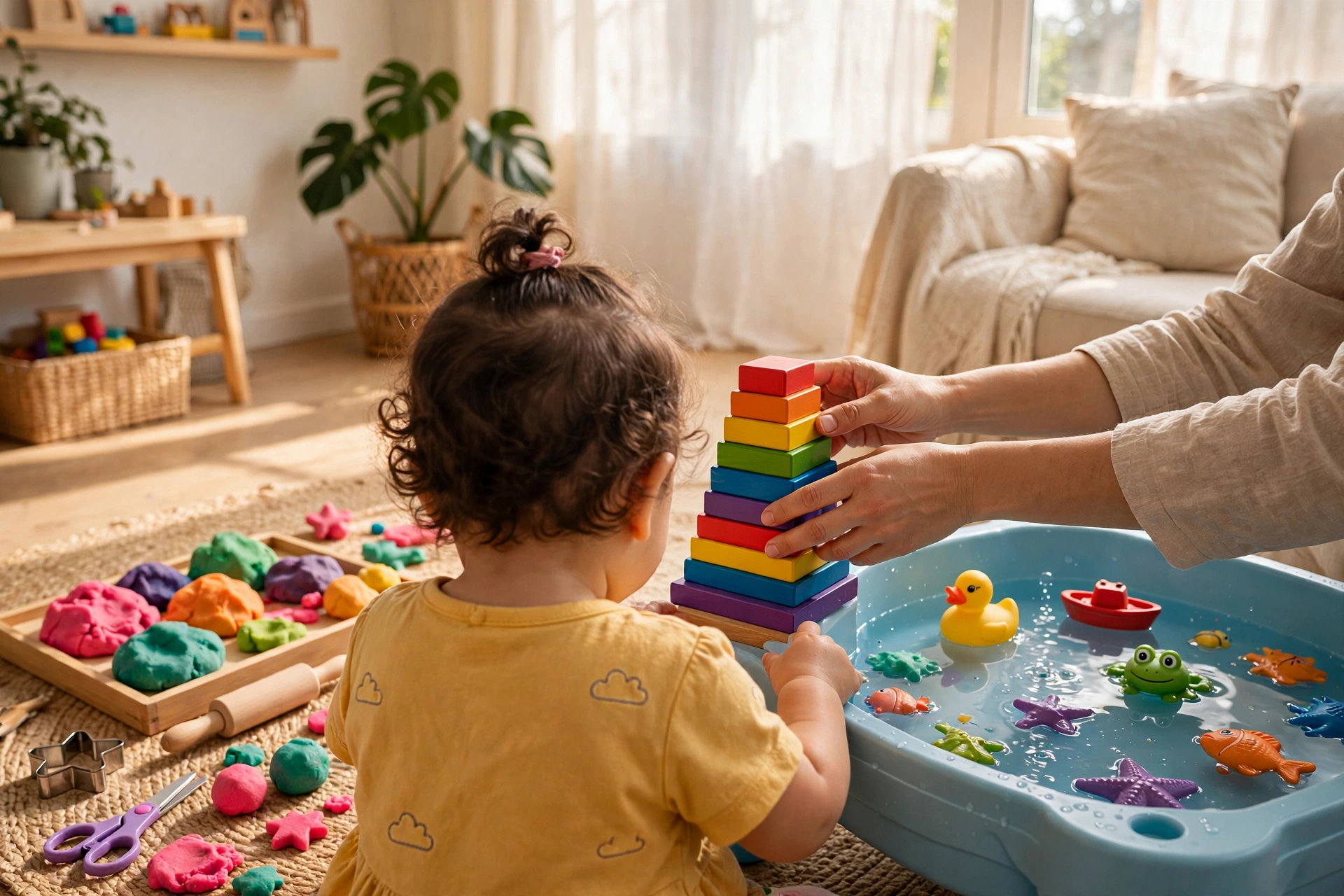
- Water pouring station — zero prep. A baking tray, two plastic cups, and an inch of water. Show them how to pour from one cup to the other — they’ll do it forty times. Put a towel underneath and accept the splashes.
- Edible finger paint. Mix plain yogurt with a drop of food coloring (or use mashed berries). Tape paper to the high chair tray and let them go. Everything is taste-safe, which is the whole point at this age.
- Pots, pans, and wooden spoons — zero prep. Give them a cupboard’s worth of safe kitchen items and let them bang, stack, and nest. Different sizes and materials = different sounds = endlessly fascinating.
- Texture touch board. Glue (or tape) fabric scraps, sandpaper, bubble wrap, and felt to a piece of cardboard. Let them pat, scratch, and stroke each square while you name the textures: “rough,” “soft,” “bumpy.”
- Peekaboo scarf box. Drape lightweight scarves or cloth napkins over an empty tissue box and let them pull them out one by one. Refill it and they’ll do it again. Object permanence practice disguised as a game.
- Soft ball roll — zero prep. Sit on the floor facing each other and roll a soft ball back and forth. It builds turn-taking and tracking — often the first real “game” a one-year-old can play.
- Cardboard box tunnel. Open both ends of a large box and let them crawl through. Crawling through enclosed spaces builds spatial awareness and confidence.
- Bubble chase. You blow, they chase and pop. It practices running, reaching, and hand-eye coordination, and it buys you a solid 15 minutes with a $2 bottle of bubbles.
- Nature texture walk — zero prep. Carry them (or let new walkers toddle) and stop to touch tree bark, grass, smooth stones, and leaves. Narrate everything: “The bark is rough! The leaf is soft.” It’s a sensory tour of the block.
- Sandbox or dirt digging. A bucket, a shovel, and any patch of dirt or sand. Digging, scooping, and dumping build fine motor skills, cause and effect, and sensory input all at once.
- Water painting on the fence. Give them a chunky paintbrush and a bucket of water, and let them “paint” the fence, sidewalk, or patio. Zero mess (it evaporates), total engagement.
- Grass rolling and tumbling — zero prep. Find a soft grassy slope and let them roll down it. It looks like pure silliness; it’s actually balance, body awareness, and courage.
- Puddle stomping — zero prep. After rain, put them in rain boots (or bare feet on a warm day) and let them stomp. The splash-back delight never gets old, and it’s the cheapest thrill in parenting.
- Push-toy parade. A toy lawnmower, a doll stroller, a wagon — anything they can push while walking. New walkers especially love having something to hold onto, and parading it around the yard feels like a grand expedition.
Age 2 (24–36 Months): Busy Builders
Two-year-olds are mobile, opinionated, and obsessed with doing things “myself.” They love pouring, stacking, sorting, and anything with a satisfying cause-and-effect. Channel the chaos — don’t fight it.
- Playdough station. Store-bought or homemade, plus cookie cutters, a rolling pin, and plastic knives. Squeezing, rolling, and cutting build the hand strength they’ll need for writing later.
- Sensory bin with dry rice or pasta. Fill a shallow bin with uncooked rice, add scoops and small containers, and let them pour and fill. Supervise closely (it’s a choking hazard if mouthed), and lay a sheet underneath for easy cleanup.
- Sticker art — nearly zero prep. Give them a sheet of stickers and a piece of paper. Peeling stickers is precision fine-motor work disguised as fun. Dot stickers on drawn shapes add a bonus challenge.
- Laundry basket “car wash” — zero prep. Fill a laundry basket with stuffed animals, hand them a damp sponge, and declare it a car wash. Washing, scrubbing, and “drying” each toy keeps them busy for ages.
- Tape roadways on the floor. Use painter’s tape to make roads on the floor or a large piece of cardboard. Add toy cars and watch them drive the routes for far longer than you’d expect. Peel it up when you’re done — no residue.
- Sorting by color. Grab pom-poms, blocks, or socks, and set out bowls for sorting by color. Two-year-olds love categorizing — narrate as they go: “Red goes here! You found a blue one!”
- Dance freeze game — zero prep. Play music, dance together, and freeze when it stops. It practices listening and impulse control — and watching a toddler freeze mid-wiggle is pure joy.
- Book nook fort. Drape blankets over chairs, toss in pillows and a basket of books, and read inside with a flashlight. The enclosed space makes reading feel like an adventure.
- Shaving cream sensory play. Spray a layer of shaving cream on a baking tray and let them swirl, draw, and squish. Gloriously messy, washes off with one wipe. (If your child still mouths everything, use whipped cream instead.)
- Sidewalk chalk art. Chunky chalk on the driveway or sidewalk: scribbles, tracing their shadow, or drawing a hopscotch grid you “play” together. Hose it off when you’re done.
- Playground circuit. Swings, slides, climbing — playgrounds are purpose-built toddler gyms. Let them set the pace and repeat their favorite element twelve times. Repetition is how they master it.
- Nature scavenger hunt. Hand them a small bucket and a simple picture list: a leaf, a smooth rock, a stick, a flower. They’ll take it very seriously, and you’ll get a lovely slow walk out of it.
- Tricycle or balance bike practice. Even just scooting around the driveway builds leg strength and balance. Stay close, keep it to flat surfaces away from streets, and let them go at their own speed.
- Gardening helper. Hand them a small watering can for the plants, or let them dig holes for seeds with a spoon. They’ll “help” enthusiastically and imperfectly, which is exactly right.
- Balloon volleyball — zero prep. Blow up a balloon and bat it back and forth. Balloons move slowly enough for toddler reflexes, making this one of the few catching games that actually works at age two.
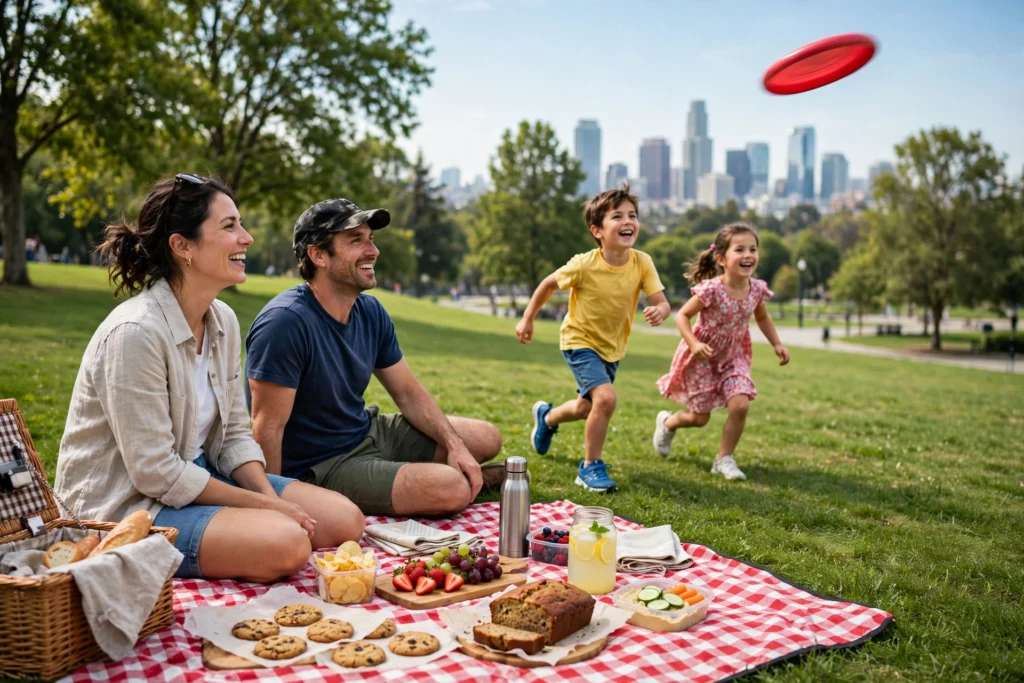
- Picnic in the yard. Pack their lunch in a basket, spread a blanket, and eat outside. Eating somewhere novel makes even familiar food exciting — and there’s no chair to fall off.
- Follow-the-leader walk — zero prep. Take turns being the leader: march, tiptoe, hop, spin. It burns energy, practices imitation, and usually dissolves into giggles by the third round.
- Wash the toys. Fill a bin with warm soapy water and let them wash plastic toys, toy cars, or play dishes with a sponge. It’s sensory play, practical-life skills, and genuinely helpful — the toddler trifecta.
Age 3 (36–48 Months): Imaginative Creators
Three-year-olds have blossoming imaginations, longer attention spans (think 15–30 minutes), and strong opinions about everything. Lean into pretend play, simple crafts, and activities with a little more structure — while still keeping prep minimal.
- Cardboard box creations. A big box becomes a house, a car, a rocket, a shop. Hand them crayons to decorate it and let the pretend play run — this alone can fill a rainy afternoon.
- Oobleck (cornstarch and water). Mix cornstarch with water until it’s solid when squeezed, liquid when released. Endlessly fascinating, taste-safe, and it washes off easily.
- Dress-up story time. Pull out old clothes, hats, and accessories from a dress-up bin and act out a favorite book together. Narrating and role-playing builds language skills faster than almost anything else.
- Simple baking together. Banana bread, muffins, or sugar cookies — let them pour (with help), stir, and press cookie cutters. The recipe matters less than the process; expect flour everywhere and consider it a success.
- Indoor obstacle course — zero prep. Crawl under the table, hop over pillows, balance along a tape line, toss a stuffed animal into a basket. Time them if they’re competitive, or just cheer every lap.
- Puppet show. Socks with button eyes, paper-bag puppets, or just stuffed animals behind the couch. Put on a show for them, then let them run the theater. Storytelling practice disguised as silliness.
- Kinetic sand play. It holds shapes like wet sand but stays dry and sweeps up easily. Add small cups, molds, and toy dinosaurs for excavation scenarios — one of the highest engagement-per-dollar activities that exists.
- “I spy” color game — zero prep. “I spy something red!” and let them hunt around the room. It builds vocabulary, observation, and attention — and you can play it while sitting down with your coffee.
- Collage art. Old magazines, safety scissors, and a glue stick. Cutting and gluing develop hand strength and planning skills, and the results are wonderfully weird.
- Nature art. Collect leaves, sticks, petals, and stones on a walk, then arrange them into pictures or patterns on the ground (or glue them onto cardboard at home). It’s art class with free supplies.
- Tricycle obstacle course. Set up cones (or stuffed animals) in the driveway and have them weave through. Add “stop signs” where they have to brake — it’s traffic school for tiny drivers.
- Bug hunt. Hand them a magnifying glass and look for ants, roly-polies, and worms — lift rocks, check under logs. Genuine scientific curiosity starts exactly here.
- Playground “missions.” Turn the playground into an adventure: “Climb to the top of the slide mountain! Cross the bridge without touching the lava!” Narrative transforms familiar equipment into a new experience.
- Fly a kite together. You handle the running and steering; they hold the string (with help) and watch it soar. Pick a light breeze day — too much wind frustrates everyone.
- Outdoor painting. Tape paper to an easel or fence and paint outside, where mess doesn’t matter. Or paint rocks to leave around the neighborhood — the “kindness rocks” tradition gives the art a purpose they’ll love.
- Farmers market trip. Give them a small job: pick the apples, carry the (light) bag, hand the farmer the coins. Real-world errands are thrilling at three — and they practice counting, manners, and patience.
- Backyard camping. Pitch a tent (or drape sheets over chairs), bring sleeping bags and flashlights outside, and have a “campout” — even if everyone sleeps inside later. Roast marshmallows if you have a fire pit.
- Sidewalk “car wash” for bikes and scooters. Bucket of soapy water, sponges, and their ride-on toys lined up for cleaning. It’s the outdoor version of idea 32, and the combination of water + vehicles + sunshine is toddler paradise.
Safety Notes for Every Age
Fun means nothing without safe. Keep these non-negotiables in mind:
- Water = supervision, always. Even an inch of water needs an adult within arm’s reach. Never leave a toddler alone with water — not for “just a second.”
- Watch for choking hazards. Anything smaller than a toilet paper tube can block a toddler’s airway — dry rice, beans, small pom-poms, uninflated balloons, small toy parts. Save small-item sensory bins for age 2+ with direct supervision.
- Use taste-safe materials for under-2s. If it might go in the mouth, it should be edible or non-toxic: yogurt paint instead of tempera, whipped cream instead of shaving cream.
- Sun and heat. Sunscreen, hats, and water for every outdoor activity. Hot playground slides and metal surfaces can burn — test with your hand first on sunny days.
- Secure the play space. Anchor bookshelves and TVs, cover outlets, gate stairs. Most indoor activities on this list assume a reasonably toddler-proofed room.
- Playground surfacing matters. Falls happen — that’s normal. But check that the playground has soft surfacing (mulch, rubber, sand) under climbing equipment, not concrete.
- Trust your gut on readiness. Age ranges are averages. If your 2-year-old still mouths everything, treat them like a 1-year-old for sensory materials. You know your kid.
The Toddler Go-Bag: What to Bring for Outings
Keep a bag packed by the door and outings get 90% easier:
- Diapers/wipes + a full change of clothes (for them) and a spare shirt (for you — trust us)
- Snacks and water — hunger turns a good outing bad in about four minutes
- Sunscreen and a hat for any outdoor time
- A small comfort item — lovey, pacifier, whatever helps them reset
- 2–3 small toys for waiting moments (restaurant, line, car)
- Plastic bags for wet clothes, trash, or surprise treasures
- Basic first aid — bandages, antiseptic wipes, children’s pain reliever
- Your phone (for photos and emergencies — not for scrolling while they play)
Pack it once, refill the snacks, and you’re ready for anything on this list in under five minutes.
And when the little ones are finally down for the night, reclaim your evening — these date night ideas at home are designed for exactly that.
Frequently Asked Questions
How long should a toddler activity last?
Plan for 5–15 minutes at age 1, 10–20 at age 2, and 15–30 at age 3 — and consider anything in that range a complete success. Toddlers who drop an activity quickly aren’t being difficult; short bursts of focused play are developmentally normal. If they’re deeply engaged, let them continue as long as they want.
What are the best zero-prep activities for toddlers?
Dance freeze (21), follow-the-leader walks (31), I-spy color games (40), indoor obstacle courses (37), pots-and-pans music (3), puddle stomping (13), and stargazing-style wind-downs. The pattern: movement, music, water, and containers are endlessly entertaining with no setup at all.
What if my toddler won’t engage with an activity I set up?
Totally normal — try not to take it personally. Offer it once without pressure, and if they walk away, let it go. Often they’ll circle back to it later on their own terms. Toddlers engage most with activities they choose, so present two options (“playdough or water pouring?”) rather than one directive.
How much screen time is okay for toddlers?
Pediatric guidance generally suggests avoiding screens before 18 months (except video calls), and limiting to about an hour of high-quality programming per day from ages 2–5, ideally co-viewed with a parent. On hard days, do what you need to do — but interactive play like the activities above does more for development than any show.
What are good rainy-day activities for toddlers?
The indoor picks shine here: fort building (22), tape roadways (19), sensory bins (16), dance parties (21), obstacle courses (37), and baking together (36). Rotate through two or three in a day rather than expecting one to fill the whole afternoon.
How do I know if my toddler’s development is on track?
Every child develops at their own pace, but if you have concerns about milestones — walking, talking, social engagement — bring them to your pediatrician. The CDC’s milestone checklists are a helpful reference for what’s typical at each age, and early check-ins are always better than worrying quietly.
Do toddlers need lots of toys?
No. Fewer toys (rotated regularly) leads to longer, more creative play than a room full of options. A toddler with five toys and a cardboard box will outplay one with fifty toys. Save your money and your living room.
How can I get my toddler to play independently?
Start small: set up one inviting activity, play together for a few minutes, then step back while staying nearby. Narrate occasionally (“you’re stacking the red one!”) without taking over. Independent play is a skill that builds gradually — five minutes at age 1 growing to 20–30 minutes by age 3 is a realistic trajectory.