Walking into a coffee shop and staring at the menu board like it’s written in code? You’re not alone. Espresso this, macchiato that, flat whites and cortados — the coffee menu can feel like it requires a decoder ring. Here’s the good news: there are really only a handful of core drinks, and once you understand the basic building blocks, every coffee shop menu starts making sense.
This guide breaks down the espresso-based drinks, the brewed methods, and the cold options you’ll see at just about every café in America. By the end, you’ll order with confidence instead of panic-ordering “just a regular coffee” for the rest of your life.
The Building Blocks: What Coffee Drinks Are Actually Made Of
Nearly every hot coffee drink on a café menu comes from three ingredients: espresso, steamed milk, and foam. Espresso is a small, strong shot of coffee brewed under pressure — the foundation for lattes, cappuccinos, macchiatos, and most of the menu. What changes from drink to drink is simply the ratio of espresso to milk and foam.
Once you see that pattern, the menu stops being intimidating and starts being a choose-your-own-adventure.
Espresso-Based Drinks, Decoded
These are the classics you’ll find on nearly every coffee shop menu. All of them start with espresso shots.
Espresso
The shot itself. About an ounce or two of intense, concentrated coffee, served in a tiny cup. It has a layer of golden crema on top and hits hard and fast — strong coffee flavor with a slightly bitter, rich finish. Order it if you want to taste coffee at its most concentrated, or if you need to wake up right now.
Macchiato
“Macchiato” means “stained” or “marked” in Italian, and that’s exactly what it is: a shot of espresso “marked” with just a spoonful of foamed milk. It’s still very much an espresso-forward drink — bold and intense, with only a whisper of milk to take the edge off. If you love strong coffee flavor but want it slightly softened, this is your drink.
Don’t confuse it with the giant caramel macchiato from the drive-thru chains — that drink is really a vanilla latte with caramel drizzle. A traditional macchiato is small and strong, with barely any milk at all.
Cortado
Equal parts espresso and warm steamed milk, served in a small glass. The cortado was designed for espresso drinkers who want the best of both worlds: the boldness of straight espresso with enough milk to round it out, but not so much that the coffee flavor disappears. It’s smooth, balanced, and stronger-tasting than a latte. A great pick if lattes feel too milky but espresso feels too intense.
Cappuccino
The classic thirds drink: roughly equal parts espresso, steamed milk, and thick foam. A real cappuccino has a distinct cap of airy, dry foam on top — thick enough to spoon. It’s drier and lighter in texture than a latte, with a bolder coffee flavor relative to its milk.
Latte
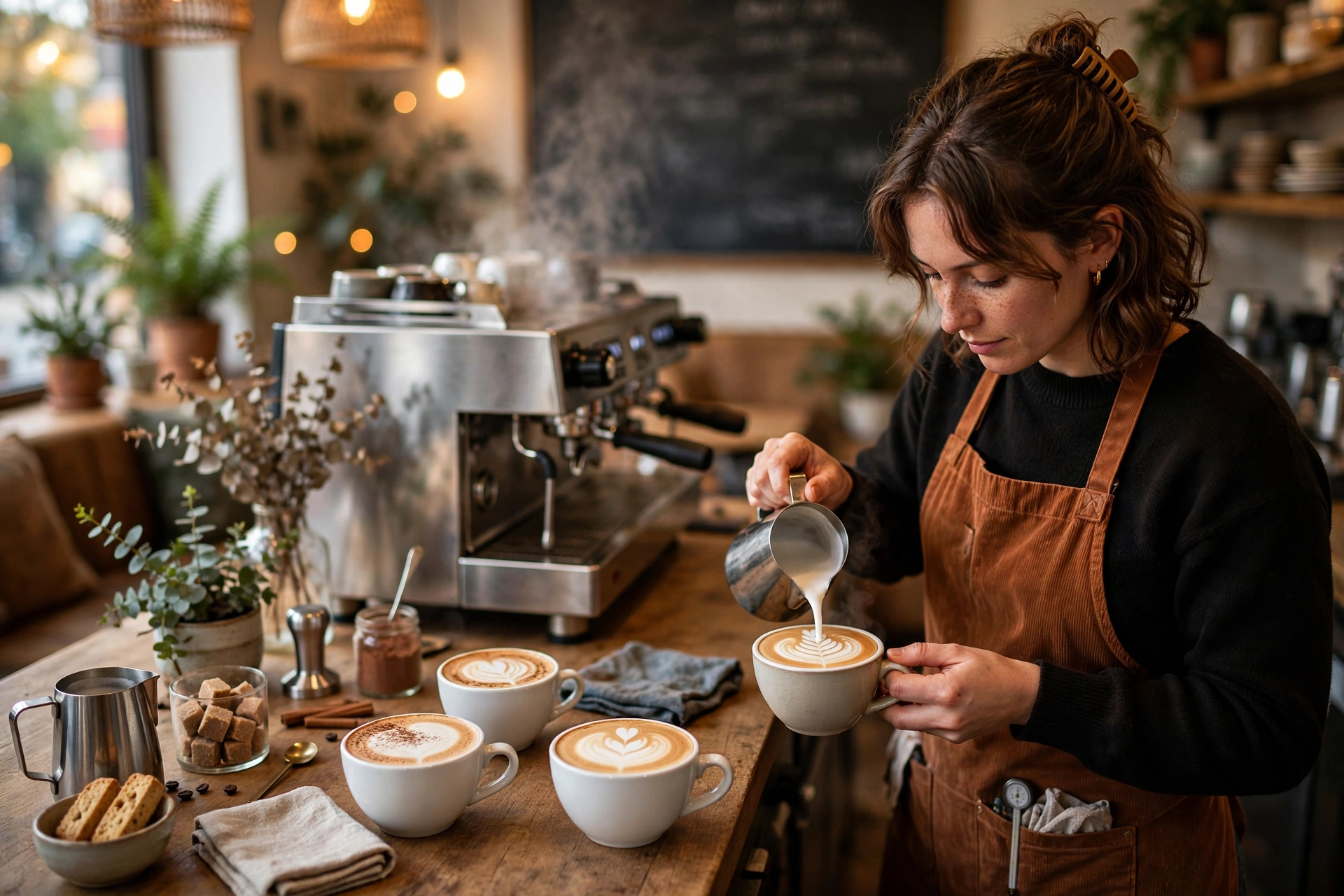
Mostly steamed milk with a thin foam layer, built on one or two shots of espresso. The latte is the mildest of the classic espresso drinks — creamy, mellow, and smooth, with the coffee flavor softened by all that milk. It’s also the drink most likely to come with beautiful latte art. If you’re new to espresso drinks and don’t want anything too intense, the latte is the safest, friendliest starting point.
Flat White
Think of the flat white as a latte’s stronger, silkier sibling. It’s made with a double shot of espresso and velvety, micro-foamed steamed milk — milk that’s been steamed to a smooth, glossy texture with very little foam. The result is richer and more coffee-forward than a latte, with a luscious mouthfeel. Originating in Australia and New Zealand, it’s now a staple on American café menus and a favorite among people who want coffee flavor to actually shine through the milk.
Mocha
A latte with chocolate — espresso, steamed milk, and chocolate (syrup or cocoa powder), usually topped with whipped cream. It’s the dessert of the coffee menu: sweet, indulgent, and perfect for anyone who finds straight coffee a bit much. The chocolate makes it approachable, though it also makes it one of the higher-calorie options on the board.
Latte vs Cappuccino: The Quick Answer
This is the single most common coffee shop drinks question, so let’s settle it. A latte is mostly steamed milk with just a thin layer of foam — creamy, mild, and smooth. A cappuccino has much more foam and less milk — drier, lighter, and bolder in coffee flavor. Same ingredients, different ratios, totally different drinking experience. If you like creamy and gentle, order the latte. If you like bold with a foamy cap, order the cappuccino.
Brewed Coffee Methods
Not everything comes from an espresso machine. These are the brewed methods you’ll see, and the differences are mostly about flavor clarity, body, and strength of taste.
Drip Coffee
The classic pot coffee — the everyday “house coffee” or “coffee of the day.” The hot water drips through ground coffee in a filter. It’s straightforward, balanced, and the most affordable thing on the menu. If you just want a solid cup of coffee without overthinking it, drip is always there for you.
Pour Over
Hot water poured slowly by hand over coffee grounds in a filter cone. Because the barista controls the pour, pour over tends to produce a cleaner, brighter, more nuanced cup than drip — you taste more of the bean’s individual character. It takes a few minutes to make, so it’s a “slow down and savor” choice.
French Press
Coarse coffee grounds steeped directly in hot water, then pressed down with a mesh plunger. Because there’s no paper filter, more of the coffee’s natural oils end up in your cup, giving French press a fuller body and richer, heavier mouthfeel. It’s bolder and more rustic-tasting than drip or pour over — great if you like your coffee with some weight to it.
Cold Brew
Coffee grounds steeped in cold water for many hours (usually overnight). The long, slow, cold extraction produces a coffee that’s naturally smoother and less acidic-tasting than hot-brewed coffee, with chocolatey, mellow notes. It’s served cold over ice, often with a splash of milk or cream. Despite tasting smoother, cold brew is typically one of the stronger-tasting, higher-caffeine-feeling drinks on the menu — the long steep pulls a lot out of the grounds.
Cold & Blended Drinks
When the weather turns warm — or when you just prefer your coffee cold — the menu shifts to iced options.
Iced Latte
A regular latte served over ice: espresso, cold milk, and ice. Refreshing, creamy, and mild. Easy to customize with flavored syrups.
Cold Brew (Iced)
The same smooth cold-steeped coffee described above, poured over ice. Often served black or with a light splash of cream. Less milky than an iced latte, more coffee-forward.
Frappes and Blended Drinks
Coffee blended with ice (and usually milk and sweetener) into a thick, frosty, milkshake-like drink. These are the sweet treats of the menu — think coffee milkshakes with whipped cream on top. Delicious, but closer to dessert than to coffee in terms of sugar.
Nitro Cold Brew
Cold brew infused with nitrogen gas and served from a tap, like a stout beer. The nitrogen gives it a cascading, creamy texture and a naturally sweet, velvety mouthfeel with no milk needed. It’s served without ice (the nitro keeps it cold and frothy) and feels surprisingly luxurious for black coffee.
Milk & Customization Options
This is where the menu gets personal. Nearly every coffee shop lets you customize, and knowing the options is half the battle.
Dairy options: Whole milk makes drinks richer and creamier; skim or low-fat keeps things lighter. Some shops offer half-and-half or heavy cream for extra indulgence.
Non-dairy milks: Oat milk is the current favorite — it steams beautifully and tastes creamy and slightly sweet, making it the closest match to dairy in lattes. Almond milk is lighter and nuttier. Soy is a classic alternative with a distinct flavor. Coconut milk adds a tropical note. Most shops charge a small upcharge for non-dairy milks, so ask.
Sweetness levels: Most flavored drinks come sweetened by default, but you can always ask for fewer pumps of syrup (“half-caf” is caffeine — “half-sweet” is sugar; don’t mix them up). Sugar-free syrups exist at many shops. And you can always add your own sugar or sweetener at the condiment bar.
Temperature and size tweaks: “Extra hot” gets you a scalding latte; “kid’s temp” (warm, not hot) lets you drink right away. Sizes vary by shop, but ordering a small of a strong drink like a cortado or macchiato is completely normal — they’re meant to be small.
How to Order with Confidence
Here’s the secret: baristas genuinely want to help you get the drink you’ll like. A good order has four parts — size, drink, milk, and modifications. For example:
- “Can I get a medium iced latte with oat milk, half-sweet vanilla?”
- “Small cappuccino, extra dry, please.”
- “Large cold brew with a splash of cream.”
Not sure what you want? Say so. Try: “I usually like my coffee creamy and not too strong — what would you recommend?” Baristas answer these questions all day, and they’d much rather guide you than remake a drink you hate.
A few ordering norms worth knowing: have a rough idea before you reach the register during morning rush. “For here” vs. “to go” matters — some shops serve dine-in drinks in real ceramic cups, which genuinely taste better. And tipping a dollar or so on a handcrafted drink is standard and appreciated.
Seasonal Specials: What’s Worth Trying
Coffee shops rotate seasonal menus, and they’re worth a look. Fall brings pumpkin spice lattes (warm spices, creamy milk — yes, they’re genuinely good), apple crisp drinks, and maple flavors. Winter means peppermint mochas, gingerbread lattes, and eggnog drinks. Spring leans floral — lavender lattes, honey and citrus notes. Summer is all about iced everything, cold foam toppings, and tropical or berry flavors.
Seasonal drinks are usually sweeter and more dessert-like than the core menu, and they only stick around for a few months — so if one catches your eye, don’t wait too long.
Caffeine Guidance: Stronger vs. Lighter
Nobody can give you exact caffeine numbers without lab testing, but here’s the general pecking order by how strong a drink feels:
Stronger-tasting and bolder: Espresso, macchiato, cold brew, nitro cold brew. These hit with concentrated coffee flavor.
Middle of the road: Cortado, cappuccino, flat white, drip coffee, pour over. Solid coffee presence, balanced by milk or brewing method.
Lighter and milder: Lattes, mochas, frappes, iced lattes — the milk and sweetness soften everything.
A few things that trip people up: a “double shot” just means two shots of espresso instead of one — stronger coffee flavor, not double the cup size. “Decaf” versions exist for nearly every espresso drink. And blended/frozen drinks often have less coffee flavor than you’d expect because the ice and sugar dilute it.
Money-Saving Tips at Coffee Shops
Café habits add up fast, but a few smart moves keep the costs down:
- Brewed coffee is the bargain. Drip coffee is almost always the cheapest drink on the menu — often half the price of a specialty latte — and many shops offer free refills on it.
- Skip the flavor upcharges. A plain latte with cinnamon from the condiment bar costs less than a syrup-flavored one. Asking for “half-sweet” also stretches the flavor.
- Bring your own cup. Many shops knock off a small discount for reusable cups — and it’s better for the planet.
- Size down on strong drinks. Cortados, macchiatos, and flat whites are meant to be small. Ordering the smallest size of a strong drink is normal and cheaper.
- Loyalty programs actually pay. If you visit the same shop regularly, sign up. Free-drink rewards accumulate faster than you’d think.
- Make the fancy stuff at home. A French press or a simple cold brew setup costs less than a week of café visits — save the café trips for drinks you can’t easily make yourself.
Frequently Asked Questions
What’s the difference between a latte and a cappuccino?
A latte is mostly steamed milk with a thin layer of foam — creamy and mild. A cappuccino uses more foam and less milk — drier, lighter, and bolder in coffee flavor. Same three ingredients (espresso, steamed milk, foam), different ratios.
What should I order if I don’t like strong coffee?
Start with a latte or a mocha — both are mostly milk, so the coffee flavor is gentle. An iced latte or a blended frappe works too. You can also ask for a “blonde” or milder espresso if the shop offers it.
What is a flat white, exactly?
A double shot of espresso with velvety steamed milk and very little foam. It’s richer and more coffee-forward than a latte, with a silky texture. It sits between a latte and a cortado in strength.
Is cold brew stronger than iced coffee?
Cold brew is steeped for hours, so it generally tastes stronger and bolder than regular iced coffee (which is just hot coffee cooled down). Cold brew also tastes smoother and less acidic. If you want strong-but-smooth, go cold brew.
What’s the least bitter coffee shop drink?
Mochas and flavored lattes — the chocolate or syrup sweetness masks bitterness. Cold brew also tastes less bitter than hot-brewed coffee. Adding milk always softens bitterness too.
Can I get any of these decaf?
Yes — nearly every espresso-based drink can be made with decaf espresso. Just say “decaf” when you order. Brewed decaf drip is also standard at most shops.
What does “dry” vs. “wet” cappuccino mean?
“Dry” means more foam, less steamed milk — airier and lighter. “Wet” means more steamed milk, less foam — creamier, closer to a latte. If you don’t specify, you’ll get the standard version.
How do I order a less-sweet drink?
Ask for “half-sweet” or “half pumps” of syrup, or order the drink without flavoring and add your own sweetener. An unsweetened latte, cappuccino, or cold brew with just milk is naturally low-sugar.
Now that you’ve got your coffee order down, check out our guide to cold brew vs. iced coffee — and pair your new skills with these brunch at home ideas.