15 Savory Diwali Snacks and Namkeen Recipes for Guests
Diwali guests arrive hungry — and they arrive often. Between Lakshmi Puja visitors, card-party evenings, and neighbors dropping by with mithai boxes, your snack table does serious work through all five days of Diwali. While sweets get the glory, it is the savory snacks and namkeen that keep guests grazing happily: crisp samosas, addictive chakli, spiced namak para, and bowls of chivda that empty faster than you can refill them.
This guide gives you 15 savory Diwali snack and namkeen recipes for guests, each with full ingredients and step-by-step methods. We have mixed deep-fried classics with baked and no-fry options, make-ahead namkeen that keeps for weeks, and impressive-but-easy party snacks. Every recipe includes frying temperatures, storage life, and scaling advice — everything you need to feed a crowd without spending the festival chained to the kadhai. For the sweet half of your spread, see our Diwali festival guide, and greet every guest with words from our Happy Diwali quotes.

Your Namkeen Pantry and Frying Setup
Stock these and you can make nearly every recipe below: besan, all-purpose flour, rice flour, semolina, poha (flattened rice), peanuts, roasted chana dal, cashews, sesame seeds, ajwain (carom seeds), cumin seeds, mustard seeds, curry leaves, turmeric, red chili powder, chaat masala, amchur (dry mango powder), black salt, potatoes, onions, green chilies, ginger, fresh coriander, paneer, and green peas. For frying: a heavy kadhai, a slotted spoon, and a thermometer — or the wooden-spoon test (dip the handle in; steady small bubbles mean the oil is ready, furious bubbles mean too hot).
Frying temperatures that matter: most namkeen fries best at 160–170°C (325–340°F) — hot enough to crisp without burning. Samosas and kachoris need lower heat (150–160°C) so the inside cooks before the outside browns. Pakoras like it hotter (175–180°C) for that shattering crust. Always fry in small batches; crowding the kadhai drops the temperature and gives you oily, soggy snacks.
The 15 Recipes
1. Punjabi Samosa (Medium, makes 20)
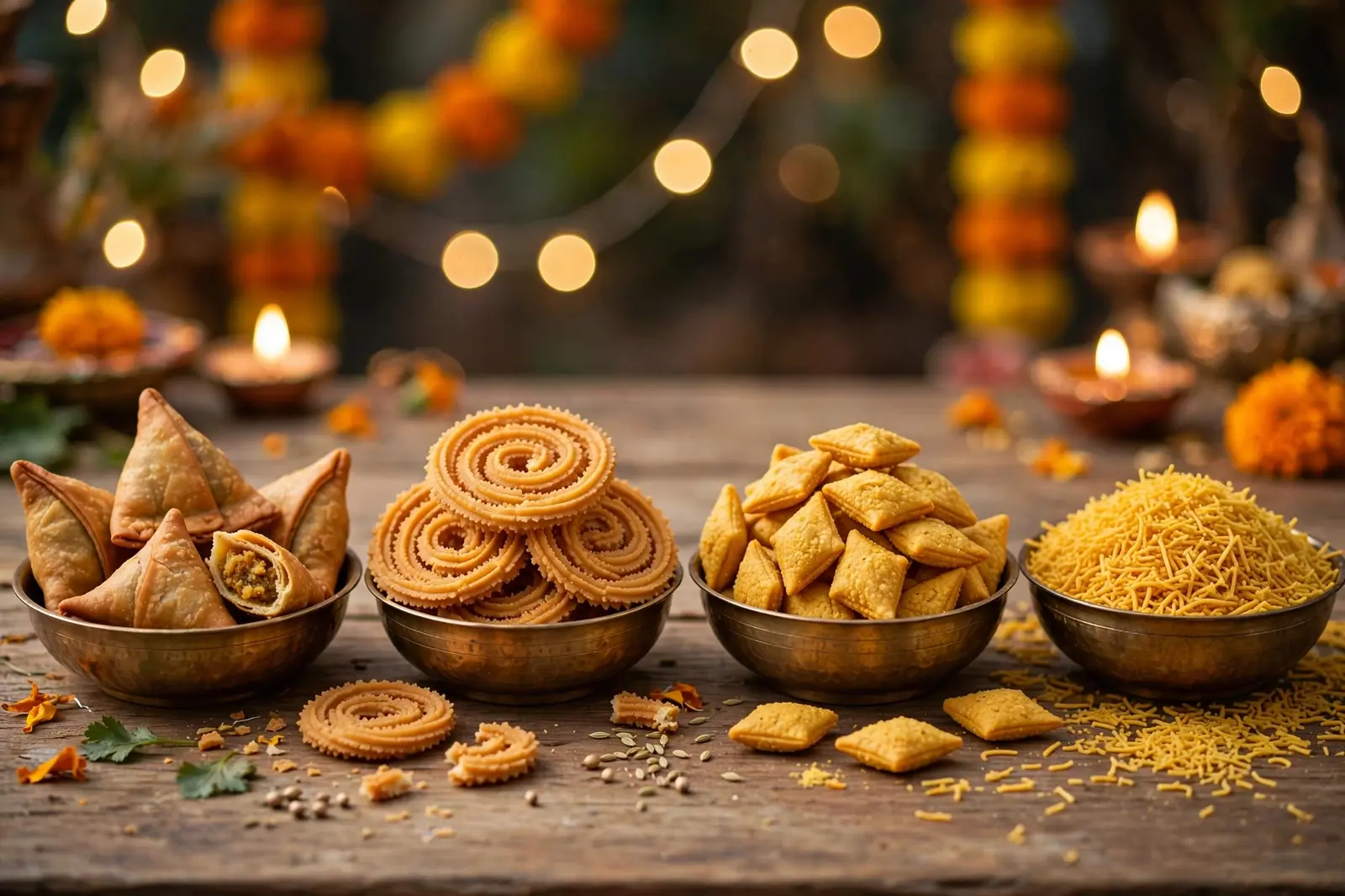
Ingredients: 2 cups all-purpose flour, 1/2 tsp ajwain, 1/4 cup hot oil (moyan), water for a stiff dough. Filling: 4 boiled potatoes (cubed), 1/2 cup peas, 1 tsp each cumin, coriander powder, amchur, garam masala, ginger, green chilies. Method: Rest the dough 30 minutes. Roll ovals, cut in half, form cones, fill with the spiced potato mixture, and seal tightly with water. Fry on low-medium heat (150–160°C) for 12–15 minutes until deep golden — low and slow is what makes samosas flaky rather than bubbly. Tip: the moyan (hot oil rubbed into flour) is non-negotiable for flakiness; skip it and you get bread, not samosa. Serve with tamarind and mint chutneys.
2. Chakli / Murukku (Medium, makes 40)
Ingredients: 2 cups rice flour, 1 cup besan, 1/2 cup hot oil, 1 tsp each cumin, sesame seeds, ajwain, 1 tsp red chili powder, turmeric, salt, water. Method: Mix flours with spices, rub in hot oil until breadcrumb-like, add water to form a firm, pliable dough. Load into a chakli press with the star nozzle and pipe spirals directly onto greased parchment or into medium-hot oil. Fry at 165°C until the sizzling subsides and they turn golden. Tip: if chaklis break while piping, the dough is too dry — knead in water a spoon at a time. If they drink oil, the oil was too cool. Keeps 3 weeks airtight — the ultimate make-ahead Diwali namkeen.
3. Namak Para (Easy, makes 50 pieces)
Ingredients: 2 cups all-purpose flour, 1/2 tsp ajwain, 1/2 tsp black pepper, 1/4 cup oil, salt, water. Method: Make a stiff dough, rest 20 minutes, roll thin (1/8 inch), cut into diamonds, and fry at 160°C until crisp and pale gold. Tip: the 30-minute namkeen — simplest in this guide, endlessly munchable, and a perfect base for variations: add kasuri methi for methi para, or a pinch of sugar for a sweet-savory twist. Keeps 3–4 weeks.
4. Masala Mathri (Easy, makes 30)
Ingredients: 2 cups all-purpose flour, 1/2 cup semolina, 1/2 tsp each ajwain, black pepper, cumin, 1/4 cup hot oil, salt, water. Method: Make a stiff dough, roll thick discs (1/4 inch), prick all over with a fork (this stops puffing), and fry on low-medium heat until crisp and golden — about 8 minutes per batch. Tip: mathri must be fried low and slow; rushed mathri looks done outside and stays doughy inside. The fork-pricking is essential, not optional. Keeps a month — the marathon namkeen of Diwali.
5. Thin Besan Sev (Easy, makes 400 g)
Ingredients: 2 cups besan, 1/2 tsp turmeric, 1 tsp red chili powder, 1/2 tsp ajwain, 2 tbsp hot oil, salt, water. Method: Make a soft, pipeable dough. Using a sev press with the fine-hole plate, pipe directly into 170°C oil in a circular motion. Fry 2–3 minutes until crisp, drain, and cool — it crisps further as it cools. Tip: sev is also a topping — sprinkle it over chaat, bhel, and dahi bhalla through the festival. Flavor variations: add crushed black pepper for kali mirch sev, or garlic powder for a modern twist.
6. Moong Dal Kachori (Medium-Hard, makes 16)
Ingredients: 2 cups all-purpose flour, 1/4 cup hot oil, water for dough. Filling: 1 cup soaked moong dal (coarsely ground), 1 tsp each fennel, cumin, coriander powder, amchur, ginger, green chilies, hing (pinch). Method: Sauté the dal mixture until dry and fragrant — the filling must be completely moisture-free or kachoris burst. Encase spoonfuls in dough balls, roll gently, and fry on low heat (150°C) for 12–15 minutes until crisp and golden. Tip: the dry filling is the whole game; wet filling equals exploded kachoris and a ruined oil batch. Serve with aloo sabzi or just chutneys.

7. Paneer Pakora (Easy, makes 20)
Ingredients: 250 g paneer (finger-sized strips), 1.5 cups besan, 1/2 tsp each turmeric, red chili, ajwain, 1/4 tsp baking soda, salt, water for a thick batter. Method: Rest the batter 15 minutes. Dip paneer strips, fry at 175–180°C until deep golden and crisp, 3–4 minutes. Tip: the batter should coat thickly — thin batter slides off. A pinch of baking soda makes them puffy; rice flour (2 tbsp) makes them extra crisp. Serve immediately with mint chutney — pakoras wait for no guest.
8. Aloo Tikki Chaat (Easy, makes 12 tikkis)
Ingredients: 4 boiled potatoes (grated), 2 tbsp cornflour, 1 tsp each cumin, chaat masala, red chili, salt. Toppings: whisked yogurt, tamarind chutney, mint chutney, chopped onion, sev, pomegranate, coriander. Method: Mix and shape firm tikkis; shallow-fry on a tawa with minimal oil until crisp and golden on both sides — or bake at 200°C for 25 minutes, flipping once, for a lighter version. Top each tikki with yogurt, both chutneys, onion, sev, and pomegranate just before serving. Tip: assemble chaat to order, never in advance — the tikki must stay crisp under its toppings. Set up a DIY chaat counter and let guests build their own; it is interactive and saves you plating.
9. Poha Chivda (Easy, no-fry option, makes 500 g)
Ingredients: 500 g thin poha, 1 cup peanuts, 1/2 cup roasted chana dal, 1/2 cup cashews, curry leaves, 2 tsp mustard seeds, turmeric, red chili powder, powdered sugar (1 tbsp), salt, 1/3 cup oil. Method: Dry-roast poha until crisp (or microwave in batches 2 minutes). Temper mustard seeds, curry leaves, peanuts, and dals in oil; toss with poha, turmeric, chili, salt, and the sugar. Tip: the sugar-salt balance is what makes chivda addictive — do not skip the sugar. The no-fry version (roasted, minimal oil) keeps 3 weeks and is the lightest namkeen in this guide.
10. Masala Peanuts (Easy, makes 400 g)
Ingredients: 400 g raw peanuts, 3 tbsp besan, 1 tbsp rice flour, 1 tsp each red chili, chaat masala, amchur, salt, water for a coating batter. Method: Toss peanuts in the spiced batter until each is thinly coated, then either deep-fry at 160°C until crisp or bake at 180°C for 20–25 minutes, shaking halfway. Tip: the baked version uses a fraction of the oil and tastes 90 percent as good — the smart choice when you are already deep-frying three other things. Keeps 2 weeks airtight.
11. Hara Bhara Kebab (Medium, makes 16)
Ingredients: 2 cups blanched spinach (squeezed dry), 1 cup boiled peas, 2 boiled potatoes, 2 tbsp besan (roasted), 1 tsp each garam masala, chaat masala, ginger, green chilies, salt. Method: Blitz everything into a firm mixture — squeeze out every drop of water from the spinach or the kebabs will fall apart. Shape into patties or logs, chill 30 minutes, then shallow-fry until crisp. Tip: the green, gorgeous, vegetarian showpiece — it brings color to a table of brown fried snacks. Serve with a yogurt-mint dip. Can be baked at 200°C for a lighter result.
12. Mini Khaman Dhokla (Easy, makes 24 pieces)
Ingredients: 1.5 cups besan, 1 tbsp semolina, 1 tsp each sugar, salt, 1/2 tsp turmeric, 1 tsp eno (fruit salt), 1 cup water. Tempering: mustard seeds, sesame, curry leaves, green chilies, 2 tbsp oil, 1/2 cup water with 1 tsp sugar. Method: Whisk the batter smooth, add eno last, and steam immediately in a greased tray for 15–18 minutes. Pour the tempering over, cut into bite-size squares, and garnish with coriander and coconut. Tip: eno goes in at the very last second and the tray goes straight into the steamer — delay deflates the batter. Dhokla is the steamed, oil-free hero for health-conscious guests.

13. Shankarpali — Savory (Easy, makes 60 pieces)
Ingredients: 2 cups all-purpose flour, 1 tsp each cumin, black pepper, ajwain, 1/4 cup hot oil, salt, water. Method: Make a firm dough, roll to 1/4-inch thickness, cut into small diamonds, and fry at 160°C until crisp and pale gold. Tip: shankarpali is Maharashtra’s answer to namak para — slightly thicker, crunchier, and wonderful with tea. Make the sweet version too (with sugar instead of salt and spices) and serve both in one bowl for a sweet-savory mix guests love.
14. Paneer Tikka Skewers (Medium, makes 12 skewers)
Ingredients: 400 g paneer cubes, 1/2 cup hung curd, 2 tbsp mustard oil, 1 tbsp each tandoori masala, kasuri methi, ginger-garlic paste, 1 tsp each turmeric, red chili, salt; capsicum and onion chunks. Method: Marinate 2+ hours (overnight is better). Thread onto skewers with vegetables and grill — oven at 220°C for 15–20 minutes, or a hot tawa with a little oil, turning until charred at the edges. Tip: the char is flavor — do not fear the dark edges. A squeeze of lemon and chaat masala at the end is mandatory. The no-fry, high-protein crowd-pleaser.
15. Dahi Ke Kebab (Medium-Hard, makes 12)
Ingredients: 500 g hung curd (drained 8+ hours until very thick), 1/2 cup roasted besan, 2 tbsp chopped nuts, 1 tsp each roasted cumin, black pepper, cardamom, salt. Method: Mix gently, chill 1 hour, shape into small patties with oiled hands, and shallow-fry on medium heat until golden — handle delicately, they are fragile. Tip: the Lucknowi legend — crisp outside, molten creamy inside. The hung curd must be genuinely thick (it should hold a spoon upright); watery curd means kebabs that dissolve in the pan. Serve the moment they leave the tawa.
Snacks at a Glance: Method, Time, and Shelf Life
| # | Snack | Method | Active Time | Keeps |
|---|---|---|---|---|
| 1 | Punjabi Samosa | Deep-fry | 1.5 hours | 2 days (refrigerated) |
| 2 | Chakli / Murukku | Deep-fry | 1 hour | 3 weeks |
| 3 | Namak Para | Deep-fry | 30 min | 3–4 weeks |
| 4 | Masala Mathri | Deep-fry | 45 min | 1 month |
| 5 | Thin Besan Sev | Deep-fry | 30 min | 3 weeks |
| 6 | Moong Dal Kachori | Deep-fry | 1.5 hours | 3 days |
| 7 | Paneer Pakora | Deep-fry | 25 min | Best fresh |
| 8 | Aloo Tikki Chaat | Shallow-fry / bake | 40 min | Best fresh |
| 9 | Poha Chivda | Roast / temper | 25 min | 3 weeks |
| 10 | Masala Peanuts | Fry / bake | 30 min | 2 weeks |
| 11 | Hara Bhara Kebab | Shallow-fry / bake | 40 min | 2 days (refrigerated) |
| 12 | Mini Khaman Dhokla | Steam | 30 min | 2 days (refrigerated) |
| 13 | Savory Shankarpali | Deep-fry | 40 min | 3 weeks |
| 14 | Paneer Tikka Skewers | Grill / bake | 30 min + marinate | Best fresh |
| 15 | Dahi Ke Kebab | Shallow-fry | 30 min + drain | Best fresh |
Tips for Feeding Diwali Guests Without Stress
Front-load the namkeen: make chakli, namak para, mathri, sev, chivda, and shankarpali a week before Diwali — they all keep for weeks airtight. Fry fresh in small waves: samosas, pakoras, and kachoris are 10x better fresh; fry a batch when guests arrive, not hours before. Set up a chutney station: mint, tamarind, and a yogurt dip cover 90 percent of these snacks — make all three the day before. Balance the table: pair two fried items with one baked/steamed and one no-fry namkeen so the spread feels abundant, not heavy. Label for dietary needs: a tiny card noting “vegan” or “gluten-free” (poha chivda, masala peanuts) is a thoughtful touch modern guests appreciate. Keep the tea flowing: no Diwali snack table is complete without masala chai — it is the traditional pairing for a reason. For the festival story behind the feasting, our Diwali festival of lights guide has you covered.
Building the Perfect Diwali Snack Platter
A great snack table is composed, not just piled. Think in layers: the base layer — large bowls of long-keeping namkeen (chakli, namak para, chivda, sev) that guests graze from all evening without any work from you. The fresh layer — one or two fried items served in small batches (samosas, pakoras), replenished from the kitchen. The interactive layer — a DIY chaat counter with tikkis, chutneys, yogurt, sev, and pomegranate, where guests build their own. The light layer — dhokla, hara bhara kebab, or paneer tikka for guests avoiding deep-fried food. Arrange by color: the golden browns of fried snacks look best against green chutneys, white yogurt dips, and red tamarind — tuck fresh coriander and lemon wedges between bowls for contrast. Serve on brass thalis and banana leaves where you can; the traditional serveware makes even simple namkeen feel festive. And always put the chutneys in the center — everything on the table orbits around them.
Drinks That Pair With Savory Snacks
The right drink turns snacking into a celebration. Masala chai is the non-negotiable classic — its spices cut through fried richness and it is what guests expect. Filter coffee for South Indian households. Chaas or salted lassi cools the palate between spicy bites and is wonderfully refreshing on a warm Diwali evening. Nimbu pani or shikanjvi (spiced lemonade) does the same job with brightness. For something festive, kesar badam milk served warm bridges the savory-sweet divide and feels luxurious. Aam panna (raw mango cooler) is tangy, seasonal, and a conversation starter. Set up a self-serve drink station beside the snack table with one hot option (chai in a thermos) and one cold option (a large dispenser of nimbu pani) — guests help themselves, and you stay out of the kitchen. For more Indian festive hosting ideas across the calendar, see our Christmas traditions in India guide.
Make-Ahead Timeline for Stress-Free Hosting
One week before: make all long-keeping namkeen — chakli, namak para, mathri, sev, chivda, shankarpali, masala peanuts. Cool completely and seal in airtight tins. Three days before: make all three chutneys and refrigerate; prep dhokla tempering ingredients. One day before: make kachori filling (keep dry), marinate paneer tikka, hang curd for dahi ke kebab and shrikhand-style dips, boil potatoes for samosa filling and tikkis. Diwali morning: assemble samosas and kachoris (fry later), shape tikkis, steam dhokla. As guests arrive: fry samosas/pakoras in small waves, warm tikkis on the tawa, set out the chaat counter. The golden rule: nothing fried sits longer than 30 minutes before serving — crispness is a countdown, so fry to the rhythm of arrivals, not ahead of them.
Kid-Friendly Diwali Snacks
Children graze differently — they want fun shapes, mild spice, and finger food. Mini samosas (half the usual size) are irresistible to small hands; keep a separate mild batch with less chili. Cheese-topped mathri — bake mathri discs, top with grated cheese, and melt under the grill for a fusion bite kids devour. Sweet shankarpali alongside the savory version gives kids their own bowl. Chocolate-dipped namak para sounds odd and tastes like a revelation — dip one end of each para in melted chocolate and let it set. Dhokla fingers with a mild yogurt dip are soft, tangy, and mess-free. Keep the spice low, the pieces small, and the presentation playful — serve kids’ snacks in colorful paper cones or small buckets rather than formal bowls. And involve them: kids who helped roll namak para will eat it with pride all evening.
Storing and Reviving Leftover Namkeen
Diwali namkeen outlasts the festival if stored right. Cool completely before sealing — even slight warmth creates condensation that softens everything within days. Airtight steel tins beat plastic; add a small pouch of uncooked rice to absorb moisture in humid climates. Never refrigerate fried namkeen — the fridge’s humidity kills crispness; room temperature in a dark cupboard is ideal. Reviving soft namkeen: spread on a tray and warm in a 150°C oven for 5–8 minutes — chakli, sev, and namak para come back remarkably well. Microwaving works in a pinch (30-second bursts) but oven-crisping is superior. Shelf reality check: most fried namkeen stays good 3–4 weeks, but flavor fades after two — plan quantities so the best eating happens in the first fortnight. Stale-but-safe namkeen need not be wasted: crush it as a crunchy topping for chaat, bhel puri, or salads.
Namkeen Gifting: Edible Diwali Gifts
Homemade namkeen makes a Diwali gift people actually finish — unlike the third box of dry-fruit. The classic tin: a steel dabba layered with chakli, namak para, and shankarpali, tied with ribbon. The chaat kit: a box with sev, masala peanuts, chivda, and small jars of tamarind and mint chutney — a DIY chaat party in a box. The regional tour: namkeen from different states (chakli, mathri, shankarpali) with a card naming each. Office-friendly: small pouches of masala peanuts and chivda — non-perishable, desk-safe, universally liked. Pack everything only after it is fully cool, seal airtight, and add a handwritten label with the contents and date. Edible gifts say “I spent my time on you” — the most Diwali sentiment there is.
Watch: DIY Diwali Wall Decor for Your Snack Table
While the namkeen cools, dress up the wall behind your snack table. This video shows an easy DIY Diwali wall decoration — a lovely backdrop that makes your homemade spread look party-ready:
Frequently Asked Questions About Diwali Snacks and Namkeen
Which namkeen can I make a week before Diwali?
Chakli, namak para, mathri, besan sev, poha chivda, savory shankarpali, and masala peanuts all keep 2–4 weeks in airtight containers. Make these first. Save samosas, kachoris, pakoras, tikkis, dhokla, and kebabs for the day guests arrive — they are dramatically better fresh.
How do I keep fried snacks crisp for a party?
Cool them completely on a wire rack (never in a pile — steam makes them soggy), then hold in a warm oven (100°C) in a single layer until serving. Never cover hot fried snacks with a lid or cloth. Fry in small batches so the oil temperature stays steady — temperature drops are the main cause of greasy, limp results.
What are good no-fry Diwali snack options?
Poha chivda (roasted), baked masala peanuts, baked hara bhara kebab, steamed mini dhokla, aloo tikki (baked), and paneer tikka (grilled) all skip the kadhai. They are lighter, easier in bulk, and modern guests increasingly prefer them alongside one or two fried classics.
How much namkeen should I make for 20 guests?
Plan roughly 150–200 g of mixed namkeen per guest for an evening of grazing — so 3–4 kg total for 20 guests across 3–4 varieties. For fried fresh snacks, 4–5 pieces per person is a safe estimate. It is always better to have a sealed backup tin than to run out mid-party.
Can I make these snacks vegan or gluten-free?
Many adapt easily: poha chivda and masala peanuts are naturally vegan; replace ghee with oil in mathri and namak para doughs. For gluten-free, use rice flour and besan-based snacks (chakli, sev, pakoras) and skip wheat-based samosas and kachoris. Paneer tikka works with firm tofu for a vegan version.
What chutneys should I serve with Diwali snacks?
The classic trio: mint-coriander chutney (fresh, herby), tamarind-date chutney (sweet-sour), and a simple whisked yogurt dip with roasted cumin. Make all three a day ahead — they keep 3–4 days refrigerated and pair with every snack in this guide, from samosas to dhokla.
The Bottom Line
Fifteen snacks, zero hungry guests. Make the long-keeping namkeen a week ahead, fry the classics fresh in small waves, steam or bake the lighter options, and let a good chutney trio tie it all together. Your Diwali snack table does not need to be complicated — it needs to be generous, crisp, and constantly refilled. Do that, and guests will remember your Diwali 2026 as the year the snacks never stopped. Happy hosting — and for the festival behind the feast, see our complete Diwali guide.