Wildflower Garden How-To: Meadows That Bloom for Months
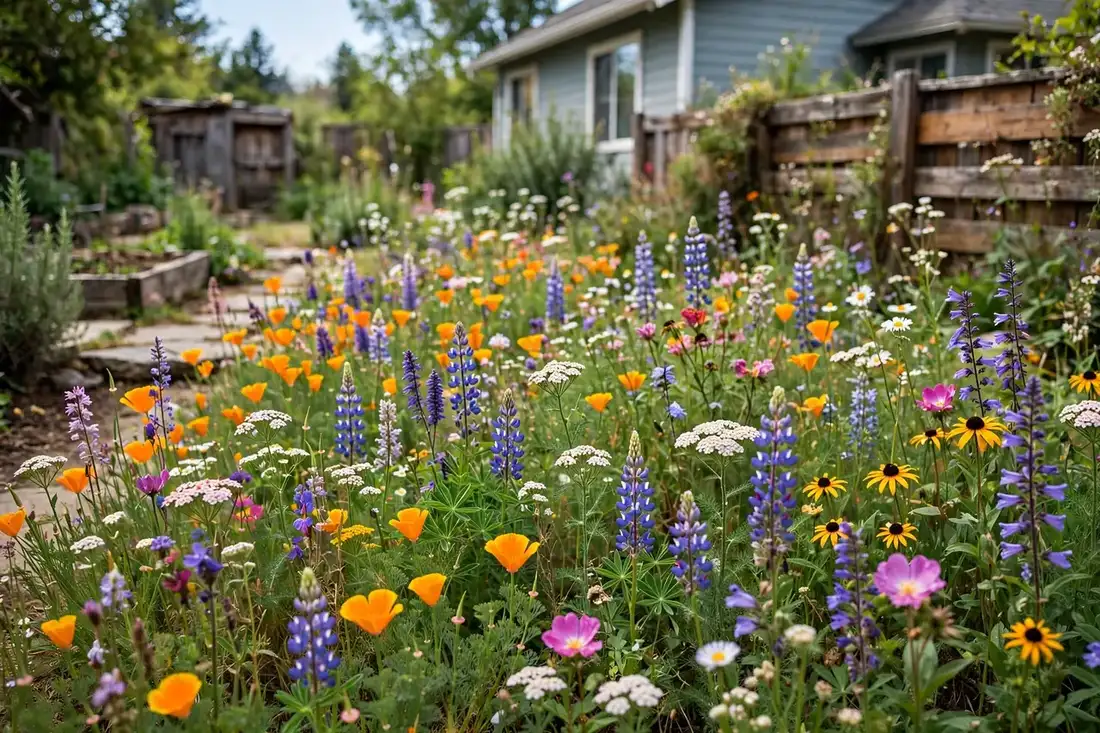
A wildflower garden — whether a full meadow or a 4×8 pocket prairie — trades lawn-mowing monotony for months of blooms, butterflies, and birdsong. Done right, it is lower-maintenance than lawn, spectacularly beautiful, and genuine habitat. Done wrong, it is a weedy patch that draws complaints. The difference is preparation and plant selection.
The core truths: wildflowers need lean soil (rich soil favors weeds), full sun, and — critically — the existing vegetation must be killed before sowing (sowing into live grass fails). Patience is required: year one sleeps (roots), year two creeps, year three leaps.
This guide covers site selection, the kill-the-grass-first imperative, seed vs plugs, choosing regionally appropriate mixes, sowing technique and timing, first-year care (the mowing strategy), long-term meadow management, and troubleshooting.
Site Selection
Sun: most meadow wildflowers need 6+ hours of direct sun — shade wildflowers exist (for woodland gardens) but the classic meadow is full sun. Observe through the growing season, not just in spring.
Soil: lean and well-drained is ideal — rich fertile soil grows weeds faster than wildflowers. Poor soil is a feature: it handicaps the aggressive weeds while wildflowers (adapted to lean conditions) thrive. Do not amend with compost or fertilizer.
Size: any size works — a 4×8 pocket meadow, a parking strip, a full acre. Bigger is more ecologically valuable and more visually dramatic, but small meadows succeed beautifully. Visibility matters: put it where you will see (and defend) it.
Check local rules: some municipalities have weed ordinances targeting ‘unkempt’ lots — a defined border, a small sign (‘Pollinator Meadow’), and mowed edges keep wildflower plantings neighbor- and code-friendly.
Killing Existing Vegetation: The Non-Negotiable Step
Sowing wildflower seed into live grass or weeds fails — the existing plants outcompete seedlings every time. The seedbed must start clean. Methods, best to worst:
Solarization: cover with clear plastic for 6–8 weeks in summer heat — cooks everything including weed seeds near the surface. Chemical-free and effective; needs a full hot summer.
Smothering: cardboard/newspaper + 4–6 inches of wood chips for a full season — kills vegetation reliably; remove or plant through the chips the next year. Slow but foolproof.
Repeated shallow cultivation: till, let weeds germinate, till again — 3–4 cycles over a season exhausts the surface seed bank. Effective but destroys soil structure and brings up new seeds each time.
Herbicide (glyphosate): one careful application kills existing vegetation with minimal soil impact — the pragmatic choice for large areas. Controversial; follow labels exactly, apply on calm days, and many meadow-makers use it once to establish, then never again.
Whatever the method, the principle is absolute: bare, vegetation-free soil before sowing. Skipping this step is the number-one meadow failure.
Seed vs Plugs: Choosing Your Approach
Seed: cheapest for large areas ($50–$200 per 1,000 sq ft for quality regional mix), greatest diversity, but slowest — full effect in year 2–3, with significant first-year weed pressure to manage. The standard for meadows over 500 sq ft.
Plugs (small nursery plants): instant impact, precise placement, blooms the first year — but expensive ($3–$6 each; a 100-sq-ft planting needs 100+ plugs). Best for small high-visibility areas, or for adding key species to a seeded meadow.
The hybrid: seed the matrix, plug the showpieces — economical diversity plus first-year structure. Many successful meadows combine both: seeded base with plugged drifts of signature species (coneflower, blazing star, Joe Pye).
Buy regional ecotype seed: ‘wildflower mix’ from big-box stores is often generic non-native annuals. Regional native seed houses (Prairie Moon, Ernst, local native nurseries) sell mixes adapted to your exact area — they establish better and support local ecology.
Sowing Technique and Timing
Timing: late fall (dormant sowing — seeds stratify naturally over winter) or early spring. Fall sowing is generally superior: natural cold stratification, spring moisture for germination, and a full season of growth. Frost-seeding (broadcasting on frozen ground in late winter) works for many species.
Rate: follow the mix’s recommended rate (typically 4–8 lbs per acre for pure wildflower, less in grass mixes) — more seed is not better; overcrowded seedlings damp off and waste money. Mix seed with sand or sawdust for even broadcasting.
Technique: broadcast half walking north-south, half east-west for even coverage. Press into soil (roll, cultipack, or walk over it) — seed-to-soil contact is essential; do not bury (most wildflower seeds need light). A light straw mulch (1 bale per 1,000 sq ft, shaken thin) holds moisture without smothering.
Water if spring-sown and dry; fall-sown relies on natural precipitation. Mark the area clearly — the number-one seedling killer is a well-meaning person ‘weeding’ the baby meadow.
First-Year Care: The Mowing Strategy
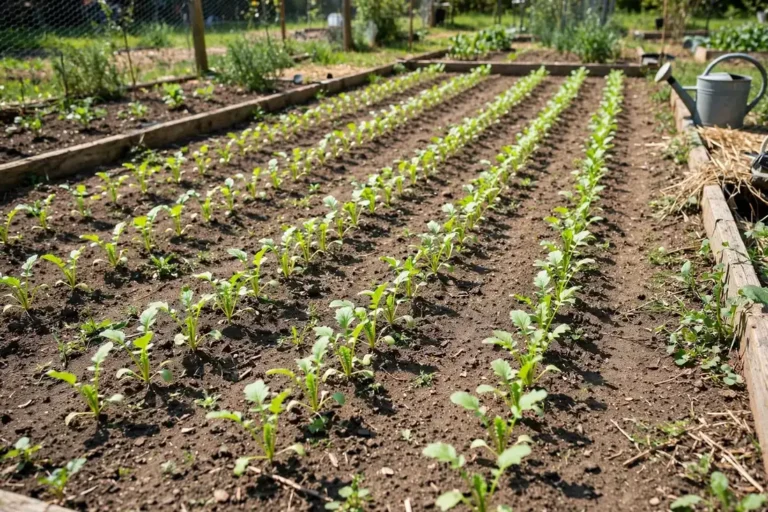
Year one looks weedy — this is normal. Annual weeds germinate faster than perennial wildflowers; the strategy is mowing, not weeding: mow to 6–8 inches whenever weeds reach 12 inches (monthly-ish), which beheads annual weeds before they seed while wildflower seedlings (low rosettes) survive beneath the blade.
Do not pull weeds individually in year one (disturbs wildflower seedlings); do not fertilize (feeds weeds); do not panic. The perennial wildflowers are building roots — ‘first year sleeps.’ Spot-treat only truly noxious invasives (thistle, bindweed).
Year two: reduce mowing (once in early summer if needed), watch the perennials emerge and bloom lightly — ‘second year creeps.’ Year three: the meadow arrives — ‘third year leaps.’ Full glory from year three onward, improving yearly.
Long-Term Meadow Management
Annual mowing: mow the entire meadow once yearly in late fall or early spring (after birds have used the seed heads, before spring growth) — cut to 4–6 inches and remove or mulch the clippings. This single mowing prevents woody succession (the meadow becoming shrubs, then forest) and is 90% of long-term maintenance.
Leave some standing: mow in sections or leave patches unmowed each year for overwintering insects — the stems house native bees, and seed heads feed birds all winter. Rotate which sections stand.
Overseed bare spots in fall, divide or add plugs of favorite species, and edit out aggressive spreaders if they dominate. A meadow is managed wildness — mostly self-sustaining, lightly guided. Never fertilize; never water established meadows (except extreme drought).

Meadow timeline: what to expect
| Year | What Happens | Your Job |
|---|---|---|
| 0 (prep) | Kill existing vegetation | Solarize, smother, or treat — bare soil is the goal |
| 1 | Weeds + tiny wildflower rosettes | Mow weeds to 6–8 in monthly; do not weed by hand |
| 2 | Perennials emerge; light bloom | Mow once if needed; spot-treat invasives |
| 3+ | Full meadow; improving yearly | One annual mow; overseed bare spots; enjoy |
Practical Tips
- Kill existing vegetation completely before sowing — the non-negotiable first step.
- Buy regional native seed mixes, not generic ‘wildflower’ bags of non-native annuals.
- Sow in late fall for natural stratification and spring moisture.
- Mow weeds (not wildflowers) in year one — monthly to 6–8 inches.
- Expect the 3-year arc: sleeps, creeps, leaps. Patience is the method.
- Mow once yearly thereafter; leave some standing for overwintering insects.

Tools and Supplies for Wildflower Garden
You need less gear than you think to start with wildflower garden — the essentials fit in a single tote. The non-negotiables: a sharp tool for the cutting tasks (bypass pruners for stems, a hori-hori knife for soil work), a watering can with a rose head for gentle watering, a soil thermometer if timing matters, and quality materials (potting mix, mulch, or seed, depending on the technique). Buy the best version of the tools you will use weekly; economize on the rest.
Nice-to-haves that earn their keep: a kneeling pad (your knees will thank you by the second season), nitrile-coated gloves (dexterity plus protection), a garden journal or phone app for records, and a small tarp for collecting debris. The pattern across decades of gardener surveys: comfort items get used, gimmick tools gather dust.
For wildflower garden specifically, gather everything before you begin — mid-project supply runs break momentum and lead to improvisation that undermines results. Lay out tools, read the instructions once fully, then work steadily. Preparation is the invisible half of every technique done well.
Budget: What Does It Really Cost?
The honest economics of wildflower garden: the startup cost is modest, the ongoing cost is mostly time, and the payoff compounds. A realistic first-year budget covers tools (many of which you may own), materials (soil, amendments, plants or seed), and optionally a reference book. Most gardeners spend $50–$200 to start a technique properly — far less than the cost of replacing failed attempts.
Where the money actually goes: quality soil and amendments (never skimp — everything grows from this), sharp tools (cheap pruners crush stems and cause disease; a $30 pair lasts a decade), and water (mulch aggressively to cut this cost). The expensive mistakes are all avoidable: wrong plants for the site, planting at the wrong time, and neglecting the first month’s aftercare.
Track costs against harvests or results for one season — most gardeners are pleasantly surprised. A $60 investment that yields $300 of produce (or a transformed garden bed) is a 5x return that also happens to be dinner. Even purely ornamental projects pay back in property enjoyment that no spreadsheet captures.
| Item | Typical Cost | Notes |
|---|---|---|
| Essential hand tools | $30–$60 | Pruners, trowel, gloves — buy once, buy well |
| Materials (soil/seed/plants) | $20–$80 | Quality inputs determine results |
| Mulch & amendments | $15–$40 | Compost and mulch pay for themselves |
| Optional upgrades | $0–$50 | Grow lights, row cover, timers as needed |
| Total first-year range | $50–$200 | Ongoing years cost far less |
When to Start: Seasonal Timing for Wildflower Garden
Every technique has its season, and wildflower garden is no exception. Spring suits most new projects — soil workable, rain reliable, the whole growing season ahead for establishment. Fall is the sleeper best season for anything involving perennials, soil building, or structural work: warm soil, cool air, and autumn rains do half the establishment work for you.
Avoid starting major projects in high summer (heat stress on you and the plants) or when the ground is frozen or waterlogged (working wet soil destroys its structure — the compaction lasts years). If enthusiasm strikes in the wrong season, use the time for planning, sourcing materials, and reading — the project will be better for the wait.
Within the right season, watch the weather window: a few days of mild, overcast weather after starting gives everything the gentlest possible launch. Gardeners who check the forecast before beginning have visibly better establishment rates than those who do not.
Scaling Up: From First Try to Mastery
Your first attempt at wildflower garden teaches you the mechanics; the second teaches you the judgment. After one season, you will know which steps mattered most, what your site’s quirks demanded, and what you would do differently — write these observations down while fresh. The gardeners who improve fastest are the ones who debrief.
Scale deliberately: expand what worked before adding new techniques. A second bed, a larger planting, or a refined version of the same project consolidates skill; three new techniques at once scatters attention. Mastery in gardening is a stack of small, well-learned skills — each season adds a layer.
Teach someone else. Explaining wildflower garden to a neighbor or friend forces you to articulate the why behind each step, which is where real understanding lives. Gardening knowledge has always traveled gardener-to-gardener; join the tradition.
Why It Matters: The Bigger Picture
Beyond the harvest or the improved garden, wildflower garden connects to things larger than your yard. Home-scale growing reduces food miles to food feet, builds soil that sequesters carbon, and creates habitat in the fragmented urban landscape. A single garden will not change the world; a million of them change neighborhoods, waterways, and pollinator populations.
The personal returns compound too: gardeners consistently report lower stress, more physical activity, and deeper seasonal awareness than their non-gardening peers. The research on gardening and wellbeing is unusually consistent — time with hands in soil measurably improves mood, and the effect strengthens with years of practice.
Start where you are, with wildflower garden, this season. The garden does not require perfection — it requires beginning, and then continuing. Everything else is refinement.
Adapting Wildflower Garden for Small Spaces
No yard? Wildflower Garden still works — nearly every gardening technique scales down to balconies, patios, and windowsills. The principles do not change; only the containers and the scale do. A 4×8 technique becomes a 2×2 version; a bed-based method becomes a container-based one. Start with the smallest viable version and expand only after it succeeds.
Small-space adaptations to keep in mind: choose compact or dwarf varieties bred for containers, use vertical space (trellises, wall planters, hanging baskets) to multiply square footage, and prefer lightweight materials (fabric pots, soilless mixes) where weight limits apply — wet soil is far heavier than beginners expect, and balconies have load limits.
The small-space advantage nobody mentions: control. A balcony gardener controls water, soil, light, and pests more precisely than a field grower, which often means healthier plants per square foot. Small space is not a handicap to overcome — it is a different medium with its own strengths.
Combining Wildflower Garden with Other Techniques
Wildflower Garden rarely lives alone in a well-designed garden — it stacks with complementary methods. Pair it with mulching (whatever the technique, mulch improves it), with composting (closing the fertility loop), and with pollinator plantings (more pollinators improve every fruiting crop). The techniques in this guide series are designed to combine; each one you add multiplies the others.
Think in systems: a rain barrel feeds drip irrigation; drip irrigation waters mulched beds; mulched beds feed compost with their trimmings; compost feeds the next planting. Each connection removes an input (purchased water, purchased fertilizer, purchased mulch) and adds resilience. The goal is a garden that increasingly runs on its own cycles.
When combining, introduce one technique per season. Wildflower Garden deserves your full attention the first time — master it, then layer the next method on top of a solid foundation. Gardeners who adopt five techniques at once master none; gardeners who add one per season build genuinely integrated systems within a few years.
Involving Kids and Beginners
Wildflower Garden is an excellent teaching technique because it shows results on a beginner’s timescale. Give kids or new gardeners ownership of a defined piece — their own container, their own row — rather than helper tasks on your project. Ownership creates the attention that makes plants thrive, and the pride of a personal harvest converts casual helpers into lifelong gardeners.
Calibrate the teaching: explain the why before the how (kids who understand that roots need air and water will water correctly without being told the schedule), let them make small mistakes (a wilted seedling teaches more than a prevented one), and celebrate harvests concretely — cooking and eating what you grew closes the loop that makes gardening meaningful.
For adult beginners, the same principles apply with less hand-holding: one technique, one season, one success. Recommend they start exactly where this guide starts, resist the urge to optimize prematurely, and keep notes. Every expert gardener was once a beginner who did not quit after the first failure.
Resources for Going Deeper
This guide covers wildflower garden thoroughly, but gardening rewards continued learning. Your local cooperative extension service is the single best free resource — region-specific advice, soil testing, and master gardener hotlines staffed by trained volunteers. Find yours with a web search for your state plus ‘cooperative extension’.
Books worth owning: a general vegetable or gardening reference for your region (the one you will actually open), a pest and disease identification guide with photos, and a soil science primer if you catch the bug. Libraries carry most of these — preview before buying.
Online, prefer university extension publications (.edu) over random blogs for factual questions — extension articles are peer-reviewed and region-specific. Gardening forums and local gardening clubs supply the tacit knowledge (timing nuances, variety recommendations) that publications miss. And nothing replaces a neighboring gardener three streets over whose conditions match yours exactly.
Advanced Troubleshooting for Wildflower Garden
When the basics are right but results disappoint, troubleshoot systematically instead of changing everything at once. The diagnostic order that solves most mysteries: timing (was it done at the right moment?), inputs (soil, water, light — measured, not guessed), technique execution (re-read the instructions — most ‘failures’ are skipped steps), and finally external factors (weather extremes, pests, contaminated materials).
Isolate variables: if one bed thrives and another fails with the same technique, the difference is in the bed (soil, drainage, light, history) — not the technique. If everything fails the same way, the technique or its timing is the suspect. This controlled-comparison thinking is the scientific method applied to gardening, and it resolves problems that years of random adjustments never will.
Keep a failure log for wildflower garden: date, conditions, what you did, what resulted. Patterns invisible in the moment emerge across entries — the pest that always arrives the third week of June, the technique step that fails whenever the soil is wet. The log turns repeated mysteries into scheduled preventions.
Know when to call in expertise: your extension service’s diagnostic clinic (many accept emailed photos), master gardener hotlines, and local gardening clubs have collectively seen every failure you will encounter. Describe symptoms precisely (when it started, what you did, photos of the problem) and you will get precise answers. There is no prize for suffering through a solvable problem alone.
Wildflower Garden Through the Seasons: A Maintenance Calendar
| Season | Focus | Key Tasks |
|---|---|---|
| Late winter | Planning | Order materials; review last year’s notes; set calendar dates |
| Early spring | Preparation | Prepare beds/soil; test equipment; start first plantings |
| Late spring | Establishment | Complete plantings; mulch; set up irrigation; monitor daily |
| Summer | Maintenance | Water deeply; scout pests weekly; harvest; succession plant |
| Fall | Extension & cleanup | Protect from frost; plant fall crops; compost spent plants |
| Winter | Rest & learn | Maintain tools; plan next year; study and order seeds |
The calendar’s real value is psychological: gardening has a rhythm, and working with it instead of against it reduces both labor and anxiety. Spring’s urgency, summer’s abundance, fall’s winding down, winter’s dreaming — each season has its tasks and its pleasures. The gardeners who last decades are the ones who found their rhythm, not the ones who sprinted.
Safety First: Wildflower Garden Without the Regrets
Gardening is safe, but it is physical work with sharp tools — treat it with the respect it deserves. The rules that prevent nearly all garden injuries: cut away from your body (not toward), keep pruners sharp (dull blades slip and require force), wear gloves for thorny or irritating plants (rose thorns, fiberglass-like squash hairs, and compost all harbor bacteria), and lift with your legs — a bag of compost weighs 40 pounds and backs are not replaceable.
Sun and heat safety matter as much as tool safety: garden in the cooler morning and evening hours in summer, wear a hat and sunscreen, drink water before you feel thirsty, and recognize heat exhaustion (headache, nausea, dizziness) as the stop-immediately signal it is. More gardeners are felled by heat than by any tool.
Chemical safety rounds it out: even organic sprays (neem, pyrethrin, copper) require label directions, protective equipment, and keeping concentrates away from children and pets. Store all garden chemicals in their original labeled containers, locked away. Wildflower Garden rewards the careful practitioner — and care starts with keeping yourself intact.
One final habit ties it all together: the end-of-session scan. Before heading inside, walk your work area — tools collected and stored (never left in the bed where a mower or foot finds them), hoses drained and coiled, gates latched, and hands washed. Five minutes of order prevents nearly all ‘how did that happen’ injuries and means your next session starts clean. Safe gardeners are not fearful gardeners; they are gardeners who built safety into the routine until it became invisible.
Common Mistakes to Avoid
- Sowing into live grass — guaranteed failure. Bare soil first, always.
- Rich fertilized soil — grows weeds, not wildflowers. Lean is right.
- Hand-weeding year one — disturbs seedlings; mow instead.
- Giving up in year one — it looks weedy; that is normal. Year three is the payoff.
- Never mowing — woody plants invade and the meadow becomes scrub. One annual mow.
Watch: Wildflower Garden in Action
See these techniques demonstrated step by step:
Frequently Asked Questions About Wildflower Garden
How do I start a wildflower meadow?
Kill existing vegetation completely (solarize, smother, or treat), sow regional native seed in late fall onto bare soil, press for seed-to-soil contact, mow weeds (not wildflowers) through year one, and wait — full meadow by year three.
Can I just throw wildflower seeds on grass?
No — the grass outcompetes seedlings every time. This is the number-one meadow failure. The seedbed must be vegetation-free before sowing.
How long does a wildflower meadow take?
Year one: roots and rosettes (looks weedy). Year two: emergence and light bloom. Year three: full meadow glory. The adage: first year sleeps, second creeps, third leaps.
Do wildflower meadows need mowing?
Yes — once yearly in late fall or early spring (cut to 4–6 inches) to prevent woody succession. Plus monthly high mowing in year one to suppress annual weeds. That is nearly the entire maintenance program.
What is the best wildflower seed mix?
A regional native mix from a native seed house (Prairie Moon, Ernst, local native nurseries) — adapted to your area, supporting local pollinators. Avoid generic big-box ‘wildflower’ mixes of non-native annuals.
Will a meadow violate weed ordinances?
It can draw complaints if it looks neglected — keep mowed edges, add a defined border and a small sign (‘Pollinator Meadow in Progress’), and check local ordinances. A framed meadow reads as intentional; an unframed one reads as abandoned.
Keep Reading on DayZora
The Bottom Line
Wildflower Garden is one of those gardening skills that pays back far beyond the effort of learning it. Start with the fundamentals in this guide, apply them this season, and refine from experience — gardening rewards the doing far more than the reading. Your garden will show the difference within weeks.